A remarkable ‘sconce’ at the Blackman Cruz showroom
How is it that the Roman philosopher Seneca (ca. 4 BC – AD 65) would know what a good idea it would be for me to go to the 10th Design Leadership Summit in Los Angeles when he said;
.
“Travel and change of place impart new vigor to the mind.”
.
As it turns out my weeklong trip to the city of angels was extraordinary, and indeed I have new vigor!
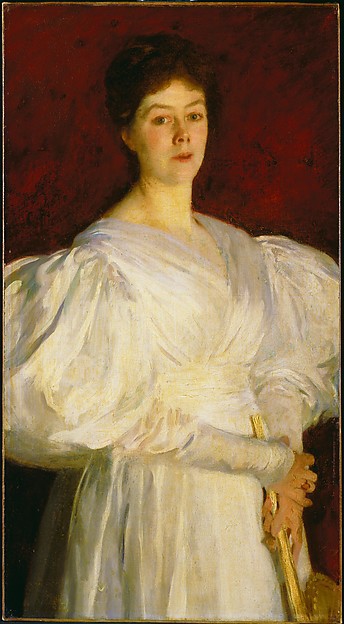
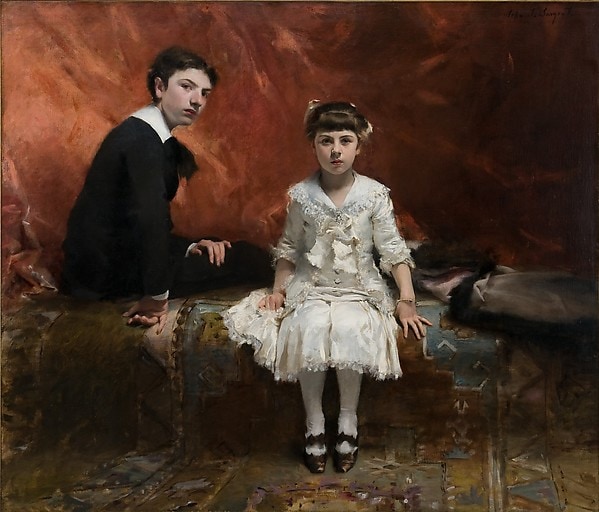
.I think of John Singer Sargent as the masterful “Court Painter”for wealthy and powerful individuals during the Edwardian era; highly sought after, he was commissioned to create grand portraits that served to express and support social position.
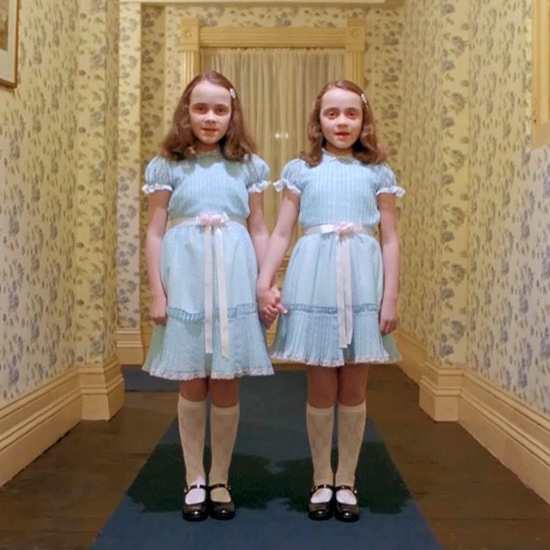
NOT as an inspiration for ‘The Shining’…
And yet the relationship of the figures, both to themselves within each image, and to the person viewing the images above, bear striking resemblance.
But I get ahead of myself.
Sergeant: Portraits of Artists and Friends (though October 5) at the Metropolitan Museum of Art is an expansive show of nearly 100 works focusing on Sargent’s more personal work: portraits he created of artist, writers, actors, and musicians, many of whom were close friends – and which are in stark contrast to the well-known and widely celebrated portraits he painted on commission.
Seemingly effortless, the paintings in this exhibition are not necessarily designed to elevate the subjects’ social position, hence he was free to create more adventurous works that are masterful expressions of his feelings about his colleagues and friends using more experimental painting techniques. It is an impressive, idiosyncratic and truly spectacular show that offers great insight into a master portrait painter.
But to my great surprise, the Sargent’s paintings brought to mind, for me, numerous other and very disparate artists, and the filmmaker Stanley Kubrick, many of whom made their work a generation or two later. This, for me, constitutes a thrilling art experience!
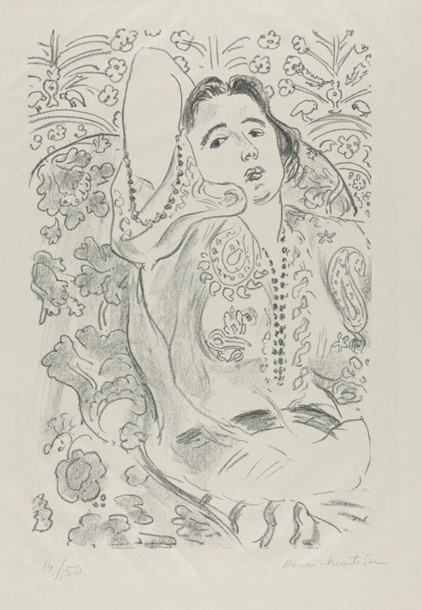
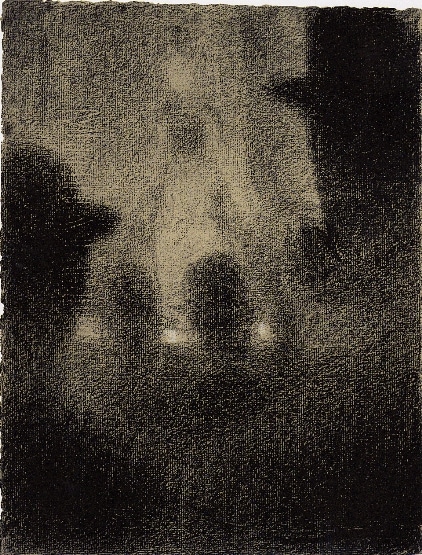
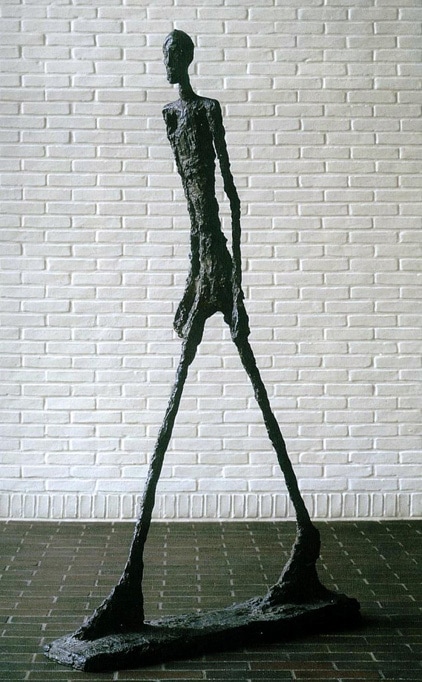
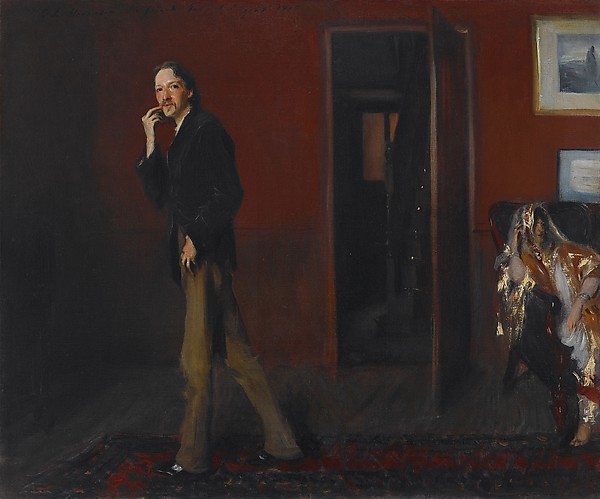
In Sergeant’s portrait of Robert Louis Stevenson and His Wife (1885) there is what was seen as an ‘odd composition’ – and I don’t disagree, however what was more striking and very surprising to me was that in this one painting I saw connections between John Singer Sergeant and Alberto Giacometti, Henri Matisse and George Seurat!
Stevenson’s wife is laying on a sofa or chaise dressed as Scheherazade – bringing to mind a series of works by Henri Matisse.
A door is open into a mysterious space with glints of light, and like in some of the drawings of his contemporary George Seurat, Sargent created space within the darkness by offering teeny glints of light from the hardware of metal bars used to hold the carpet runner (perhaps a detail only an interior designer would consider!)
More striking perhaps is the stance of Stevenson himself – tall, lean, and in motion – I had seen this very stance at the Louisiana Museum in Denmark in Alberto Giacometti’s’ ‘Walking Man’.
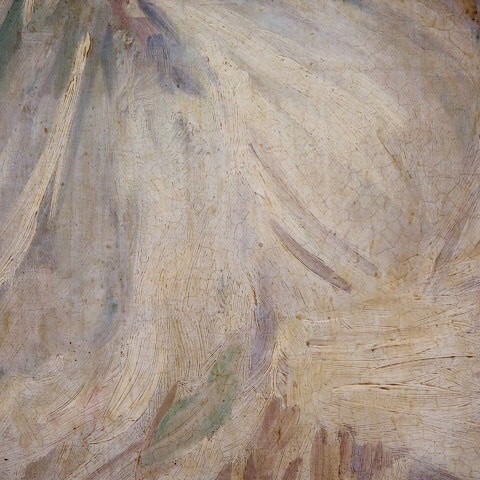
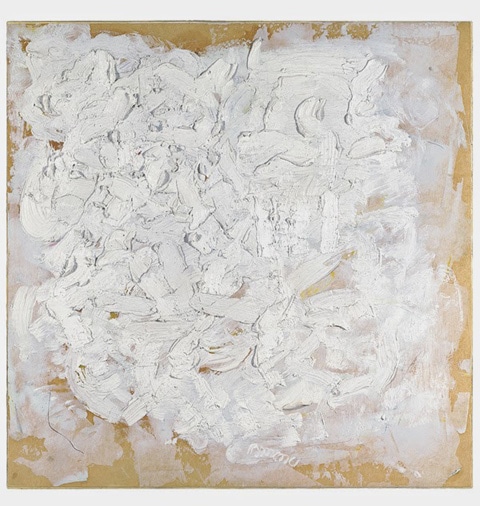
Within the often large paintings are areas of almost complete abstraction, not highly rendered and detailed, but a more modern, masterful application of paint. Enter Robert Ryman.
It came a big surprise to me that I would ‘find’ contemporary minimalist and monochrome painter Robert Rymanwithin some of Sergeant’s paintings!
.
With the exception of photography, very little of the artwork I own is representational – or portraiture for that matter — and yet the concept of portraiture is something I think about a lot. Private residential interior design at its best is a form of portraiture, reflecting the values, tastes, point of view and histories of the clients. In this idea, if a number of accomplished designers were to create an interior for the same clients, while they would look different, the clients would still be represented and legible in some form.
It was with great anticipation that I went to see Sergeant: Portraits of Artists and Friends – I did not however imagine such a dynamic art history experience that would reach into the late 20th century.
There are more riches to be found within these works, and I encourage you to see the show yourself before it closes – let me know what you find!
I have never been to the Himalayas, and wasborn after 1951; but I have been empowered numerous times in my adult life by a passage in the the writings of a Scotsman who did climb the Himalayas in that year.
Last Thursday was the last day of theHOME Section of the New York Times; there are many of us who lament this change, remembering when the section was a very important source of news about the world of design.
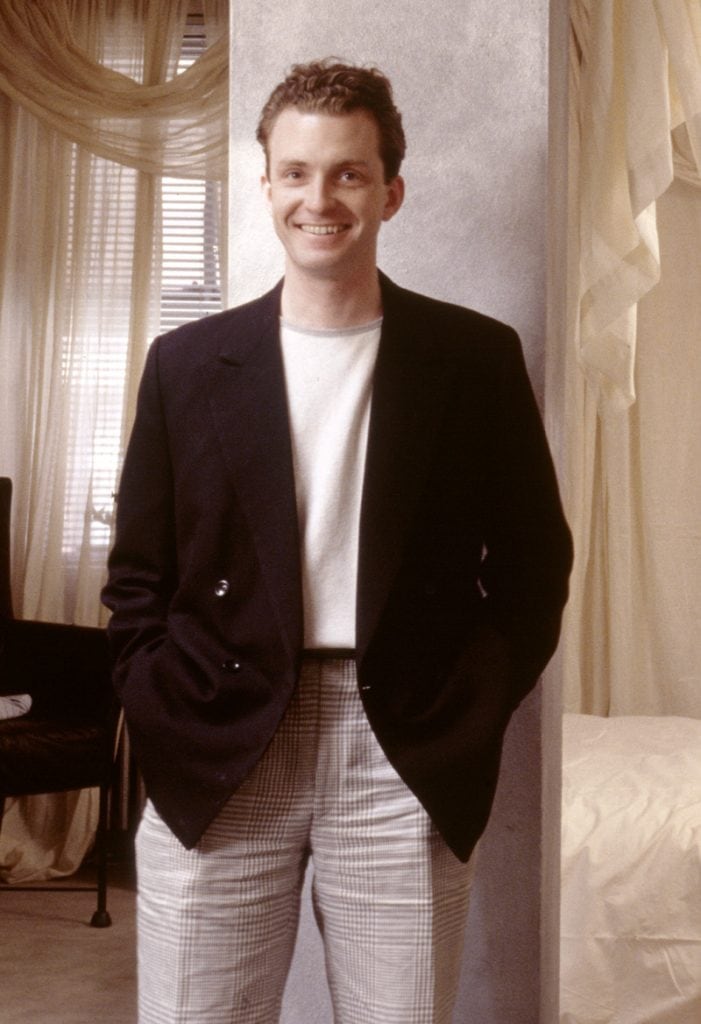
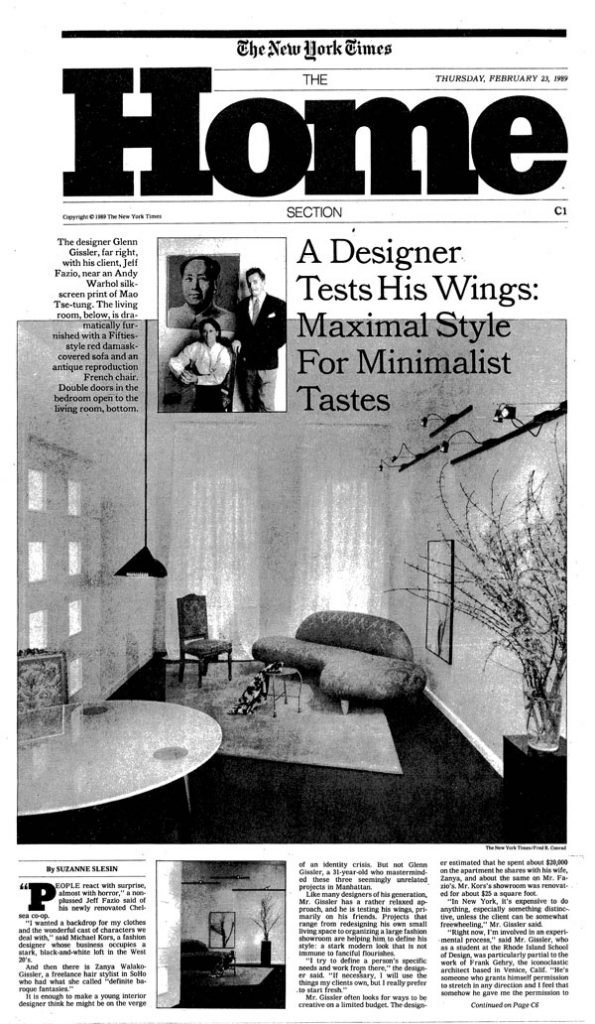
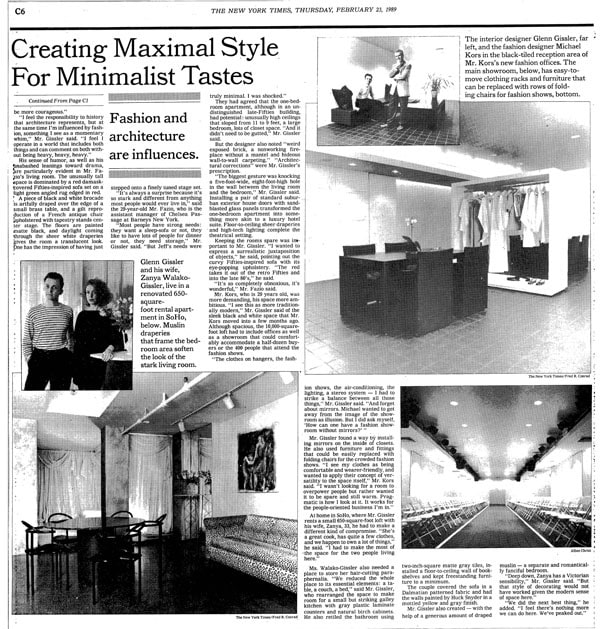
I look back with great appreciation for the countless things I learned from this section, never mind that my first real media exposure was in the HOME section in February of 1989 – just two years after I opened Glenn Gissler Design.
I was introduced to the most important and the most influential HOME section writer, Suzanne Slesin, at an opening at Furniture of the Twentieth Century. I contacted her a few days later with hopes of showing her a few recently completed projects.
Suzi came to see three projects, and literally days later “A Designer Test His Wings; Maximal Style for Minimalist Tastes”appearedon the front page of the HOME Section! Including the jump page the story covered five square feet (!) of New York Times ‘real estate’ including seven photographs, three of which included me.
I nearly died!
The HOME Section has been a mere shadow of itself for many years; there are few people who would argue that. Some even see this change as a death knoll for design coverage in the New York Times.
At least for the moment I am looking at the glass as ‘half-full’, and I am hopeful that the nay-sayers will be proven wrong.
In the world we live in people often feel compelled to express grandiose reaction to things, experiences and people – resulting in the overuse of three words:
“I LOVE IT!”
Is this grandiosity yet another effect of the celebrity-driven-reality-TV-selfie times in which we live?
Are people living their lives as if the cameras are rolling?
Or is it a devaluation of LOVE?
Shopping for clothes:
“I LOVE IT!”
Looking at furniture:
“I LOVE IT!”
After hearing a joke:
“I LOVE IT!”
Looking at Art:
“I LOVE IT!”
etc., etc., etc…
For me, LOVEis a big and meaningful word.
Perhaps this attention to the ‘meaning’ of words is due to the influence of my father, an accomplished journalist f0r whom words have real meanings, and should be used judiciously.
Having a strong emotional reaction to things, experiences, and people is something I understand. In fact, beauty, delight – and yes, even love – are essential ingredients for me in the process of living, and in the process of design; but I am seeking an enduring love, not a momentary crush. I have found that the novelty that can incite a crush rarely stands the test of time.
Sometimes the subject or object or person at hand is suitable, good, great, excellent, superb, perfect, incredible, even inspired; however sometimes it is just fine, the sensible thing, perfectly appropriate, in good taste, a great solution, but it doesn’t necessarily evoke “I LOVE IT!”
Whether it is my own reaction, or someone else’s, I am suspect of the immediate “I LOVE IT!”response. Will the feeling last? Or is it merely a novel rush of adrenaline? Never mind that these three words can sound disingenuous, if not utterly meaningless.
Much of what I do as a designer is to identify, and then solve problems, LOTS of problems requiring LOTS of solutions. Experience, logic and intuition play significant roles in this problem solving; and no I don’t LOVEevery solution. I am in pursuit of a kind of alchemy. This alchemic phenomenon can occur when the cumulative effect of experience, collaboration, invention, a thoughtful approach and intuition are brought to bear in problem solving; where this combination of considered choices results in layered, nuanced, interesting, intelligent, subtle and maybe even sublime, spaces and experiences that can evoke a deep-seated LOVE, one that endures over time like a wonderful and satisfying personal relationship.
We use cookies on our website to give you the most relevant experience by remembering your preferences and repeat visits. By clicking “Accept”, you consent to the use of ALL the cookies.
This website uses cookies to improve your experience while you navigate through the website. Out of these cookies, the cookies that are categorized as necessary are stored on your browser as they are essential for the working of basic functionalities of the website. We also use third-party cookies that help us analyze and understand how you use this website. These cookies will be stored in your browser only with your consent. You also have the option to opt-out of these cookies. But opting out of some of these cookies may have an effect on your browsing experience.
Necessary cookies are absolutely essential for the website to function properly. This category only includes cookies that ensures basic functionalities and security features of the website. These cookies do not store any personal information.


 .
.
 In Sergeant’s portrait of Robert Louis Stevenson and His Wife (1885) there is what was seen as an ‘odd composition’ – and I don’t disagree, however what was more striking and very surprising to me was that in this one painting I saw connections between John Singer Sergeant and Alberto Giacometti, Henri Matisse and George Seurat!