Bachelor’s Home – Upper West Side

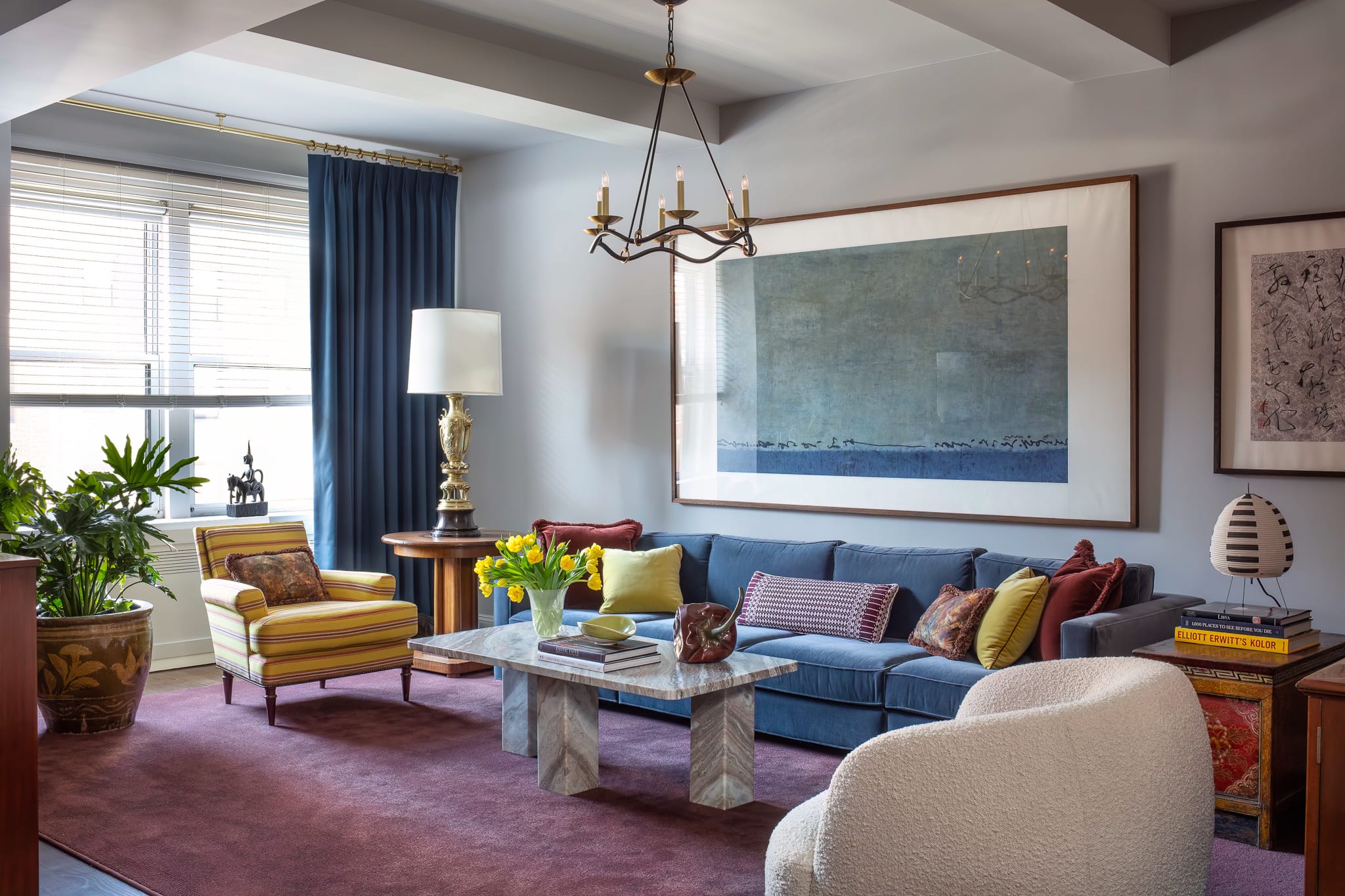
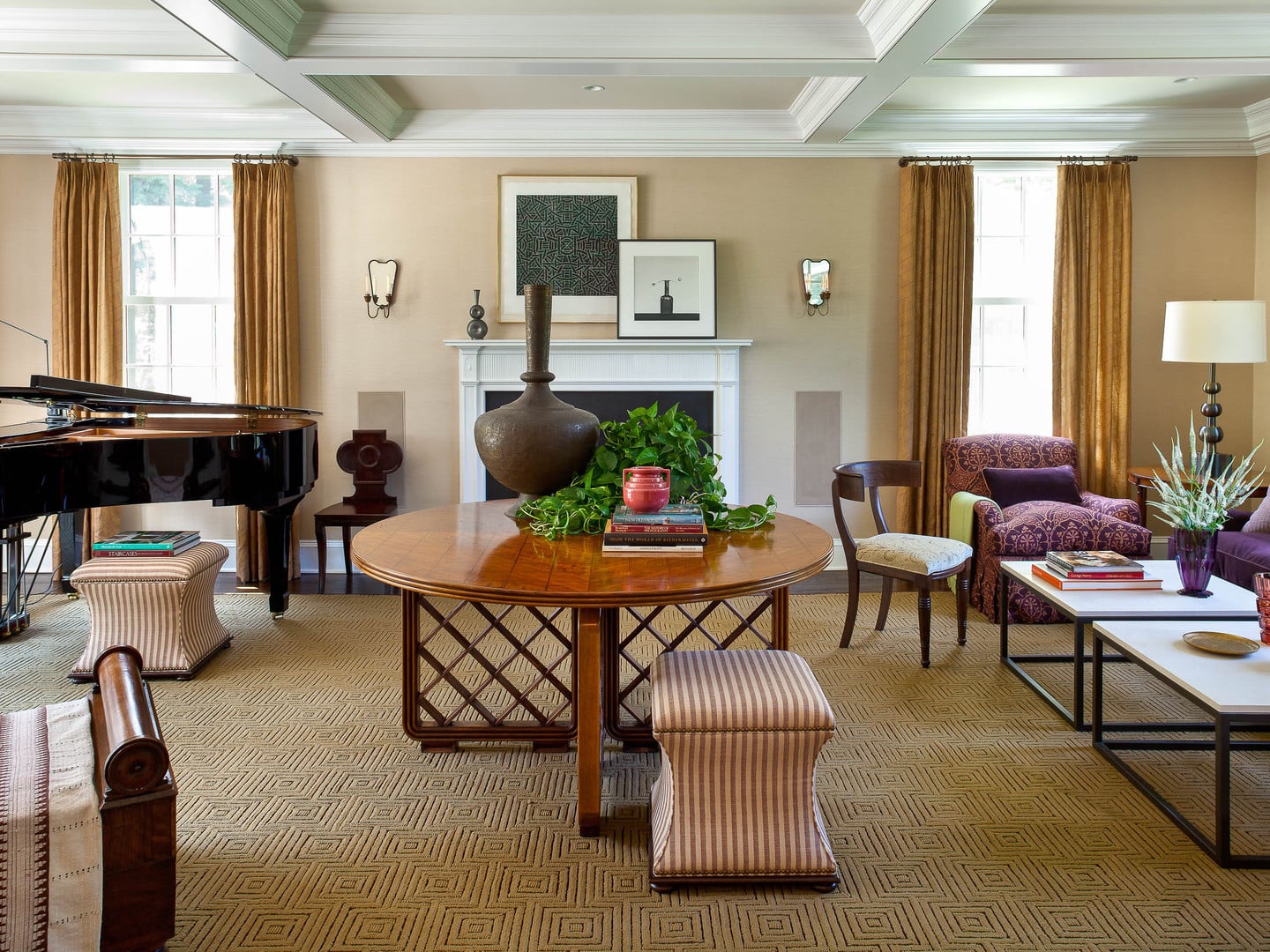
A melange of textures inflects this stylish living room–a nubby bouclé tub chair, crisp linen curtains, a sumptuous velvet sofa, and a thick pile rug. Wooden pieces, and the marble coffee table, add an organic quality, all nestled in a subtle envelope of barely-there blue-gray walls and ceiling.

Upper West Side – NYC

Bachelor’s Home

This comfortable, graciously-scaled apartment, purchased by a new-media maverick, came with a rather imaginative client brief: Create a New York apartment that felt like a European magazine editor lived there.

Rising to the challenge, Glenn Gissler Design began by establishing a refined palette of burnished jewel tones: topaz, aquamarine, citrine, garnet, and amethyst. Taken collectively, the colors draw the eye from one surface to the next in much the same way the 18th-century gentry traveled from London to Paris to Rome and then on to points East. The furnishings extend the concept with silhouettes and finishes that reference many of the far-flung locales to which our itinerant client has decamped.

And as for far-flung locales, items purchased abroad–from art and artifacts to furniture and textiles–were incorporated into the design. The result? A serene haven perched above the city’s frenetic streets, deeply reflective of the homeowner’s wanderlust lifestyle.
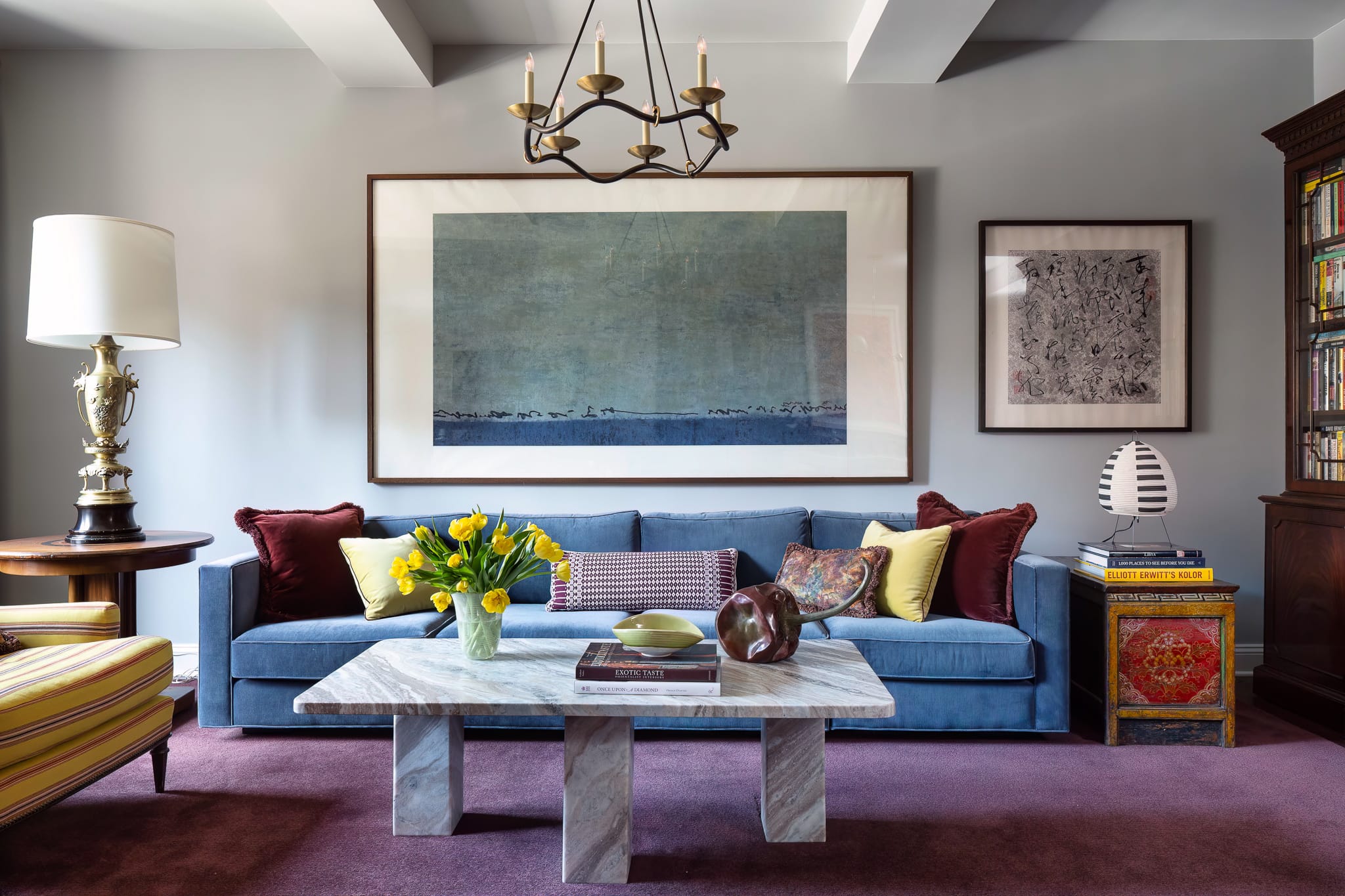
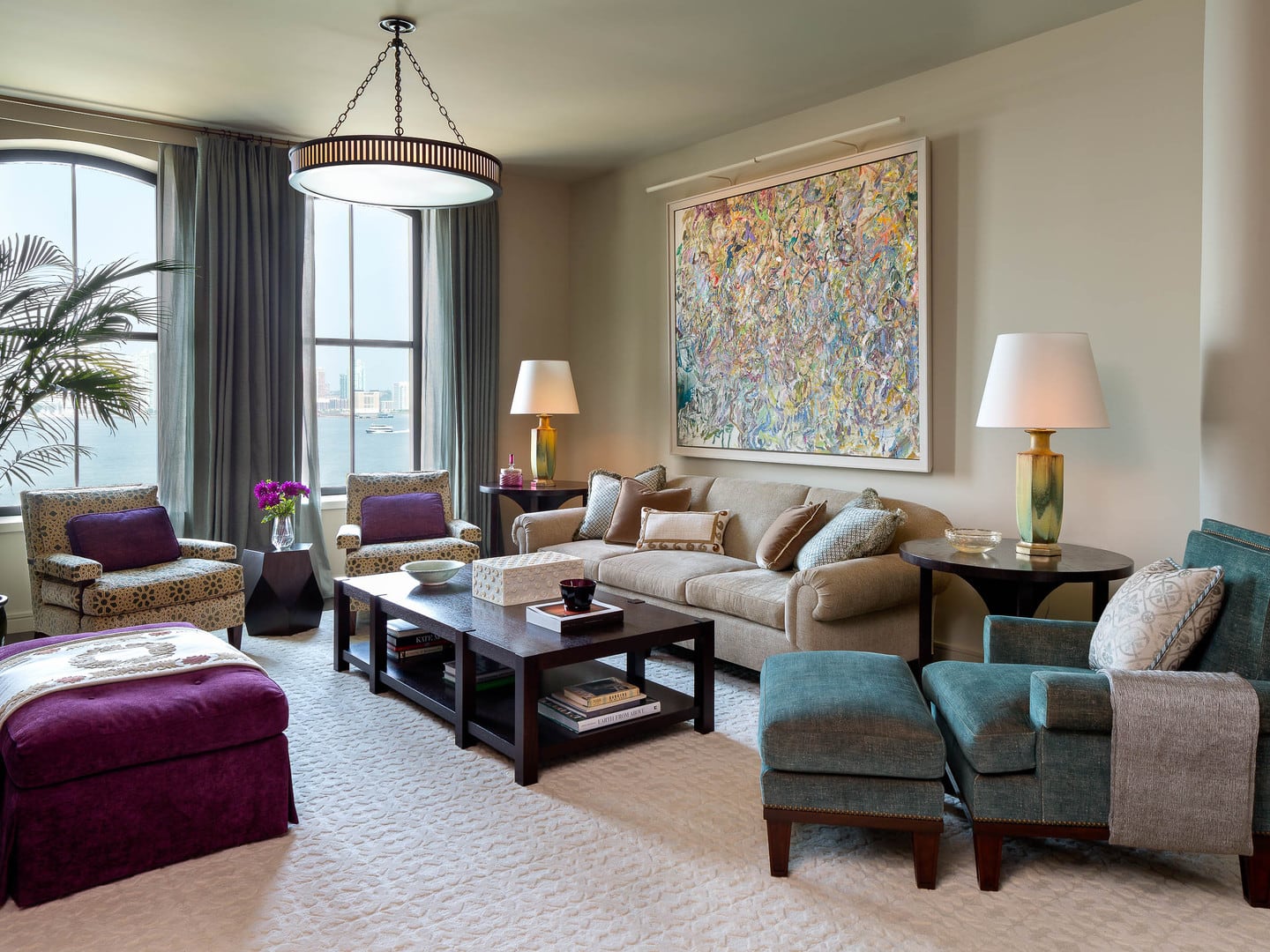
A Chinese scroll painted by Shanghai-born, Singapore-based artist Hong Zhu takes pride of place above an expansive four-seat sofa in the style of Jean Michel Frank, which is upholstered in lush velvet. Framed and hung in landscape format, the work creates a horizon, establishing a dialogue with the striped club chair seen to the left. The small Isamu Noguchi lamp enhances the linear motif. 

The Choros Chandelier, designed by Barry Goralnick, strikes a serpentine counterpoint.
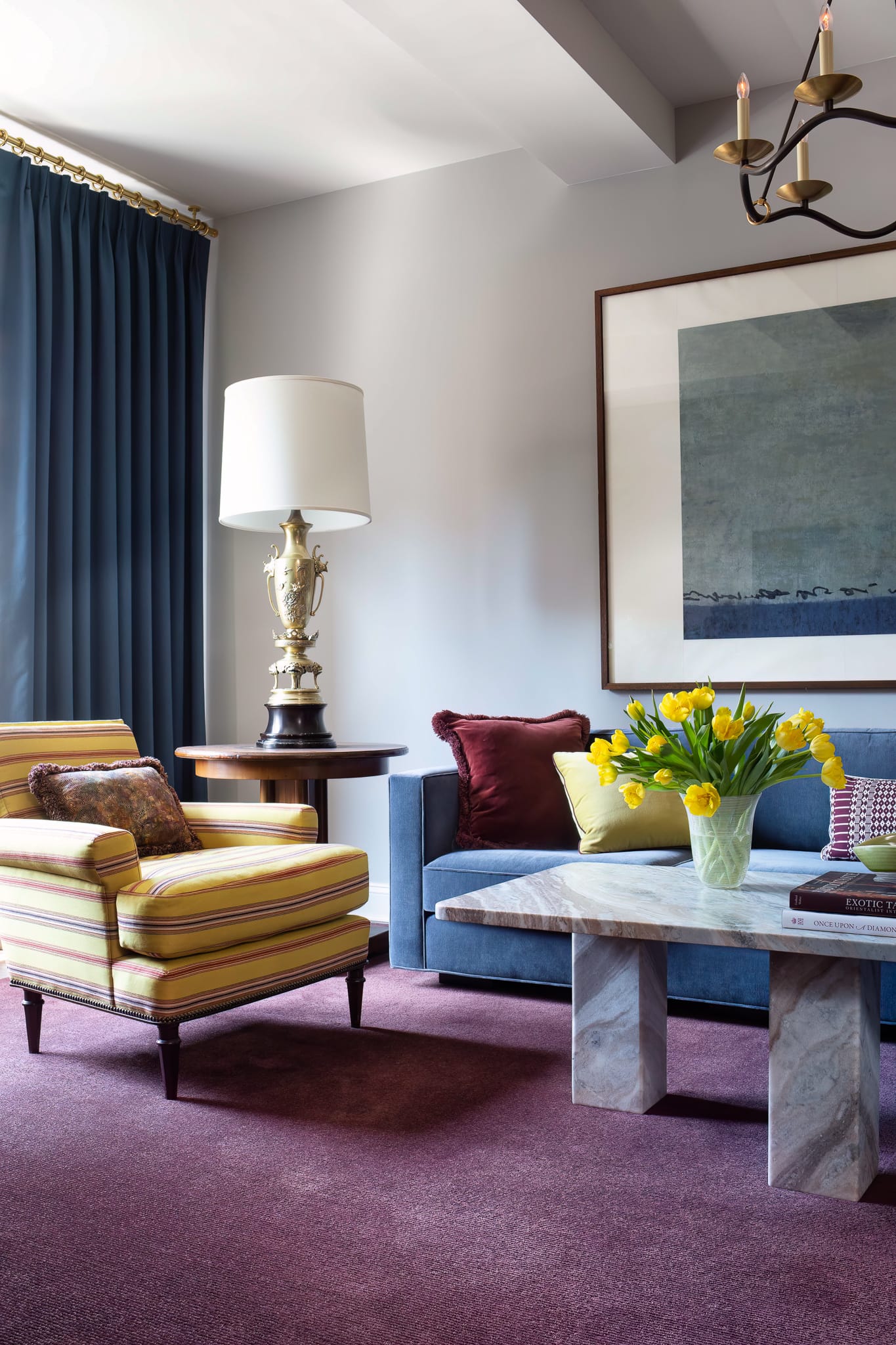


Crisp geometries forge a masculine edge in this corner vignette, which is subtly mitigated by the barely-there curve of the club chair arms and the sinuous brass lamp fashioned from a Late Qing Dynasty Chinese urn. A matching lamp illuminates the dining room.
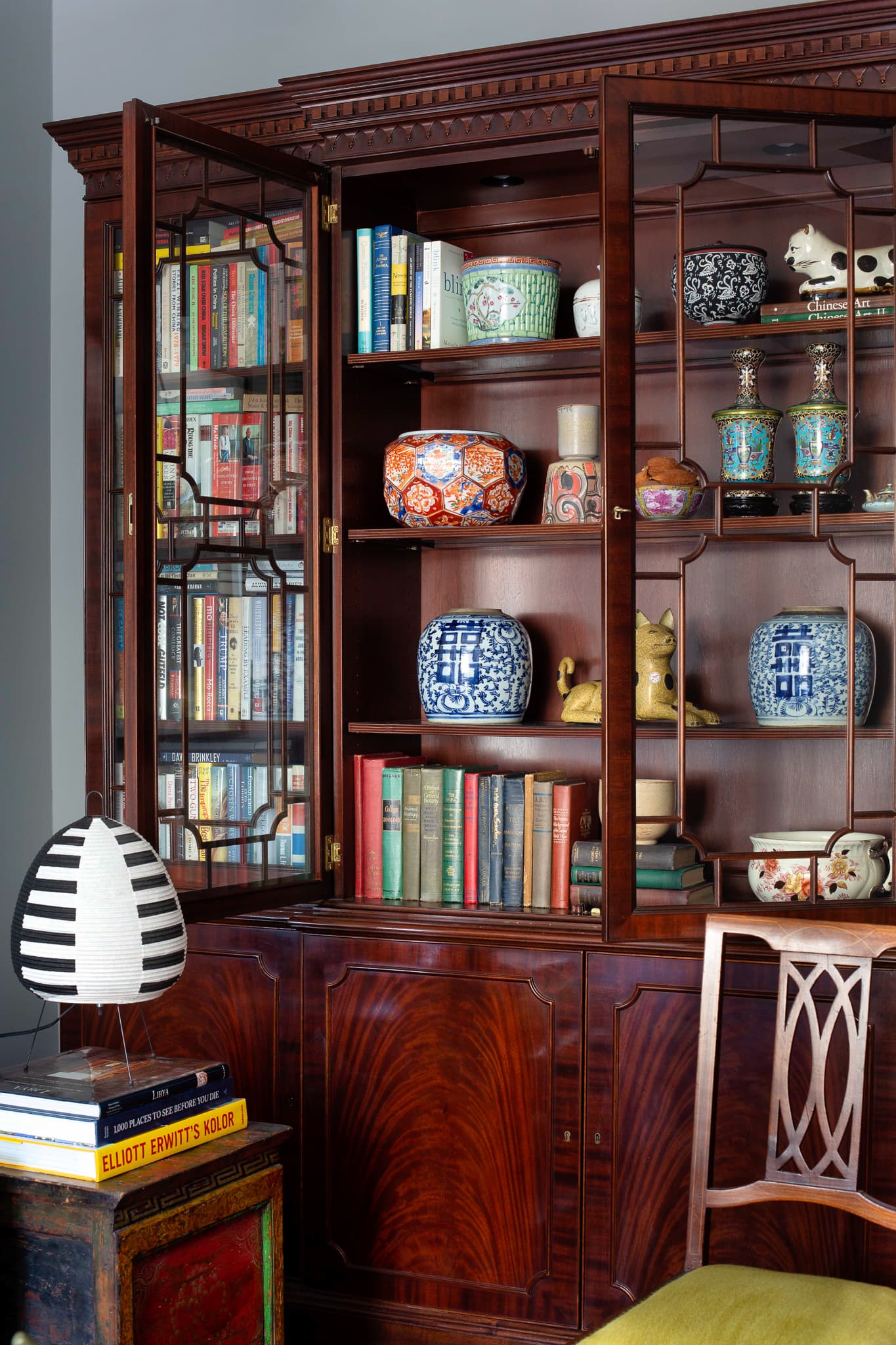
The richly patinated mahogany finish on this Chinese Chippendale breakfront lends a note of historical reference while housing a collection of Asian pottery and cherished books. A single carved side chair, which compliments the cabinet, stands at the ready to be pressed into service for guests.
Fantastique! What a setting...Sophisticated and timeless...!

– Client

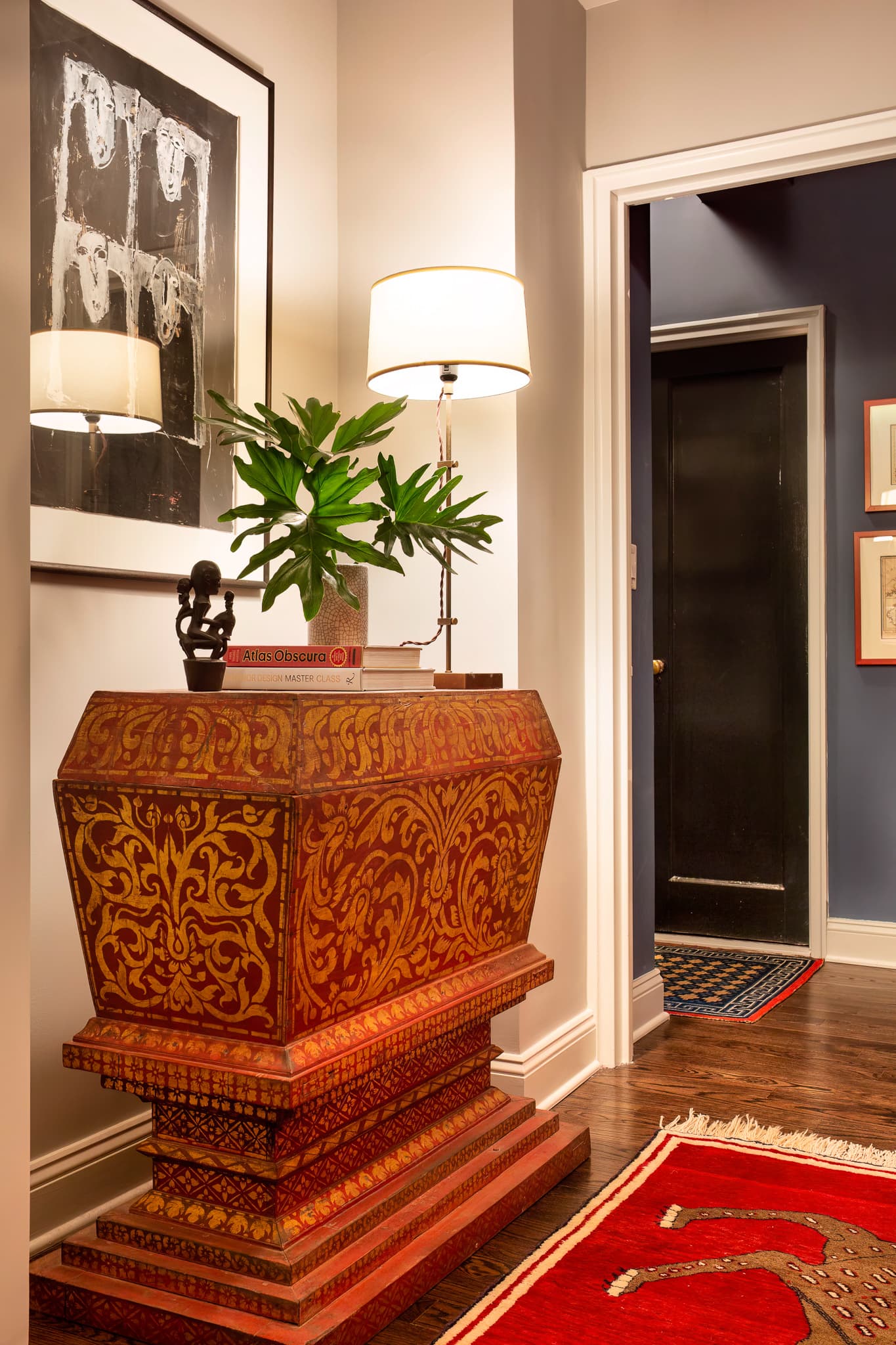
In the apartment’s entryway, an arresting painted-wood Lanna Thai Buddhist manuscript holder, which once held contemplative texts, now provides a surface to display an ever-changing montage of books, flowers, and object d’art. The ink-on-newspaper drawing above is by the Vietnamese artist Dinh Y Nhi.

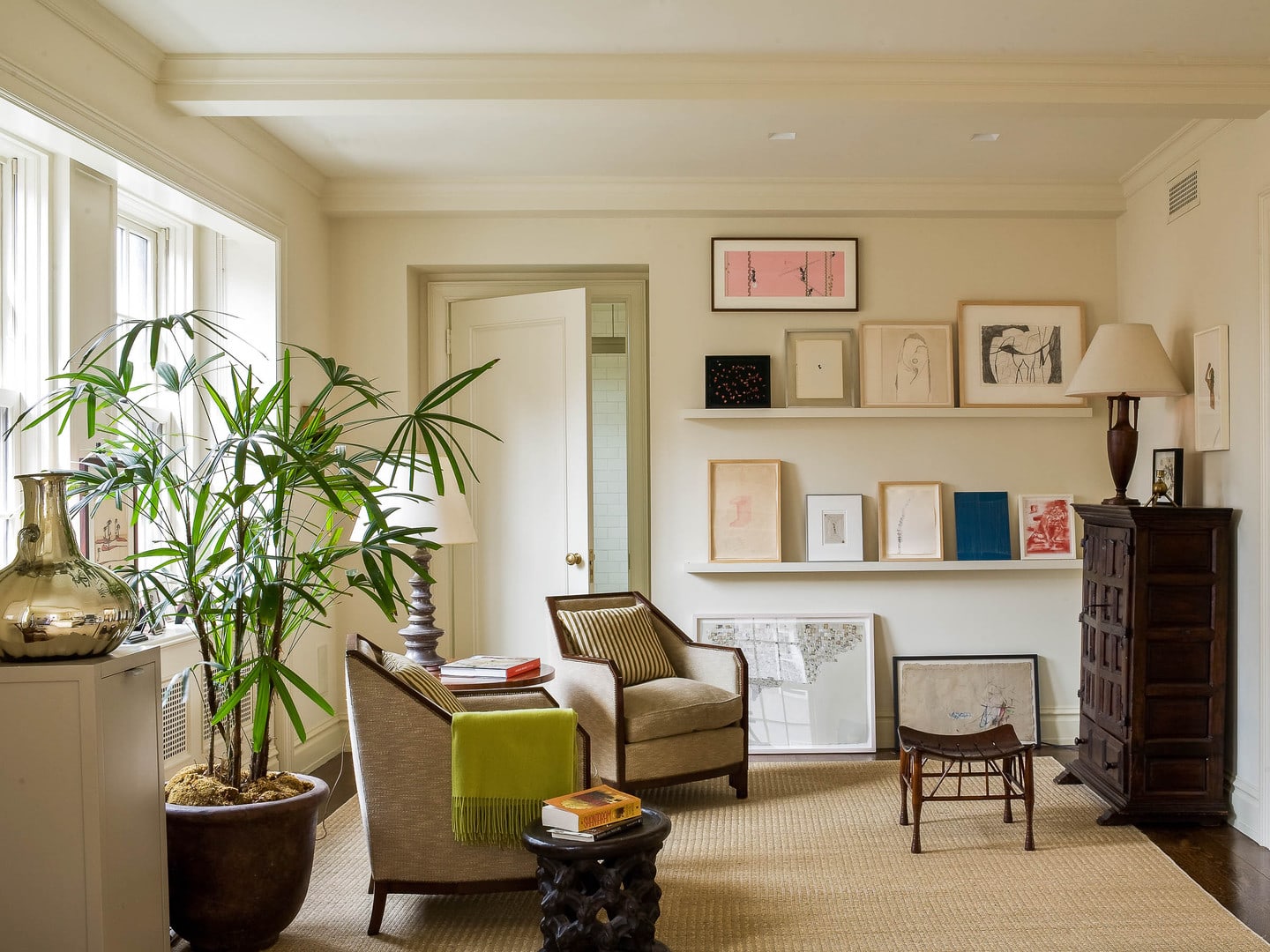
The multipurpose seating area does triple duty as a combined dining room, sitting room, and office. “Join The Circle” 2003, a joyful, exuberantly kinetic work by the artist Pacita Abad, informs the color palette.
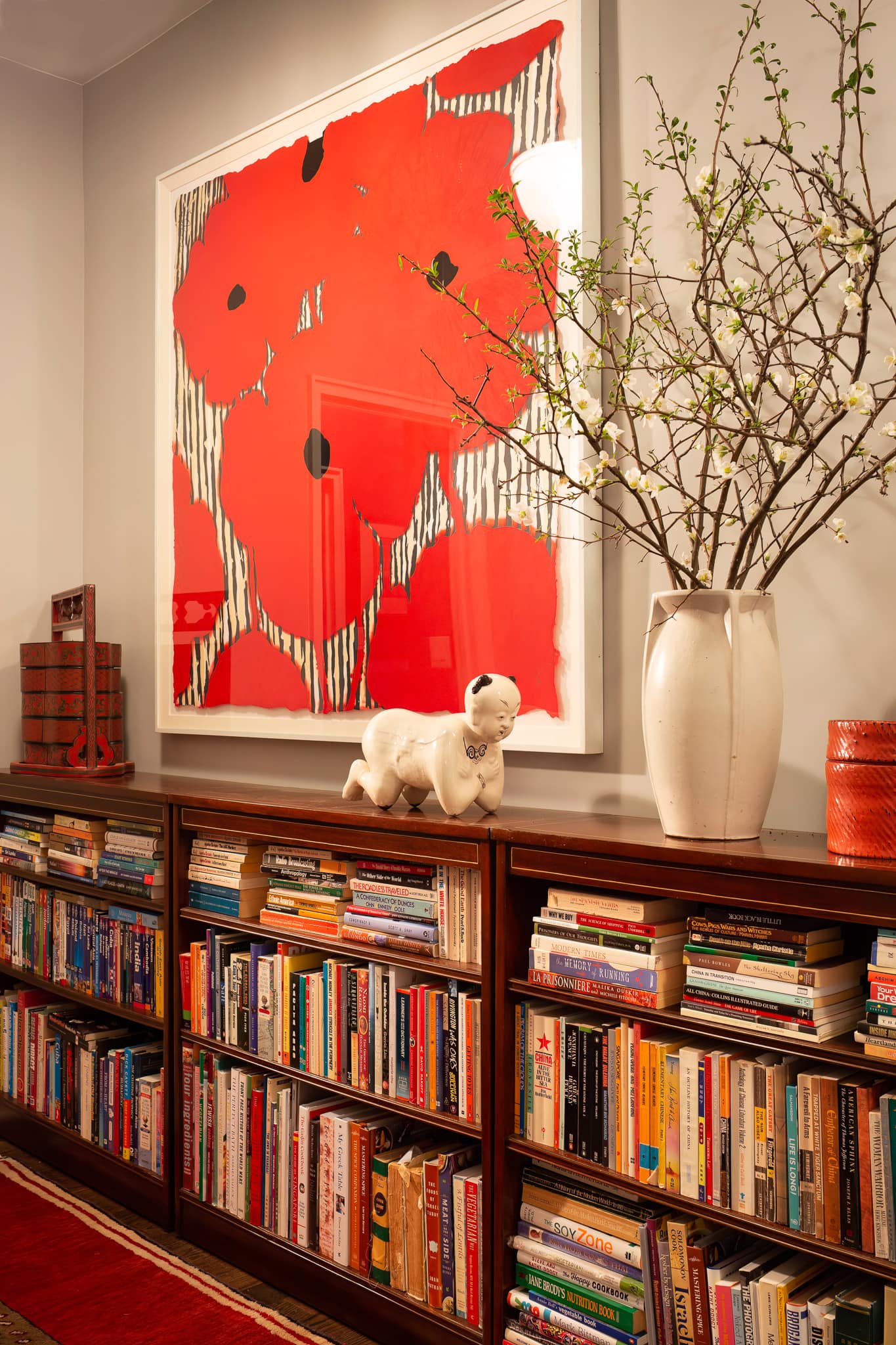
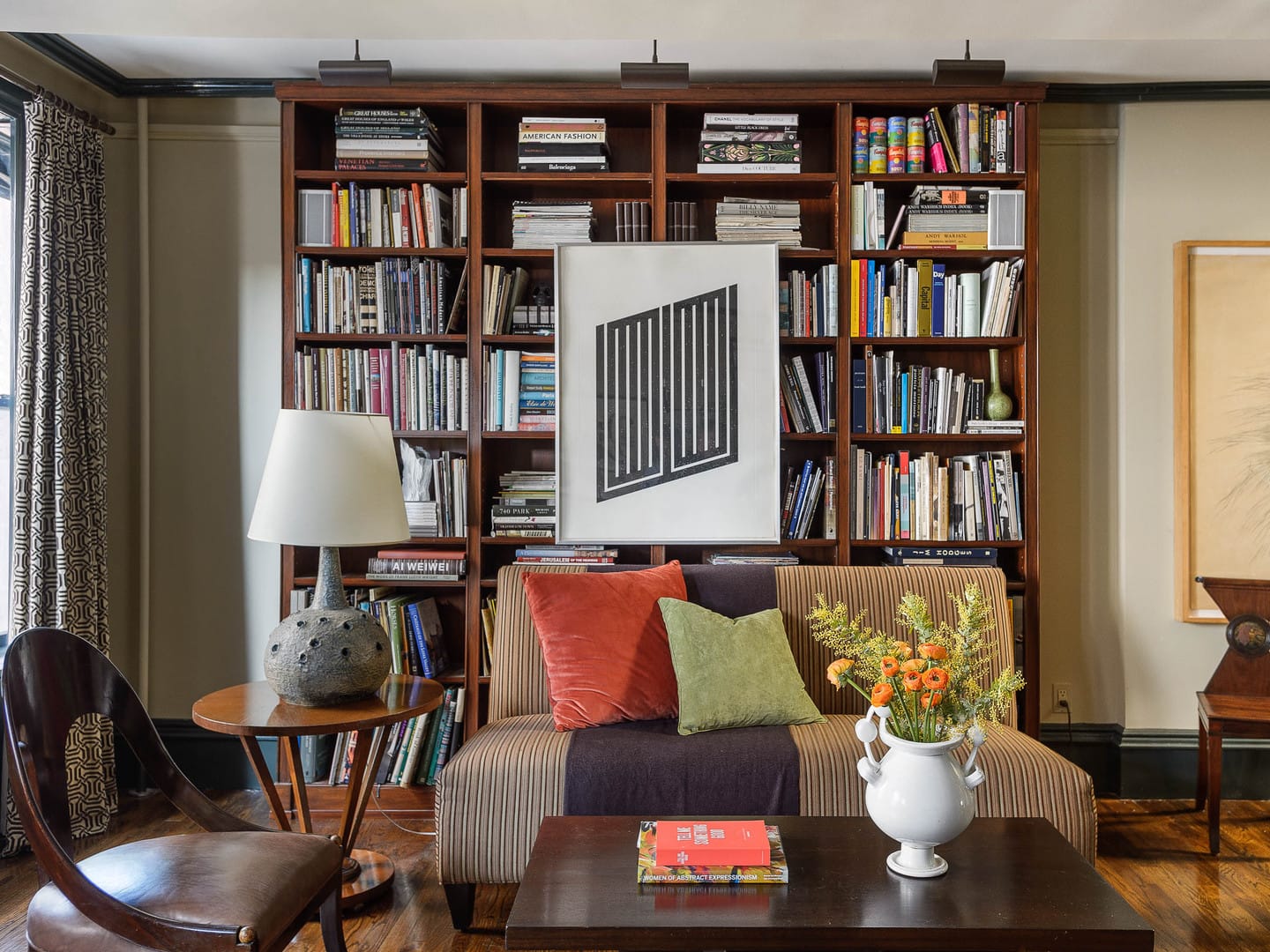
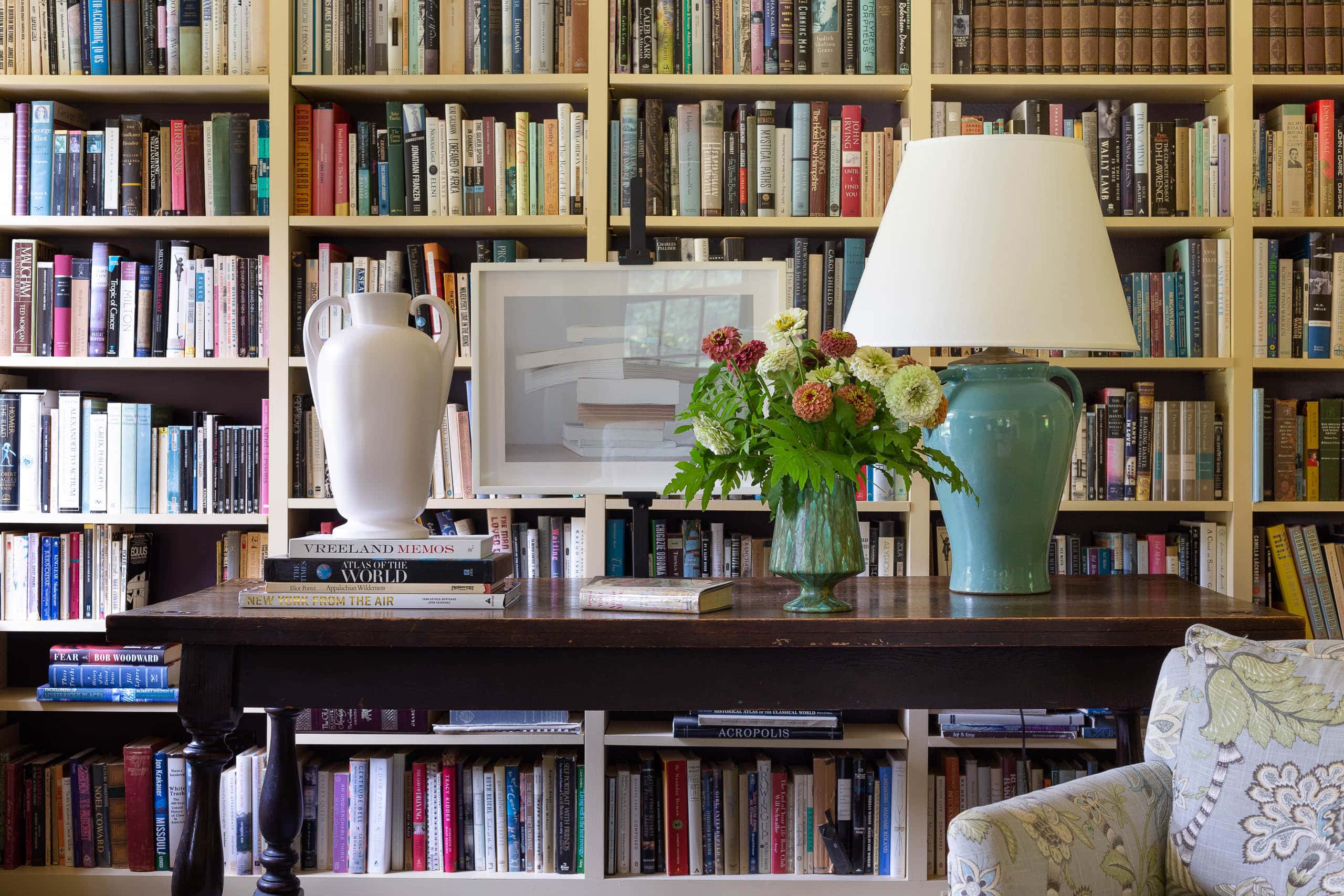
Anchoring the opposite side of the entry, an expansive collection of oft-referenced books, housed on oak shelves, creates a pleasing rhythm while revealing the interests of the homeowner. Donald Sultan’s “Eight Red Poppies” 2002 hangs above. The Chinese infant is actually a porcelain headrest from Beijing.

A more expansive view includes a bronze sculpture titled “Dancers” by the late Israeli artist Noemi Schindler, who reimagined the human form. The armless sofa was chosen to reflect the space’s casual, eclectic vibe. The orange lumbar pillows were fashioned from a textile purchased in Myanmar.
The silhouette of this bronze table lamp can be traced to prehistoric China when potters modeled their work after organic forms. The adjacent lacquered box, in the shape of a deer, is from Cambodia and is one of our client’s favorite treasures.
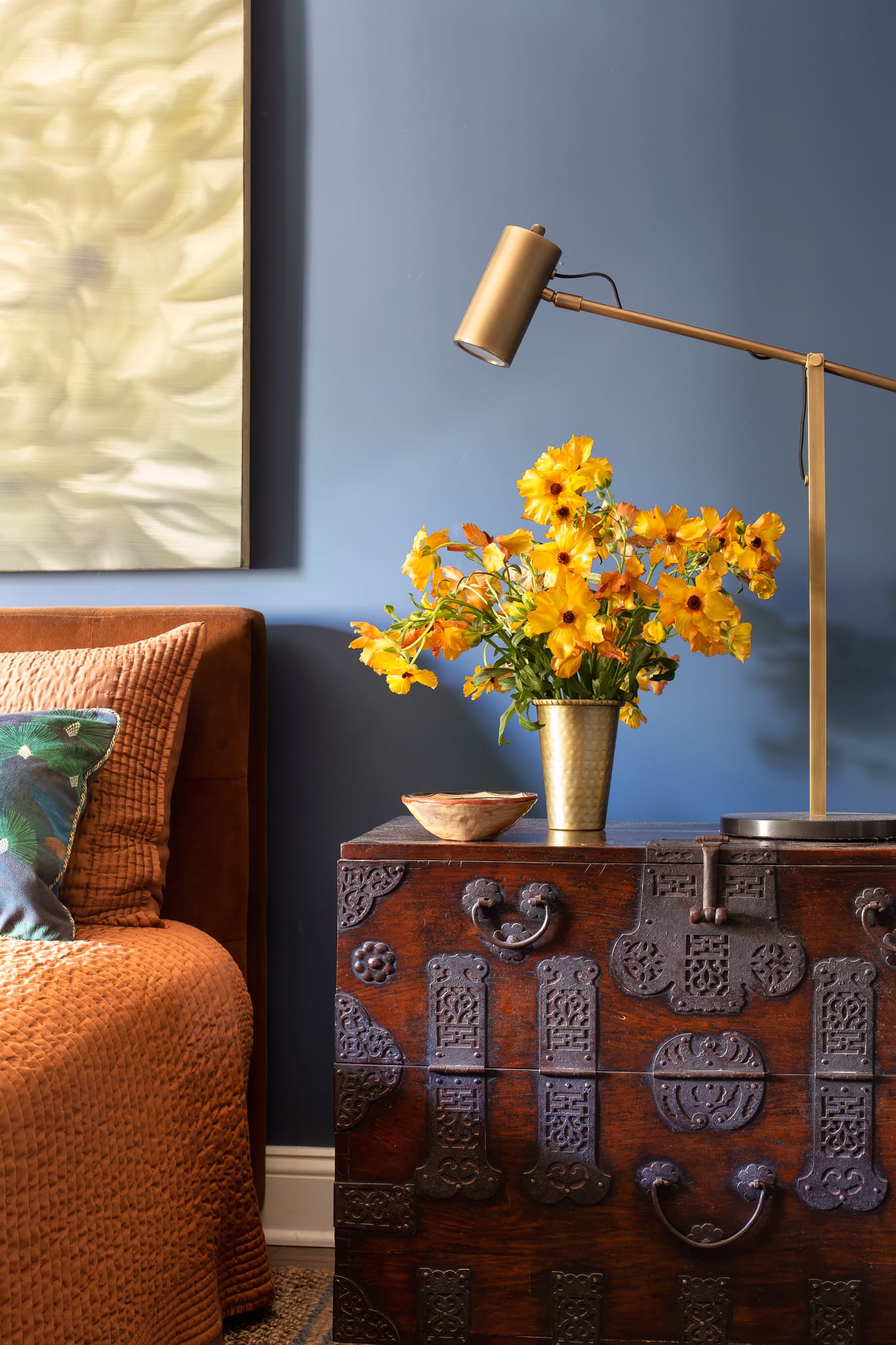
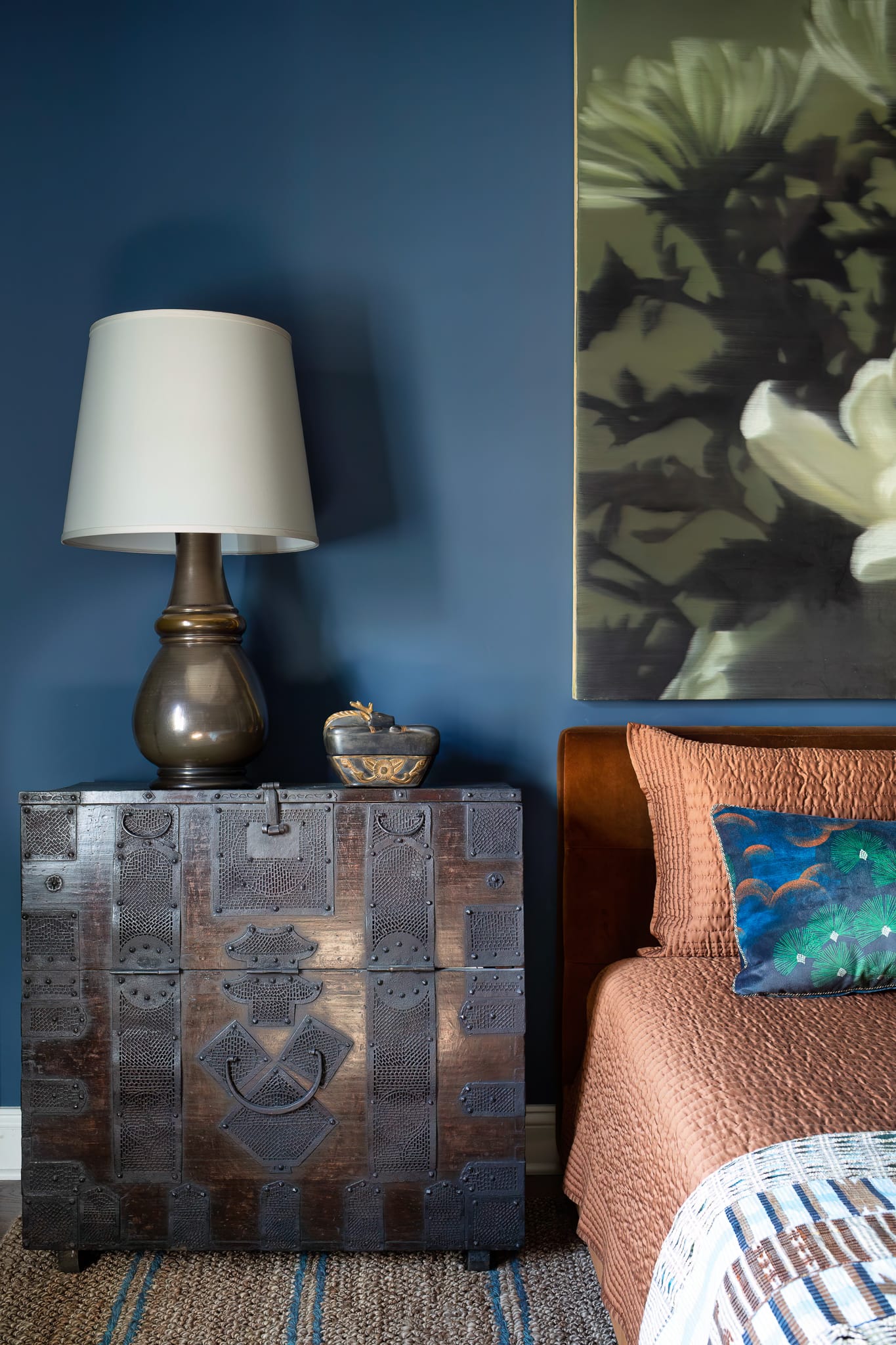
Hand-engraved hardware set against patinaed wood defines this Korean blanket chest, which historically held a bride’s wedding dowry; the modernist table lamp provides a counterpoint.
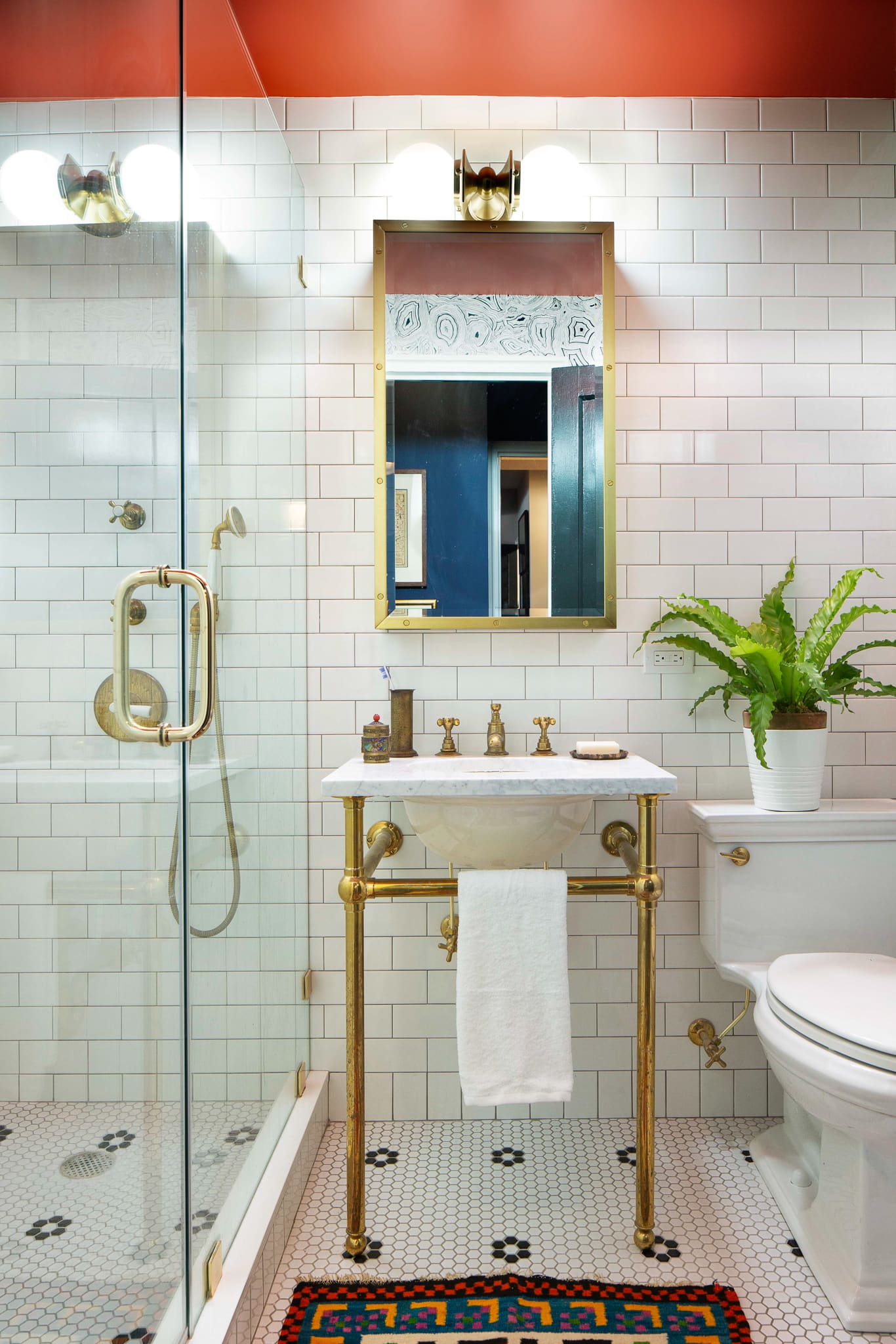
White subway tiles and a hexagonal black-and-white patterned floor evoke a retro-sensibility in the master bath. Their graphic lines are set against a naturalistic malachite-patterned wallpaper designed by Piero Fornasetti, which can be seen in the mirror. The surprisingly glossy cinnabar ceiling warms the architecture.
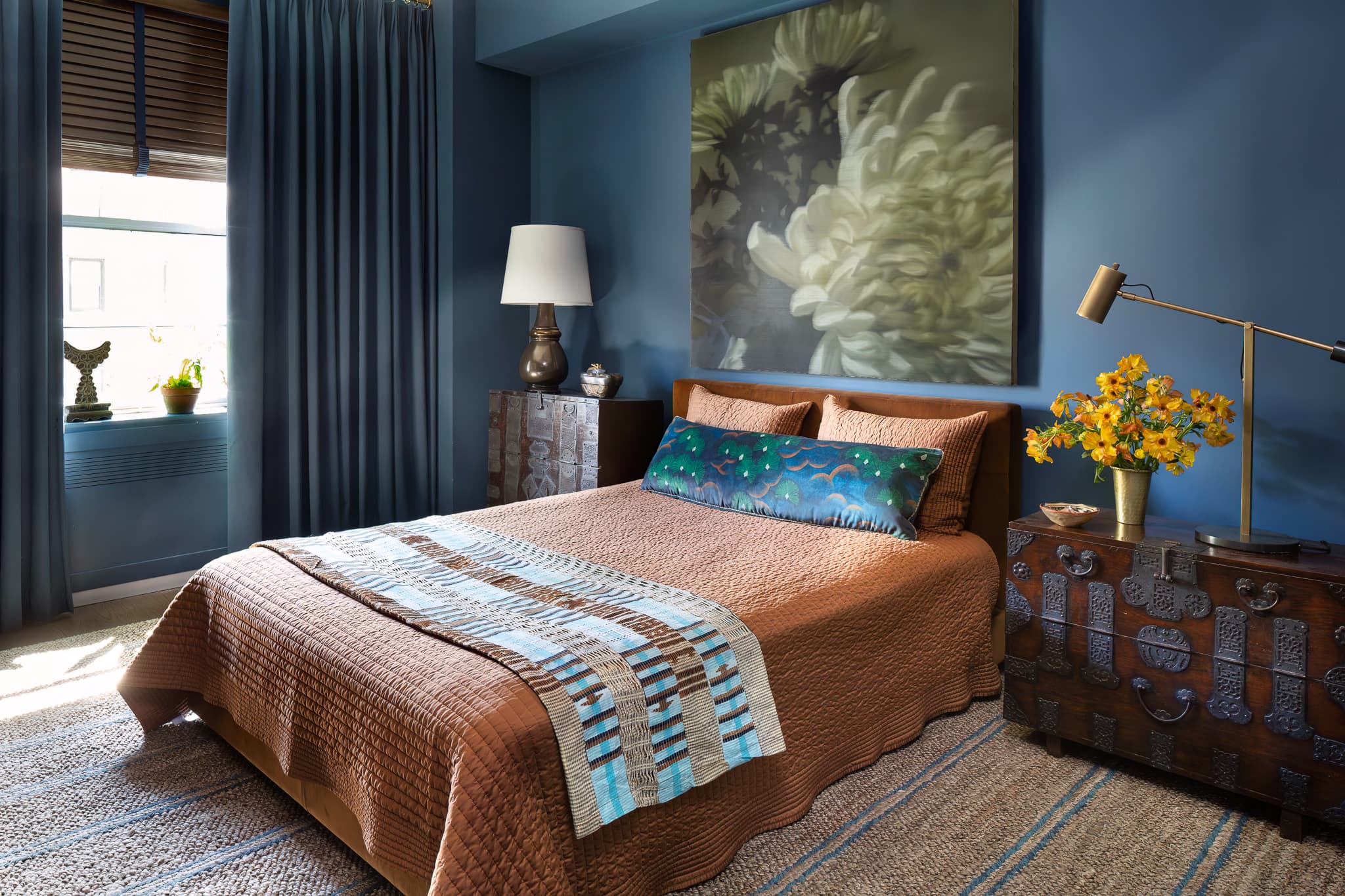
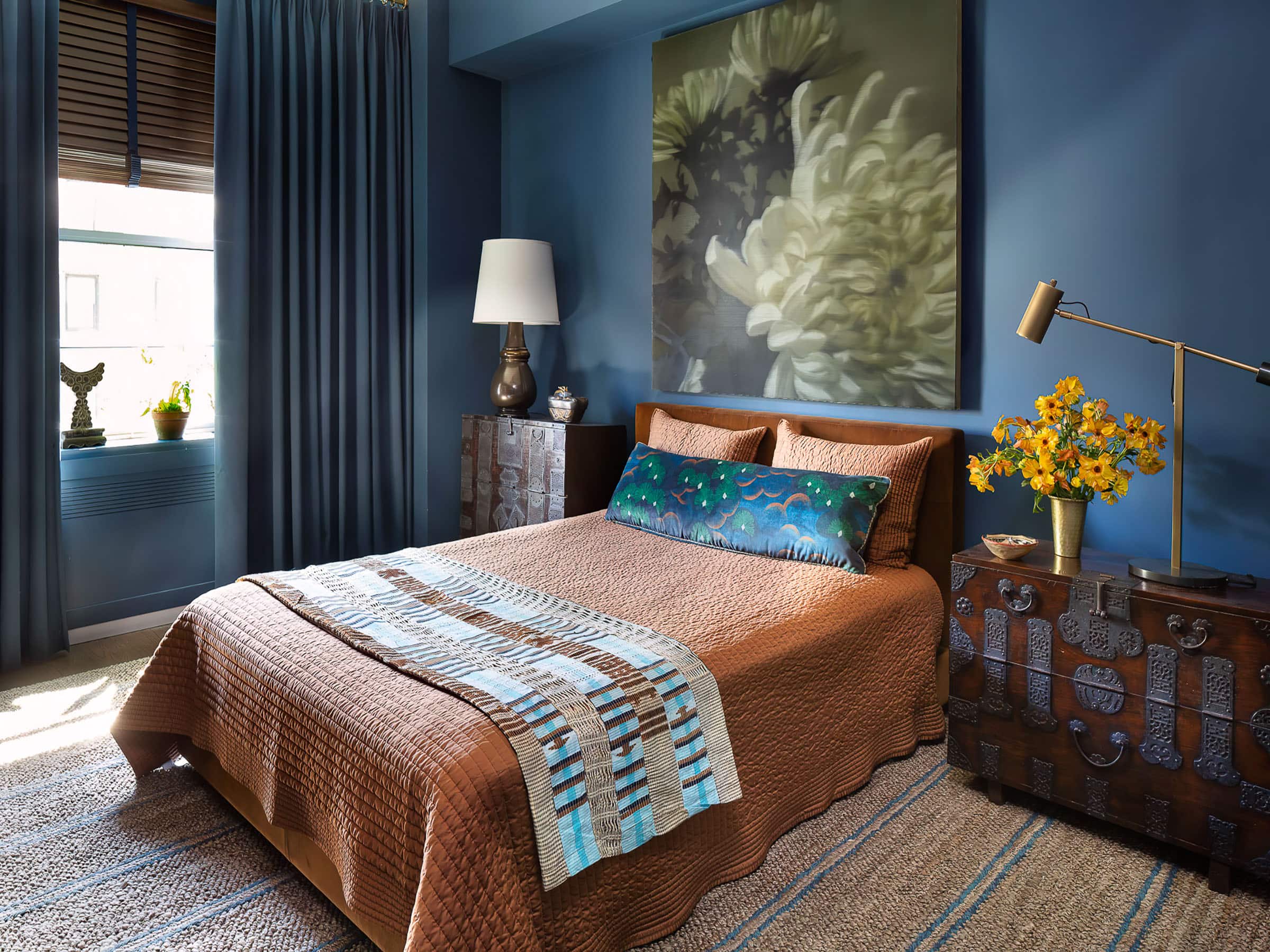
A pair of Korean blanket chests, one taller than the other, serve as bedside tables in the master bedroom. The walls are sheathed in muted sapphire and are complemented by the terracotta-toned pic-stitched bed cover. A seagrass area rug and a canvas by Southeast Asian artist Eric Chan anchor the room.

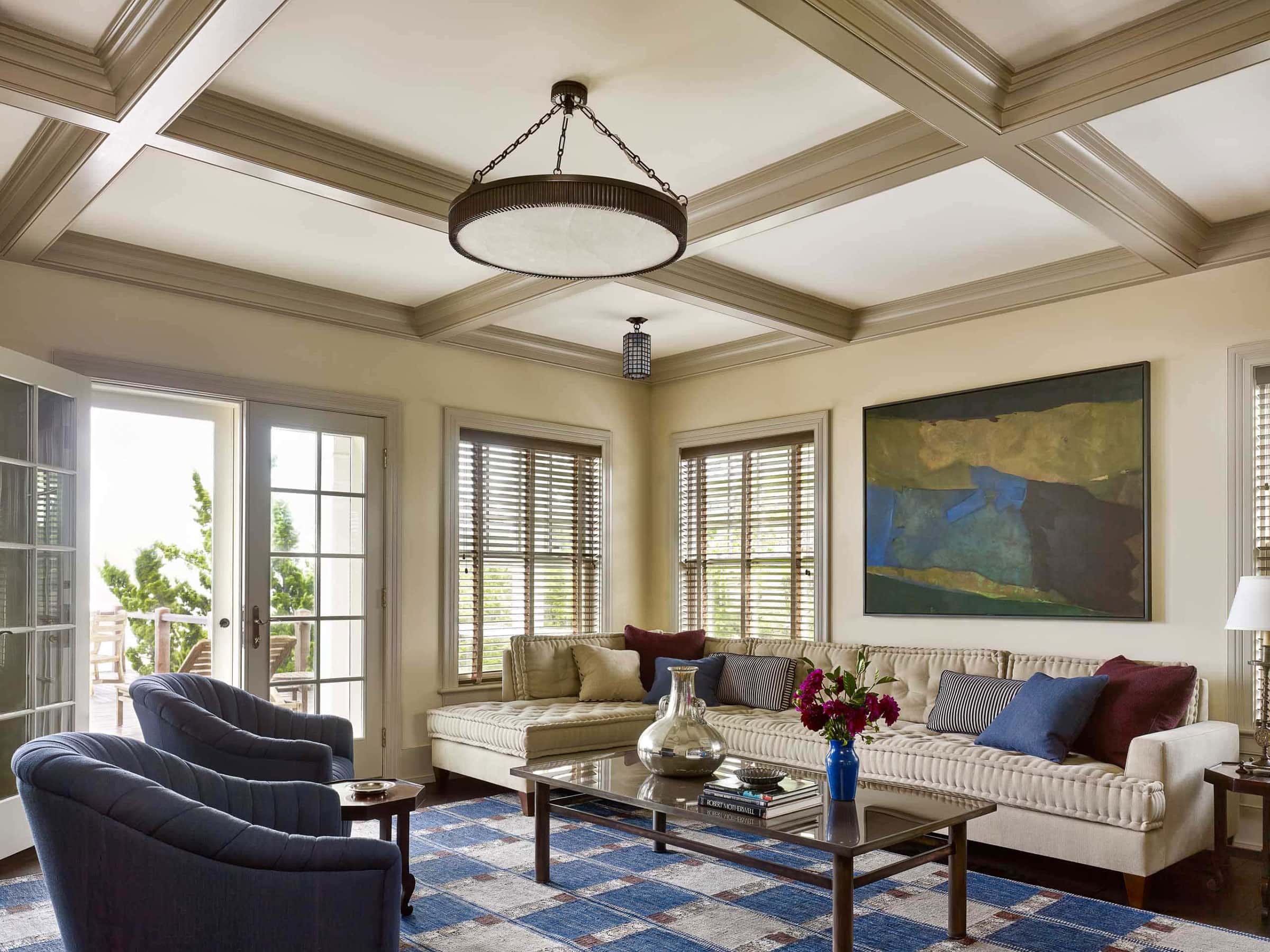
Senior Designer Craig Strulovitz
Photos by Gross & Daley

Pied-à-Terre – Greenwich Village, NYC

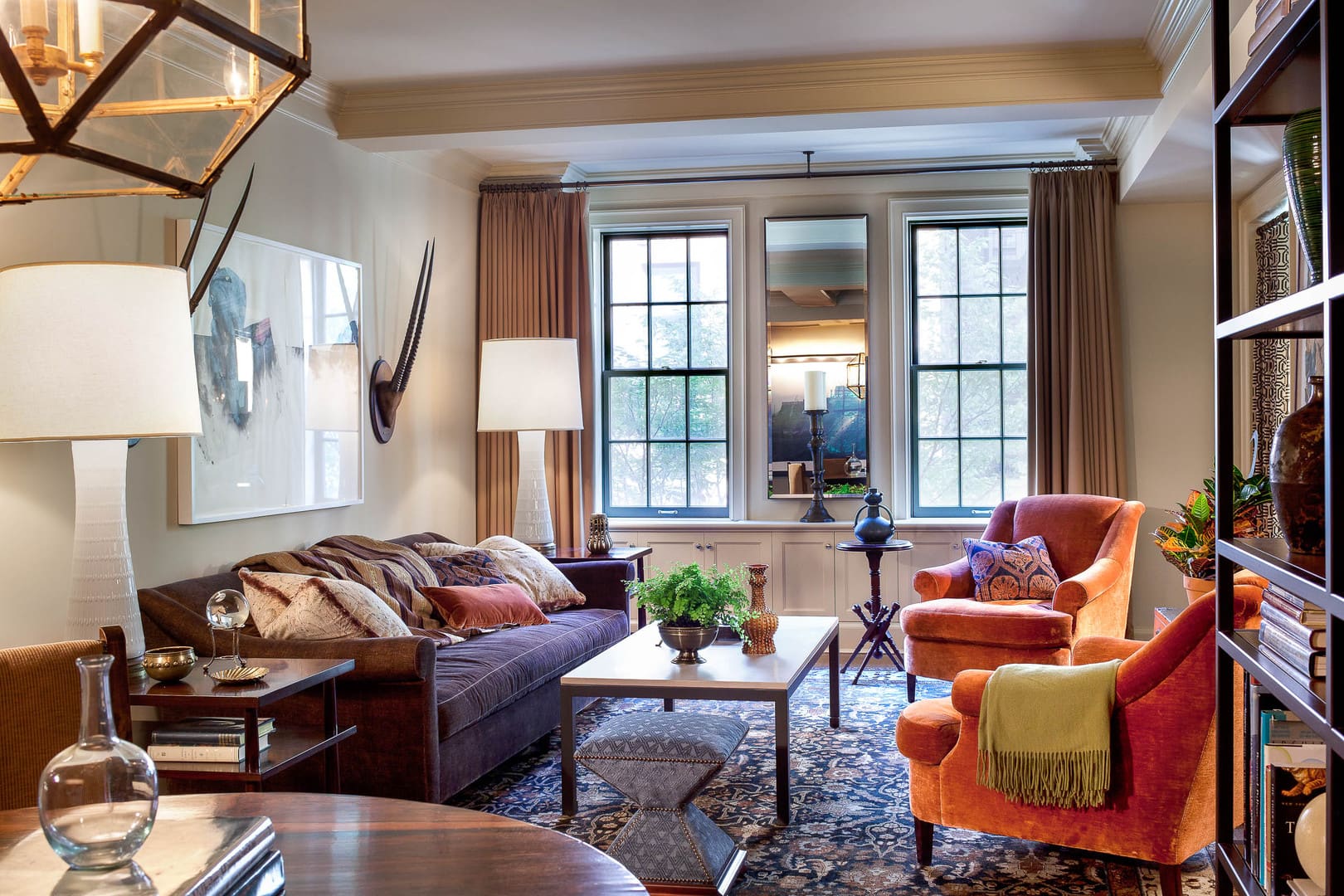
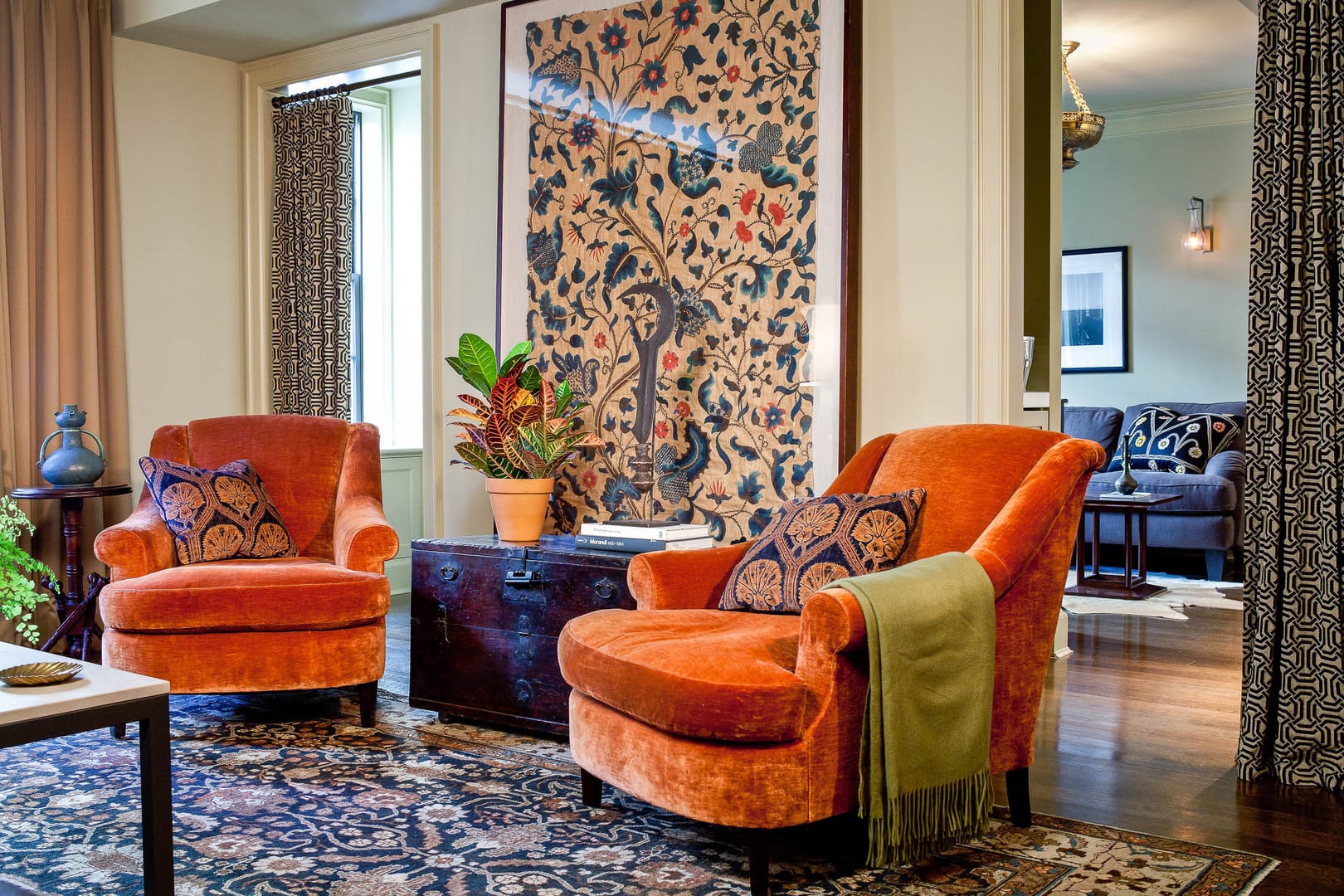
An antique Tabriz area rug with stylized floral pattern in indigo and cream, is keynote of this richly patterned and textured room. The custom Belgian sofa is from Jonas. Interesting objects–two pairs of mounted oryx horns; a cross-legged Aesthetic Movement table–add detail and depth.

GREENWICH VILLAGE – NYC

Pied-à-Terre

The Ottoman Empire, with its richly figured carpets and ornaments, was the vision this Colorado couple had for their two-bedroom condominium in a Greenwich Village building renovated by designer Victoria Hagan, who had preserved its prewar character.

We decided to articulate the room separations by using casings, moldings, and a portiere to create a greater sense of sequence to the rooms. To further emphasize room separations, we changed coloration from one room to the other, with the entry  lacquered a vivid cinnabar. Judiciously placed mirrors expanded and lightened the spaces.

The clients were very interested in vintage textiles, so we introduced layering of Persian rugs and embroidered or tapestry wall-hangings. A selection of patterned textiles, woven or embroidered rather than printed, and often antique in appearance, are carefully juxtaposed. Many of the upholstery and pillow fabrics are actually new, but they have a luscious, aged look.

The result is not a recreated Turkish interior, but a place where imagined travel meets the incomparable comfort of home, in this case, a second one in one of the most charming neighborhoods New York City has to offer.

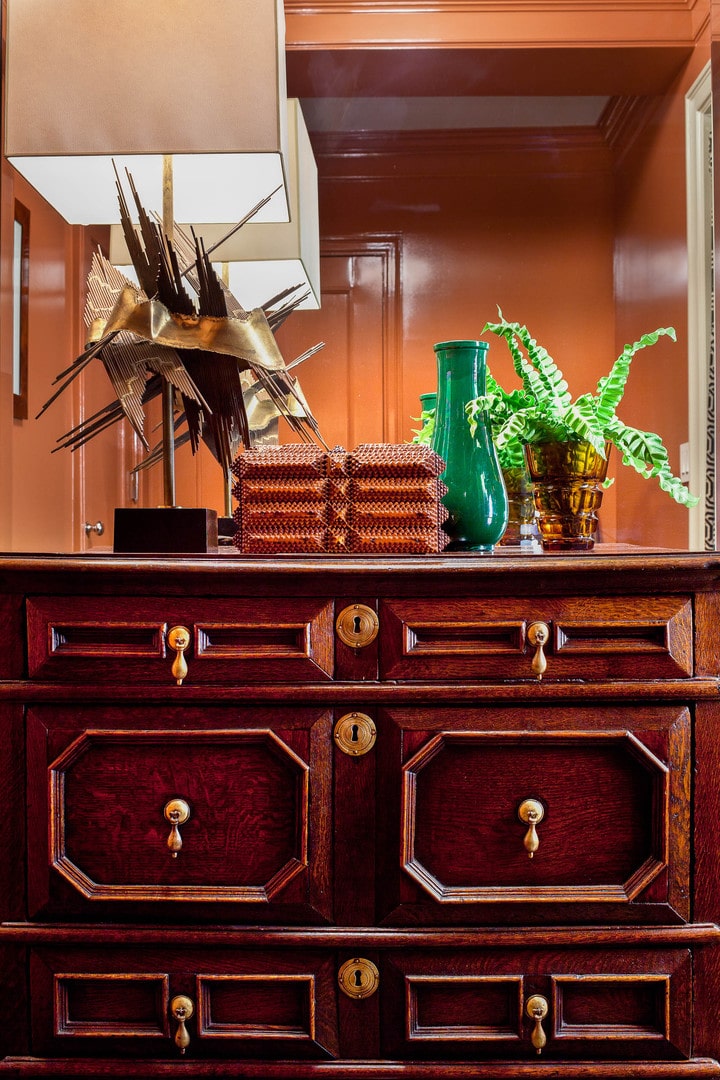
A provenance with panache: this Italian walnut Baroque chest of drawers, 19th century with 18th century elements, is from Loring House, Massachusetts, home of the Codman family.

An antique Tabriz area rug with stylized floral pattern in indigo and cream, is keynote of this richly patterned and textured room. The custom Belgian sofa is from Jonas. Interesting objects–two pairs of mounted oryx horns; a cross-legged Aesthetic Movement table–add detail and depth.

"You guys are amazing. It's really kinda thrilling to be in the presence of your genius, vision, passion, professionalism. Thanks."

– AV

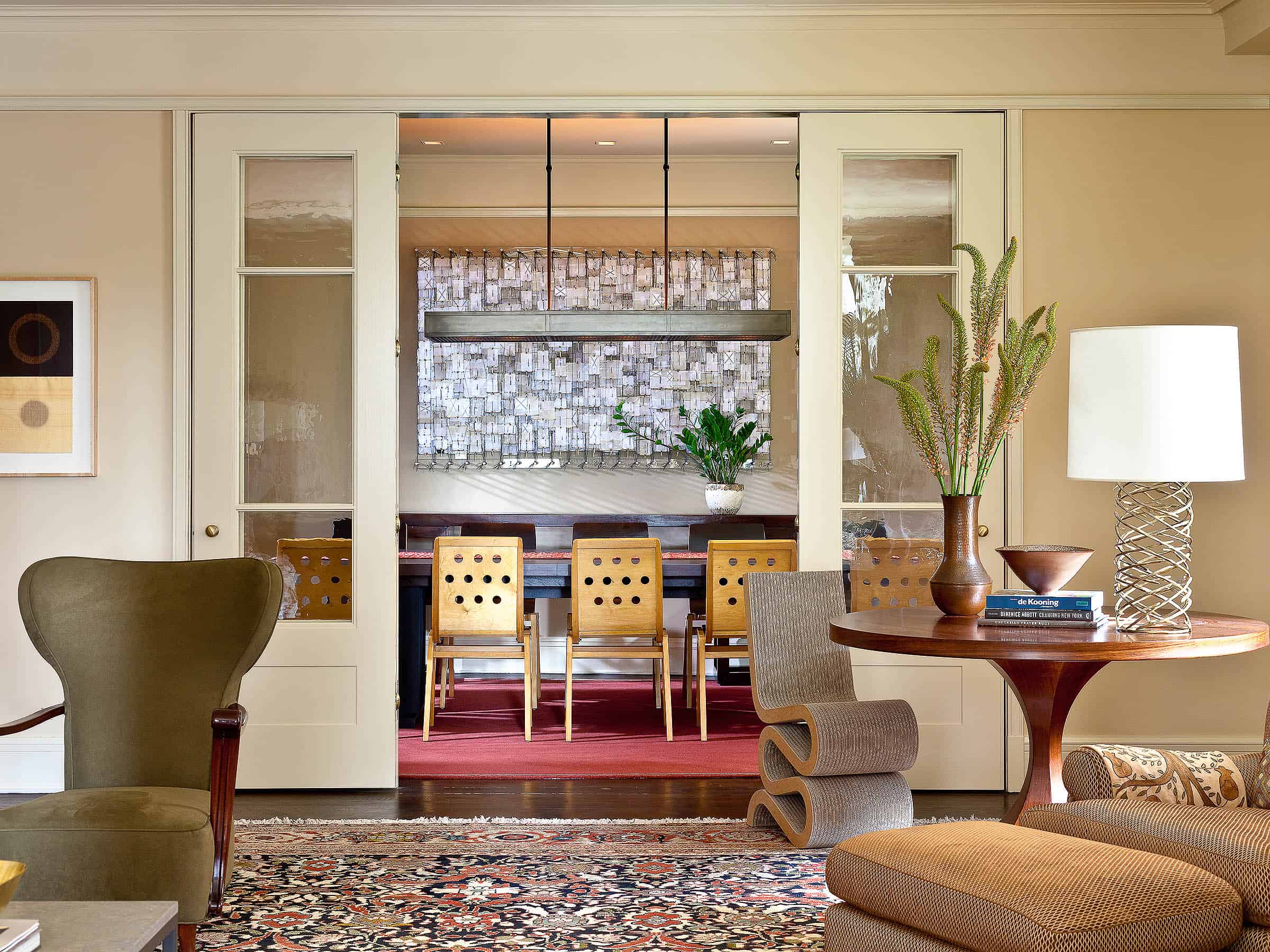
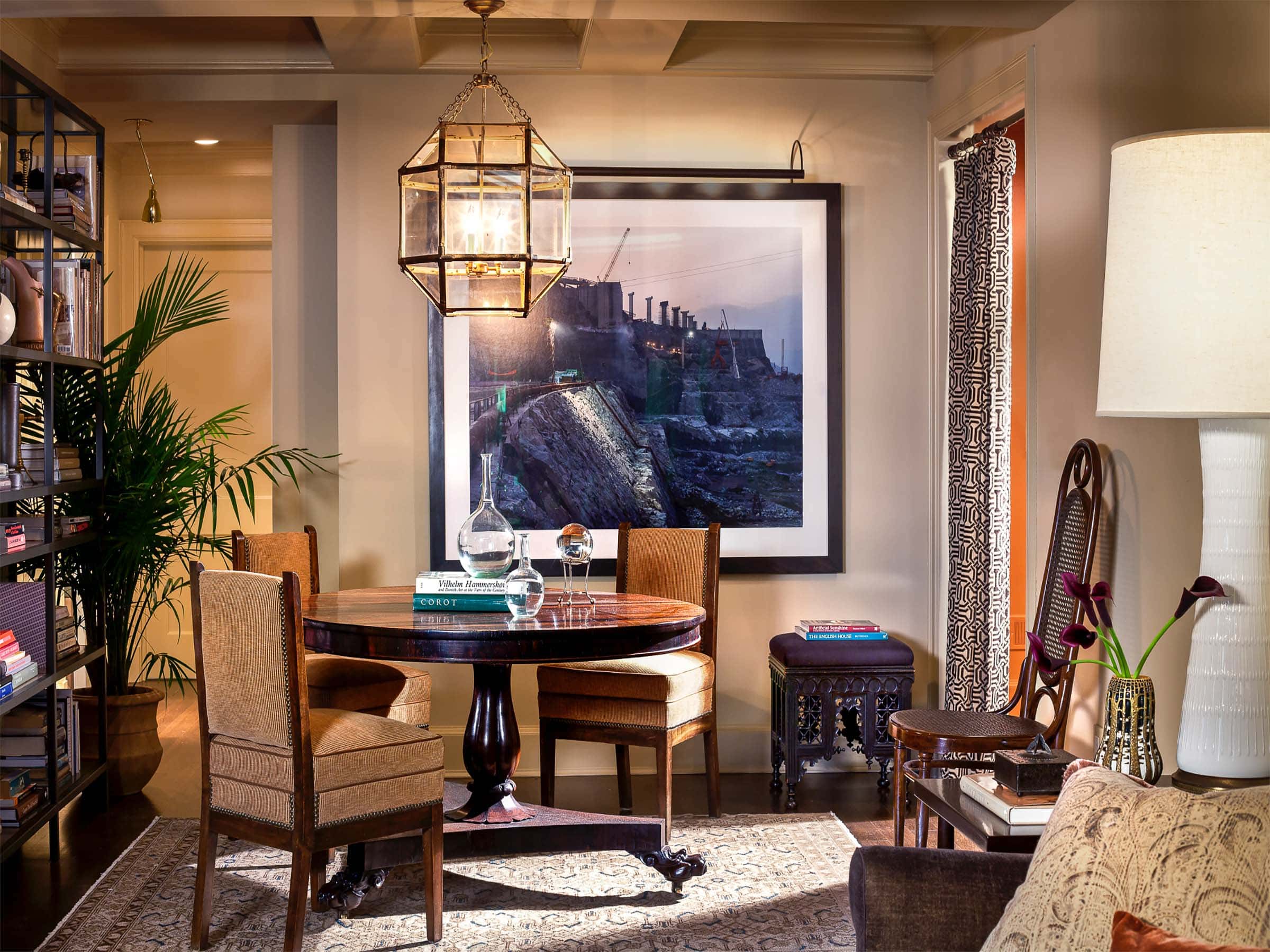
The dining room became a study which can be used for occasional entertaining, centered upon the Empire round table the clients brought from Colorado. Chairs are from a 1930s ocean liner. Meant to be flexible, the table may be set up as a dining table, buffet, or bar. At right, a portiere in Kravet’s double-sided “Interweave” fabric marks the separation from the bedroom.

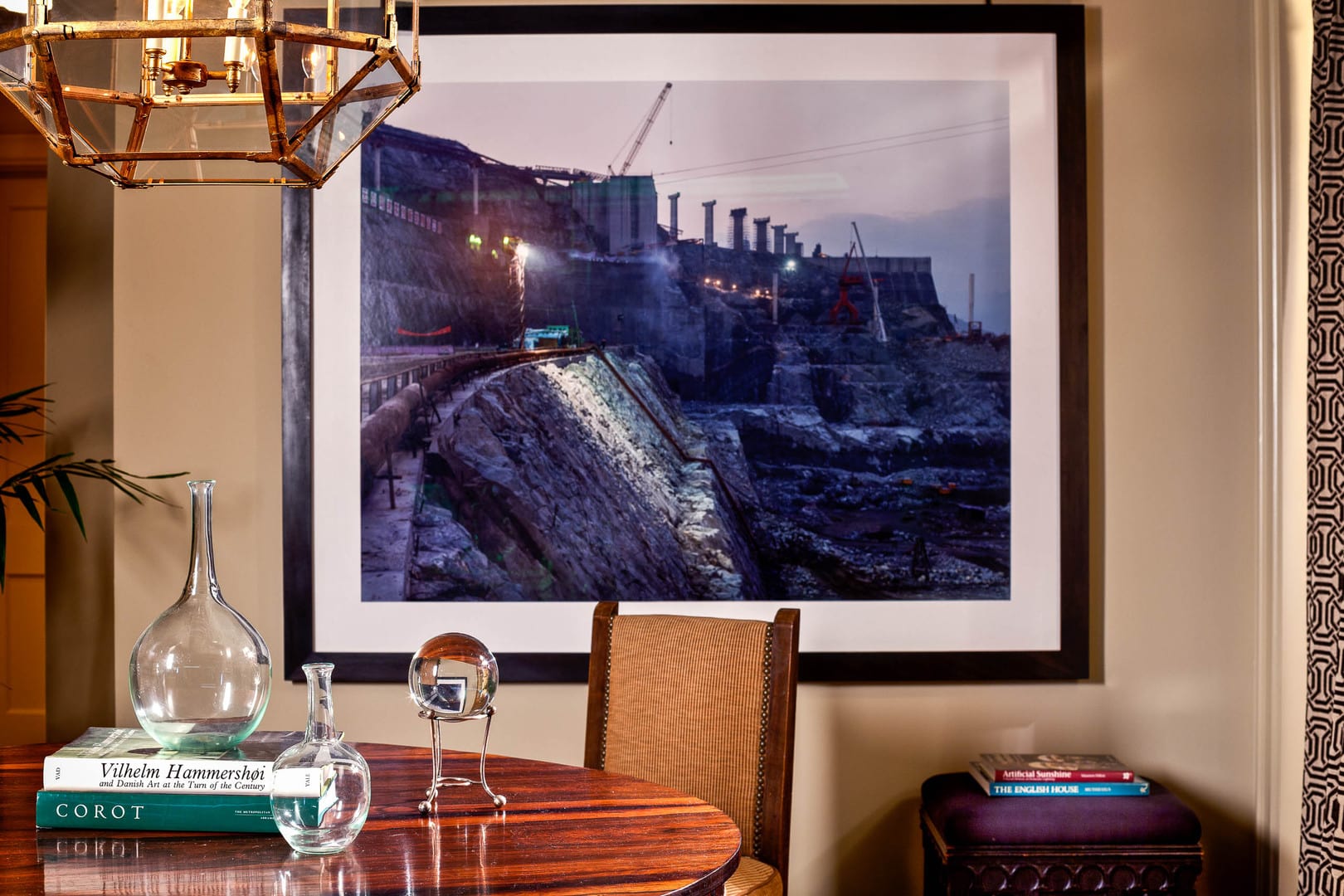
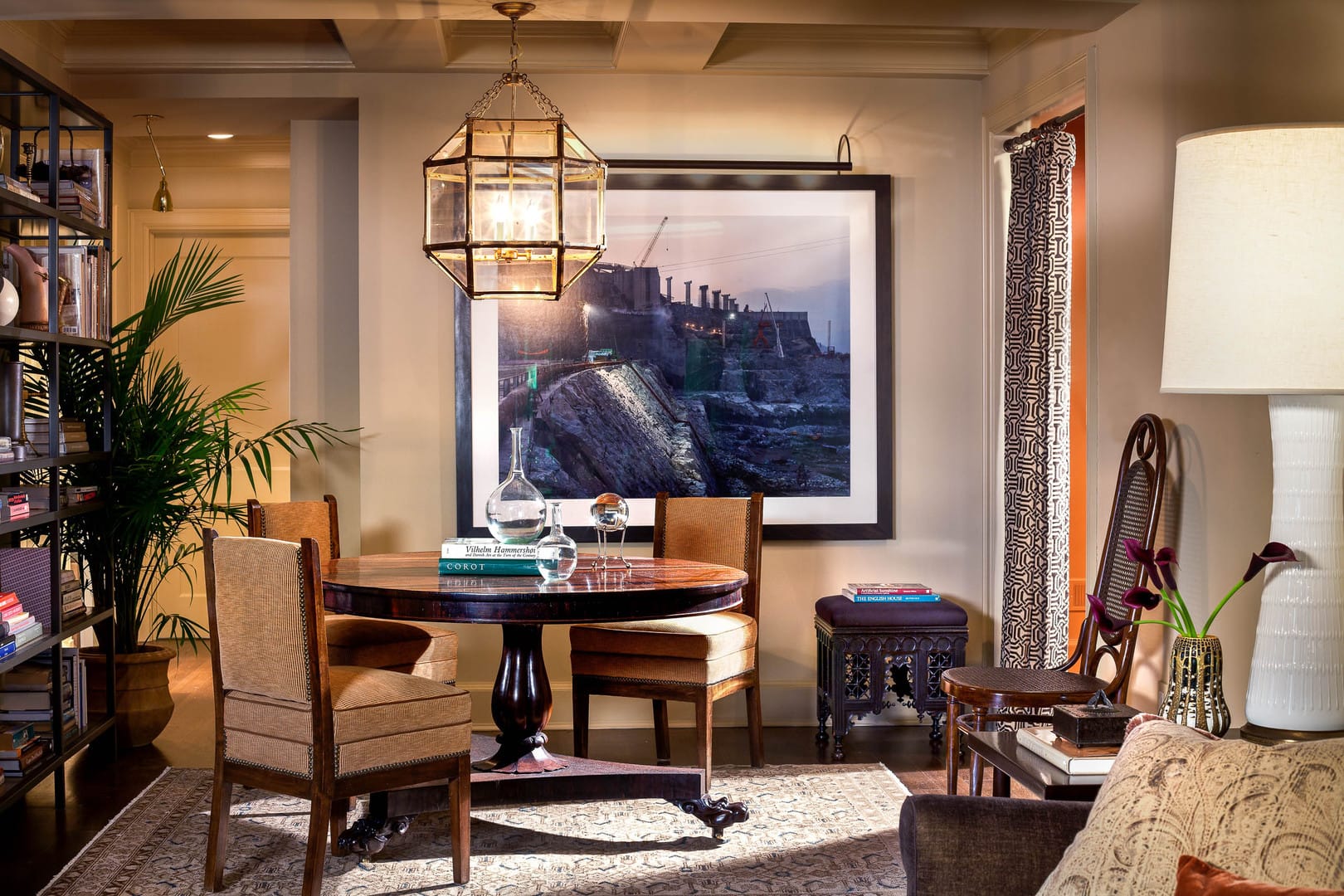
A place for reflection: a contemporary photograph of a Chinese dam joins a patinated brass ceiling fixture and a crystal orb.

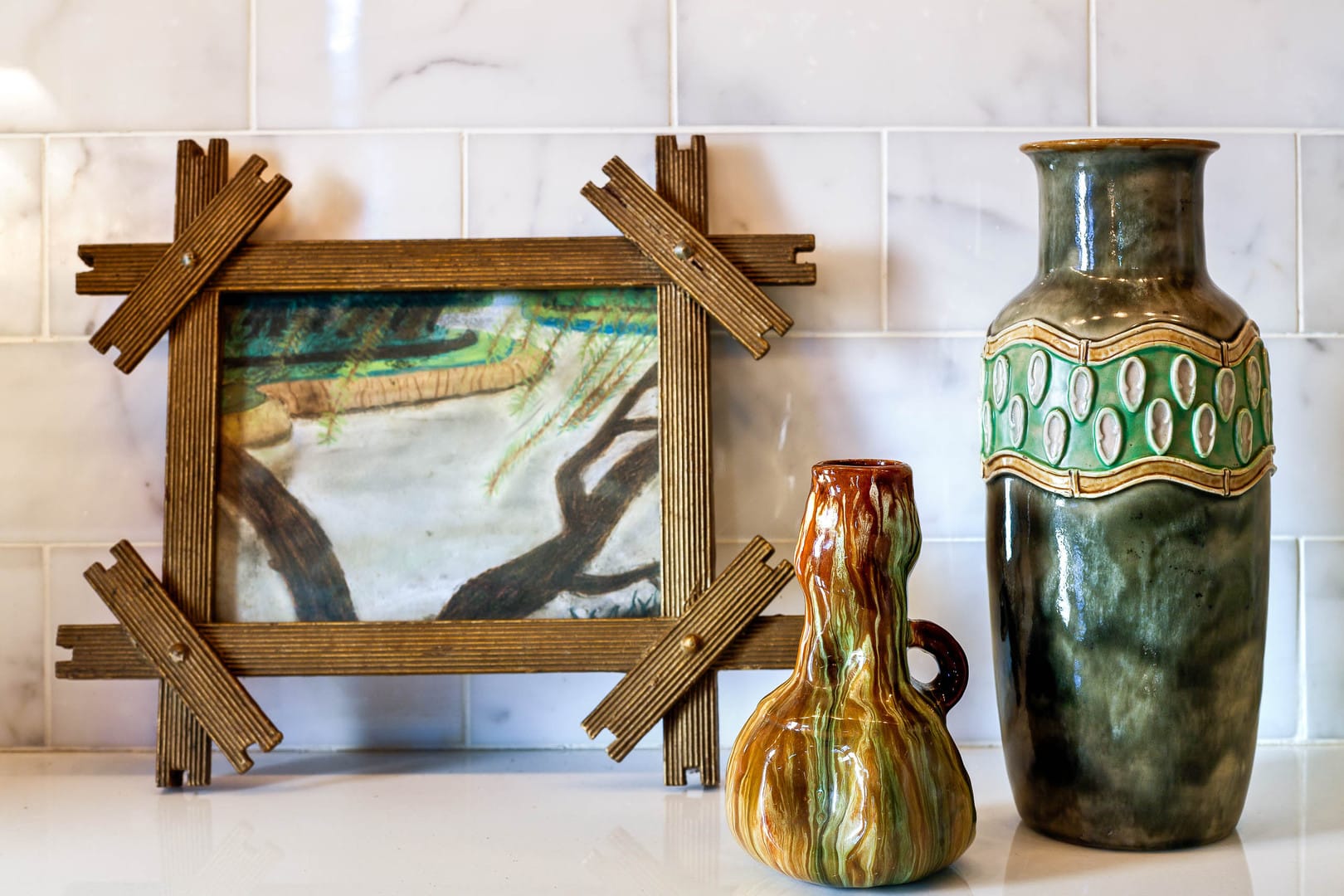
Outsider art, insider ceramics: a charming primitive painted in a hand-made “tramp art” frame joins Arts & Crafts Movement pots.

Nothing less than sumptuous, the king-sized bed features Williams-Sonoma’s faintly curving “Sutton” upholstered headboard. The crimson, persimmon, black and cream stylized floral pattern bed covering is an antique Suzani. The slightly shimmering “Fiori” wallpaper is by Rose Tarlow.

Senior Designer Craig Strulovitz
Photos by Gross & Daley

High-Rise Duplex Apartment – NYC

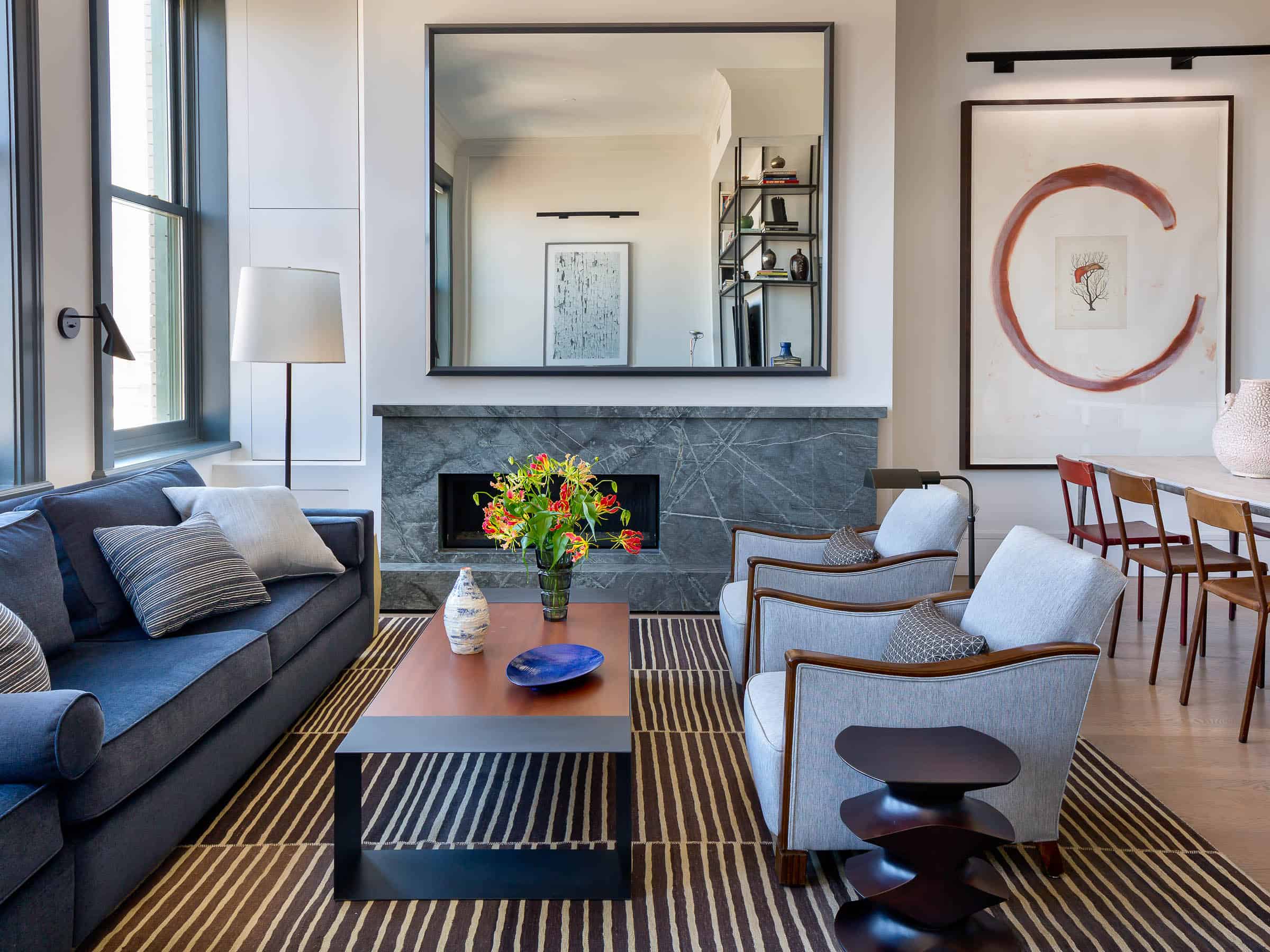
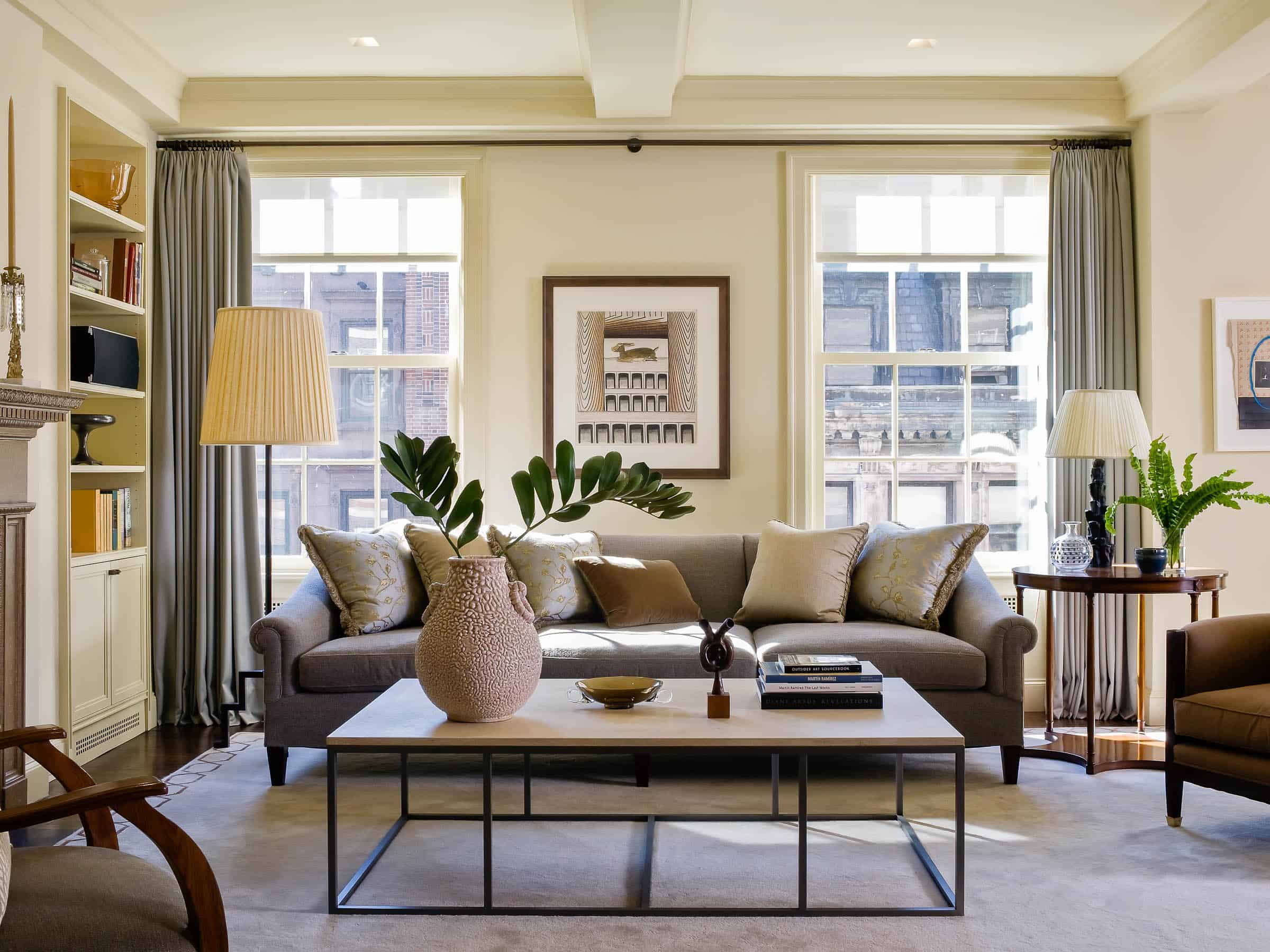
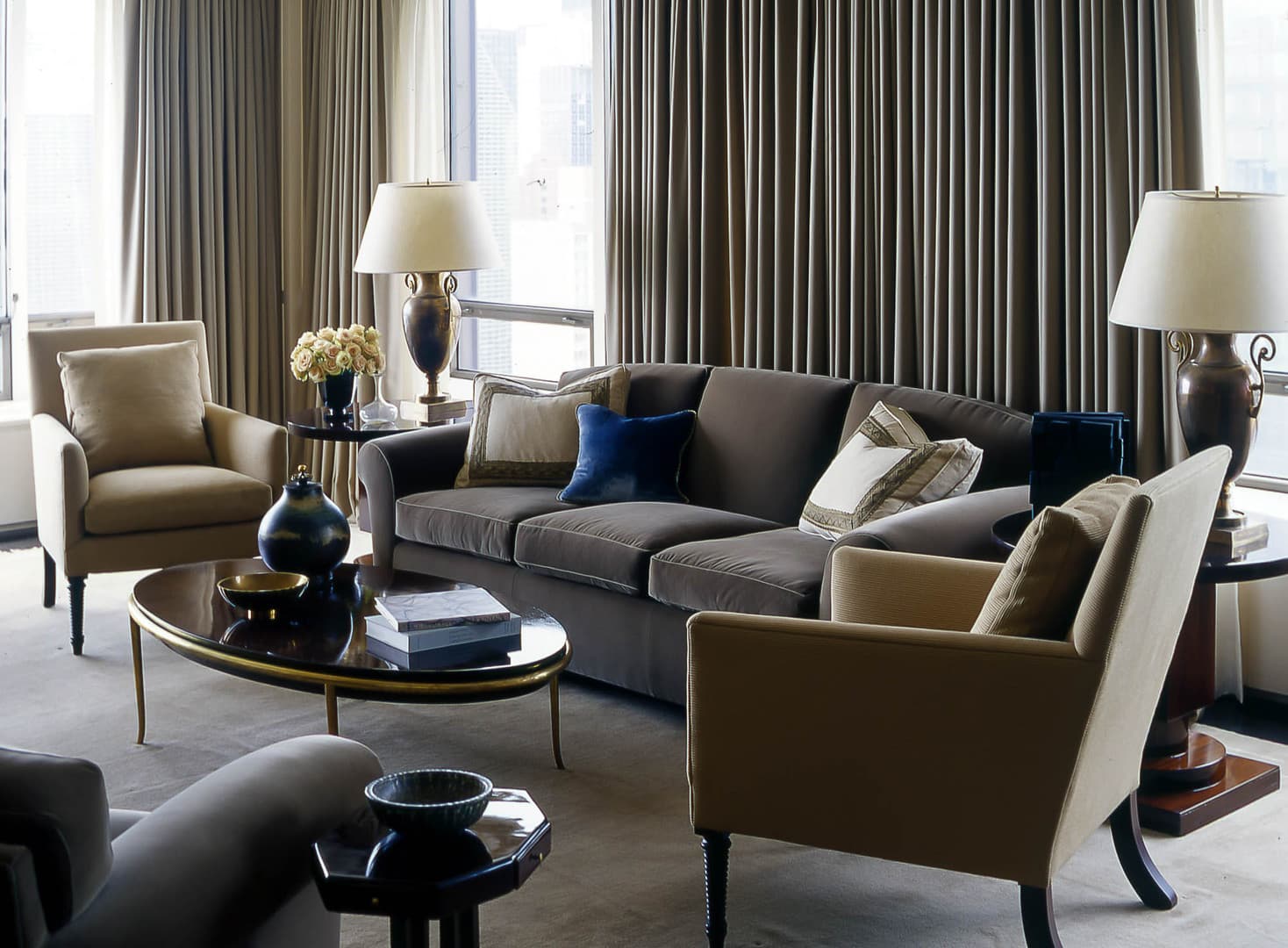
The living room is a tour de force of understatement, a sumptuous composition of palest greys, silvery blue tones and creams, accented by early-to-mid-century French and Scandinavian ceramics. The armchairs are from Holly Hunt, and the sofa is upholstered in a rich velvet by Gretchen Bellinger.

MIDTOWN EAST – NYC

High-Rise Duplex Apartment

The challenge posed by this 4000 square foot duplex near the United Nations, in one of a pair of towers built by architect Wallace Harrison in 1966, is that its exterior glass walls epitomize modernity, while its apartment interiors are organized into more traditional rooms. The building, once inhabited by the great decorator Billy Baldwin, treads an odd ground between the radiant utopia represented by the U.N. complex and the old-world gentility of nearby Beekman Place.

When client Caroline Hirsch, proprietress of Caroline’s Comedy Club, acquired the duplex apartment on a very high floor, with its incomparable natural light and views, we had to invent a language of architectural detail which would respect the modernity of the building’s skin while creating a greater sense of texture and material richness within the rooms, which, as Hirsch remarked, were “like a blank canvas,” devoid of ornamentation. Our strategy was inspired by looking at a certain early Cubist Picasso painting which evinced architectural clarity yet had a warm, rich palette.

We shifted interior walls and partitions to better correspond to the building’s mullion grid, reinstating and clarifying the classical layout of the public rooms and kitchen on the lower floor, bedrooms above. Then we introduced eight-foot mahogany doors with thick frames and custom nickel hardware; and in the library, oak paneling against which Modernist works of art are hung. The palette, muted, is calibrated from white to ivory to beige to taupe to brown to shades of blue. The 20th century furniture forms a quietly elegant counterpoint to Hirsch’s ambitious art collection, which takes pride of place.

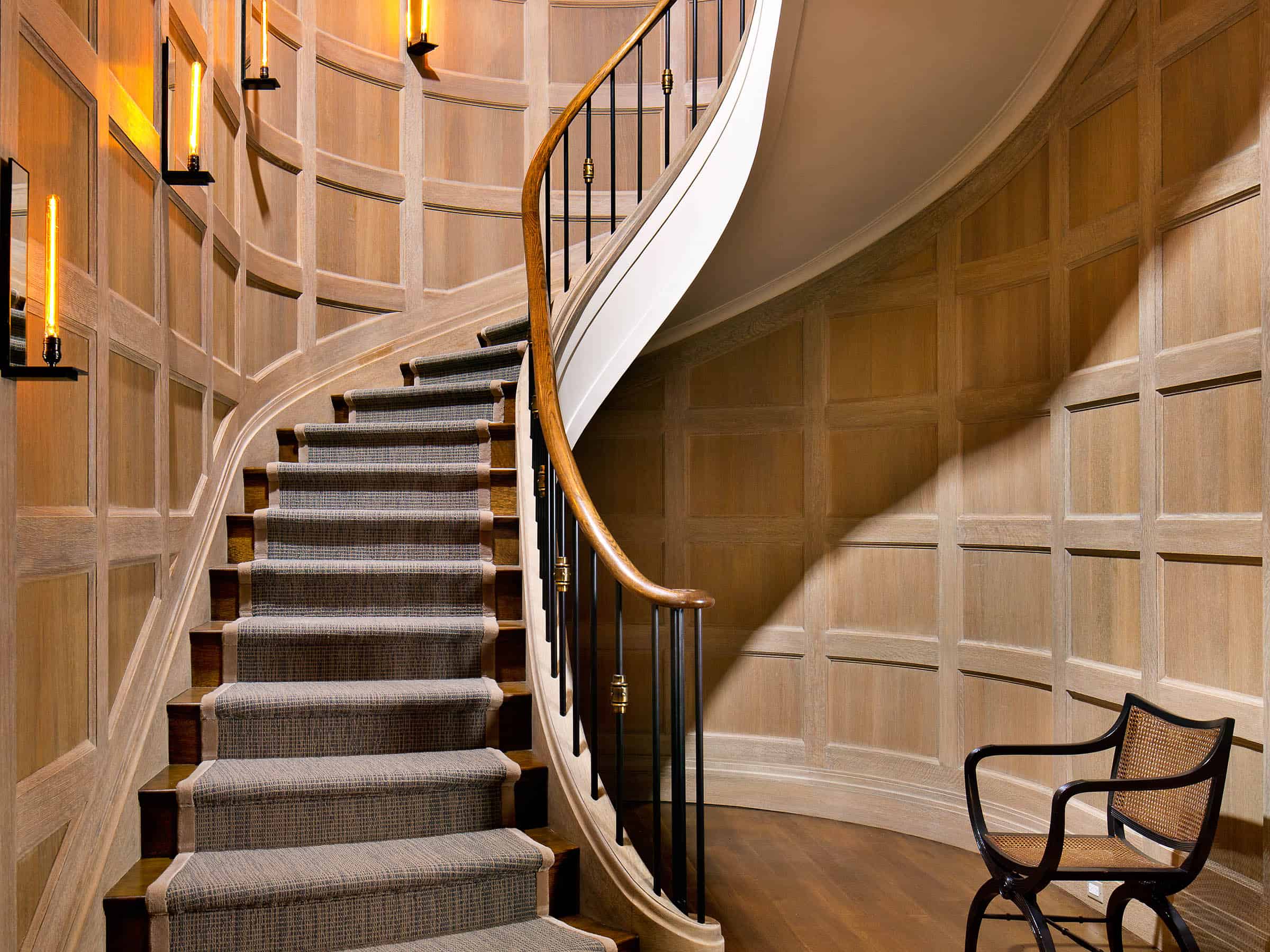
At the foot of the dramatically curving staircase, carpeted in velvety cut pile, a massive torso by Rodin signals the superlative array of modern art collected by Hirsch.

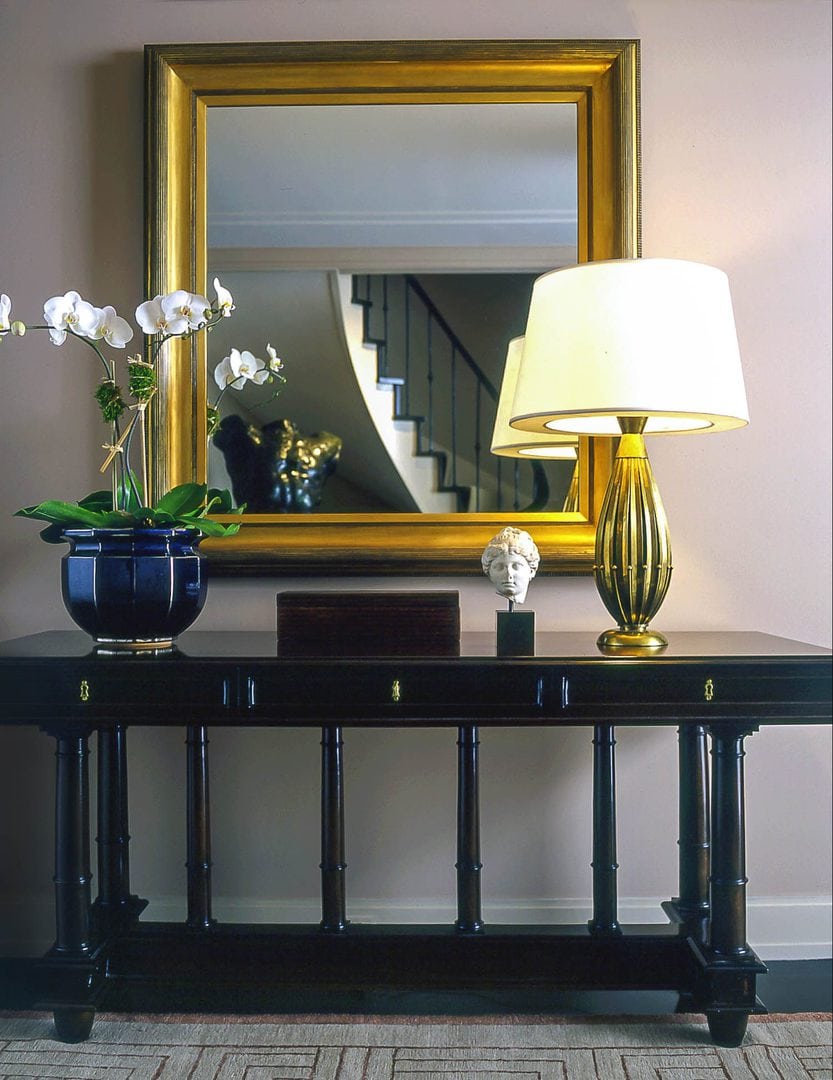
In the entry, a mirror above the ebonized console presents an alluring reflection of the winding staircase. On the console, an eclectic selection of small fine and decorative art works includes an Antique Greek head and a 20th century glass lamp.

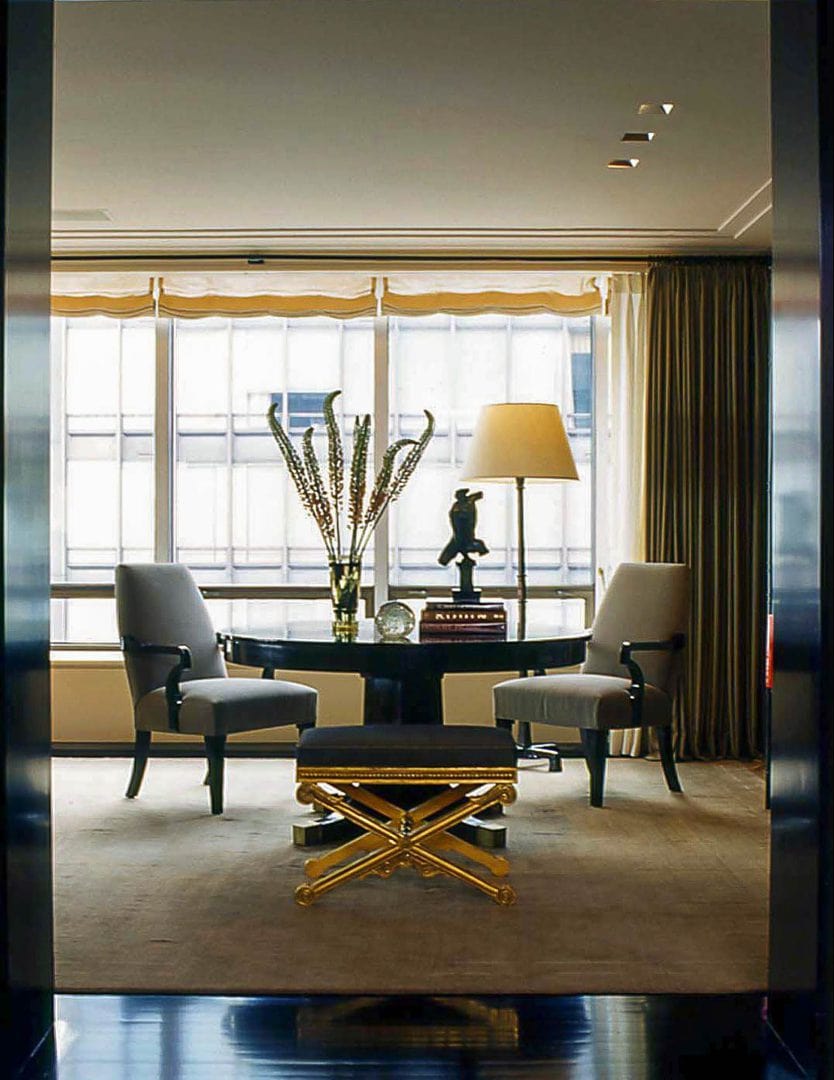
In the living room, a bronze torso by Enzo Piazzotta tops an American mahogany center table. A gilded x-framed stool adds a grand geometric note.

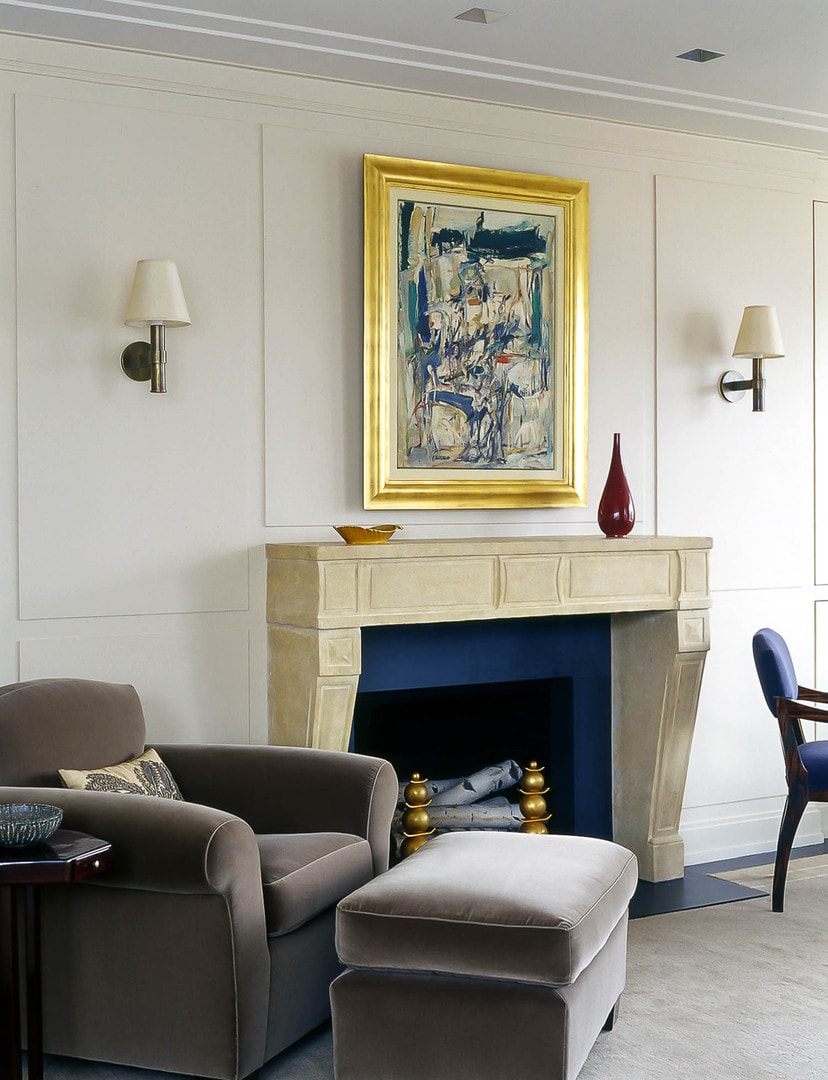
A 1955 painting by Joan Mitchell in a gilded frame hangs above the mantelpiece.

Art Deco ceramics, and glass in tones of deep chocolate and burnt orange, decorate an ebonized console.

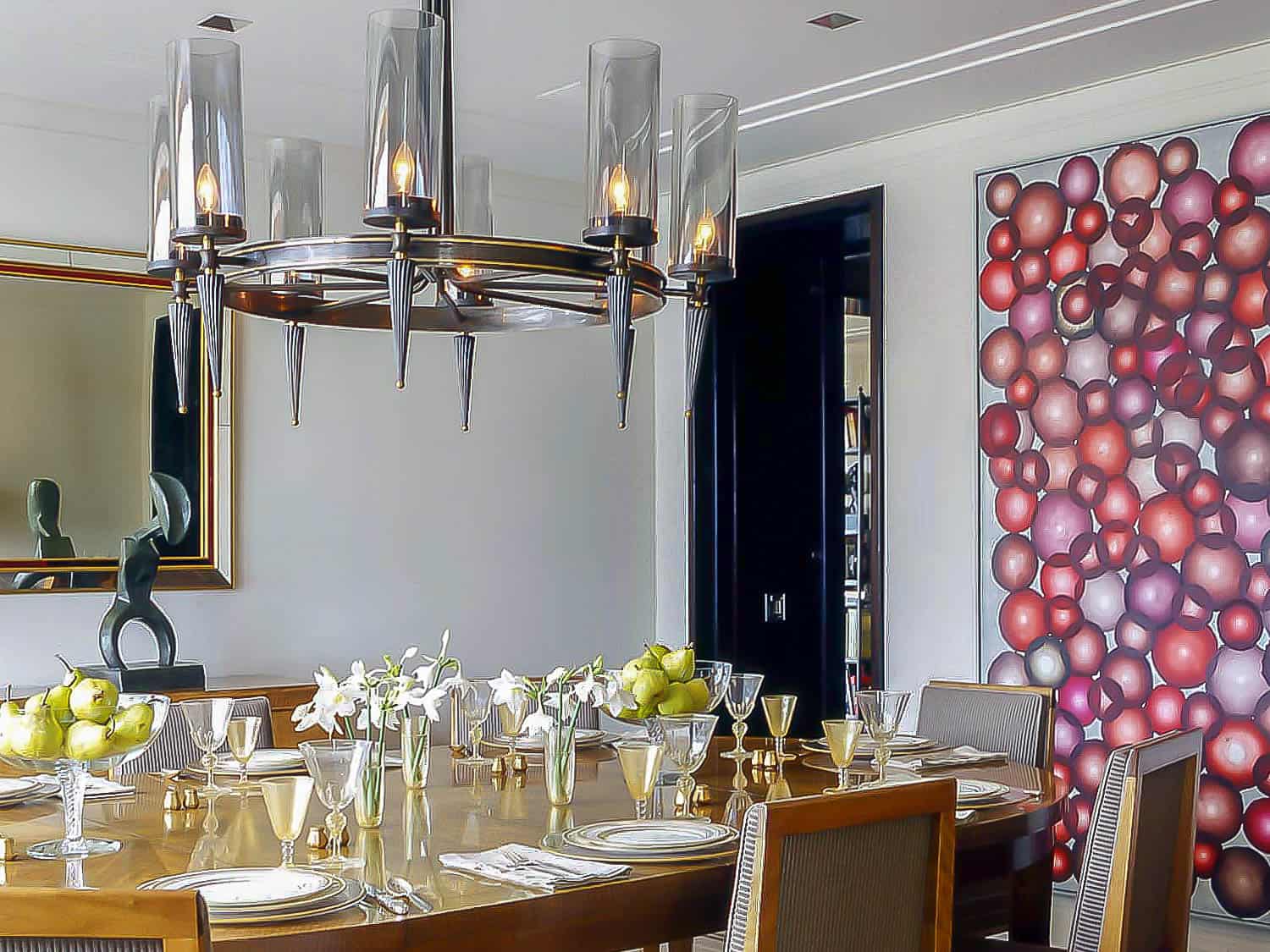
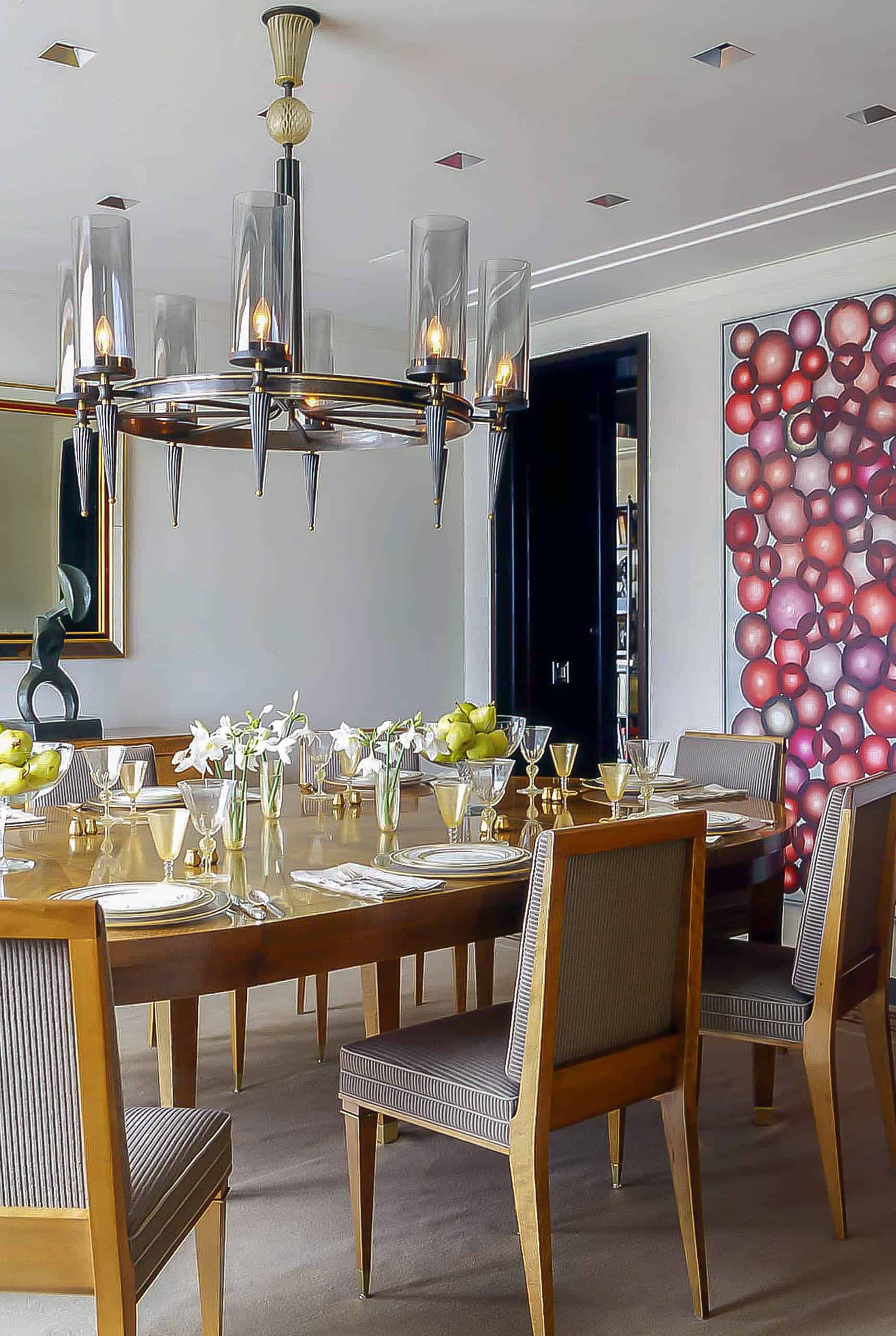
In the dining room, 1930s Jules Leleu chairs circle a custom oval table. The French forties bronze chandelier complements a Max Ernst figure, also in bronze; the painting is Ross Bleckner’s Flow and Return (2001).

"Glenn’s broad knowledge of architecture, interior design and lifestyle were immensely important to a successful and enduring project. His focus on quality, understatement and comfort has created a gracious & livable home."

– Client

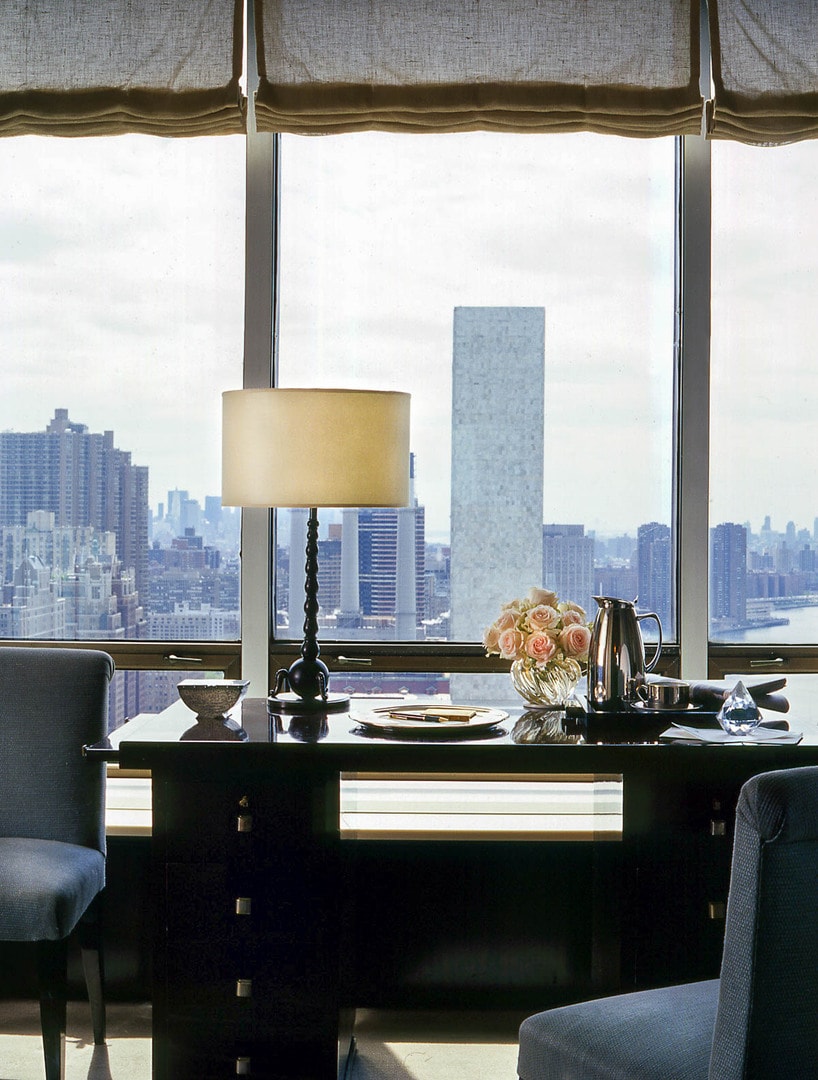
A sparkling view of the United Nations–one of many spectacular views in this duplex–enlivens a quiet workspace with desk and chairs.

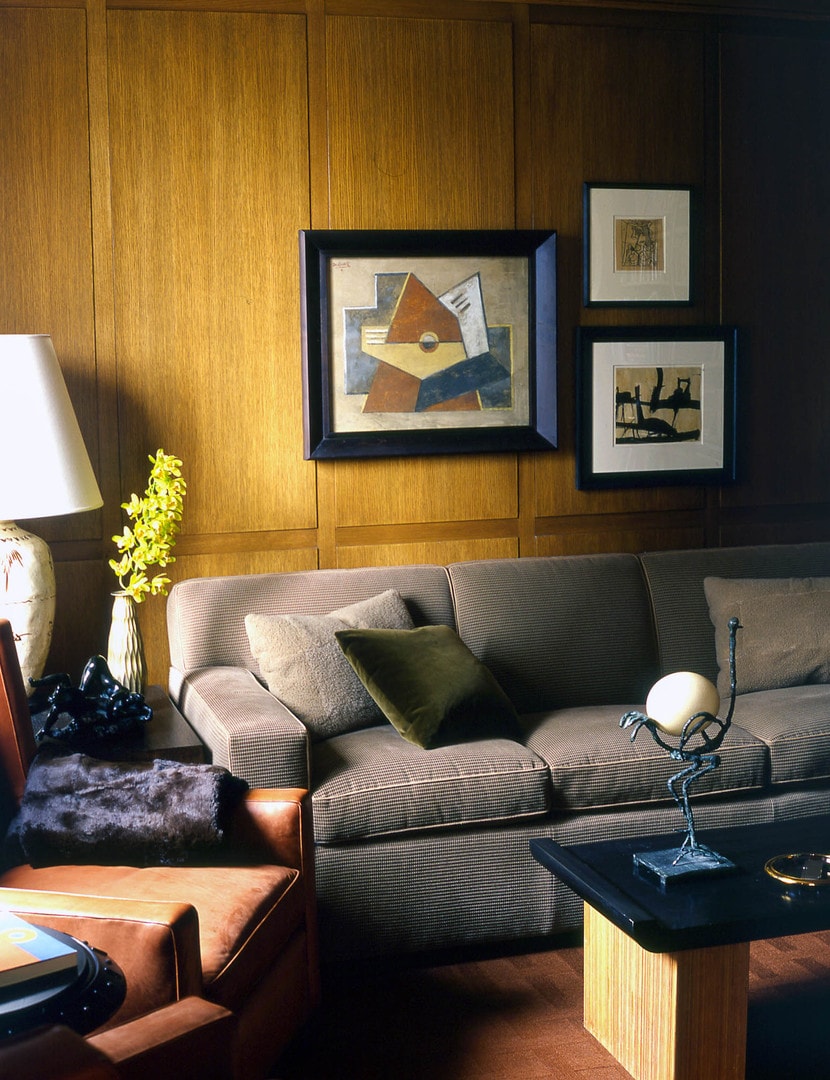
Works by Franz Kline, Giacometti and Lipschitz hang against a wall paneled in golden oak. The sofa is upholstered in Clarence House velvet.

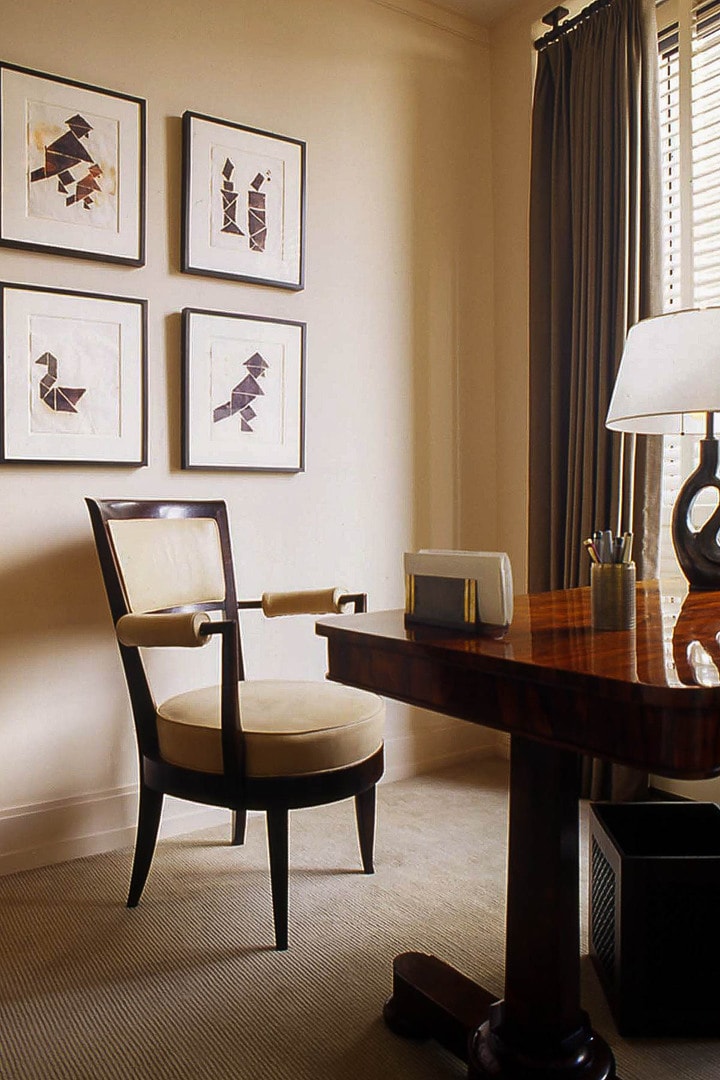
A highly polished library table is accompanied by a round-seated Biedermeier chair and a biomorphic 1950s table lamp.

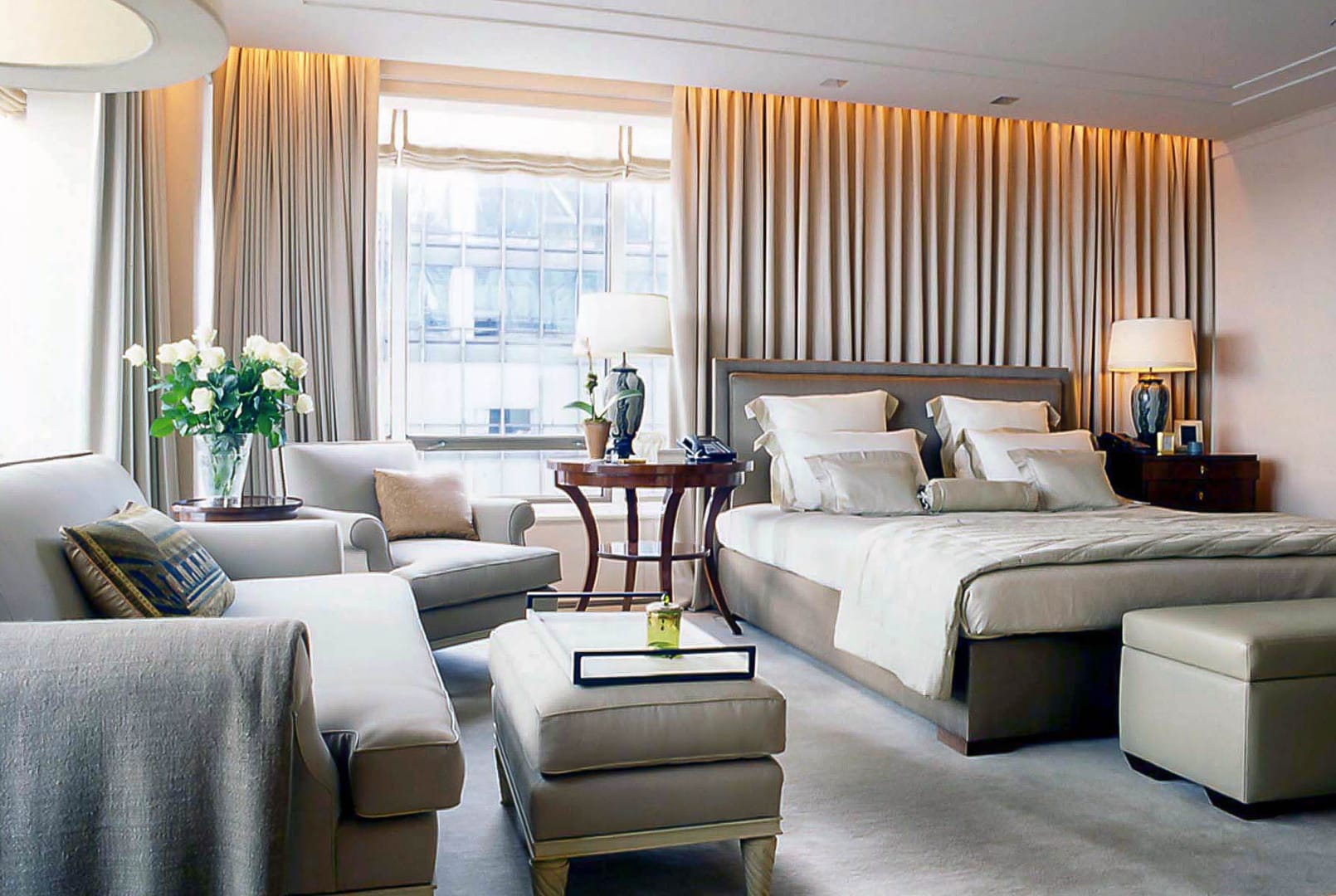
The master bedroom is a subtle, luxurious expanse of neutrals: palest biscuit and cream tones. The sweeping curtains are in fabric by Rogers & Goffigon; the bed linens by Frette, Hirsch’s linens of choice.

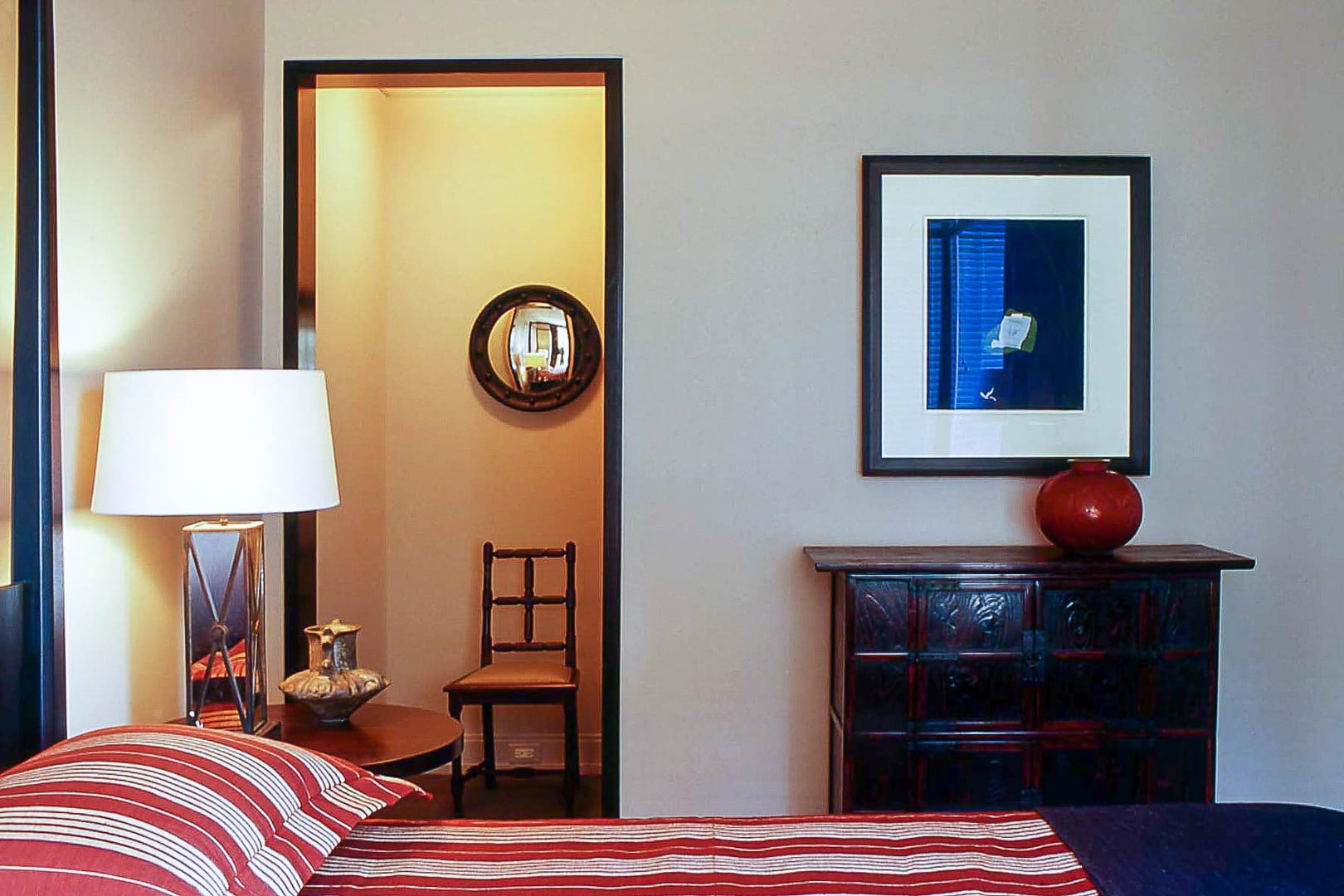
Jaunty red and white striped linens adorn a guest bedroom, along with quiet American antiques and 20th century ceramics.

Senior Designer Craig Strulovitz
Photos by Gross & Daley

Connecticut Colonial

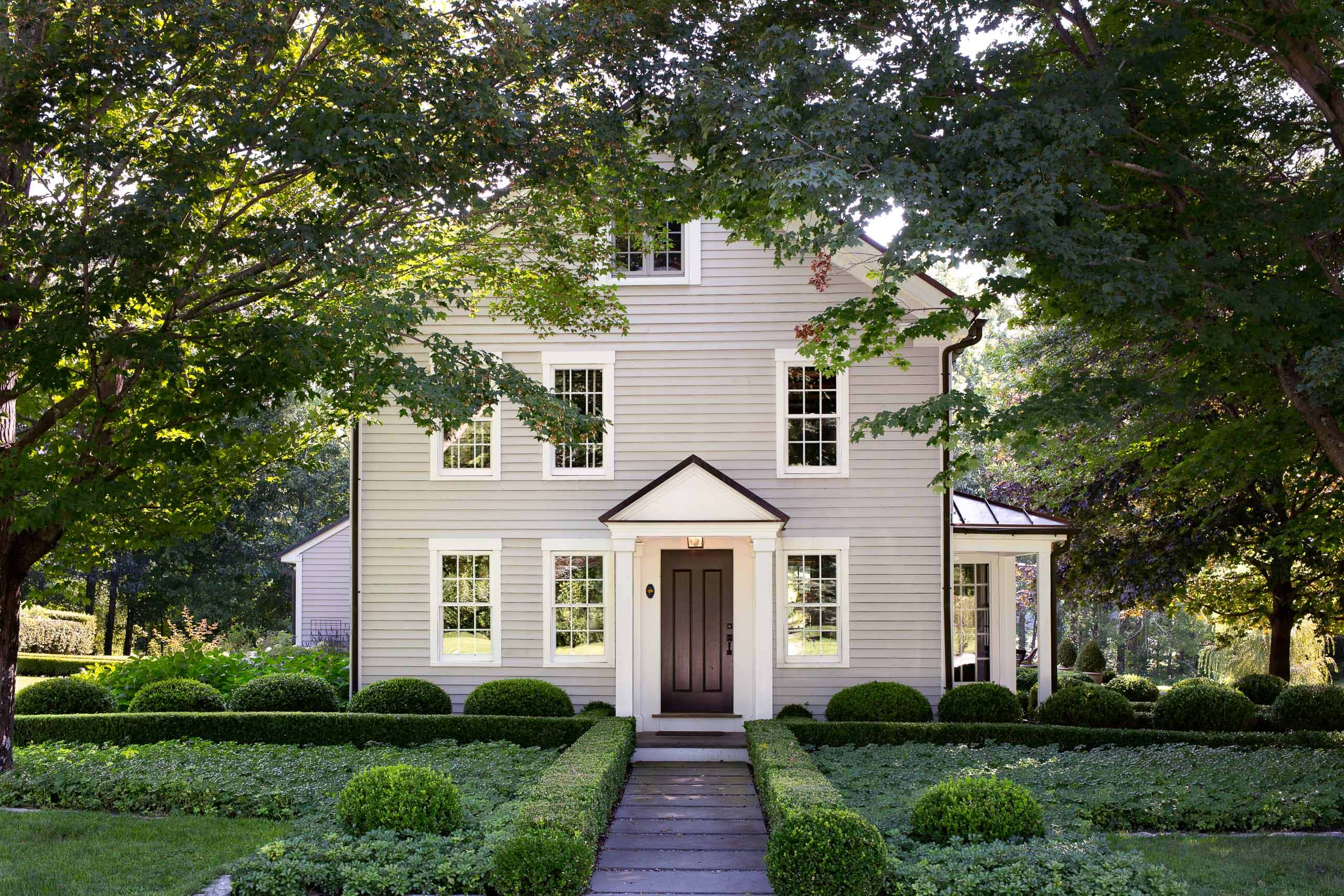
Trimmed and globe boxwoods, along with two old-growth trees, create a symmetrical approach to the house. The new front porch, which we designed, features a pediment echoing the structure’s roofline. The front door is painted a glossy aubergine, which hints at what lies behind it.

Trimmed and globe boxwoods, along with two old-growth trees, create a symmetrical approach to the house. The new front porch, which we designed, features a pediment echoing the structure’s roofline. The front door is painted a glossy aubergine, which hints at what lies behind it.

LITCHFIELD, CT

Connecticut Colonial

This early-19th-century house in Litchfield County, Connecticut, is located within the historic district of a small town. 

The homeowner, a long-time friend of Glenn Gissler Design, asked us to reimagine the exterior and interiors of their home. The client, who grew up in rural Kentucky, imagined a farmhouse reminiscent of her childhood but with a gracious update incorporating modern comforts and her sophisticated aesthetics.

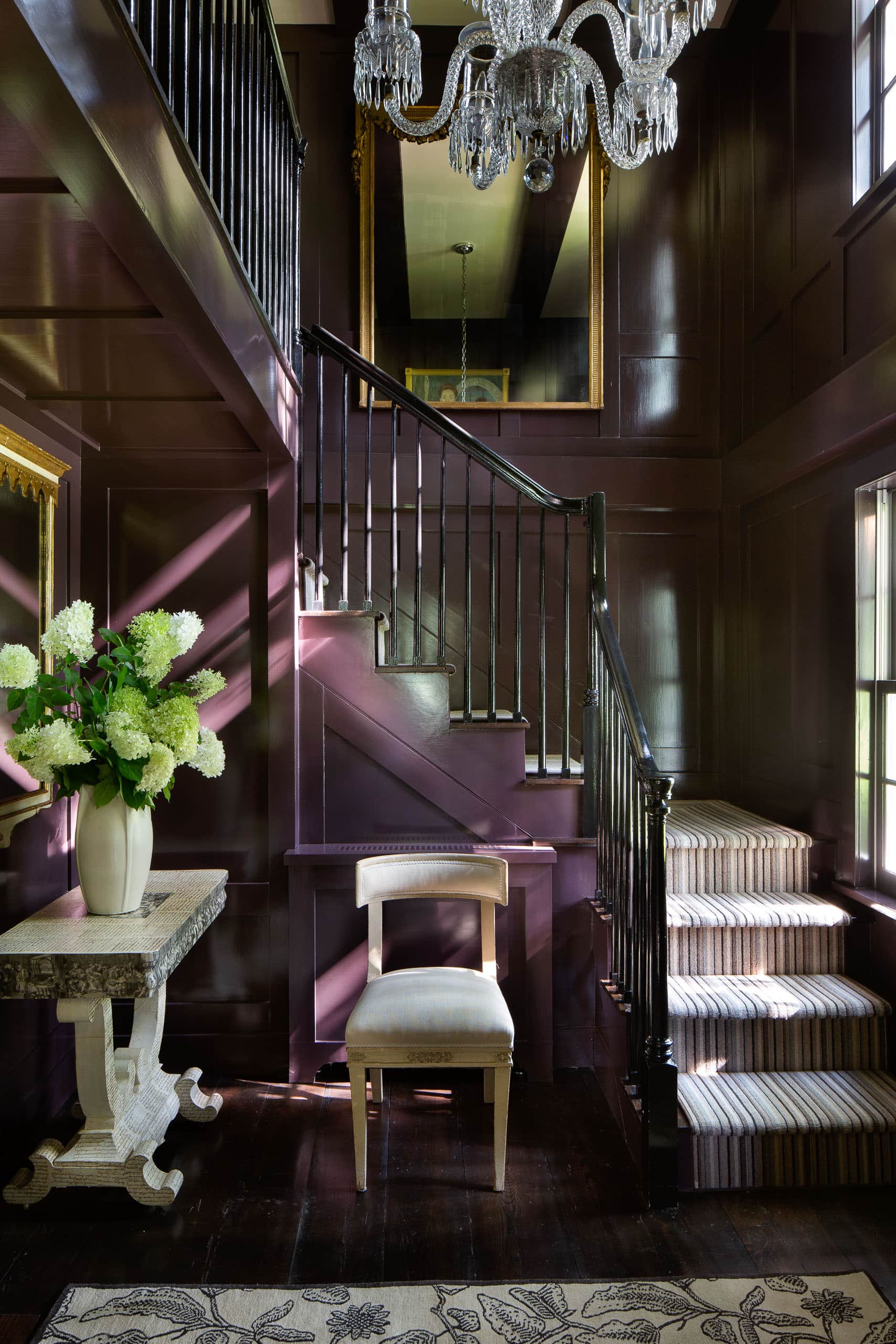
We designed new paneling in the double-height entryway which is painted glossy aubergine – the homeowner’s favorite color. To make the space more accommodating, we removed a coat closet and replaced it with an Empire-period console decoupaged with antique calligraphic paper and an antique-painted Swedish chair. Two gilt-framed mirrors refract the ample sunlight to expand the space by day; by night, a crystal chandelier purchased decades ago by the homeowner illuminates the room. The striped stair runner strikes a balance between antique and modern sensibilities.
We designed new paneling in the double-height entryway which is painted glossy aubergine – the homeowner’s favorite color. To make the space more accommodating, we removed a coat closet and replaced it with an Empire-period console decoupaged with antique calligraphic paper and an antique-painted Swedish chair. Two gilt-framed mirrors refract the ample sunlight to expand the space by day; by night, a crystal chandelier purchased decades ago by the homeowner illuminates the room. The striped stair runner strikes a balance between antique and modern sensibilities.
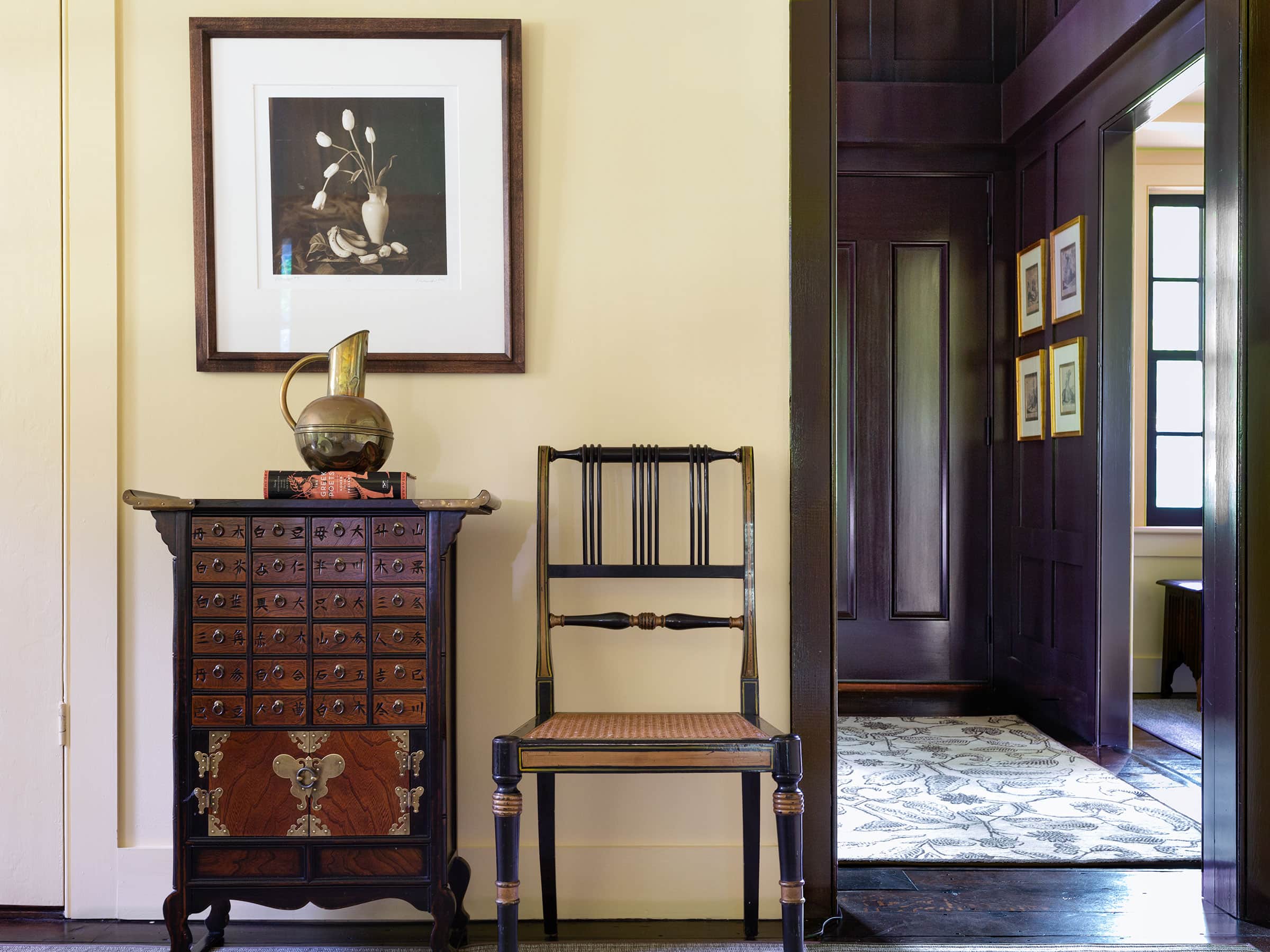
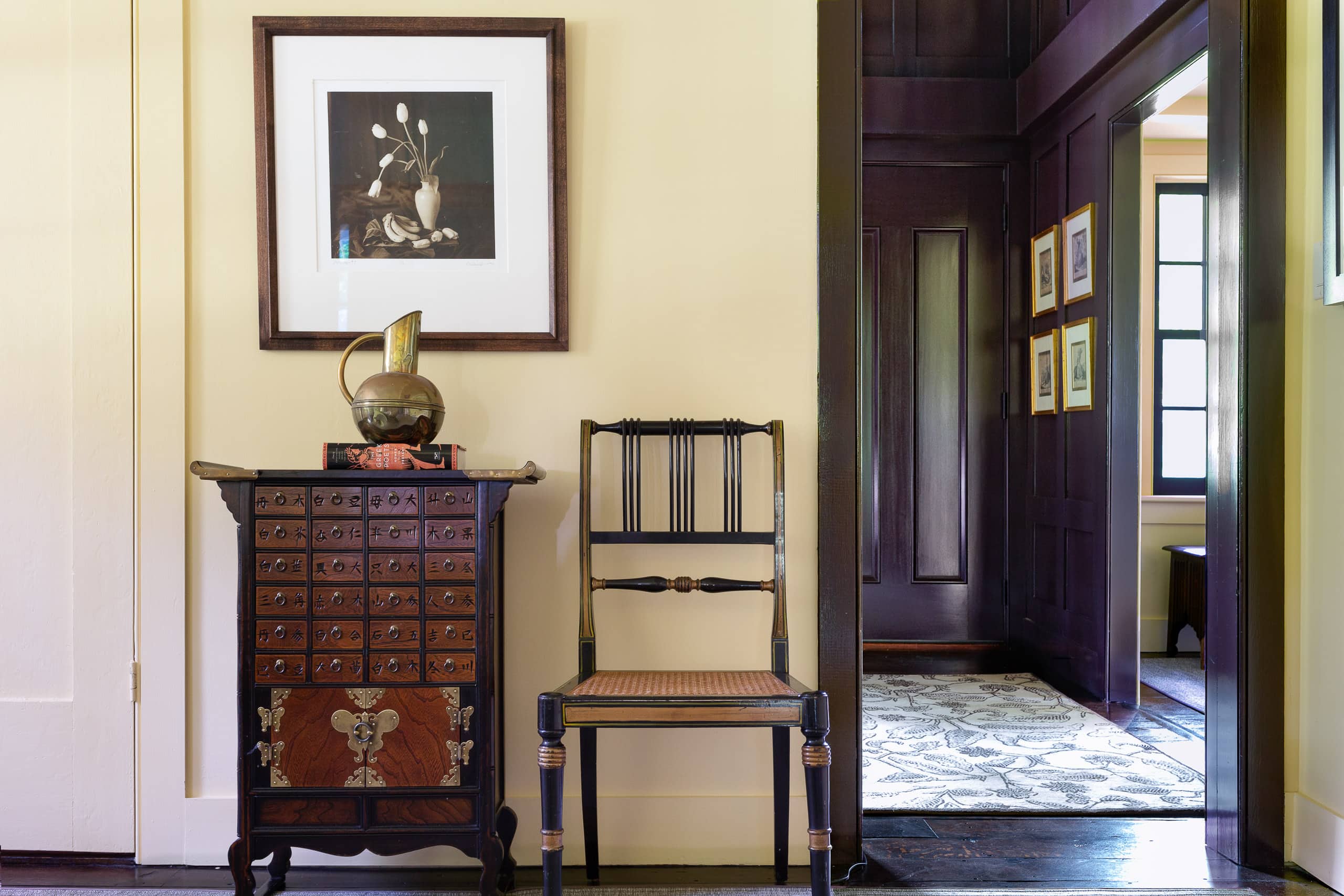
Just inside the living room, a Duncan Phyfe-style side chair, one of a pair, is part of a tableau with a vintage Chinese apothecary cabinet, a 19th-century Christopher Dresser ewer, and a romantic black-and-white still-life photograph.

Just inside the living room, a Duncan Phyfe-style side chair, one of a pair, is part of a tableau with a vintage Chinese apothecary cabinet, a 19th-century Christopher Dresser ewer, and a romantic black-and-white still-life photograph.

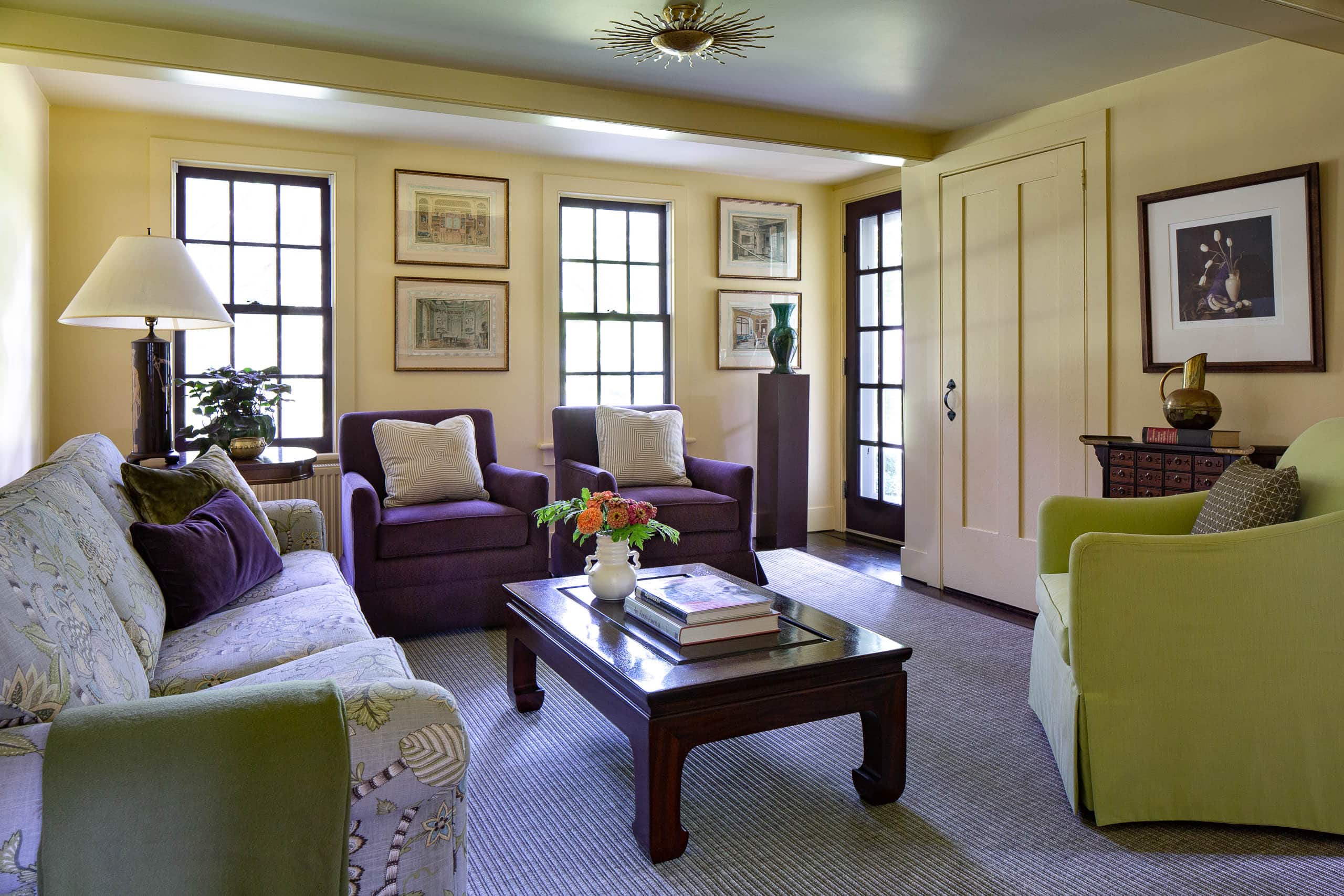
The living room sofa is upholstered in a stylized botanical print, complementing the three club chairs in purple and a shade of fresh yellow-green linen to complete the seating arrangement. The bold silhouette of the Macau-inspired coffee table anchors the center of the room and sits beneath a vintage French ceiling fixture. The window mullions are painted dark to frame the views of the property.

The living room sofa is upholstered in a stylized botanical print, complementing the three club chairs in purple and a shade of fresh yellow-green linen to complete the seating arrangement. The bold silhouette of the Macau-inspired coffee table anchors the center of the room and sits beneath a vintage French ceiling fixture. The window mullions are painted dark to frame the views of the property.

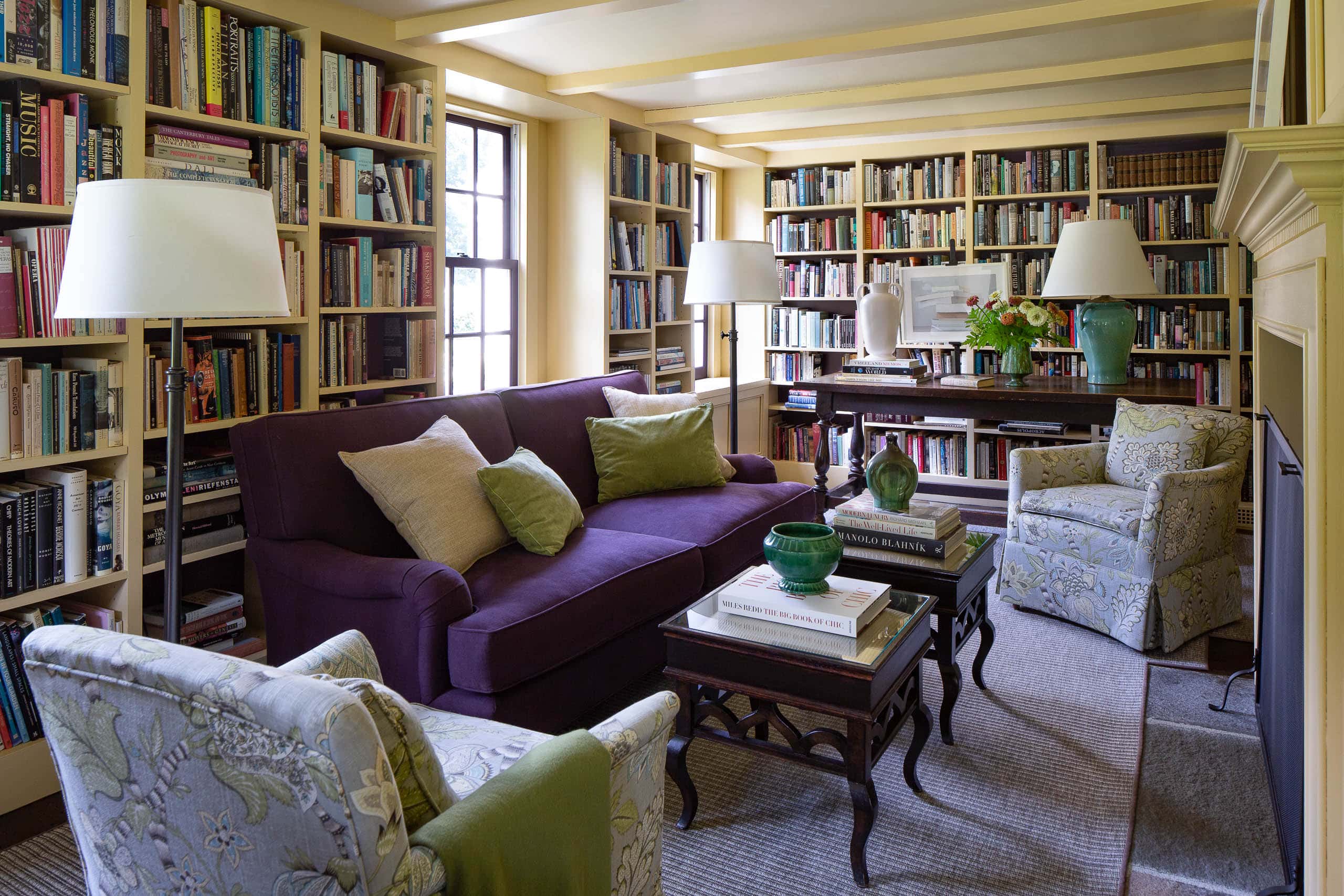
A 19th-century library table displays an array of books and accessories illuminated by a celadon ceramic lamp.

A 19th-century library table displays an array of books and accessories illuminated by a celadon ceramic lamp.

We designed floor-to-ceiling bookcases to accommodate an extensive collection of literature. We also added ceiling beams, a newly designed colonial mantle, moldings, and a concealed television cabinet to make it a charming but multi-functional space.

We designed floor-to-ceiling bookcases to accommodate an extensive collection of literature. We also added ceiling beams, a newly designed colonial mantle, moldings, and a concealed television cabinet to make it a charming but multi-functional space.

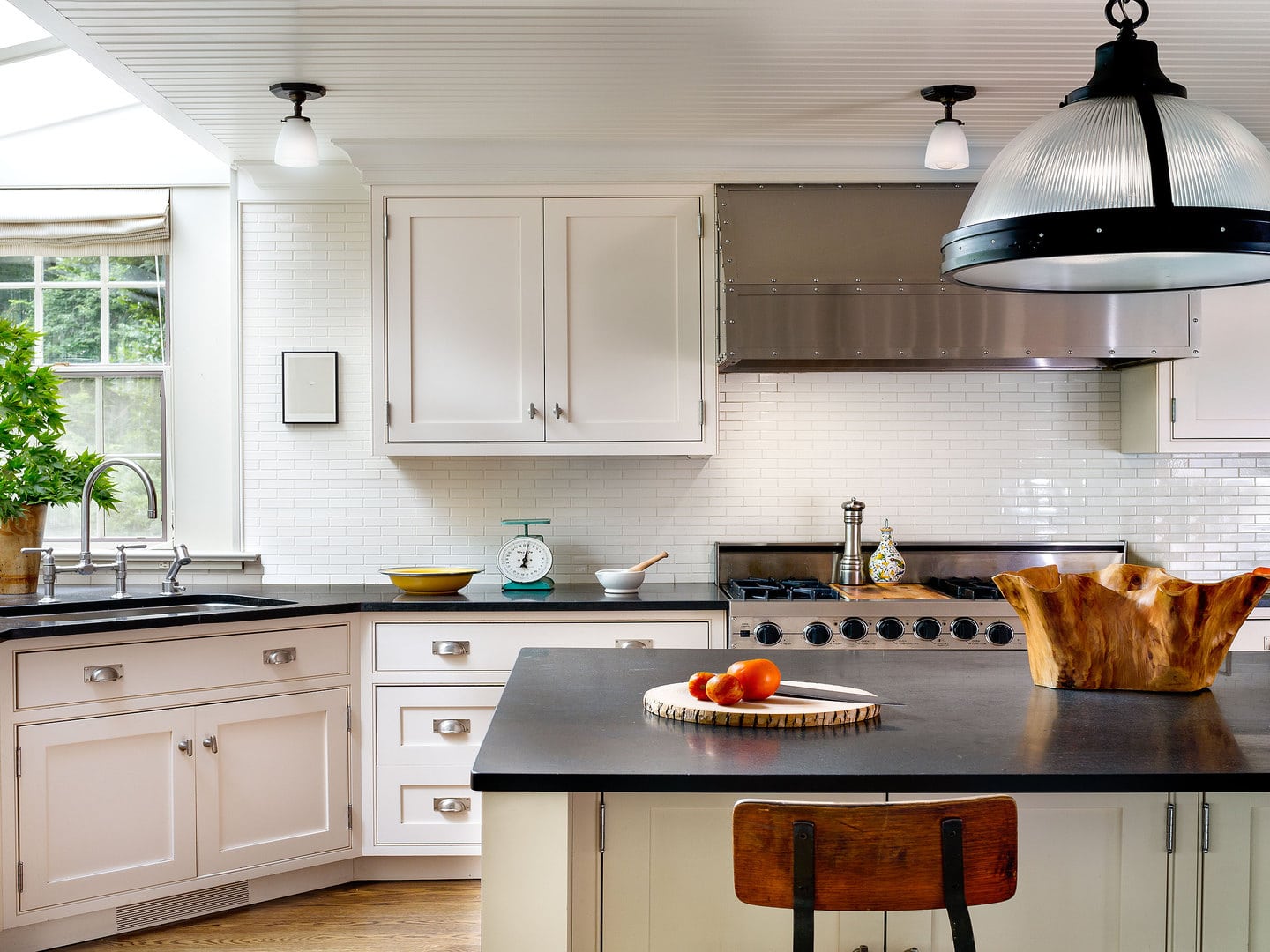
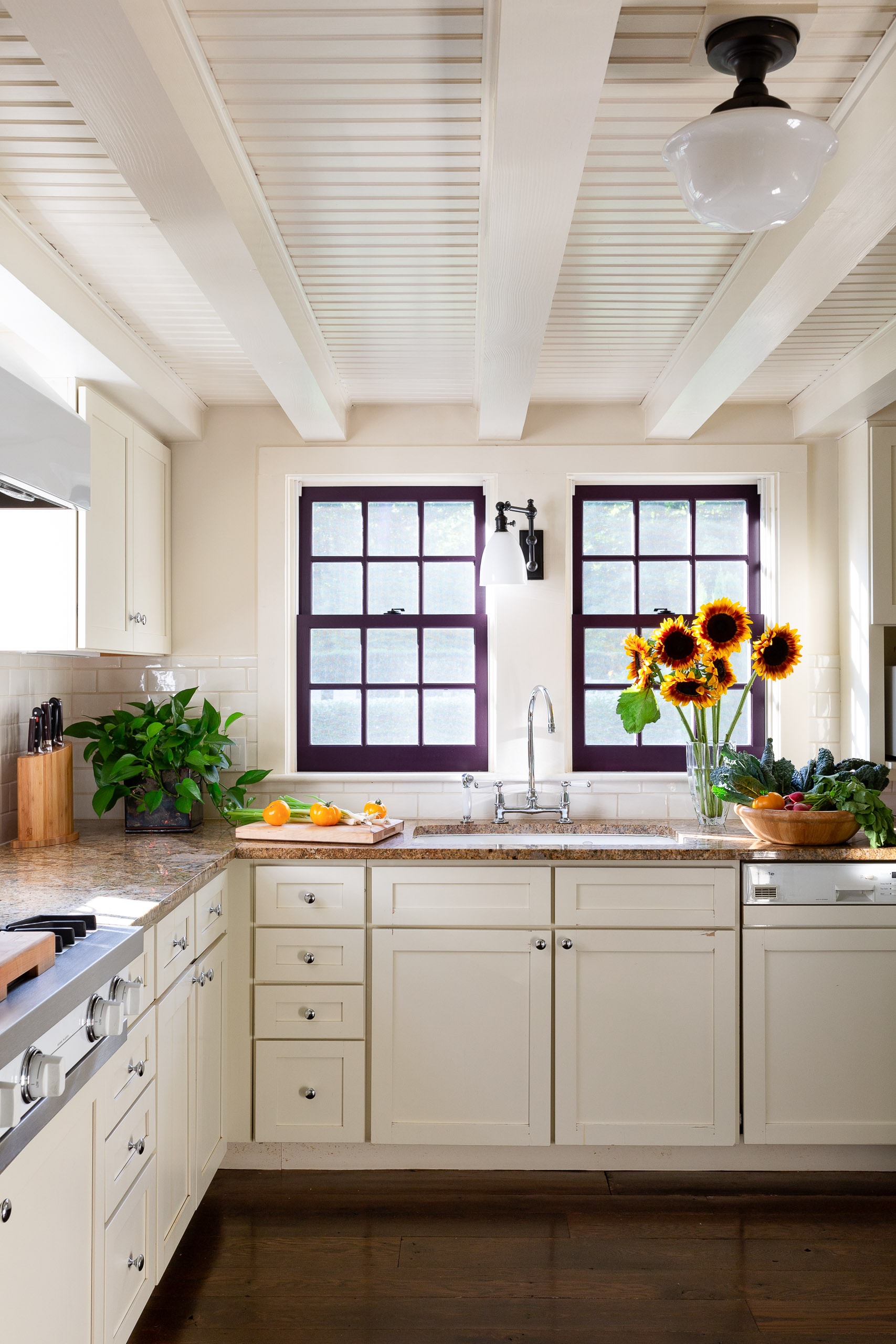
A fresh coat of paint on the walls, beams, and ceiling boards integrated the kitchen into the adjacent dining room. We added a vintage-style ceiling fixture and a swing-arm sconce above the sink. For a naturalistic note, warm brown granite countertops complement the room’s crisp, clean lines.

A fresh coat of paint on the walls, beams, and ceiling boards integrated the kitchen into the adjacent dining room. We added a vintage-style ceiling fixture and a swing-arm sconce above the sink. For a naturalistic note, warm brown granite countertops complement the room’s crisp, clean lines.
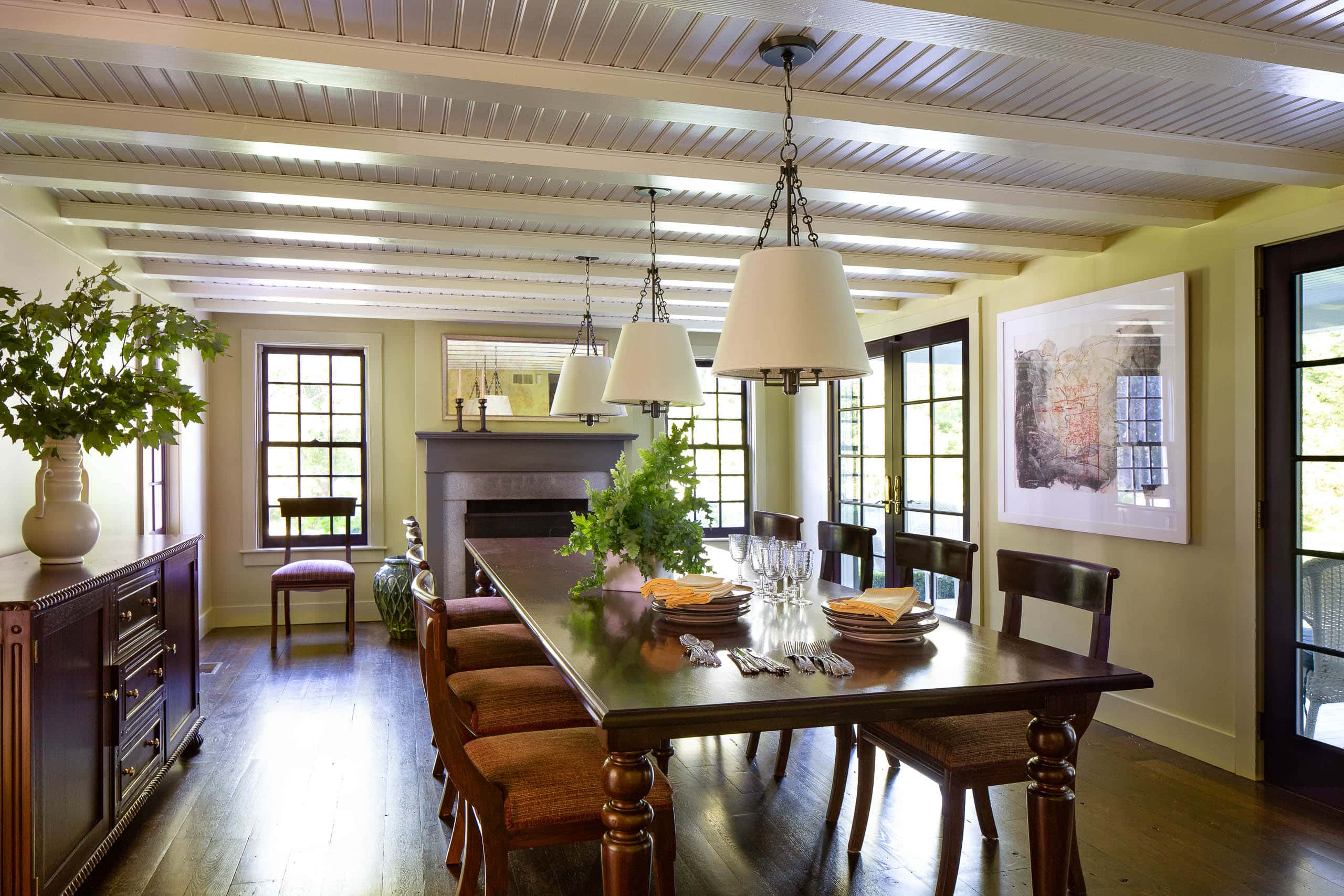
We designed an entire suite of teak Anglo-Indian dining room furniture, including the massive table, sideboard, and 12 chairs. The room can host small gatherings and holiday dinners for as many as 14 guests. A trio of shaded pendant light fixtures provides appealing illumination.

We designed an entire suite of teak Anglo-Indian dining room furniture, including the massive table, sideboard, and 12 chairs. The room can host small gatherings and holiday dinners for as many as 14 guests. A trio of shaded pendant light fixtures provides appealing illumination.

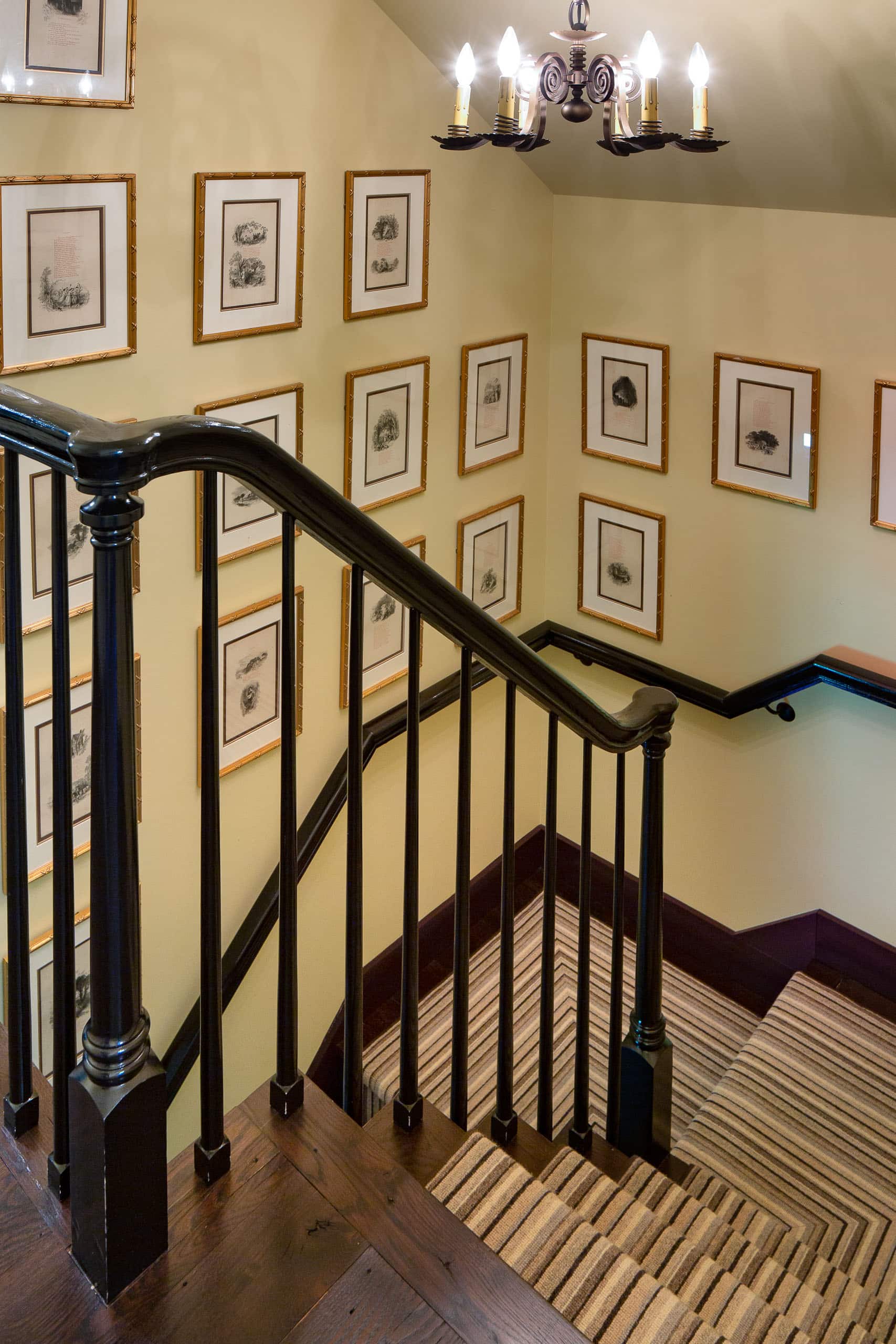
A new staircase leads to the former attic, now a third floor with a bedroom and a half and extensive storage. The striped stair runner was meticulously mitered at the landings to great effect. Each framed artwork from the homeowner’s collection is a line from a poem, which can be read sequentially from top to bottom to complete the verses, lit by a charming chandelier purchased at auction.

A new staircase leads to the former attic, now a third floor with a bedroom and a half and extensive storage. The striped stair runner was meticulously mitered at the landings to great effect. Each framed artwork from the homeowner’s collection is a line from a poem, which can be read sequentially from top to bottom to complete the verses, lit by a charming chandelier purchased at auction.

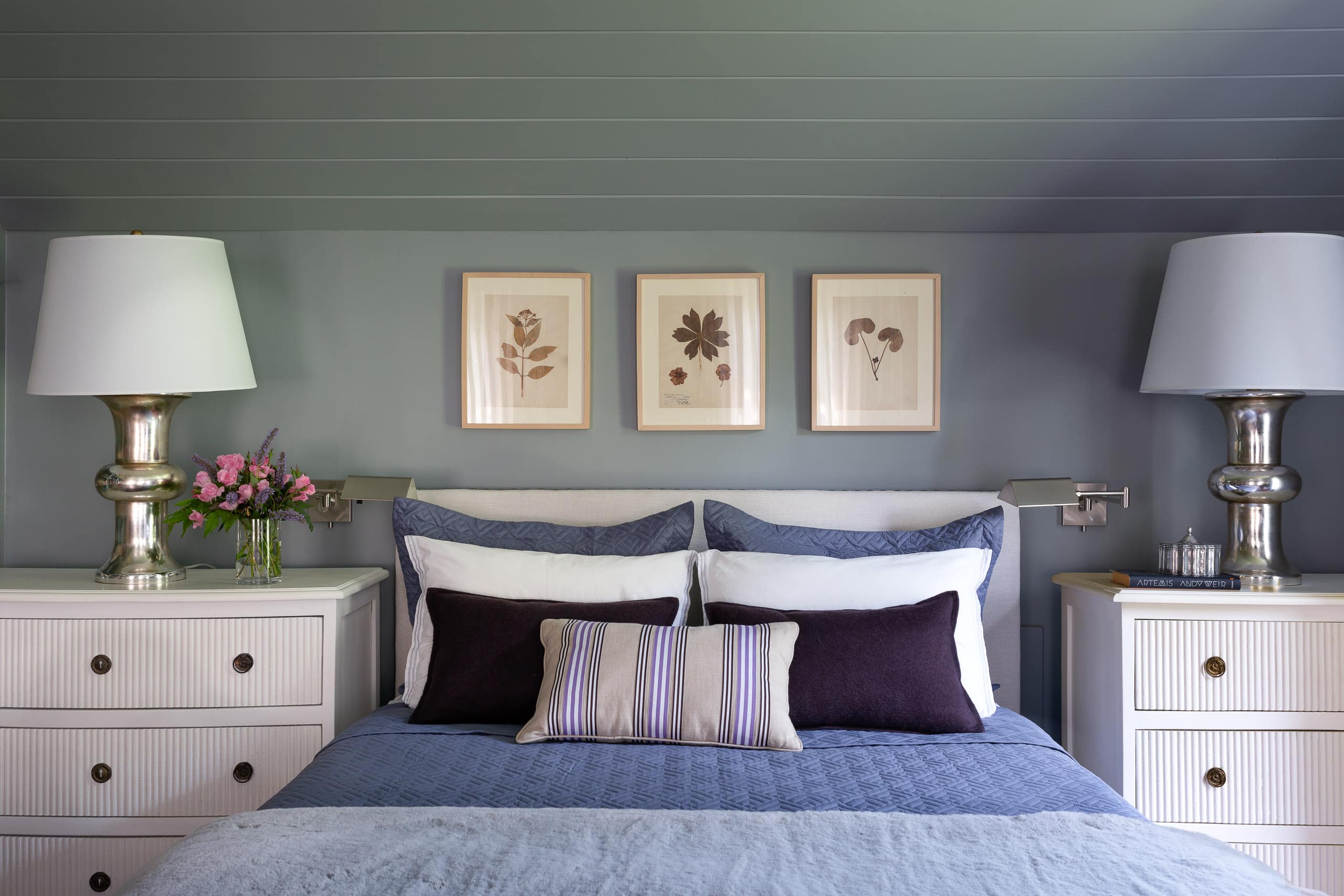
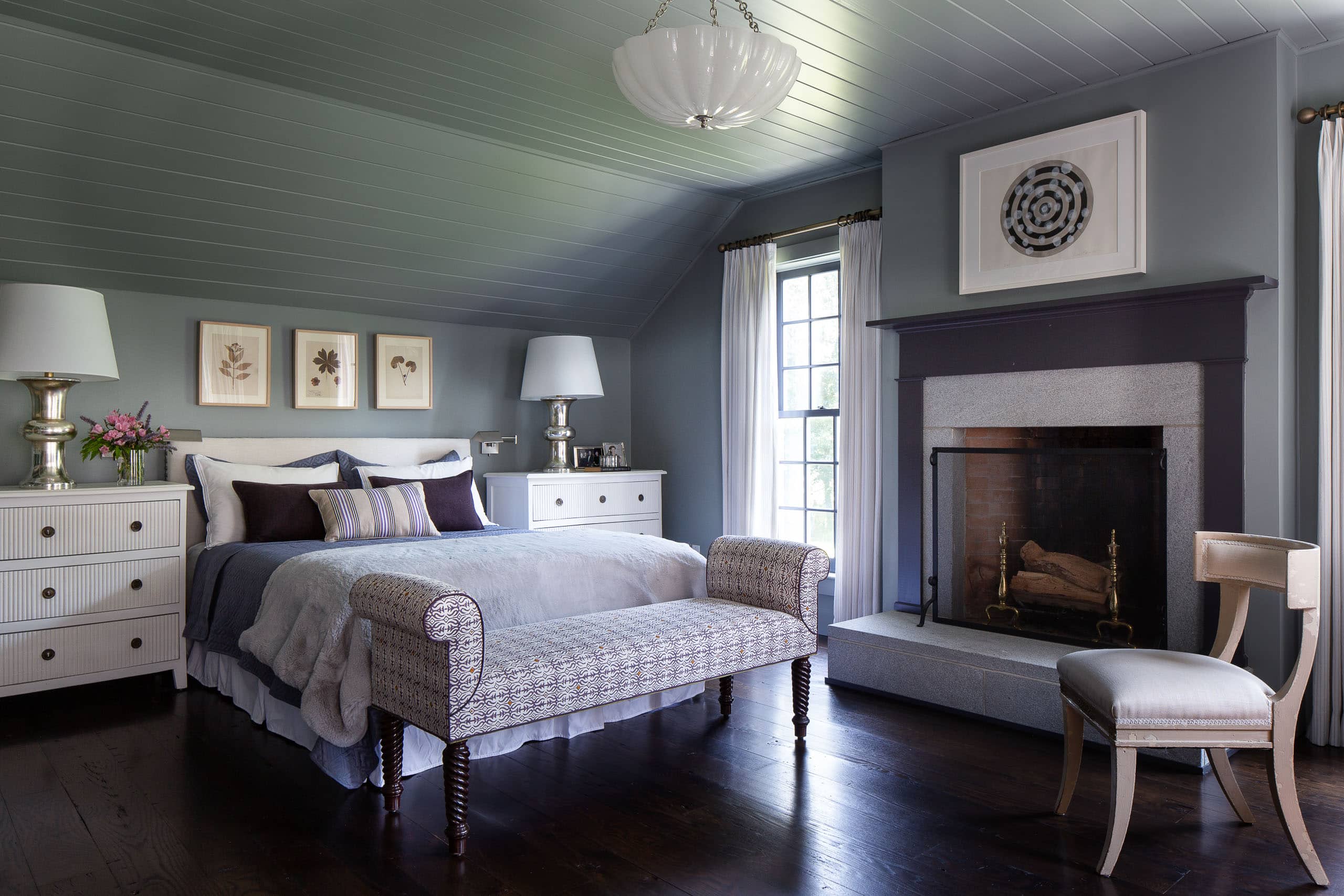
A pair of Swedish-inspired cabinets doubles as bedside tables and coveted storage in the primary bedroom. Matching mercury-glass lamps add to the symmetry and three 19th-century framed botanicals that add a historical charm.
In the primary bedroom, we stained the floors a rich dark brown, added v-grooved planking to the ceiling, and painted everything one color for a calming effect. The upholstered headboard tucks into the eave, with a bench upholstered in block-printed cotton sitting at the foot of the bed and another antique Swedish chair.

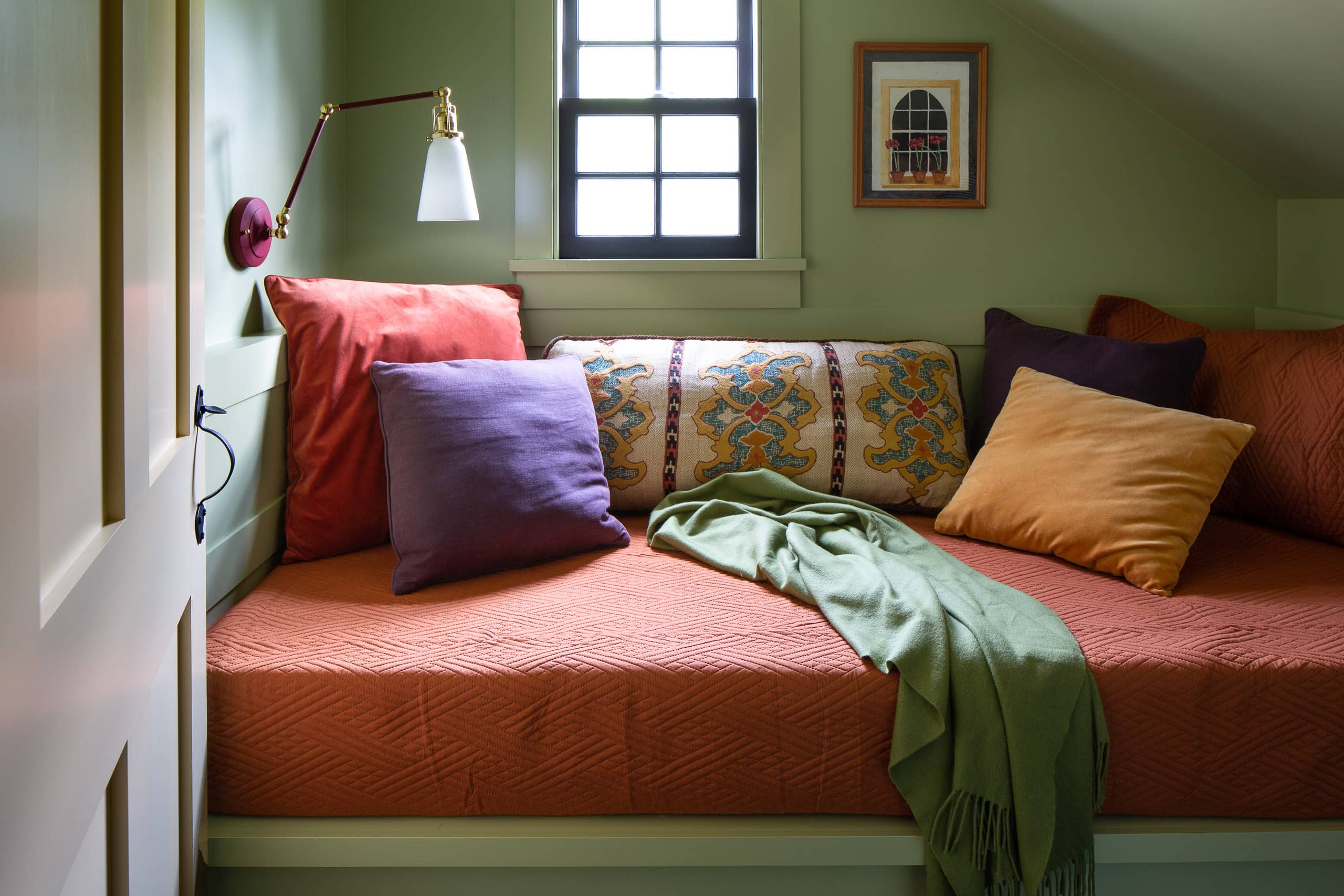
We carved out an extra sleeping space at the top of the stairs – a half-bedroom – on the new third floor; a favorite spot for the client’s grandchildren. The wall sconce and toss pillows’ playful colors add a bit of whimsy, with the diminutive painting by the client’s mother adding a nostalgic generational note.

We carved out an extra sleeping space at the top of the stairs – a half-bedroom – on the new third floor; a favorite spot for the client’s grandchildren. The wall sconce and toss pillows’ playful colors add a bit of whimsy, with the diminutive painting by the client’s mother adding a nostalgic generational note.

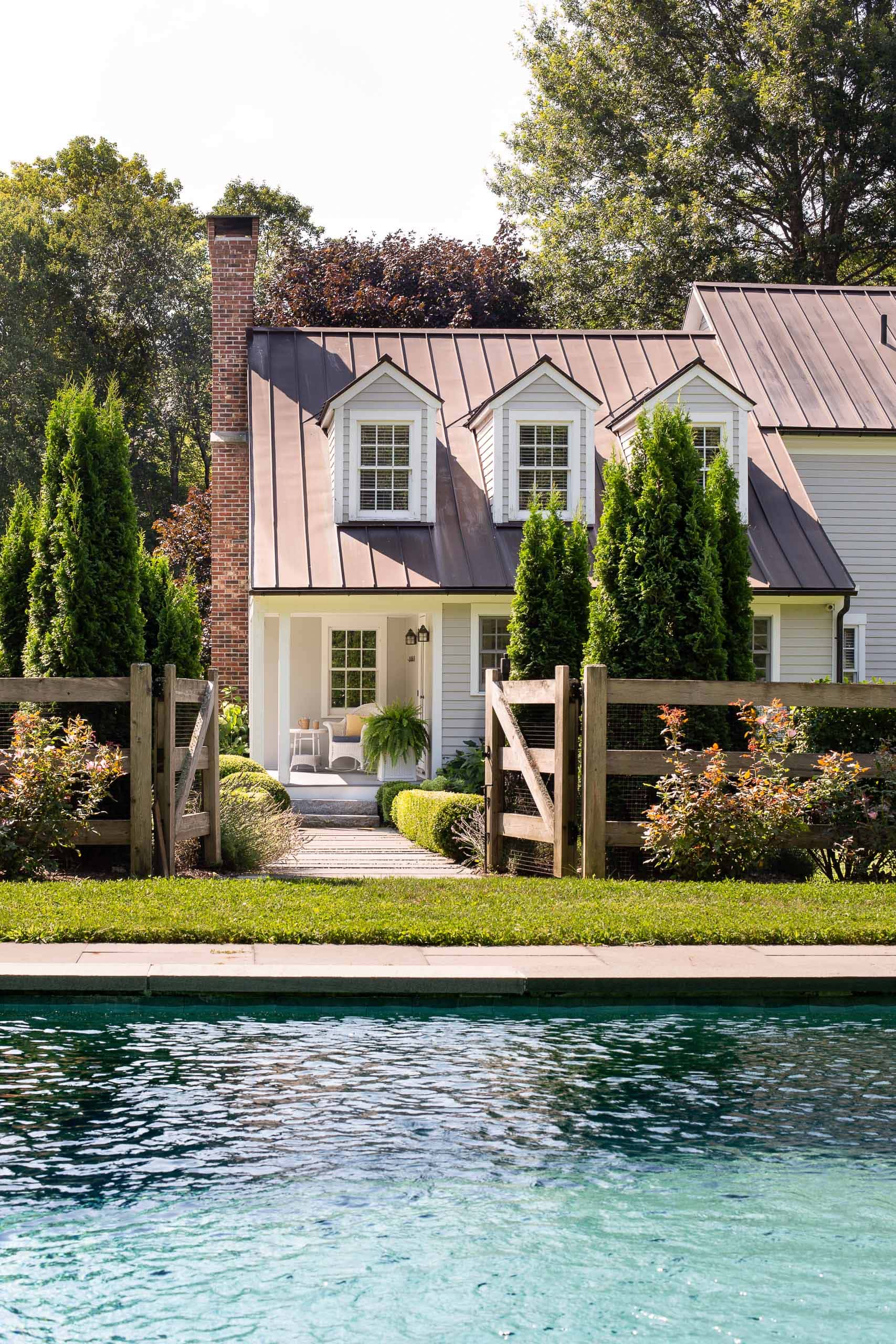
The original structure from the nineteenth century is married to the relatively new back addition by the raised-ridge copper roof we specified to reinforce the character of this historic home. On the axis from the home’s back porch, a stone pathway and mature arborvitae lead to a new ‘paddock-style’ enclosure for the pool, recalling the client’s rural Kentucky heritage.

The original structure from the nineteenth century is married to the relatively new back addition by the raised-ridge copper roof we specified to reinforce the character of this historic home. On the axis from the home’s back porch, a stone pathway and mature arborvitae lead to a new ‘paddock-style’ enclosure for the pool, recalling the client’s rural  Kentucky heritage. 

"Glenn was such a creative and pleasant partner in our recent conversion of an 1810 Greek Revival farmhouse. During this 9 month project, the interior was greatly altered. Glenn always surprises me with his vision and most importantly his ability to work with his team to make what we imagined....real."

Dr. Allen

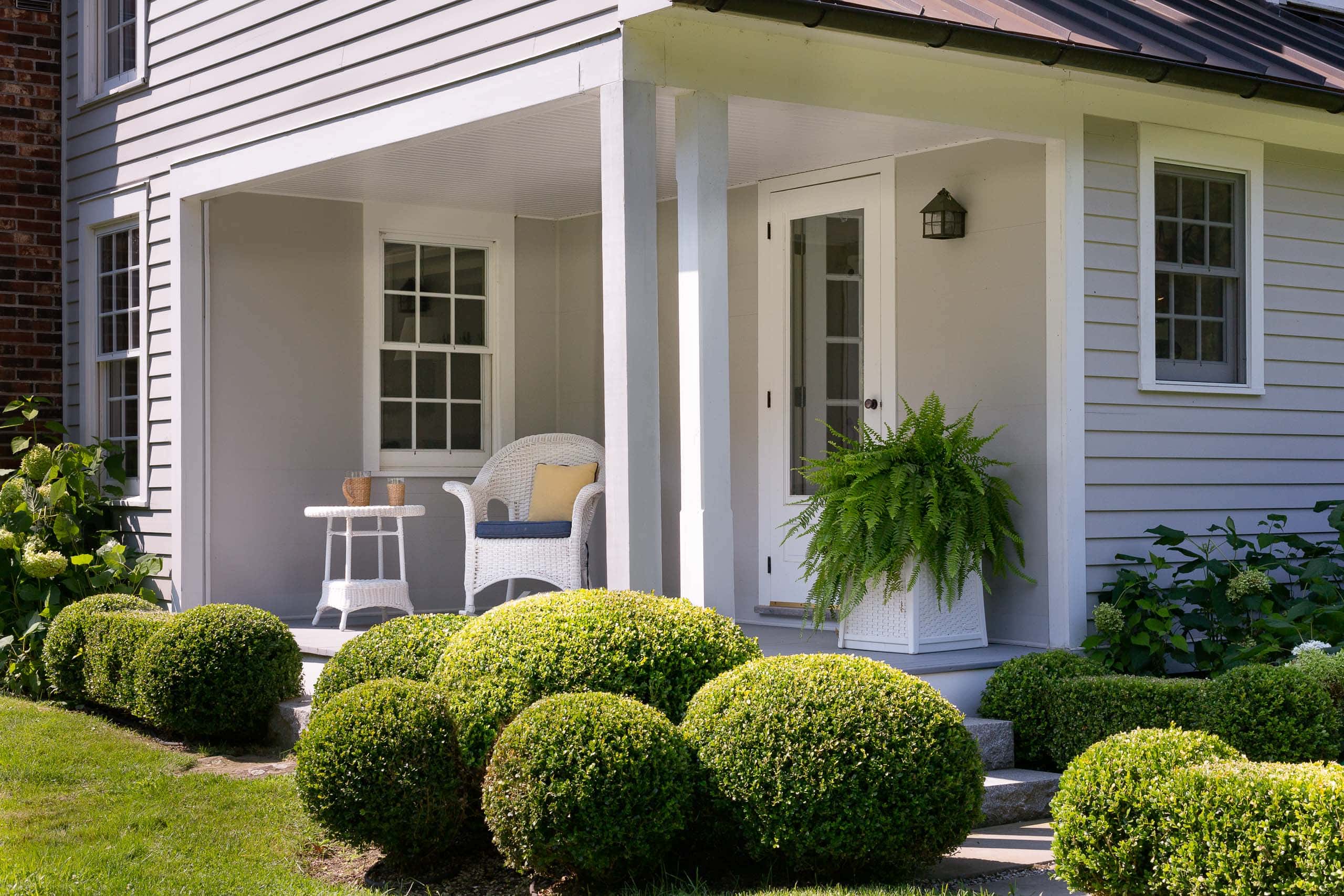
A cluster of globe boxwoods creates a visual counterpoint to the strict linear pattern of the home’s clapboard siding. In the summer, Boston ferns and mature hydrangeas add to the garden’s quintessential New England sensibility.

A cluster of globe boxwoods creates a visual counterpoint to the strict linear pattern of the home’s clapboard siding. In the summer, Boston ferns and mature hydrangeas add to the garden’s quintessential New England sensibility.

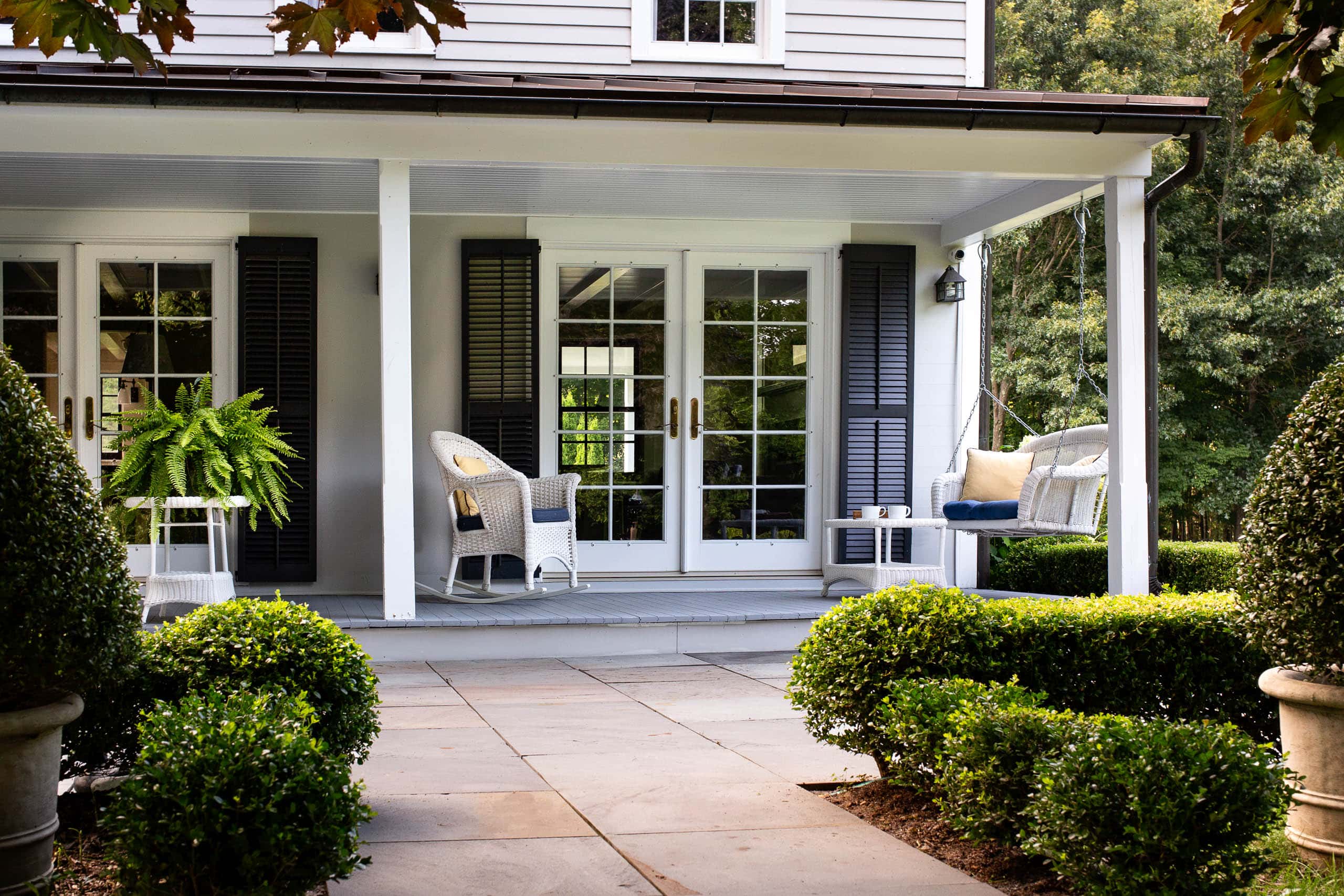
The back porch is part of an addition to the house that dates to the twentieth century. It is just off the dining room, with views of a pond and the bucolic Connecticut countryside beyond. Vintage rattan furniture and a porch swing provide al fresco seating for morning coffee or post-dinner conversations.

The back porch is part of an addition to the house that dates to the twentieth century. It is just off the dining room, with views of a pond and the bucolic Connecticut countryside beyond. Vintage rattan furniture and a porch swing provide al fresco seating for morning coffee or post-dinner conversations.

Senior Designer Craig Strulovitz
Photos by Gross & Daley

Grand Country Residence – Westchester

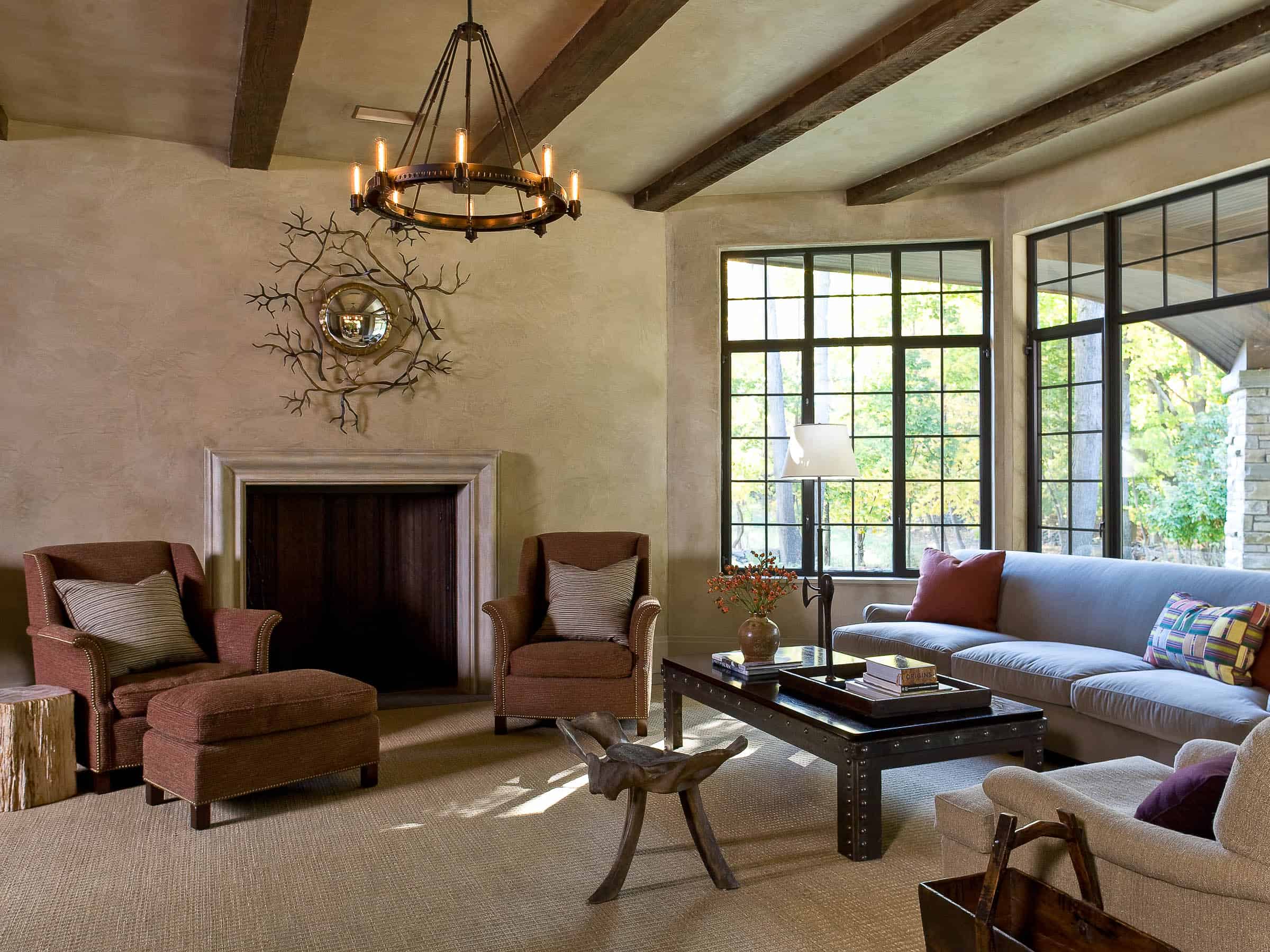
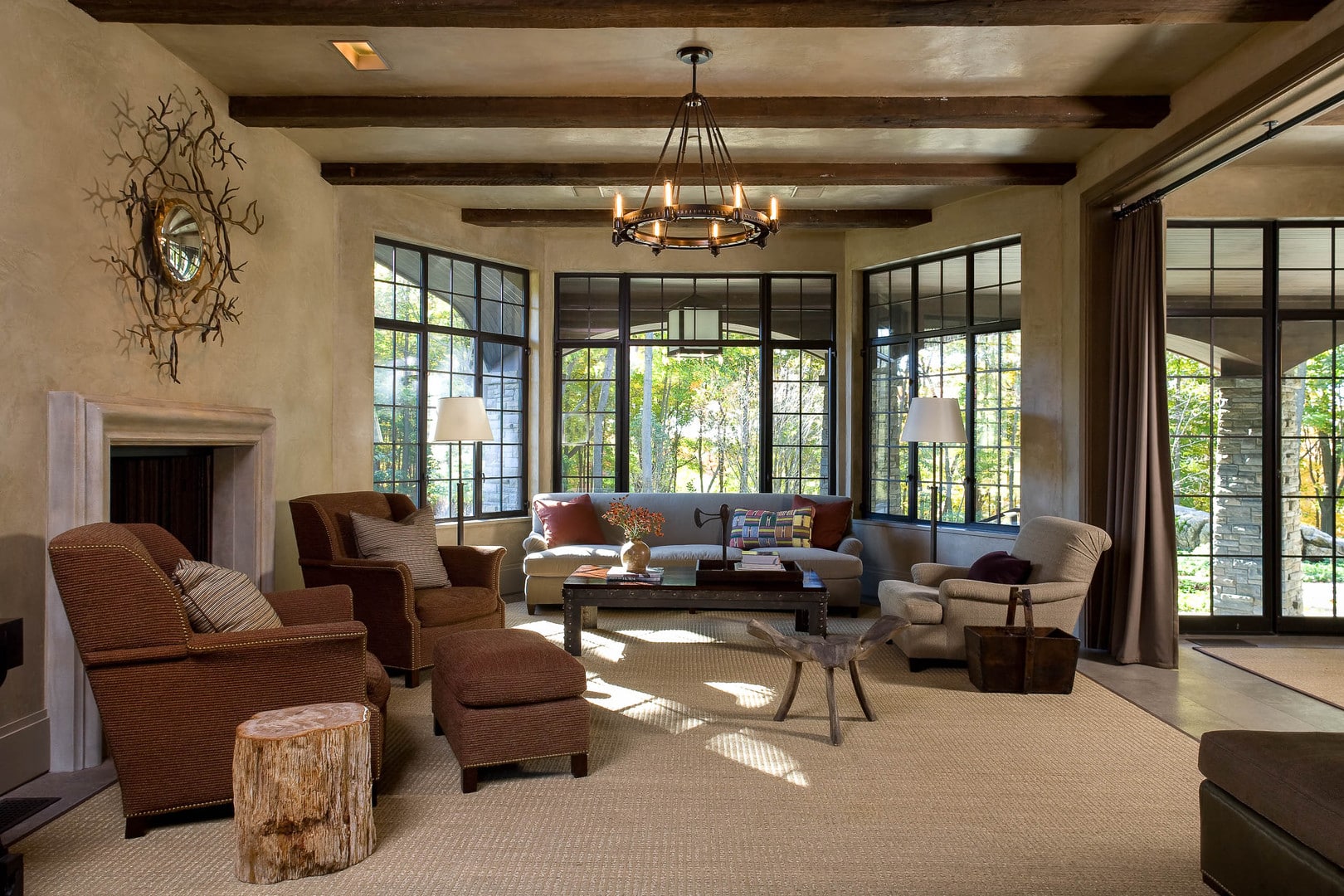
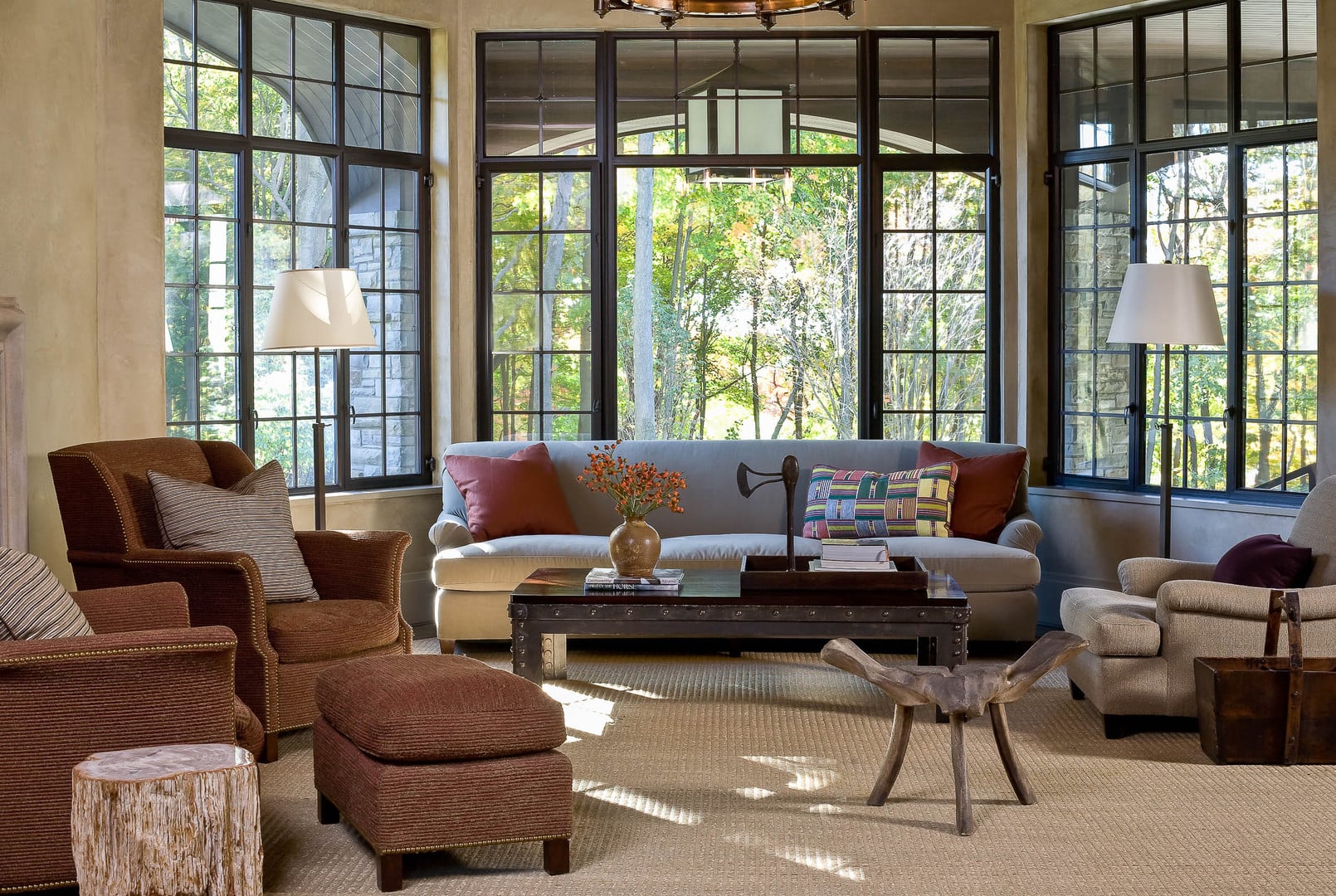
The living room is a study in soft greys and mellow burgundies, with sofas by Jonas Upholstery. The stool is 19th century, made from whale vertebrae; the tree-trunk table is of petrified wood, and the mirror over the fireplace is from Herve van der Straaten. The custom chandelier from Daniel Berglund is made partially from discarded jet-engine parts.

WESTCHESTER, NY

Grand Country Residence

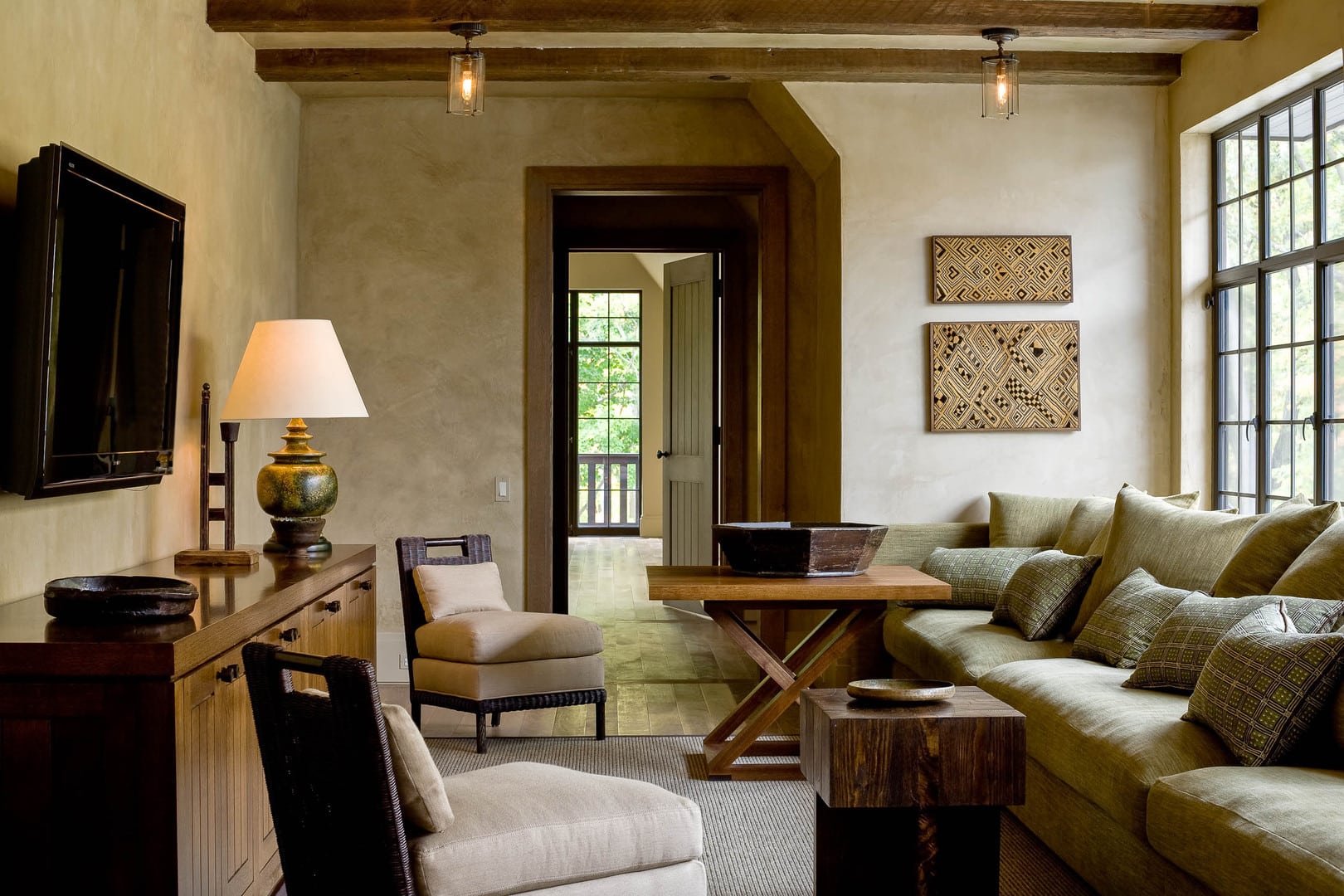
These Manhattan clients acquired a horse farm in upstate New York and decided to build a house from scratch. We were commissioned to invent the interiors, and were involved almost from the inception. The gabled rustic stone house, with vast expanses of steel casement windows, was designed by Tasos Kokaris Architects, and is reminiscent of a country manor house designed for William Randolph Hearst in the early 20th century.

With an abundance of space to work with, the challenge was to create unity, flow and meaningful yet understated decorative relationships from room to room. This we achieved by concentrating on a repertoire of rich, resonant materials–artisanal plaster, cerused oak paneling, planed stone floors–and a muted palette of taupes and driftwood greys which, rendered in the pigmented plaster, achieve a subtle glow. Accents of burgundy, red and persimmon are provided by fabrics and objects. Dark wood floors and sisal carpeting and rugs assure continuity throughout the house.
The overall effect of these rooms is manorial, the reenactment, in 21st century America, of great country houses, both here and abroad. The public spaces invite entertaining on a grand scale, yet they never lose their warmth and dignified informality.

In furnishing these spaces, we looked to eras much earlier than his favorite late 19th and early 20th centuries. The scale and mood of the rooms seemed to demand a more massive, even rugged approach, with 16th and 17th century European carved oak chests and tables an appropriate choice. Interestingly, the use of these pieces from a remote time did not result in period rooms, but in an aura of timelessness. Combined with comfortable large sofas and club chairs upholstered in highly textured fabrics such as washed linen and chenille, the early pieces take on a new relevance, even modernity.

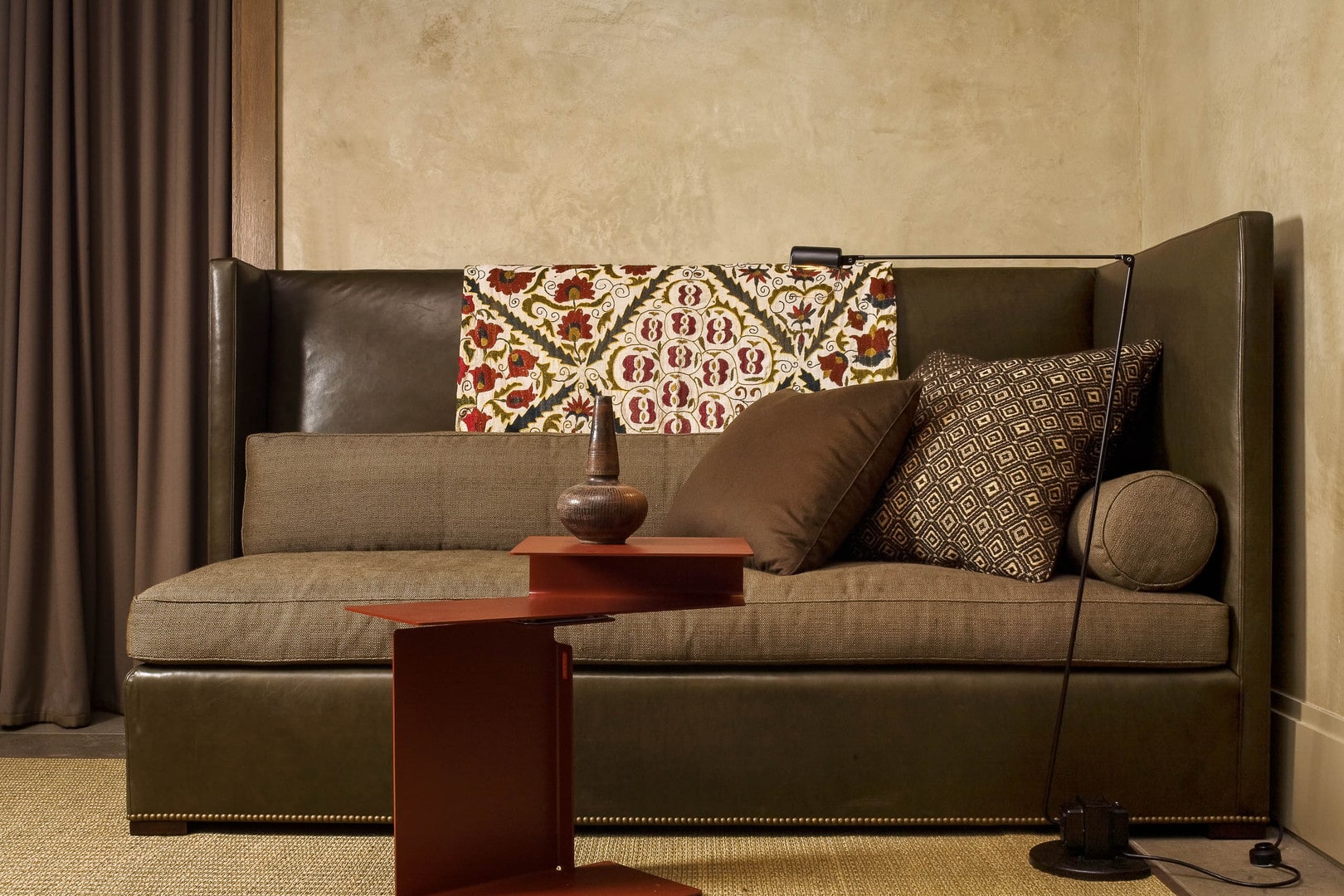
A custom daybed features a leather surround trimmed in nailheads; the mattress and bolsters are upholstered in linen, with an intricate Suzani textile from Uzbekistan for color. The lacquered steel table is designed by Konstantin Grcic; the delicate low-voltage floor lamp is as minimal as a lamp can be.

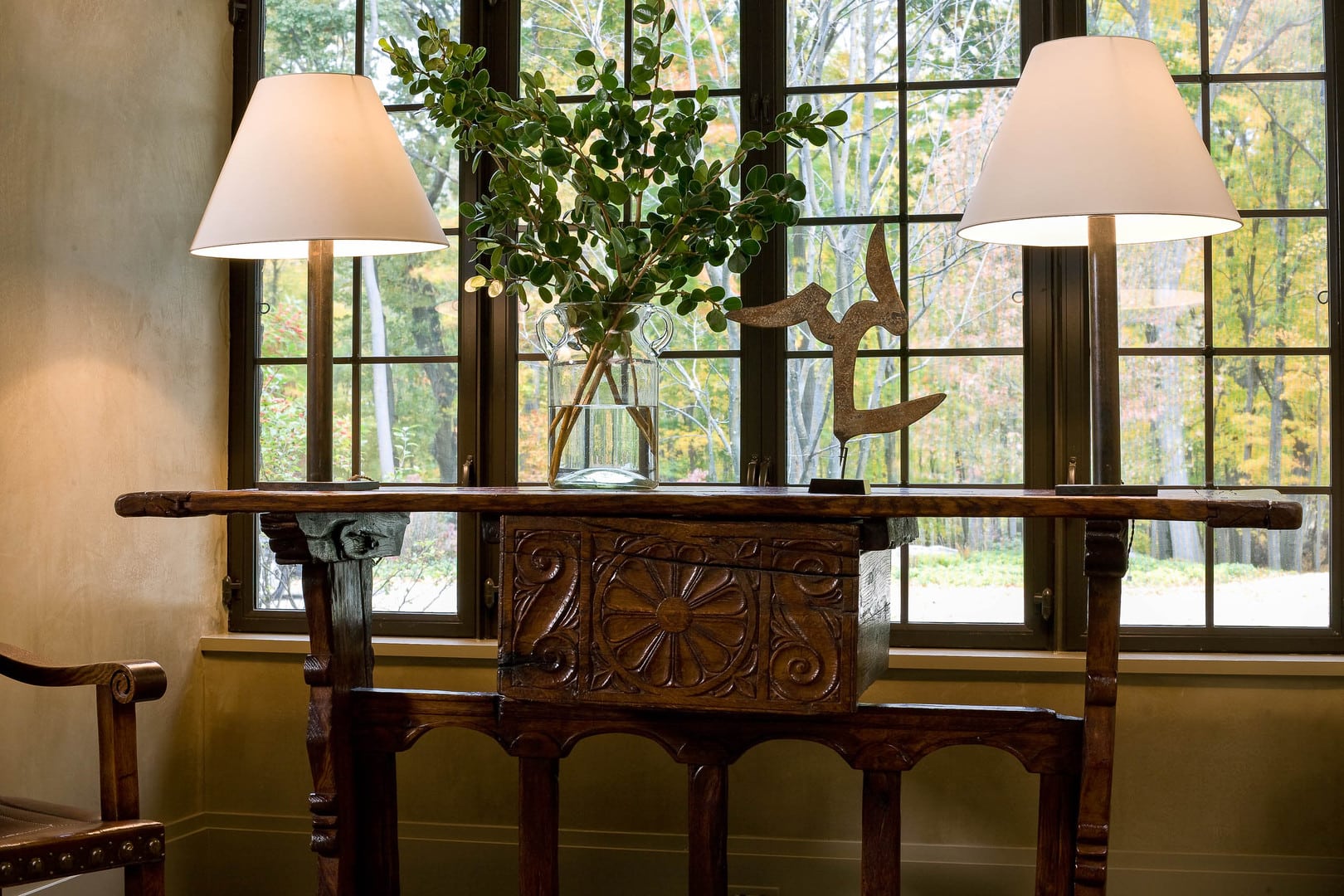
A 17th century Spanish altar table with one deep drawer to hold a bible sits in front of a large steel casement window, simple steel lamps with paper shades offer light and a sculptural piece of vintage African currency on a stand.

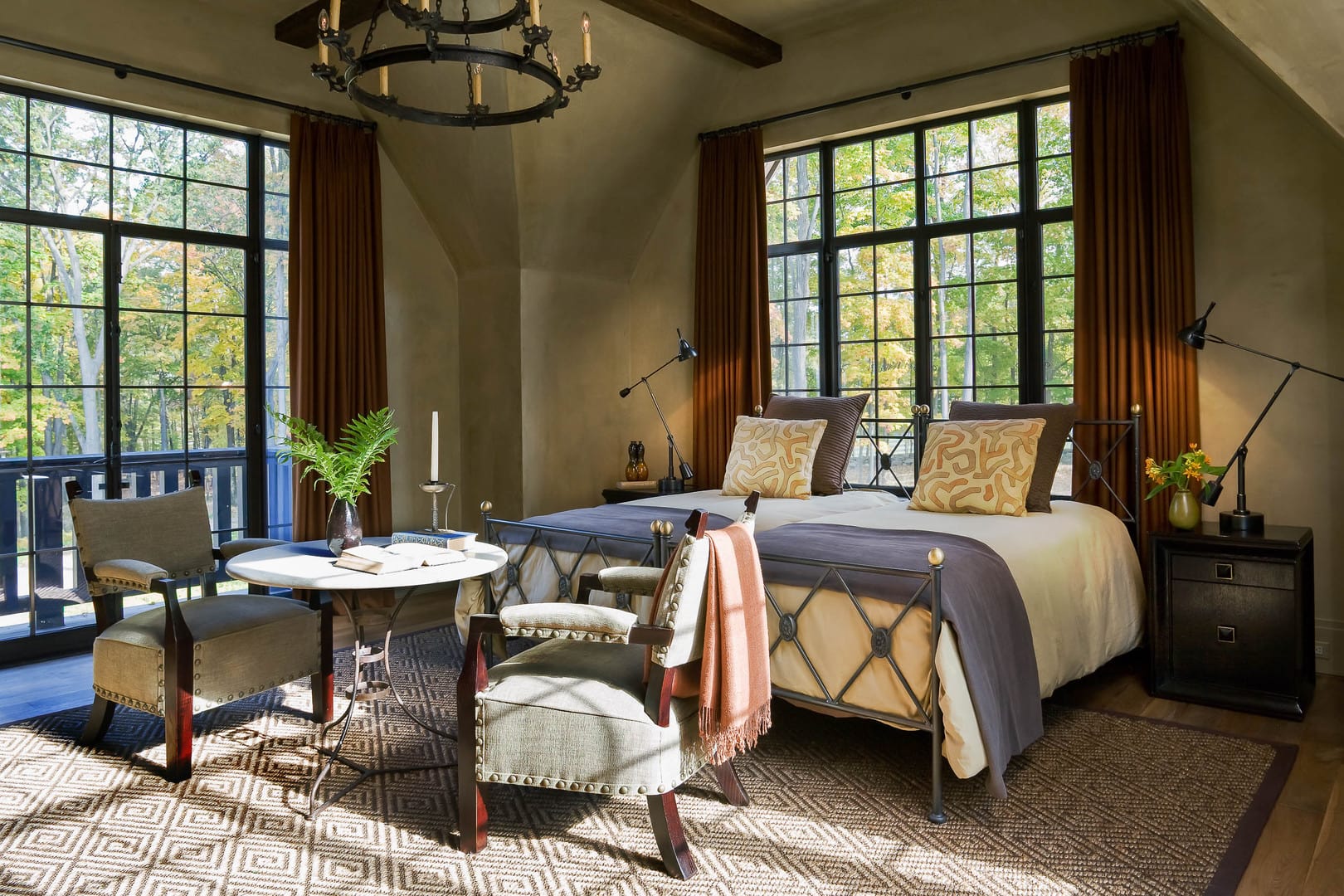
In the guest bedroom, diamond patterns form a leitmotif in the structure of the steel headboards and in the woven sisal rug. The chairs, by Thomas O’Brien, add a modern incarnation of the Arts & Crafts period.

A sofa upholstered in dark green chenille complements the grey of the artisanal plaster walls, adding textural interest. On the table, a Tibetan vessel in vibrant red-orange is juxtaposed with an ancient Greek sculpture fragment.

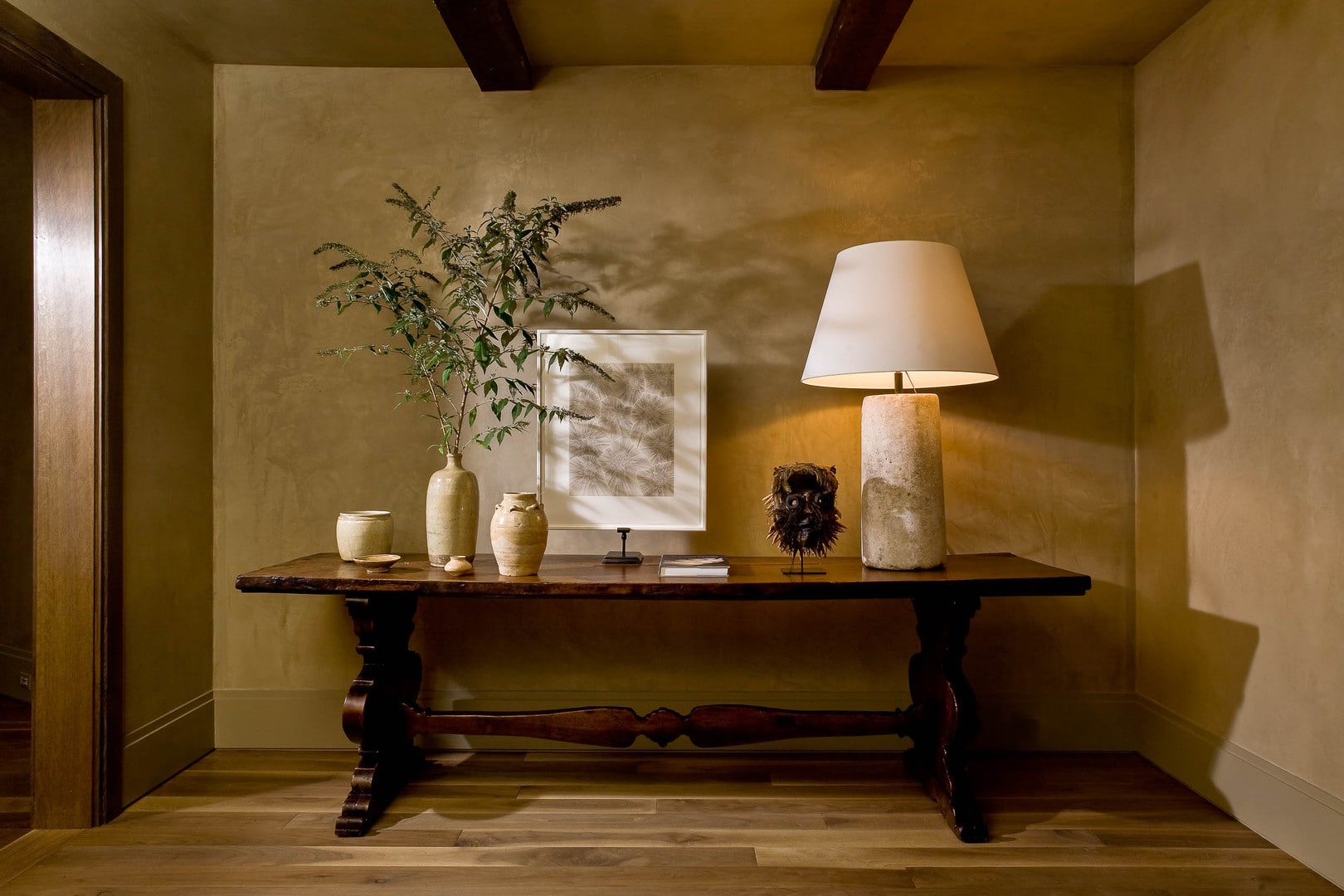
In the hallway, artisanal plaster walls in a pale cocoa offer a variation in palette. A massive 16th century Roman Renaissance table hosts an array of bone-colored artifacts, including a large stone lamp, pottery of various eras and a work on paper by James Siena.

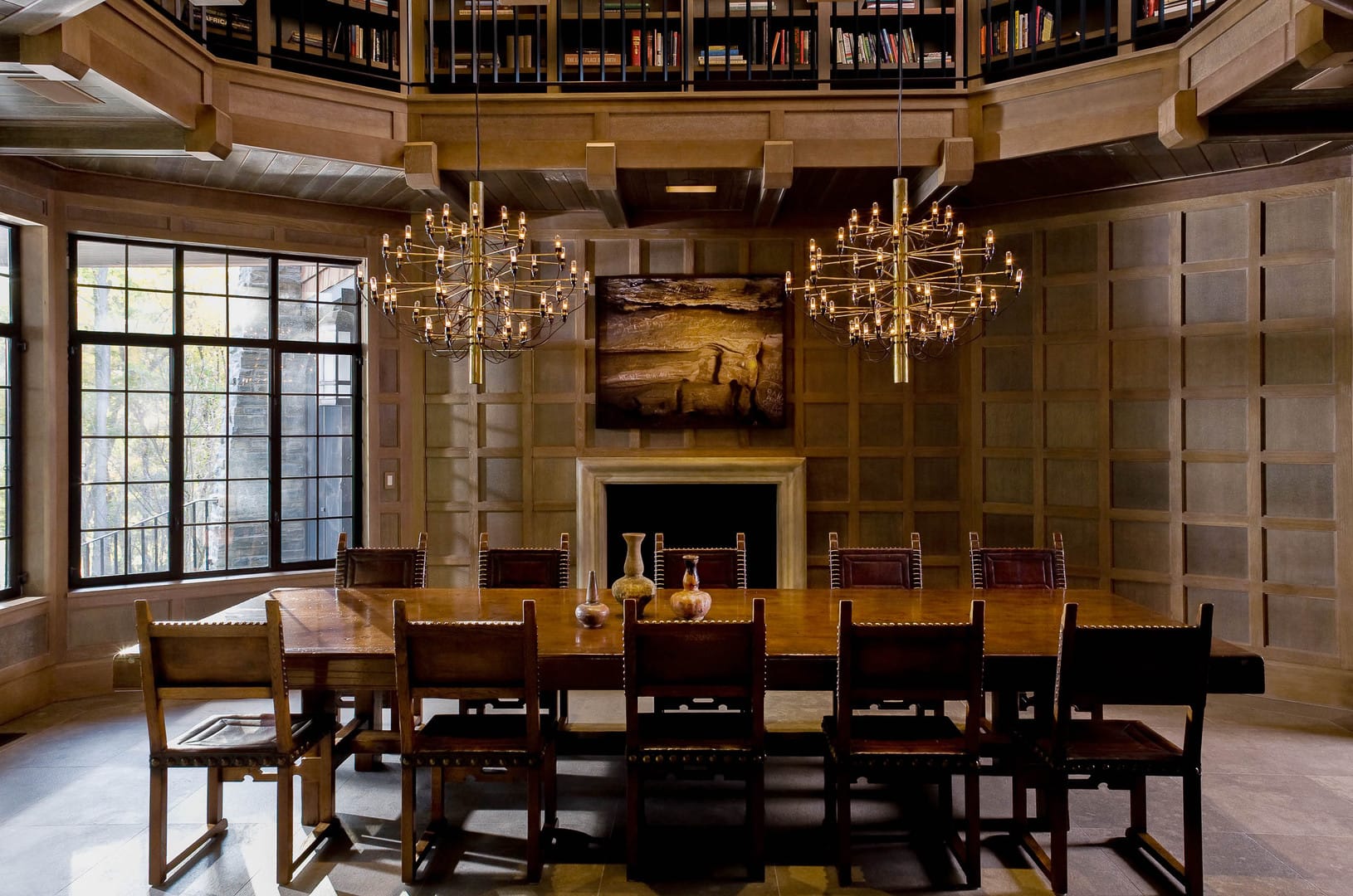
The double-height dining room, with a library catwalk above the dining area, is a tour de force of light and shadow. Above the mantelpiece is a photograph of the interior of a cave by Jeff Whetstone, which, in tones similar to that of the cerused oak paneling, seems to have been created just for this room. The chairs are French, c. 1900, with their original leather upholstery, from Lucca Antiques. The enormous refectory table is custom; the chandeliers, vintage Sarfatti.
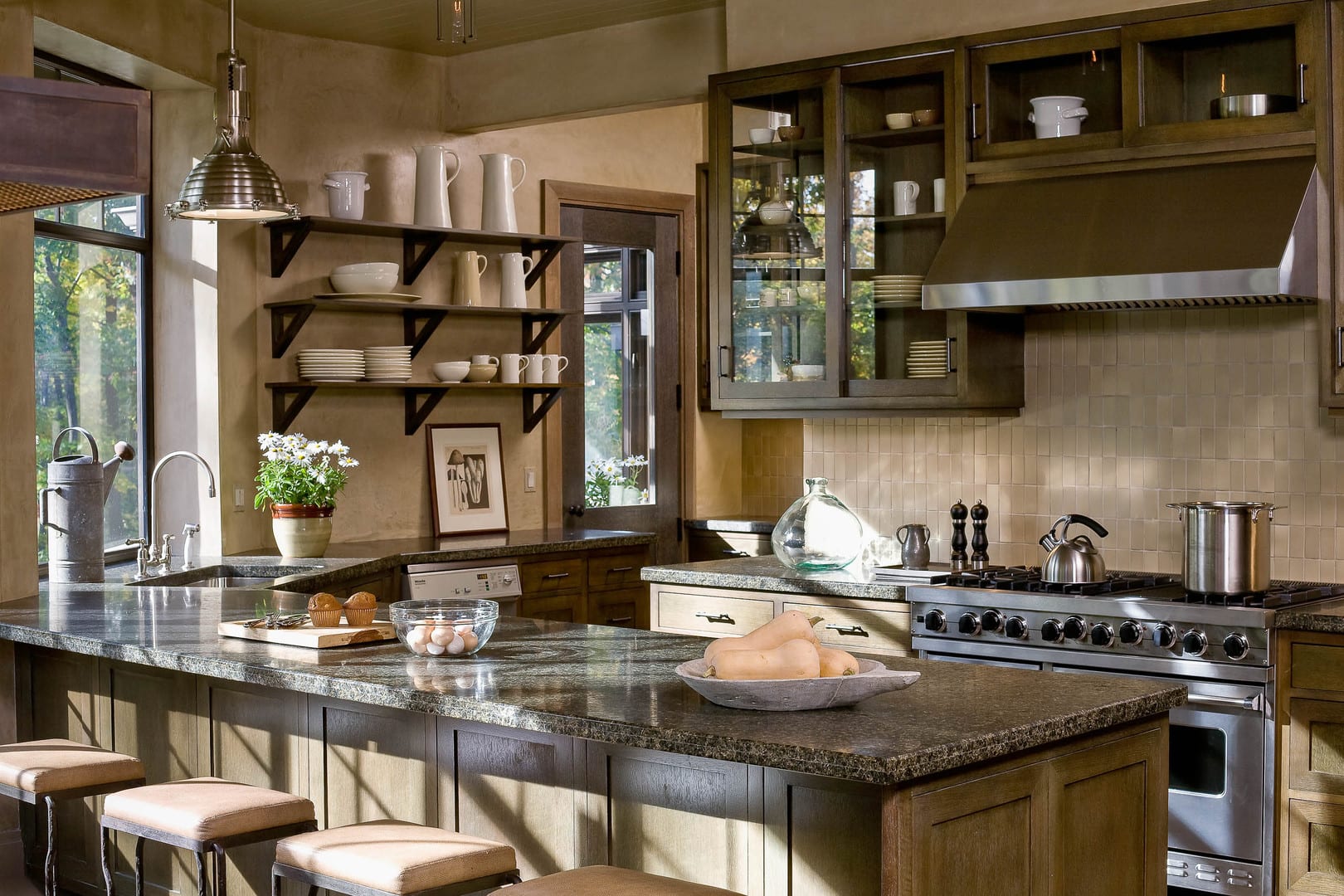
Warmth, informality and honesty in materials infuse the Kitchen, where open shelving holds white porcelain and hand-made tiles face the wall behind the stove. Other materials include Uba Tuba granite, stainless steel and cerused oak.

The kitchen, graced by vast steel casement windows, is grandly rustic, with its long line-edge table prepared for eight in vintage-style wicker chairs.

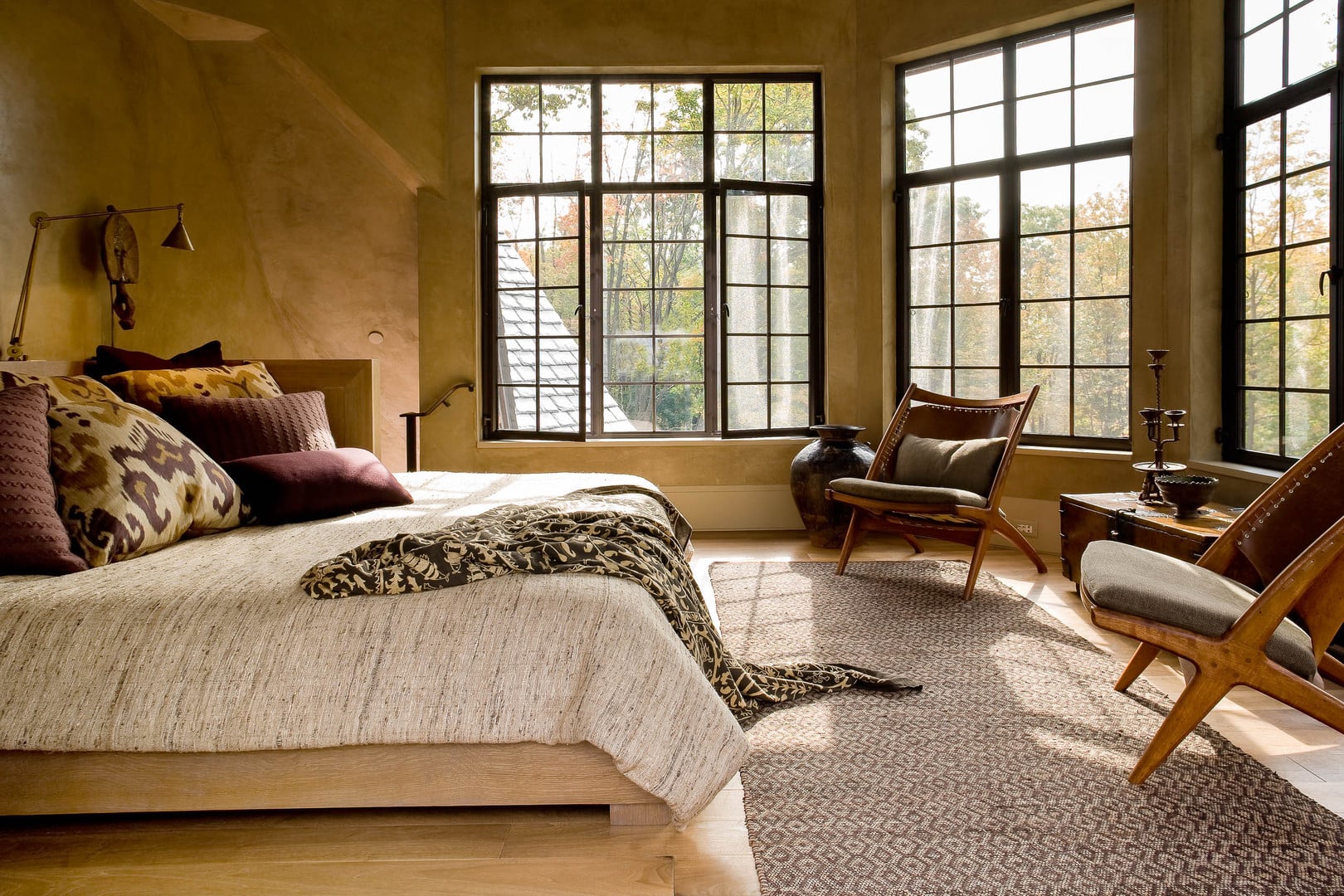
Rugged elegance characterizes the master bedroom, where the rug is of woven suede, the bedcover of handwoven raw silk. The sling back chairs are by Frederik Kayser, c. 1950. The antique trunk is Korean.

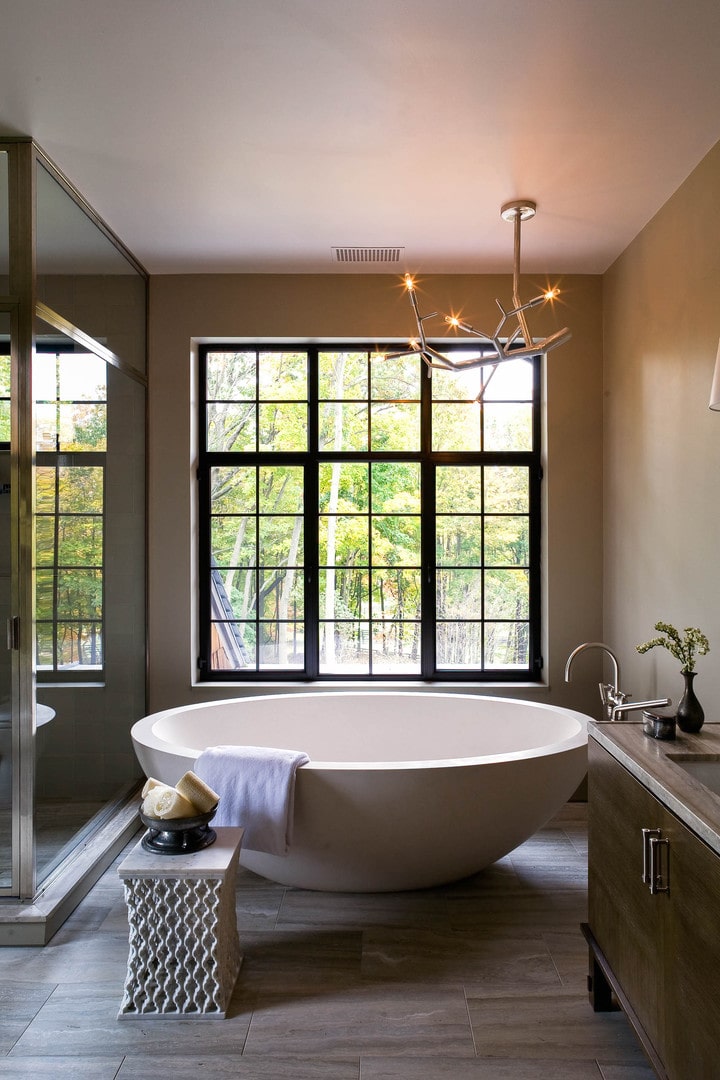
In the master bath, a solid stone tub is complemented by the carved marble stool, from Stephanie Odegard. The aluminum chandelier is titled “New Growth,” from C. P. Lighting.

Senior Designer Craig Strulovitz
Photos by Gross & Daley