High-Rise Duplex Apartment – NYC

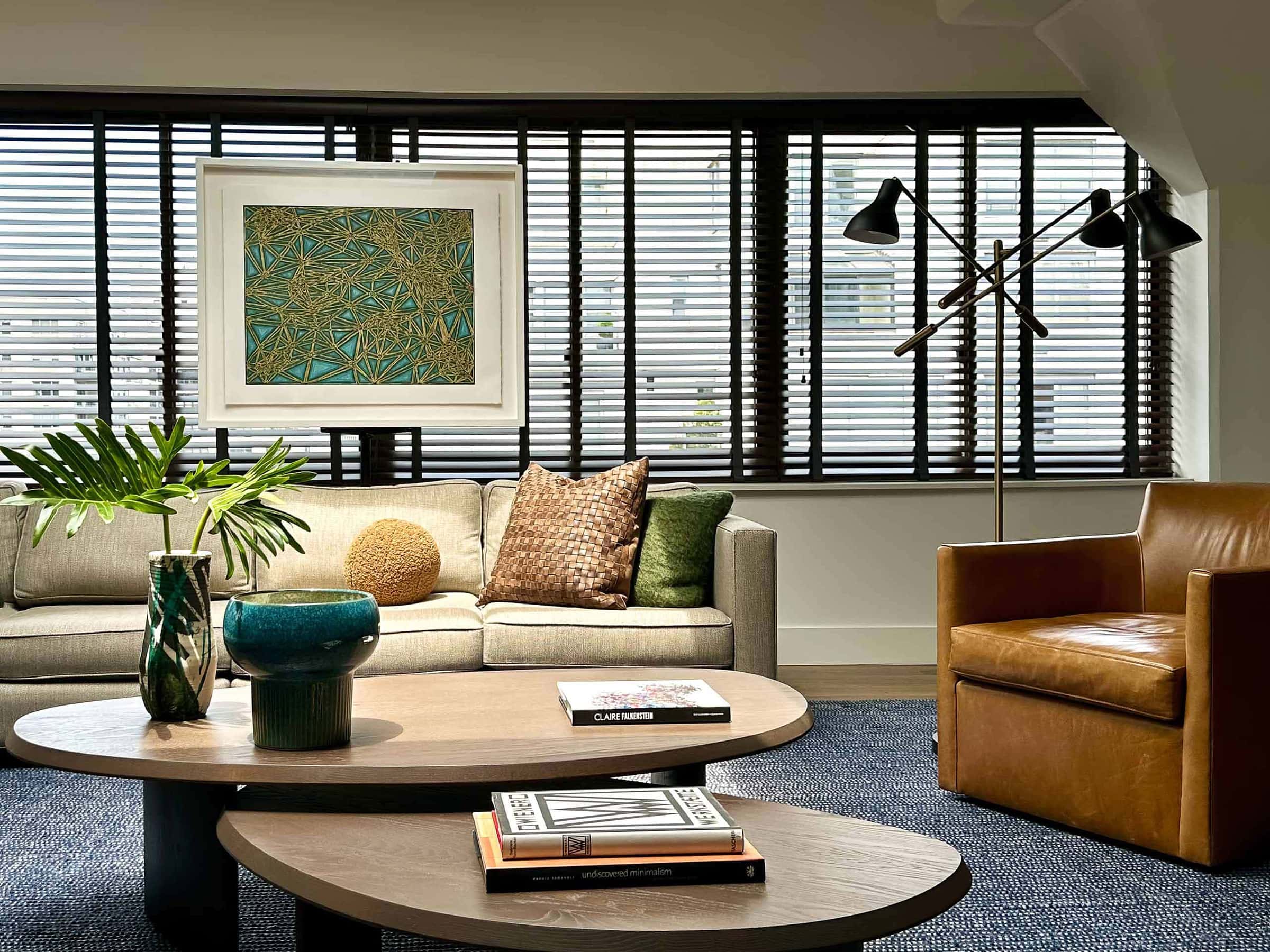
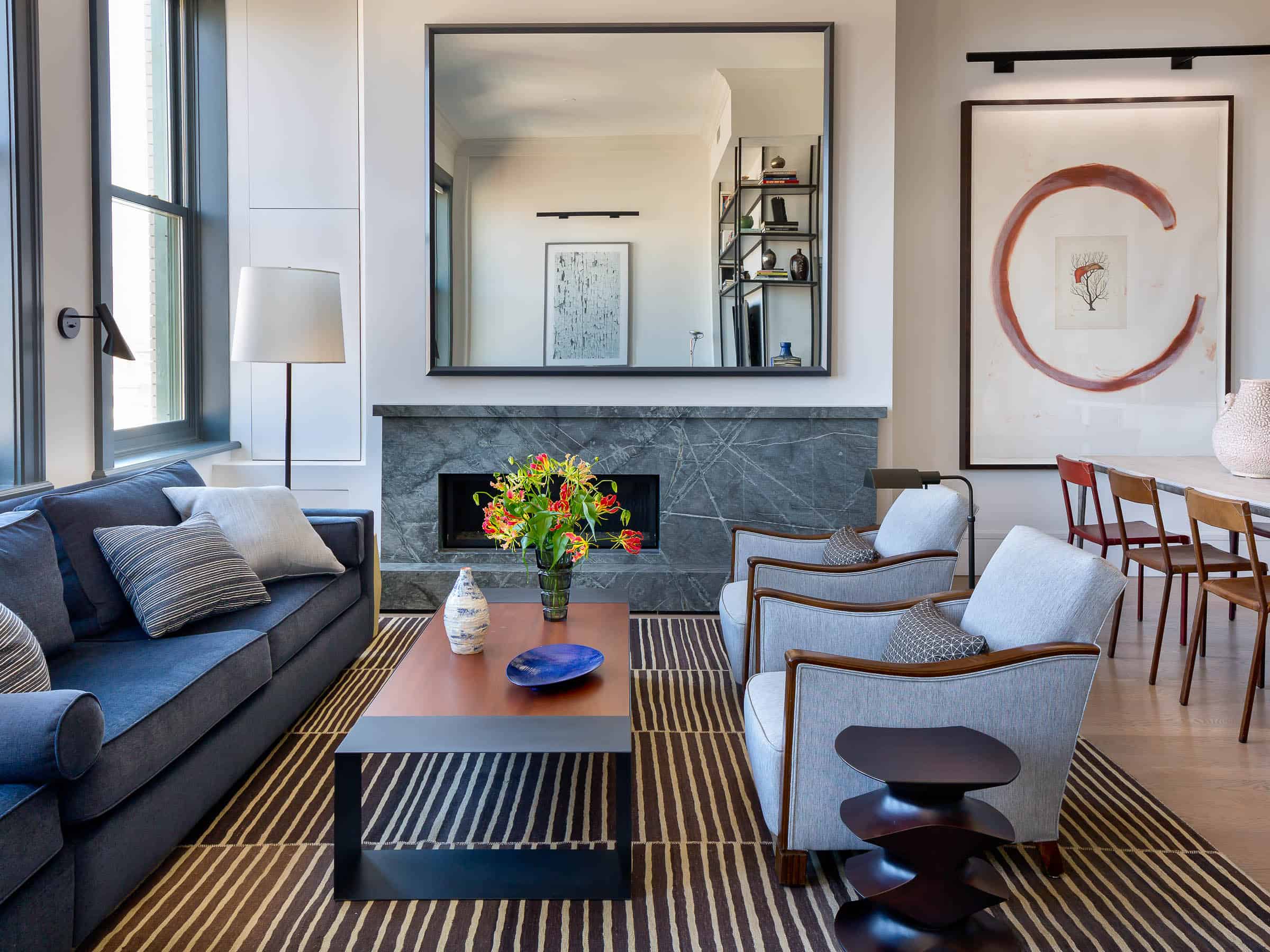
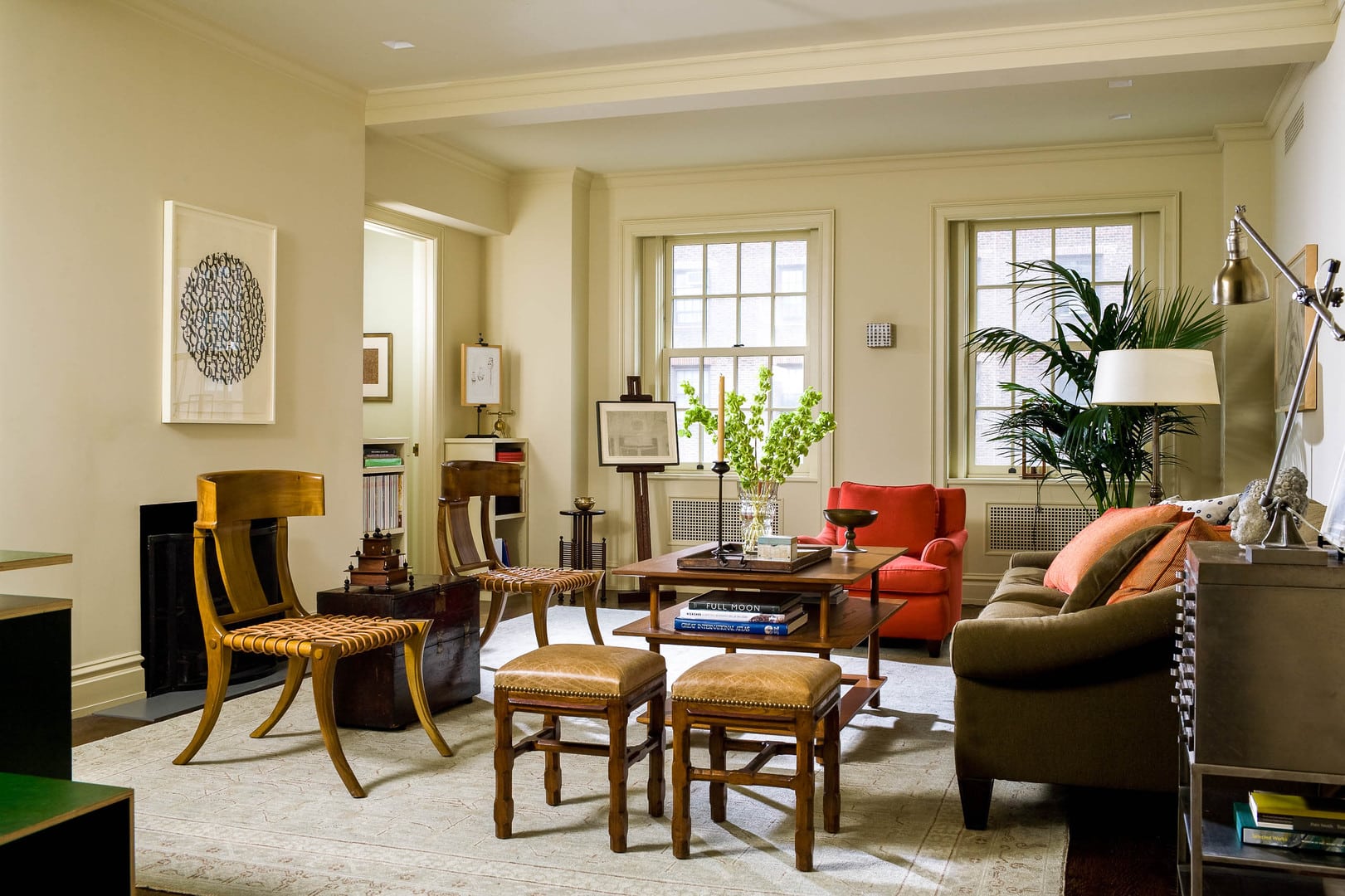
The living room is a tour de force of understatement, a sumptuous composition of palest greys, silvery blue tones and creams, accented by early-to-mid-century French and Scandinavian ceramics. The armchairs are from Holly Hunt, and the sofa is upholstered in a rich velvet by Gretchen Bellinger.

MIDTOWN EAST – NYC

High-Rise Duplex Apartment

The challenge posed by this 4000 square foot duplex near the United Nations, in one of a pair of towers built by architect Wallace Harrison in 1966, is that its exterior glass walls epitomize modernity, while its apartment interiors are organized into more traditional rooms. The building, once inhabited by the great decorator Billy Baldwin, treads an odd ground between the radiant utopia represented by the U.N. complex and the old-world gentility of nearby Beekman Place.

When client Caroline Hirsch, proprietress of Caroline’s Comedy Club, acquired the duplex apartment on a very high floor, with its incomparable natural light and views, we had to invent a language of architectural detail which would respect the modernity of the building’s skin while creating a greater sense of texture and material richness within the rooms, which, as Hirsch remarked, were “like a blank canvas,” devoid of ornamentation. Our strategy was inspired by looking at a certain early Cubist Picasso painting which evinced architectural clarity yet had a warm, rich palette.

We shifted interior walls and partitions to better correspond to the building’s mullion grid, reinstating and clarifying the classical layout of the public rooms and kitchen on the lower floor, bedrooms above. Then we introduced eight-foot mahogany doors with thick frames and custom nickel hardware; and in the library, oak paneling against which Modernist works of art are hung. The palette, muted, is calibrated from white to ivory to beige to taupe to brown to shades of blue. The 20th century furniture forms a quietly elegant counterpoint to Hirsch’s ambitious art collection, which takes pride of place.

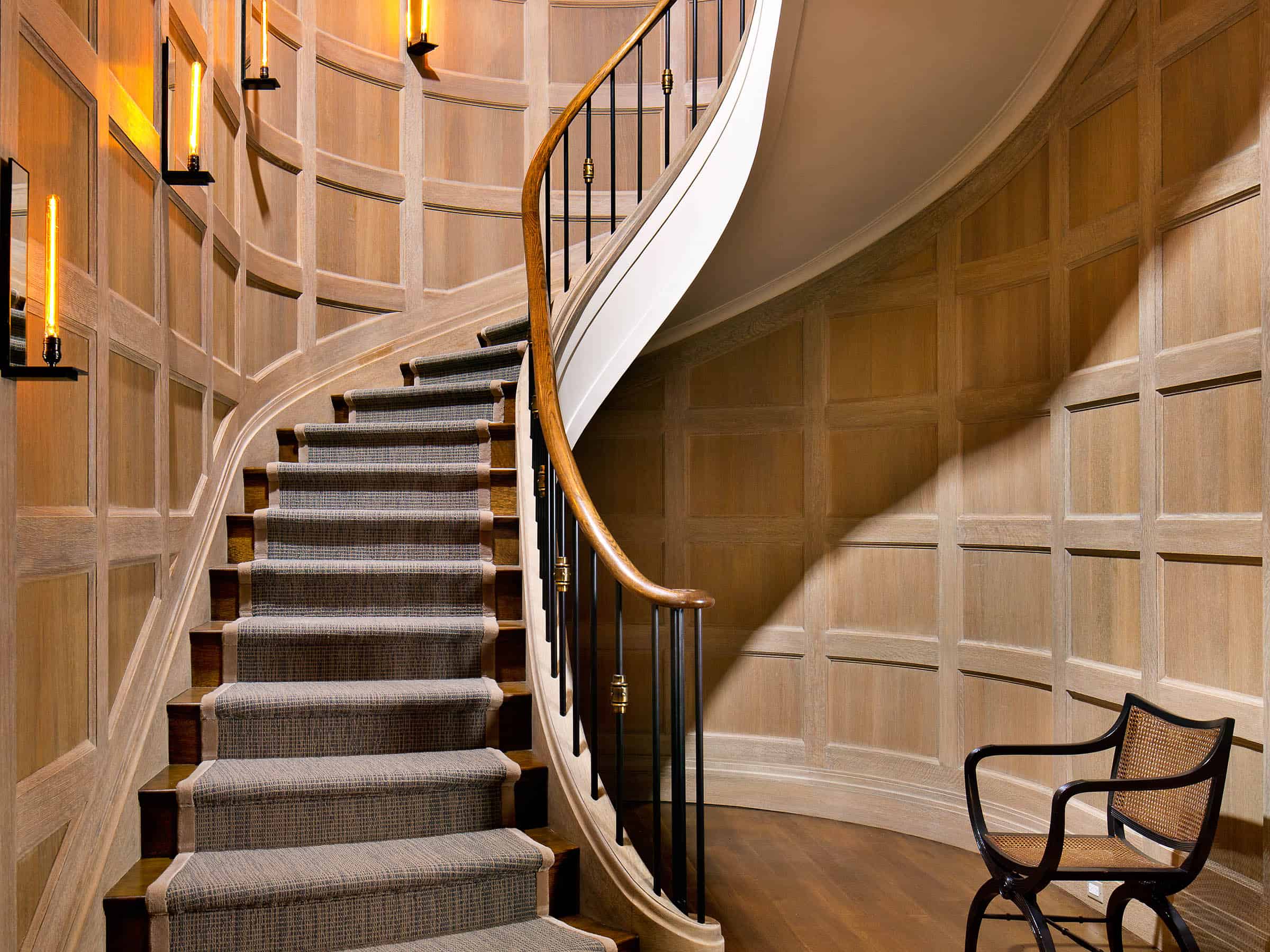
At the foot of the dramatically curving staircase, carpeted in velvety cut pile, a massive torso by Rodin signals the superlative array of modern art collected by Hirsch.

In the entry, a mirror above the ebonized console presents an alluring reflection of the winding staircase. On the console, an eclectic selection of small fine and decorative art works includes an Antique Greek head and a 20th century glass lamp.

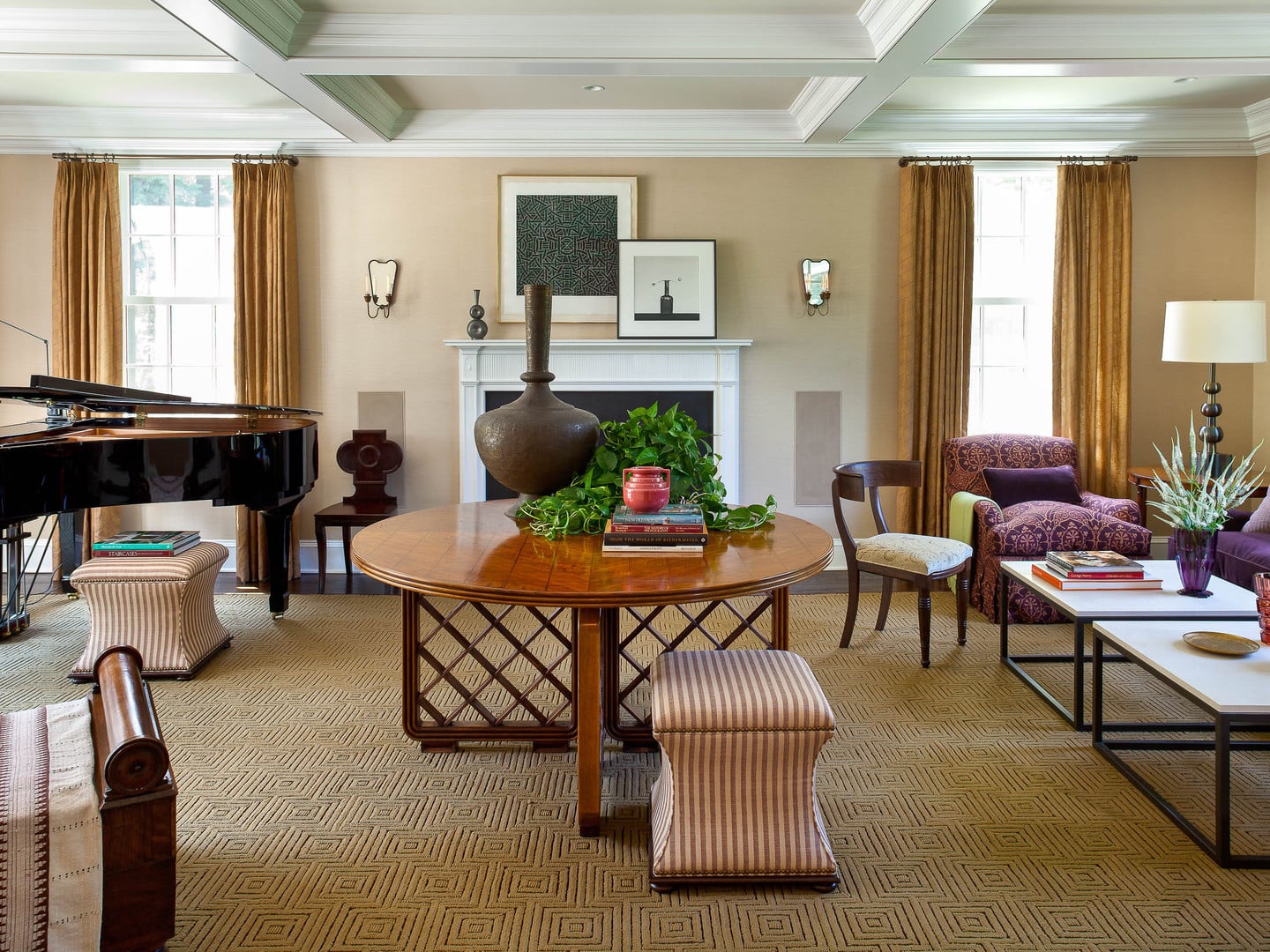
In the living room, a bronze torso by Enzo Piazzotta tops an American mahogany center table. A gilded x-framed stool adds a grand geometric note.

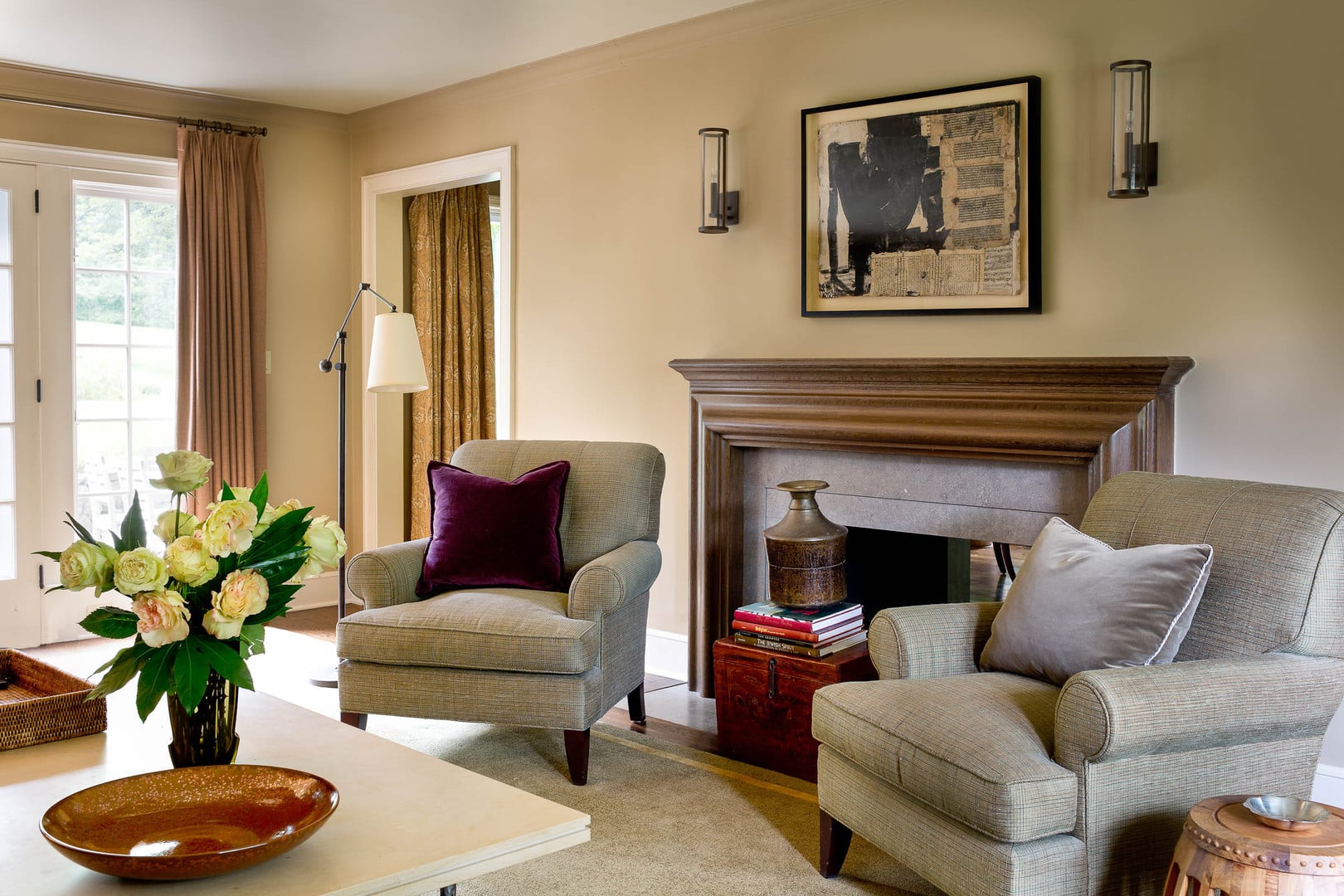
A 1955 painting by Joan Mitchell in a gilded frame hangs above the mantelpiece.

Art Deco ceramics, and glass in tones of deep chocolate and burnt orange, decorate an ebonized console.

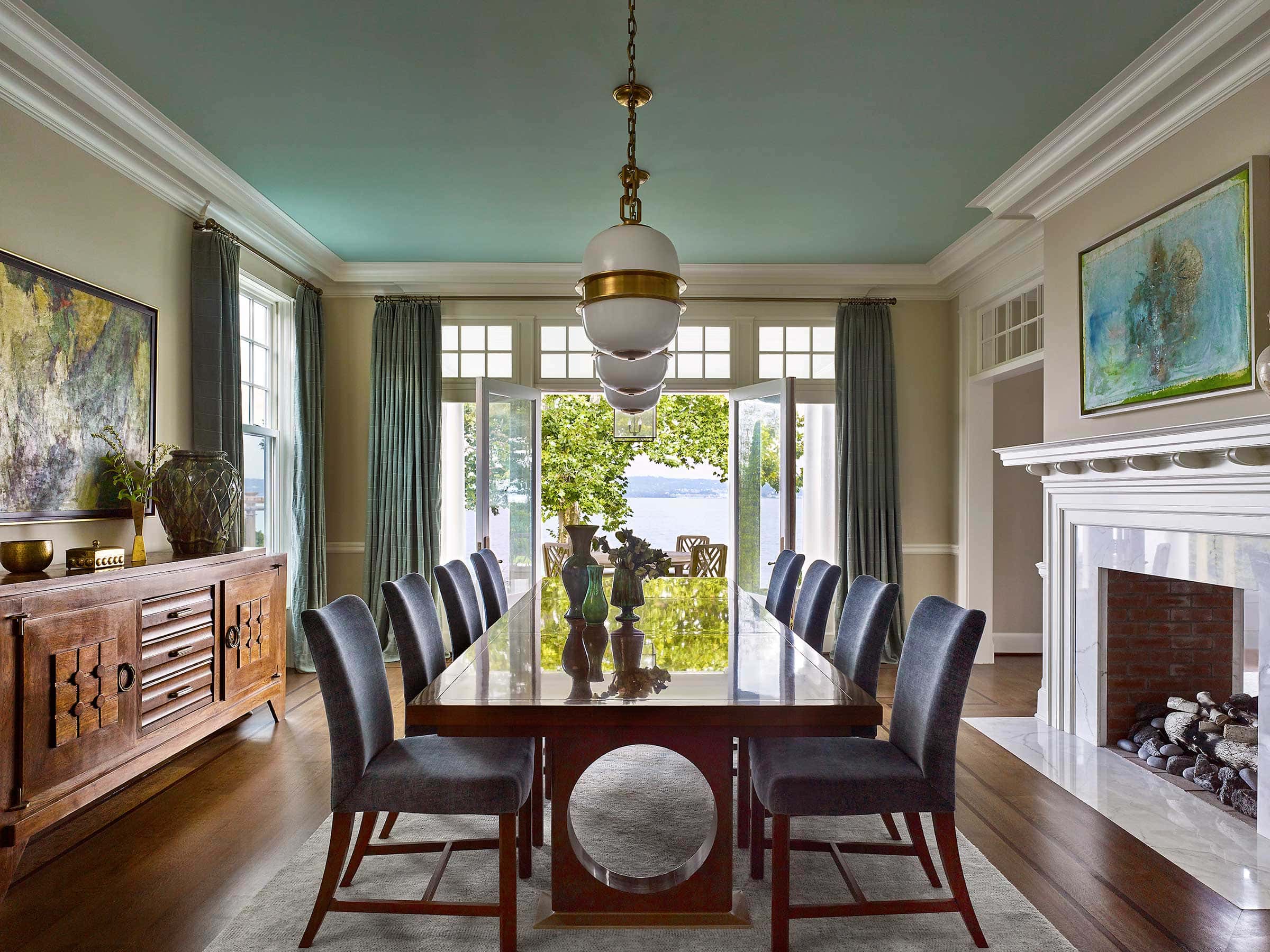
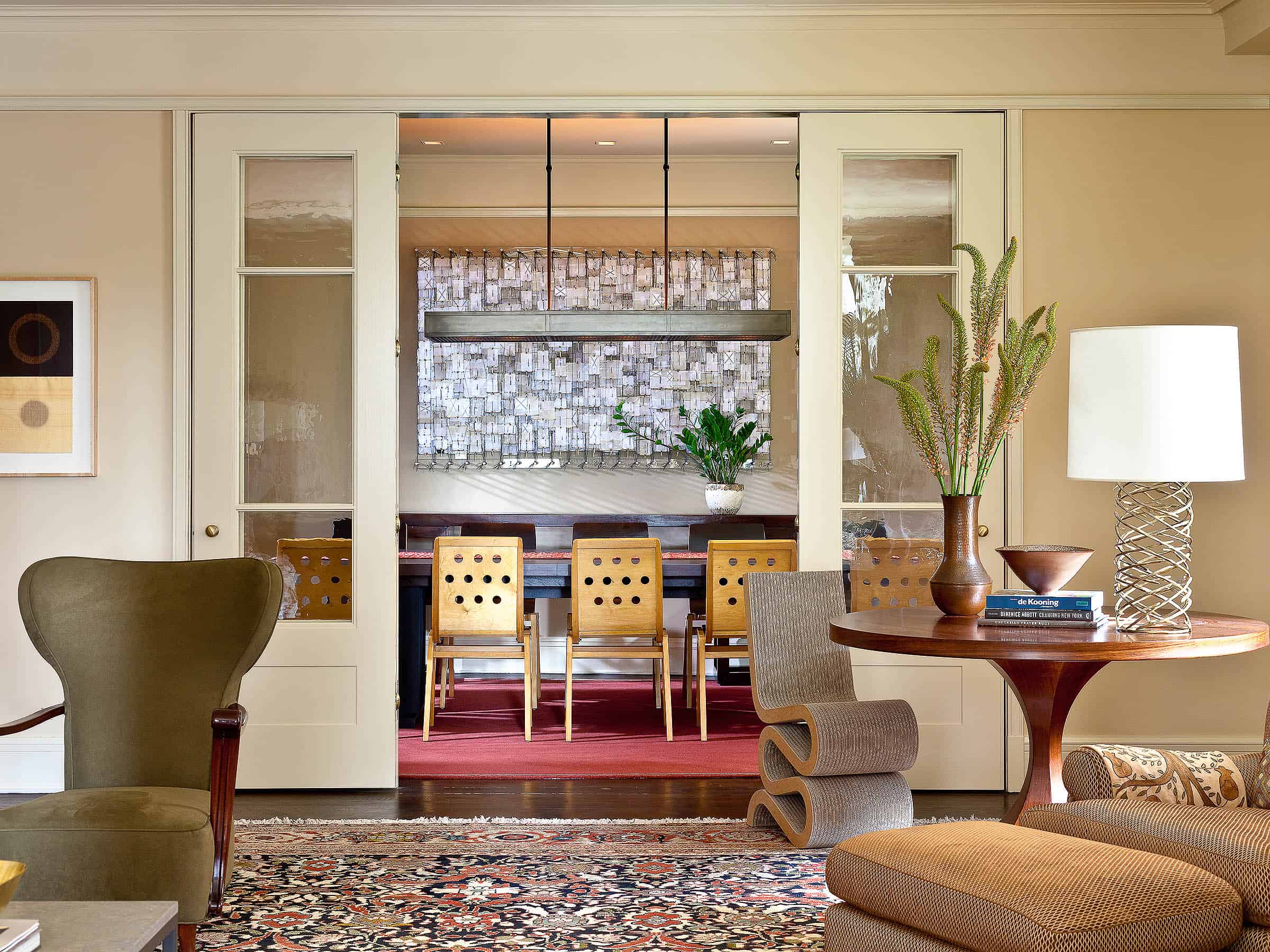
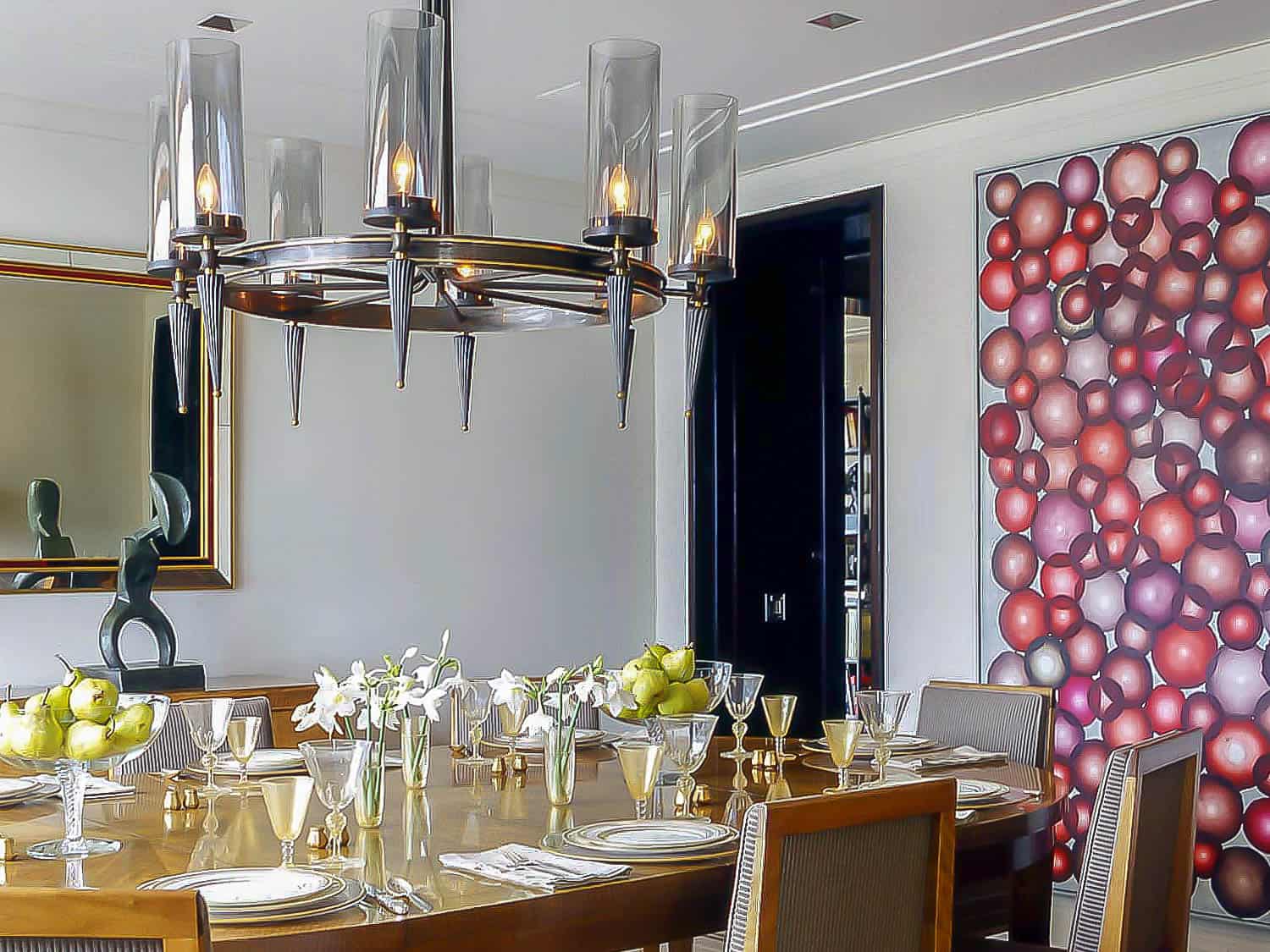
In the dining room, 1930s Jules Leleu chairs circle a custom oval table. The French forties bronze chandelier complements a Max Ernst figure, also in bronze; the painting is Ross Bleckner’s Flow and Return (2001).

"Glenn’s broad knowledge of architecture, interior design and lifestyle were immensely important to a successful and enduring project. His focus on quality, understatement and comfort has created a gracious & livable home."

– Client

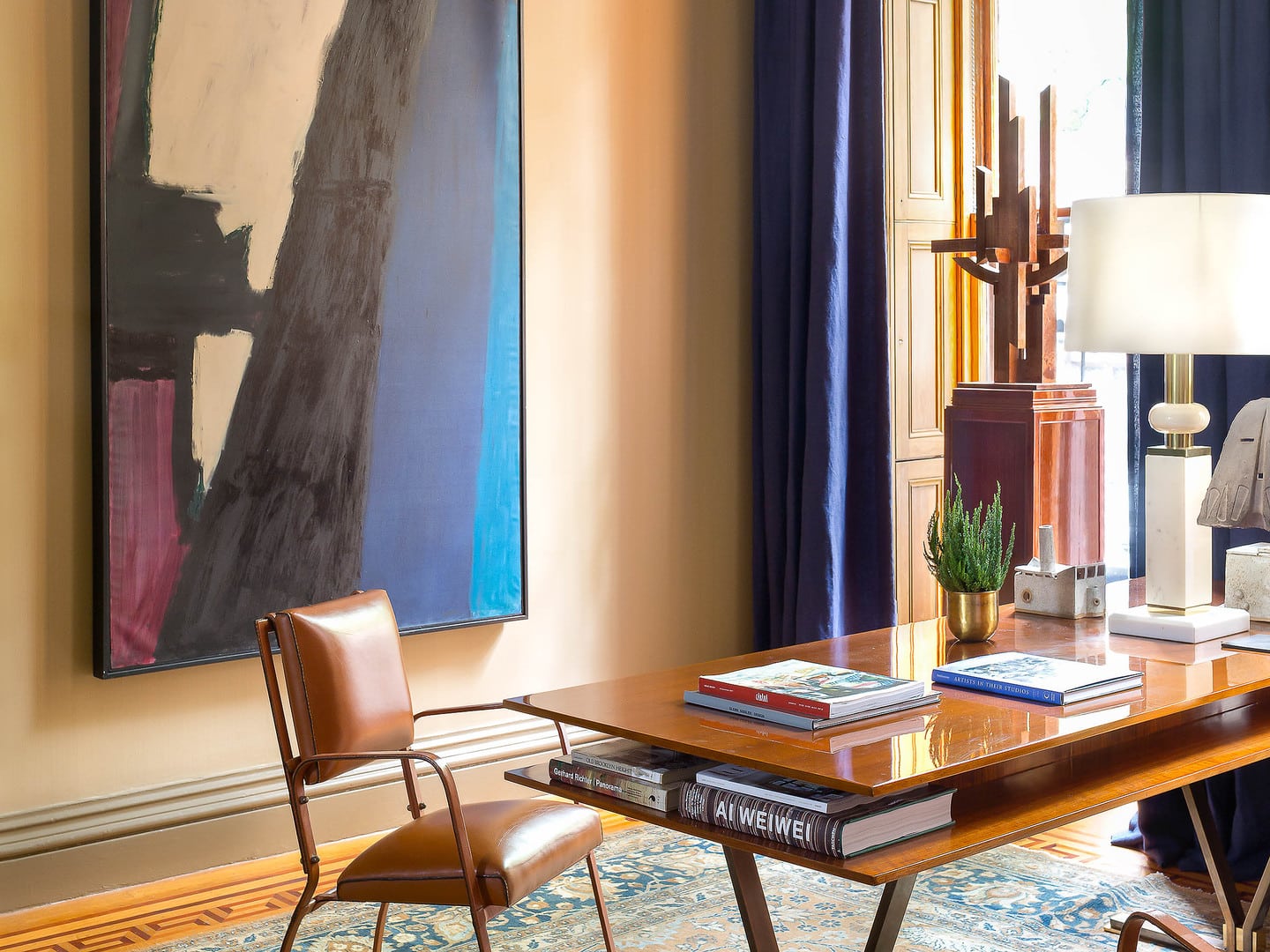
A sparkling view of the United Nations–one of many spectacular views in this duplex–enlivens a quiet workspace with desk and chairs.

Works by Franz Kline, Giacometti and Lipschitz hang against a wall paneled in golden oak. The sofa is upholstered in Clarence House velvet.

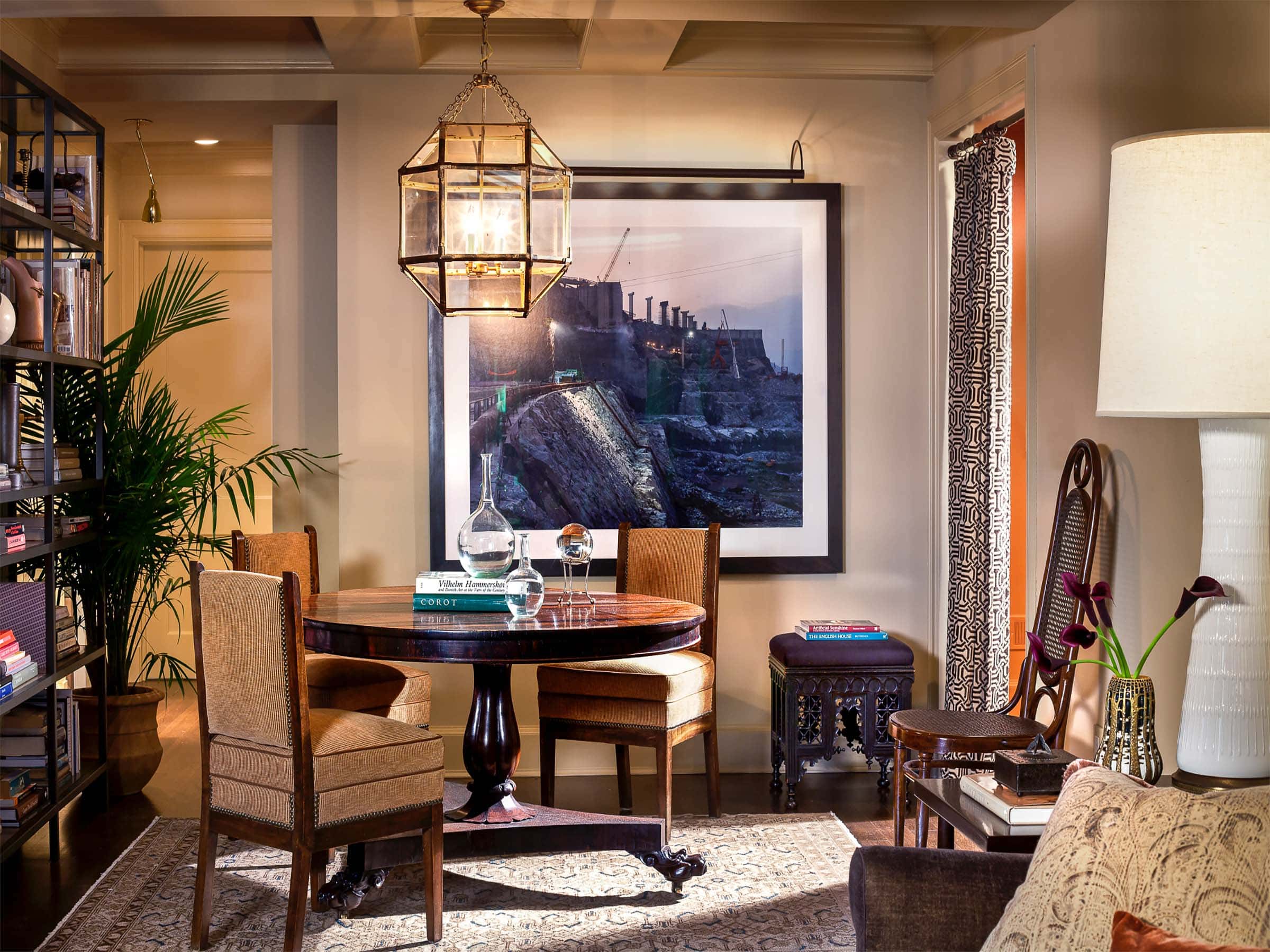
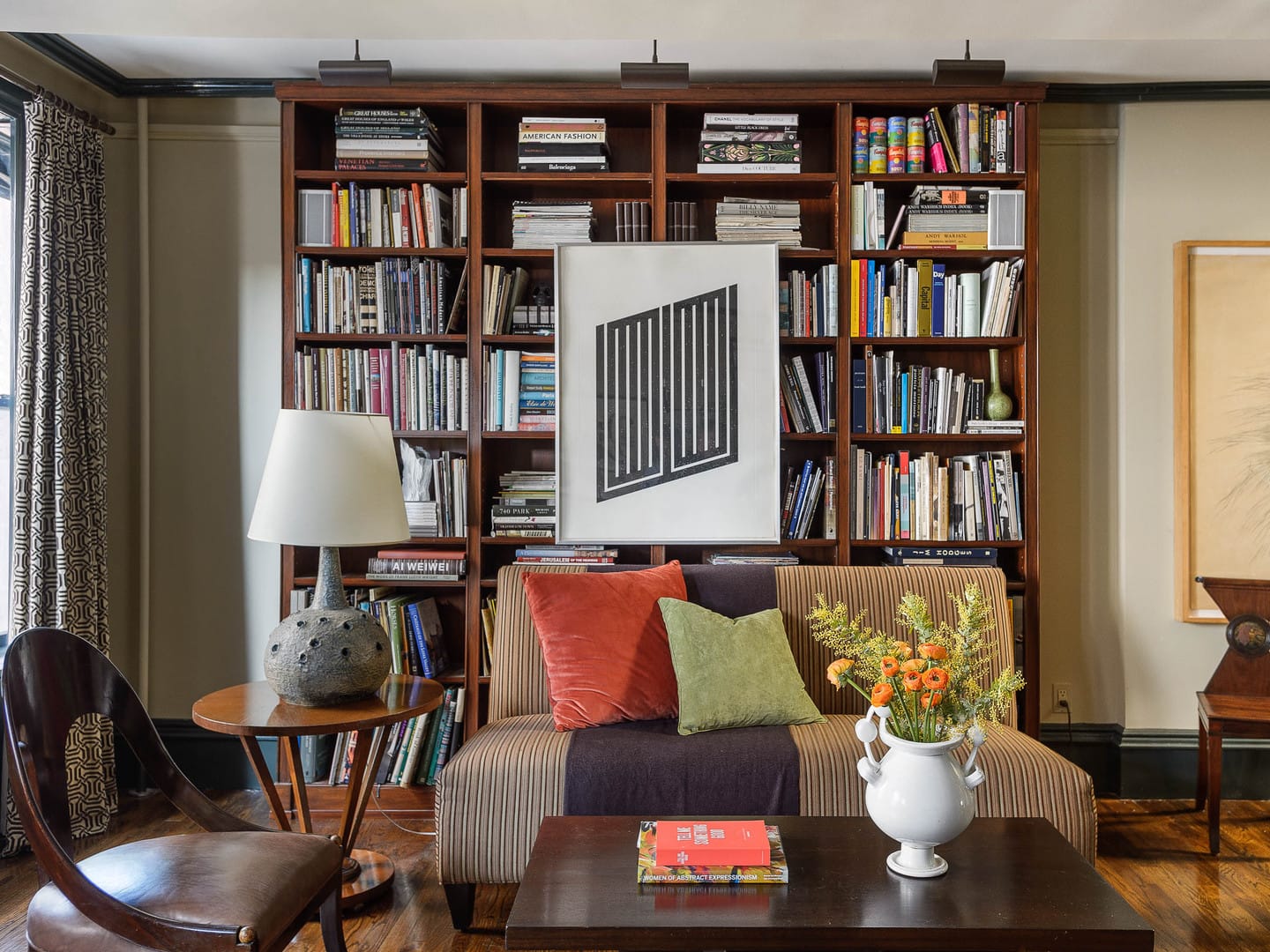
A highly polished library table is accompanied by a round-seated Biedermeier chair and a biomorphic 1950s table lamp.

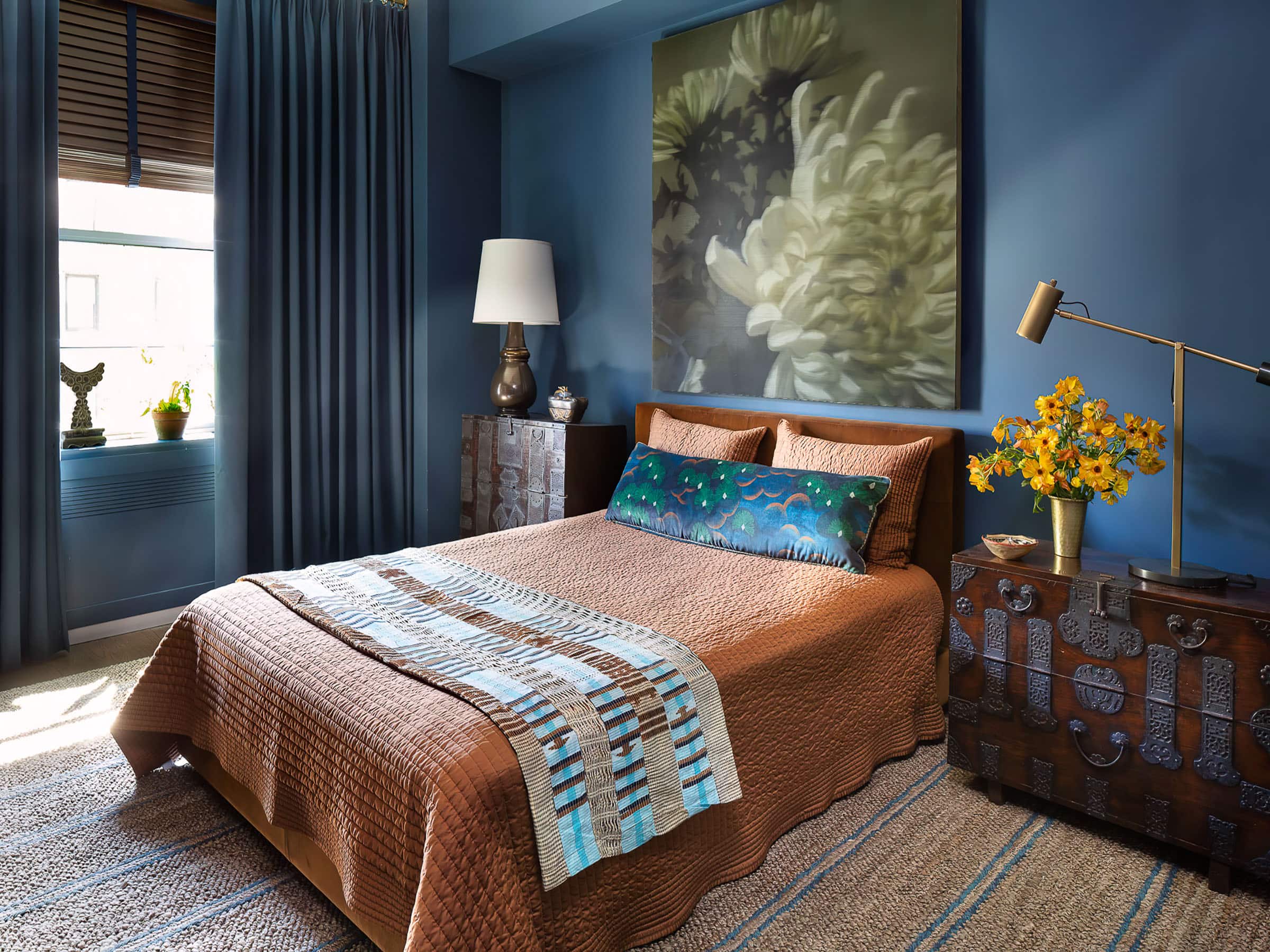
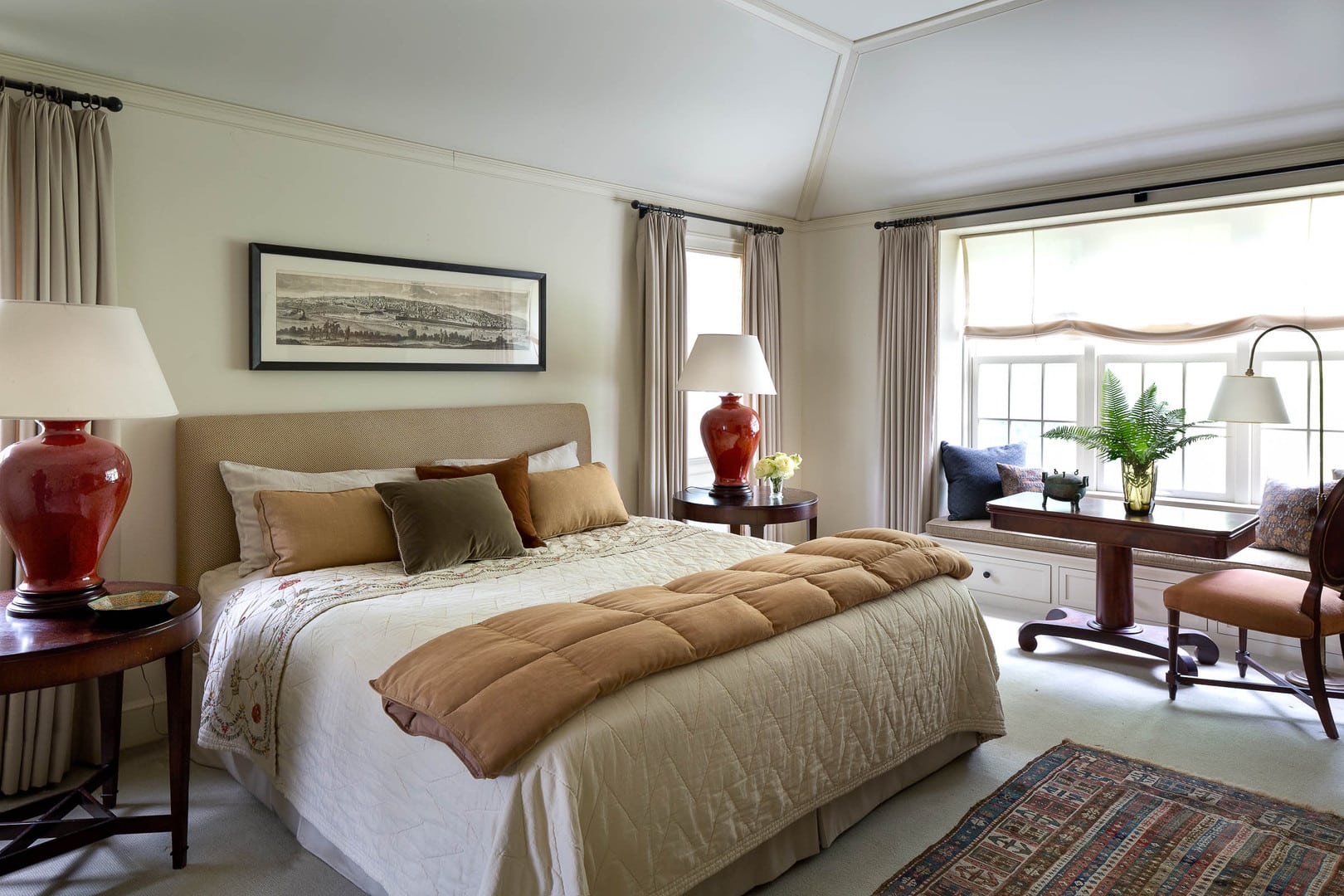
The master bedroom is a subtle, luxurious expanse of neutrals: palest biscuit and cream tones. The sweeping curtains are in fabric by Rogers & Goffigon; the bed linens by Frette, Hirsch’s linens of choice.

Jaunty red and white striped linens adorn a guest bedroom, along with quiet American antiques and 20th century ceramics.

Senior Designer Craig Strulovitz
Photos by Gross & Daley

Connecticut Colonial

Trimmed and globe boxwoods, along with two old-growth trees, create a symmetrical approach to the house. The new front porch, which we designed, features a pediment echoing the structure’s roofline. The front door is painted a glossy aubergine, which hints at what lies behind it.

Trimmed and globe boxwoods, along with two old-growth trees, create a symmetrical approach to the house. The new front porch, which we designed, features a pediment echoing the structure’s roofline. The front door is painted a glossy aubergine, which hints at what lies behind it.

LITCHFIELD, CT

Connecticut Colonial

This early-19th-century house in Litchfield County, Connecticut, is located within the historic district of a small town. 

The homeowner, a long-time friend of Glenn Gissler Design, asked us to reimagine the exterior and interiors of their home. The client, who grew up in rural Kentucky, imagined a farmhouse reminiscent of her childhood but with a gracious update incorporating modern comforts and her sophisticated aesthetics.

We designed new paneling in the double-height entryway which is painted glossy aubergine – the homeowner’s favorite color. To make the space more accommodating, we removed a coat closet and replaced it with an Empire-period console decoupaged with antique calligraphic paper and an antique-painted Swedish chair. Two gilt-framed mirrors refract the ample sunlight to expand the space by day; by night, a crystal chandelier purchased decades ago by the homeowner illuminates the room. The striped stair runner strikes a balance between antique and modern sensibilities.

We designed new paneling in the double-height entryway which is painted glossy aubergine – the homeowner’s favorite color. To make the space more accommodating, we removed a coat closet and replaced it with an Empire-period console decoupaged with antique calligraphic paper and an antique-painted Swedish chair. Two gilt-framed mirrors refract the ample sunlight to expand the space by day; by night, a crystal chandelier purchased decades ago by the homeowner illuminates the room. The striped stair runner strikes a balance between antique and modern sensibilities.

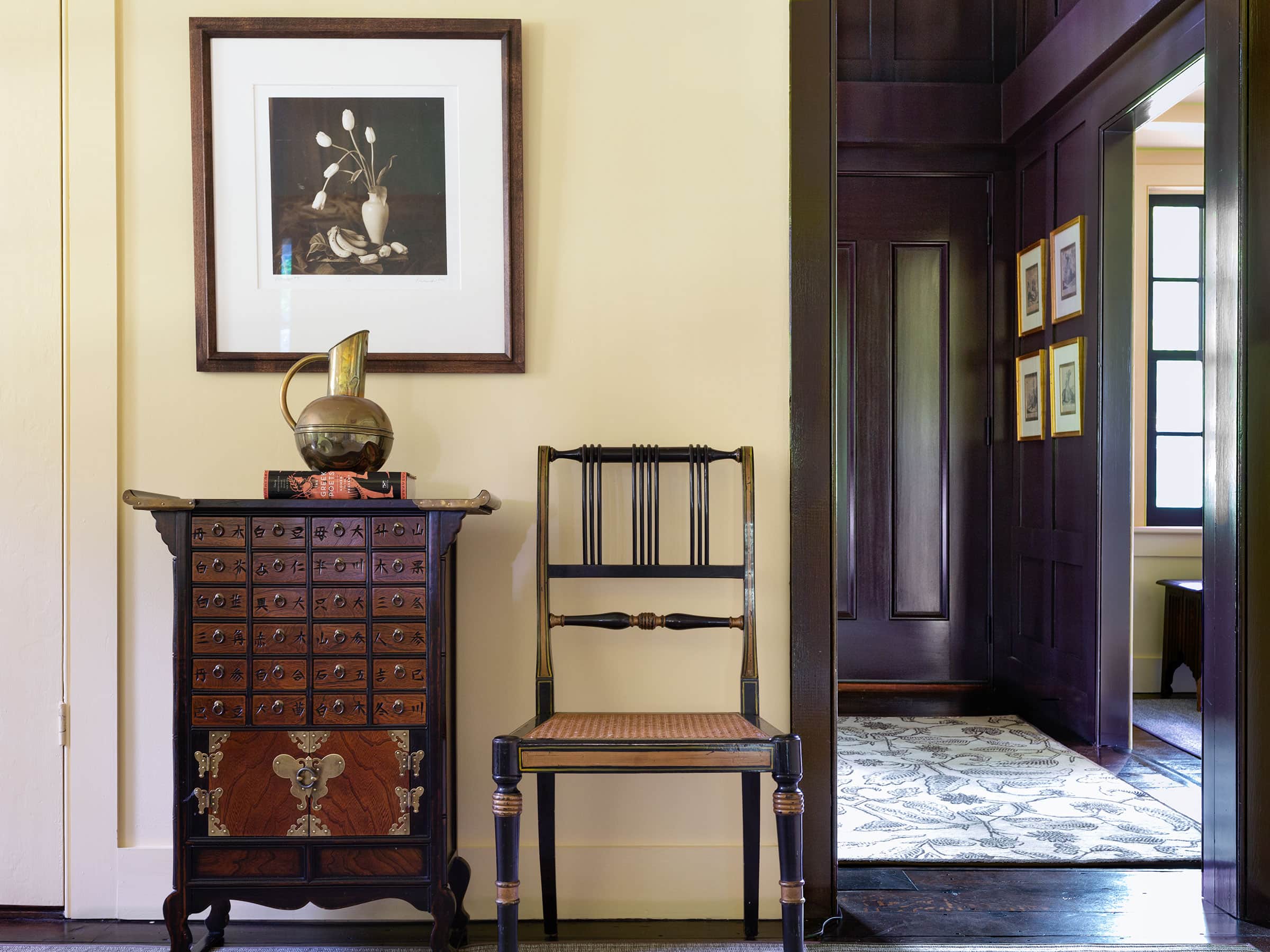
Just inside the living room, a Duncan Phyfe-style side chair, one of a pair, is part of a tableau with a vintage Chinese apothecary cabinet, a 19th-century Christopher Dresser ewer, and a romantic black-and-white still-life photograph.

Just inside the living room, a Duncan Phyfe-style side chair, one of a pair, is part of a tableau with a vintage Chinese apothecary cabinet, a 19th-century Christopher Dresser ewer, and a romantic black-and-white still-life photograph.

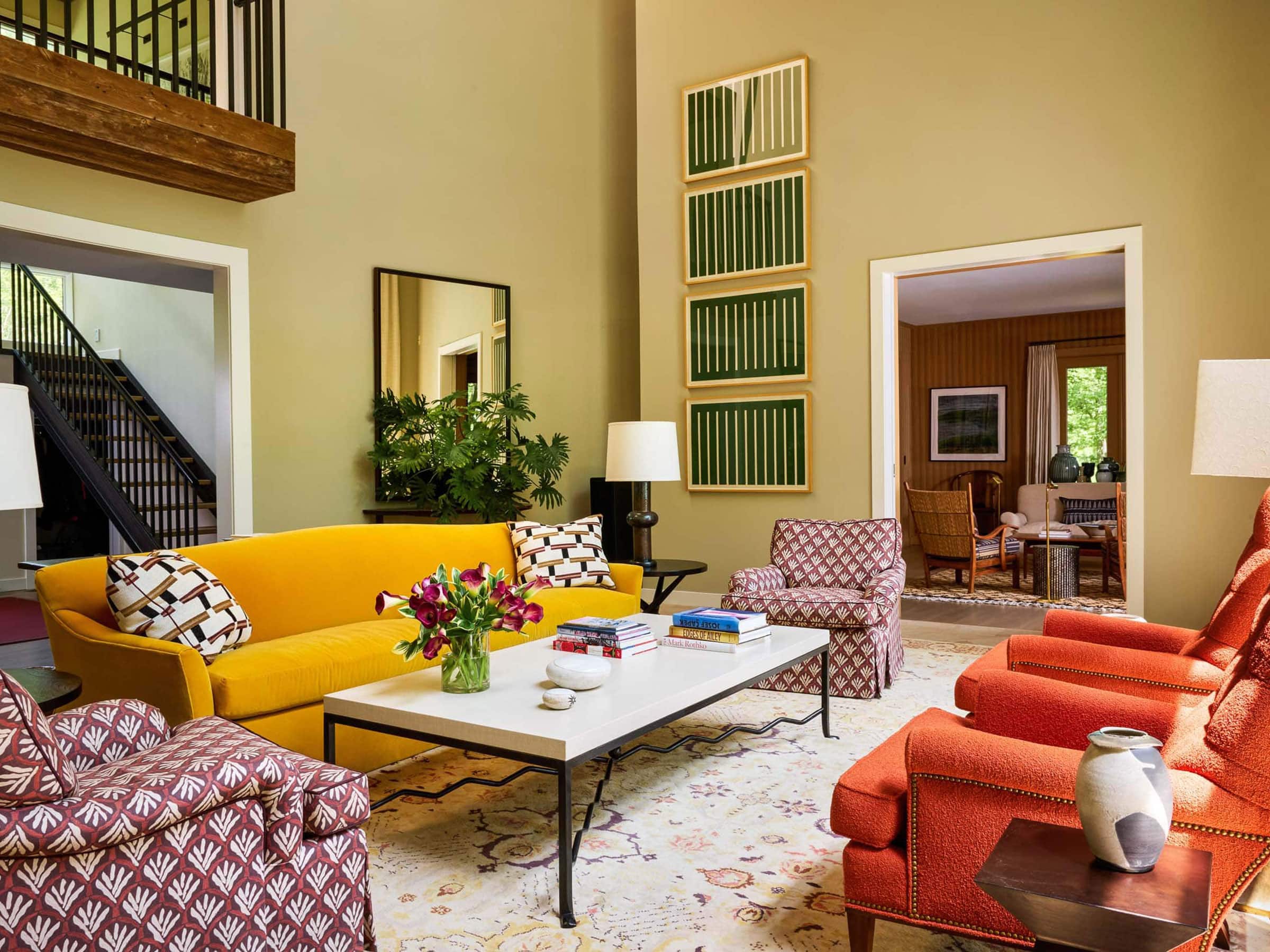
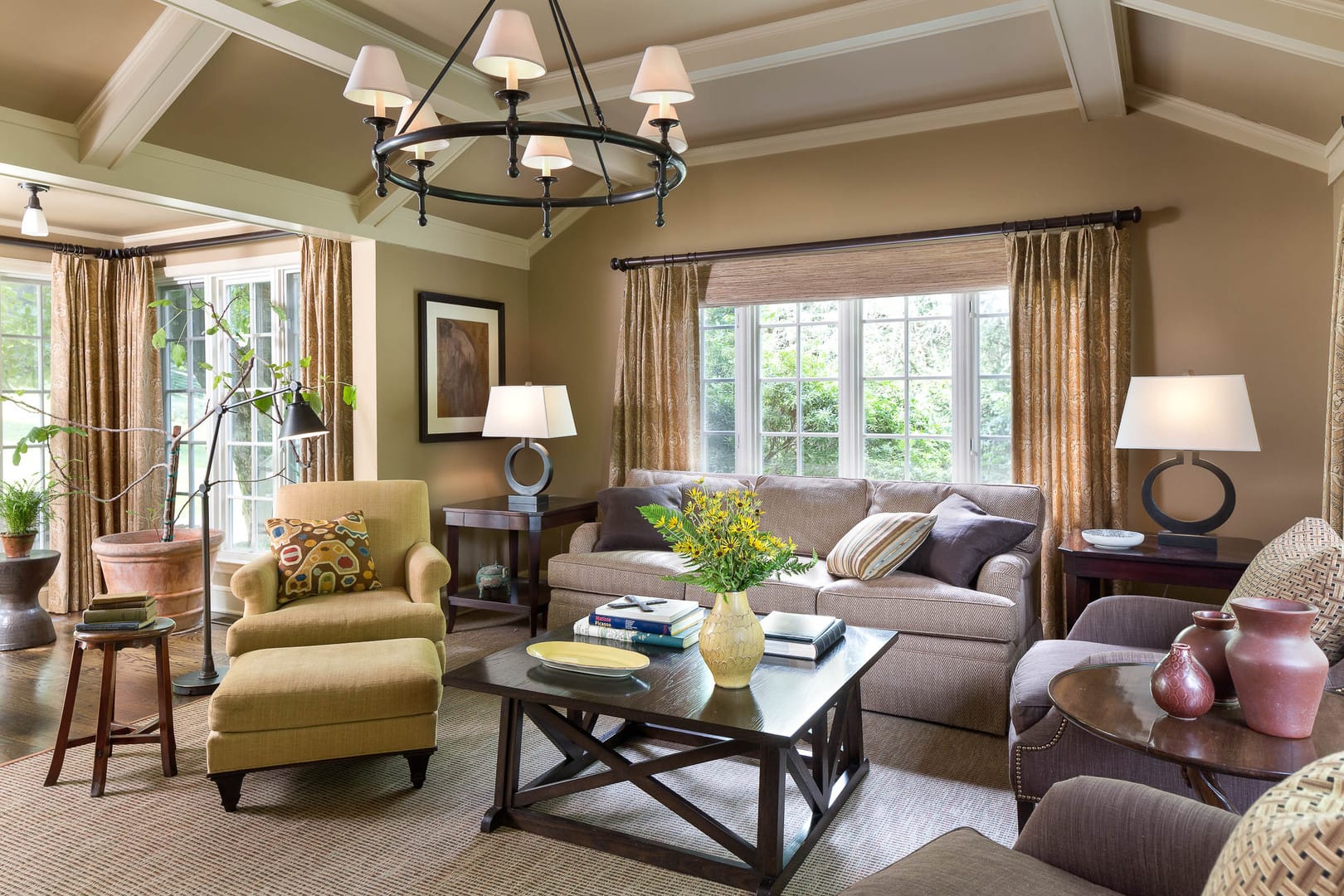
The living room sofa is upholstered in a stylized botanical print, complementing the three club chairs in purple and a shade of fresh yellow-green linen to complete the seating arrangement. The bold silhouette of the Macau-inspired coffee table anchors the center of the room and sits beneath a vintage French ceiling fixture. The window mullions are painted dark to frame the views of the property.

The living room sofa is upholstered in a stylized botanical print, complementing the three club chairs in purple and a shade of fresh yellow-green linen to complete the seating arrangement. The bold silhouette of the Macau-inspired coffee table anchors the center of the room and sits beneath a vintage French ceiling fixture. The window mullions are painted dark to frame the views of the property.

A 19th-century library table displays an array of books and accessories illuminated by a celadon ceramic lamp.

A 19th-century library table displays an array of books and accessories illuminated by a celadon ceramic lamp.

We designed floor-to-ceiling bookcases to accommodate an extensive collection of literature. We also added ceiling beams, a newly designed colonial mantle, moldings, and a concealed television cabinet to make it a charming but multi-functional space.

We designed floor-to-ceiling bookcases to accommodate an extensive collection of literature. We also added ceiling beams, a newly designed colonial mantle, moldings, and a concealed television cabinet to make it a charming but multi-functional space.

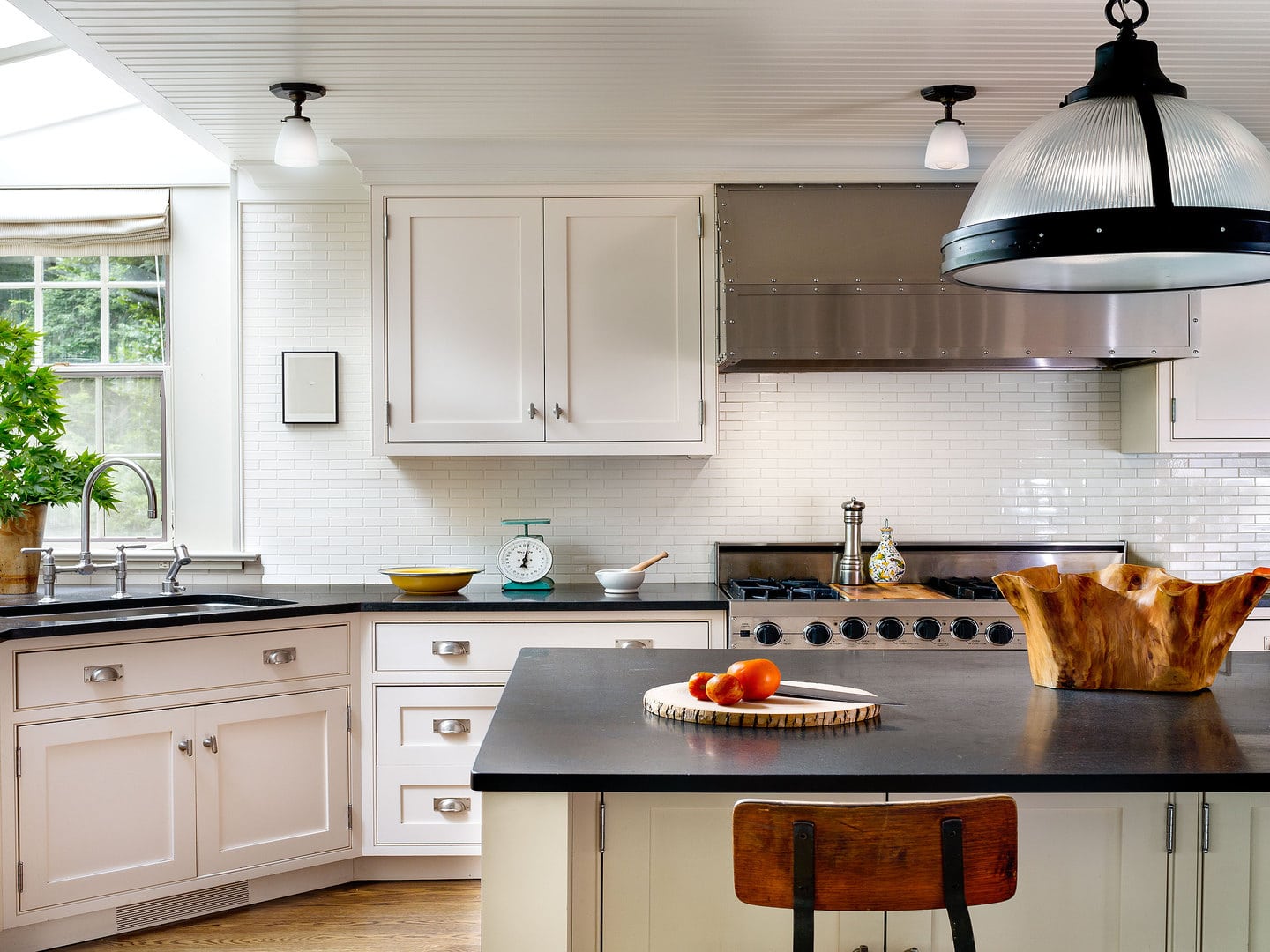
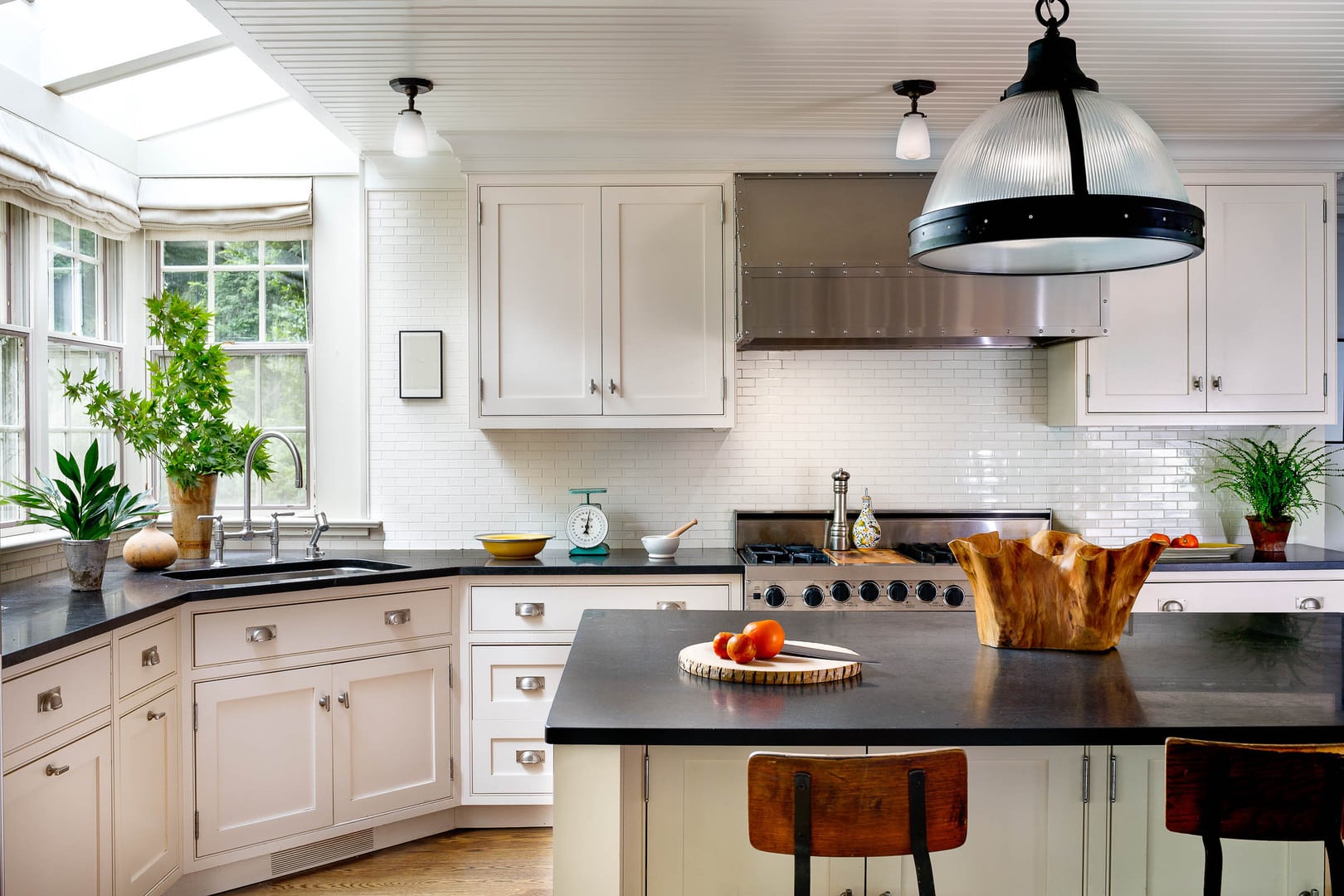
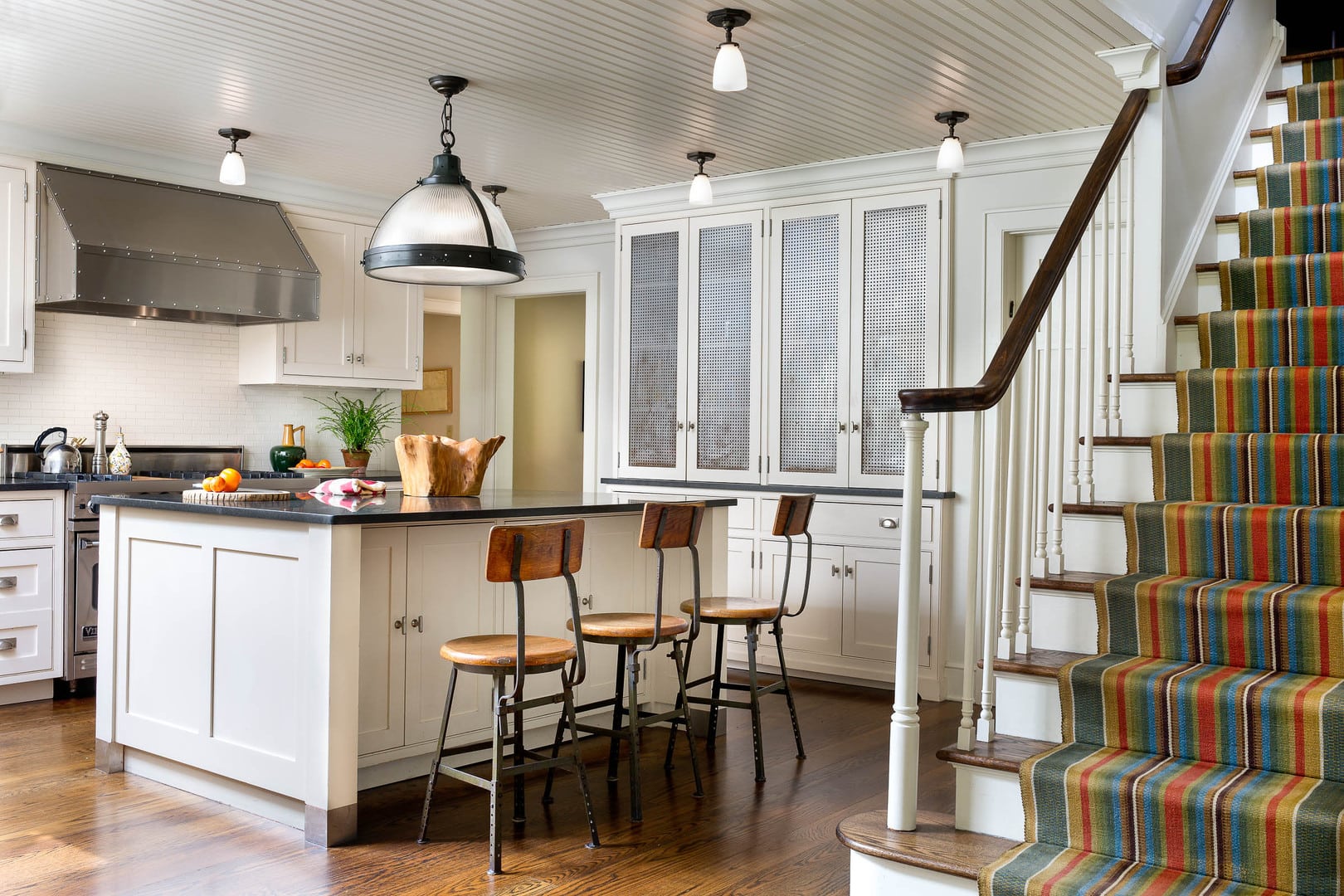
A fresh coat of paint on the walls, beams, and ceiling boards integrated the kitchen into the adjacent dining room. We added a vintage-style ceiling fixture and a swing-arm sconce above the sink. For a naturalistic note, warm brown granite countertops complement the room’s crisp, clean lines.

A fresh coat of paint on the walls, beams, and ceiling boards integrated the kitchen into the adjacent dining room. We added a vintage-style ceiling fixture and a swing-arm sconce above the sink. For a naturalistic note, warm brown granite countertops complement the room’s crisp, clean lines.

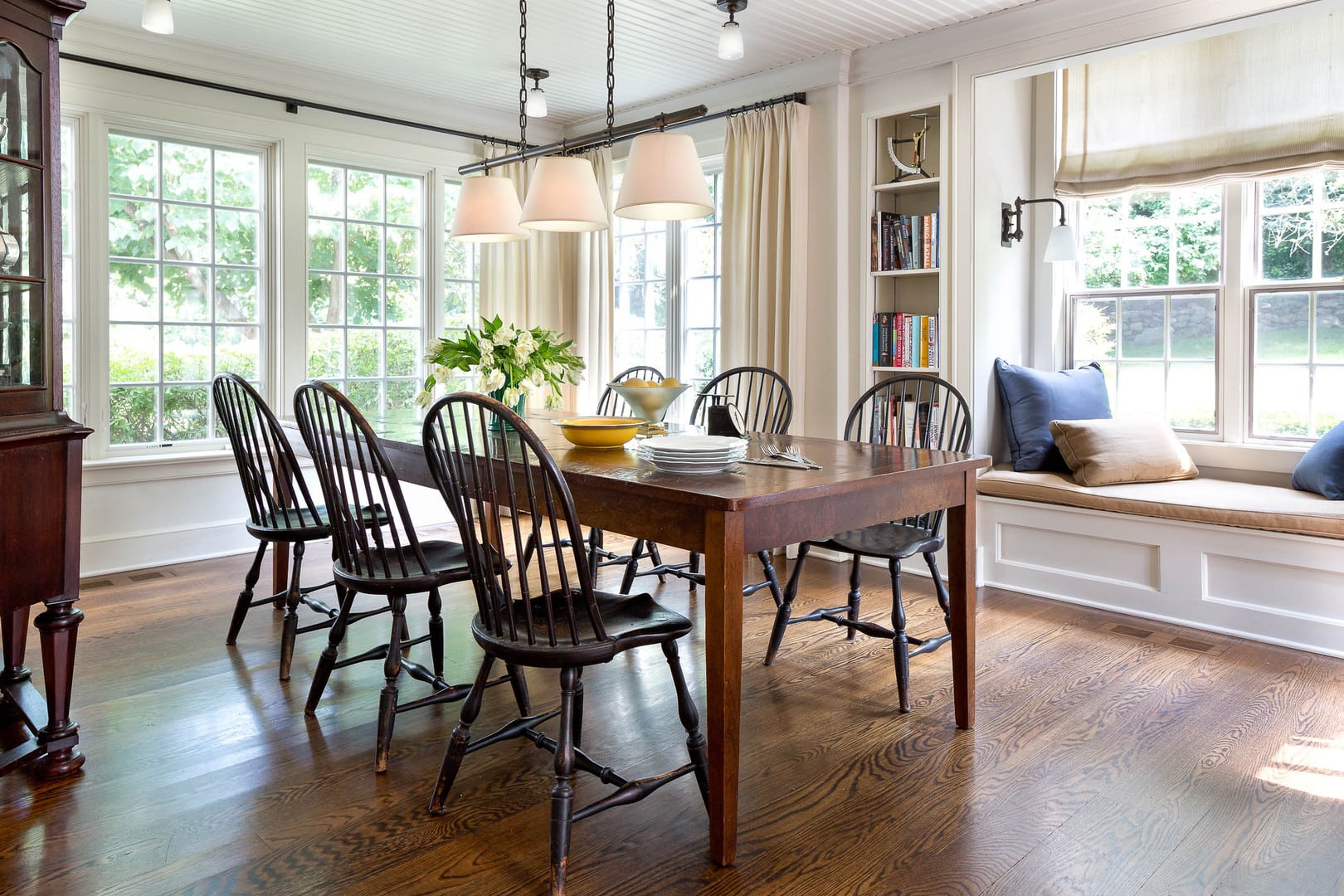
We designed an entire suite of teak Anglo-Indian dining room furniture, including the massive table, sideboard, and 12 chairs. The room can host small gatherings and holiday dinners for as many as 14 guests. A trio of shaded pendant light fixtures provides appealing illumination.

We designed an entire suite of teak Anglo-Indian dining room furniture, including the massive table, sideboard, and 12 chairs. The room can host small gatherings and holiday dinners for as many as 14 guests. A trio of shaded pendant light fixtures provides appealing illumination.

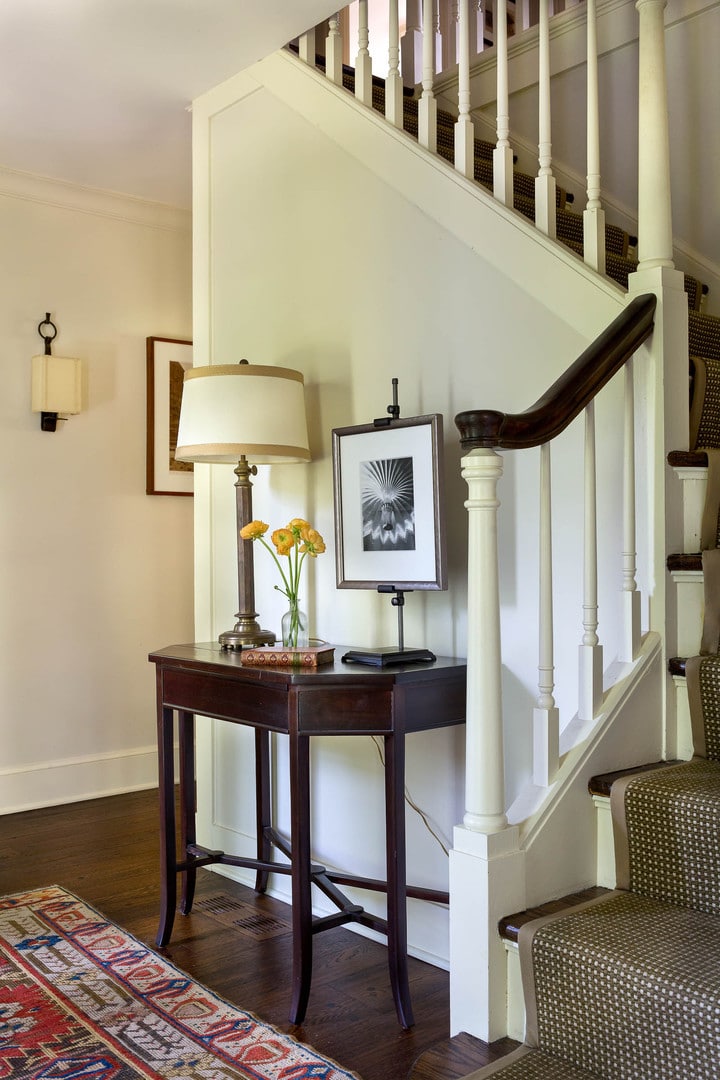
A new staircase leads to the former attic, now a third floor with a bedroom and a half and extensive storage. The striped stair runner was meticulously mitered at the landings to great effect. Each framed artwork from the homeowner’s collection is a line from a poem, which can be read sequentially from top to bottom to complete the verses, lit by a charming chandelier purchased at auction.

A new staircase leads to the former attic, now a third floor with a bedroom and a half and extensive storage. The striped stair runner was meticulously mitered at the landings to great effect. Each framed artwork from the homeowner’s collection is a line from a poem, which can be read sequentially from top to bottom to complete the verses, lit by a charming chandelier purchased at auction.

A pair of Swedish-inspired cabinets doubles as bedside tables and coveted storage in the primary bedroom. Matching mercury-glass lamps add to the symmetry and three 19th-century framed botanicals that add a historical charm.

In the primary bedroom, we stained the floors a rich dark brown, added v-grooved planking to the ceiling, and painted everything one color for a calming effect. The upholstered headboard tucks into the eave, with a bench upholstered in block-printed cotton sitting at the foot of the bed and another antique Swedish chair.

We carved out an extra sleeping space at the top of the stairs – a half-bedroom – on the new third floor; a favorite spot for the client’s grandchildren. The wall sconce and toss pillows’ playful colors add a bit of whimsy, with the diminutive painting by the client’s mother adding a nostalgic generational note.

We carved out an extra sleeping space at the top of the stairs – a half-bedroom – on the new third floor; a favorite spot for the client’s grandchildren. The wall sconce and toss pillows’ playful colors add a bit of whimsy, with the diminutive painting by the client’s mother adding a nostalgic generational note.

The original structure from the nineteenth century is married to the relatively new back addition by the raised-ridge copper roof we specified to reinforce the character of this historic home. On the axis from the home’s back porch, a stone pathway and mature arborvitae lead to a new ‘paddock-style’ enclosure for the pool, recalling the client’s rural Kentucky heritage.

The original structure from the nineteenth century is married to the relatively new back addition by the raised-ridge copper roof we specified to reinforce the character of this historic home. On the axis from the home’s back porch, a stone pathway and mature arborvitae lead to a new ‘paddock-style’ enclosure for the pool, recalling the client’s rural  Kentucky heritage. 

"Glenn was such a creative and pleasant partner in our recent conversion of an 1810 Greek Revival farmhouse. During this 9 month project, the interior was greatly altered. Glenn always surprises me with his vision and most importantly his ability to work with his team to make what we imagined....real."

Dr. Allen

A cluster of globe boxwoods creates a visual counterpoint to the strict linear pattern of the home’s clapboard siding. In the summer, Boston ferns and mature hydrangeas add to the garden’s quintessential New England sensibility.

A cluster of globe boxwoods creates a visual counterpoint to the strict linear pattern of the home’s clapboard siding. In the summer, Boston ferns and mature hydrangeas add to the garden’s quintessential New England sensibility.

The back porch is part of an addition to the house that dates to the twentieth century. It is just off the dining room, with views of a pond and the bucolic Connecticut countryside beyond. Vintage rattan furniture and a porch swing provide al fresco seating for morning coffee or post-dinner conversations.

The back porch is part of an addition to the house that dates to the twentieth century. It is just off the dining room, with views of a pond and the bucolic Connecticut countryside beyond. Vintage rattan furniture and a porch swing provide al fresco seating for morning coffee or post-dinner conversations.

Senior Designer Craig Strulovitz
Photos by Gross & Daley

Grand Country Residence – Westchester

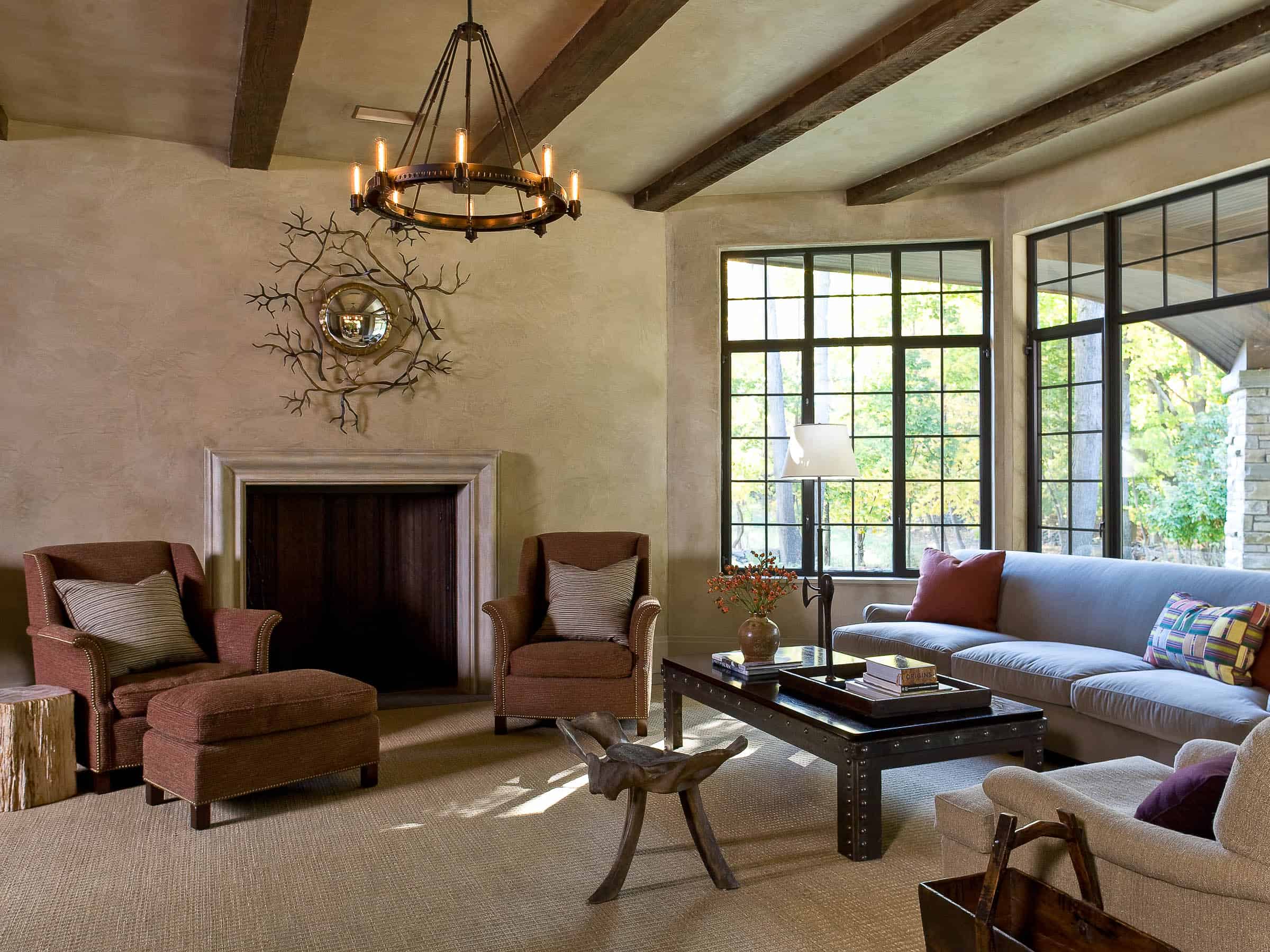
The living room is a study in soft greys and mellow burgundies, with sofas by Jonas Upholstery. The stool is 19th century, made from whale vertebrae; the tree-trunk table is of petrified wood, and the mirror over the fireplace is from Herve van der Straaten. The custom chandelier from Daniel Berglund is made partially from discarded jet-engine parts.

WESTCHESTER, NY

Grand Country Residence

These Manhattan clients acquired a horse farm in upstate New York and decided to build a house from scratch. We were commissioned to invent the interiors, and were involved almost from the inception. The gabled rustic stone house, with vast expanses of steel casement windows, was designed by Tasos Kokaris Architects, and is reminiscent of a country manor house designed for William Randolph Hearst in the early 20th century.

With an abundance of space to work with, the challenge was to create unity, flow and meaningful yet understated decorative relationships from room to room. This we achieved by concentrating on a repertoire of rich, resonant materials–artisanal plaster, cerused oak paneling, planed stone floors–and a muted palette of taupes and driftwood greys which, rendered in the pigmented plaster, achieve a subtle glow. Accents of burgundy, red and persimmon are provided by fabrics and objects. Dark wood floors and sisal carpeting and rugs assure continuity throughout the house.

The overall effect of these rooms is manorial, the reenactment, in 21st century America, of great country houses, both here and abroad. The public spaces invite entertaining on a grand scale, yet they never lose their warmth and dignified informality.

In furnishing these spaces, we looked to eras much earlier than his favorite late 19th and early 20th centuries. The scale and mood of the rooms seemed to demand a more massive, even rugged approach, with 16th and 17th century European carved oak chests and tables an appropriate choice. Interestingly, the use of these pieces from a remote time did not result in period rooms, but in an aura of timelessness. Combined with comfortable large sofas and club chairs upholstered in highly textured fabrics such as washed linen and chenille, the early pieces take on a new relevance, even modernity.

A custom daybed features a leather surround trimmed in nailheads; the mattress and bolsters are upholstered in linen, with an intricate Suzani textile from Uzbekistan for color. The lacquered steel table is designed by Konstantin Grcic; the delicate low-voltage floor lamp is as minimal as a lamp can be.

A 17th century Spanish altar table with one deep drawer to hold a bible sits in front of a large steel casement window, simple steel lamps with paper shades offer light and a sculptural piece of vintage African currency on a stand.

In the guest bedroom, diamond patterns form a leitmotif in the structure of the steel headboards and in the woven sisal rug. The chairs, by Thomas O’Brien, add a modern incarnation of the Arts & Crafts period.

A sofa upholstered in dark green chenille complements the grey of the artisanal plaster walls, adding textural interest. On the table, a Tibetan vessel in vibrant red-orange is juxtaposed with an ancient Greek sculpture fragment.

In the hallway, artisanal plaster walls in a pale cocoa offer a variation in palette. A massive 16th century Roman Renaissance table hosts an array of bone-colored artifacts, including a large stone lamp, pottery of various eras and a work on paper by James Siena.

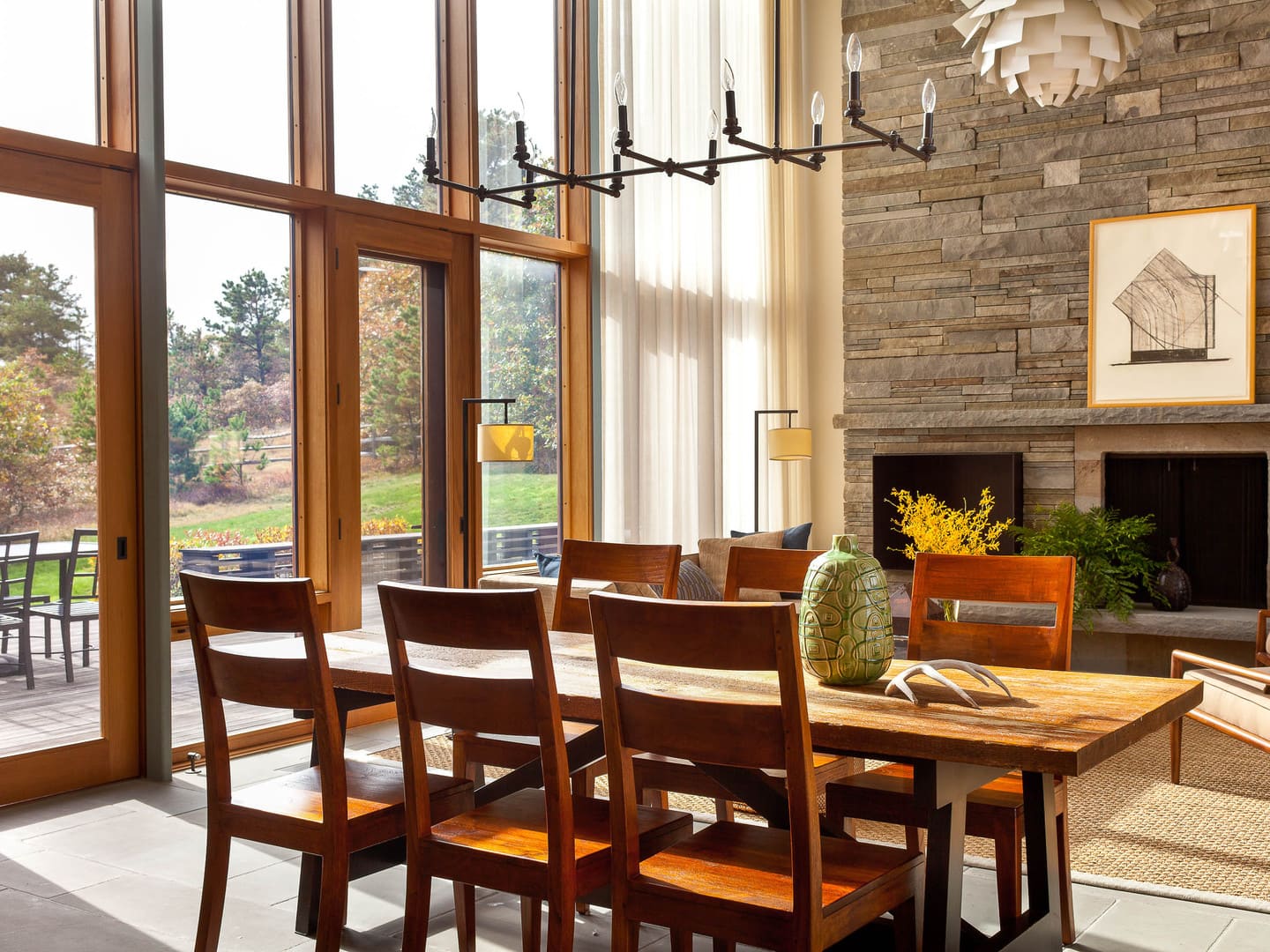
The double-height dining room, with a library catwalk above the dining area, is a tour de force of light and shadow. Above the mantelpiece is a photograph of the interior of a cave by Jeff Whetstone, which, in tones similar to that of the cerused oak paneling, seems to have been created just for this room. The chairs are French, c. 1900, with their original leather upholstery, from Lucca Antiques. The enormous refectory table is custom; the chandeliers, vintage Sarfatti.

Warmth, informality and honesty in materials infuse the Kitchen, where open shelving holds white porcelain and hand-made tiles face the wall behind the stove. Other materials include Uba Tuba granite, stainless steel and cerused oak.

The kitchen, graced by vast steel casement windows, is grandly rustic, with its long line-edge table prepared for eight in vintage-style wicker chairs.

Rugged elegance characterizes the master bedroom, where the rug is of woven suede, the bedcover of handwoven raw silk. The sling back chairs are by Frederik Kayser, c. 1950. The antique trunk is Korean.

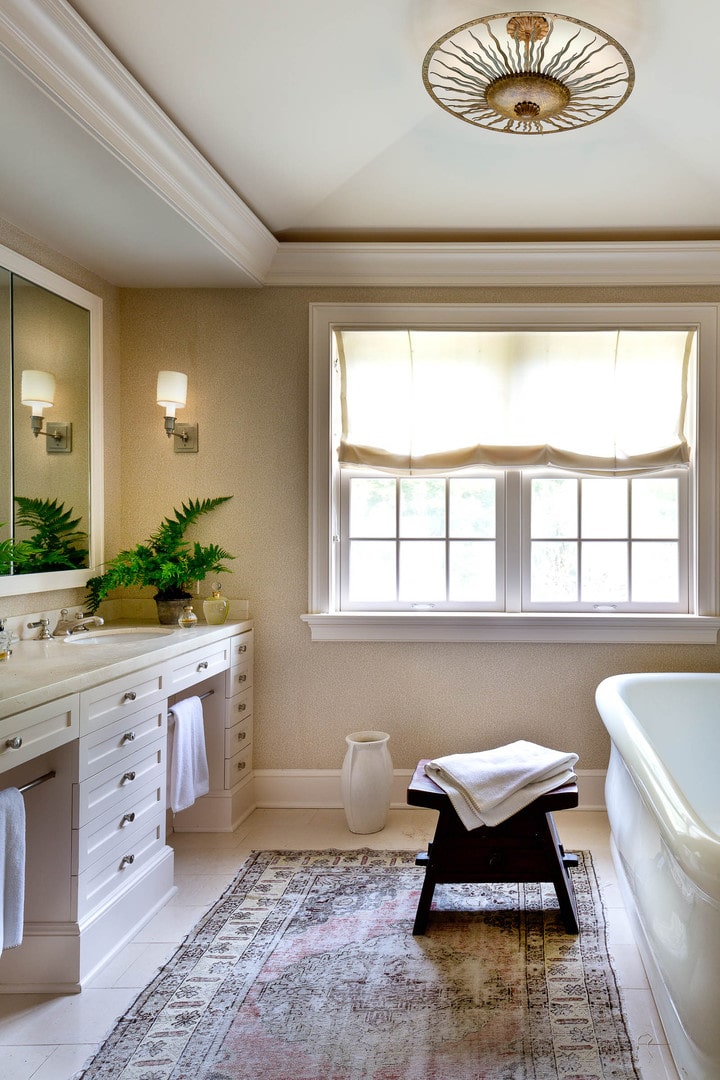
In the master bath, a solid stone tub is complemented by the carved marble stool, from Stephanie Odegard. The aluminum chandelier is titled “New Growth,” from C. P. Lighting.

Senior Designer Craig Strulovitz
Photos by Gross & Daley

Family Apartment – Upper East Side
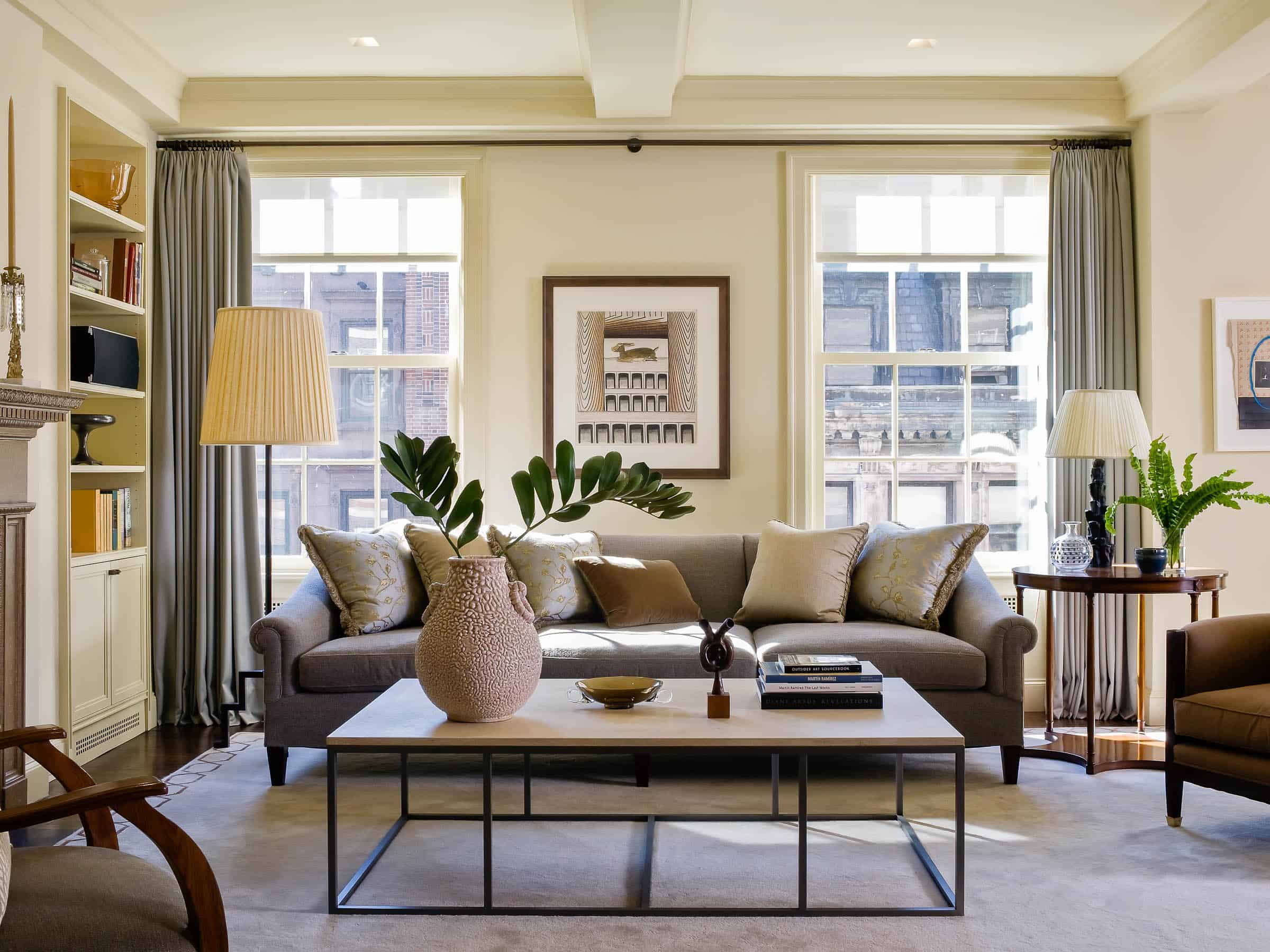
The 30-foot living room’s palette of creams, browns and silvery tones unifies the subtle mix of custom and 1940s furniture and contemporary art. A custom steel and limestone coffee table by Richard Shapiro vies with the gentler curves of the “Breck” sofa from Jonas Upholstery and the “Vermeer” end table from Nancy Corzine.

UPPER EAST SIDE – NYC

Family Apartment

Originally this eleven room apartment was two apartments in a building designed in 1923 by architect Mott B. Schmidt on Manhattan’s Upper East Side off Park Avenue. The co-op had several beautifully proportioned rooms and 110 feet of southern exposure. The clients, a family, sought a design for the interior that would be both livable and stylish.

The spare yet luxurious Neo-classicism of French 1940s design appealed to these collectors of contemporary art. They also had inherited a collection of American furniture and decorative arts. The designer’s brief was to achieve an airy, spacious aesthetic in the public rooms, while integrating the family’s earlier furniture and art into the cozier private space of the master bedroom.

In every space, works of fine and decorative art–mostly twentieth century– initiate us into the careful layering of eras and textures which characterizes the apartment as a whole. As well as French 1940s pieces, the residence features custom furniture of the highest quality. The meticulous detailing of architecture and fixtures throughout the apartment attains a high level of quality, materiality and finish. It is a home for art lovers, as comfortable as it is beautiful.

The upholstered furniture is tailored but welcoming, covered in warm-hued fabrics—greens, beiges, and purples—that use texture or unassertive pattern to create additional visual interest. Tables, chairs, and case goods in solid dark-stained wood offer strong, graphic silhouettes. Walls are painted in warm and soothing, yet art-friendly shades of taupe.
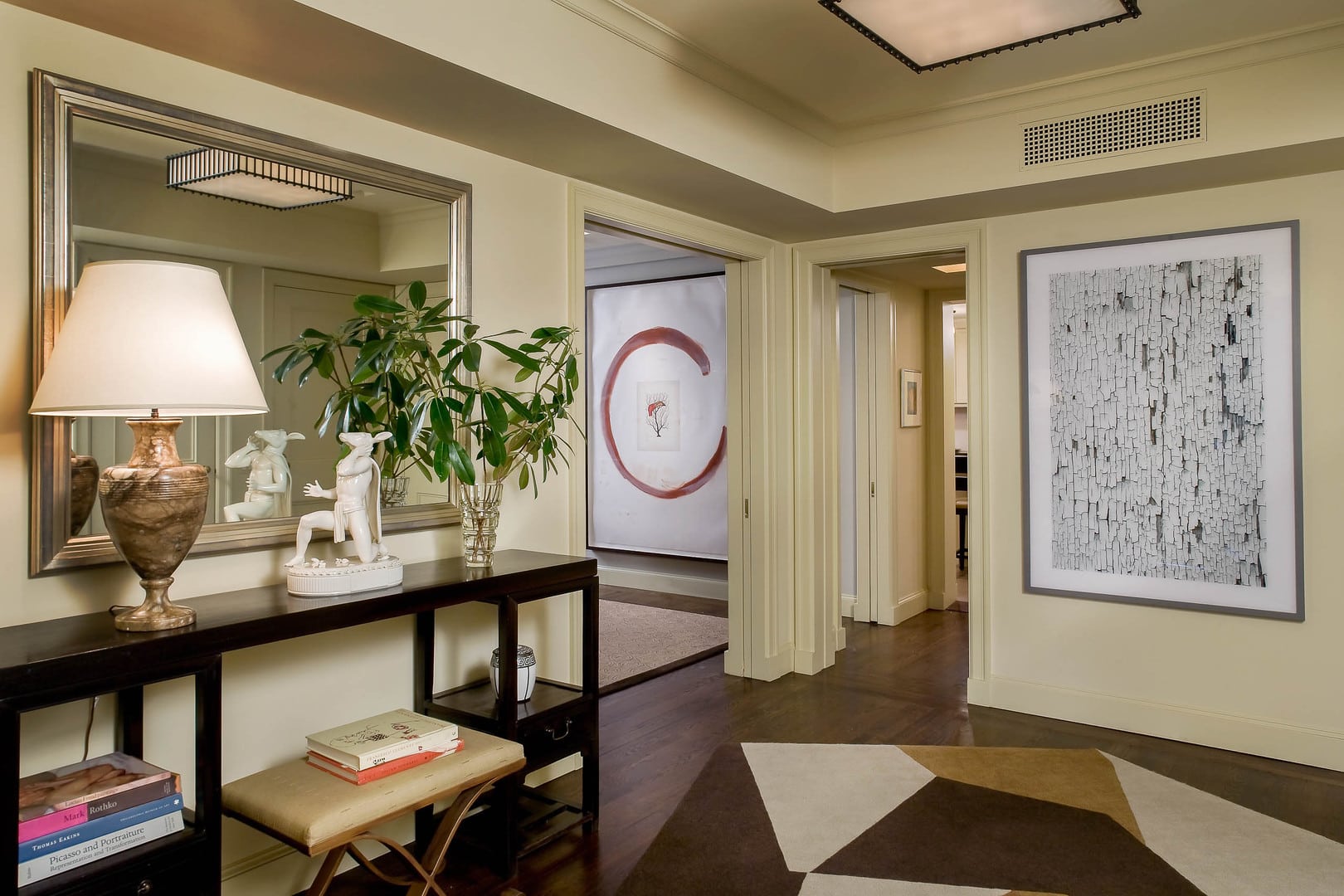
In the entry hall, gleaming dark wood floors contrast with a custom interpretation of a Gio Ponti rug of 1954, made originally in cowhide, now handmade by Martin Patrick Evan. Large photograph of a rough, peeling wall is by German artist Frank Thiel; the large work on paper at left is by Julian Schnabel. Glass and brass light fixtures are custom, from Daniel Berglund.
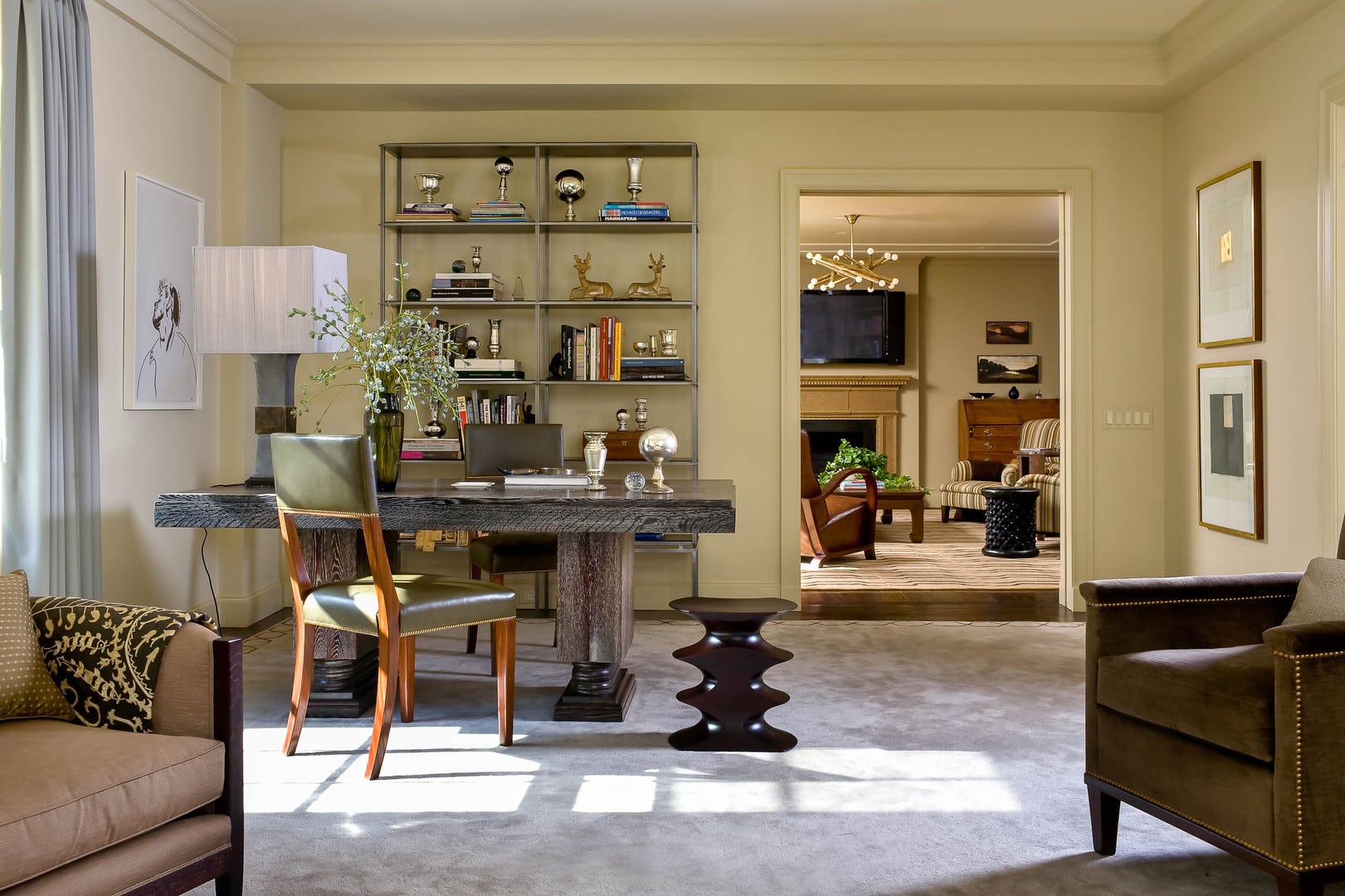
In another corner of the living room, the furniture is assertively midcentury modern. The splendid, massive library table is 1940s French, of limed oak, complemented by Russell side chairs from Dessin Fournir, upholstered in olive leather. A strong sculptural note is architects Herzog & de Meuron’s solid birch “Hocker” stool, a contemporary classic which echoes the forms of African art.

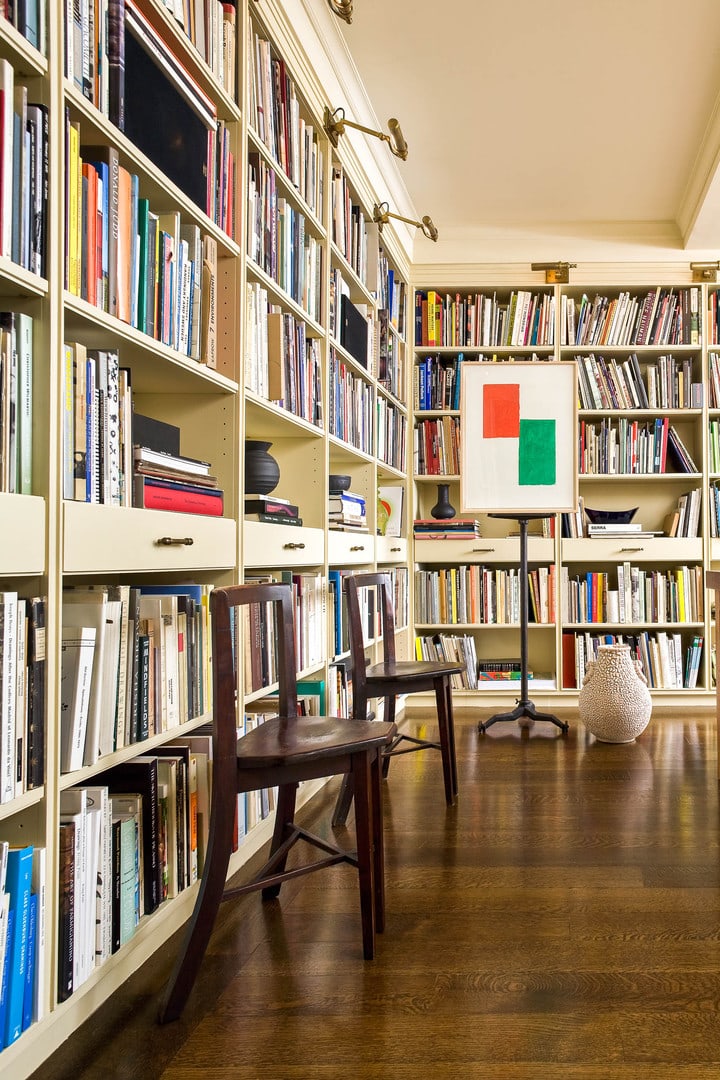
An Italian fruitwood cabinet, c. 1927, by Gio Ponti and Emilio Lancia is the setting for a Louise Bourgeois drawing presented on an easel. Elegant plain curtains in Holly Hunt’s “Colonial Pewter” fabric frame the tableau for these Modernist icons. Scandinavian ceramics complete the vignette.
"Over the years Glenn has worked with us on two projects - a sprawling Upper East Side Co-Op and a Soho penthouse loft. They could not have represented two more different challenges, but each could not have been more successful. Glenn has impeccable taste - he was both sensitive to our needs and aesthetic and to the integrity of the space in which he worked."

– RF

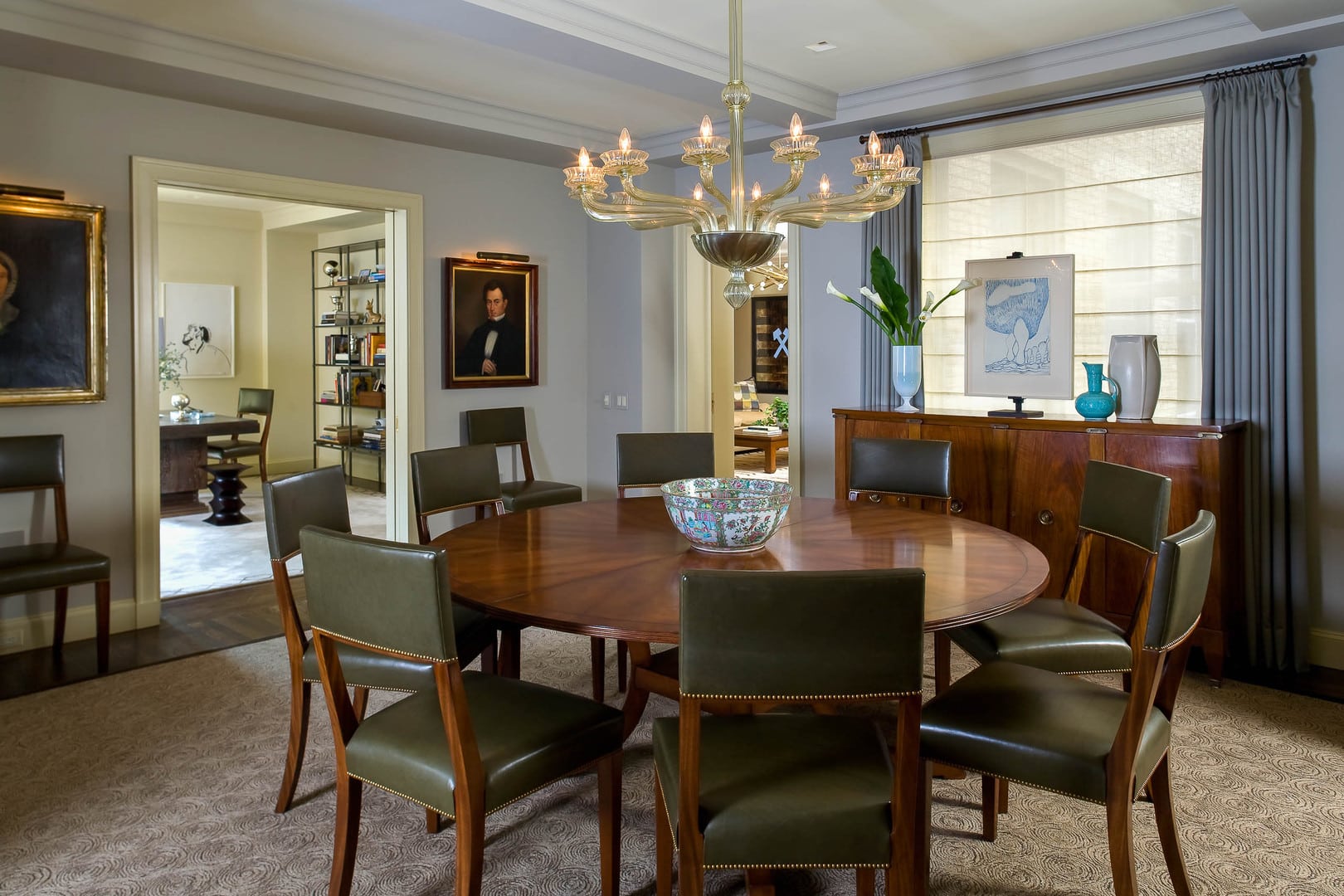
Gilt-framed family portraits flank the entry of the Dining Room, with a view into the living room. The pear wood dining table is from Holly Hunt; the custom Russell side chairs are from Dessin Fournir.

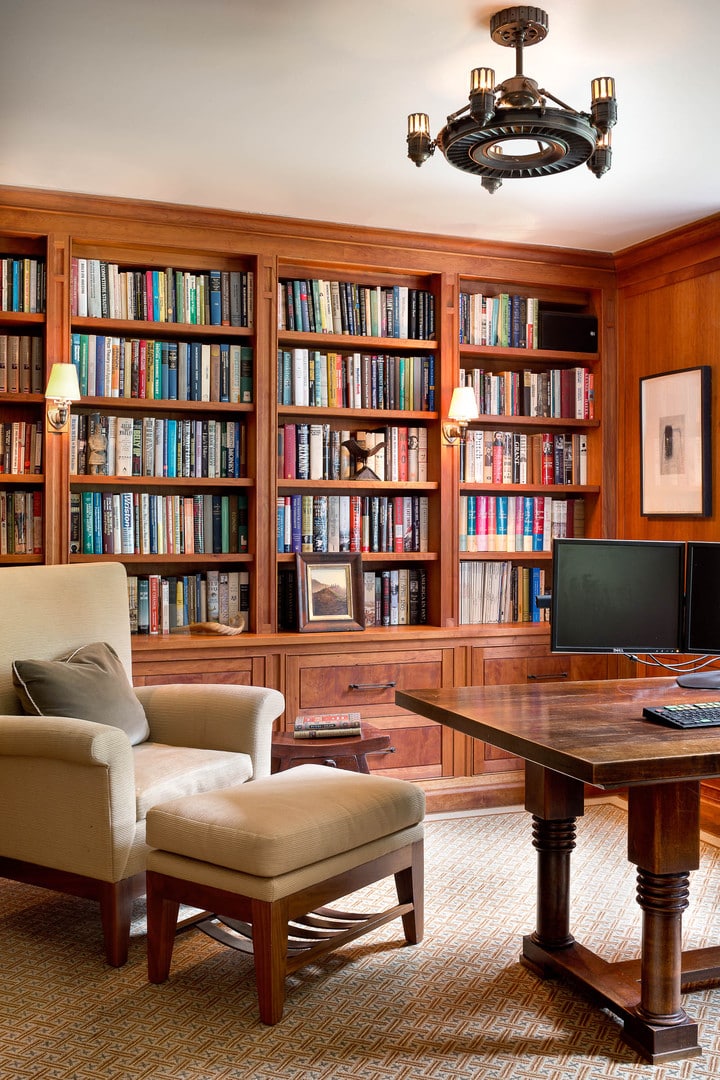
The superbly proportioned Library is enveloped in the warmth created by the soft browns, camels and ambers of the wools and leather used for upholstery, rug and curtains. There is hint of the safari lodge in the stylized tiger design of the custom wool carpet and the tropical hardwoods of the furniture. The brass chandelier, by Sarfatti, is Italian, from the 1950s.
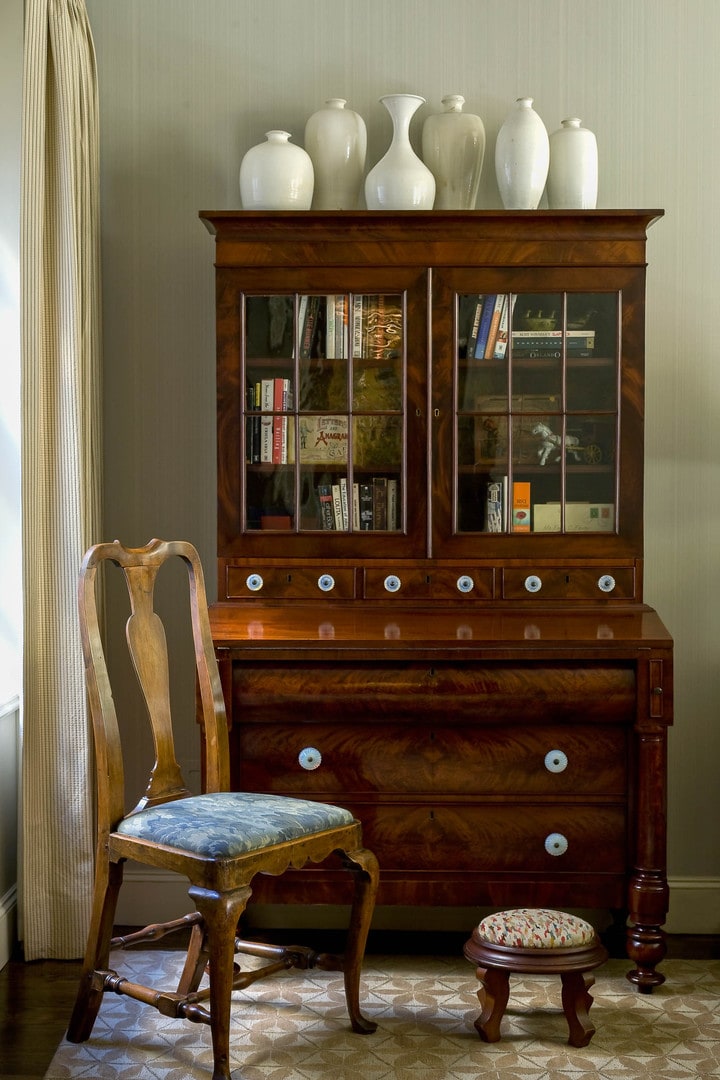
A collection of white-glazed Chinese pottery graces an antique secretary – a family heirloom. The custom wool and silk rug from Tai Ping, is woven to resemble a needlepoint pattern. The crisply pleated curtains are in “Palazzo Check” from Holly Hunt; the custom strie wallpaper is from Farrow & Ball. More family heirlooms, a Queen Anne chair and footstool, complete the space.
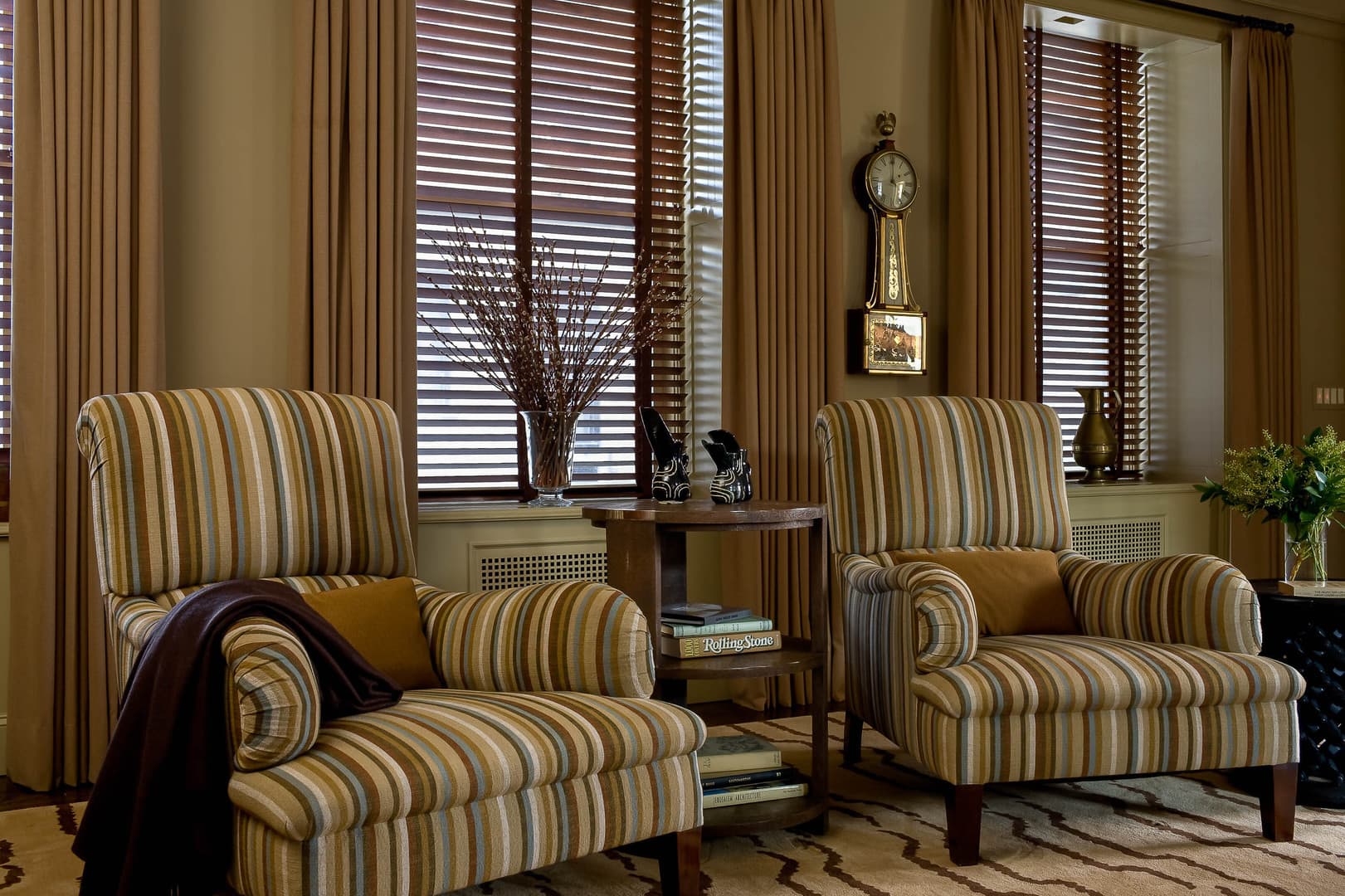
The pair of generously proportioned custom “Briarcliff” armchairs by Jonas are upholstered in a lively stripe from Larsen Fabrics, flanking a three-tiered Art Deco side table in chocolate faux shagreen.

Senior Designer Craig Strulovitz
Photos by Gross & Daley

Riverfront Loft – Tribeca

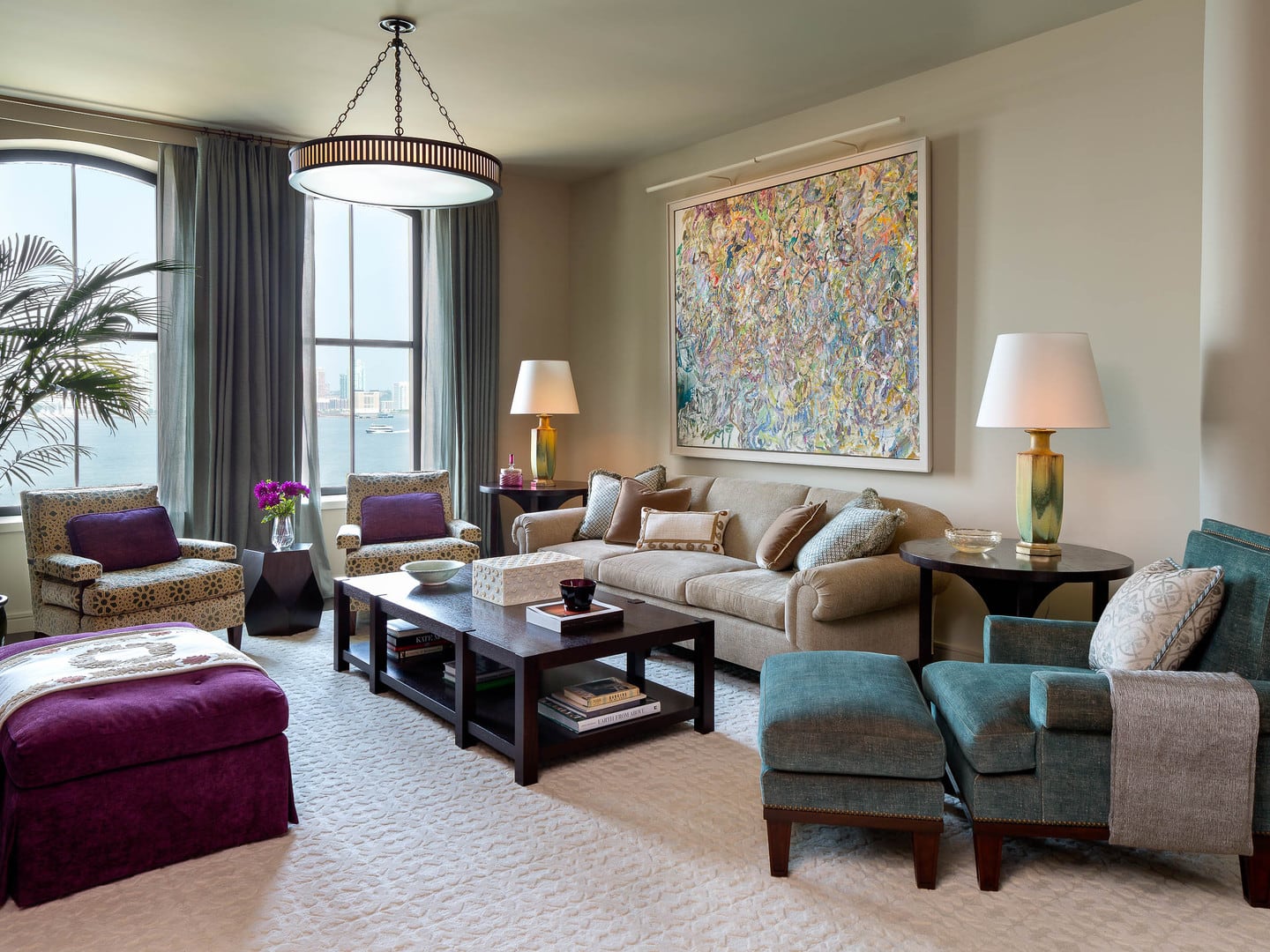
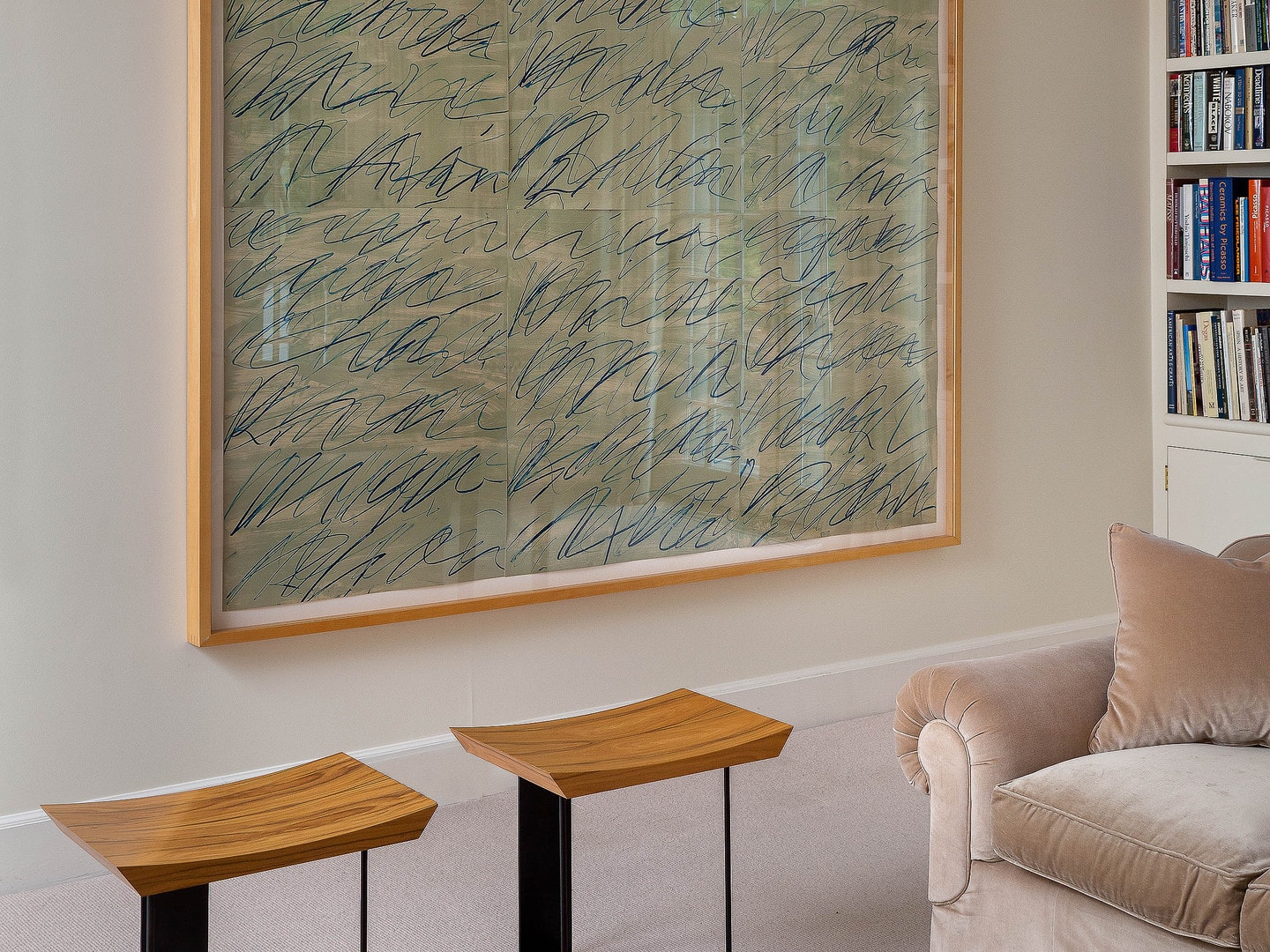
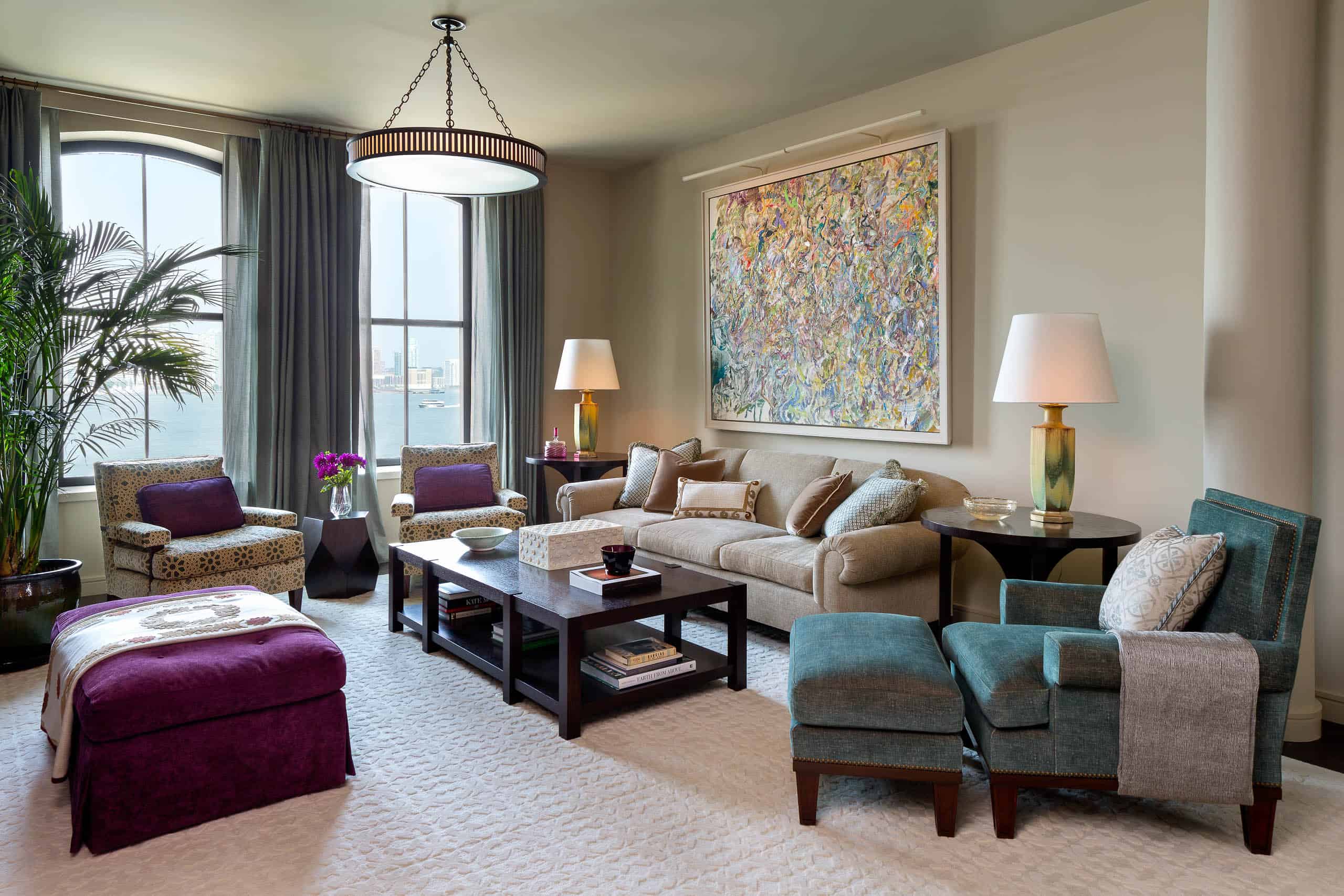
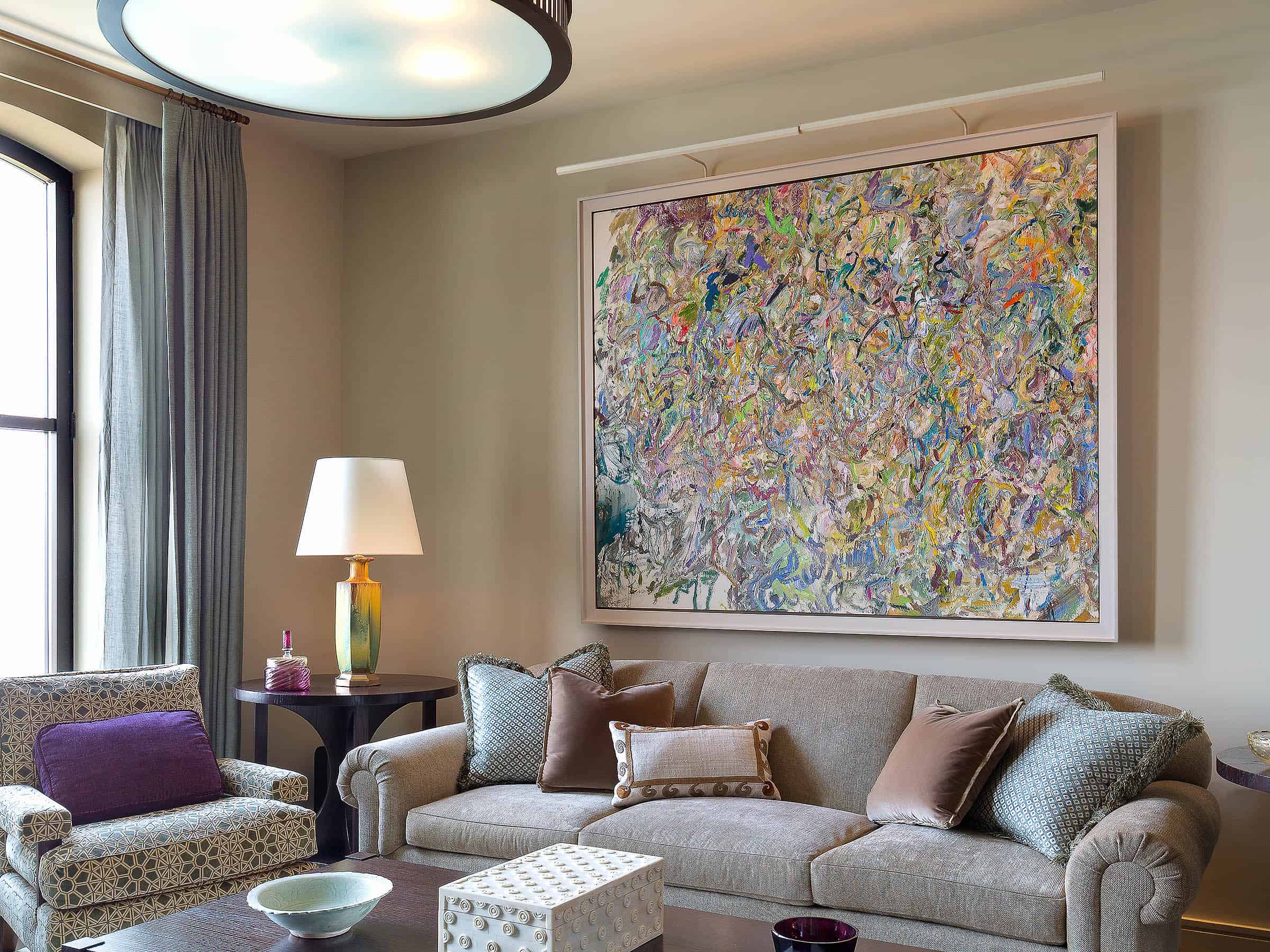
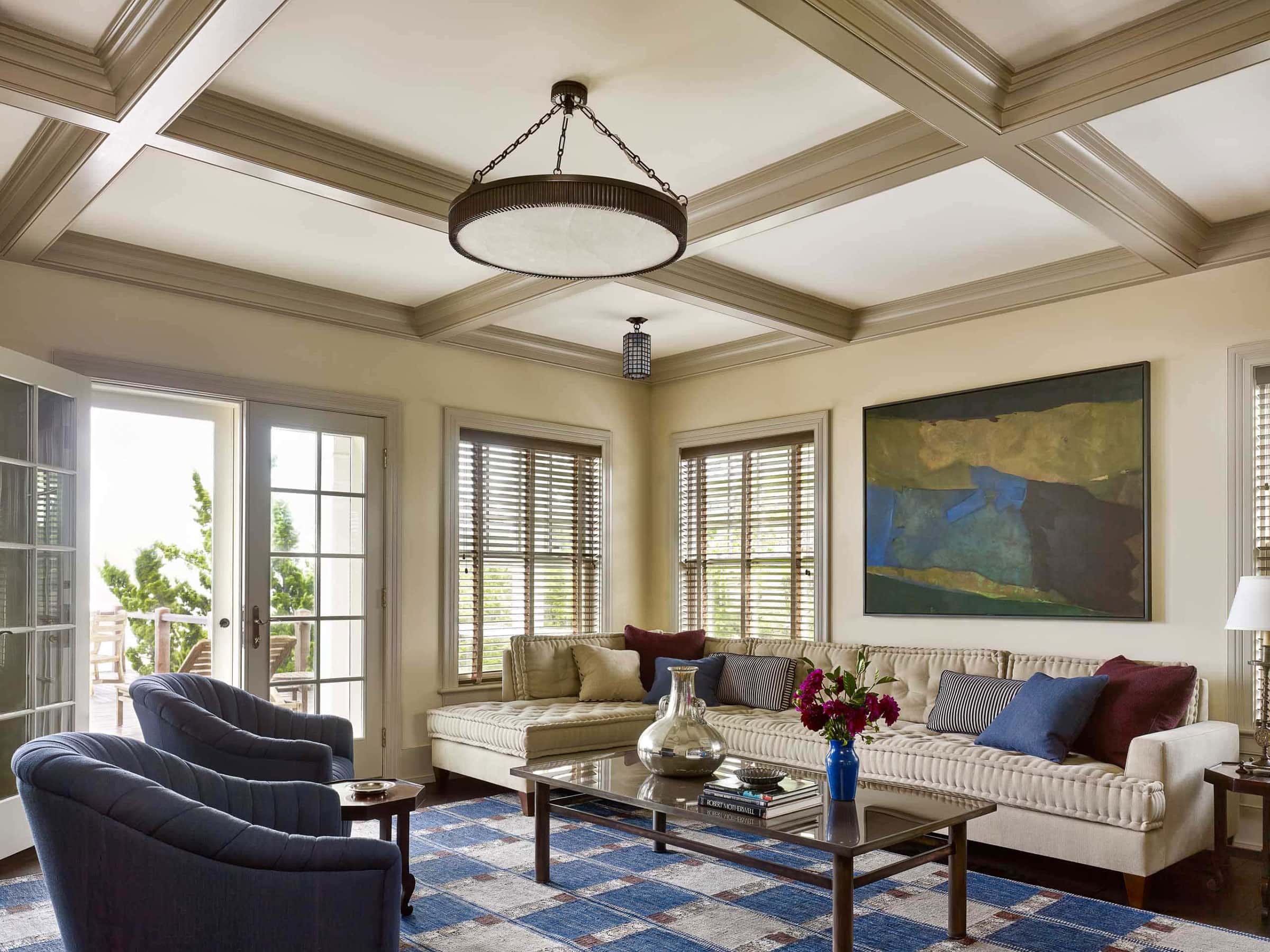
A large, lively and colorful canvas by Larry Poons hangs above the sofa, flanked by Ombre Italian Lamps from the 1950’s in acidic yellow and greens that add an element of surprise to the room’s palette.

TRIBECA – NYC

Riverfront Loft

Glenn Gissler Design transformed this 2,500 square-foot, 2-bedroom loft apartment in Tribeca for a family of three. Located in a freshly converted former warehouse building, the loft’s principal rooms enjoy Hudson River views and an abundance of natural light through six large west-facing windows, making the remaining walls ideal for displaying a newly acquired collection of fine art.

Gissler worked with his clients to acquire a number of artworks by recognized leading American Abstract Expressionist movement artists to be placed within the calm background. A large, lively canvas by Larry Poons hangs above the living room sofa, while striking works by Theodoros Stamos and Milton Resnick are seen in the entry off the dining area.

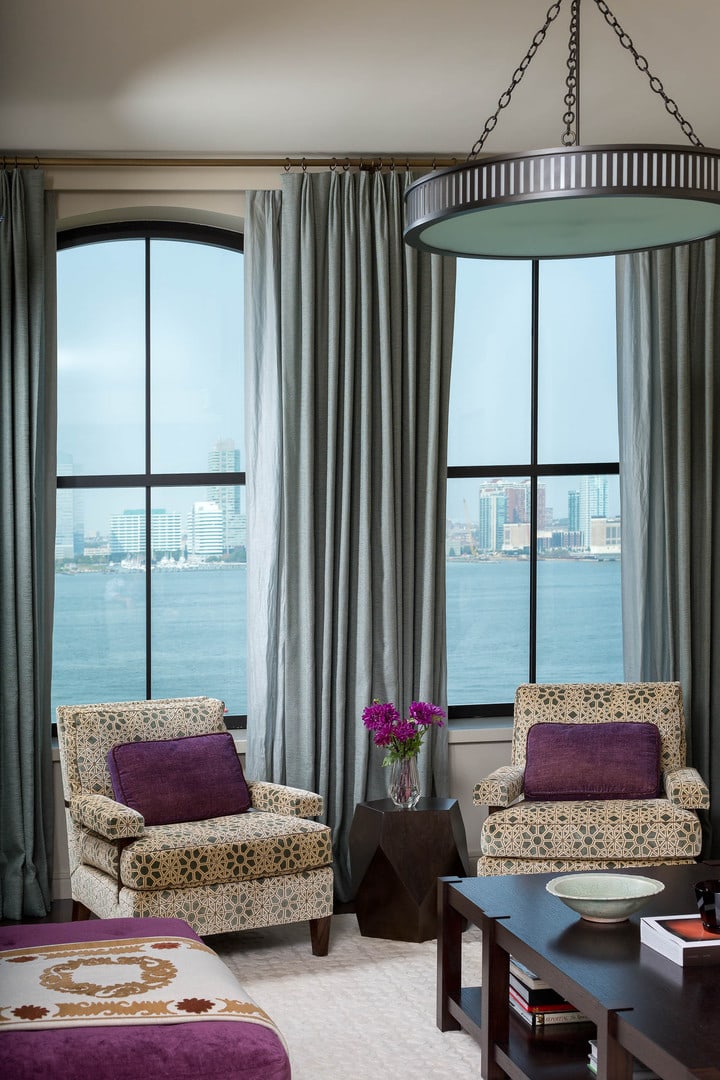
The soft green treatments mimic the hues of the Hudson River and frame the view. Anchoring this end of the room is a pair of Roman Thomas chairs upholstered in a Pollack fabric. A 19th Century Uzbekistan Suzani embroidery placed on the purple ottoman adds a layer of history and decoration.
The upholstered furniture is tailored but welcoming, covered in warm-hued fabrics—greens, beiges, and purples—that use texture or unassertive pattern to create additional visual interest. Tables, chairs, and case goods in solid dark-stained wood offer strong, graphic silhouettes. Walls are painted in warm and soothing, yet art-friendly shades of taupe.
"We are grateful we selected GGD and would certainly recommend them to others. "

– Client

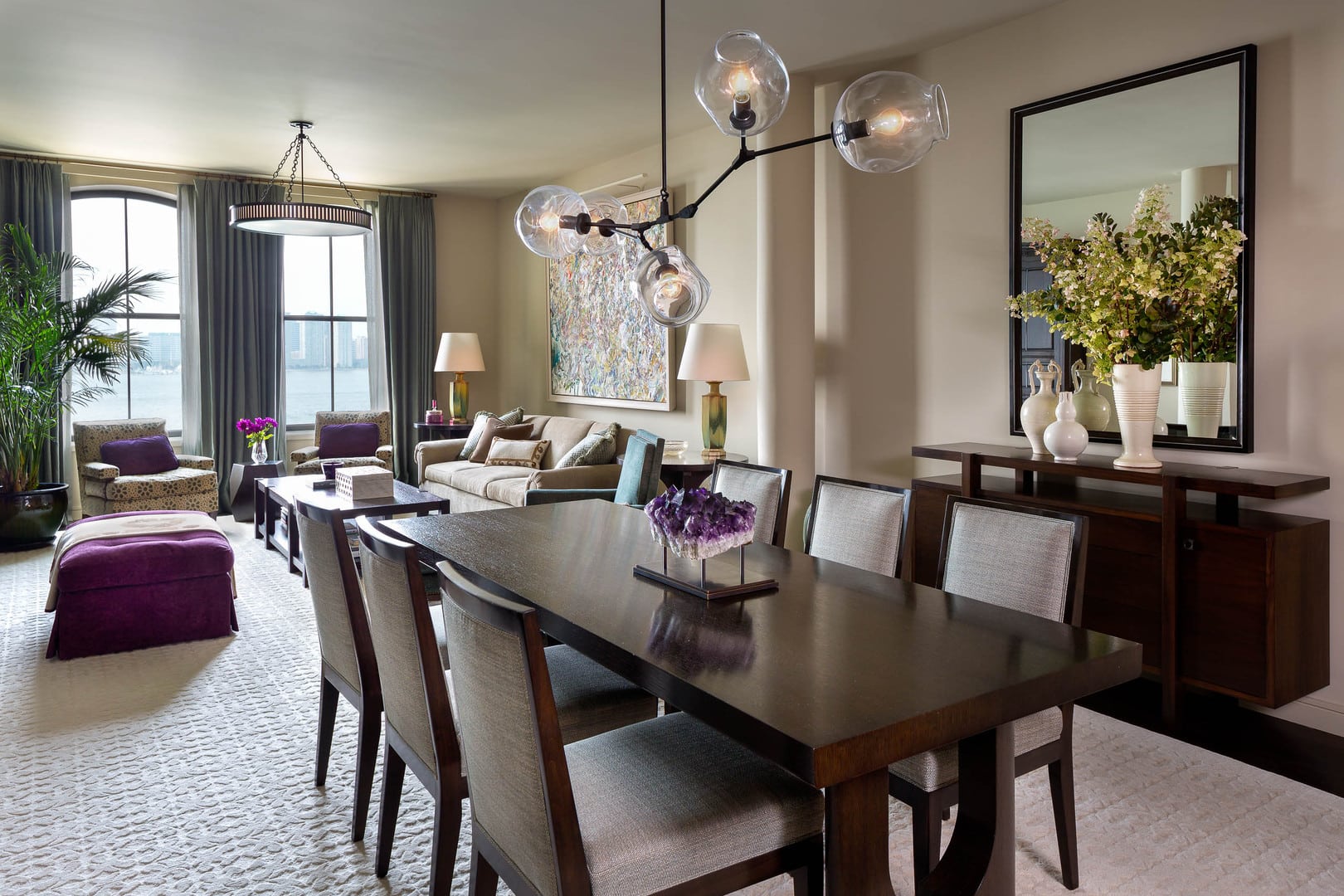
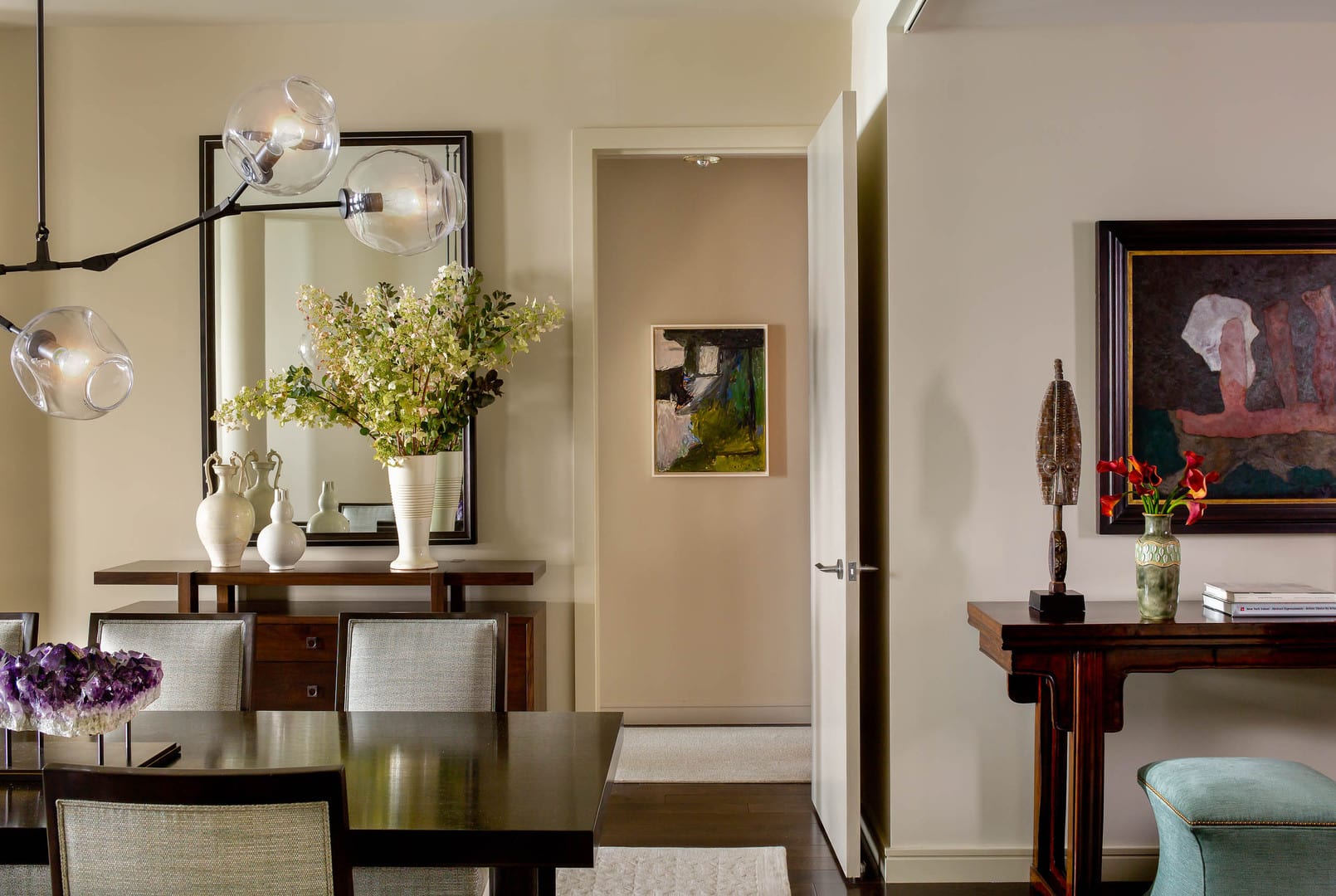
The symmetrical Dining Area has a pair of large framed mirrors to create the feeling of openness in the room. Above the dining table hangs a branching bubble chandelier by contemporary designer Lindsey Adelman. A large Amethyst specimen is displayed prominently as the centerpiece on the dark-stained dining table from Holly Hunt.

The first view of the apartment is of Theodoros Stamos painting from 1946 title ‘The Sacrifice’ hung above circa 1830 Chinese Alter Table.

The entryway and dining area have a bold mix of objects but the focus of on the rich painting by American Abstract Expressionist painters Milton Resnick and Theodoros Stamos.

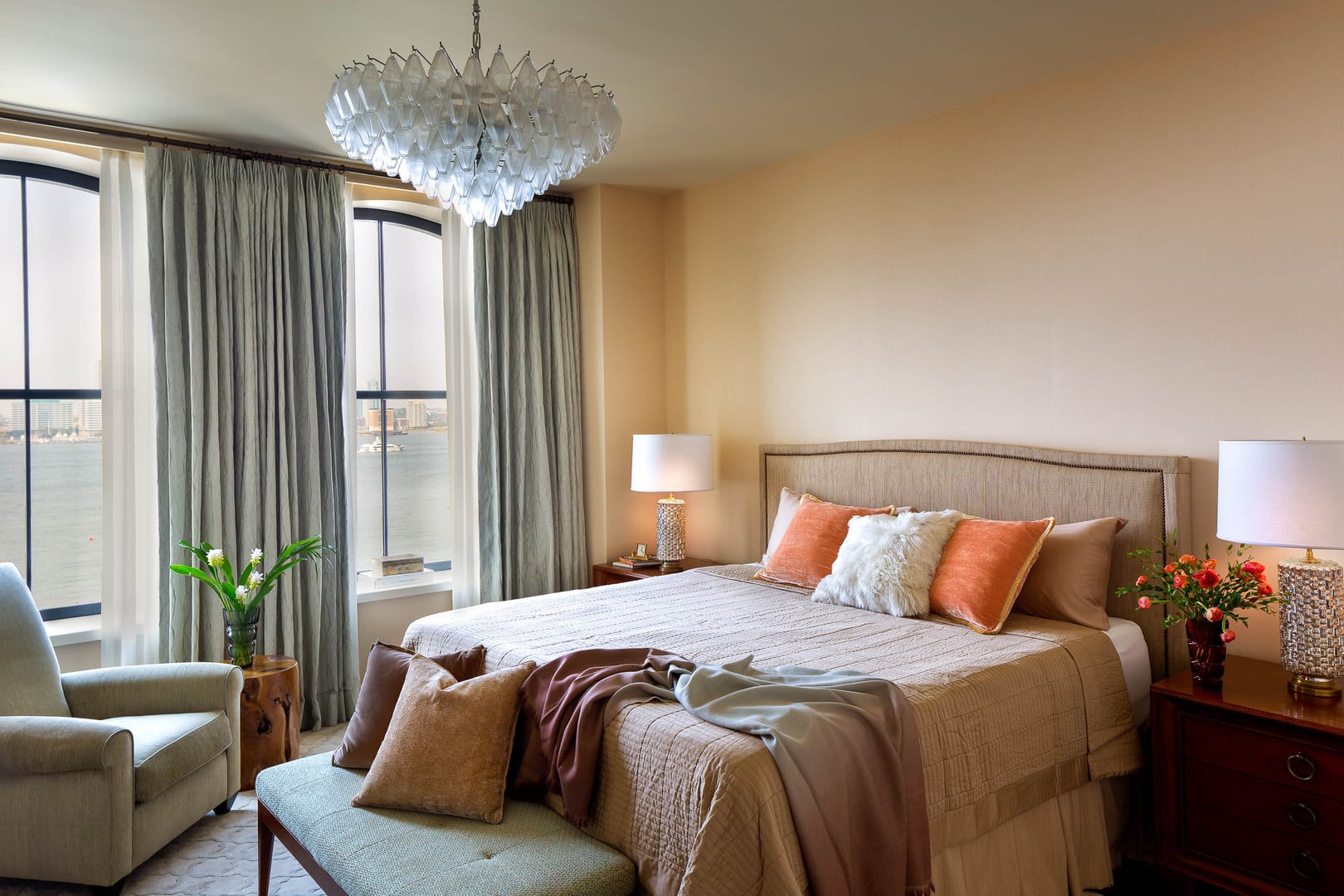
In the master bedroom the palette is a combination of soft green and pale peach and the light reflecting off of the Hudson River sparkles in the Mercury Glass Lamps and 1960’s Venini Chandelier.

Senior Designer Craig Strulovitz
Photos by Gross & Daley