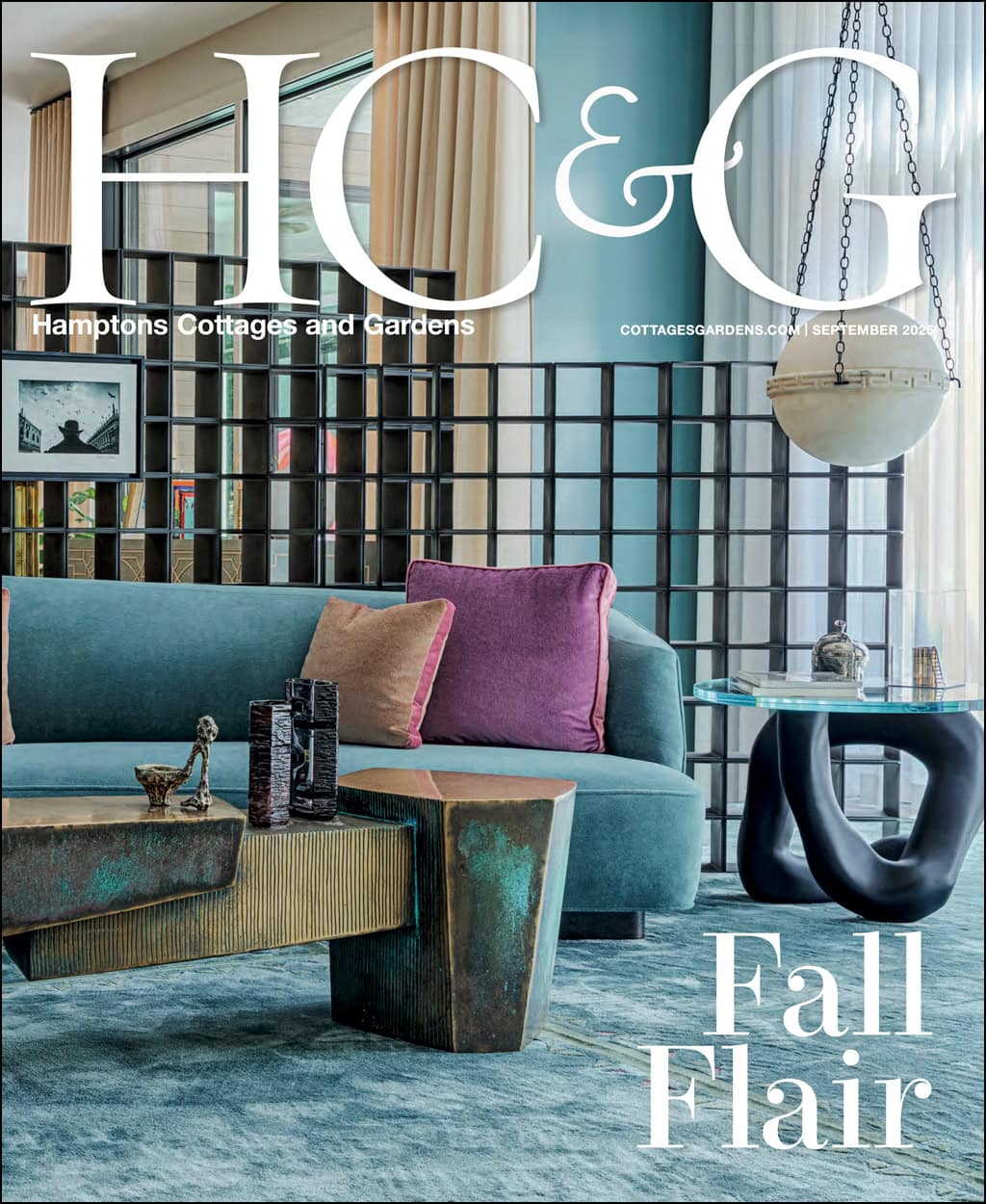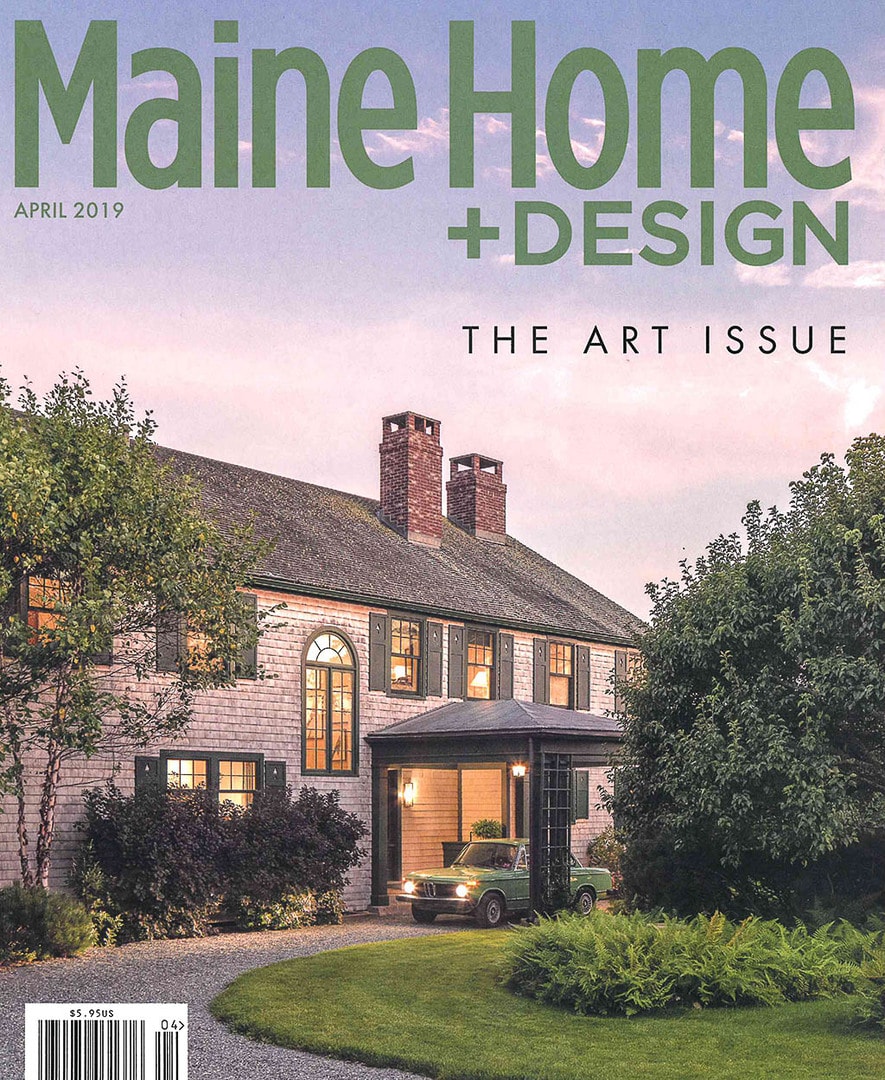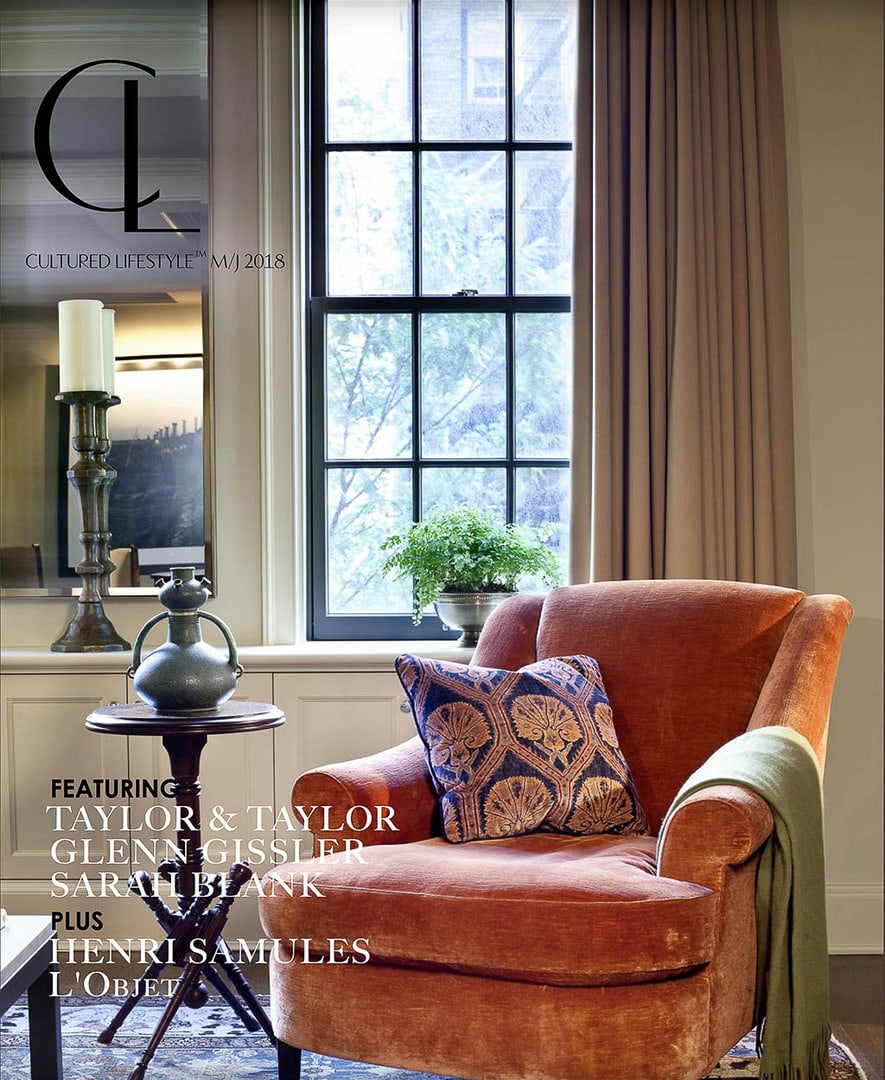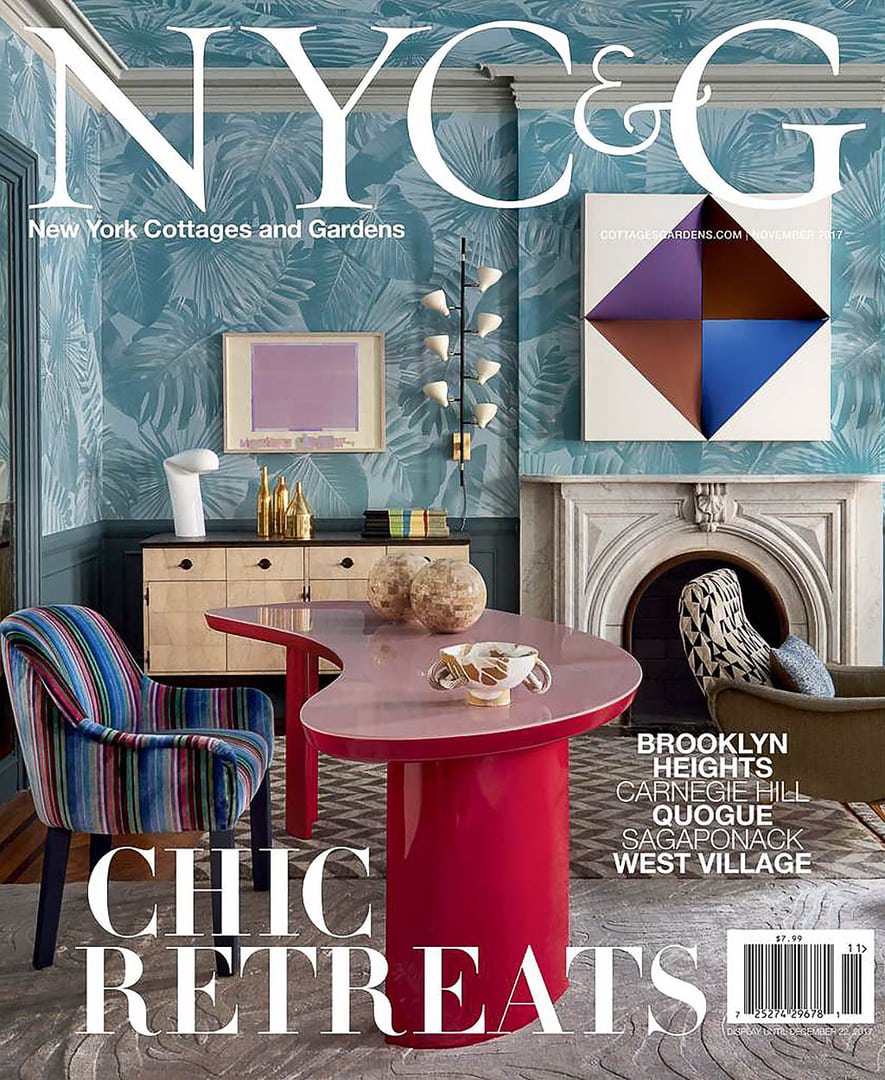
HC&G (Hamtons Cottages & Gardens)

HC&G (Hamptons Cottages & Gardens)

SEPTEMBER 2025

Edited to Perfection

by LAURA FENTON
Photography: PETER MURDOCK

Originally Published in cottagesgardens.com

Nearly 30 years after his original design, interior designer Glenn Gissler returns to refresh this shingle-style home.

It’s rare that a house decorated almost three decades ago still pleases its owner, but such is the case of the Water Mill home belonging to Caroline Hirsch, the founder of the comedy club Carolines on Broadway and the New York Comedy Festival.

In the 1990’s Hirsch hired architect Francis Fleetwood to build her a classic shingle style house like those designed by McKim, Mead & White. “It’s a true shingle” Hirsch says. “We tried to keep it as authentic as we could.” Craving an equally timeless interior, Hirsch tapped interior designer Glenn Gissler to decorate the inside in a style befitting the architecture. Gissler drew inspiration form the Arts & Crafts movement and American Mission style to design a beach house with greater richness and depth than the usual white-on-white seaside decor. The effect was both of it’s moment and timeless.

Gissler and Hirsch became friends through the process, and Gissler has continued to update the house in the ensuing years, keeping it current for Hirsch’s lifestyle. Back in 2010, Gissler oversaw the expansion of the covered deck and patio and addition of a pergola. He also added furnishings to host outdoor dinner parties of up to 50 people, including the Stand Up for Heroes fundraisers Hirsch and Andrew Fox, her partner in life and the comedy festival, to benefit the Bob Woodward Foundation.

More recently Hirsch asked Gissler to rethink some of the living spaces. After closing her namesake club in 2022, Hirsch and Fox found themselves spending more and more time at the beach, and, like so many people, they were working from home more often. They realized that the ground-floor guest bedroom and a small room that led to the pool were underutilized. “I always wanted more living space on the first floor,” says Hirsch.

Hirsch and Fox wanted more work space and room to entertain, but they also wanted an everyday place where they could screen movies and hang out. Working with his long-time senior designer, Craig Strulovitz, Gissler rethought these two rooms as a home office/sitting room and a new lounge and bar. “Caroline wanted something that was fresher, a little but more contemporary feeling” says Gissler of the direction of the redesign, which features much more color than before.

As they began making updates, those changes begat more changes (as home makeovers are a wont do to), resulting in a significant refresh of most of the home’s rooms. Some traditional leaning elements have been swapped out for more streamlined ones (notably: rugs). However, many pieces from the original decor remain. “You don’t need to change everything to make a change,” says Gissler. For example, the dining room’s Arts & Crafts-style chairs remain, but look fresh with new upholstery on the seats and set against a water-y blue wall color.

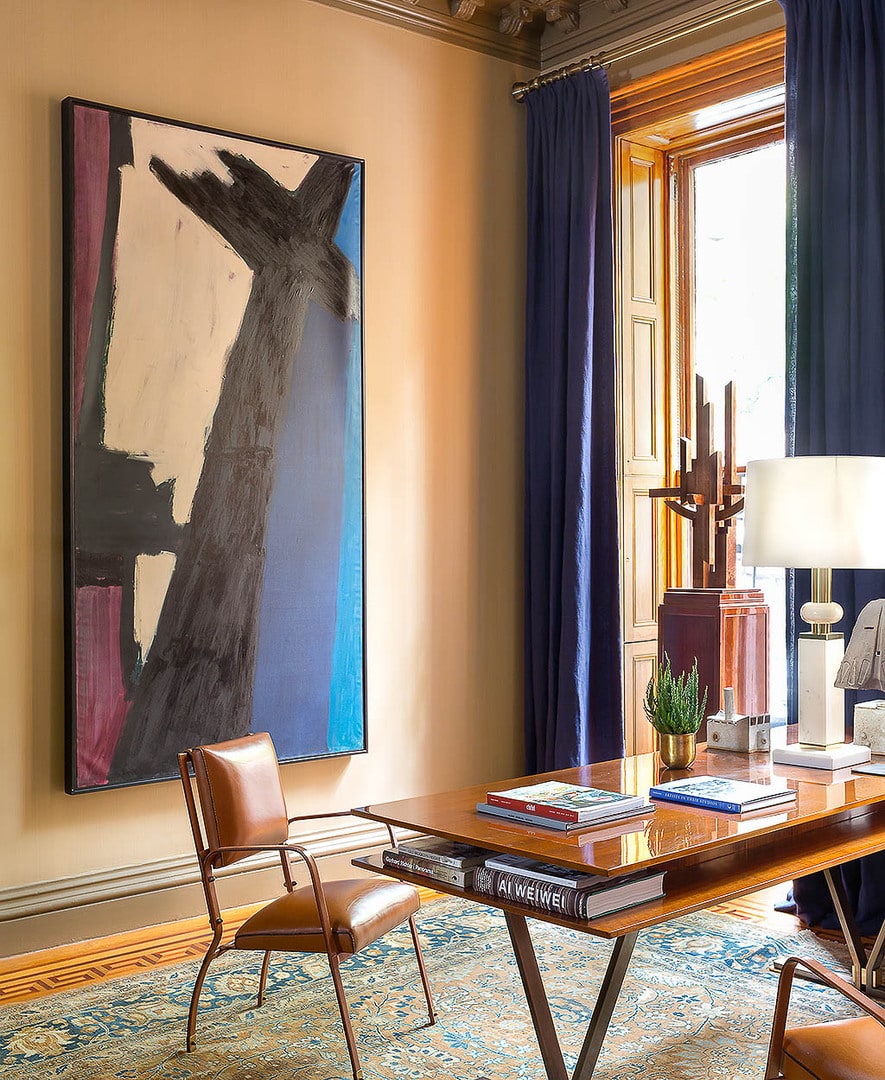
To make the former guest bedroom and pool room feel more in keeping with the rest of the public-facing rooms, Gissler and Strulovitz added millworker, beams, and bead-board. “A lot of the new houses are under-detailed,” confides Gissler. “Things like paneling and beams—whether they’re modern or traditional bring character to a space.” Several art acquisitions, including mid-20th century works by Larry Poons, Alfred Leslie, Yvonne Thomas, Theodoros Stamos, and William Baziotes were also added.

Those layers of art and architectural character are also what makes the house fell relevant decades after it’s first design. “People toss around the work “timeless” so much that it’s become meaningless,” says Gissler. “But there’s a responsibility to make good choices not just bases on trends, but on the house. You have to listen to what the house says and what the owner say—and find a bridge between the two.”

Hirsch says she couldn’t be more pleased with he refresh, noting that the lounge now gets used more that almost any other room. “It’s thrilling to still have a relationship—both with the client and with the house—and be able to make changes as I’ve changed, as she’s changed, and as the world has changed,” says Gissler.

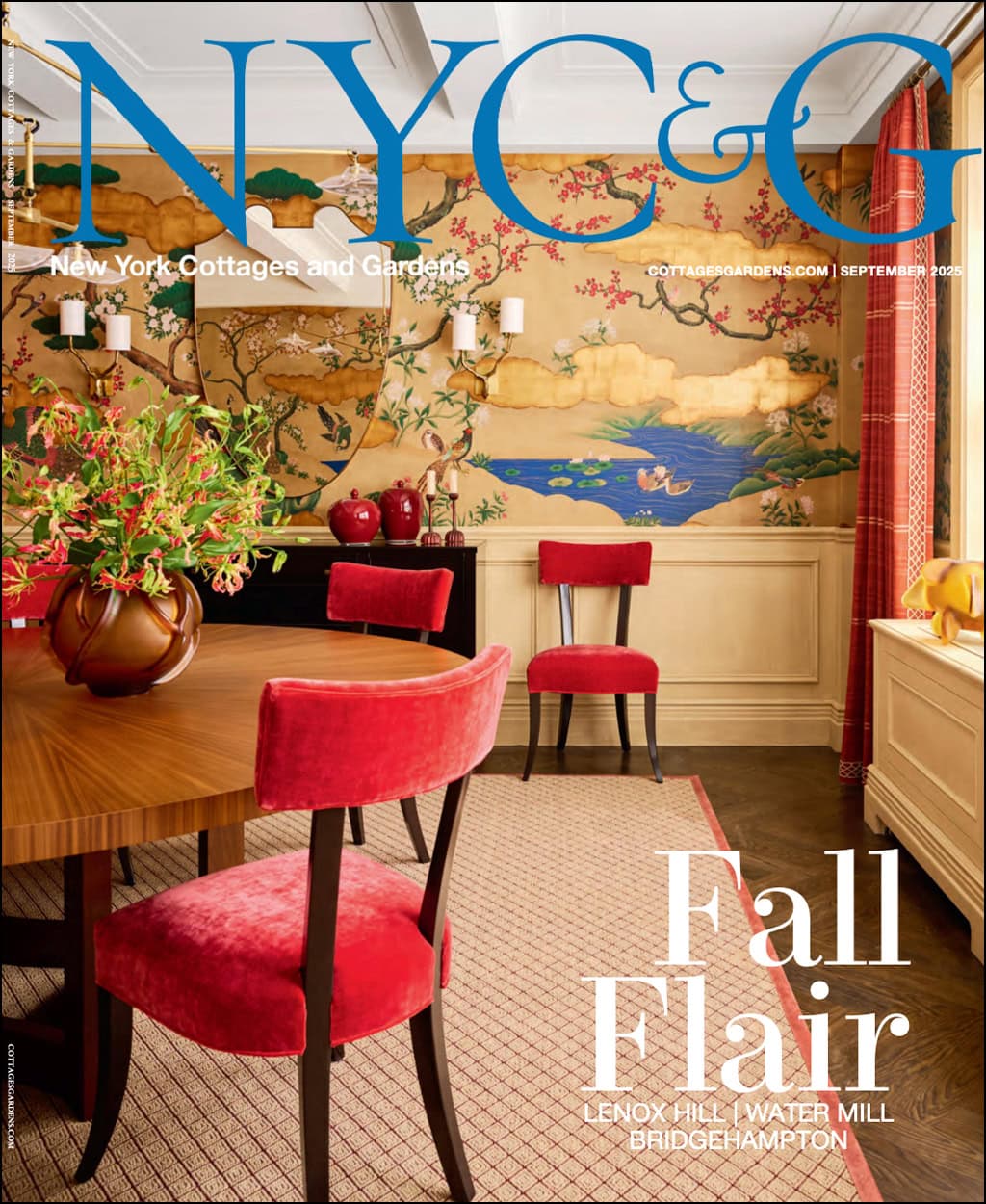
NYC&G (New York Cottages & Gardens) 2025

NYC&G (New York Cottages & Gardens)

SEPTEMBER 2025

Edited to Perfection

by LAURA FENTON
Photography: PETER MURDOCK

Originally Published in cottagesgardens.com

Nearly 30 years after his original design, interior designer Glenn Gissler returns to refresh this shingle-style home.

It’s rare that a house decorated almost three decades ago still pleases its owner, but such is the case of the Water Mill home belonging to Caroline Hirsch, the founder of the comedy club Carolines on Broadway and the New York Comedy Festival.

In the 1990’s Hirsch hired architect Francis Fleetwood to build her a classic shingle style house like those designed by McKim, Mead & White. “It’s a true shingle” Hirsch says. “We tried to keep it as authentic as we could.” Craving an equally timeless interior, Hirsch tapped interior designer Glenn Gissler to decorate the inside in a style befitting the architecture. Gissler drew inspiration form the Arts & Crafts movement and American Mission style to design a beach house with greater richness and depth than the usual white-on-white seaside decor. The effect was both of it’s moment and timeless.

Gissler and Hirsch became friends through the process, and Gissler has continued to update the house in the ensuing years, keeping it current for Hirsch’s lifestyle. Back in 2010, Gissler oversaw the expansion of the covered deck and patio and addition of a pergola. He also added furnishings to host outdoor dinner parties of up to 50 people, including the Stand Up for Heroes fundraisers Hirsch and Andrew Fox, her partner in life and the comedy festival, to benefit the Bob Woodward Foundation.

More recently Hirsch asked Gissler to rethink some of the living spaces. After closing her namesake club in 2022, Hirsch and Fox found themselves spending more and more time at the beach, and, like so many people, they were working from home more often. They realized that the ground-floor guest bedroom and a small room that led to the pool were underutilized. “I always wanted more living space on the first floor,” says Hirsch.

Hirsch and Fox wanted more work space and room to entertain, but they also wanted an everyday place where they could screen movies and hang out. Working with his long-time senior designer, Craig Strulovitz, Gissler rethought these two rooms as a home office/sitting room and a new lounge and bar. “Caroline wanted something that was fresher, a little but more contemporary feeling” says Gissler of the direction of the redesign, which features much more color than before.

As they began making updates, those changes begat more changes (as home makeovers are a wont do to), resulting in a significant refresh of most of the home’s rooms. Some traditional leaning elements have been swapped out for more streamlined ones (notably: rugs). However, many pieces from the original decor remain. “You don’t need to change everything to make a change,” says Gissler. For example, the dining room’s Arts & Crafts-style chairs remain, but look fresh with new upholstery on the seats and set against a water-y blue wall color.

To make the former guest bedroom and pool room feel more in keeping with the rest of the public-facing rooms, Gissler and Strulovitz added millworker, beams, and bead-board. “A lot of the new houses are under-detailed,” confides Gissler. “Things like paneling and beams—whether they’re modern or traditional bring character to a space.” Several art acquisitions, including mid-20th century works by Larry Poons, Alfred Leslie, Yvonne Thomas, Theodoros Stamos, and William Baziotes were also added.

Those layers of art and architectural character are also what makes the house fell relevant decades after it’s first design. “People toss around the work “timeless” so much that it’s become meaningless,” says Gissler. “But there’s a responsibility to make good choices not just bases on trends, but on the house. You have to listen to what the house says and what the owner say—and find a bridge between the two.”

Hirsch says she couldn’t be more pleased with he refresh, noting that the lounge now gets used more that almost any other room. “It’s thrilling to still have a relationship—both with the client and with the house—and be able to make changes as I’ve changed, as she’s changed, and as the world has changed,” says Gissler.
American Lifestyle

AMERICAN LIFESTYLE

ISSUE 95

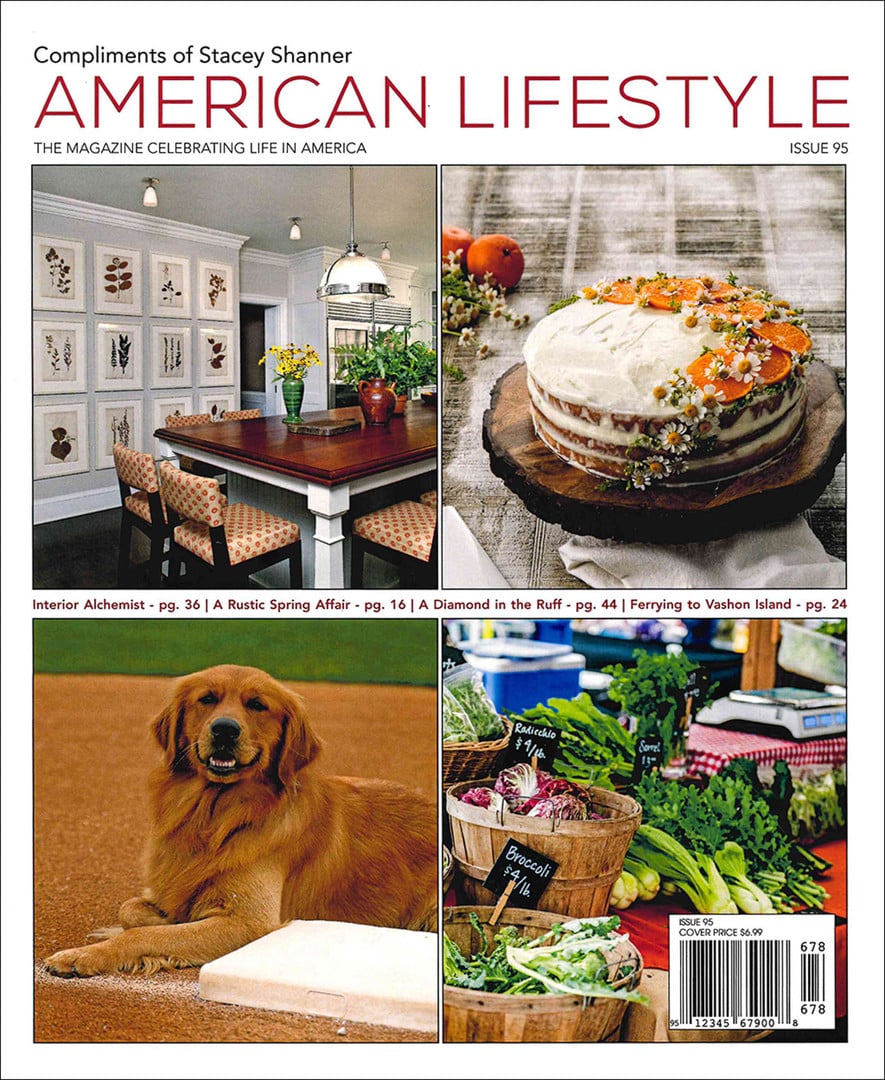
Glenn Gissler: Interior Alchemist

by Rebecca Poole
Photography by Gross & Daley

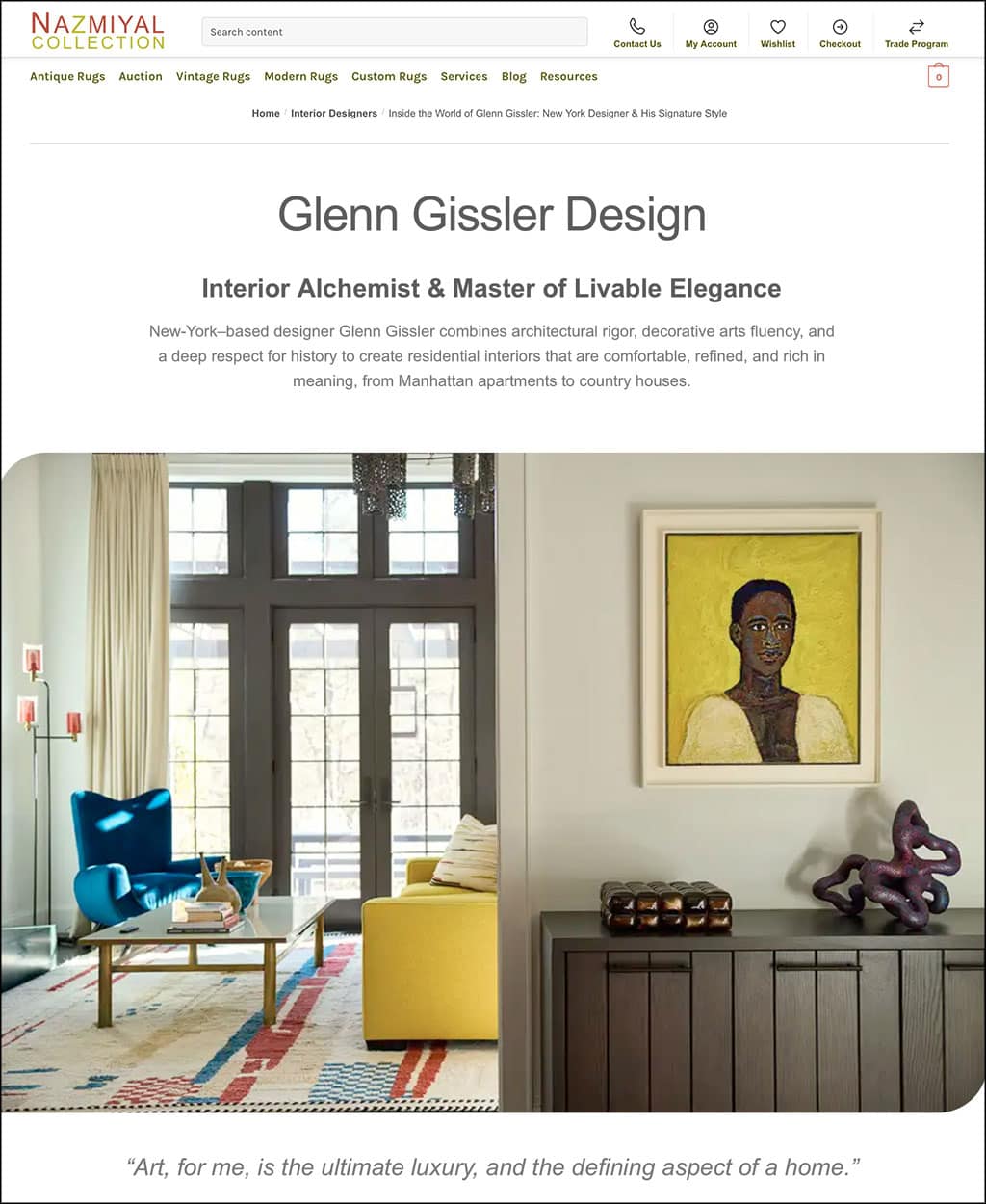
Some interior designers focus on art and history, some on architecture, and some on furnishings. Glenn Gissler is a designer who blends them all into awe-inspiring interior spaces that transcend trends, putting them in a category all their own. Gissler talks about why art plays such a vital role in his work, his approach to bringing a client’s vision to life, and how his latest Westchester, New York, project came to be.

How did you get started in design, and what led you to being so passionate about pursuing this as a career?
When I was just thirteen, I publicly declared to my class that I wanted to be an interior designer. I only knew of one interior designer at the time—a friend of my mother. She was a creative spirit and a painter, and she really inspired me. That was the beginning of a journey that went on to include seven years of college when I studied American architectural history and historic preservation, culminating with two degrees from Rhode Island School of Design, where I studied architecture and fine arts. Growing up in Wisconsin, there wasn’t much in terms of historic architecture—not like there was in New England. This was the time before the internet, so I was snooping around in books to learn as much as I could. My father was a journalist, with one of his focuses looking at the rebirth of American cities, so we had a lot of books around on the topic. This idea of adaptive reuse—finding a new purpose for old buildings—was a provocative and ‘new’ idea that caught my imagination, and this would go on to influence my design approach.

How would you describe your signature style?
I’ve been in the business now for thirty years, and I see design more as a complex layering of textiles and objects—it’s about problem solving. You combine grace and ease with how you live, with one foot in history and one foot in today’s world. If I had to describe my style, I’d go off what others have described it as: American. I also incorporate multicultural objects and textiles to create a spatial and visual dialogue that’s interesting.

What has been your favorite project to work on, and why?
There are a couple of projects from twenty-five years ago that are still on my website that I still see as relevant today. They’re evidence that, when you love your clients and your projects and make thoughtful decisions not based on trends, your work can endure over time. There are oftentimes conceptual challenges involved, because it’s not simply a matter of buying furniture and taking pretty pictures—you’re crafting a lifestyle that is beautiful, compelling, and makes functional sense. Projects I find really engaging are those where I work with people who want some assistance inventing the next chapter of their home lives with me.

How do you handle challenges that arise?
I’m lucky to have a team of people who helps me address challenges. Fundamentally, interior design is about isolating what the problems are and coming up with solid and sometimes clever solutions. And the solution needs to be aesthetically pleasing while having functionality. It requires a certain amount of creativity to take, say, a space with a dining room that no one uses, and turn it into something else. It’s not about leaving my mark that says, “Glenn was here!” No, it’s about seeing what’s right for the space and the client. There can be challenges with older houses because the architecture was not designed for today’s living. How do you make a living room livable so it’s not sitting empty until the holidays? I try to have things make sense through a twenty-first-century point of view while keeping the historic elements alive.

What is your process like, especially with clients who have a very specific vision for their space?
In the pre-internet days, people had tear sheets they had accumulated over time and things they wanted, like a “fantasy country house.” These images are useful to see, but I’m really much more interested in hearing about the house they grew up in and where they see their lives in five years. Kids will be older, so do you want a more private space, or do you want to have the house that everyone wants to hang out in? This is the kind of information I like to gather in our initial conversation. I try to make it about the broader view, too, like if someone lives in a colonial revival but wants a modern look to it. People get overwhelmed by choices, so I try to keep the bigger vision at the center. Even if you hired five different interior designers, my philosophy is that the owner should still be at the core. The project should go through the filter of the interior designer rather than looking like every home the designer has in his or her portfolio.

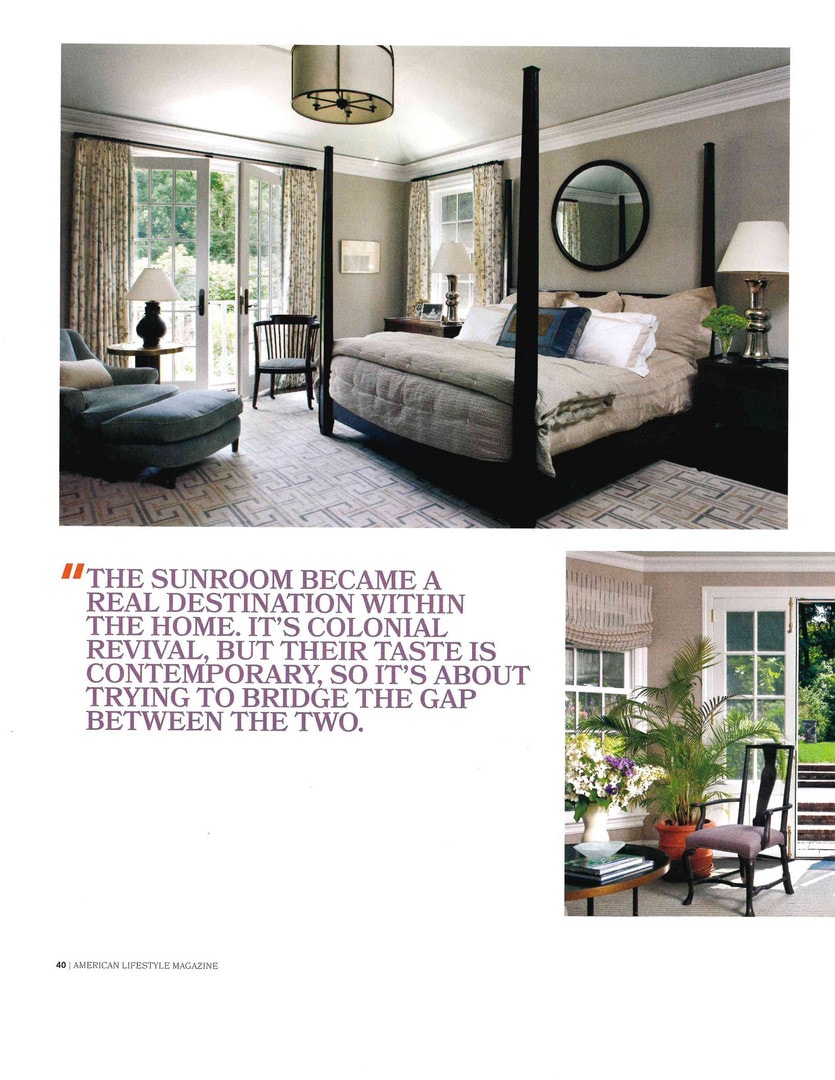
The sunroom became a real destination within the home. It’s colonial revival, but their taste is contemporary, so it’s about trying to bridge the gap between the two.


What about living and working in New York City inspires you the most?
I’ve been in New York since the mid-‘80s. I lived in Greenwich Village before moving to Brooklyn Heights, where I reside now. I’ve always been an art collector and an object collector, and I’m constantly moving things in my home from one place to another to keep them dynamic and engaging. My office is near the Flatiron Buildings, where it’s remained for over twenty years. The architecture and street life around that area have so much vitality. You hear Europeans say, “There’s so much energy in New York!” But, to be honest, I have become a bit immune to it after being here for so many years. Social media helps because it keeps my seemingly insatiable curiosity alive. My brain sees thousands upon thousands of images a week, so it’s constantly swirling with new ideas. When I’m working on a project and stuck about a chandelier, for example, I go look at my 100+ Pinterest boards, which gives me that conceptual turbocharge to se and consider an idea differently.

Describe the Westchester house and what your main inspiration was behind designing it:
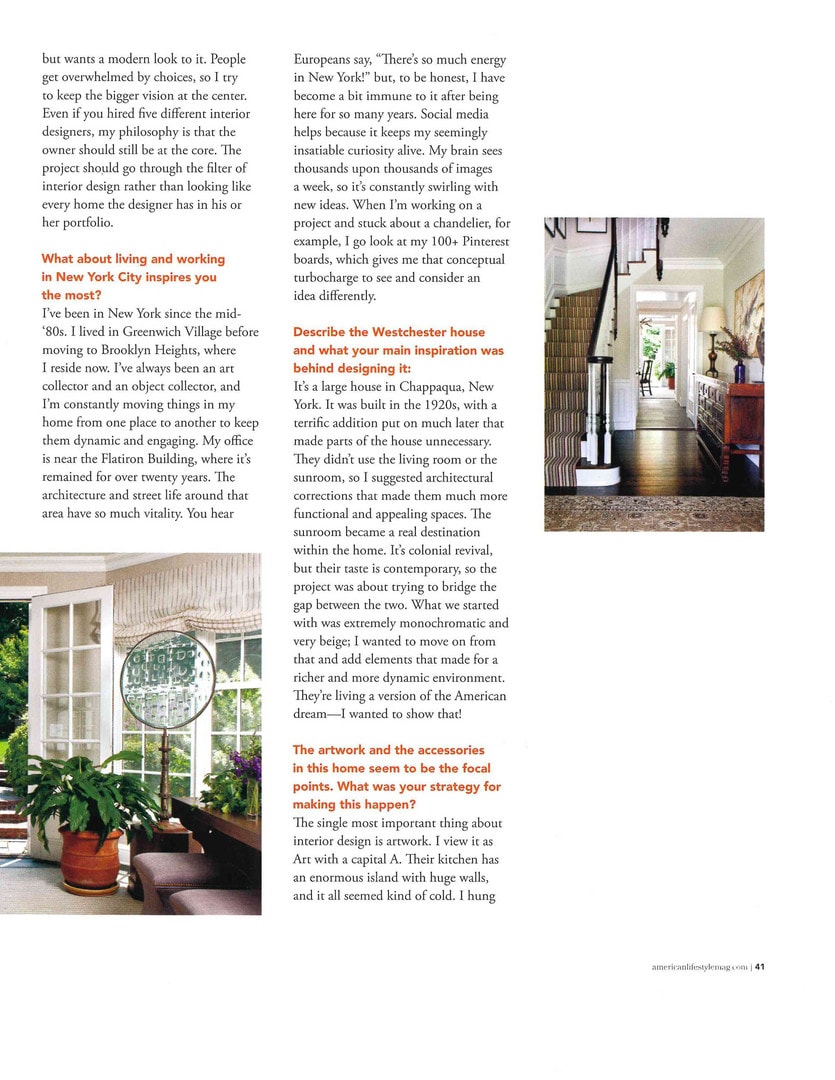
It’s a large house in Chappaqua, New York. It was built in the 1920s, with a terrific addition put on much later than that made parts of the house unnecessary. They didn’t use the living room or the sunroom, so I suggested architectural corrections that made them much more functional and appealing spaces. The sunroom became a real destination within the home. It’s colonial revival, but their taste is contemporary, so the project was about trying to bridge the gap between the two. What we started with was extremely monochromatic and very beige; I wanted to move on from that and add elements that made for a richer and more dynamic environment. They’re living a version of the American dream—I wanted to show that!

The artwork and the accessories in this home seem to be the focal points. What was your strategy for making this happen?
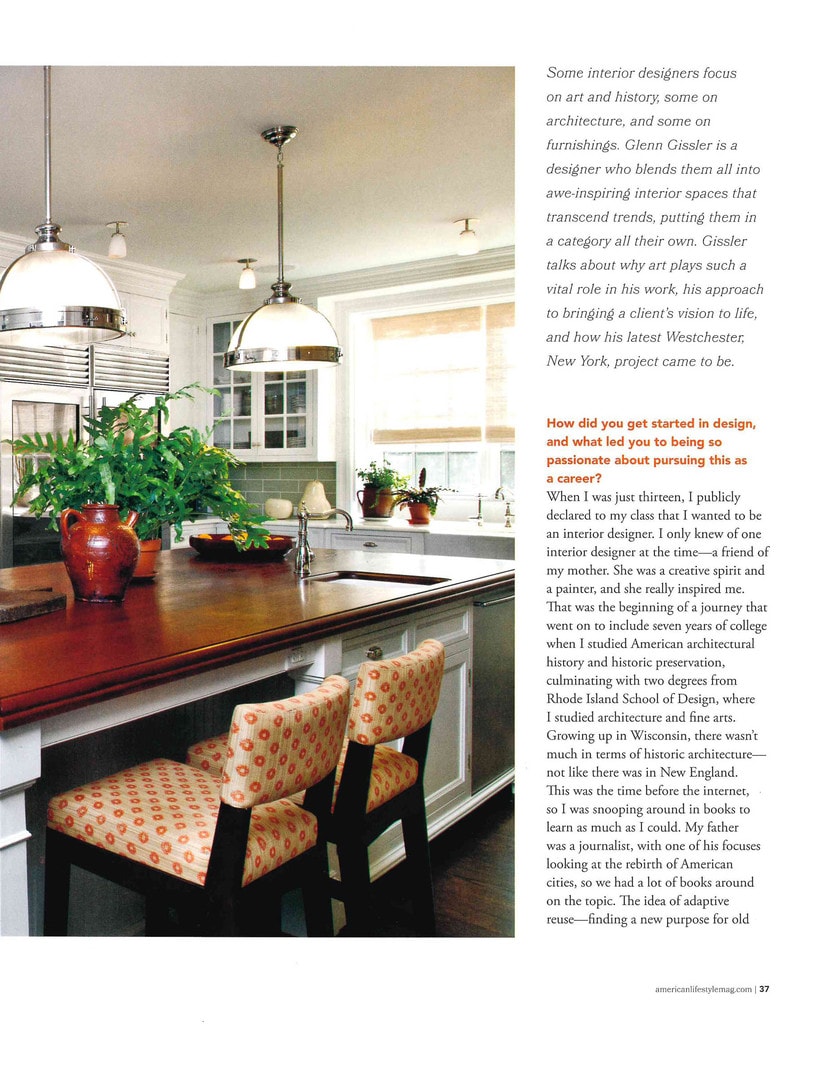
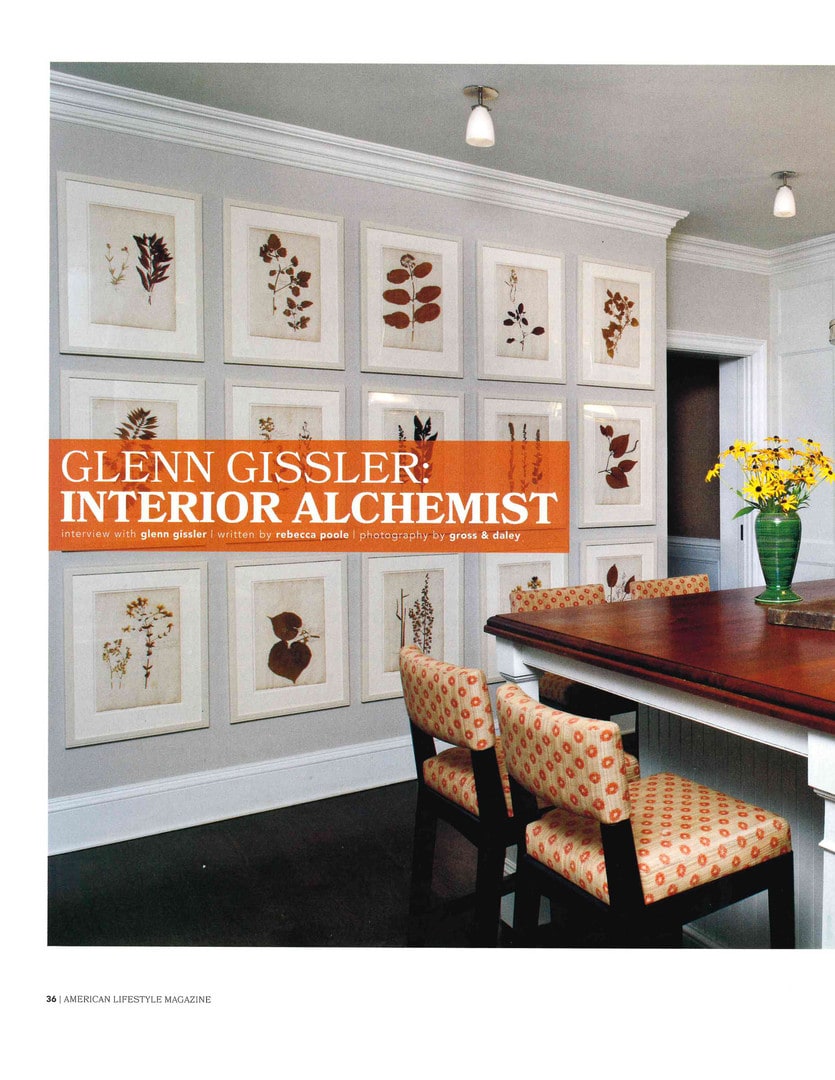
The single most important thing about interior design is artwork. I view it as Art with a capital A. Their kitchen has an enormous island with huge walls, and it all seemed kind of cool. I hung a collection of antique botanicals from the nineteenth century—they gave the kitchen a fresh look. The stairwell features framed artwork by their three kids, which breathes color and joy into the space. We bought really fantastic pieces for other areas of the house. I’ve been going to museums and art galleries since I was sixteen, and it filters into the homes I design. For this home, I kept the design manful with aspects of history and art but maintained a look that makes sense with their lifestyle.

What was your favorite room to design in the house?
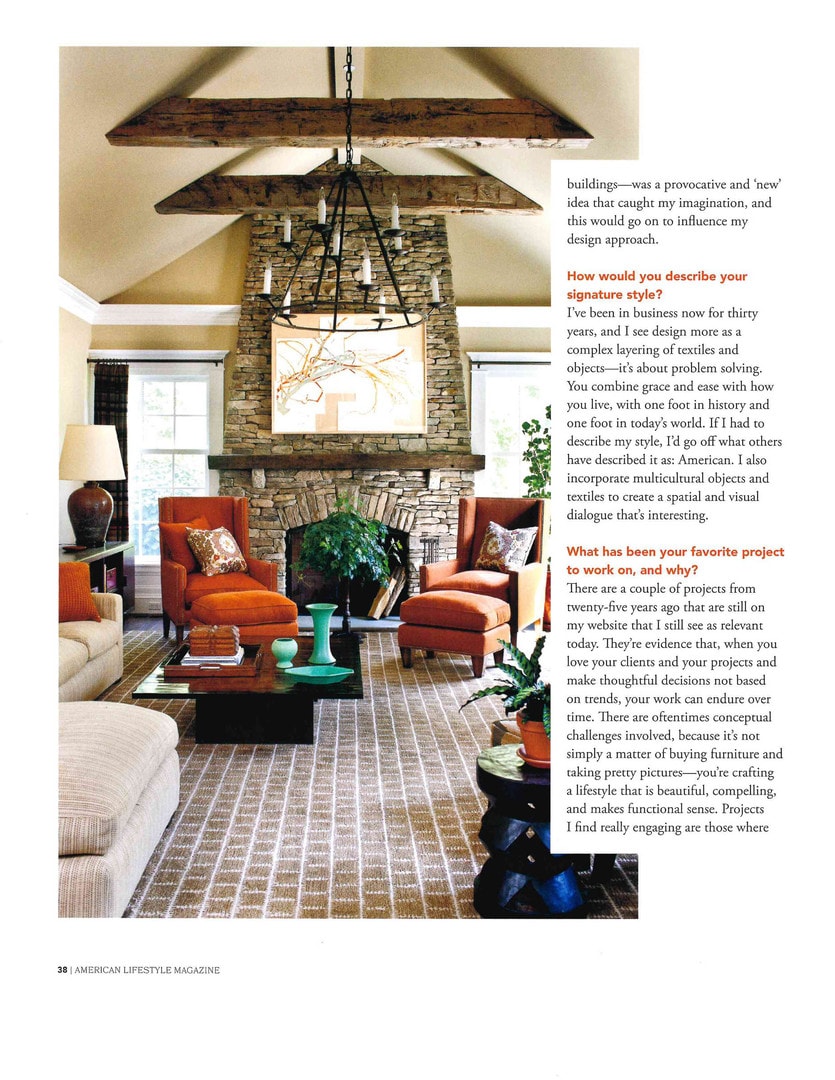
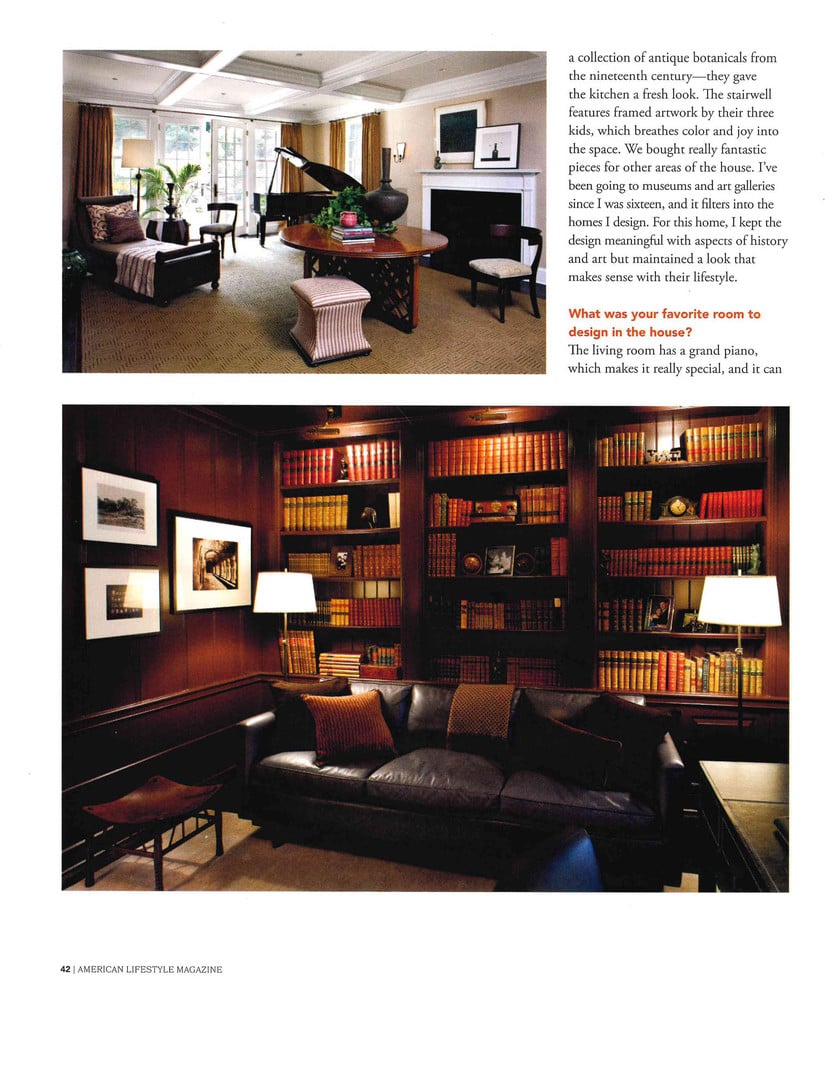
The living room has a grand piano, which makes it really special, and it can accommodate a lot of people in many different ways. But I have to say the sunroom is my favorite. It’s a brightly lit room all year round, with a mix of both historic and modern elements.

There are a lot of bold colors, as well as warmer, neutral tones. How do you find that balance between the two in order to create a space that looks cohesive?
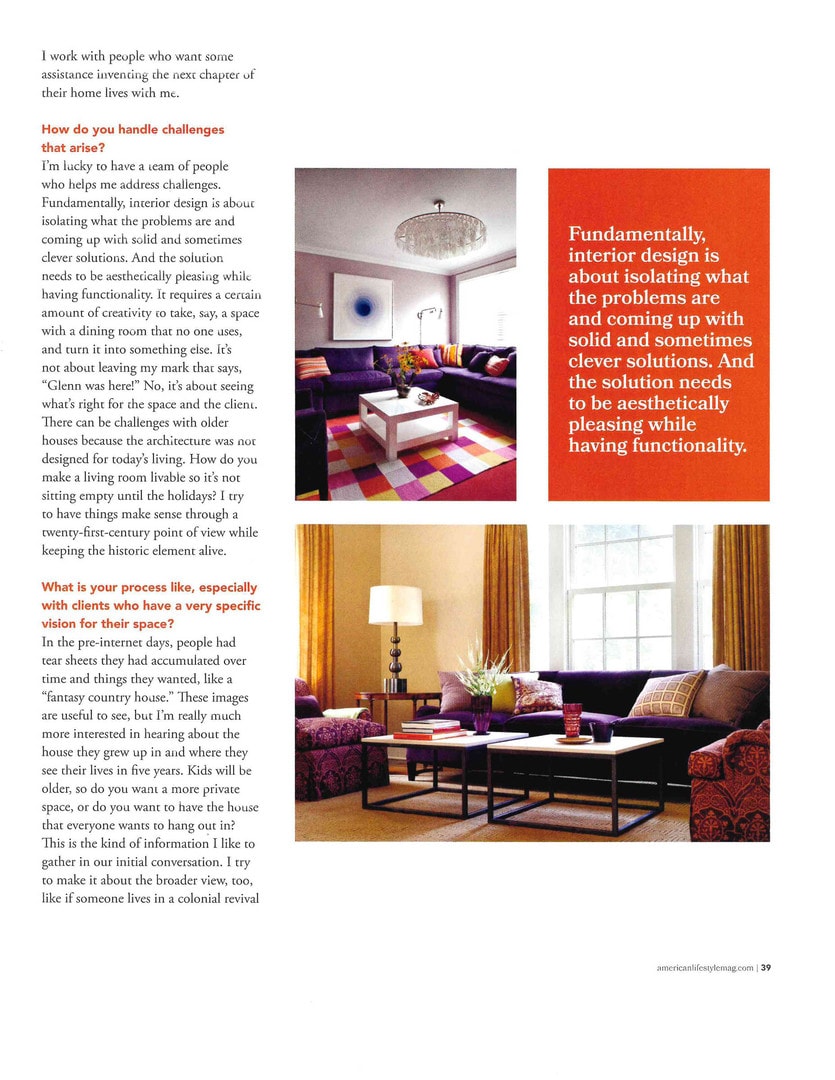
When it comes to color, I like to incorporate items that you can change out without having to start from scratch—like throw pillows, chairs, or artwork. Rugs and sofas cost a fortune, so those need to be solid color decisions that endure the test of time. No matter what the budget is, everything you’re spending matters. It’s important to keep in mind that tastes are constantly evolving. You don’t want to make decisions that three years from now will make you wonder, “Why did I do that?”

What have you learned from the mentors in your life? What advice would you give aspiring interior designers?
My first employer was a designer named Juan Montoya. He was on Architectural Digest’s first Top 100 list and has been since it started. I saw how he ran his business and said, “I can do this.” He gave me that entrepreneurial spirit and relentless curiosity. I look up to people who—whether I know them or not—maintain a curiosity about art, history, and things both old and new. I think it’s vital for aspiring designers to see what’s around every corner—be curious! At the end of the day, you still have to pick out chairs, but always try to inspire people with your work.