
Bold Journey

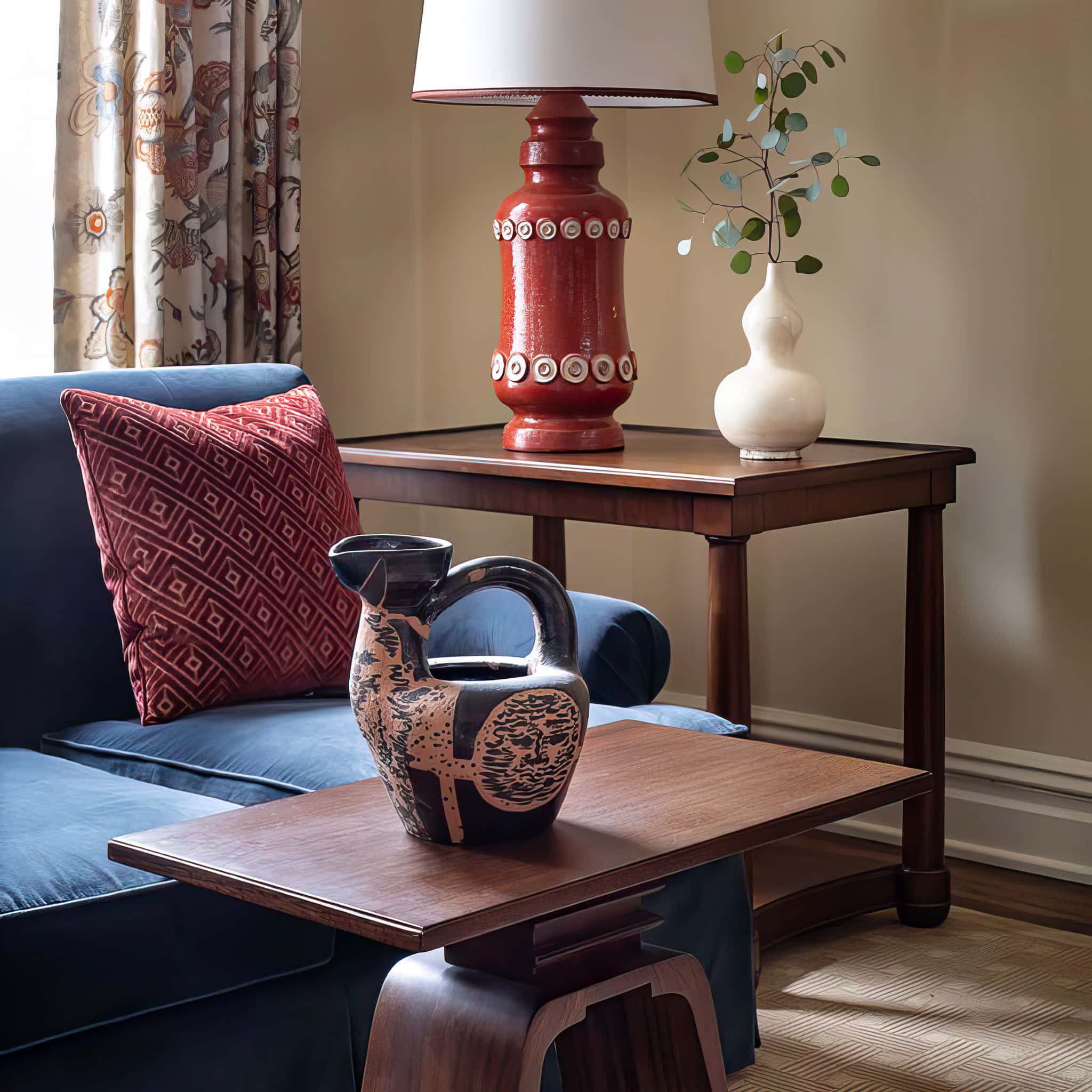
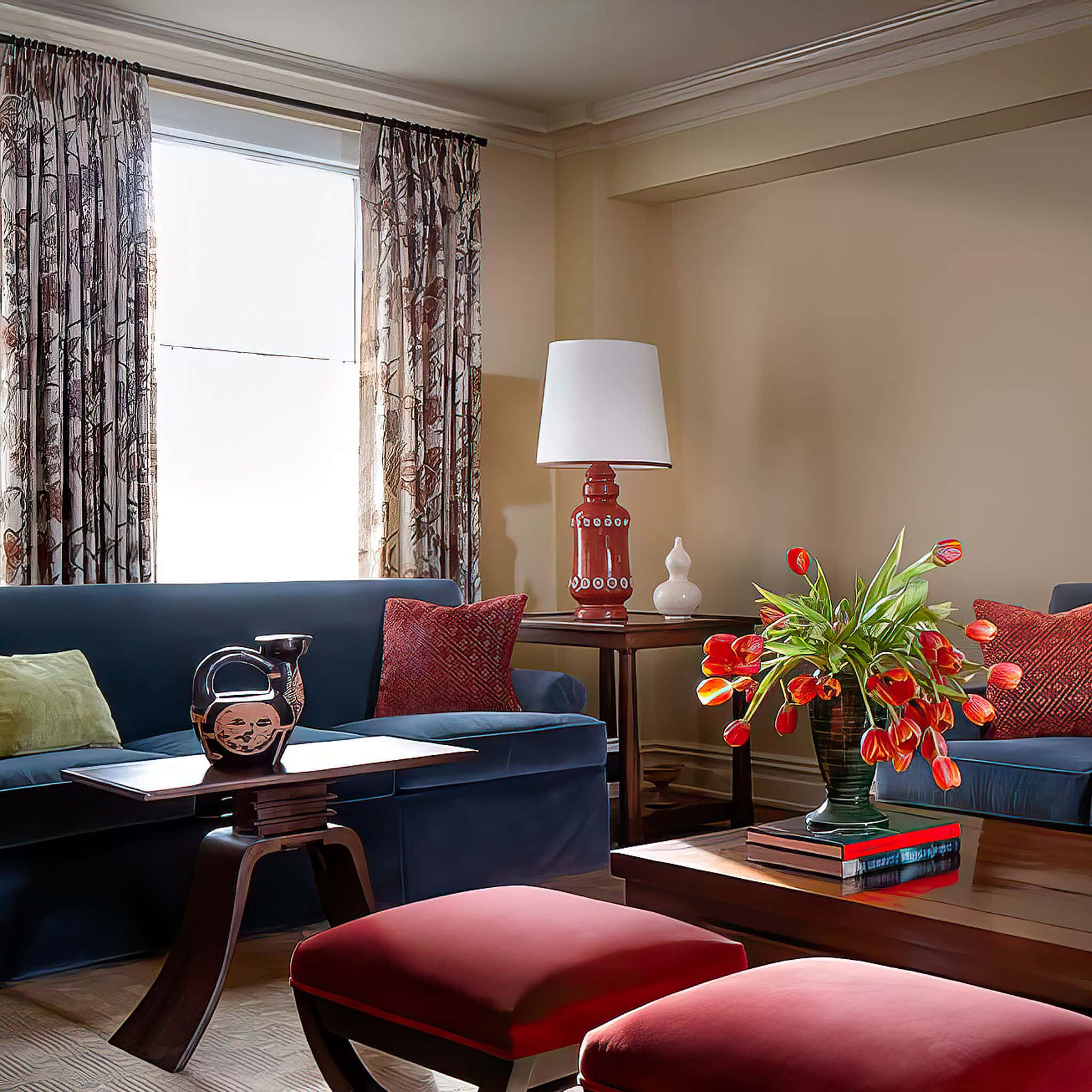
For the living room of a colonial revival home by architect David Neff, Glenn Gissler drew his palette from the nearby Hudson River, which the house overlooks, and then enlisted abstract art to break up the symmetry of the classical proportions. The room’s airiness is grounded by an elegant panneled library behind it.

Hi Glenn, thank you so much for joining us today. We’re thrilled to learn more about your journey, values and what you are currently working on. Let’s start with an ice breaker: What is something outside of work that is bringing you joy lately?

What brings me joy outside of work is my antique house in Litchfield County, Connecticut.

I had fantasized for three decades about a place outside of NYC where I could ‘put my feet in the grass’ – really a metaphor for an alternative to a rich and busy metropolitan life – and then it happened!

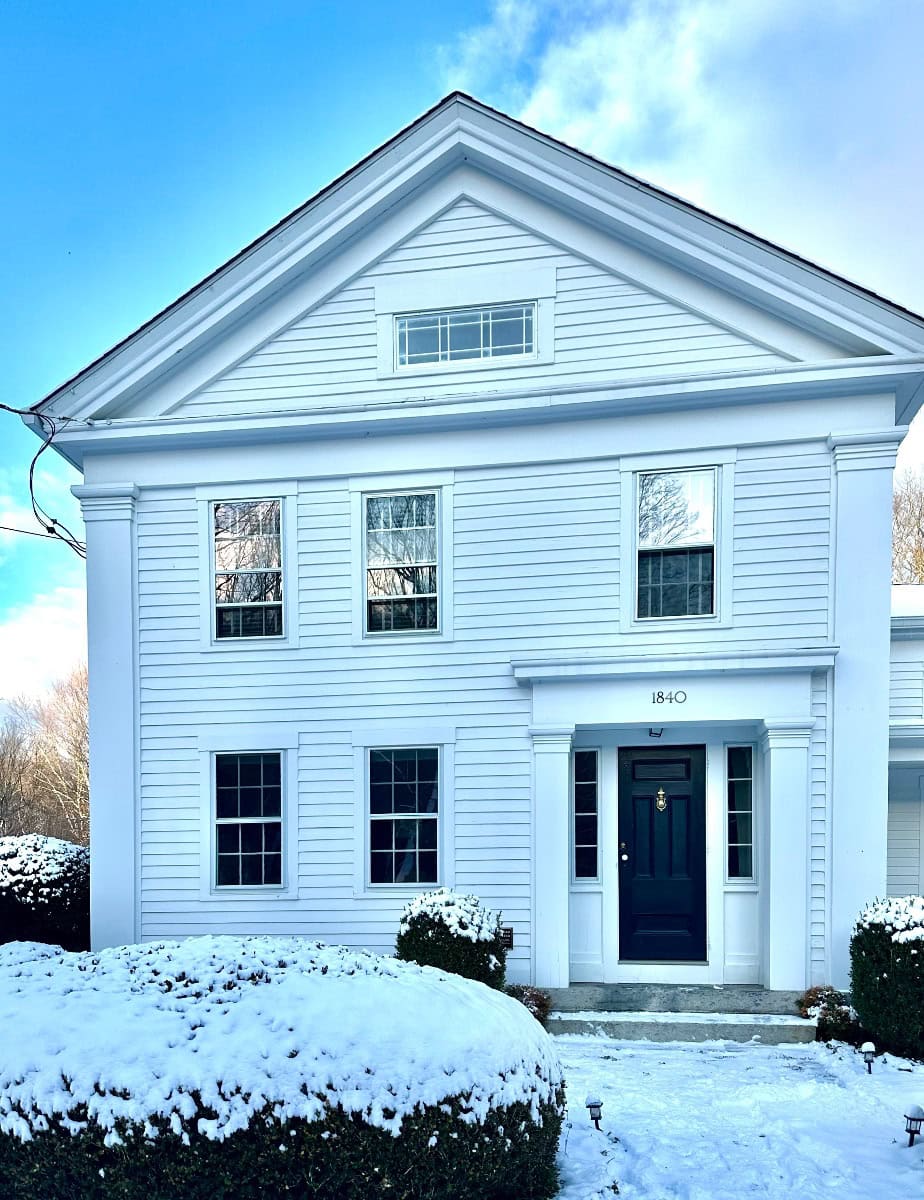
I found a Greek Revival farmhouse on 8 acres of land and jumped into my very first house, with both feet!

About six years ago, I discovered a mid-twentieth-century period in the house’s history that included world-renowned Surrealists. The research is an ongoing and captivating pastime. And after a lengthy process, I was able to get the house listed on the National Register of Historic Places!


Can you briefly introduce yourself and share what makes you or your brand unique?

In a presentation to my eighth-grade class about career aspirations, I said I wanted to become an interior designer. And by golly, that is what I did!

It was a somewhat circuitous path that included seven years in college at three different schools before graduating with degrees in Fine Arts and Architecture from the Rhode Island School of Design (RISD). Less than four years later, when a young fashion designer named Michael Kors asked me to design a showroom and offices for him, I quit my job and started Glenn GIssler Design.

And with a blink of an eye (thirty-eight years later) I am still at it.

At this point, my design practice is focused on private residential projects, mostly in the New York Metropolitan area, for a range of clients and stylistic approaches. We create enduring, livable, and sophisticated homes in a variety of scales and locales for young families, extended families, empty nesters, captains of industry, and some bold-faced names.


Okay, so here’s a deep one: Who saw you clearly before you could see yourself?

Two people who immediately come to mind are my third-grade teacher, Josanna Berdzinski, and my Aunt Chris!

Then, Miss Berdzinski opened many doors for me that I enthusiastically walked through. She encouraged my enthusiasm and curiosity, personal exploration and adventure, self-expression, reading, and kindness.

My Aunt Chris – my father’s sister, now 84, is still one of my favorite people ever! I refer to her as my GREAT Aunt Chris! All of my friends who meet her and spend time with her ‘adopt’ her as their Great Aunt too.

I have very special bonds with both of these people that started when I was very young and continue to this day. I had lunch with Miss Berdzinski on her 80th birthday in Florida – I flew down from NYC, met her for lunch, and took the next plane back to NYC – a little crazy maybe, but I am so glad that I was able to have her know how important she is to me.


Was there ever a time you almost gave up?

Not really. I have certainly felt beleaguered and beaten down quite a few times in my life, but I just keep putting one foot in front of another, imagining better days.

The challenging times have been personal, interpersonal, and professional.

Last year I was asked to give an overview of my professional life to a small group of industry colleagues, but given the nature of what I do for a living, there are many overlaps with my personal life.

These challenges have included starting fresh at three colleges, Black Monday (two weeks after I started my business), 9/11, World Financial Crisis, Hurricane Sandy, COVID, two divorces, a couple of lawsuits with former clients who owed me money, this of course doesn’t include the standard ups and downs of a shifting economy, fickle and in some cases mean clients, and the day-to-day challenges of running a creative business in a competitive industry including staffing and cash flow challenges and the punishing cost of doing business in NYC.

I don’t give up easily!


So a lot of these questions go deep, but if you are open to it, we’ve got a few more questions that we’d love to get your take on. What would your closest friends say really matters to you?

Beauty, ambiance, art, design, history, family and friends, and experiences, especially sharing a meal with people in my home – the more the merrier!


Thank you so much for all of your openness so far. Maybe we can close with a future oriented question. What is the story you hope people tell about you when you’re gone?

He was a good son and a great father.

He was a person with great aesthetic taste and a kind heart.

He is extremely loyal, very generous, and deeply supportive of his family and friends.

He always worked hard and persevered through challenging times.

He is enthusiastic about many things and is committed to making a difference in the world in small, medium and large ways.

He has integrity and a solid moral compass.

He throws great parties!

View More on Bold Journey

From Where: THE BEST INTERIOR DESIGNERS OF BROOKLYN, NY

For the living room of a colonial revival home by architect David Neff, Glenn Gissler drew his palette from the nearby Hudson River, which the house overlooks, and then enlisted abstract art to break up the symmetry of the classical proportions. The room’s airiness is grounded by an elegant panneled library behind it.

Brooklyn’s design culture

Brooklyn’s design culture is as bold and diverse as the borough itself—fusing old-world character, modern artistry, and a flair for urban sophistication. From loft-style apartments and historic brownstones to eclectic studios and commercial spaces, Brooklyn designers blend creativity and practicality to shape spaces with soul.

We evaluated client reviews across Google, Facebook, and Yelp to identify the most celebrated interior design firms in Brooklyn. These professionals have earned recognition for their distinctive aesthetics, collaborative processes, and commitment to delivering environments that are beautiful, expressive, and uniquely personal.

View More on FROM WHERE

For the living room of a colonial revival home by architect David Neff, Glenn Gissler drew his palette from the nearby Hudson River, which the house overlooks, and then enlisted abstract art to break up the symmetry of the classical proportions. The room’s airiness is grounded by an elegant panneled library behind it.
A large mirror hangs over the custom marble-clad fireplace with roots in early modern architecture, a large coffee table, and a pair of French Art Deco armchairs with sinuous wood arms and a ‘Hocker Stool’ designed by Herzog and de Meuron sit on a striped flat weave rug.

How My Greek Revival Farmhouse Became Part of American History!

For the living room of a colonial revival home by architect David Neff, Glenn Gissler drew his palette from the nearby Hudson River, which the house overlooks, and then enlisted abstract art to break up the symmetry of the classical proportions. The room’s airiness is grounded by an elegant panneled library behind it.

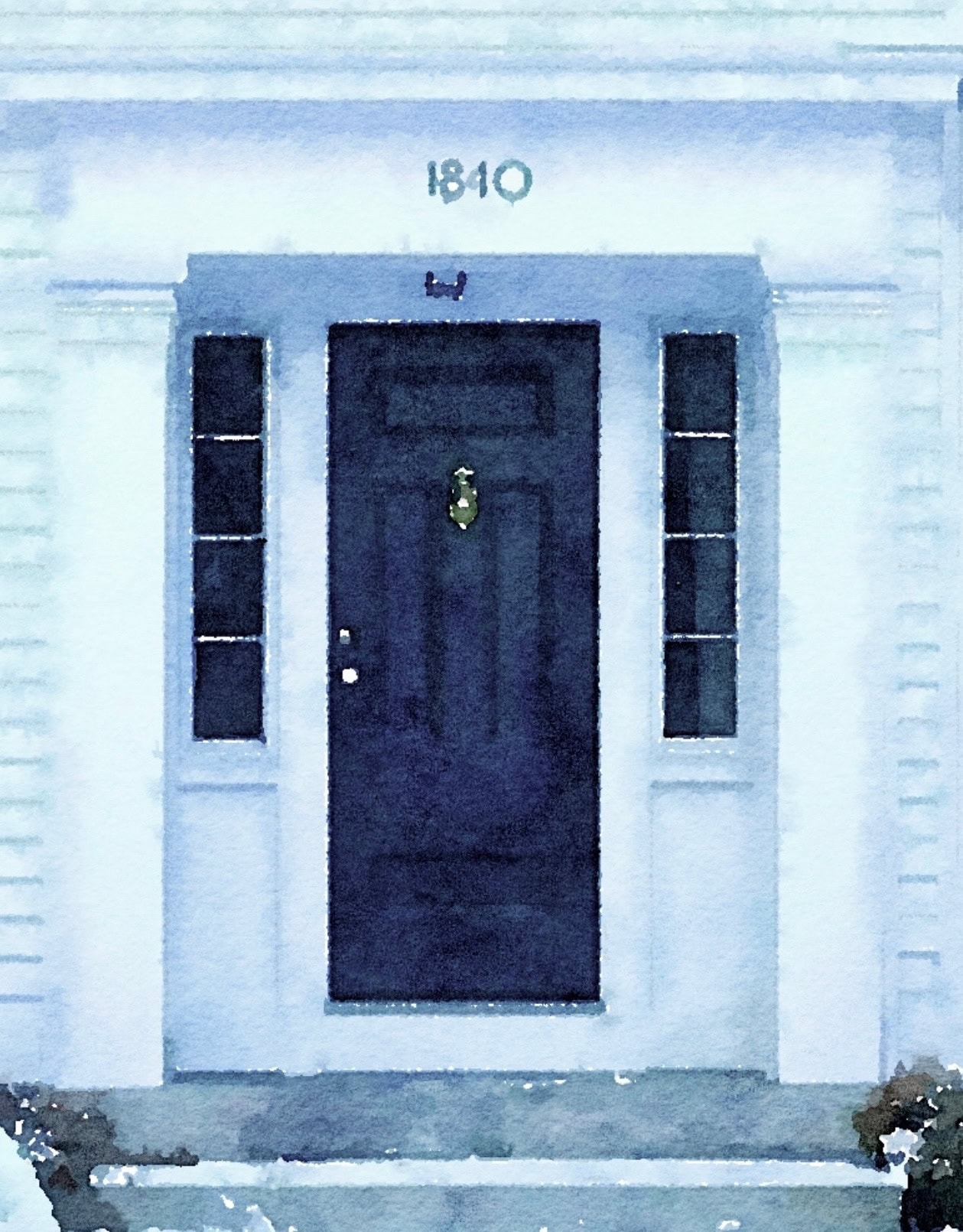
Built in 1840 in Roxbury, Connecticut

When I first glimpsed the Greek Revival farmhouse in 2014, I knew immediately:

This was the calling I’d been preparing for my entire life.

My journey with historic preservation began fifty years ago, when I watched the Pabst Mansion in Milwaukee nearly become a parking garage. That moment changed everything. I’ve spent the decades since living intentionally within America’s historic places—from painting nineteenth-century facades in South Milwaukee to founding the Madison Trust for Historic Preservation, from years in historic Boston and Providence, RI, for two decades in Greenwich Village, and then for over a dozen years in the Brooklyn Heights Historic District.

For the living room of a colonial revival home by architect David Neff, Glenn Gissler drew his palette from the nearby Hudson River, which the house overlooks, and then enlisted abstract art to break up the symmetry of the classical proportions. The room’s airiness is grounded by an elegant panneled library behind it.

What makes 148 Good Hill Road extraordinary isn’t just its Greek Revival architecture, though the eight-acre setting and original structure are wonderful. It’s the secret history that unfolded as I began restoring it. The home was owned by artist David Hare from 1940 to 1950, when it became a haven for surrealist artists exiled from Europe—a place where Alexander Calder, Marcel Duchamp, Arshile Gorky, Jackson Pollock, Peggy Guggenheim, and André Breton spent time within the walls. Hare’s family connections to art ran deep: his mother was one of the funders of the legendary 1913 Armory Exhibition; his uncle co-designed MoMA; and his cousin, artist Kay Sage, was married to Yves Tanguy and lived nearby.

After a two-year process working with the team at Preservation Connecticut, this house—with all its history, artistic significance, and role in my lifelong preservation mission—has been officially recognized by the United States Department of the Interior. It’s now listed on the National Register of Historic Places.


I am very proud of my house, the remarkable history I discovered, and that I am helping to preserve.

This house called me, and I answered!

A stylized Chinese-inspired chain-link motif unfolds across a custom-designed area rug, establishing a colorful dialog with two armchairs in the style of Jacques Adnet, upholstered in similarly-hued paisley. Two lean classical end tables, a custom-colored linen table at the center, and a cast bronze thorn-leg table by Herve van der Straeten provide gracious space for a pair of white crackle-glazed lamps, drinks, books, and cherished mementos.

Whether you’re celebrating in a historic home or a modern space, the real treasure is the people and memories we gather within them.

Wishing you lovely moments this holiday season,
from all of us at Glenn Gissler Design.

A large mirror hangs over the custom marble-clad fireplace with roots in early modern architecture, a large coffee table, and a pair of French Art Deco armchairs with sinuous wood arms and a ‘Hocker Stool’ designed by Herzog and de Meuron sit on a striped flat weave rug.

Considering Ceilings

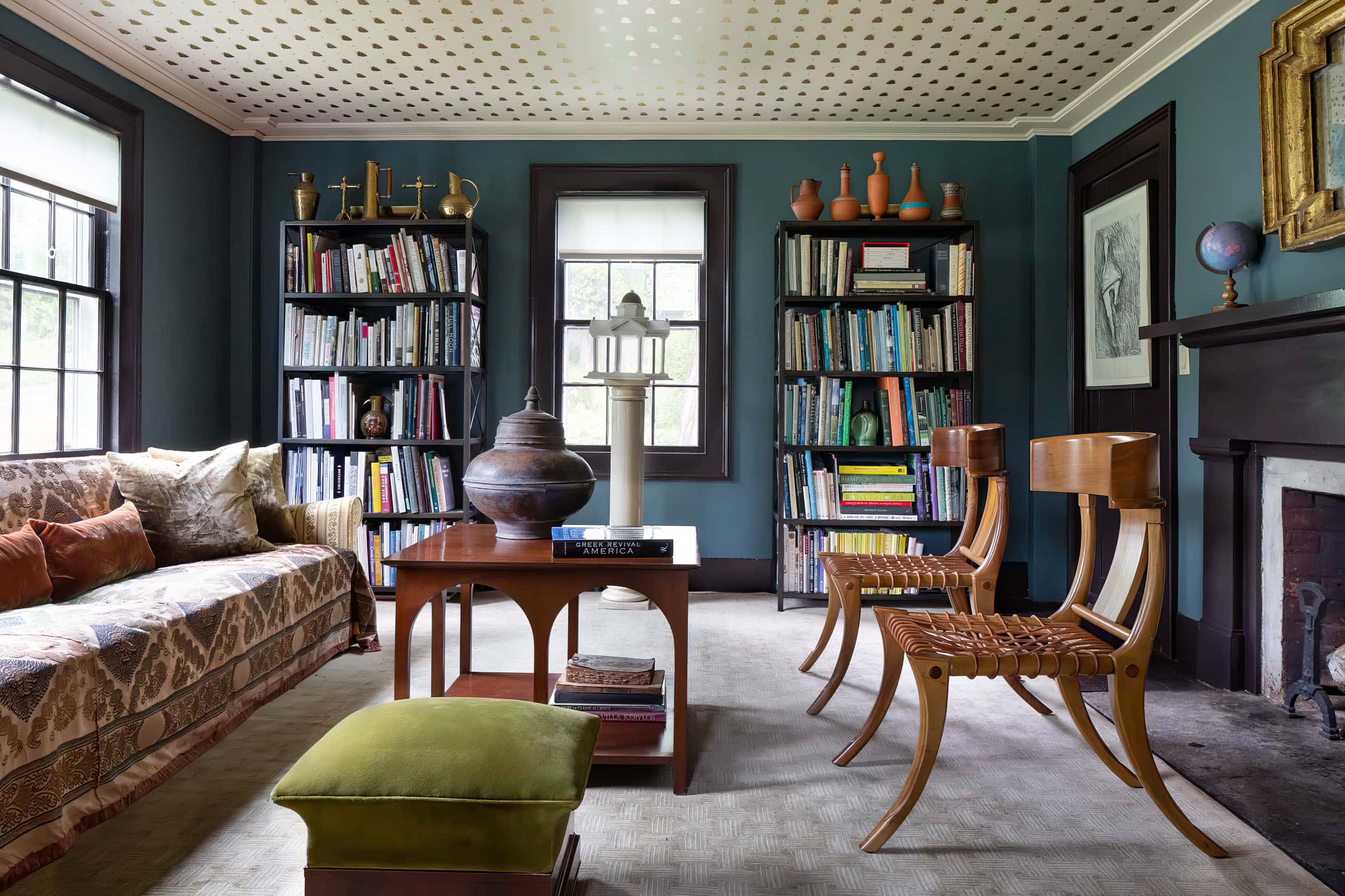
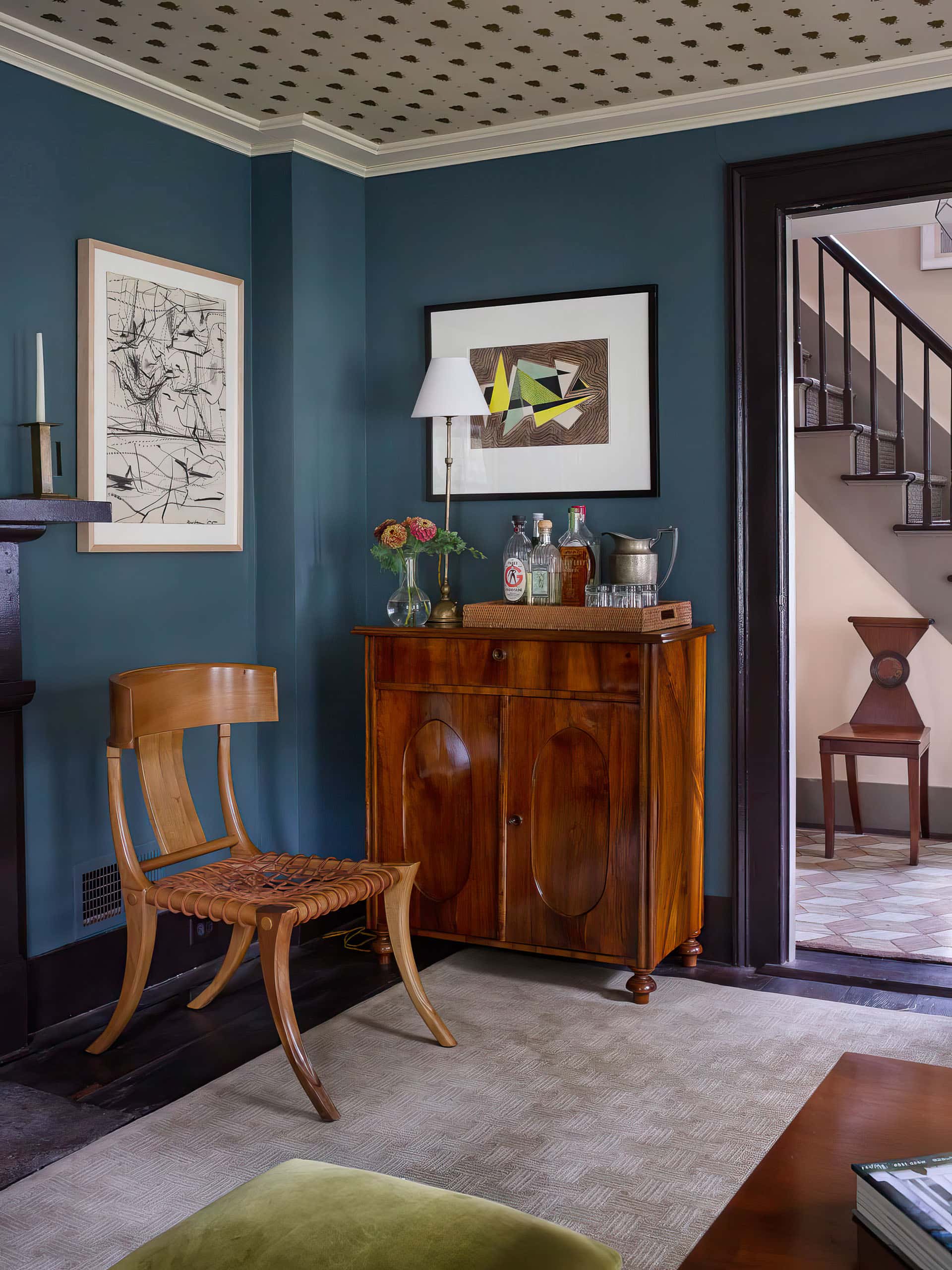
I used a wallpaper from Farrow & Ball for the ceiling of my library in Litchfield County, Connecticut. The metallic glint of the bumblebees adds movement while reflecting the generous ambient light - glorious in the day and at night! The classicist T.H Robsjohn-Gibbings is well-represented in this room with Klismos chairs, a vintage Robsjohn-Gibbings for Dunbar table with arches and a rare Robsjohn-Gibbings sofa draped in an antique Suzani textile lending gravitas to the space.
I used a wallpaper from Farrow & Ball for the ceiling of my library in Litchfield County, Connecticut. The metallic glint of the bumblebees adds movement while reflecting the generous ambient light – glorious in the day and at night! The classicist T.H Robsjohn-Gibbings is well-represented in this room with Klismos chairs, a vintage Robsjohn-Gibbings for Dunbar table with arches and a rare Robsjohn-Gibbings sofa draped in an antique Suzani textile lending gravitas to the space.  

Photo by Gross & Daley

“Ceilings must always be considered. They are the most neglected surface in a room”

– Albert Hadley

The ‘neglect’ of ceilings may have been the case in the zeitgeist of American interiors in the mid-to-late 20th century when Albert Hadley practiced the craft with his legendary counterpart Sister Parish. However, a longer review of decorative arts history tells a different story.

The fact is ceiling decoration has played a significant role in architecture and design history, evolving over centuries to reflect each era’s artistic, societal, and technological developments.
In ancient times, cultures used ceiling decoration to express their religious beliefs, social status, and artistic prowess. In Egypt, for example, temples and tombs featured intricate ceiling paintings depicting mythological and sacred ceremonies. The vibrant colors and symbolic imagery conveyed a sense of divinity and spirituality.

Similarly, in ancient Greece, temples showcased elaborate paintings and decorative elements on their ceilings, reflecting the Greek appreciation for beauty and balance.

The remarkable coffered ceiling that tops the Pantheon on the Piazza della Rotonda in Rome. Image courtesy o
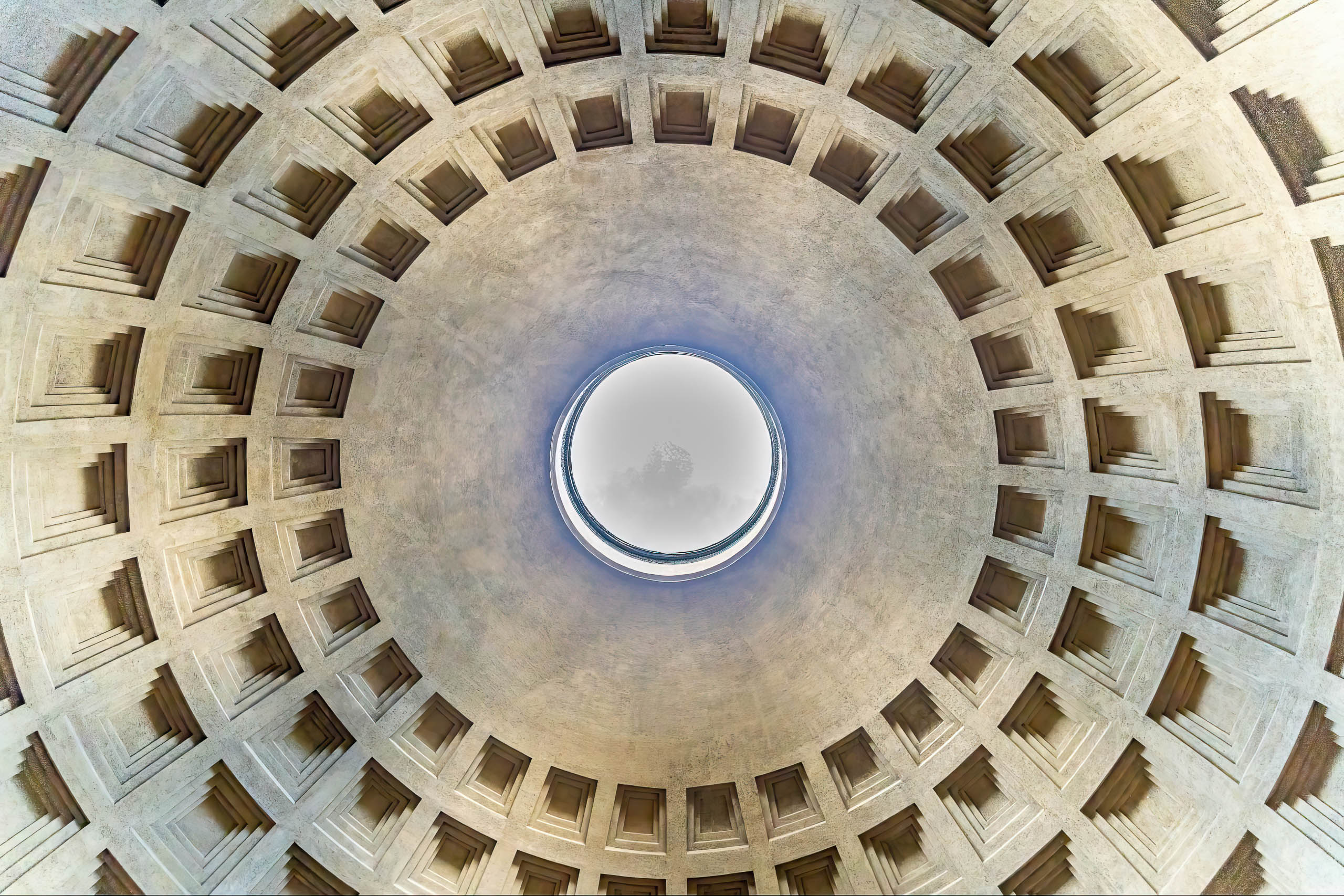
The remarkable coffered ceiling that tops the Pantheon on the Piazza della Rotonda in Rome. Image courtesy of Unsplash.com
The Romans–never to be outdone by the Greeks–took ceiling decoration to new heights (quite literally!) with the invention of the coffered ceiling. Coffers, or recessed panels, were often adorned with intricate patterns and designs. This architectural innovation not only added a sense of grandeur to spaces like the Roman basilicas but also served a practical purpose by reducing the weight of the ceiling. 

The Pantheon, a seminal example of Roman engineering and design, features a stunning coffered dome that inspires architects to this day. 

As the Middle Ages arrived, the focus shifted to the ever-more ornate decoration of church ceilings. Gothic architecture introduced the rib vault and pointed arch, allowing for taller and more elaborate ceilings. 

Notre Dame in Paris showcased magnificent ribbed vaults and intricate stained glass, creating a celestial atmosphere that aimed to inspire awe and reverence. The ceiling became a canvas for religious storytelling in these medieval structures, with painted murals and detailed sculptures narrating biblical tales.


Italian and Flemish artists painted the Hall of Maps in the Vatican Museum in Rome under the direction of Ignazio Danti, mathematician, astronomer, and cosmographer. Image courtesy of VaticanMuseumRome.com
Italian and Flemish artists painted the Hall of Maps in the Vatican Museum in Rome under the direction of Ignazio Danti, mathematician, astronomer, and cosmographer. Image courtesy of Vatican Museum
Trompe-l’oeil techniques, where paintings create the illusion of three-dimensional space, also became popular during this period, adding depth and dimension to ceiling designs. One astonishing example is the curved ceiling in the Hall Of Maps in the Vatican Museum (a must-see in Rome!)

By the time the Renaissance arrived, a revival of classical ideas led to a renewed interest in symmetry and proportion. Artists and architects like Michelangelo and Leonardo da Vinci explored new techniques for ceiling decoration. The Sistine Chapel ceiling, painted by Michelangelo, is an awe-inspiring masterpiece that transcends time. 

Ceiling decoration during the Baroque and Rococo periods became even more extravagant. Over-the-top stucco, gilded moldings, and awe-inspiring frescoes adorned the ceilings of palaces and grand estates across Europe. The Palace of Versailles in France is the most famous, with its Hall of Mirrors featuring a ceiling adorned with gilded stucco and paintings that reflect the flashy style of the brazenly ostentatious Louis XIV.

A return to simplified, classical motifs arrives on the scene in the Neoclassical era. The emphasis on clean lines and restraint marked a departure from the excesses of the Baroque and Rococo styles. 

The 19th and early 20th centuries saw a range of successive styles, from the revival of Gothic architecture to the emergence of Art Nouveau and Art Deco. It’s also interesting to note that the Industrial Revolution brought about new materials and technologies, allowing for innovative approaches to ceiling design. Metal ceilings became popular as they provided a cost-effective alternative to traditional plaster. Tin ceiling tiles with intricate patterns became a staple in Victorian buildings. 

In the mid-20th century, the design shifted towards simplicity and functionality. Minimalism became dominant, with clean lines and unadorned ceilings gaining favor. 

These days, the approach to ceiling decoration is wildly diverse, reflecting a blend of influences and contemporary aesthetics born of design’s advancing democratization since the advent of the internet. It’s no wonder–designers have access to an unprecedented amount of reference material to spur their imaginations.

Showcasing that range, a recent story in 1st Dibs online magazine INTROSPECTIVE highlights various current approaches to ceiling designs, including a room by Glenn Gissler Design. 

Here are a few more examples of rooms where we took a creative approach to decorating ceilings.


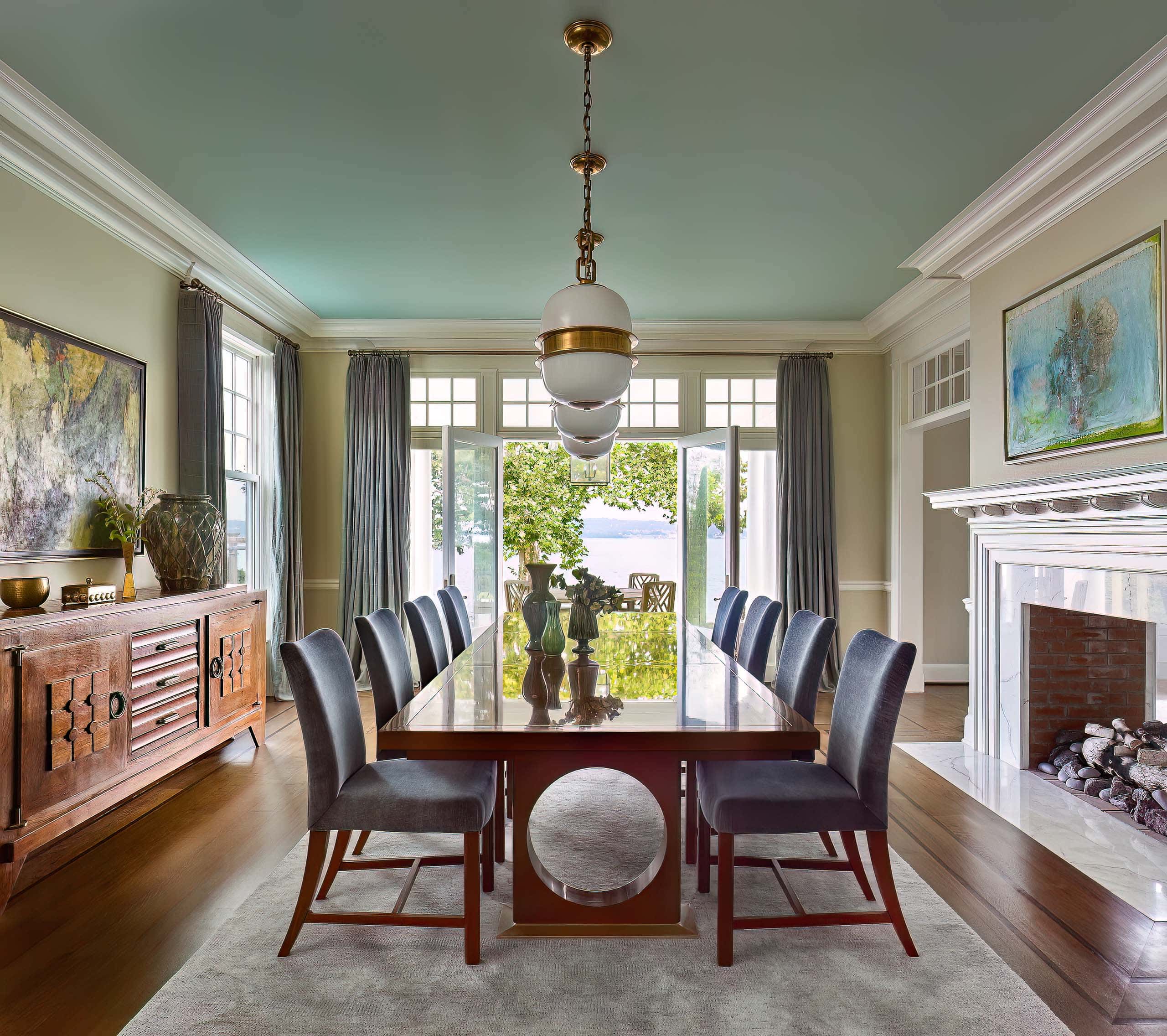
For the ceiling of this waterside dining room in Nyack, New York, we chose Benjamin Moore’s “Bridal Bouquet 632” in a matte finish in contrast to the sheen of the mantel and moldings. Linen curtains in the same blue-green soften the interior architecture while framing the spectacular view. Follow this link to see the rest of the home.
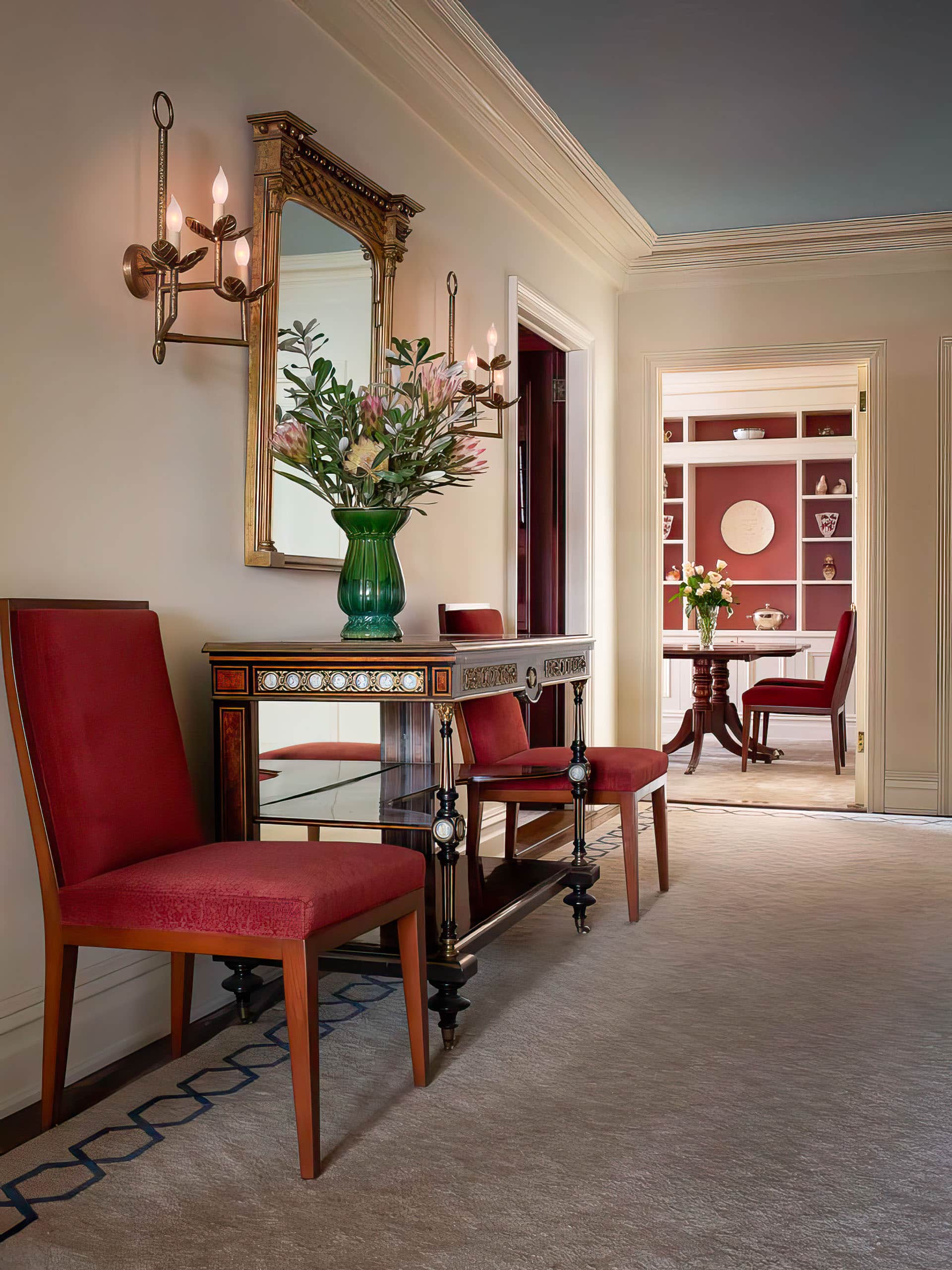
Sherwin Williams’ Languid Blue 6226 bathes the ceiling of this Carnegie Hill entryway, inviting family and friends to relax in the way porch ceilings–painted in a similar shade–do in the American South. Follow this link to see the rest of this home.
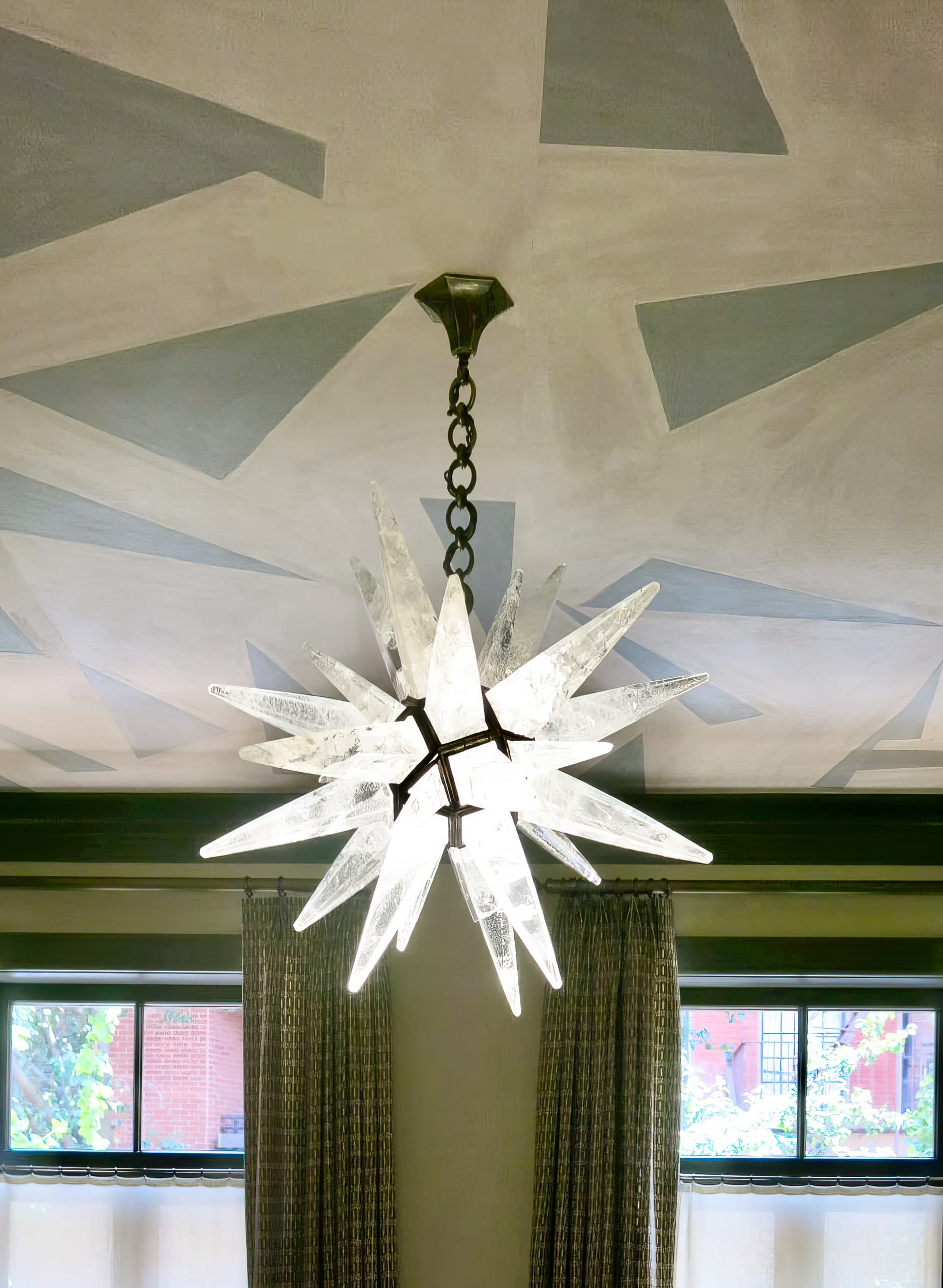
In this West Village townhouse, a rock crystal Morrocan star chandelier hangs below a ceiling sheathed in Porter Teleo’s hand-painted “Refracted” wallpaper. Together, they create a sophisticated visual dialogue of angular shapes.
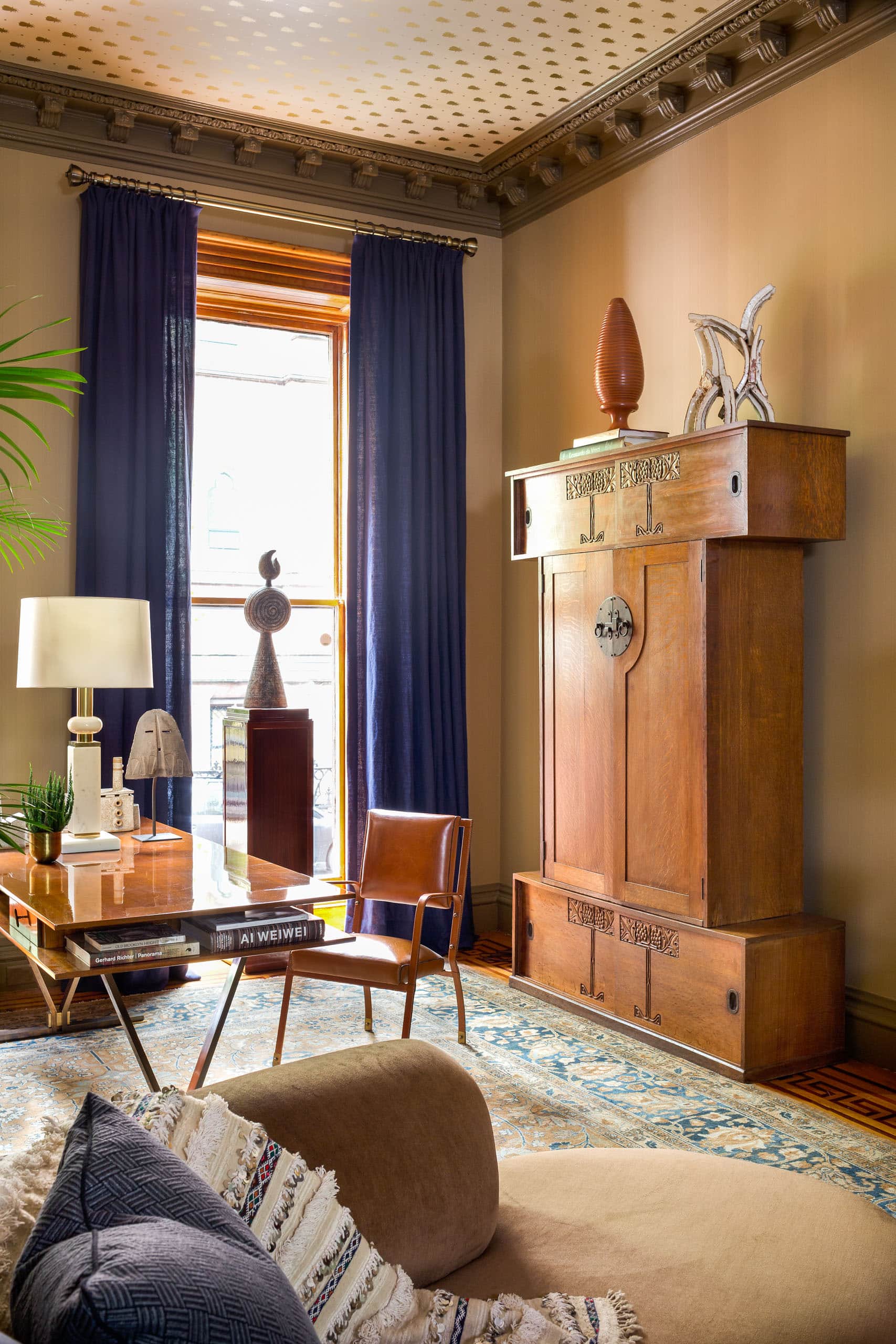
Here is a corner view of my library in Litchfield County, Connecticut. The house is an early 19th-century Greek Revival structure with many original details intact. The burled-wood Beidermier cabinet serves as a bar; I invite guests to help themselves when cocktail hour arrives!
A massive scale and of the striking English Arts & Crafts Armoire boldly holds one side of the room with its evocative form, and earthier finish a counterpoint to many of the more glossy, refined elements in the room.
The massive scale of the striking English Arts & Crafts Armoire boldly holds one side of this Brooklyn Heights’ room with its evocative form and earthier finish. It is a counterpoint to many of the more glossy, refined elements in the room.
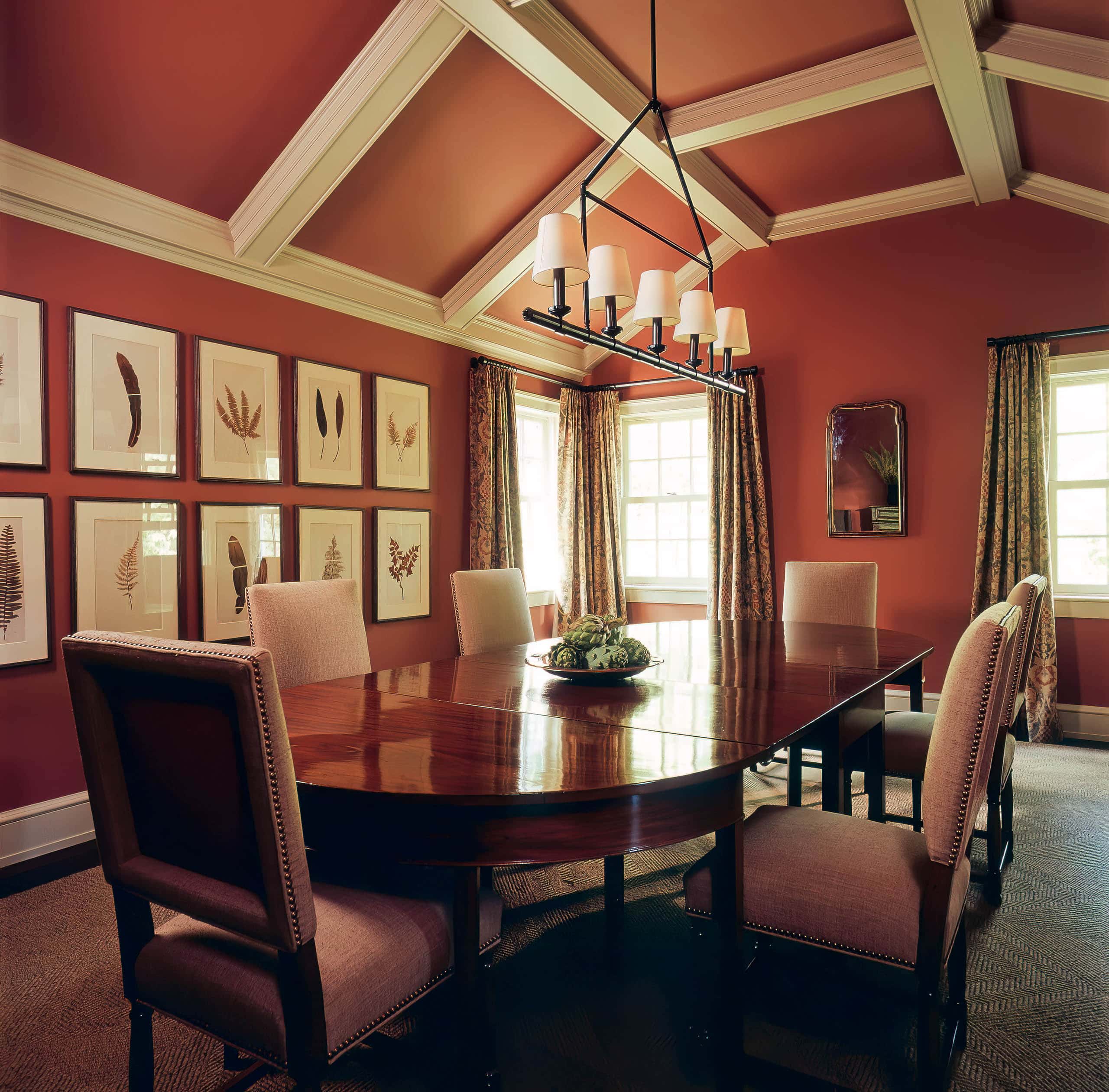
The walls and inset panels of the arched and coffered ceiling in this dining room were painted in Farrow & Ball's Loggia No. 232, setting the tone for lively conversation. In contrast to the rich russet-red, a series of framed botanicals reference the gardens on the property beyond the glass.

The walls and inset panels of the arched and coffered ceiling in this dining room were painted in Farrow & Ball’s Loggia No. 232, setting the tone for lively conversation. In contrast to the rich russet-red, a series of framed botanicals reference the gardens on the property beyond the glass.     

It is interesting to think about how the evolution of ceiling decoration from ancient times to today mirrors the broader history of art, architecture, and design. Each era left its mark on how we approach the sometimes-overlooked “fifth wall” of a space. Synthesizing those historical references into fresh ideas for ceilings is just one of the many joys of my work as an interior designer.

LENS versus LOOK

Shades of muted aquamarine, cinnabar, and sandstone serve to punctuate this gracious living room, with seating for six--or more--when the homeowners entertain family and friends. At the far end of the space the window wall is framed with lush curtains, tailored from Cowtan & Tout's 'BROMLEY' printed linen.

Shades of muted aquamarine, cinnabar, and sandstone serve to punctuate this gracious living room, with seating for six–or more–when the homeowners entertain family and friends. At the far end of the space the window wall is framed with lush curtains, tailored from Cowtan & Tout’s ‘BROMLEY’ printed linen. 

Senior Designer Craig Strulovitz
Photos by Gross & Daley

Many successful interior designers have a LOOK; they create instantly recognizable rooms, either through the employment of specific color schemes, blue and white spaces, for example, distinct styles, like traditional or modern, or signature elements that they favor, like particular light fixtures, finishes, or furniture silhouettes.

We take a different approach.

 Instead of having a LOOK, Glenn Gissler Design utilizes an aesthetic LENS through which we make choices, edit materials, and accessorize spaces. This LENS is informed by decades of crafting singular rooms–rooms specific to the homeowner we are working with. We take this approach because we believe the most successful interiors are those our clients have inspired us to create.

 Other factors, like the project’s location in the city, country, or beach, guide our decisions. The exterior architecture gives us clues, too; we consider the structural vocabulary of a home so that the exterior envelope and interior decorations are harmonious.

 Another guiding principle at GGD is that we NEVER SAY NEVER in the project’s planning stages. This way of thinking leads to distinctive and personal rooms. When everything is on the proverbial table, the creative process is only limited by the breadth of our (and our client’s) imagination. 

 Let me give you an example.

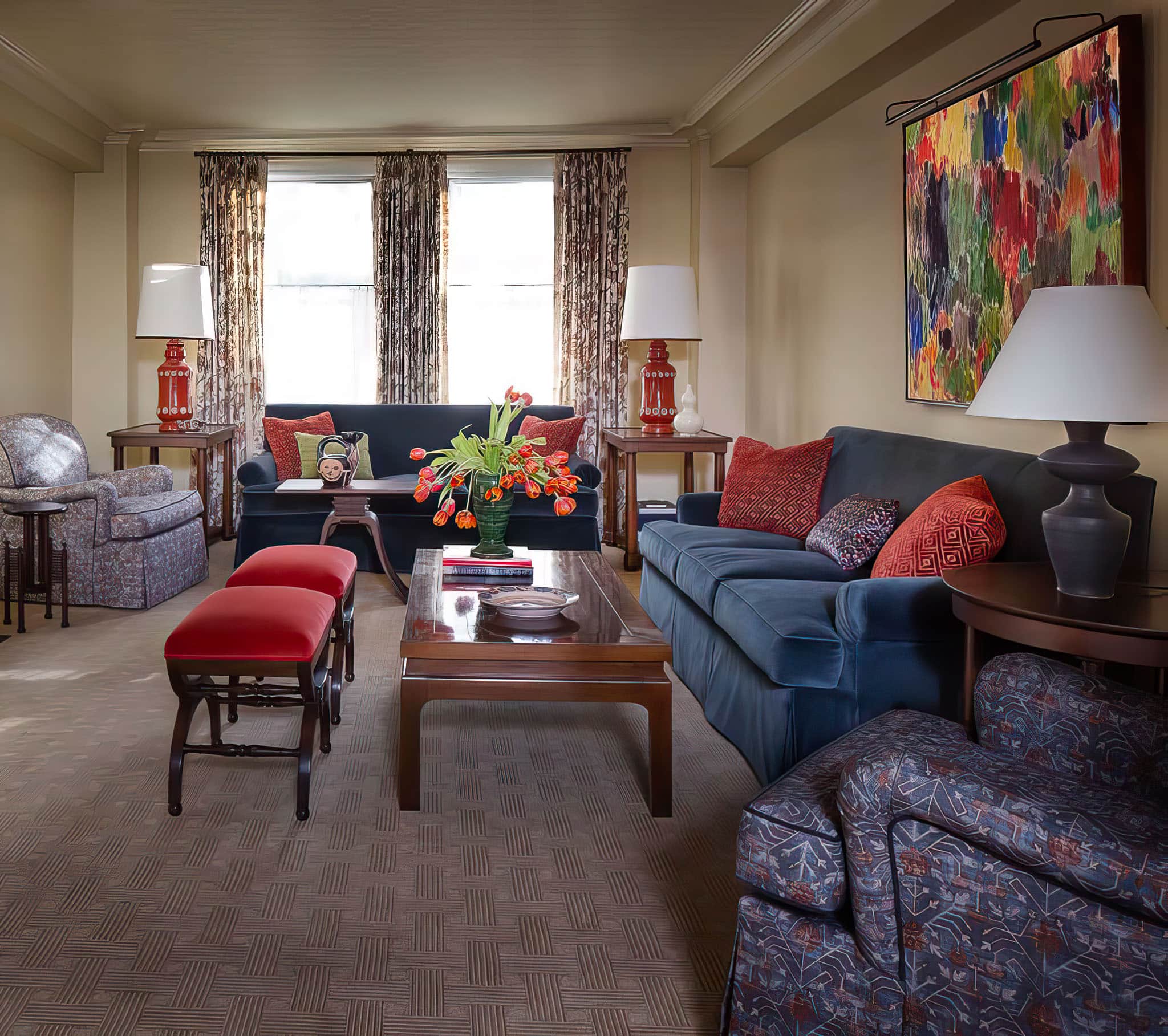
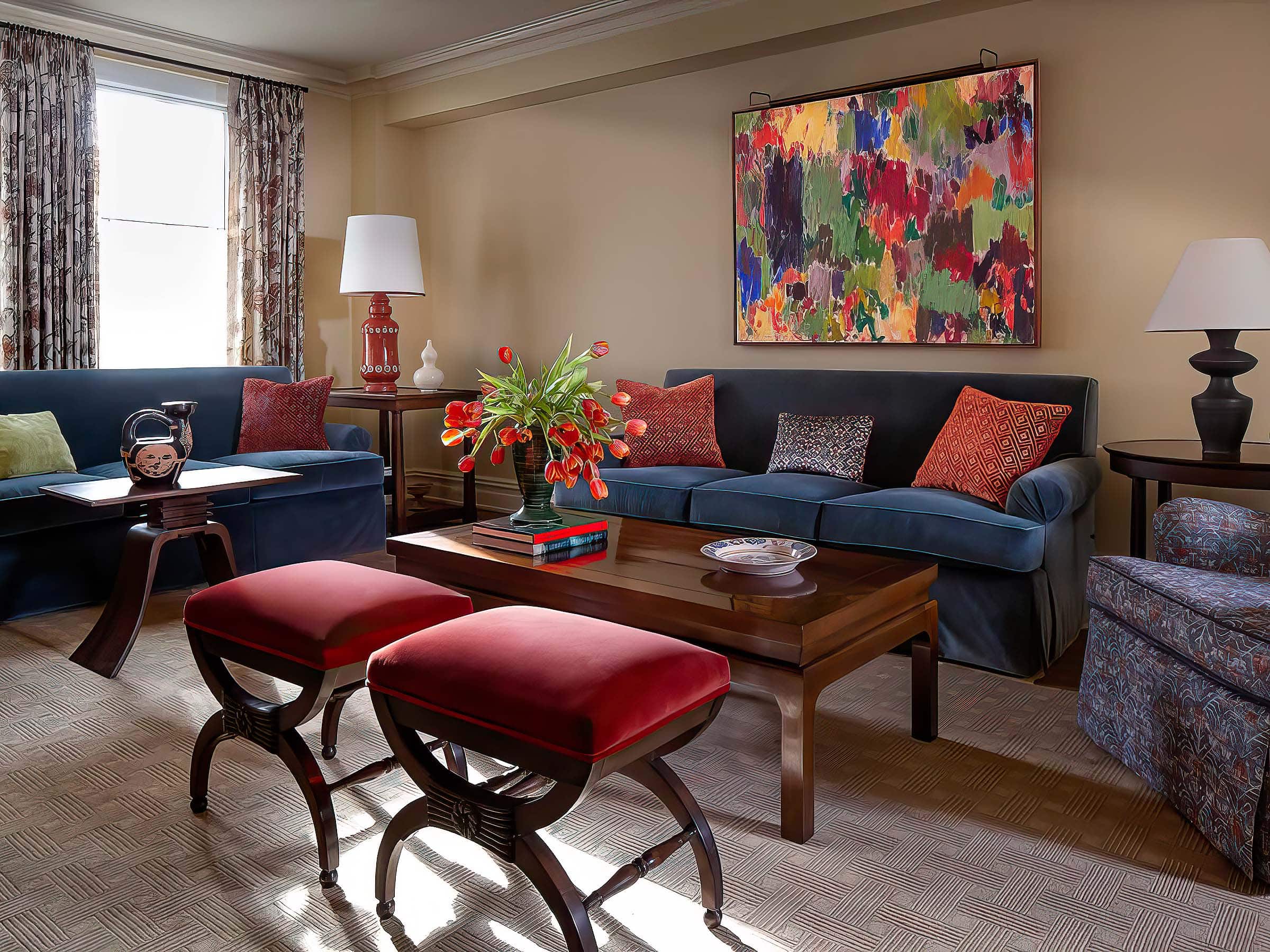
A vibrant canvas by the late American abstract impressionist painter John Opper (1908-1994) takes pride of place in the apartment’s gracious living room. Two deep-seated sofas are upholstered in lush blue velvet, with a pair of club chairs covered in a Zak & Fox textile and two Regency-style benches covered in paprika-hued velvet. The curtains were tailored from a Cowtan & Tout floral fabric.

A vibrant canvas by the late American abstract impressionist painter John Opper takes pride of place in the apartment’s gracious living room. Two deep-seated sofas are upholstered in lush blue velvet, with a pair of club chairs covered in a Zak & Fox textile and two Regency-style benches covered in paprika-hued velvet. The curtains were tailored from a Cowtan & Tout floral fabric.

In this recently completed apartment in the Carnegie Hill neighborhood of Manhattan, our clients asked us to create a home cohesively inflected with traditional references–including floral patterned textiles, which, while not a house code for our firm, became part of the scheme.

Having gathered floral fabric samples from various showrooms, we set off to present them to our clients. And as it turned out, they favored many from the heritage brand Cowtan & Tout. Something was alluring about the quality, texture, and sensibility of the firms’ selections. Below are some of their fabrics and how they were used in this apartment, including stripes and solids we sourced through Cowtan & Tout as well.

SEE THE ENTIRE PROJECT HERE

Anne Hanavan & Glenn Gissler

One last thought: In a world of impersonal and ever-more-automated interactions, we wanted to tip our hats to our sales representative from Cowtan & Tout, the delightful, energetic, fun, and responsive Anne Hanavan. She’s always available to help us source a textile–and her professionalism is first-rate! Here’s to you, Anne!

Throw pillows on the living room sofas were made from Cowtan & Tout’s JAGO in the colorway BURNT ORANGE.Throw pillows on the living room sofas were made from Cowtan & Tout’s JAGO in the colorway BURNT ORANGE.

Throw pillows on the living room sofas were made from Cowtan & Tout’s JAGO in the colorway BURNT ORANGE.

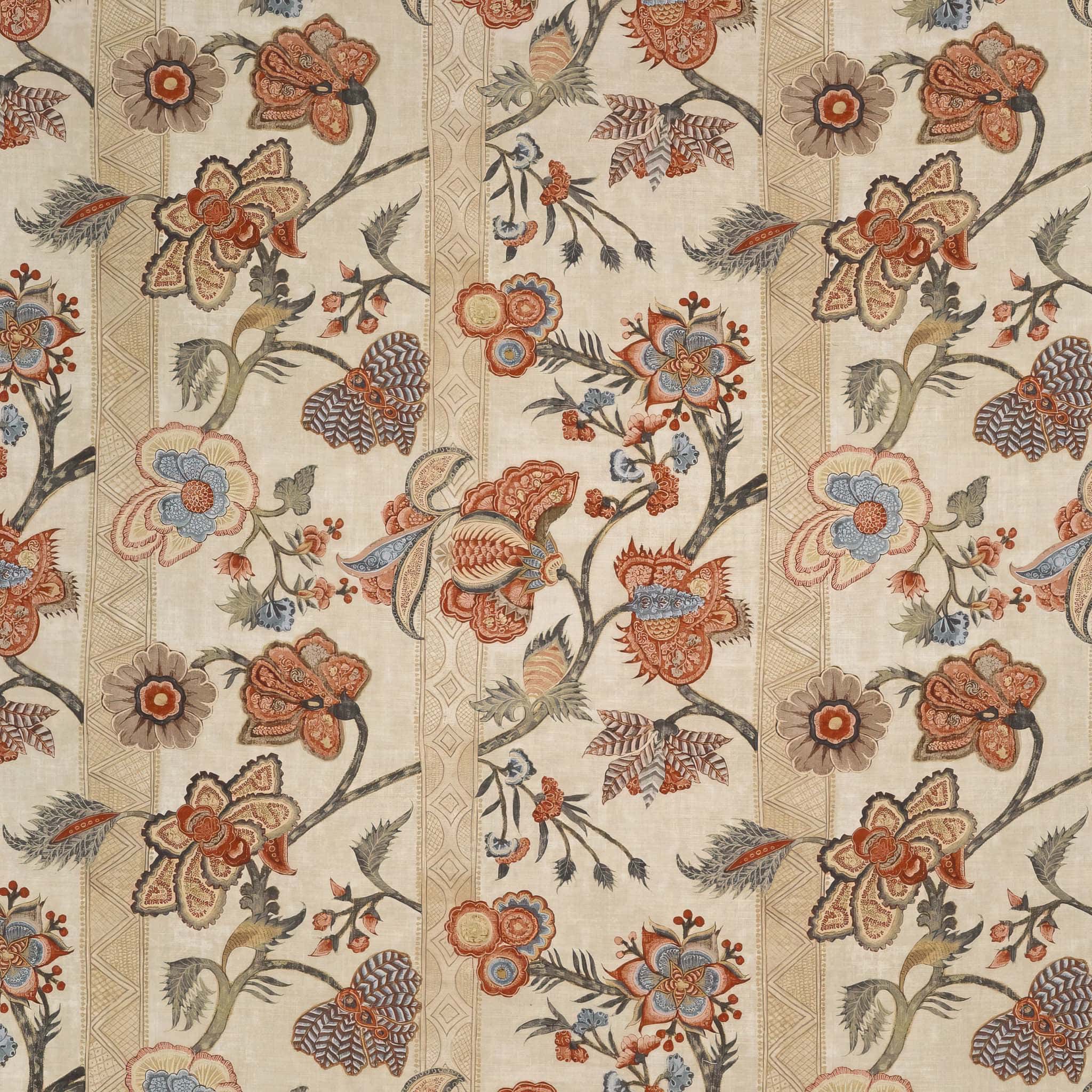
The living room curtains were tailored in Cowtan & Tout’s BROMLEY, in the colorway SAND/RED.

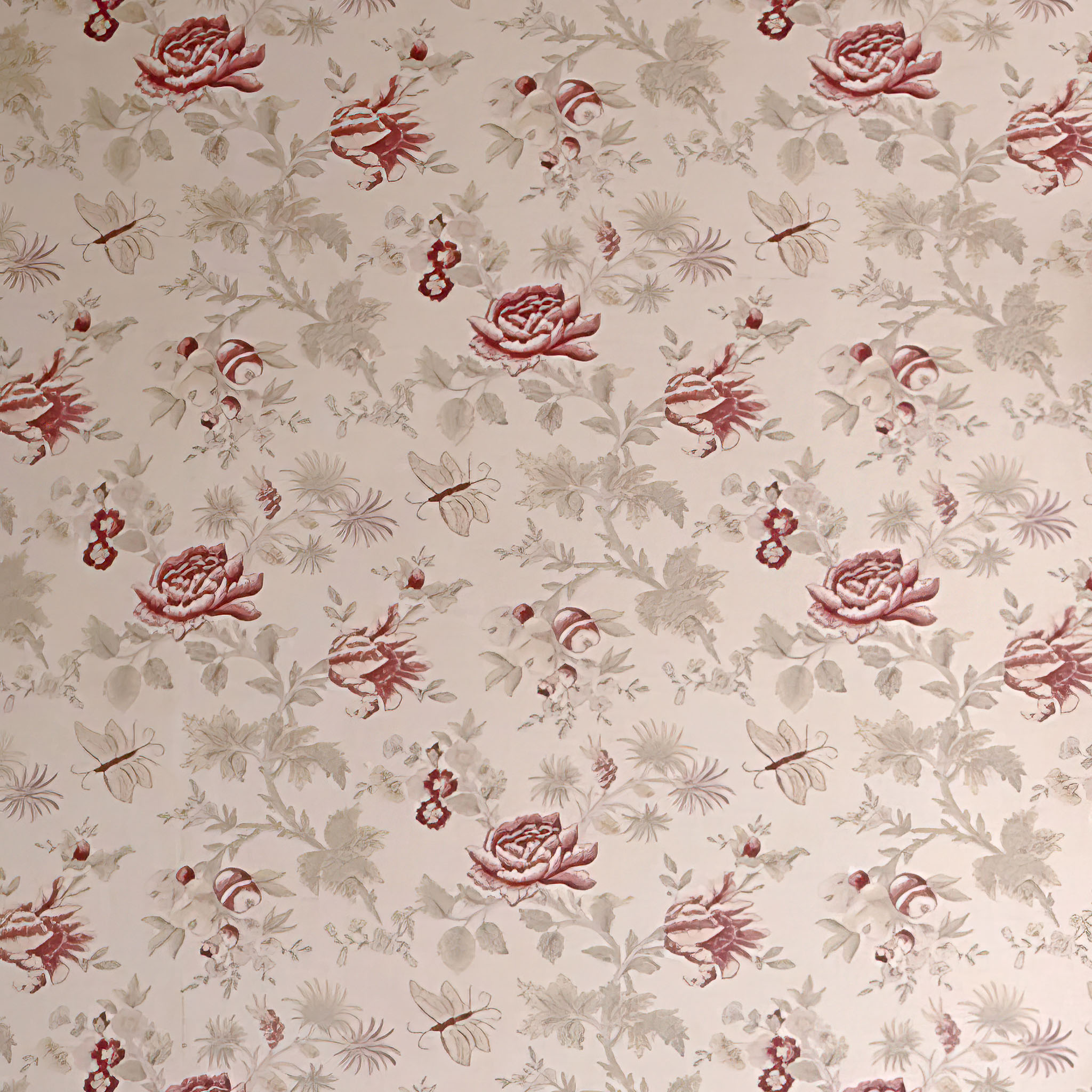
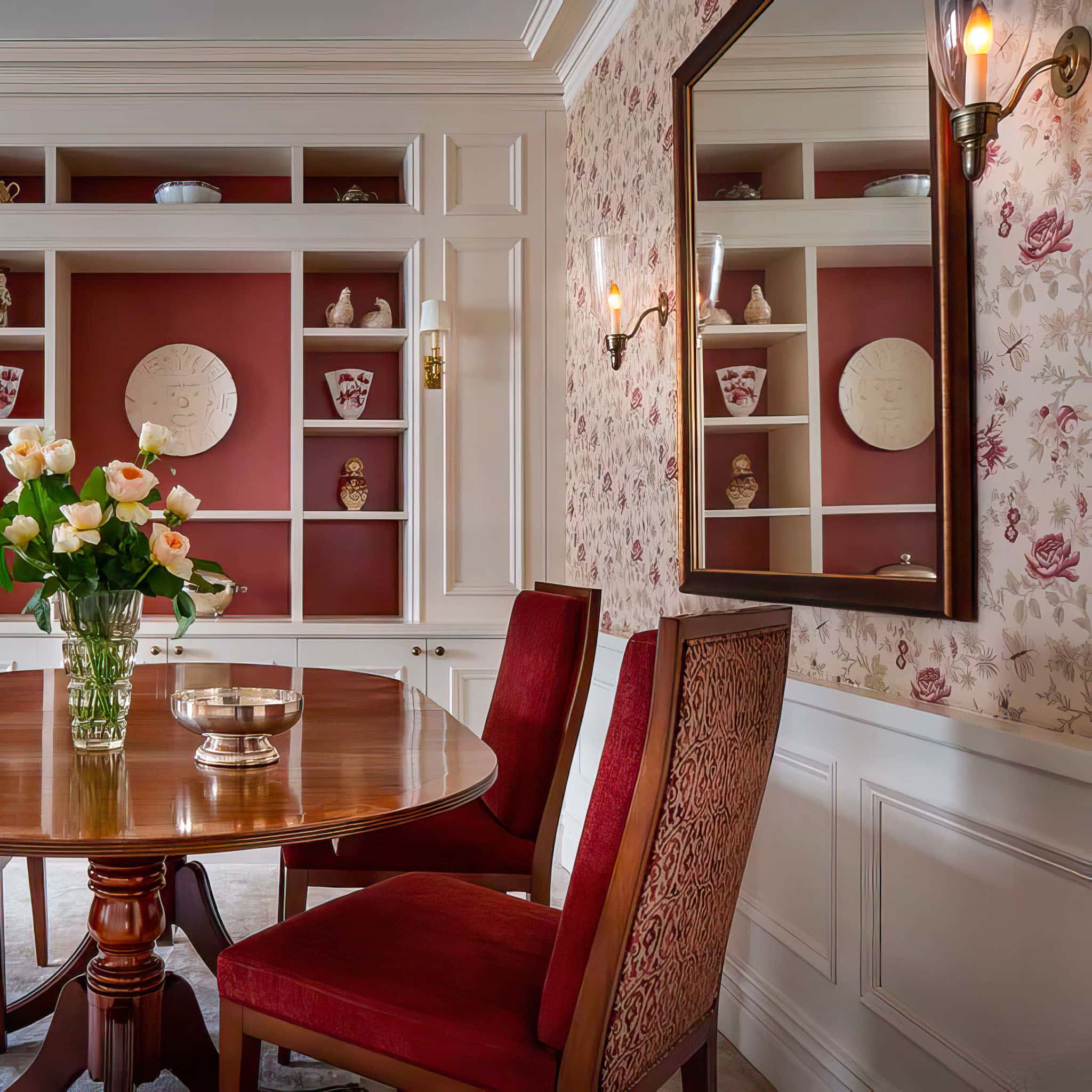
Dining Room has existing Cowtan & Tout upholstered walls in a discontinued Cabbage Rose.

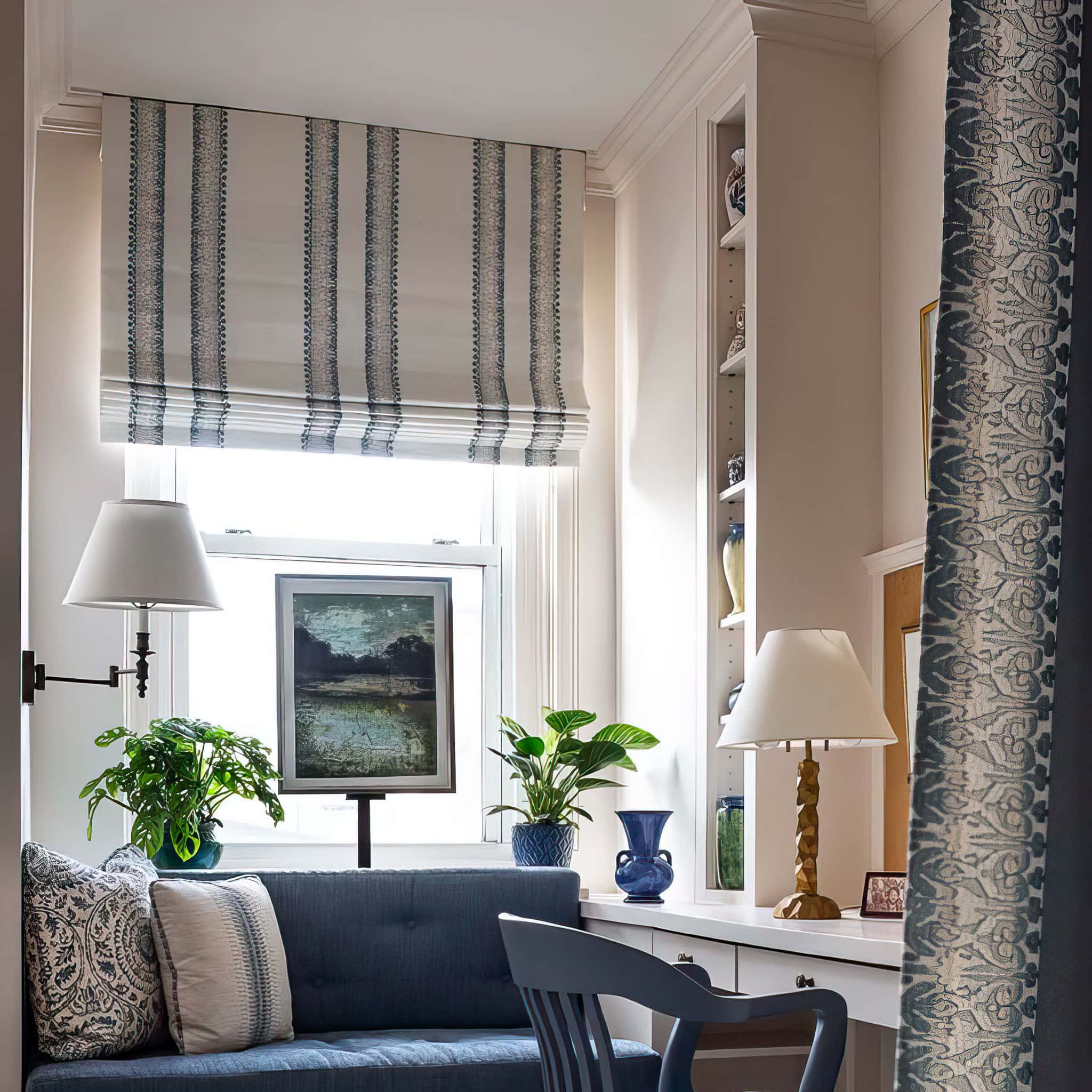
The Roman shade is tailored in Cowtan & Tout’s GISELLE STRIPE in the colorway PATINA in the home office. That pattern was also used as trim for the leading edge of the portiere curtain.

Additionally, the window seat cushion and desk chair were covered in Cowtan & Tout’s ASTA in the colorway OCEAN. That fabric was also used for the headboard in the blue bedroom.

“We want to give clients a new home with carefully edited pieces that reflect their lives in a way that brings joy.”

– Glenn Gissler

A sage-toned Bridgewater-armed club chair provides the perfect spot for afternoon reading or a cup of tea before bed. When paired with the curtains–tailored from Colefax and Fowler’s GREENACRE print–the tableau mirrors verdant Central Park just outside the window.