Family Loft – Lincoln Center NYC

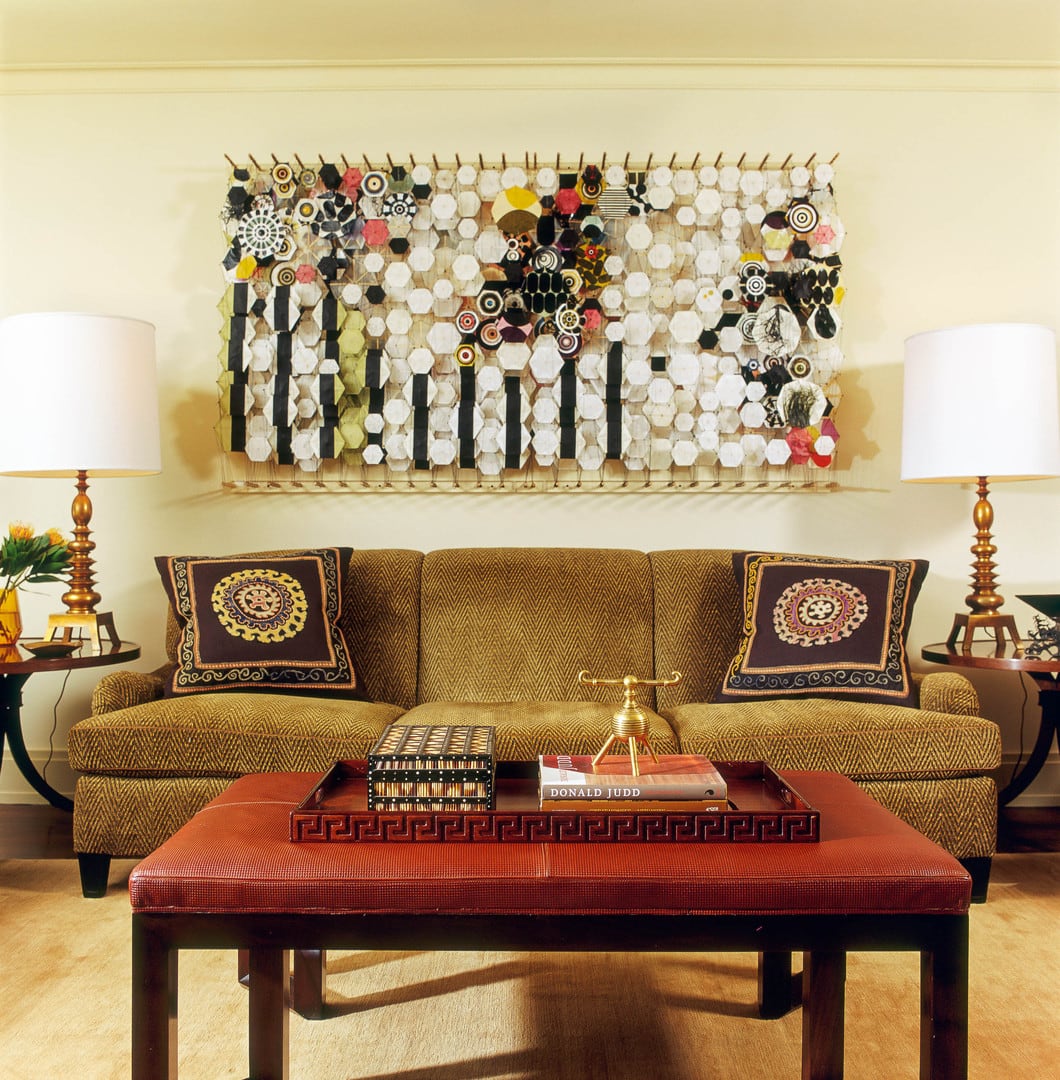
A Jacob Hashimoto collage above the oversized sofa sets the scene: fine art meets family living.

LINCOLN CENTER, NYC

Family Loft

This growing family had moved from a three-bedroom apartment in a small post-war building in Greenwich Village to a dramatically larger, vastly different space: a 3000-square foot loft in a converted former warehouse near Lincoln Center. Challenged by scarce natural light and impractically long dark hallways, we rearticulated these spaces into a dwelling very human in scale, suited to entertaining and to more intimate family time alike.

The furnishings, a mix of custom contemporary pieces with 1940s French design, are a lively array, preserving the downtown Manhattan edge of the family’s former residence while lending a greater level of comfort and elegance to the new loft. Layers of African and Asian textiles and artifacts augment the distinctive eclecticism of the rooms.

The finished Lincoln Center loft reveals the fresh character that architectural rethinking, sensitive detailing and imaginative furniture choices can attain in a near-raw space.
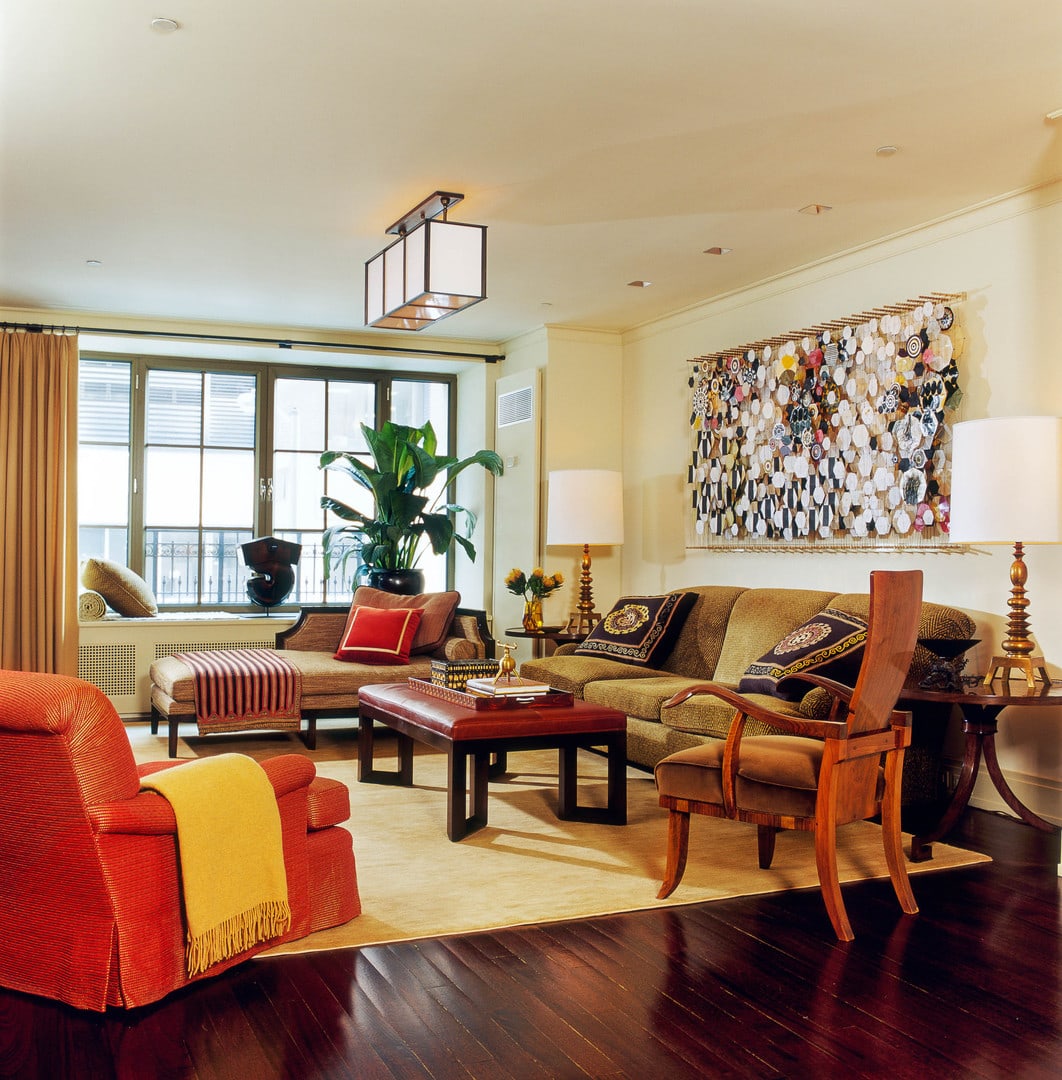
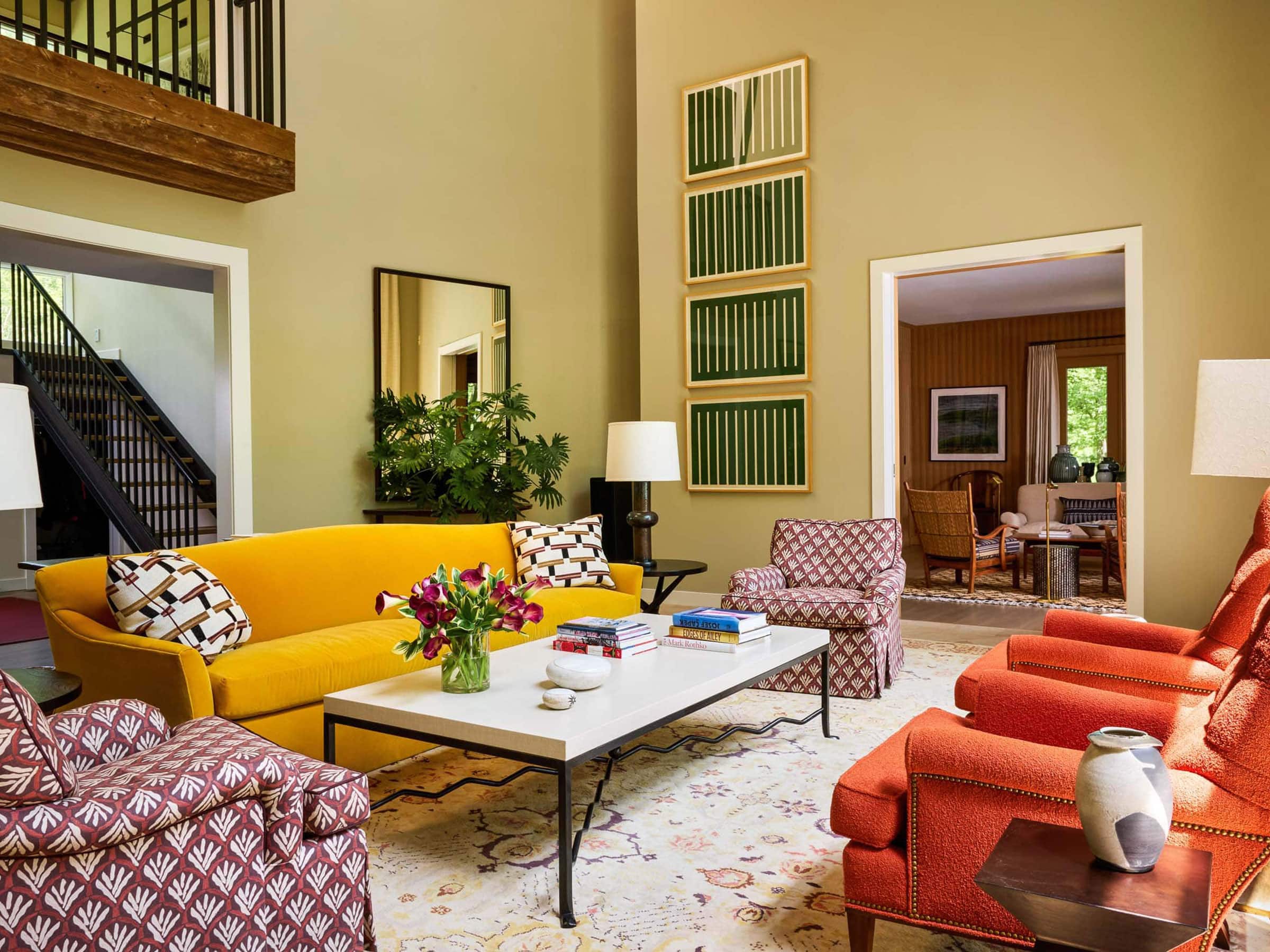
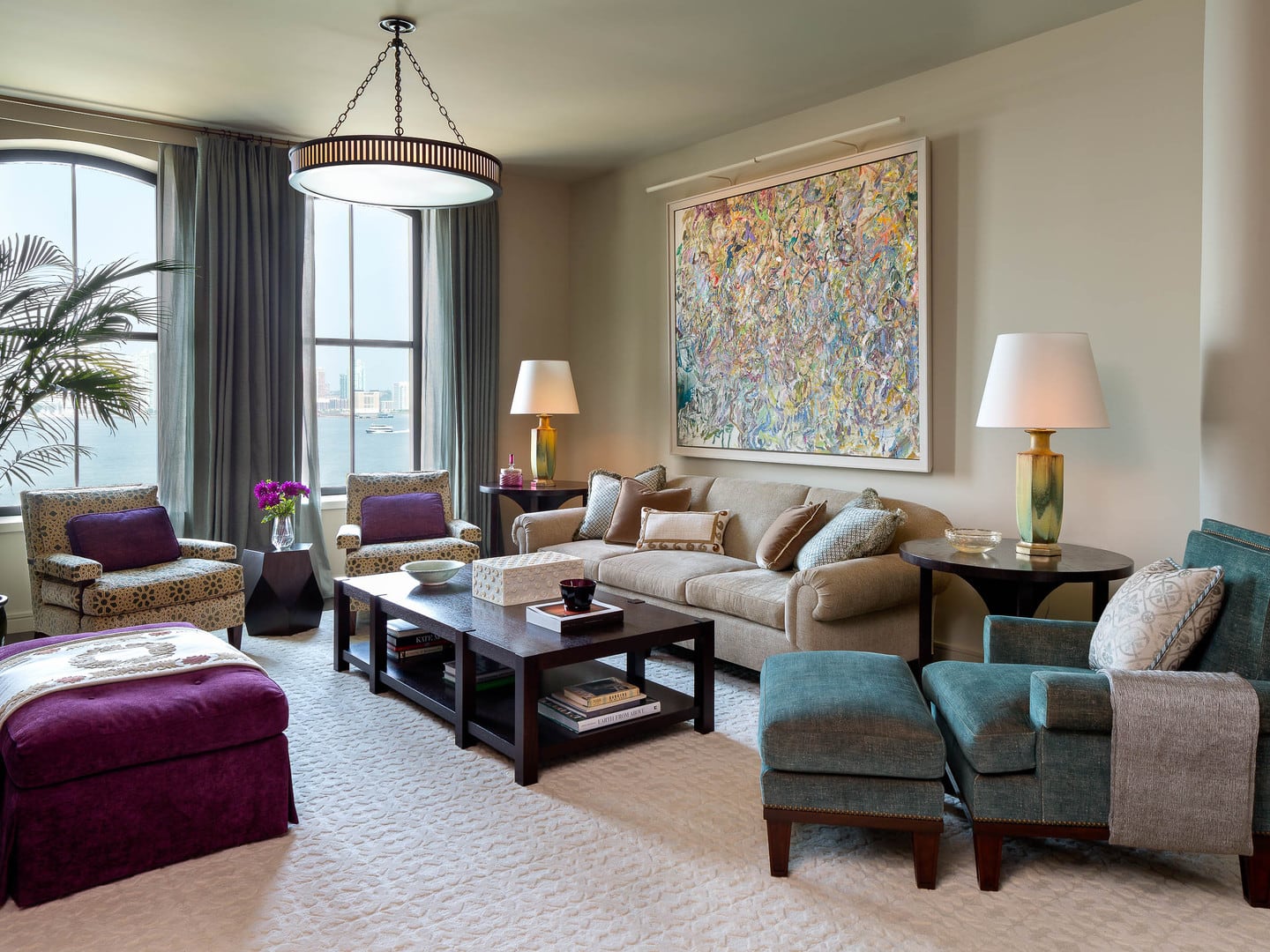
Finest quality custom upholstered furniture with a rich selection of textiles, art and antiques make this living room both supremely comfortable and visually interesting. In front of the sofa is a broad ottoman upholstered in leather; in the corner, near the window, a chaise is covered in linen velvet by Calvin Fabrics. The throw, from Sarajo, is fabricated from a vintage black and red cape from Sumatra. The luxurious area rug, of vegetable dyed hand-knotted Tibetan wool is from Odegard.

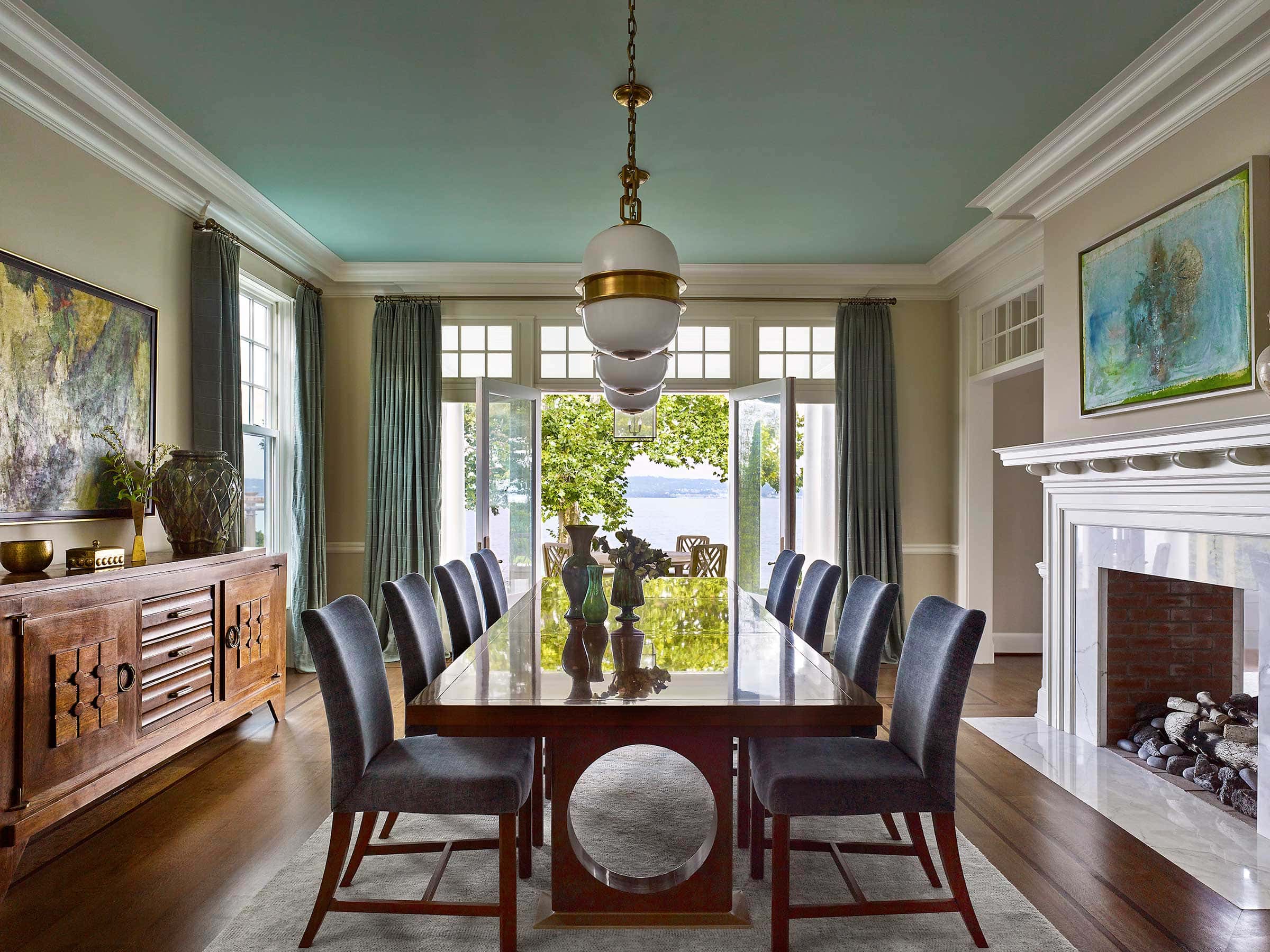
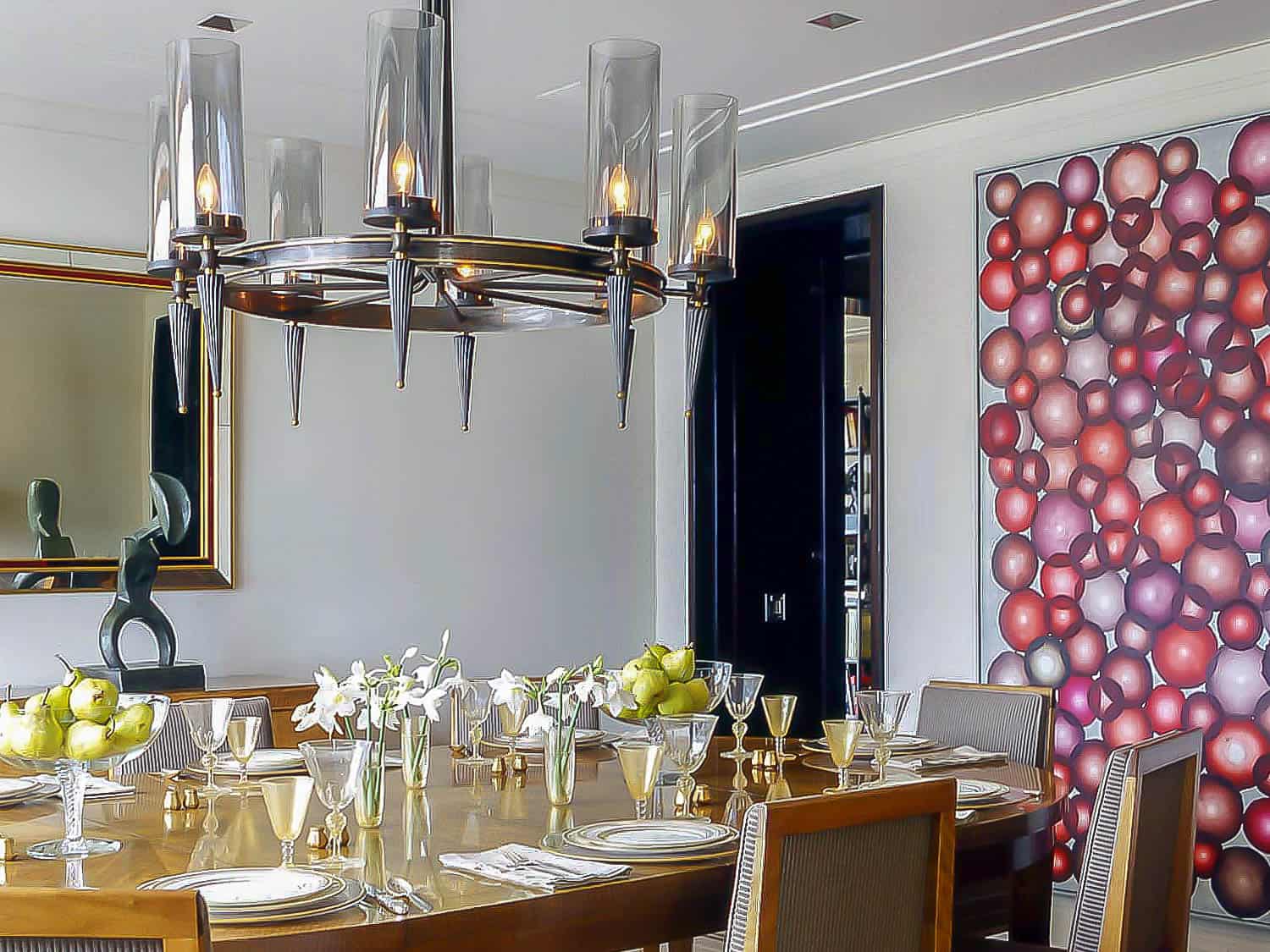
The dining room transmits a French post-WWI aesthetic–machine-inspired furniture forms executed in a traditional material–in this case, oak. The 1930s modernist sideboard is by Charles Dudouyt. Atop the sideboard is a patinated brass and copper mirror custom made by Bark Frameworks, wider and longer than the cabinet, so that its surface appears doubled. A cast bronze fireback, a silvered vase, and an African sculpture add ornamental interest. The painting is by Joan Mitchell.
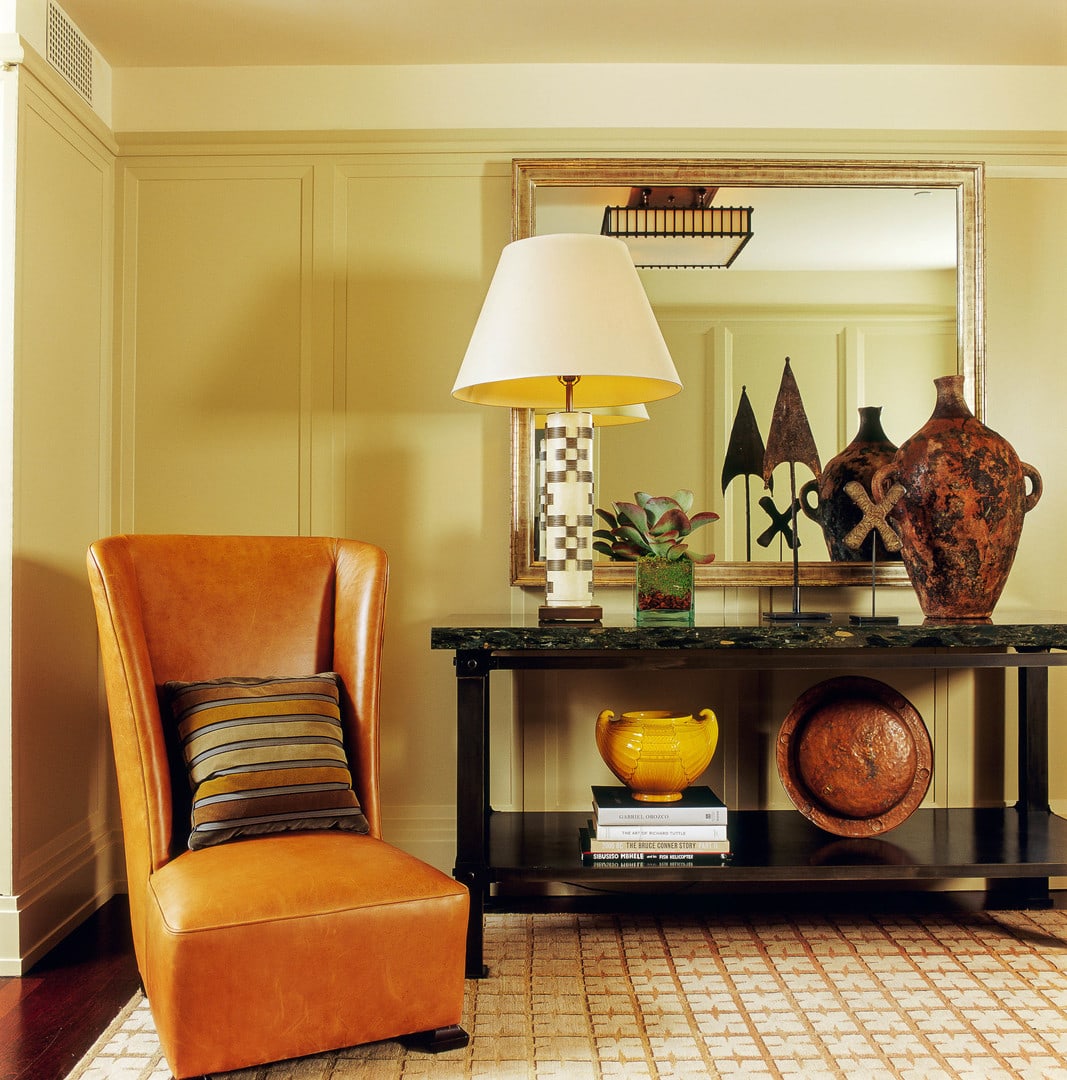
The bright pumpkin leather of a Thomas O’Brien tight-back armchair is paired with an ebonized wood console table topped in black marble designed by Glenn Gissler. The table lamp is fabricated from a printing cylinder. The two-handled vase below, glazed the color of saffron, is by late 19th century British proto-modernist designer Dr. Christopher Dresser.
"We find it hard to believe we actually live in such a beautiful apartment! Glenn designed a distinctive and comfortable family-friendly apartment that works well when we are all together but also provides autonomy for everyone."

– Client

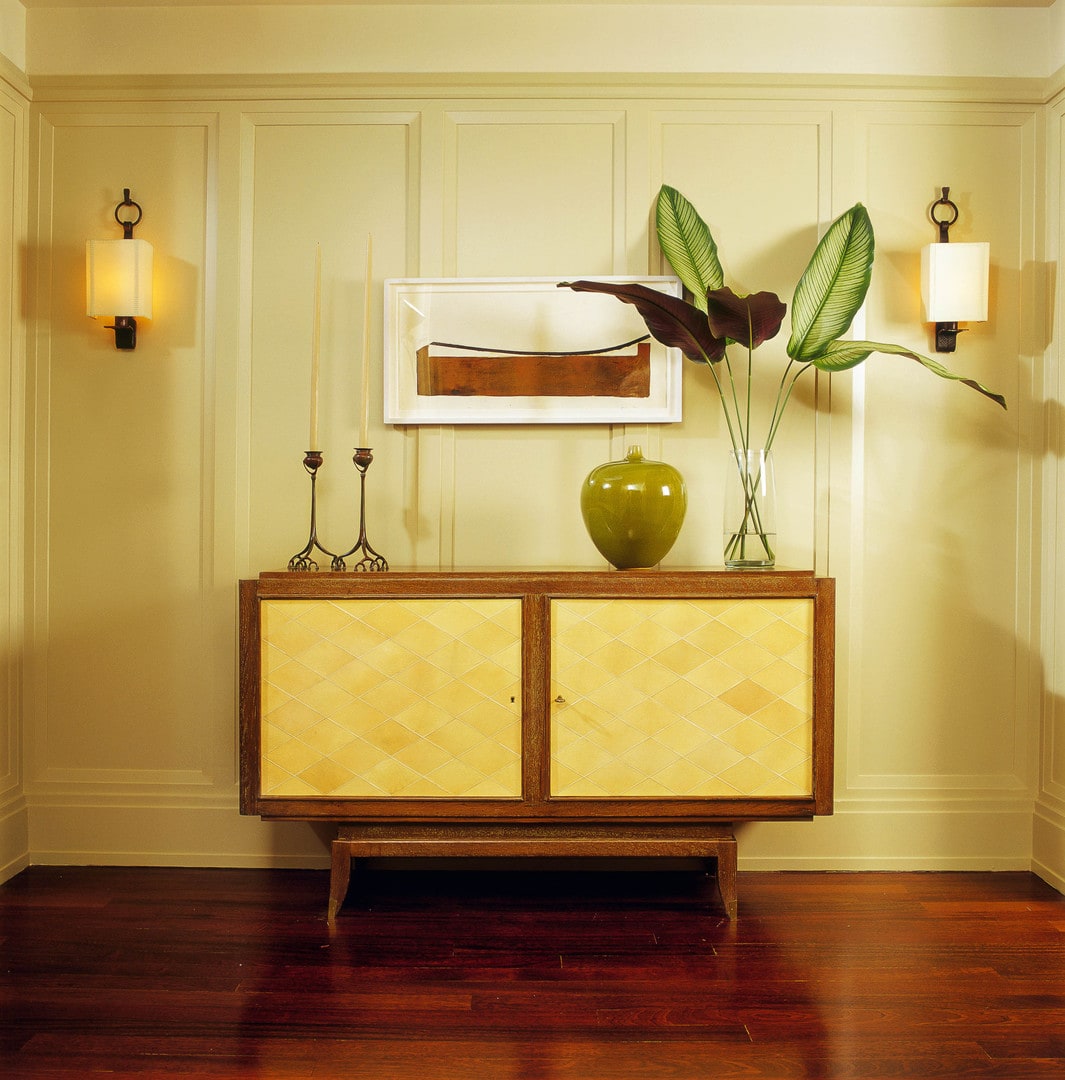
A French 1940s console attributed to Pascaud, with doors of inlaid shagreen and bone, creates a serene tableau at the end of a long hallway. A pair of classic signed Tiffany candlesticks, c. 1900, from Ophir Gallery, are of patinated bronze with bronze candle cup and ‘organic root’ base. Stiges wall sconces, from Roman Thomas, are of oil-rubbed hand forged iron with stitched silk pearl shade.
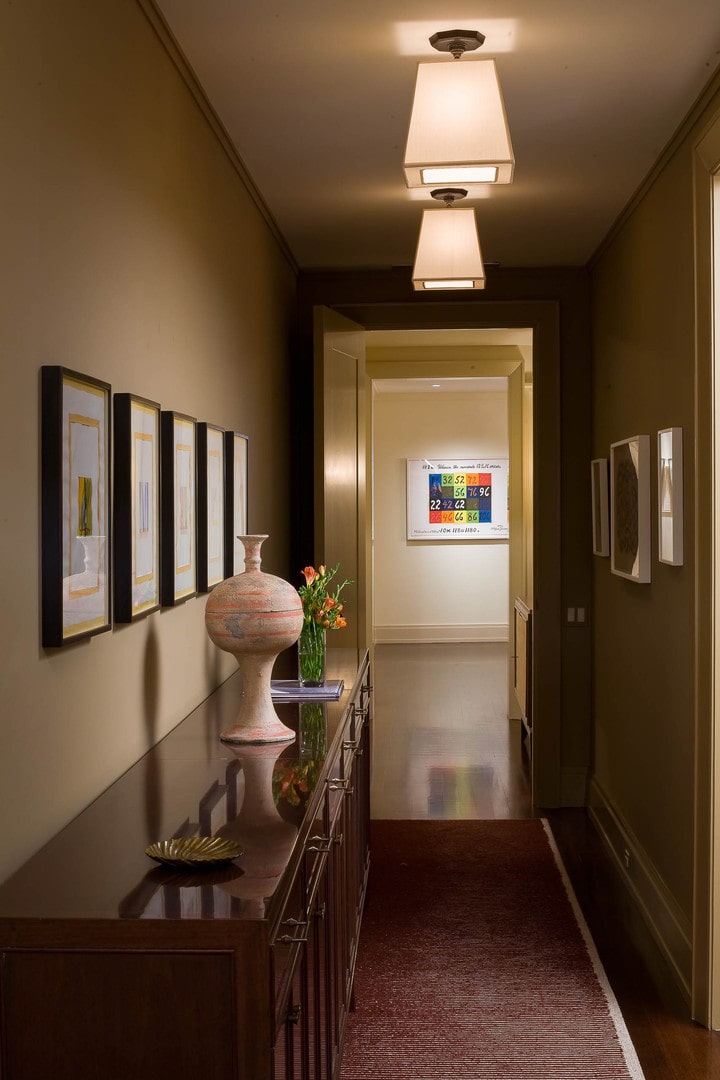
A long hallway hung with contemporary art terminates in a bright checkerboard painting by American abstract artist Alfred Jensen.
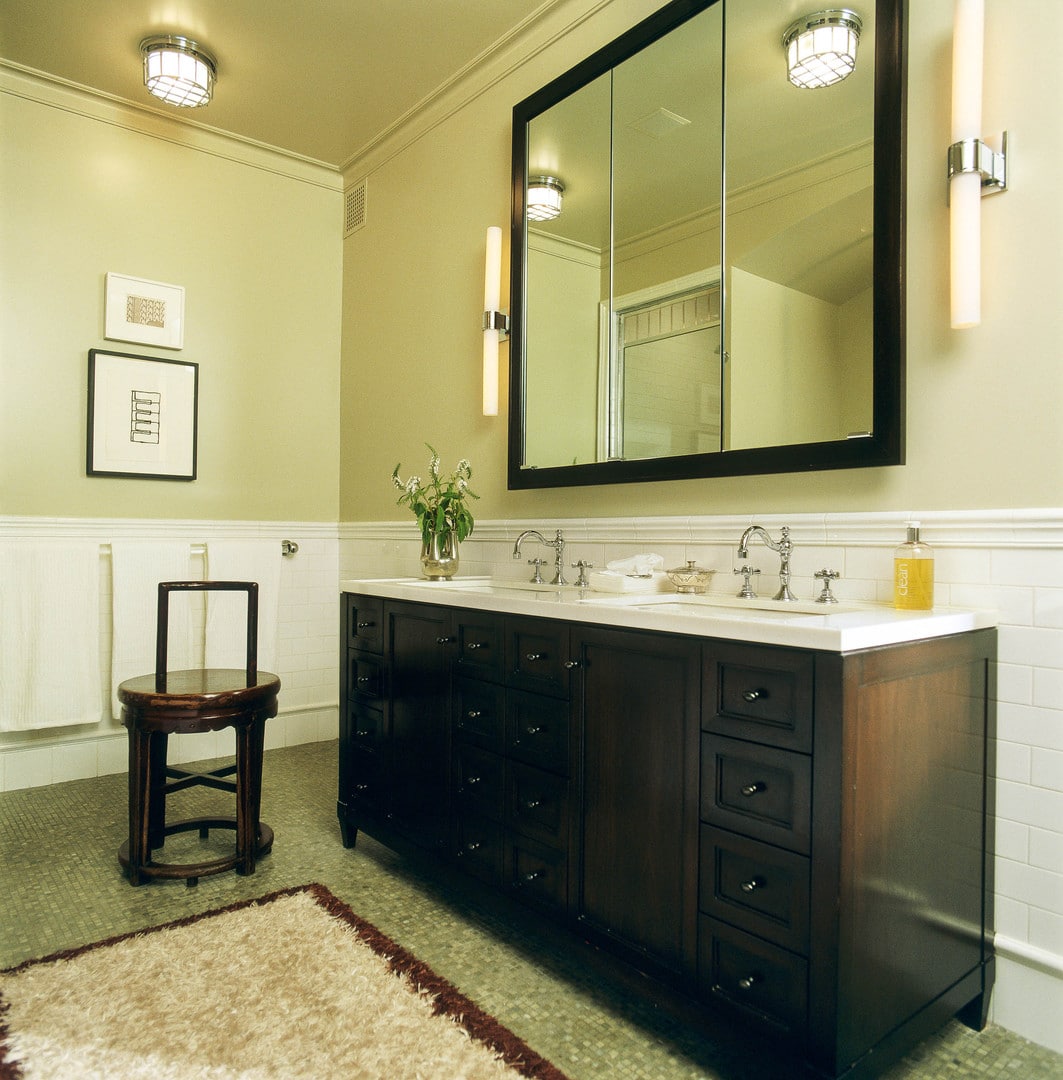
We paid special attention to augmenting storage capacity–the oversized mirror is in fact a custom 3-way medicine cabinet. The round mahogany stool is antique Chinese.
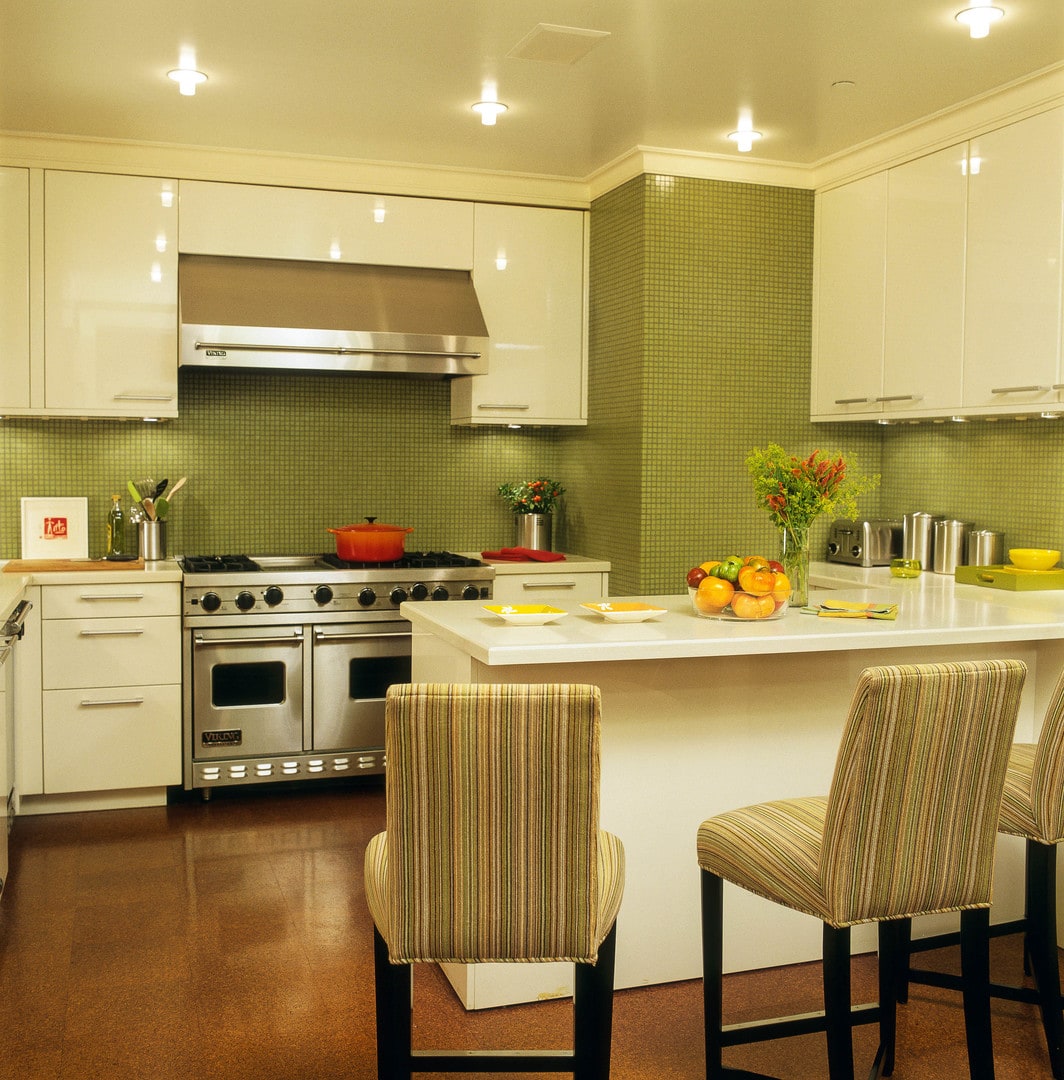
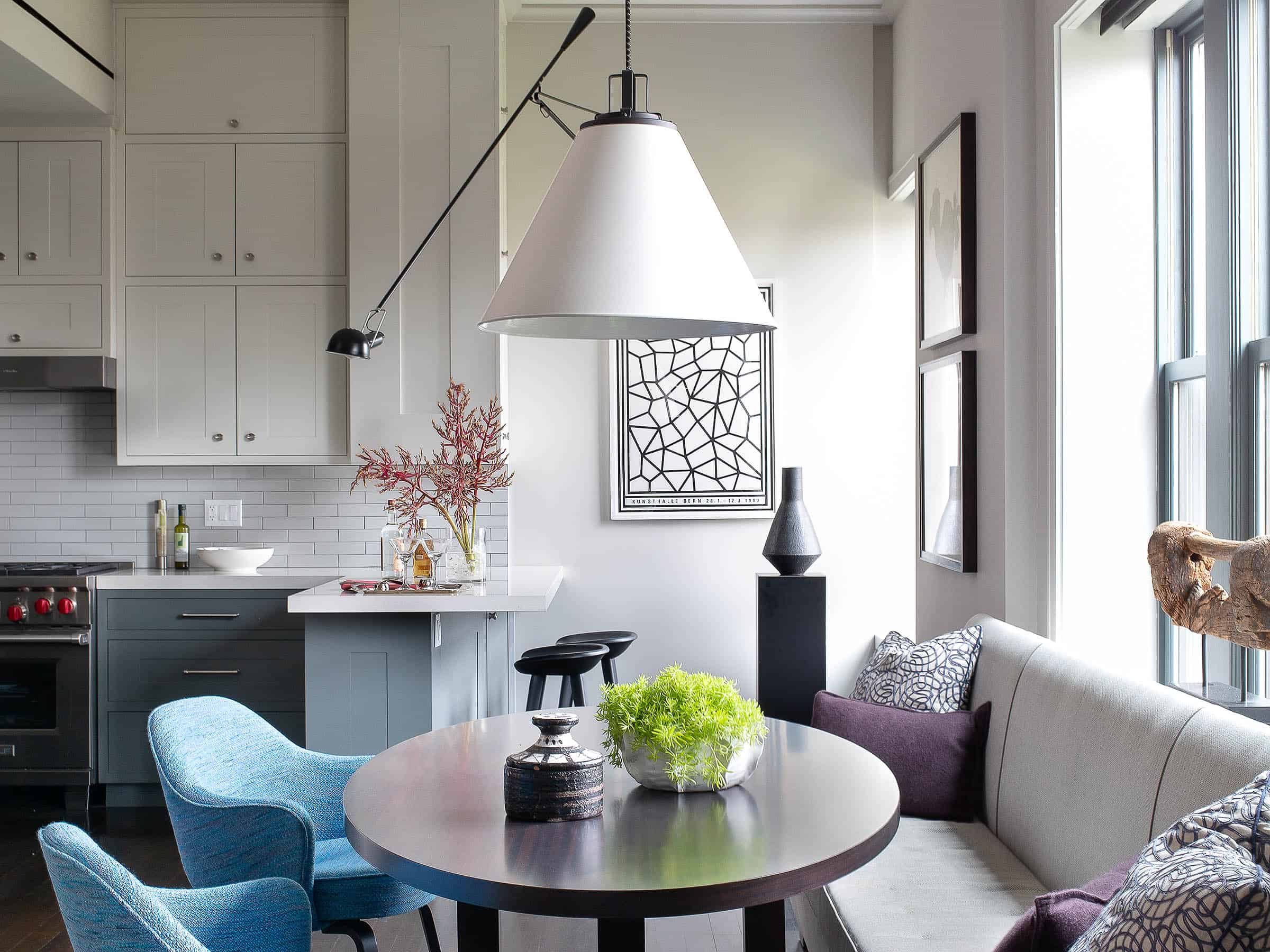
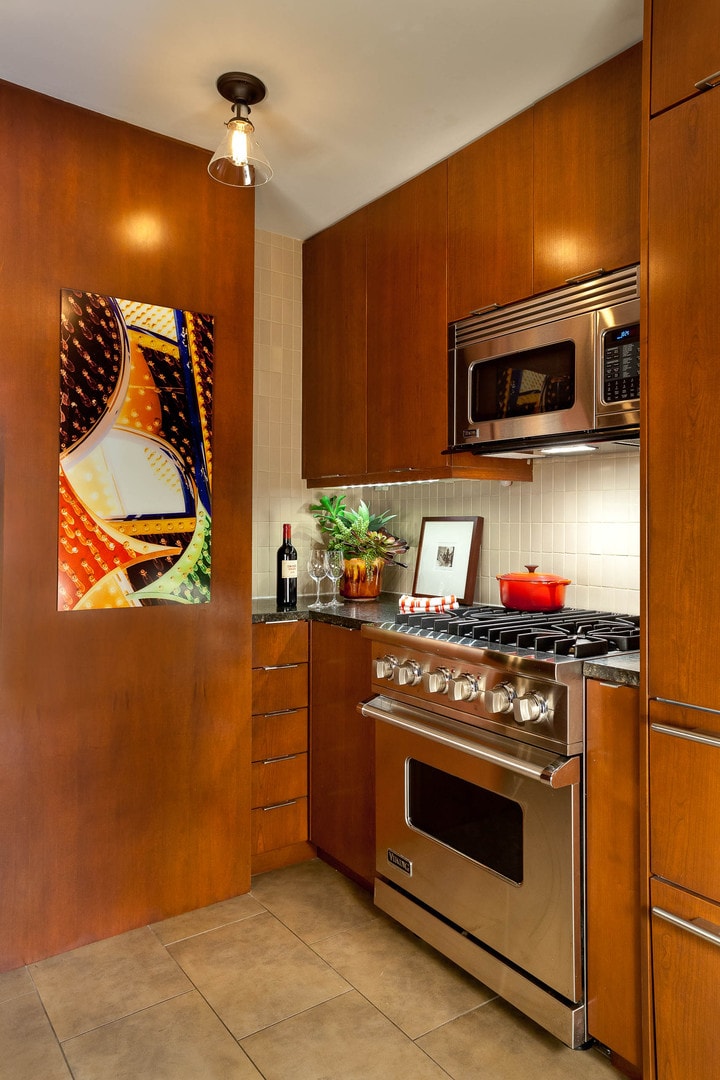
Apple-green tile and smart stripes on the kitchen counter stools make this internal kitchen sparkle, along with the shining stainless steel professional range.
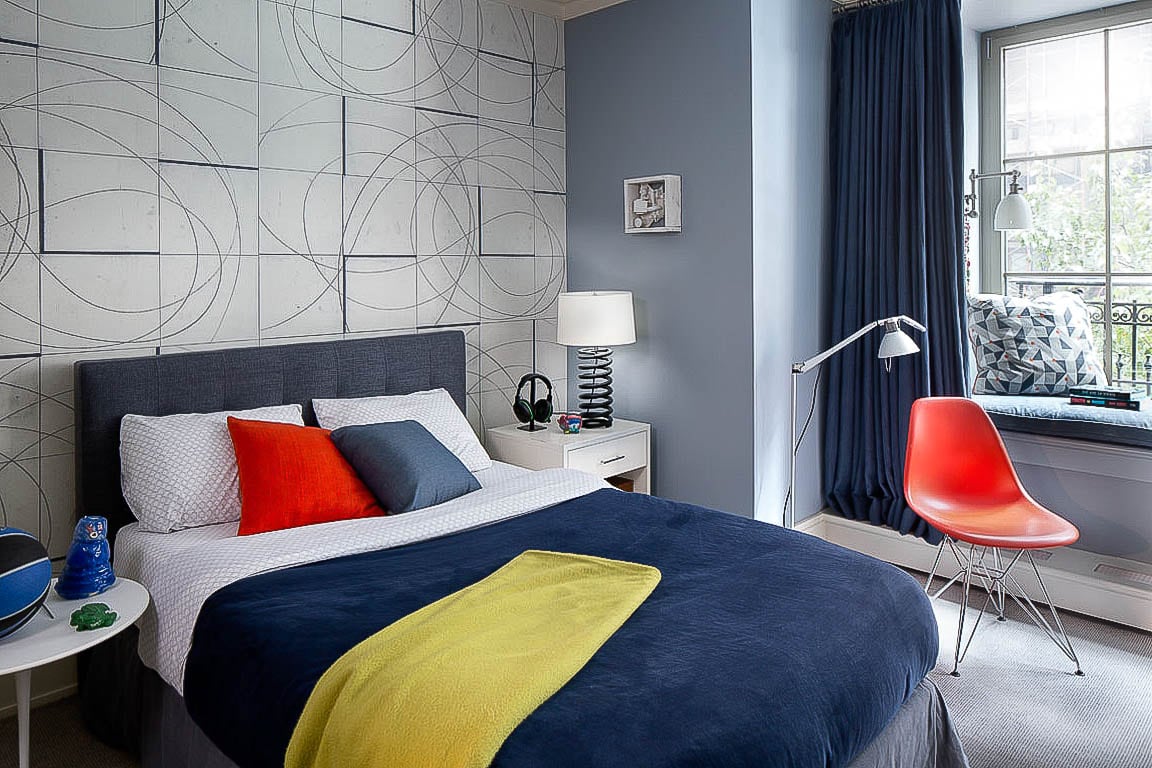
Working directly with this teenage boy we created a bedroom that reflects his desire for both geometric order and simplicity, and the his favorite color – blue.
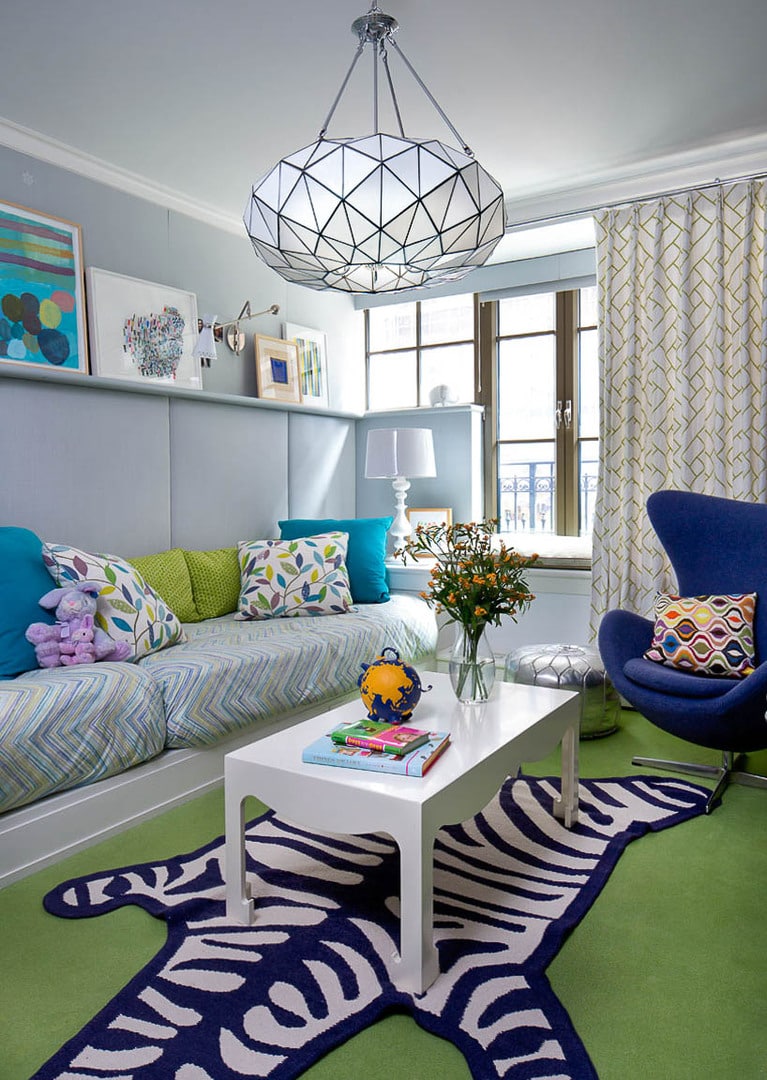
Transitioning form a little girl’s rom to a room for a teenage girl we created a bright cheery palette and sophisticated furnishings to create a space that is more lounge than bedroom – putting two twin beds together with a plethora of pillows to create a 12 foot long sofa for she and her friends.

Senior Designer Craig Strulovitz
Photos by Gross & Daley

Pied-à-Terre – Upper East Side, NYC

UPPER EAST SIDE – NYC

Pied-à-Terre

The clients, natives of Sao Paulo, love New York City, and wanted to establish a sometime home there, where their children and grandchildren could visit and they might entertain. To import the colors and cadence of Brazil was a joyous assignment for us, an unusual, less sedate take on modernism which draws inspiration from Latin American architects such as Brazil’s own Oscar Niemeyer, landscape architect Roberto Burle Marx, and Mexico’s Luis Barragan.

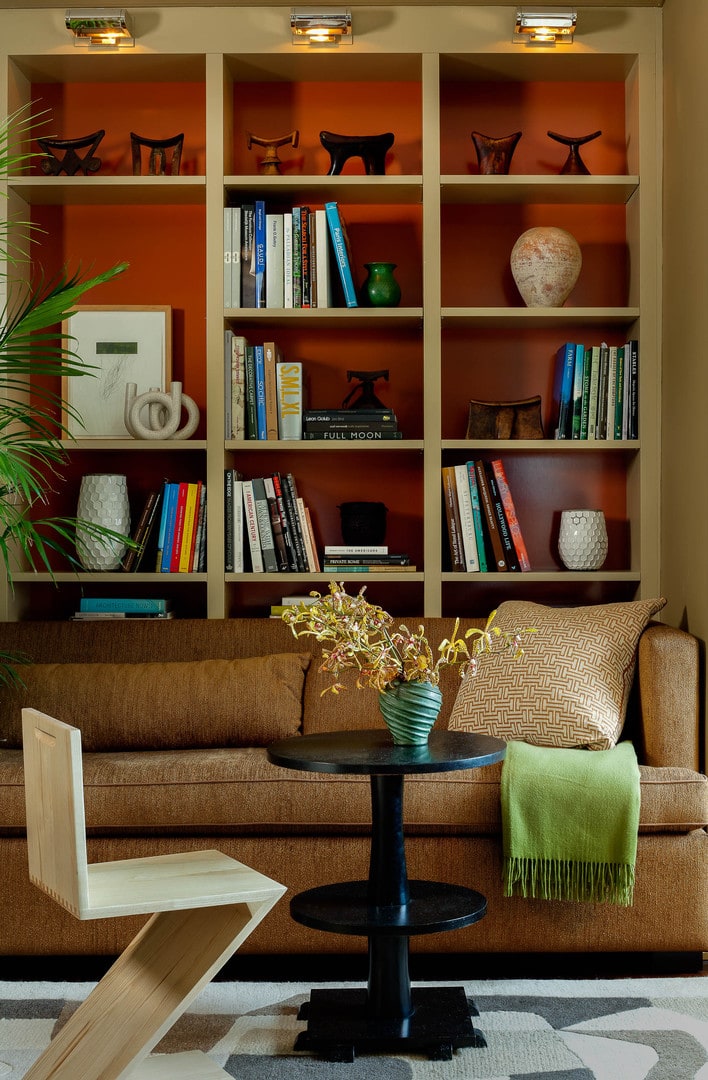
We adopted Niemeyer’s and Marx’s love of undulating biomorphic shapes in our selection of ceramics and artworks; and Barragan’s bold use of color to demarcate planes and announce room transitions. These architectural trends are hinted at, echoed rather than imitated. Instead of painting a whole wall orange, as Barragan might have done, we brought in this luscious, vibrant color more sparingly: the large ceramic lamp in the entry; the pillows and napkins in the dining area; and the back of a shelving unit. Yet the dominant colors–coffee brown, cinnamon and natural walnut–also speak of Brazilian tropics and tastes.
A custom banquette upholstered in distressed buckskin, and “Turner” chair in Kravet’s Diamond Raffia surround a custom walnut table top from Nutech Interiors. The large late 1950’s abstract painting in grey, black and white evinces the spirit of cool jazz.

The slim, handsome custom one-armed sleeper sofa from Carlyle is juxtaposed with a jaunty abstract rug by John-Paul Philippe for West Elm, and Rietveld’s classic Zig Zag Chair.

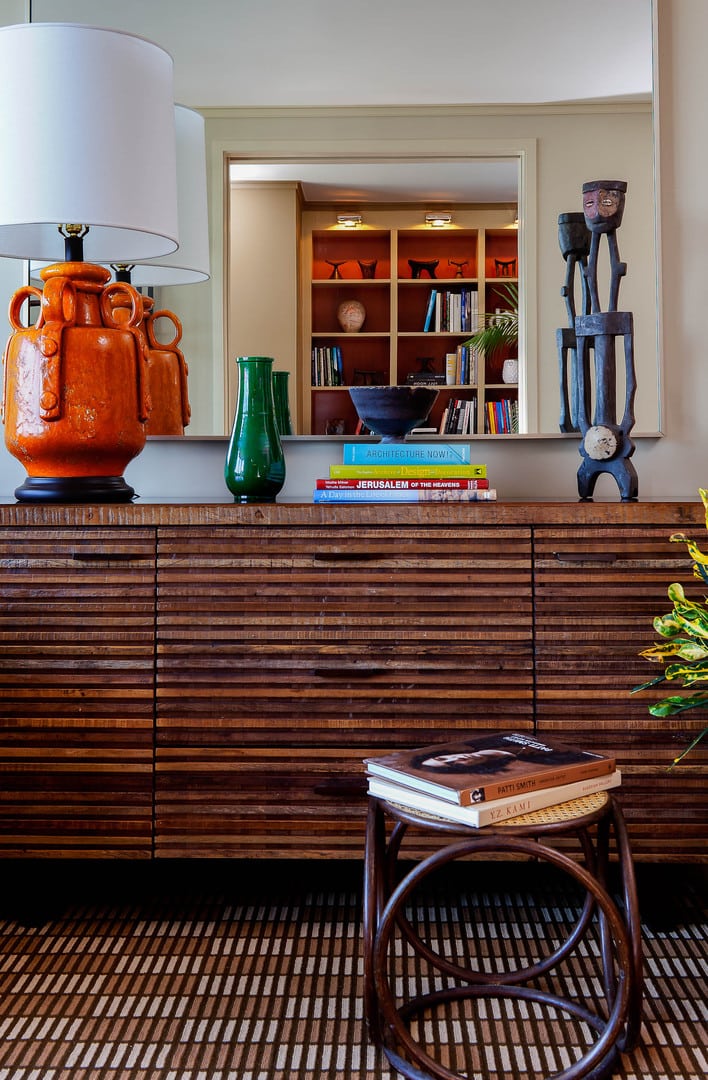
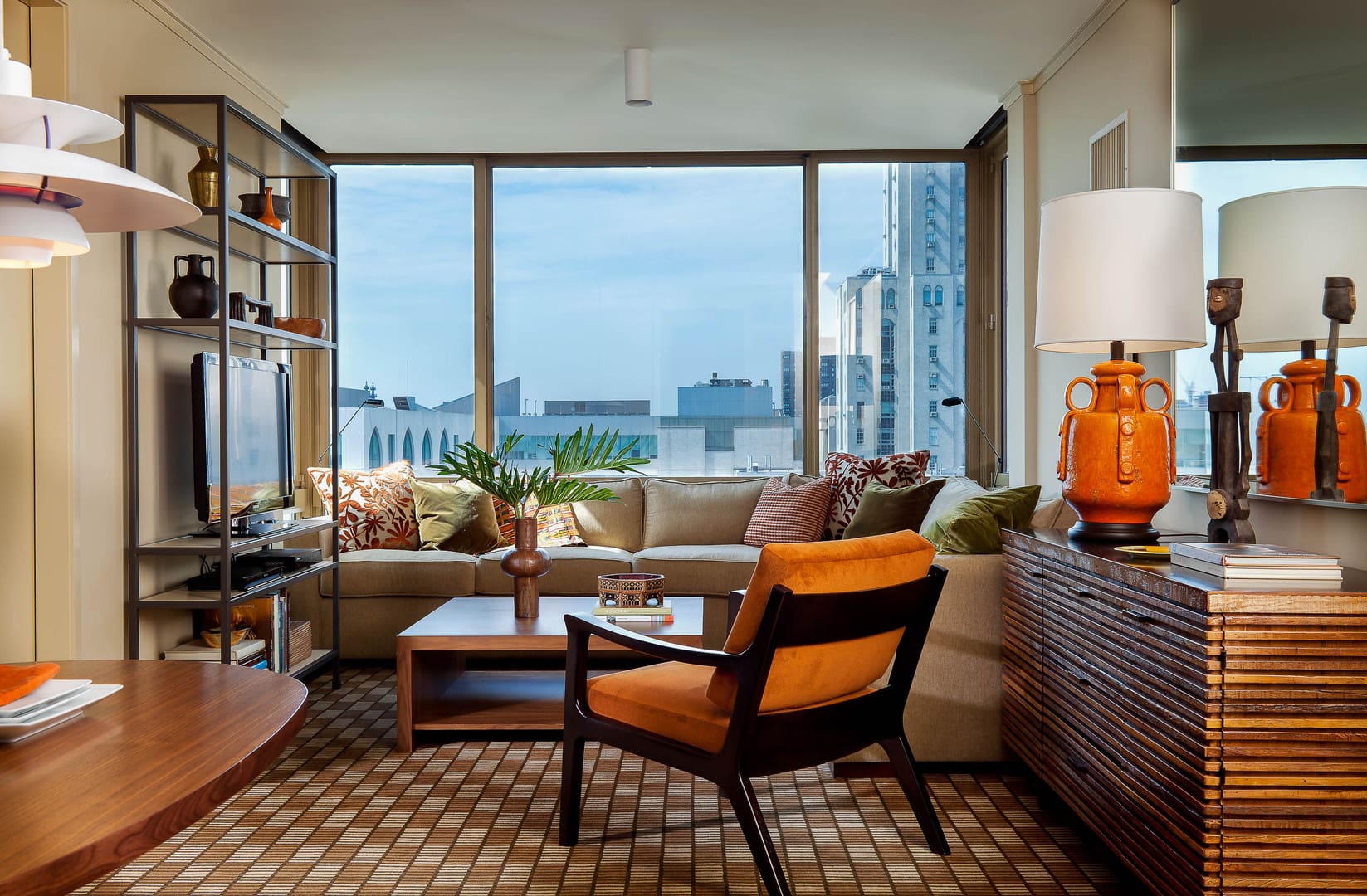
We created an ensemble with an aura of Latin sophistication. The sideboard was crafted from rare, exotic peroba wood salvaged from the siding and floors of old buildings in Brazil. The 1960s orange stoneware lamp sets the vibrant mood of the entire apartment. The 1970s bentwood and cane stool and African sculpture complete the earthy, quirky atmosphere.

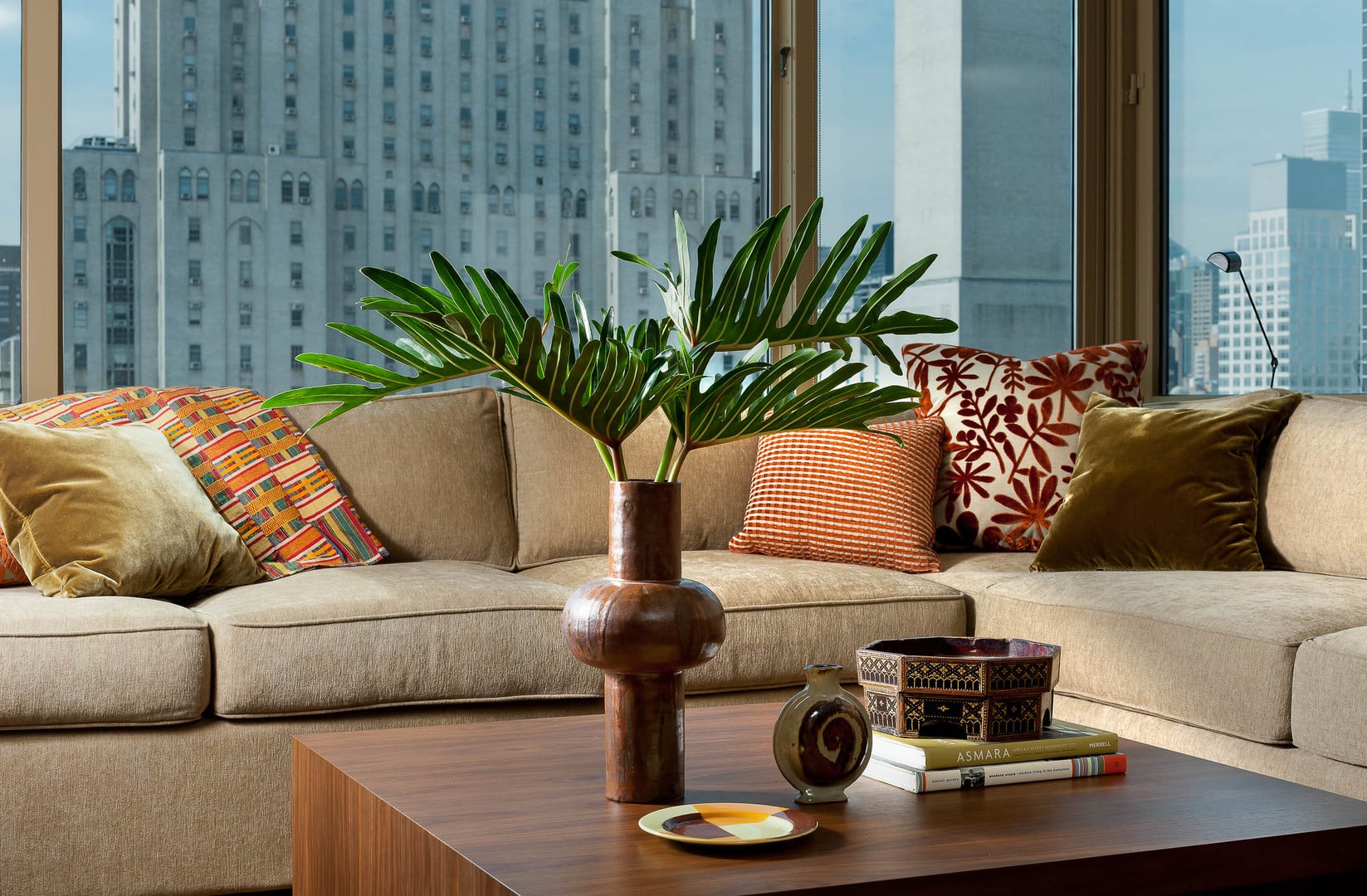
Earthy modern ceramics populate the large multi-use low table in the Living Room, with pops of color provided by textiles used on pillows and a vintage Kente cloth throw with a common orange thread.

A rich warm palette and comfortable mid-century style furniture overlook the cool geometry of the NYC landscape.

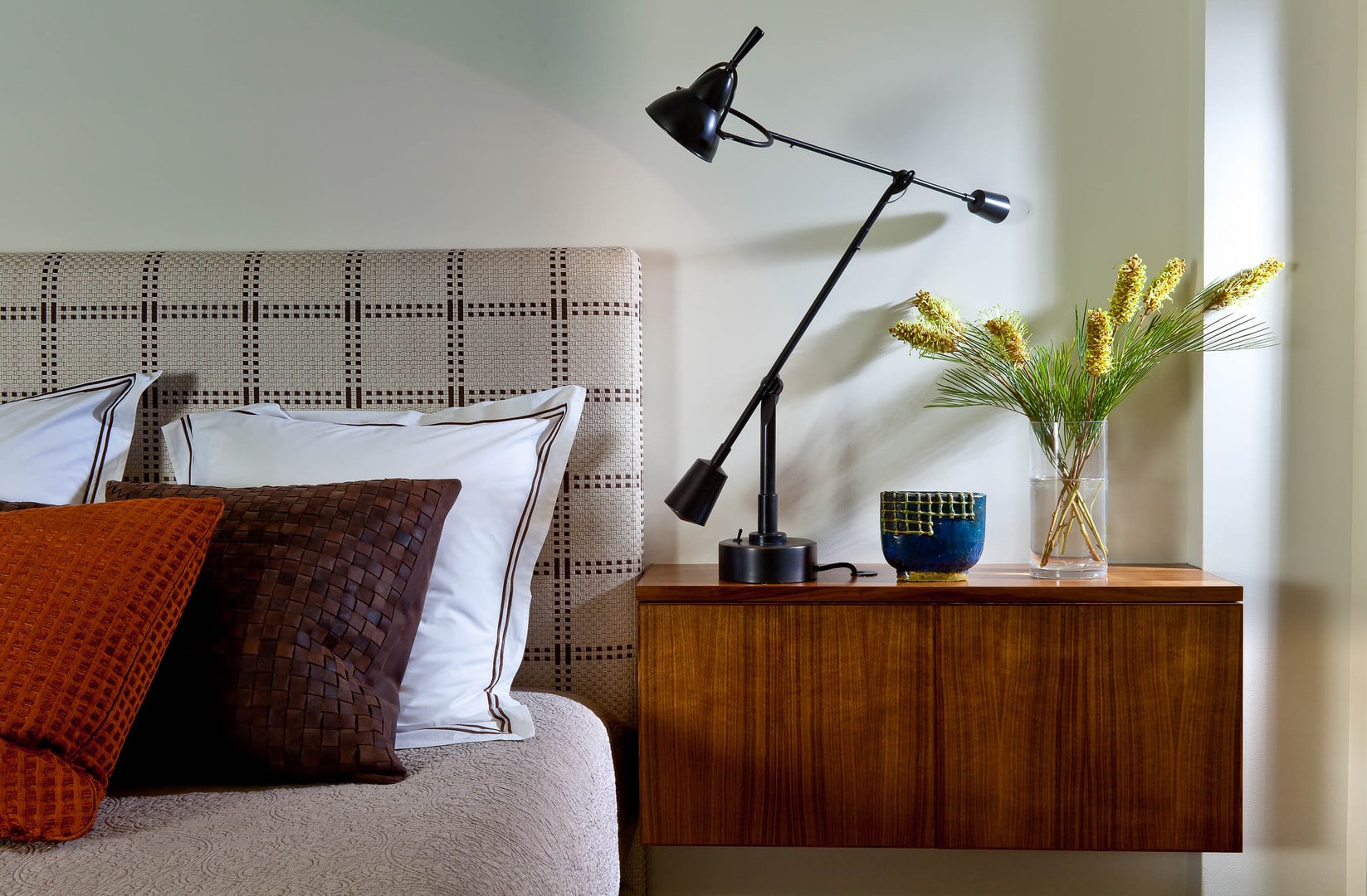
In the spacious bedroom, a custom bedside console floats along the wall, illuminated by the Machine Age lamp designed by Edouard-Wilfred Bouquet. The print is by Robert Motherwell. Archaic elements make their way into the room: a vintage Thebes Chair with leather upholstery and a small vintage Moroccan rug, c. 1940s, from Jacques Carcanagues.

A tailored upholstered head board combined with custom wall-mounted mahogany bedside cabinets with Edouard-Wilfred Buquet articulated lamps continue the clean-lined mid-century story.

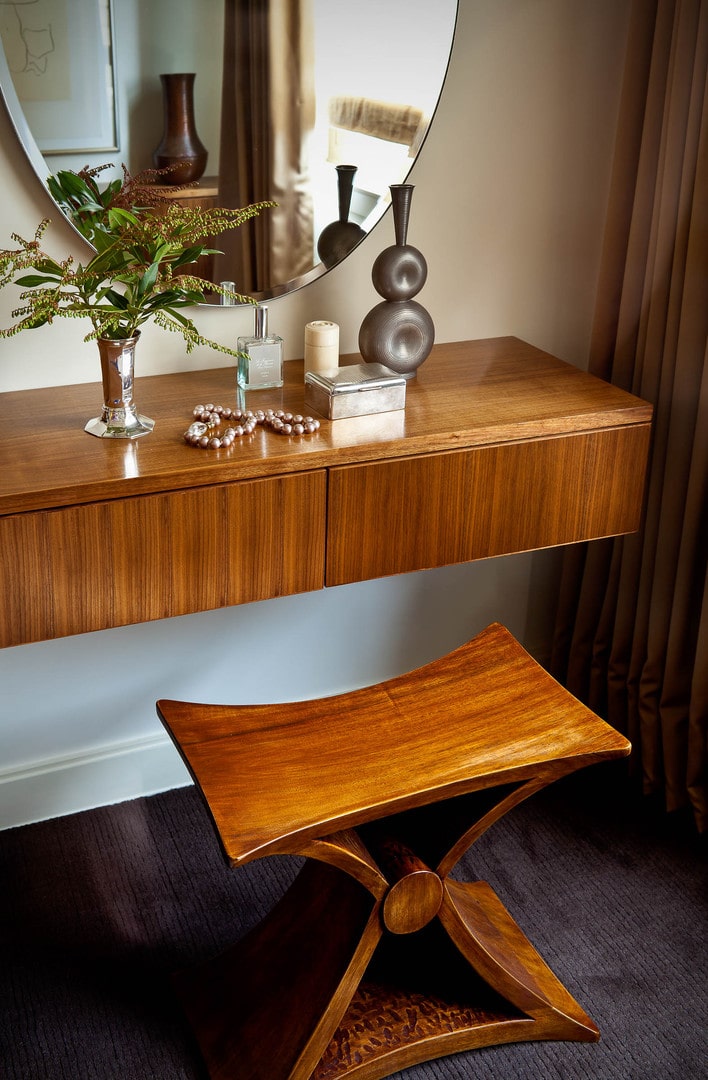
In a definite nod to simple luxury living a modern vanity was designed to provide a perfect location near the large window for the application of make-up, and completion of finishing touches.

Senior Designer Craig Strulovitz
Photos by Gross & Daley

Gramercy Park

GRAMERCY PARK – NYC

Gramercy Park Apartment

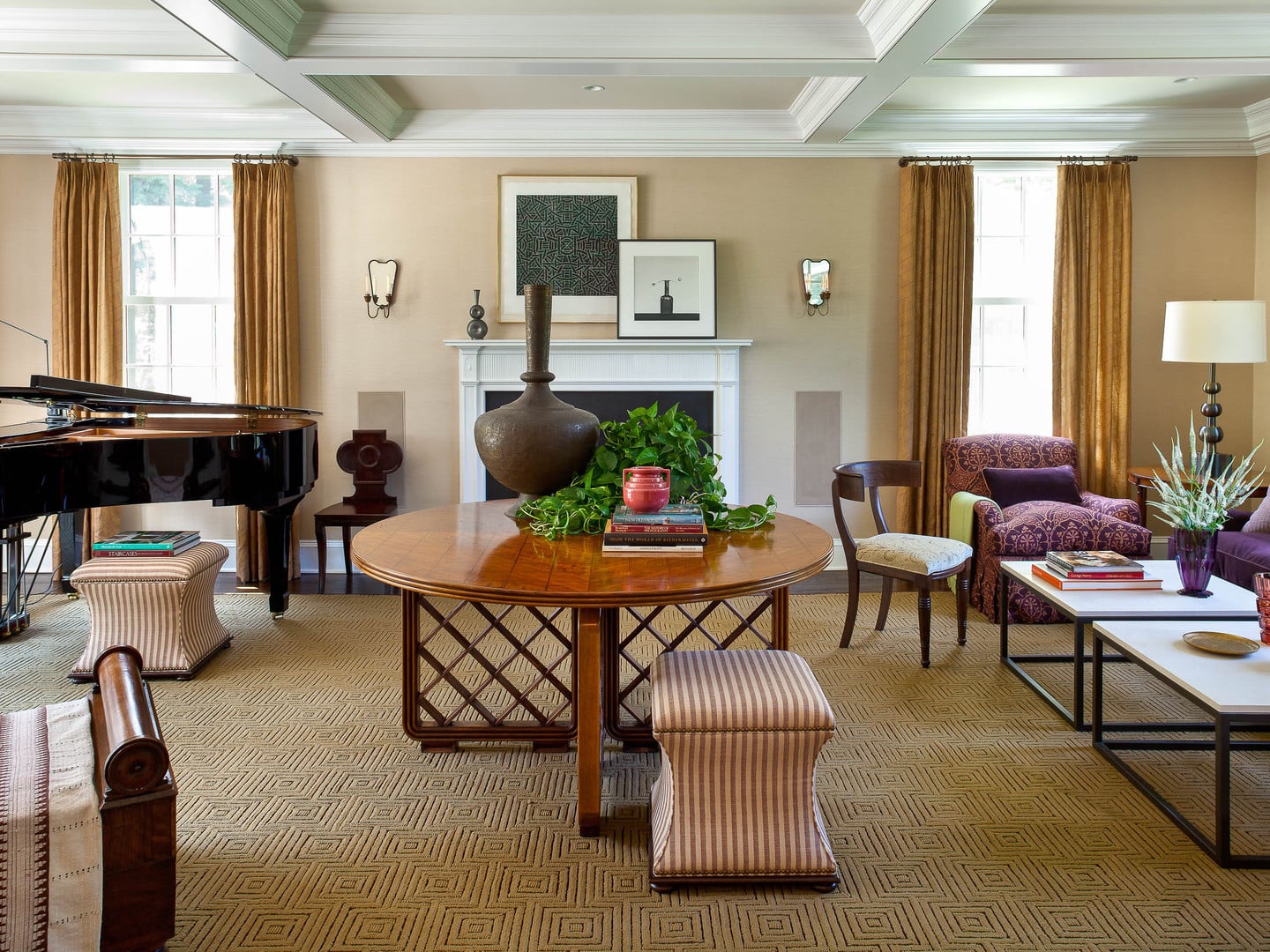
These engaged and willing clients, a couple moving from California, sought to create an interior in their prewar Gramercy Park two bedroom – with keys to the Park — that would express emotion, even passion. One of the clients was from South Africa and possessed some heirlooms belonging to his grandfather, including a grand piano and artworks, forming an interesting family legacy which introduced color and and a certain exoticism into the apartment.

Instead of using the second bedroom as a guest room, we chose to create a den for work and entertainment; this has turned out to be a delightful and much-used room.

The couple are master chefs, and multi-course dinners with carefully selected wines were a priority. We created a dining area with a banquette; a closet was transformed into a stunning bar. We furnished the terrace with pieces from Restoration Hardware, making of it another place for dining.

By actively engaging these gastronomic connoisseurs in the design design process, their evolving visual sense came to be reflected in the colors, textures and objects of this highly personal apartment.

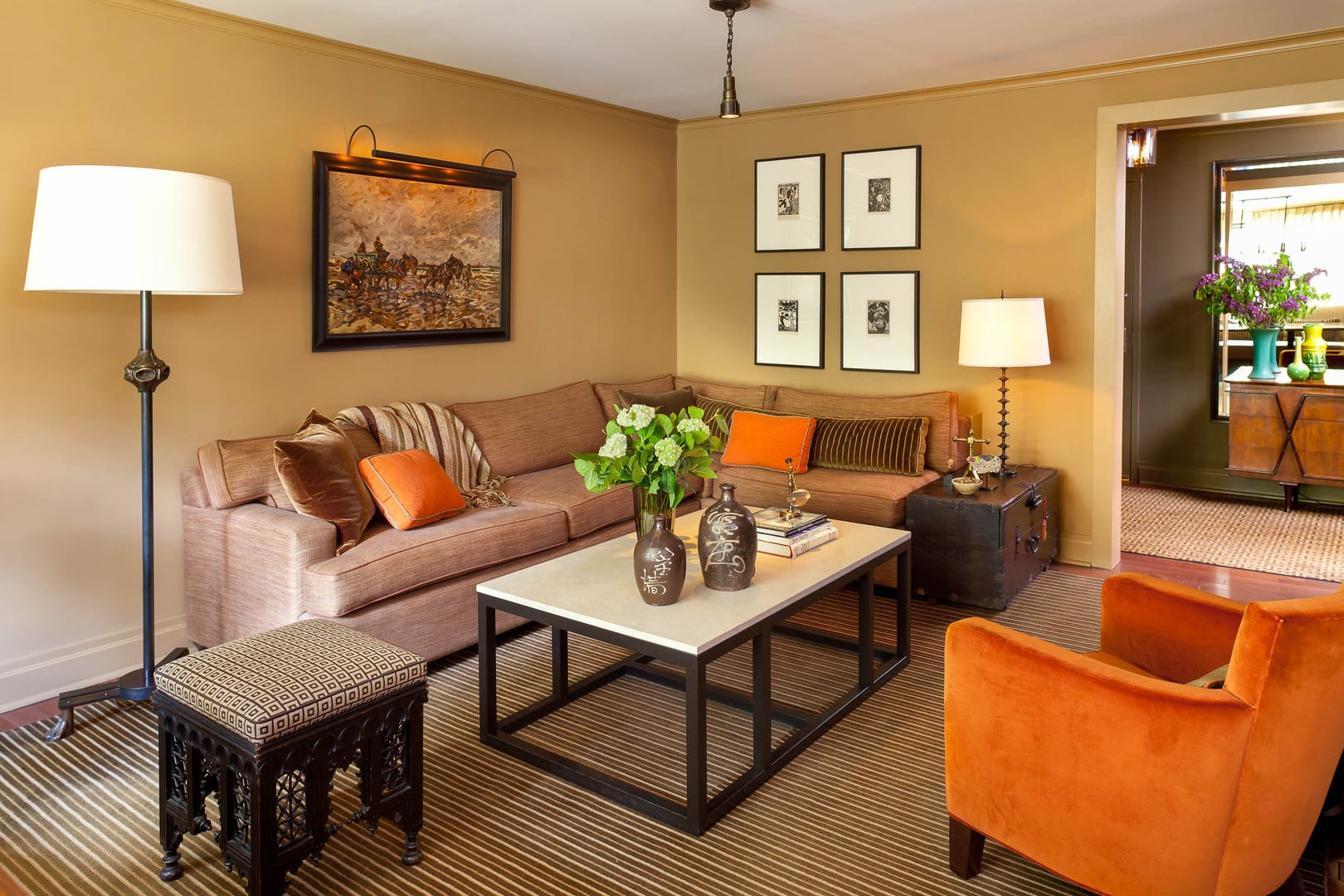
A lively striped carpet in tones of cinnamon and cream provides a basic palette and ground for custom and antique furniture, including a black-painted Moroccan stool of the Victorian era.

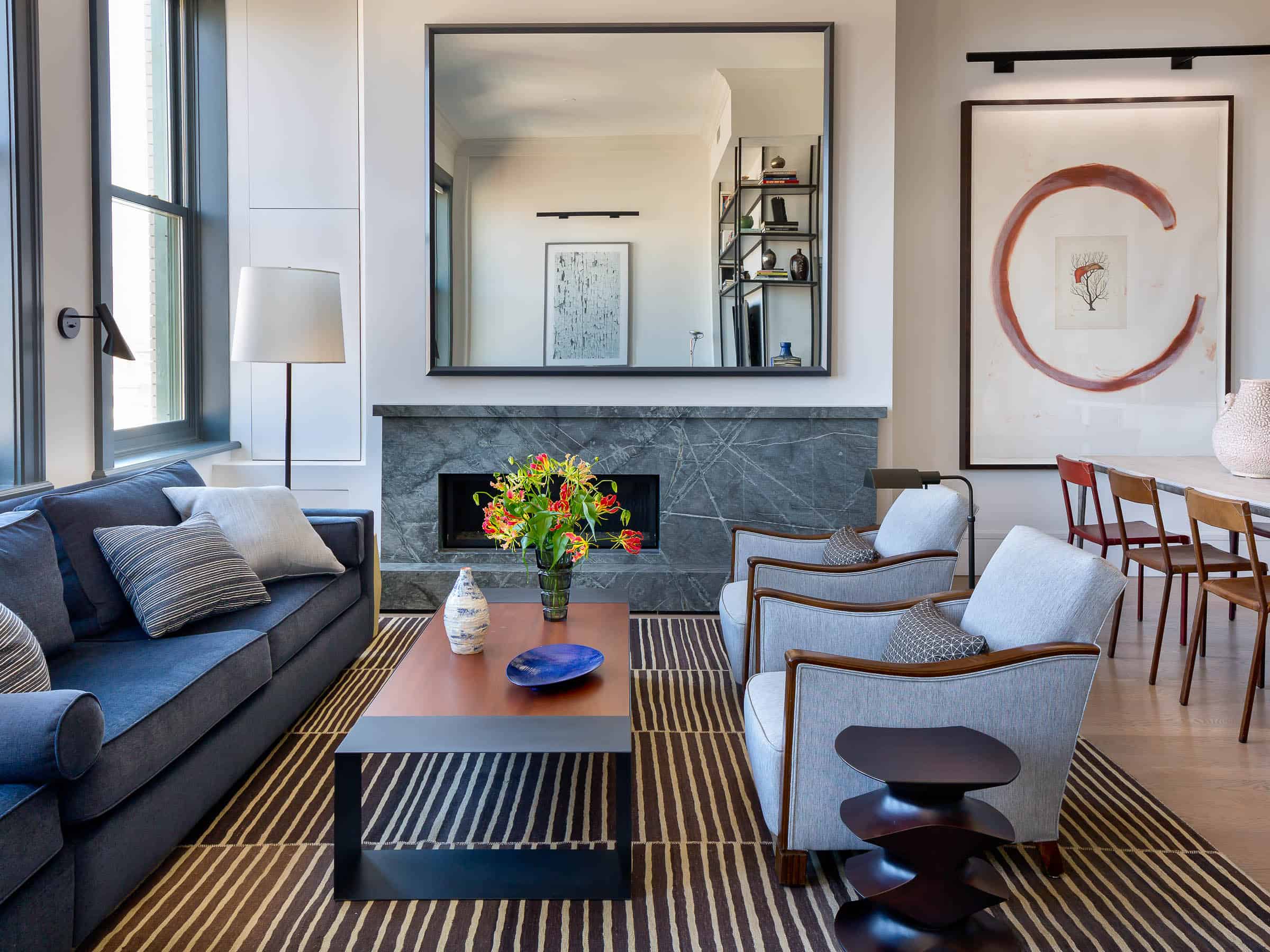
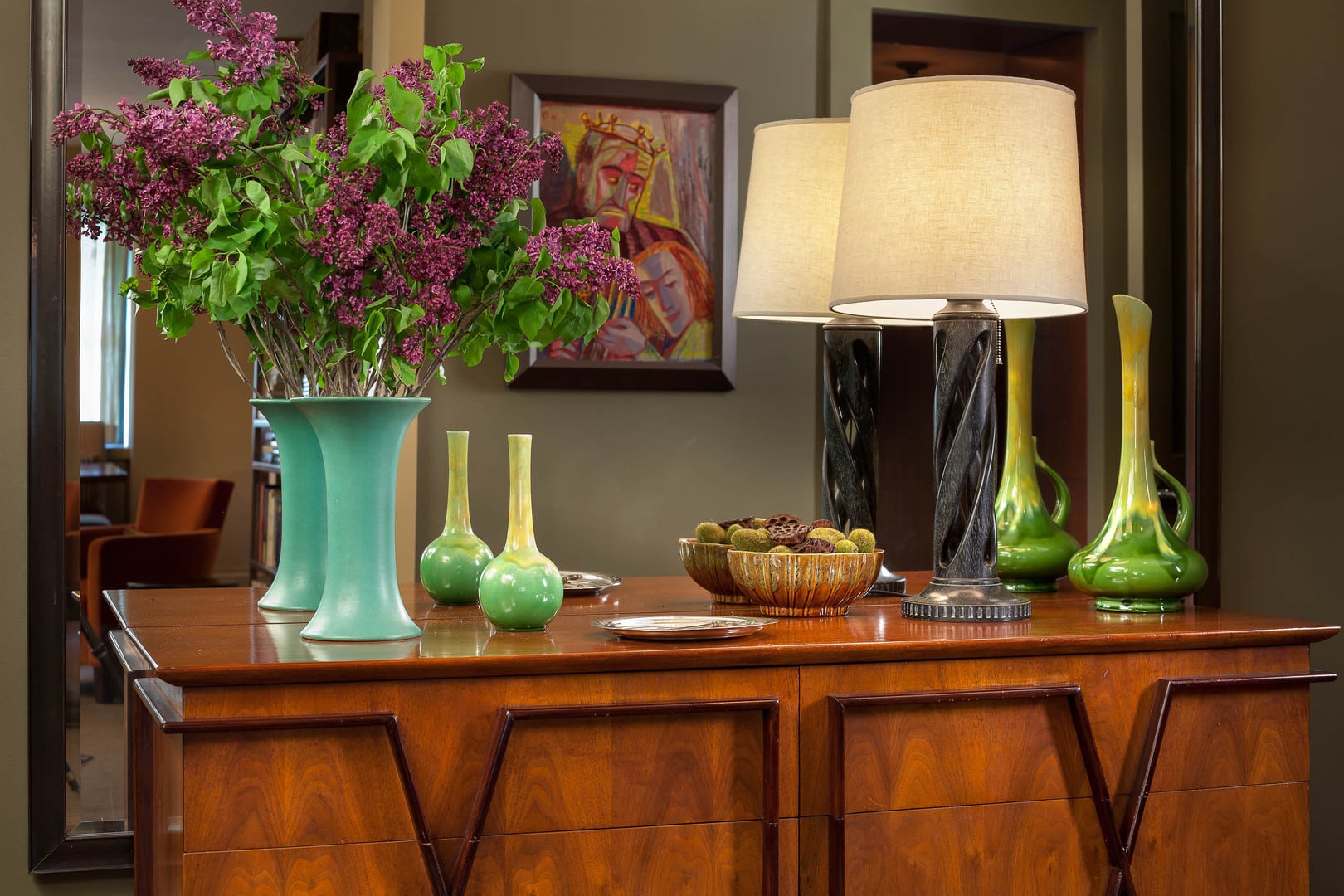
An X-front American chest of drawers, 1950s, sets the stage for a collection of green-glazed pots and an spiraling cylinder fashioned into a table lamp. We extended the custom mirror beyond the chest for an added feeling of space. The carpet, from Stark, is in a Greek key pattern which appears almost stenciled.

"Thanks to his architectural background, Glenn Gissler is a master at transformative spaces. His unique eye for materials, shape and color manifested in a seductive, sumptuous and luxurious space that has become our new home in Manhattan. Working with Glenn and his extended team of highly talented, professional and caring artisans and contractors yielded a formidable result we are extremely proud of."

– Client

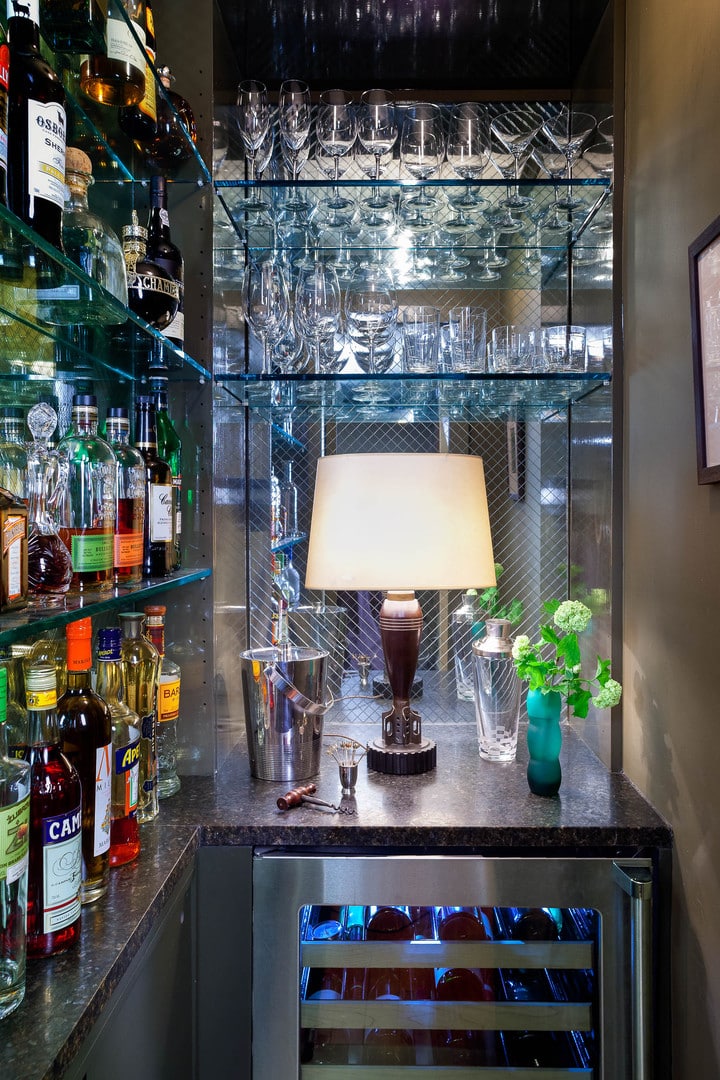
Converted from a closet, the bar is a special delight, inspired by Charles James’ bar for the De Menils in Houston. The clients are oenophiles, with an esoteric knowledge of wines and spirits. The granite top is Uba Tuba from Stone Source.

Converted from a closet, the bar is a special delight, inspired by Charles James’ bar for the De Menils in Houston. The clients are oenophiles, with an esoteric knowledge of wines and spirits. The granite top is Uba Tuba from Stone Source.

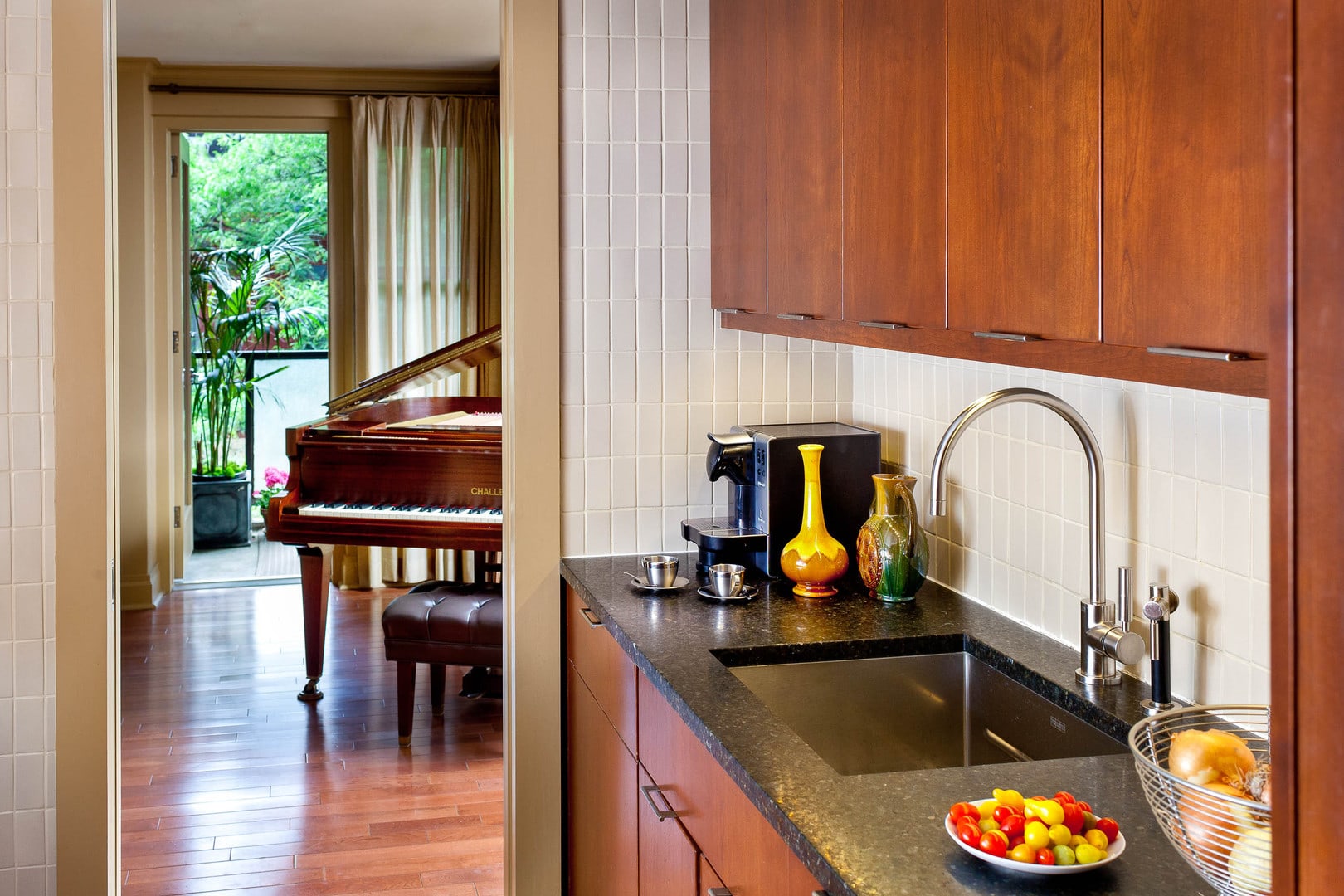
In the kitchen, Dresser ceramics and an expresso maker have pride of place on the Uba Tuba counter. The couples baby grand piano appears though the doorway.

While the kitchen is diminutive, we managed to incorporate superlative appliances that speak to the clients love of all things culinary.

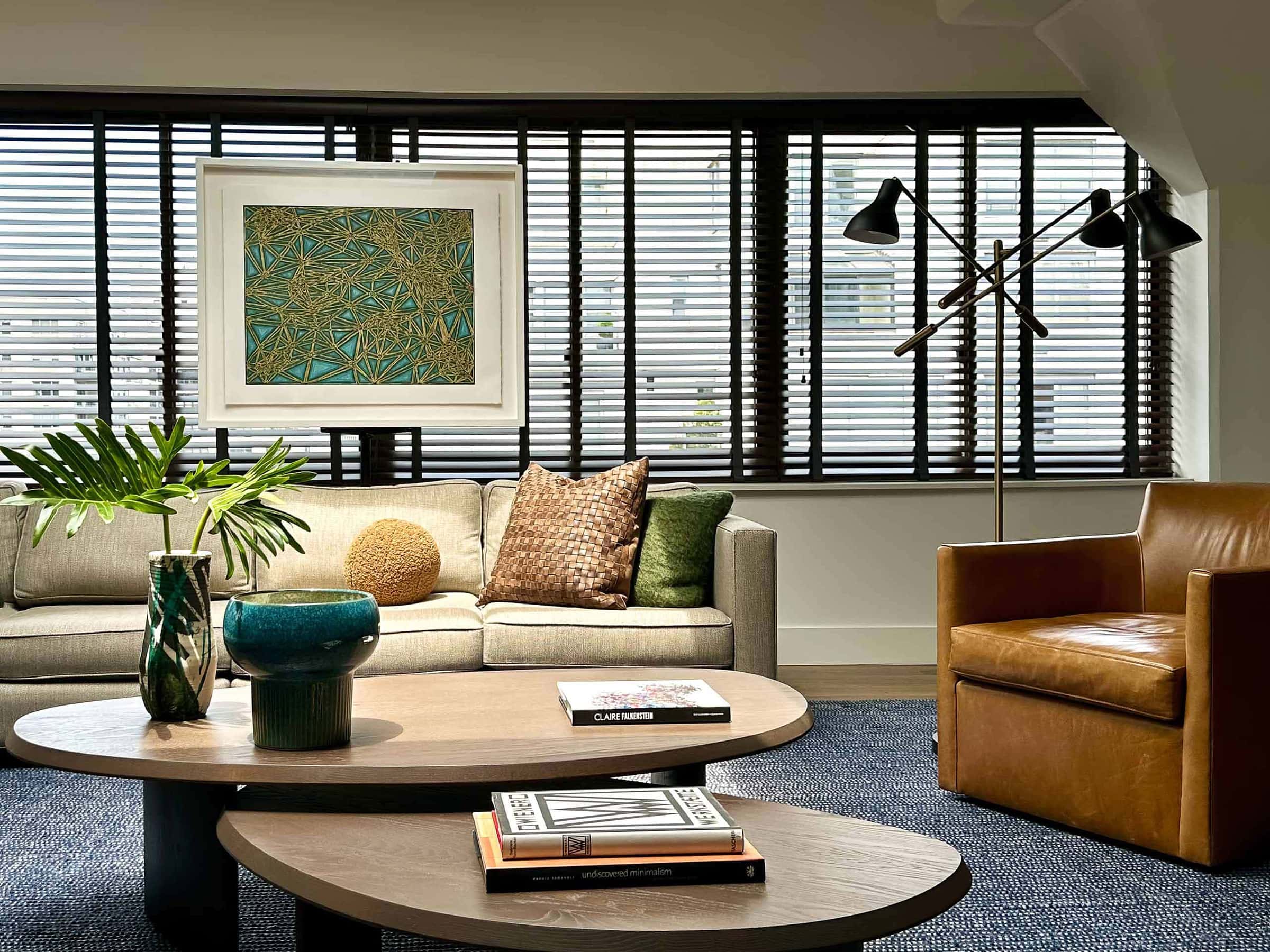
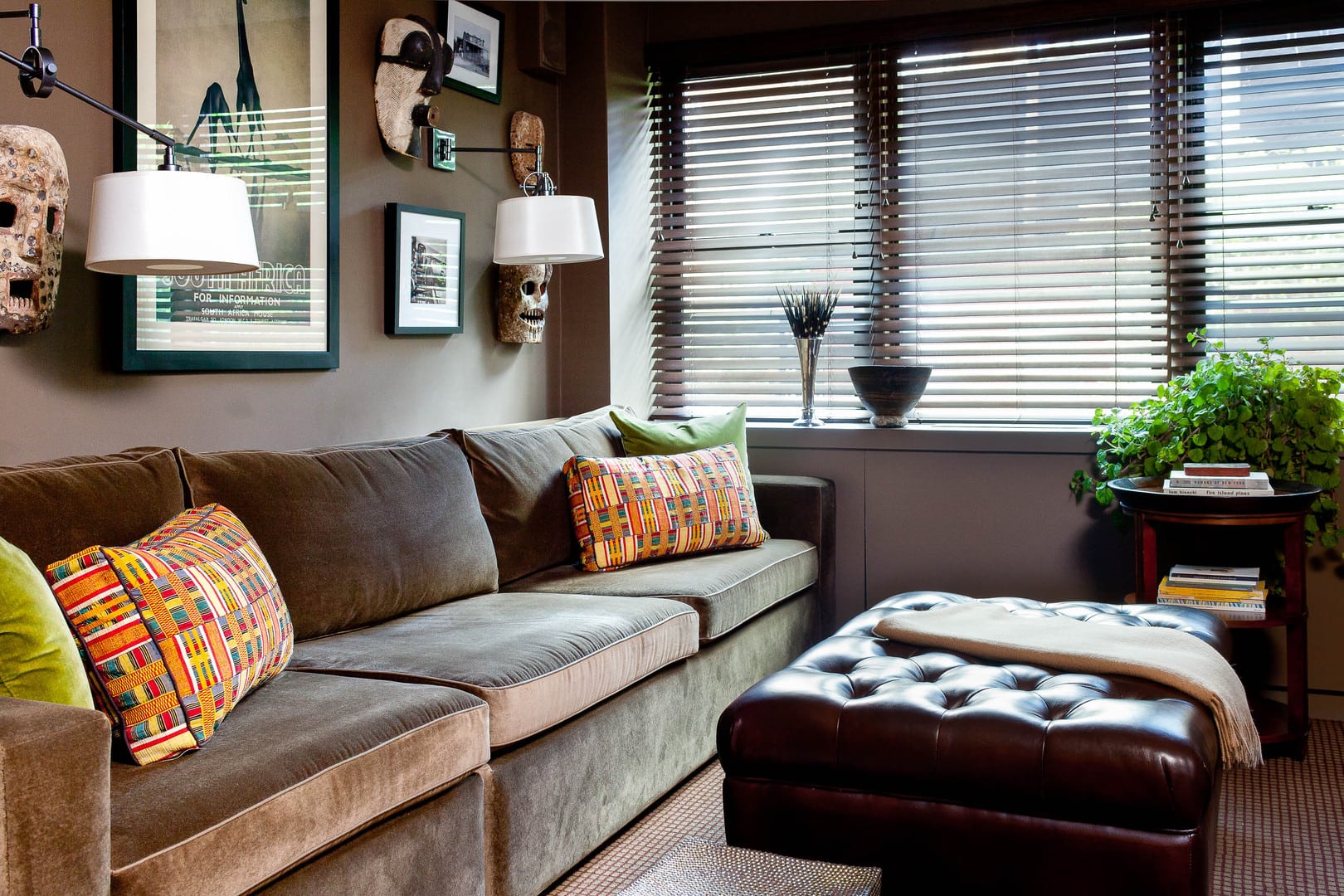
The den, painted in Benjamin Moore’s “Northwood Brown,” with dark wooden blinds at the window, is well lived in by the clients and their guests, who enjoy the comfort of a sleeper sofa upholstered in Holly Hunt velvet with pillows covered in vintage Kente fabric.

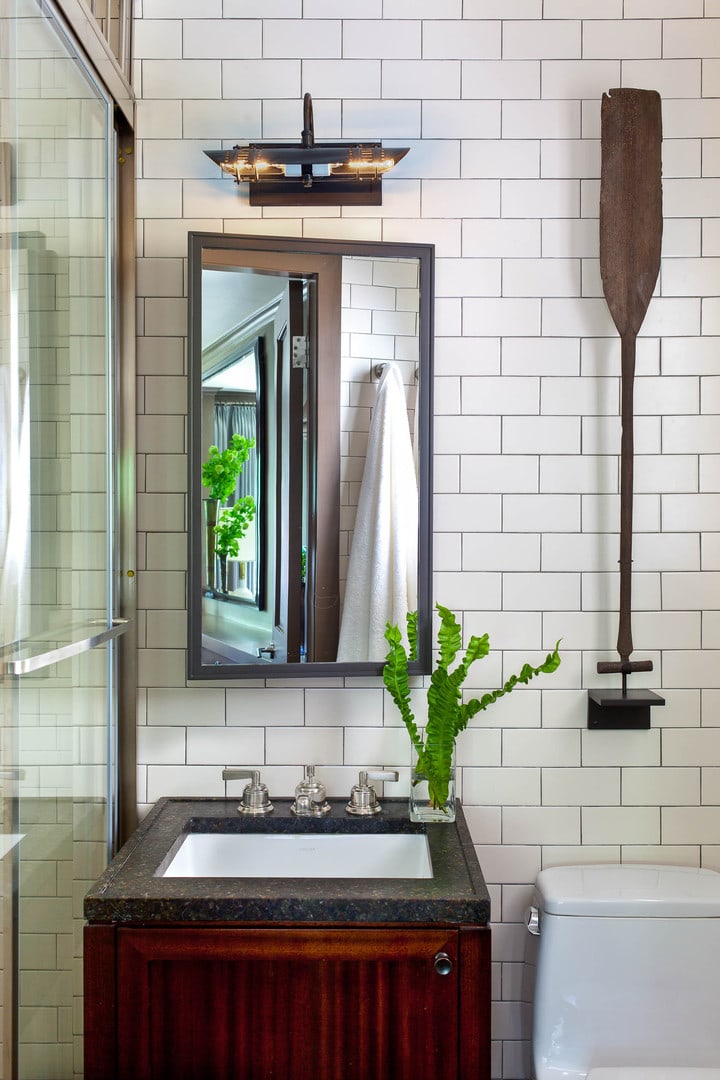
Bone-colored subway tiles create a ruggedly masculine environment, accented by the antique paddle mounted on a custom stand and an industrial sconce in steel and brass

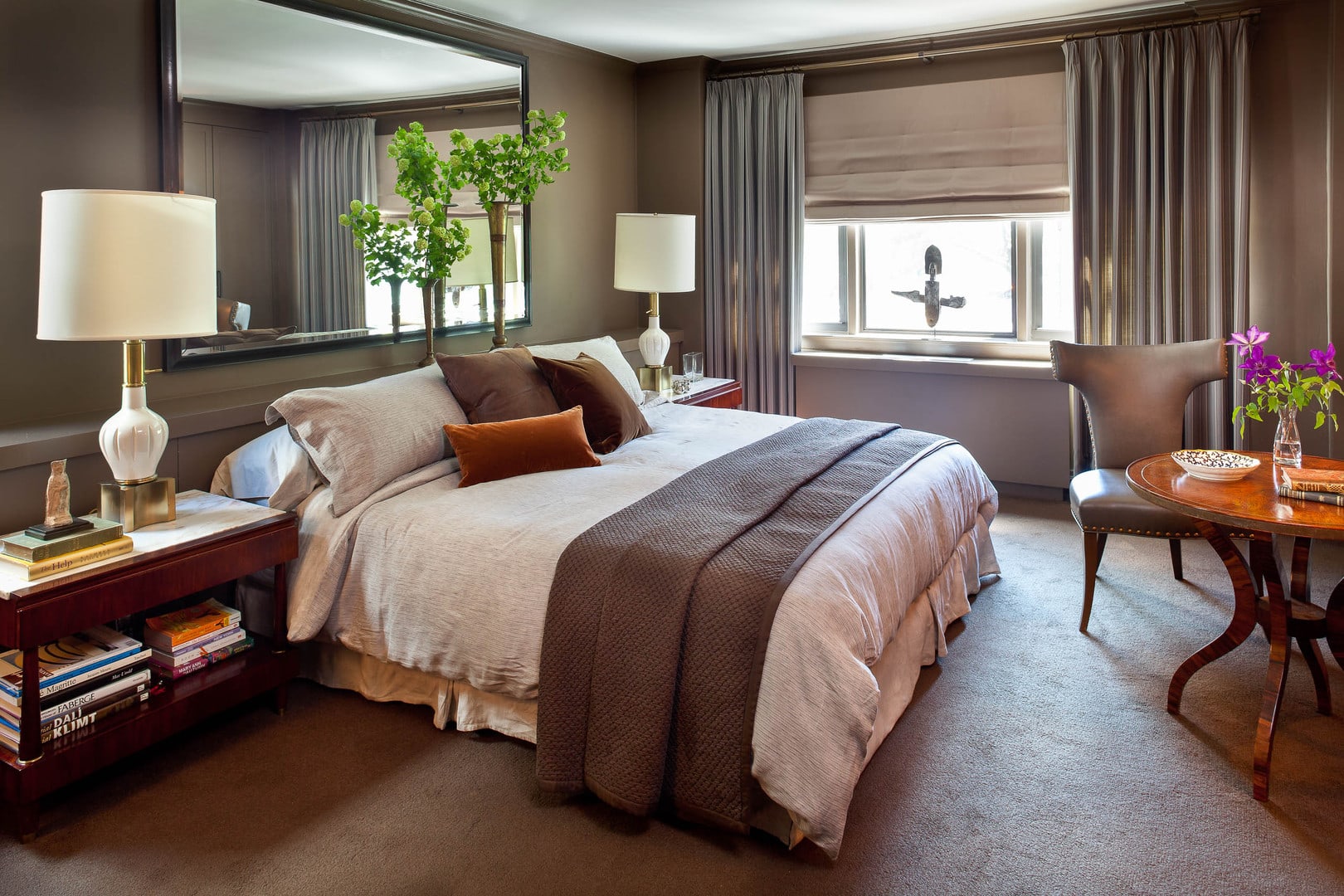
By removing part of a wall of closets, we created a little sitting and work area, with a banquette and midcentury table and lamp, like one would find in a good hotel. The bed skirt is of vintage washed Belgian linen; the bedding, from Aero. Walnut and marble nightstands are by Bert English, 1950s.

Senior Designer Craig Strulovitz
Photos by Gross & Daley

Chelsea Loft – NYC

CHELSEA – NYC

Chelsea Loft

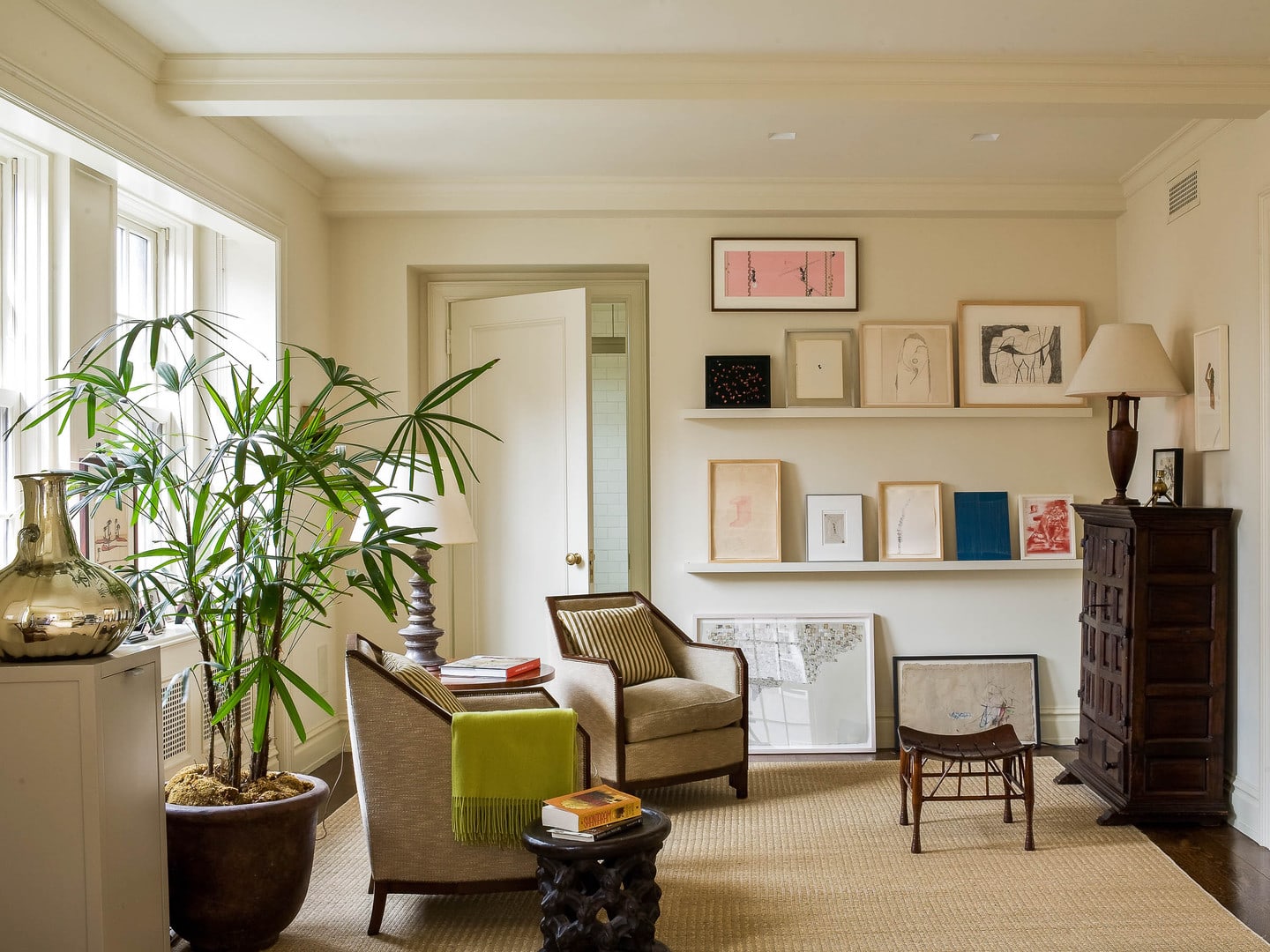
This loft in Chelsea, owned by Glenn Gissler, was a place of design ferment and experiment, an arena for working out long-held design convictions and exploring completely fresh modes of decorative expression. Deep wall colors create a rich, shadowy atmosphere in the main living room, yet other spaces are equally notable for bursts of natural light, a chiaroscuro that informs all of Glenn’s work.

Collections of photographs and contemporary works on paper abound, along with piles of art and design books. We see certain Gissler signatures– Rietveld’s Zig-Zag chair; Christopher Dresser’s metalwork and green-glazed pottery–but there are new artistic elements as well. A Frank Stella black print from the 1970s vies with a plethora of stark, moody near-abstract black and white photographs. The loft represents a tension between the stability of well-loved furniture and objects and the restless desire for new knowledge which is the lot of every true collector and connoisseur.

Amidst experiment, Glenn did not stint on comfort, which is, as much as his devotion to art, a Gissler hallmark. Velvety tufted sectional sofas invite the guest to take in and assimilate the wealth of art and objets which fill this space.

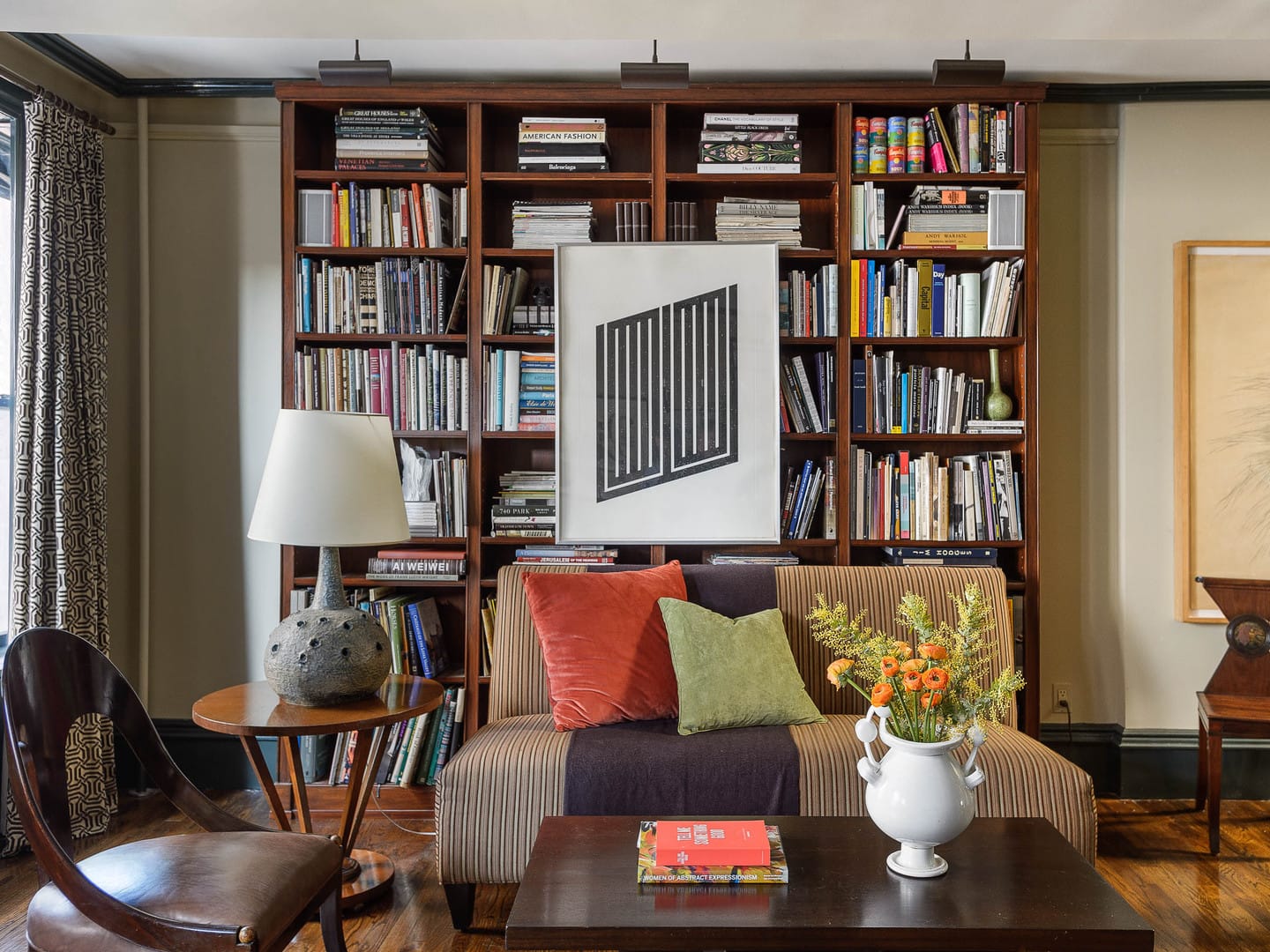
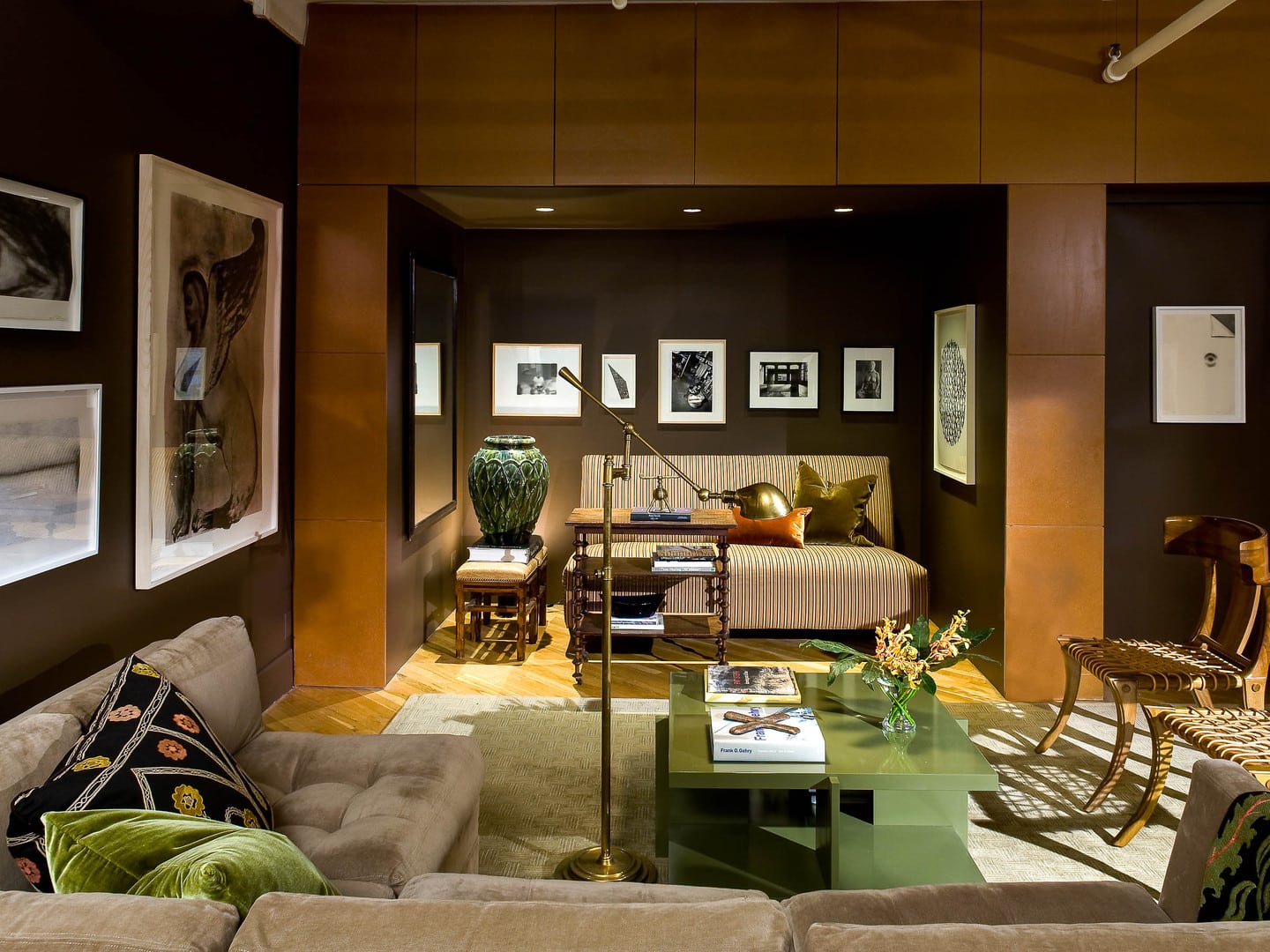
A favorite striped sofa is ensconced among a huge green urn and brass candlesticks, both by Christopher Dresser. On the wall, vintage and contemporary photographs invite closer scrutiny.

A broader view of the living room reveals subtly lacquered surfaces. The asymmetrical coffee table is the color of snap peas; the walls are a bitter chocolate reminiscent of that used by Billy Baldwin in his own famous apartment. Rope seated Klismos chairs by Robsjohn-Gibbings are muscular, yet sinuously feminine in outline.

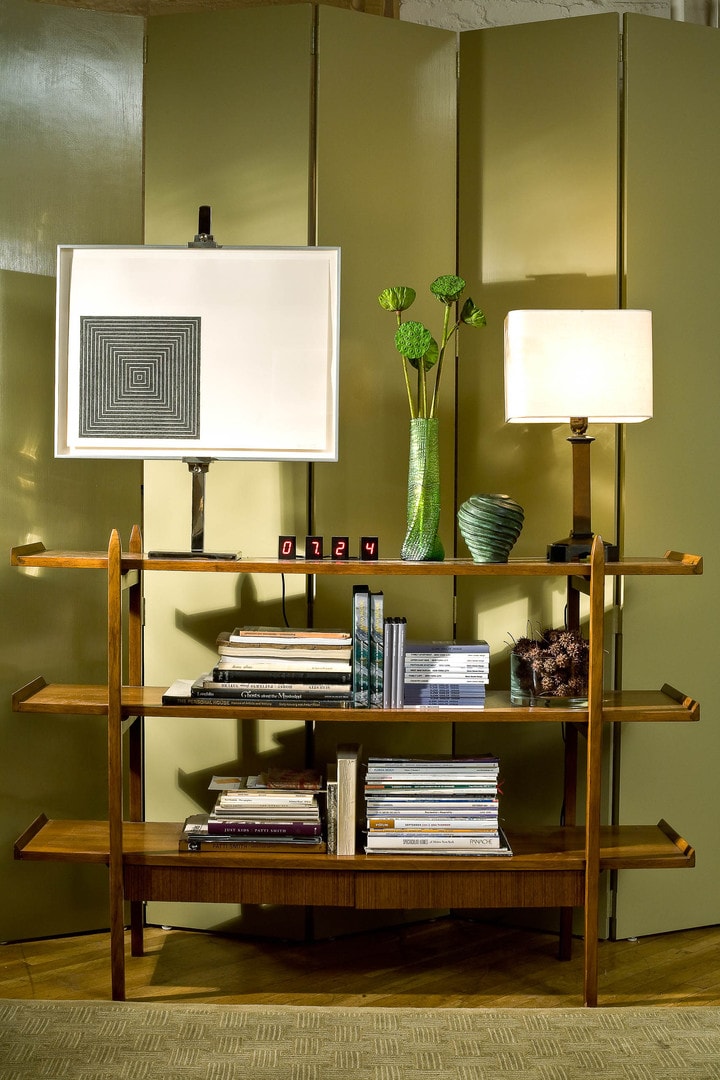
On a 1950s biomorphic etagere, a print from Frank Stella’s black period is displayed on a modern stand; assorted green pottery completes the tableau.

A massive Arts and Crafts oak dining table is surrounded by chairs with distinctive X splats. White-washed brick walls create a light space.

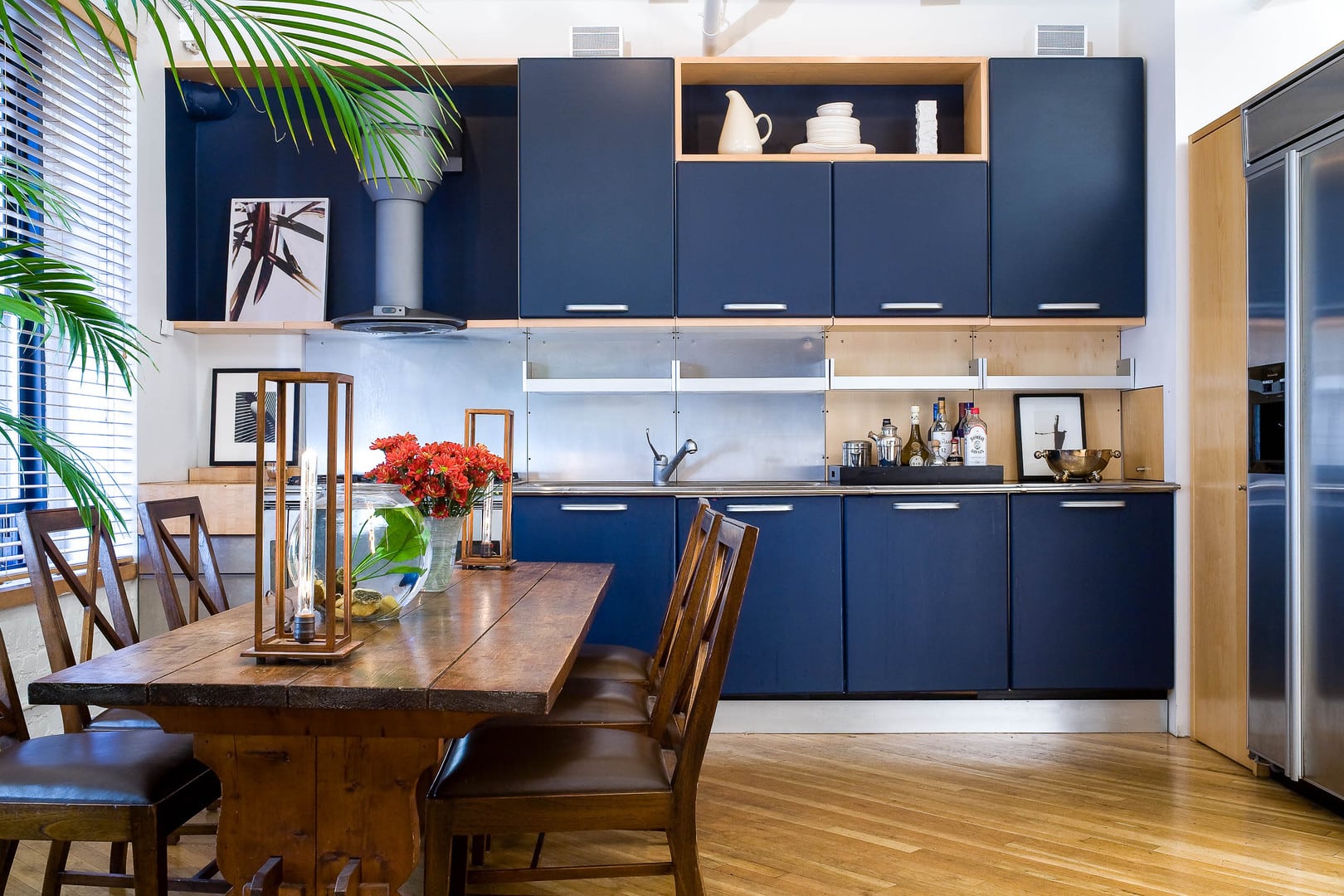
Kitchen cabinets are lacquered elegant blue-black, displaying a collection of creamy white wares by Russel Wright.

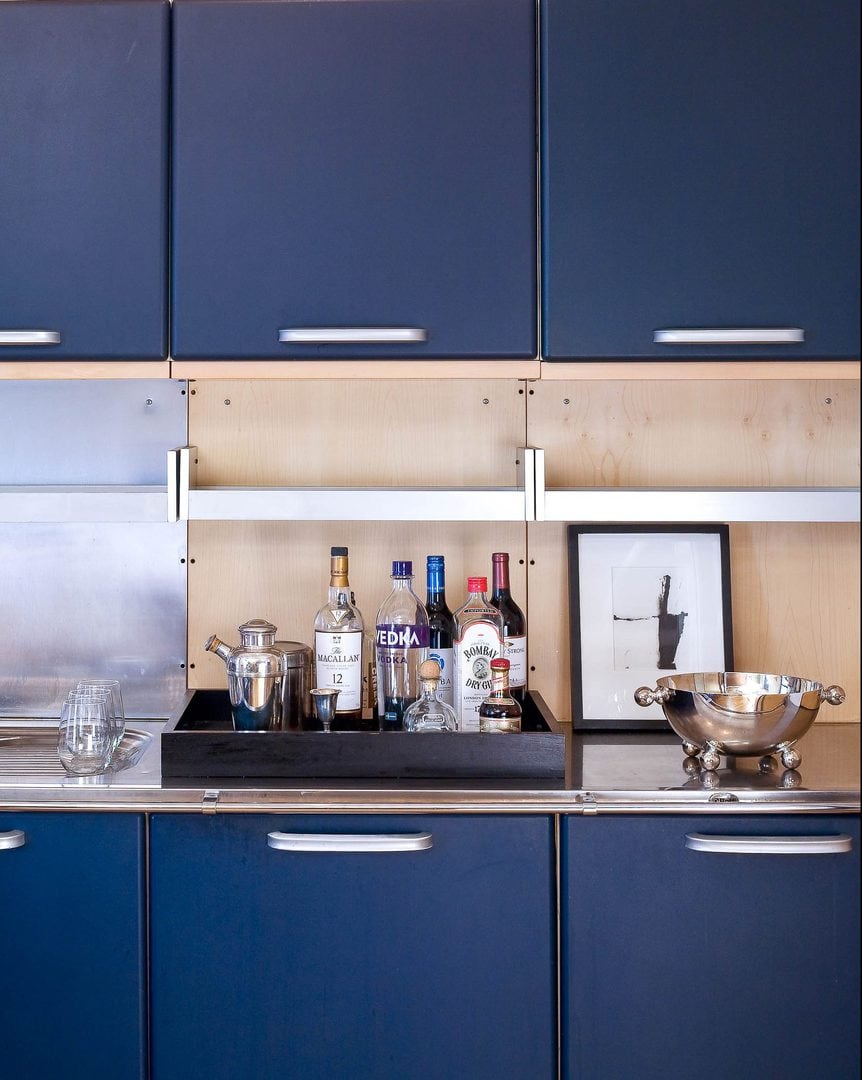
In the kitchen, an improvised bar beckons. Silver bowl is by Wiener Werkstatte designer Josef Hoffmann.

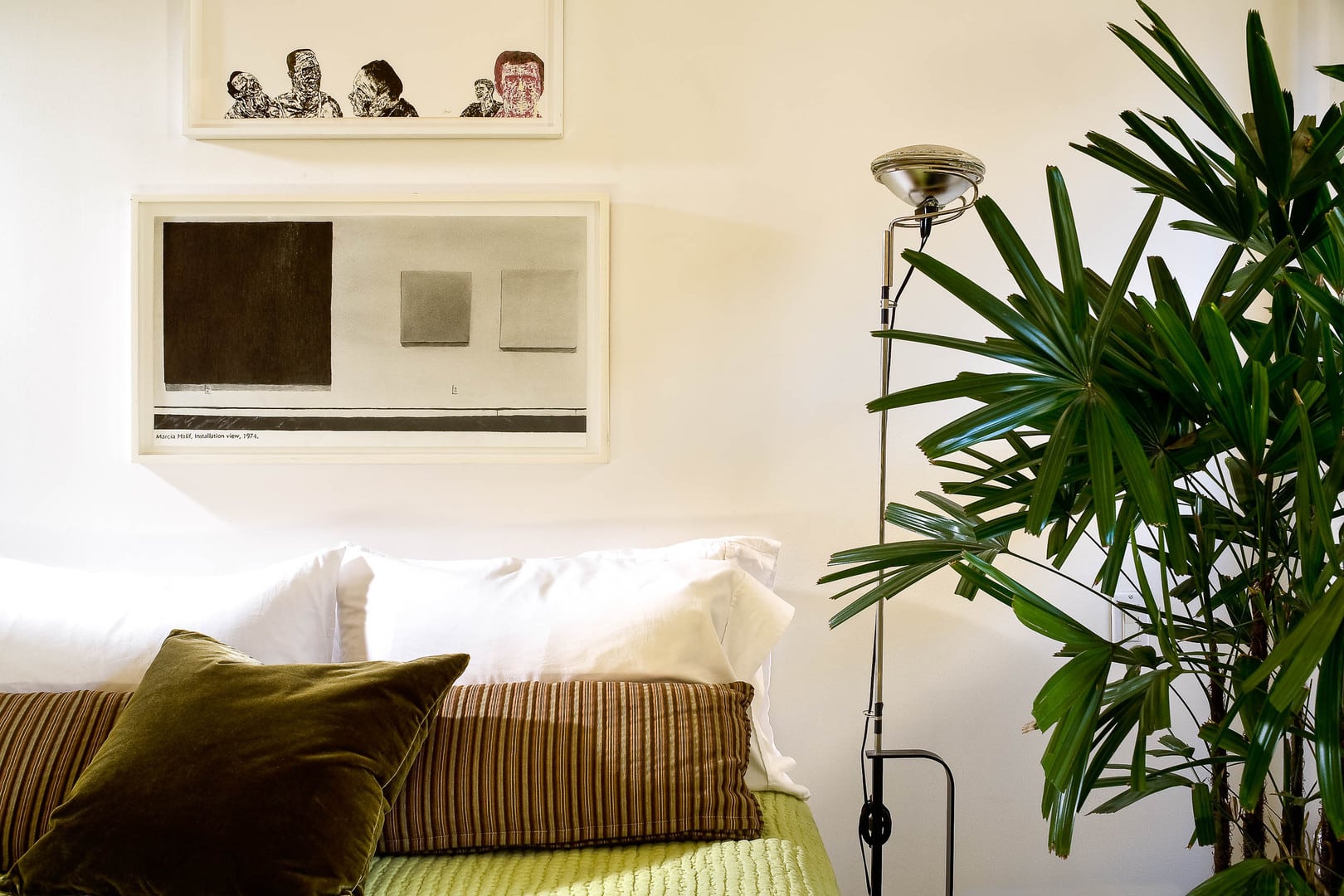
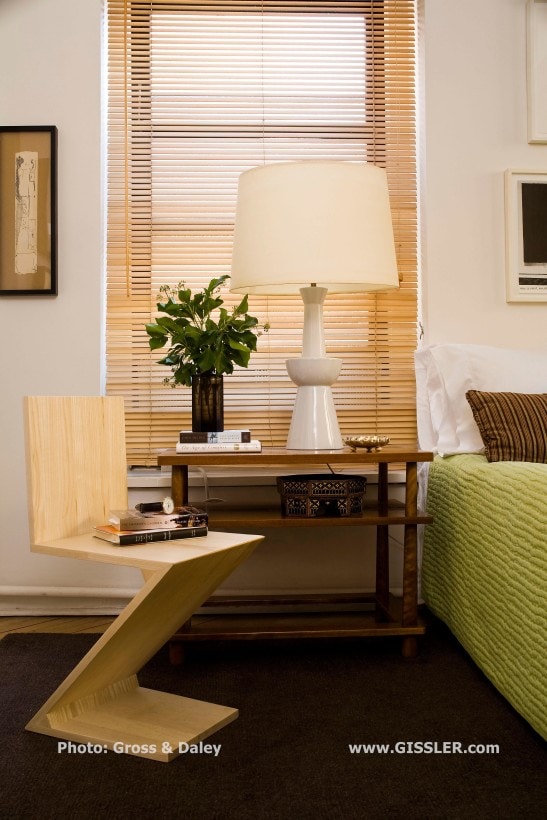
In the bedroom, a light palette, of white and apple green.

Natural wooden blinds, the color of chopsticks, emphasize the lightness of the bedroom, along with Rietveld’s Zig-Zag chair.

An impossibly slender Tiffany candlestick and two ancient fragments of Buddhas, along with a spiky bit of a shark’s jaw create an ambiguous yet contemplative shrine.

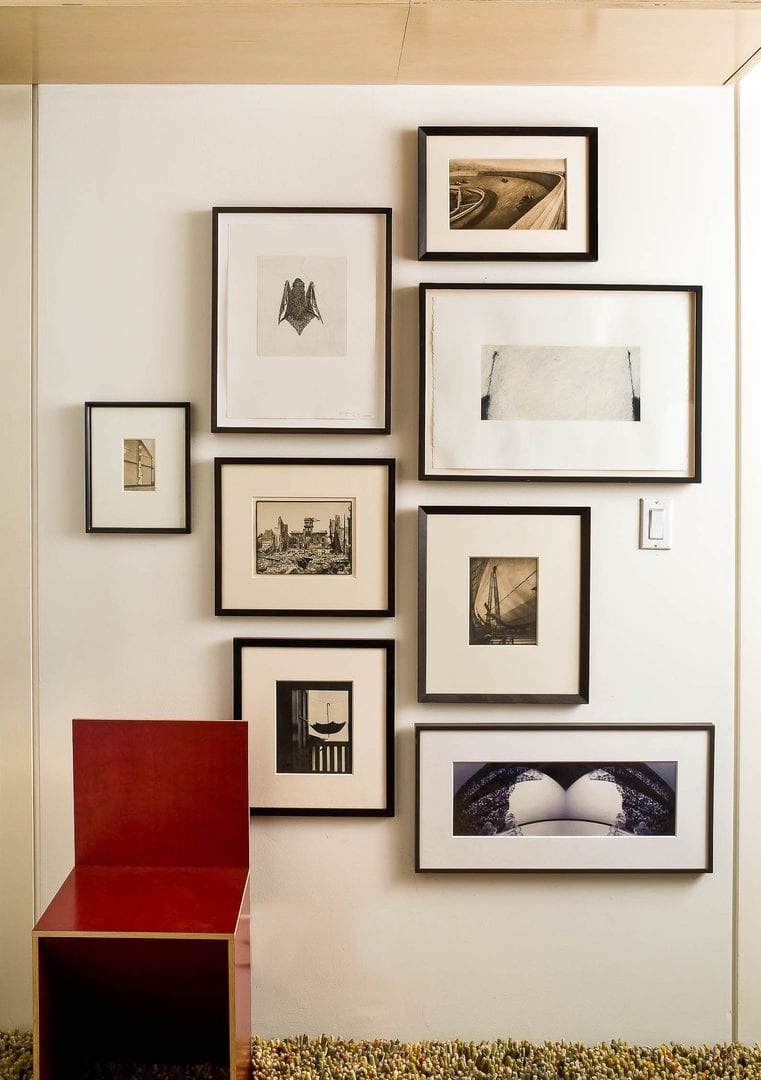
A chair by artist Donald Judd lacquered in dark red is juxtaposed with a selection of contemporary art.

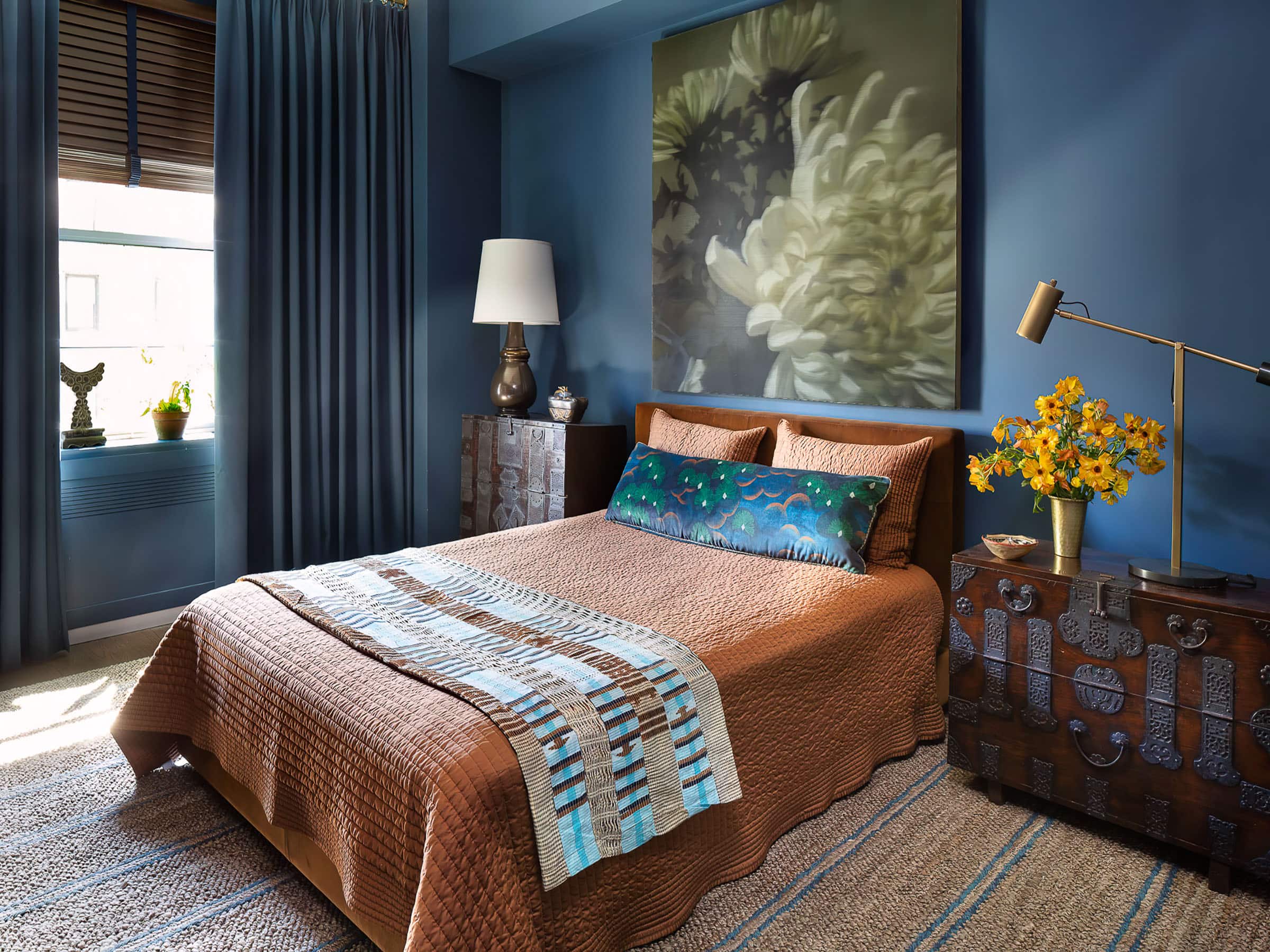
A medley of browns: the whole-wheat color and texture of an upholstered chair; the chocolate of the wall-color; and a striped pillow in shades of golden brown.

In the bathroom Glenn used a vivid cobalt blue worthy of Mondrian as a backdrop for a photographs.

Senior Designer Craig Strulovitz
Photos by Gross & Daley

Summer House – Hamptons

Remsenburg, NY

Summer House Hamptons

For a large, newly-built house near Westhampton Beach, our challenge was to forge dimension, texture and style through a sequence of architectural interventions. By adding more windows we created a symmetry to the elevations which had been missing; replacing sliding doors with French doors augmented the atmosphere with dignity.

Our goal was not to encrust a contemporary house with period ornament, but to lend it the time-honored language of understated architectural detail, a way of accentuating and humanizing space.

The floors of the house were originally surfaced in a variety of materials, including tile, which made the rooms feel “chopped up.” To create an unbroken sense of flow–and warmth– from room to room, we installed dark wood floors throughout, using sea grass and sisal area rugs to further unify the rooms.

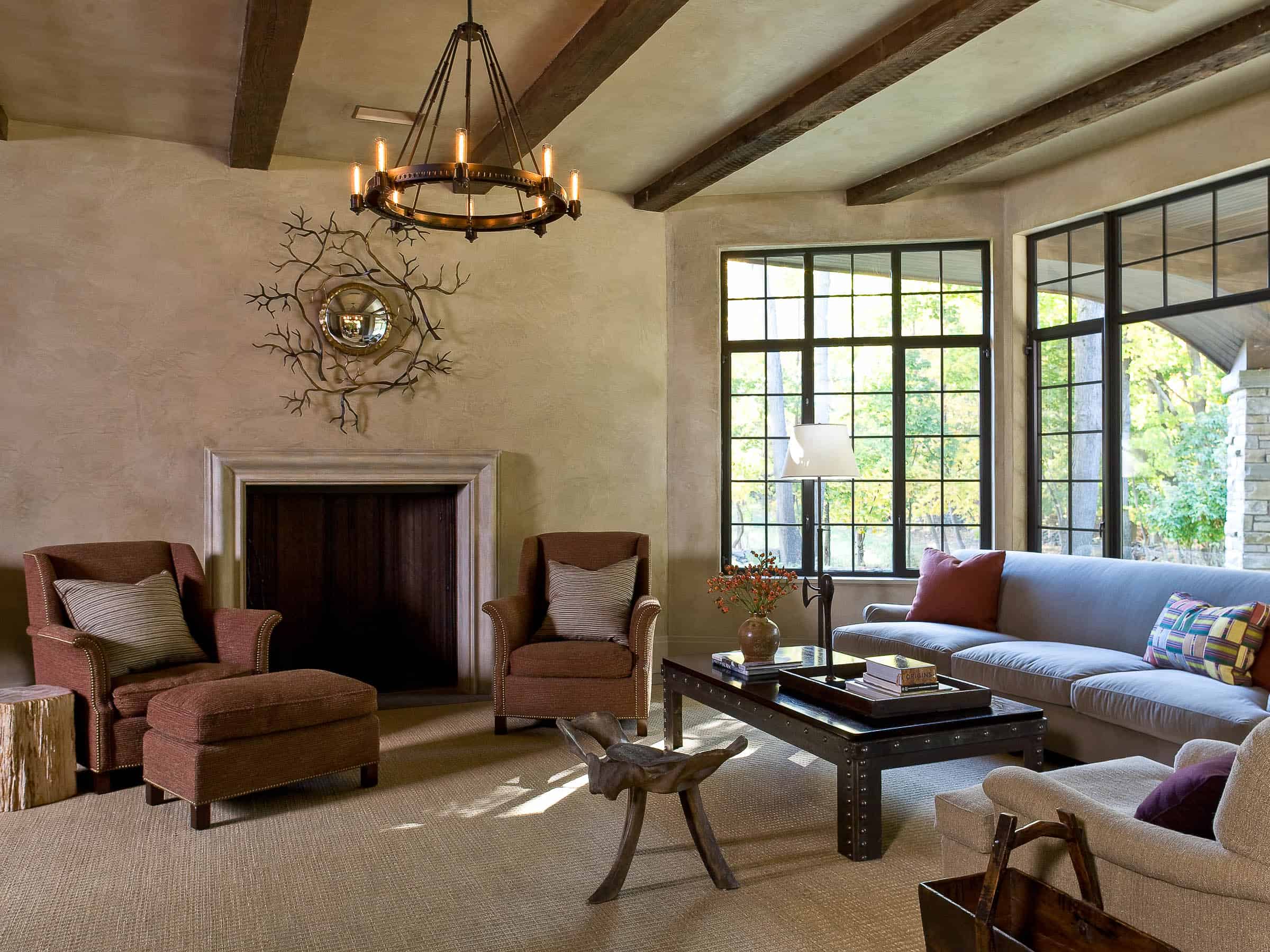
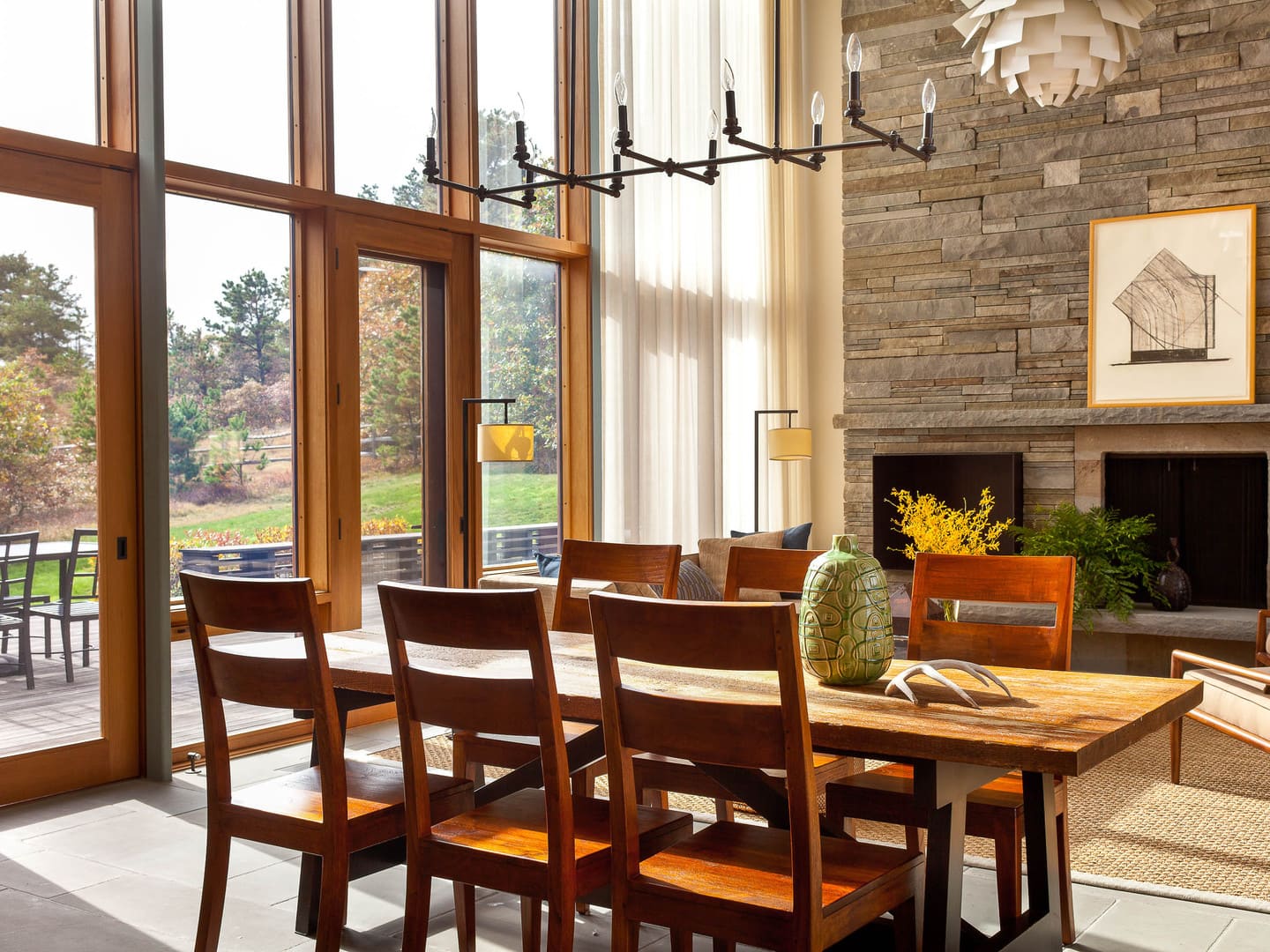
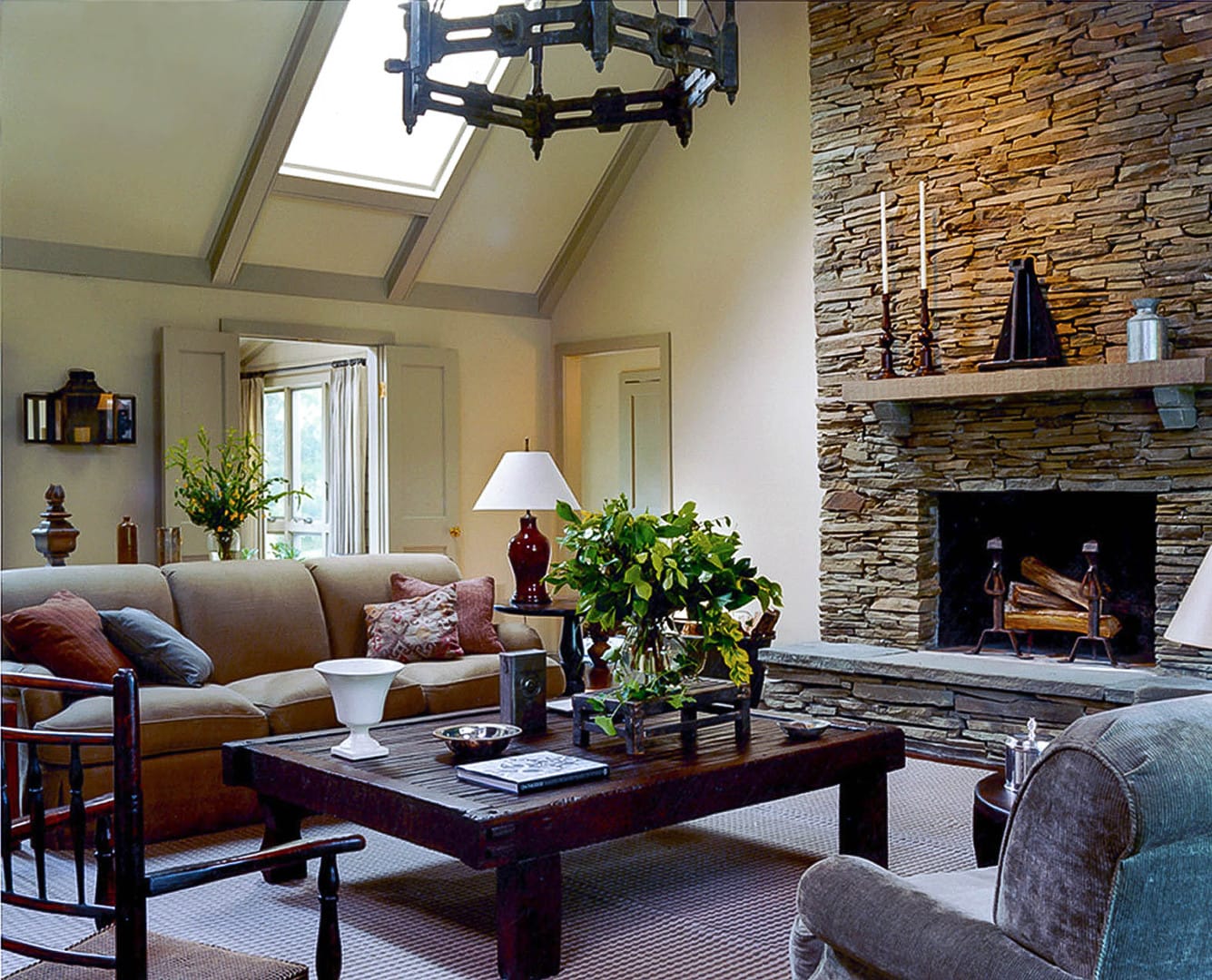
The double-height living room had a rather blank fireplace with a sheetrock surround. Using Connecticut fieldstone, we built a floor to ceiling surround using the “drystack” building method, in which no mortar is visible; the rough effect added shadows and texture to the space. A massive 19th-century wooden chandelier brings human scale to the 18-foot ceiling.

With the house itself thus reimagined, furnishing became a delightful enterprise of layering English and American 19th century antiques with pieces from South America, the Far East and India, including colonial styles. Warmth, materiality and restrained rusticity became the keynotes of this house, which now appears rooted and timeless, inside and out.

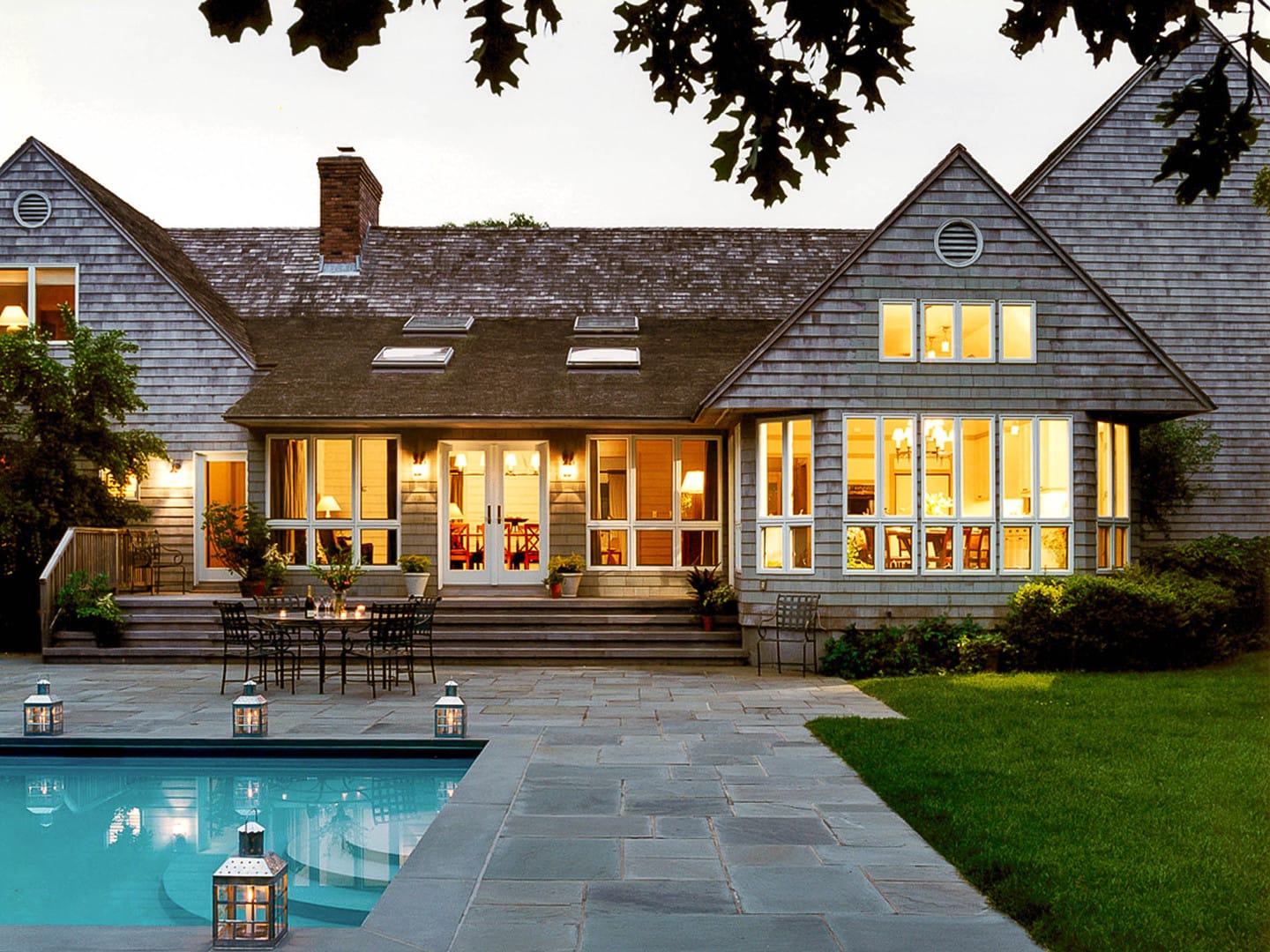
The blue-grey of the house’s exterior shingles is complemented by the use of bluestone surrounding the swimming pool, punctuated, in turn, by small gridded metal lamps.

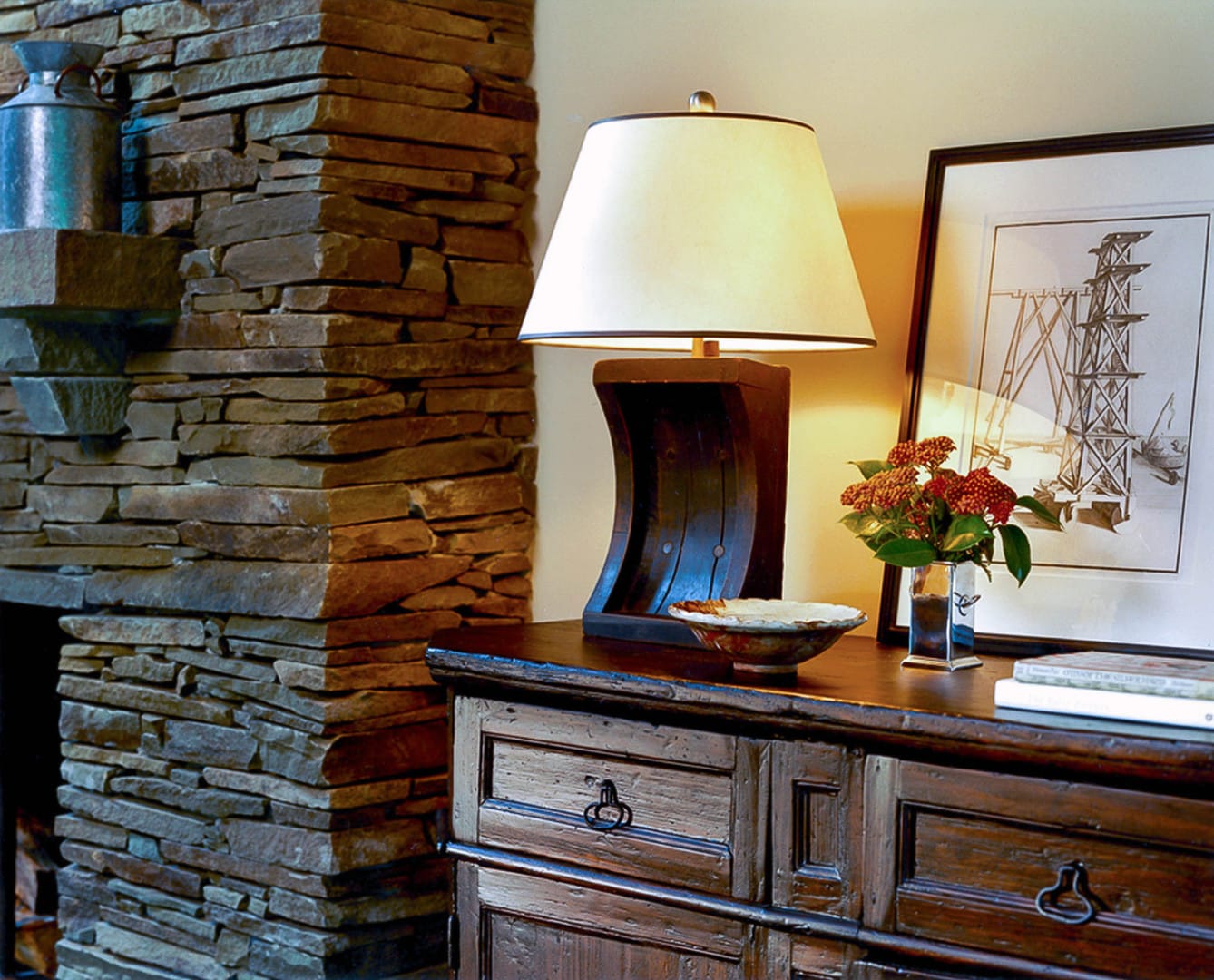
An old chest harbors a collection of objects evincing texture and interest, including the lamp, which we had cast, and an 18th century architectural engraving of an obelisk.

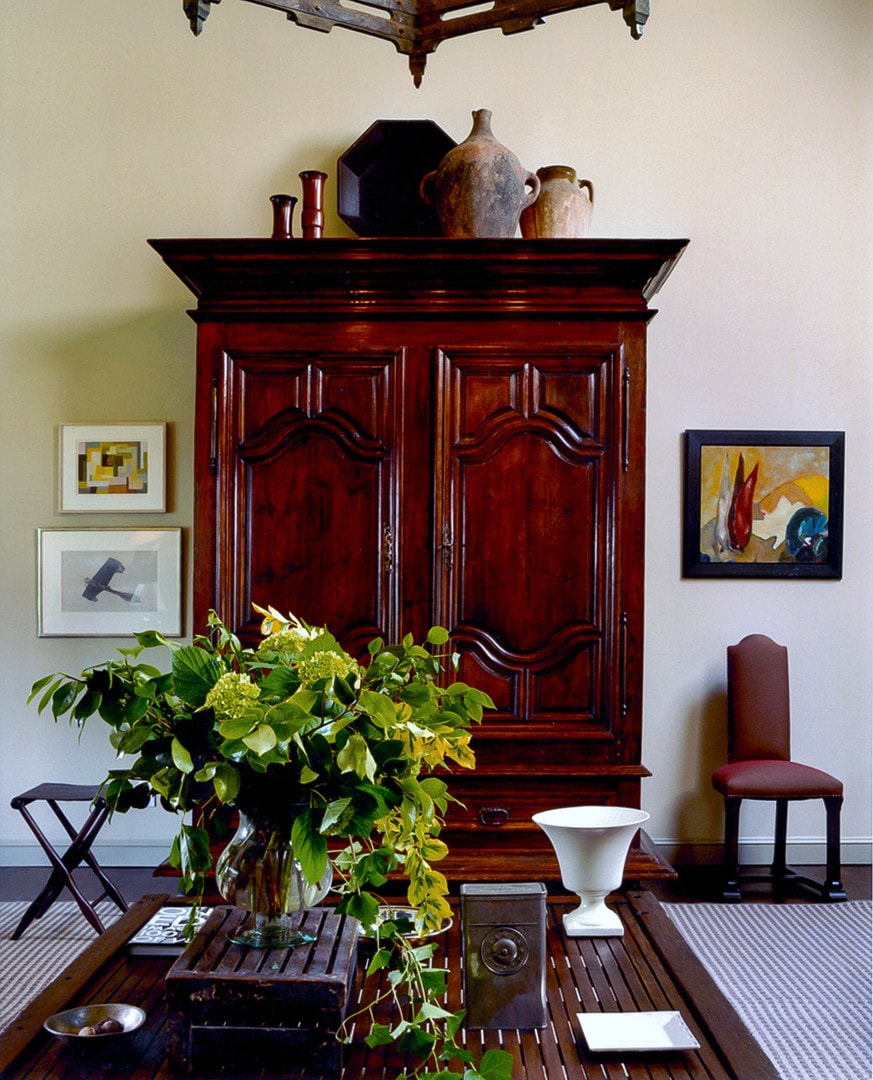
An 18th century Italian armoire, ten feet high, sheathes the family’s entertainment center and balances the fireplace on the opposite side of the living room.

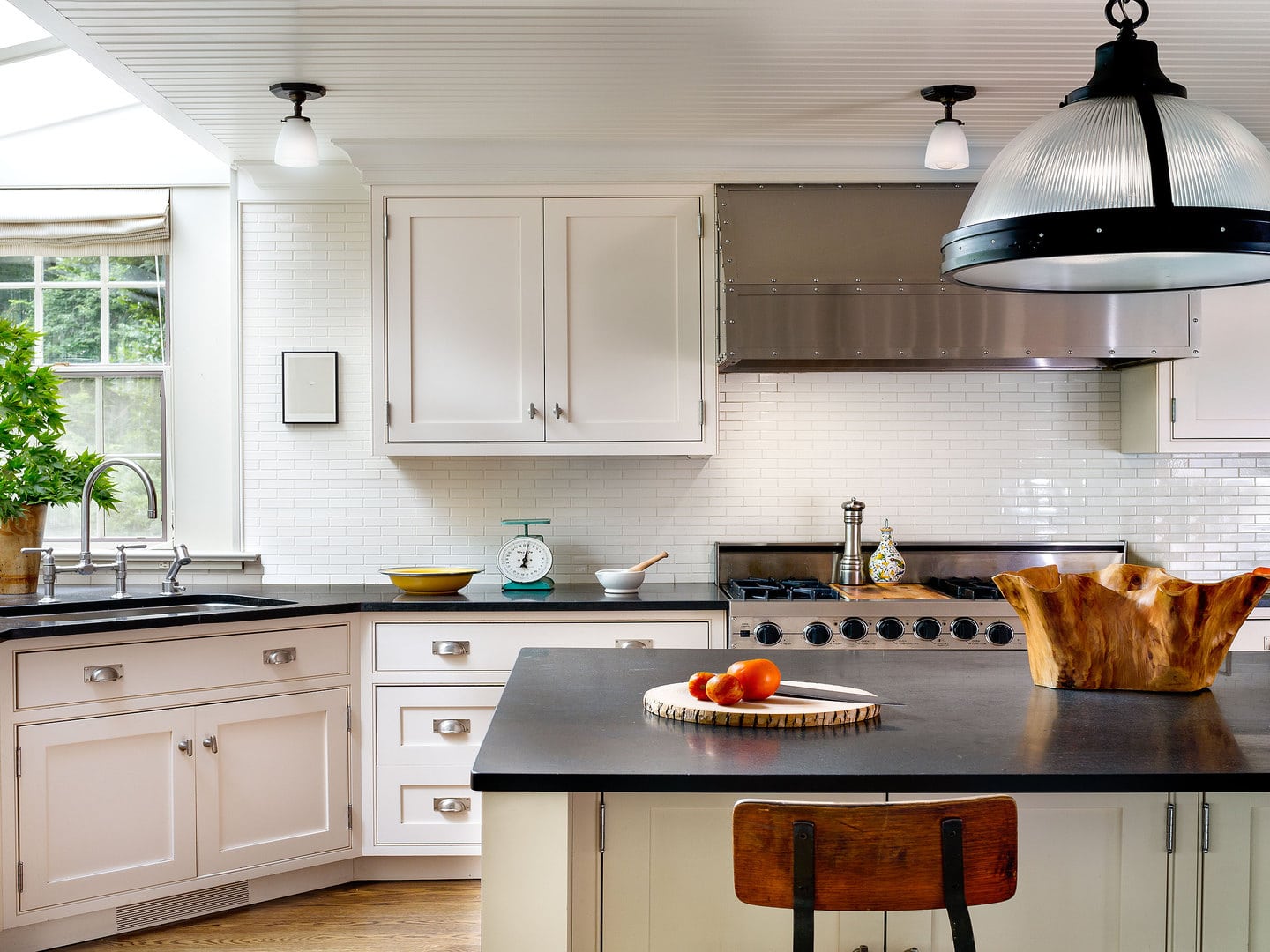
Dark wooden floors carry through into the kitchen, contrasting crisply with finely crafted millwork lacquered in off-white, and the taupe window frames of the double-height dining area.

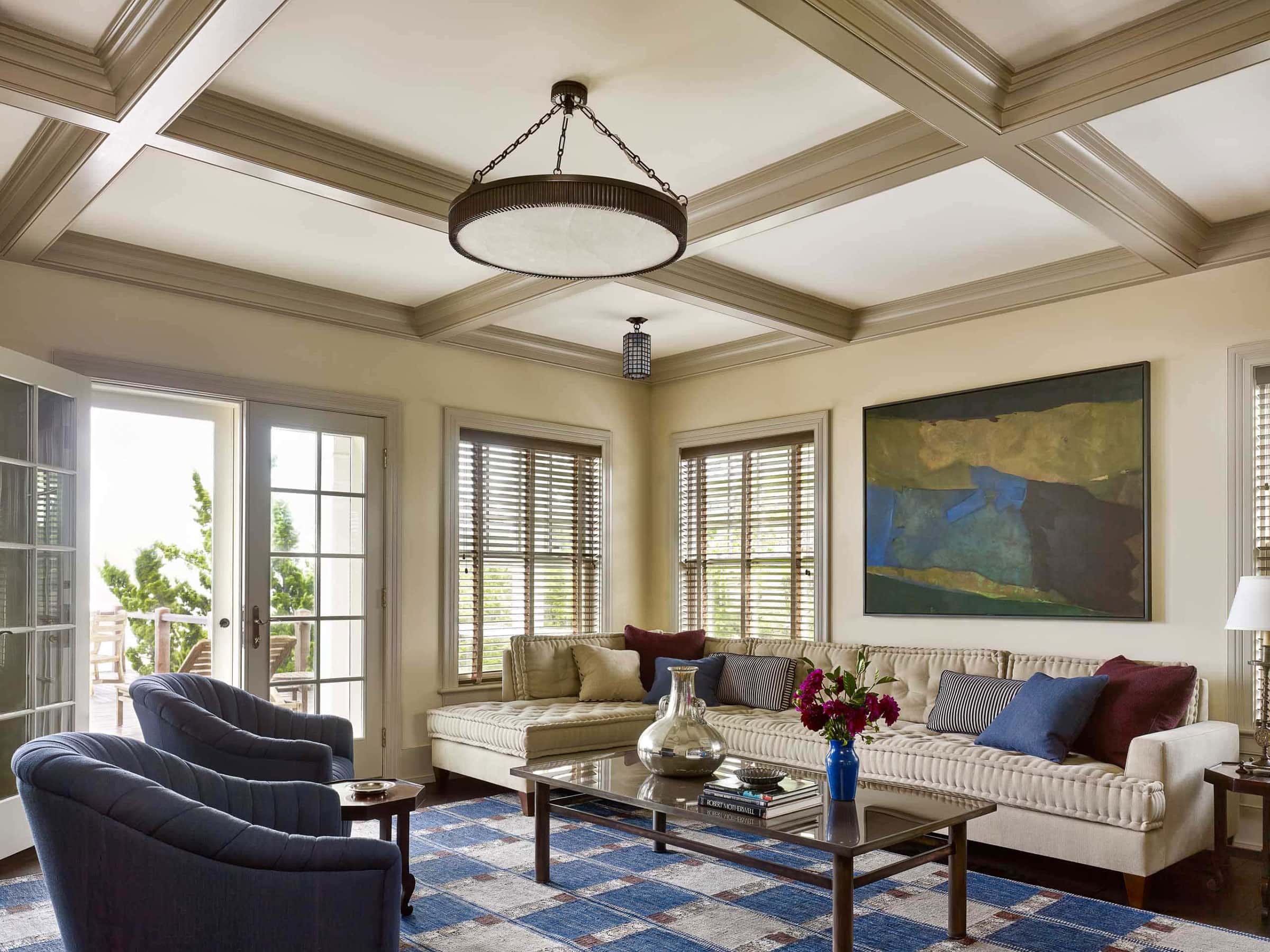
The double-height drystack fireplace, its hearth and mantelpiece made of slabs of bluestone, is a dominant organic element in the room, suggesting the earth tones of the upholstery fabrics: grey plush velvet, antique linen and leather. A heavy coffee table, a relic of the Raj, is counterpointed by a delicate William Morris Sussex chair. Traditional Shaker doors and moldings are painted a soft taupe.

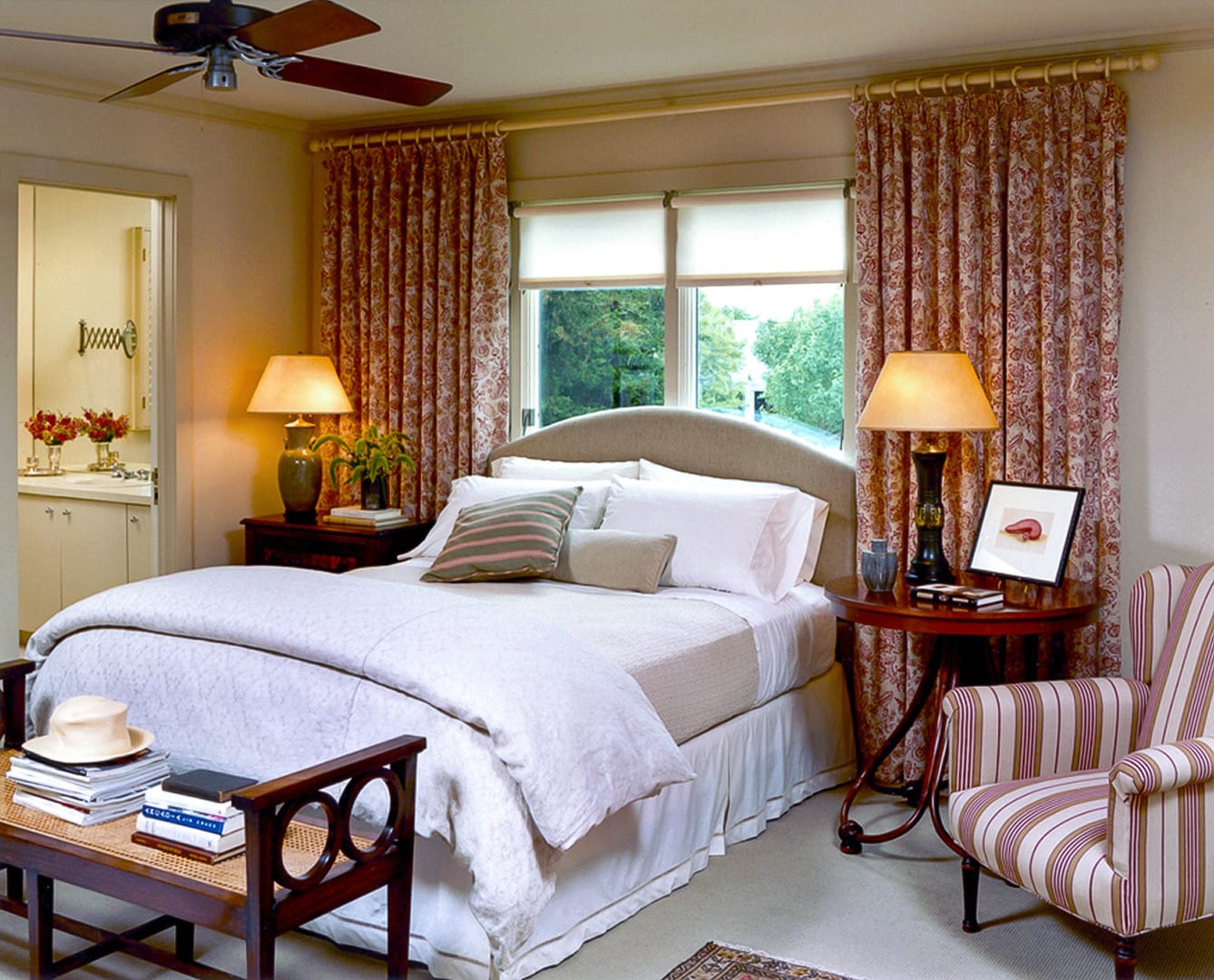
Regency rules in the master bedroom, with a caned bench at the foot of the bed. A comfortable armchair upholstered in maroon and white stripes and printed curtains of the same color heighten the 19th century atmosphere of the room.

Senior Designer Craig Strulovitz
Photos by Gross & Daley