Summer House – Hamptons

Remsenburg, NY

Summer House Hamptons

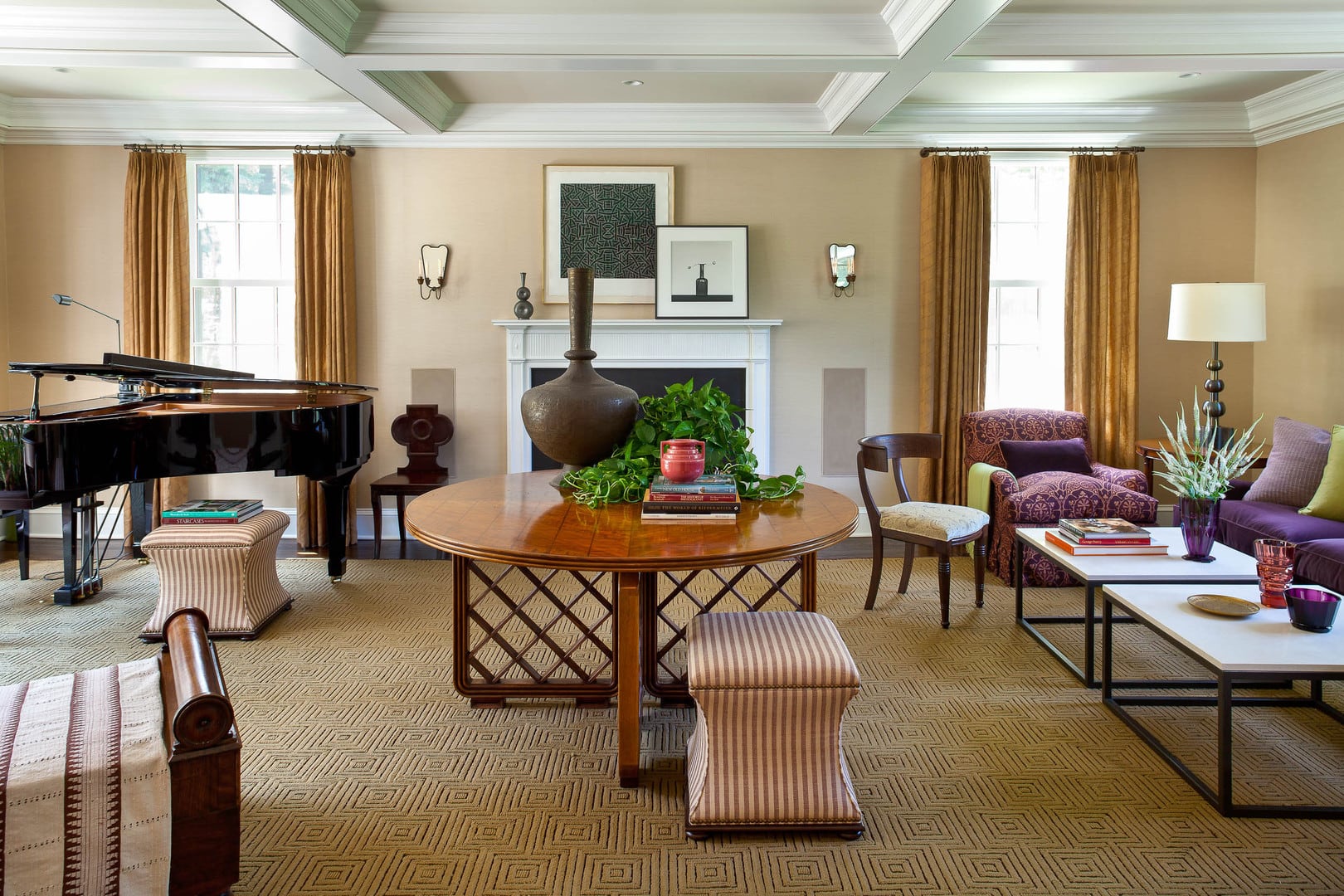
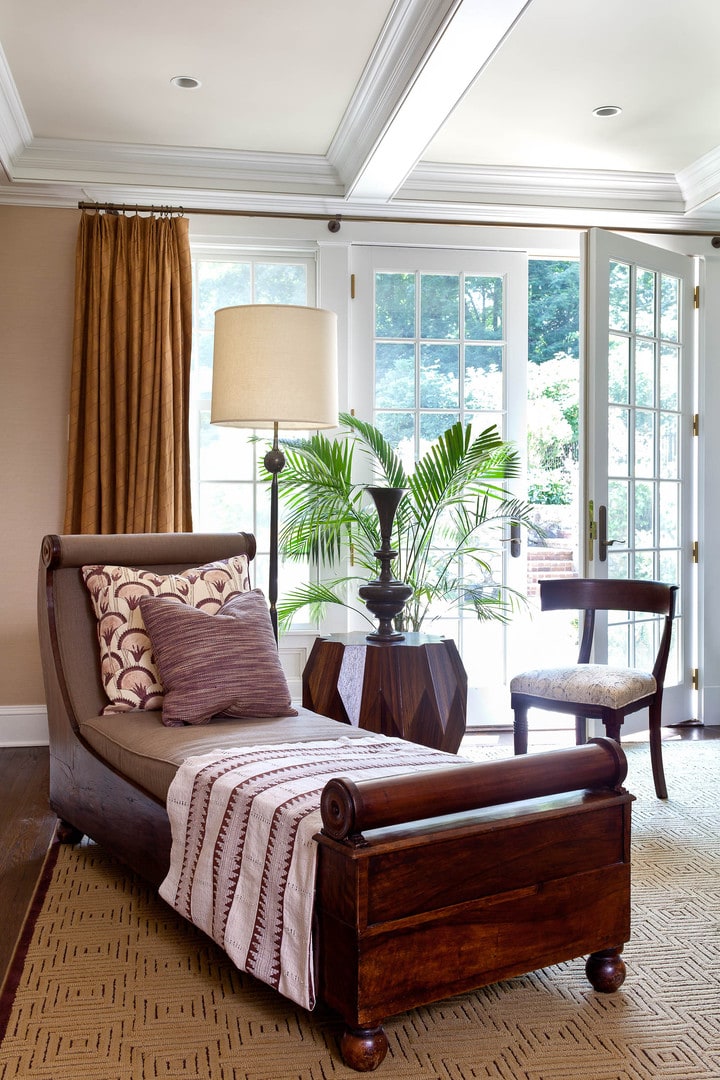
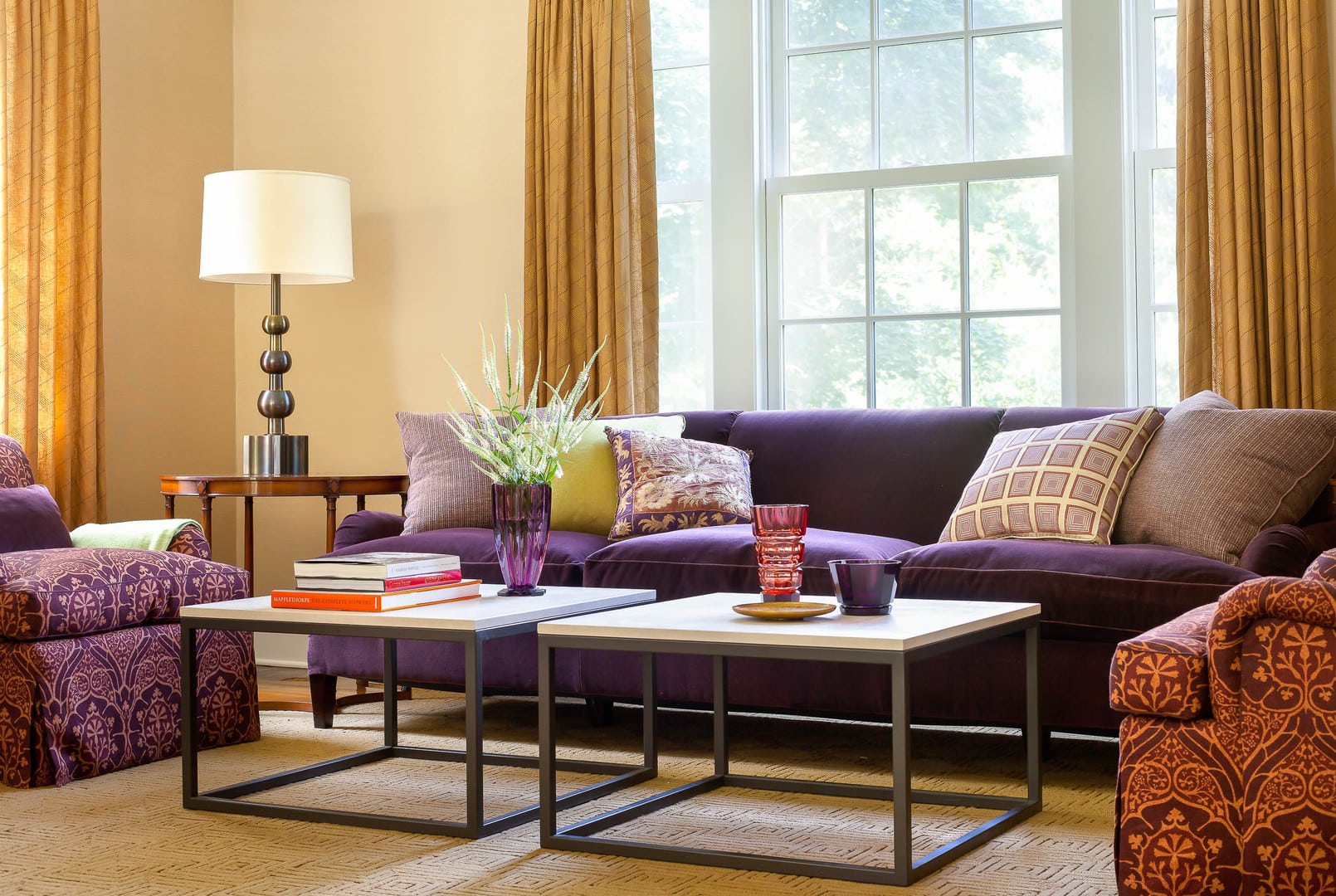
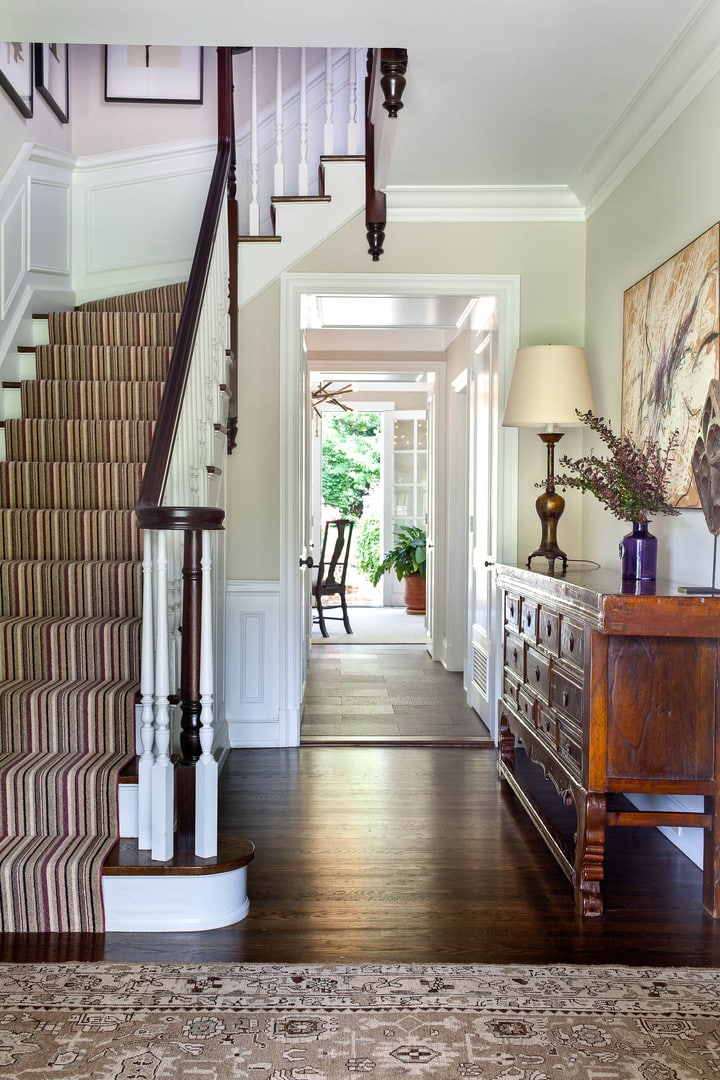
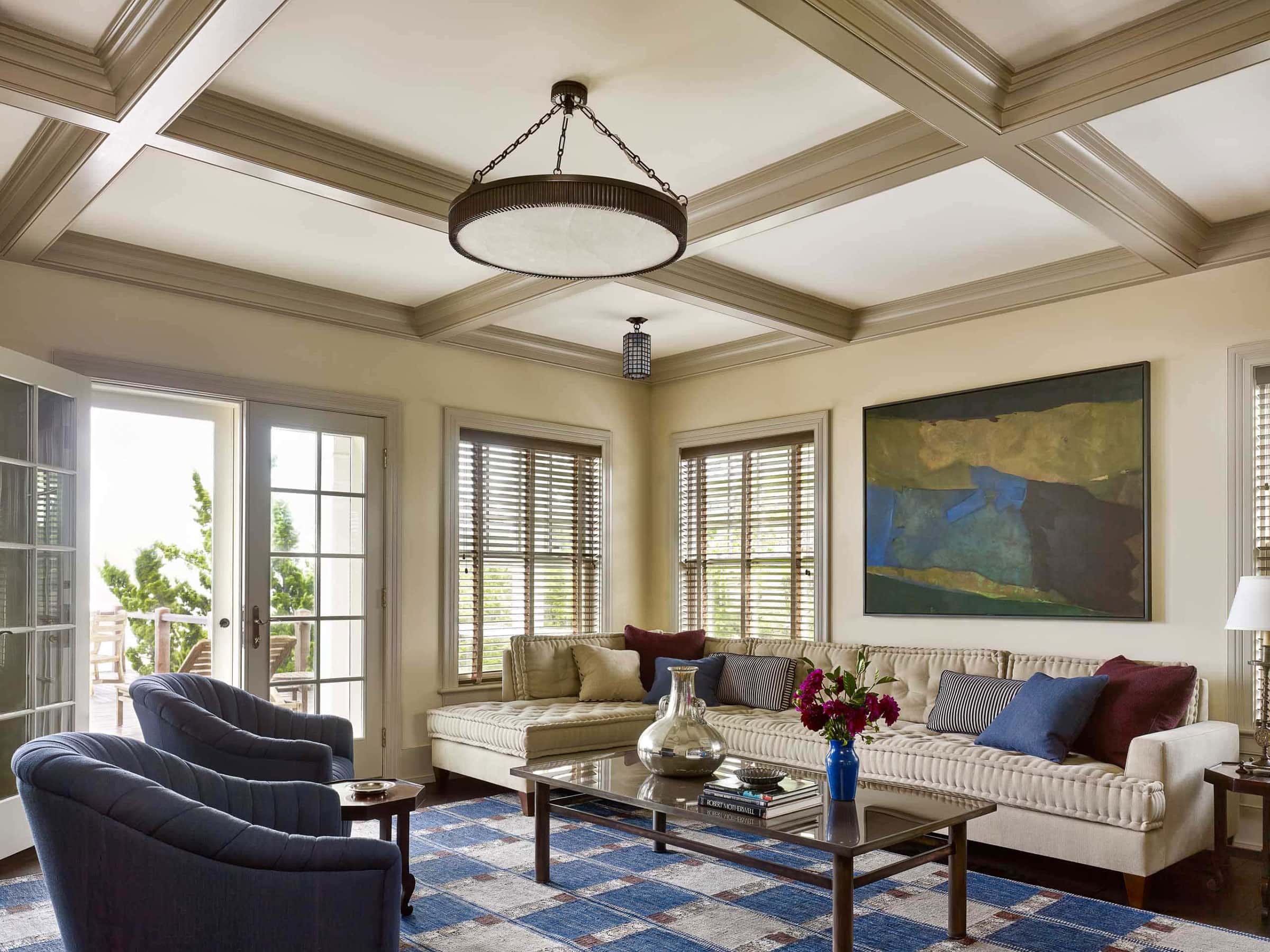
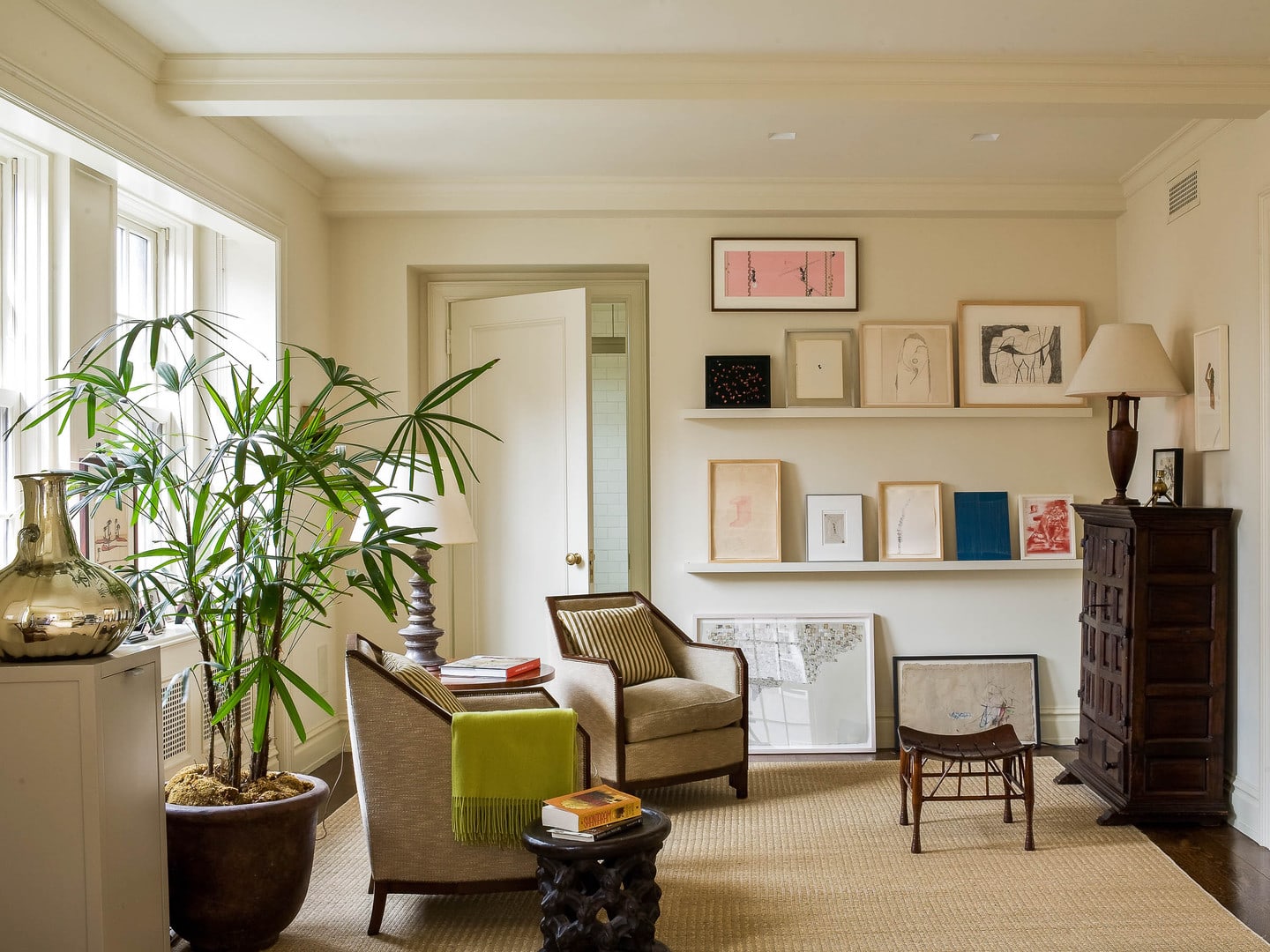
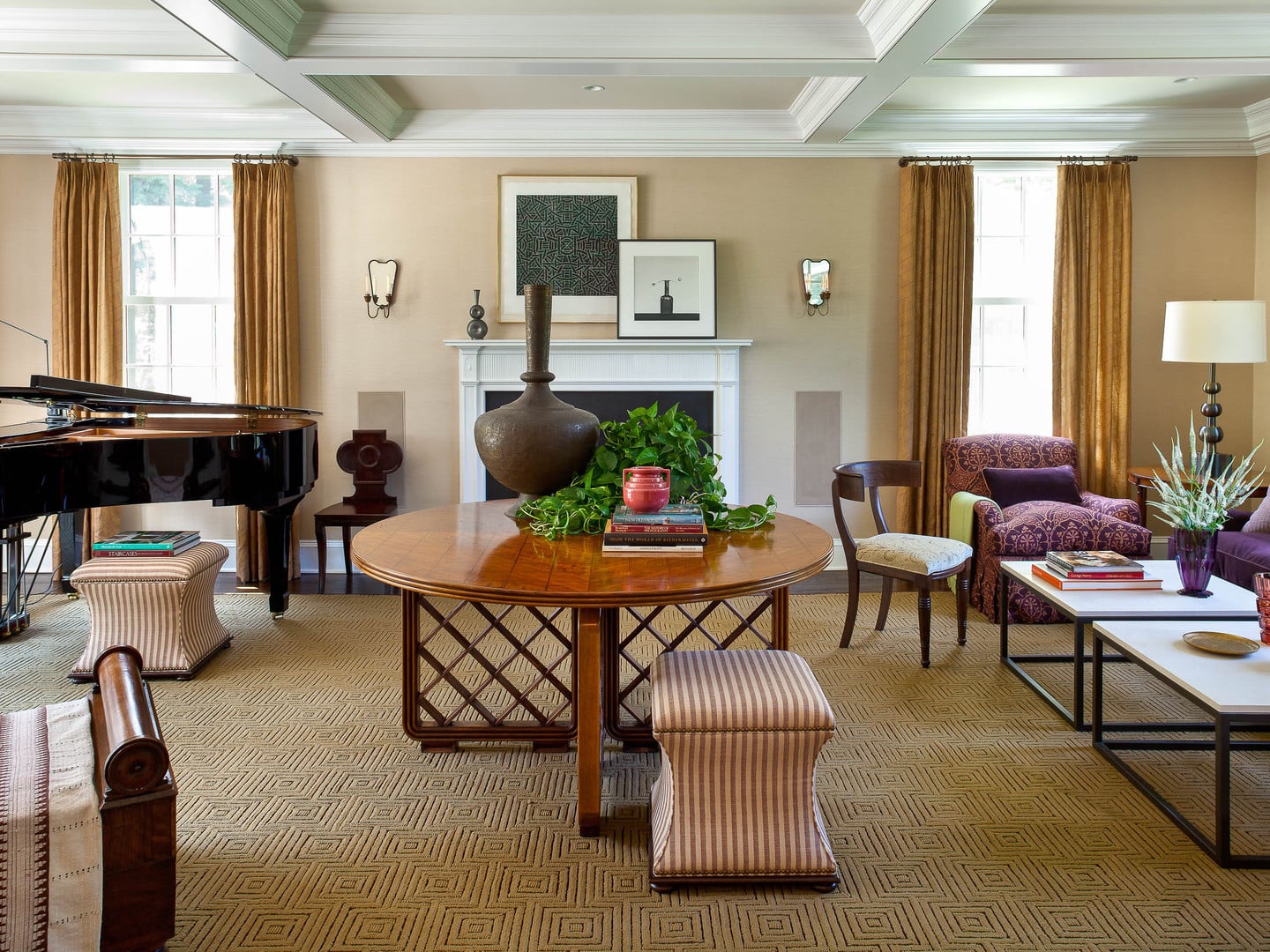
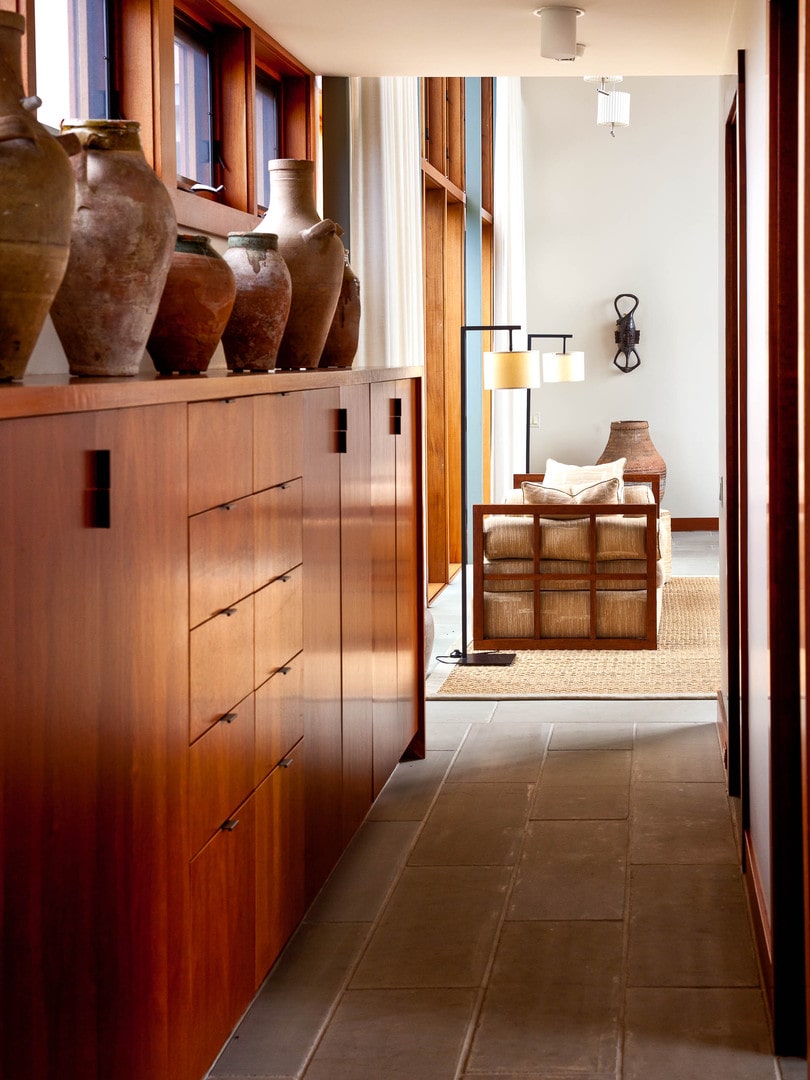
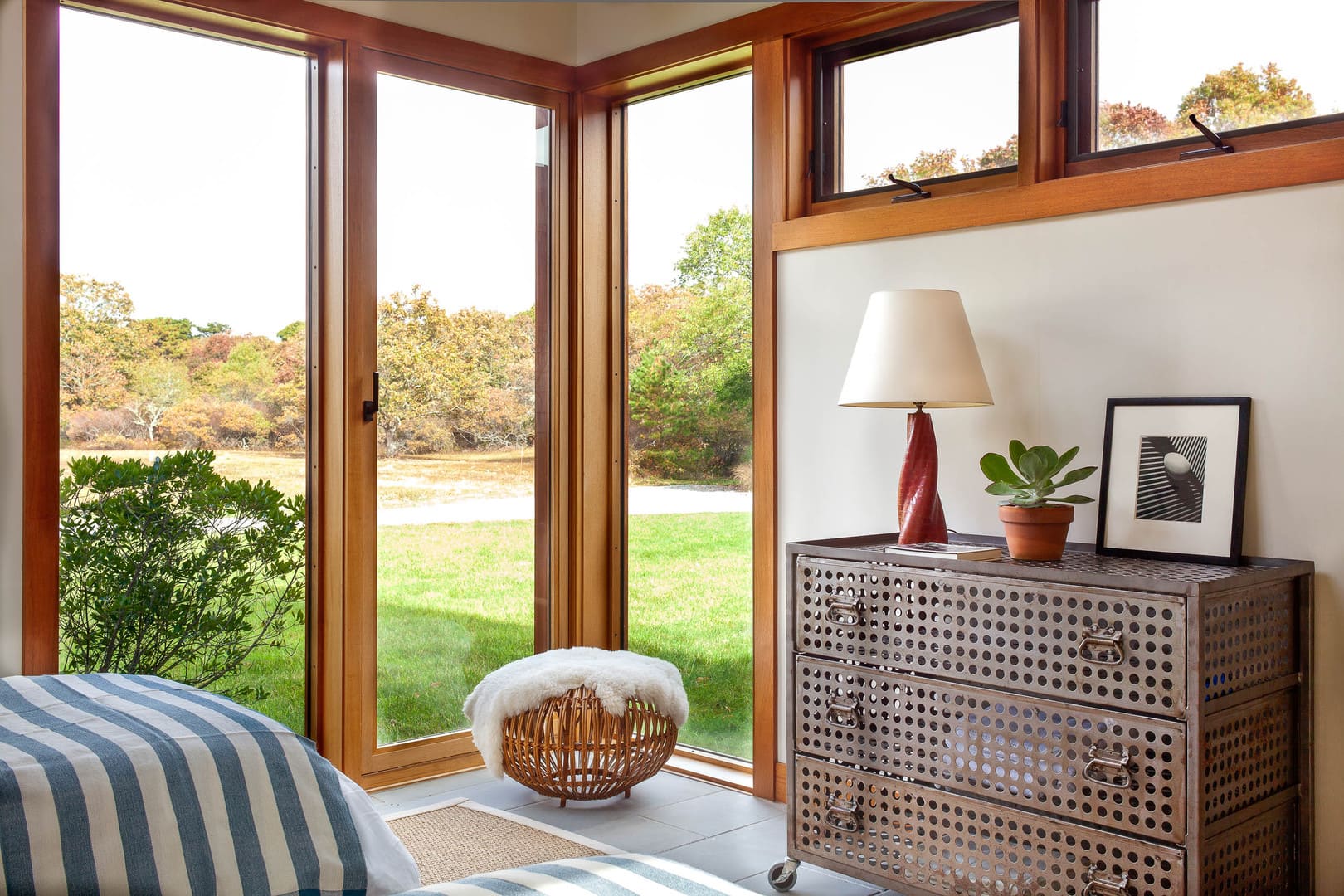
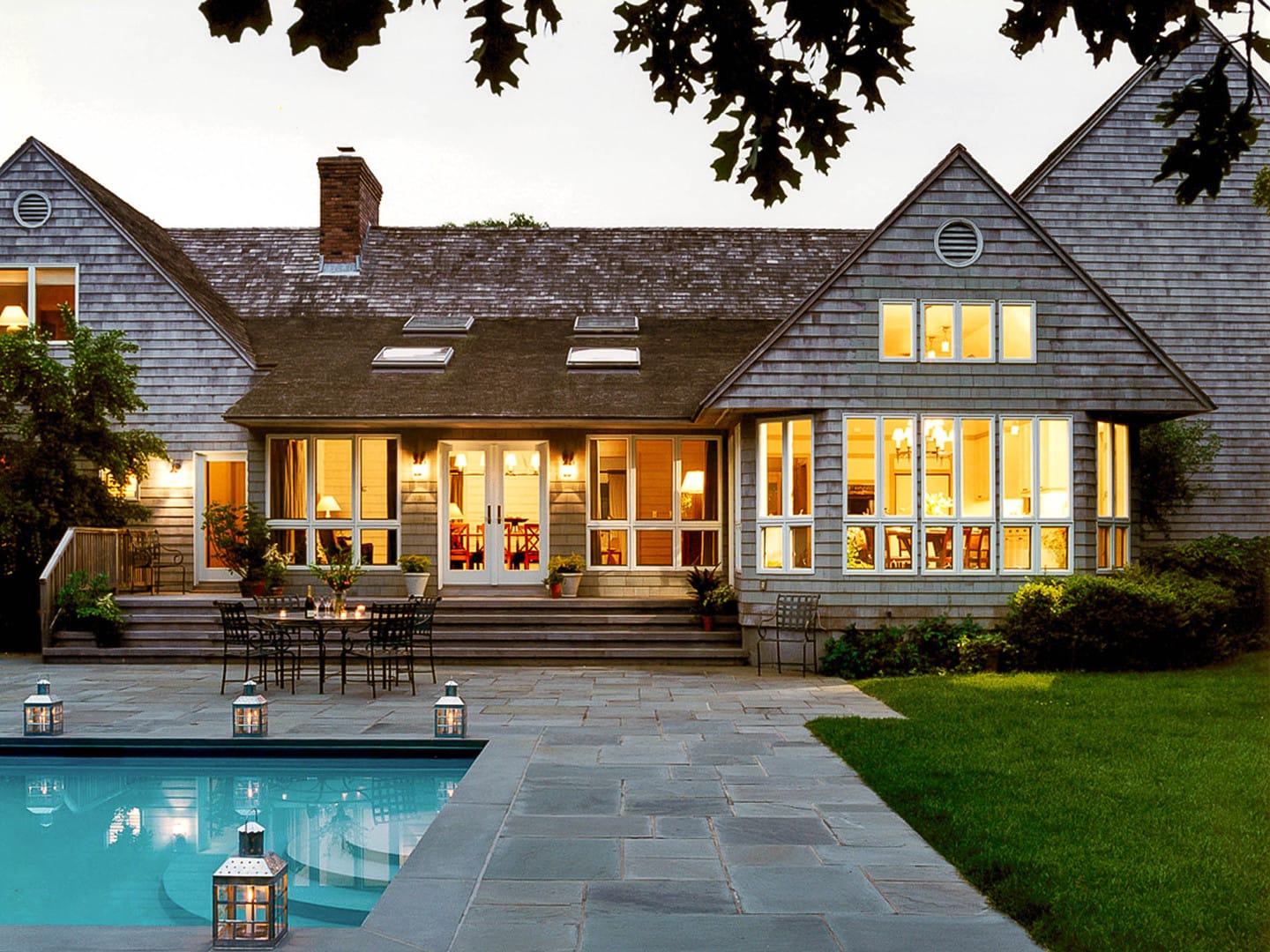
For a large, newly-built house near Westhampton Beach, our challenge was to forge dimension, texture and style through a sequence of architectural interventions. By adding more windows we created a symmetry to the elevations which had been missing; replacing sliding doors with French doors augmented the atmosphere with dignity.

Our goal was not to encrust a contemporary house with period ornament, but to lend it the time-honored language of understated architectural detail, a way of accentuating and humanizing space.

The floors of the house were originally surfaced in a variety of materials, including tile, which made the rooms feel “chopped up.” To create an unbroken sense of flow–and warmth– from room to room, we installed dark wood floors throughout, using sea grass and sisal area rugs to further unify the rooms.

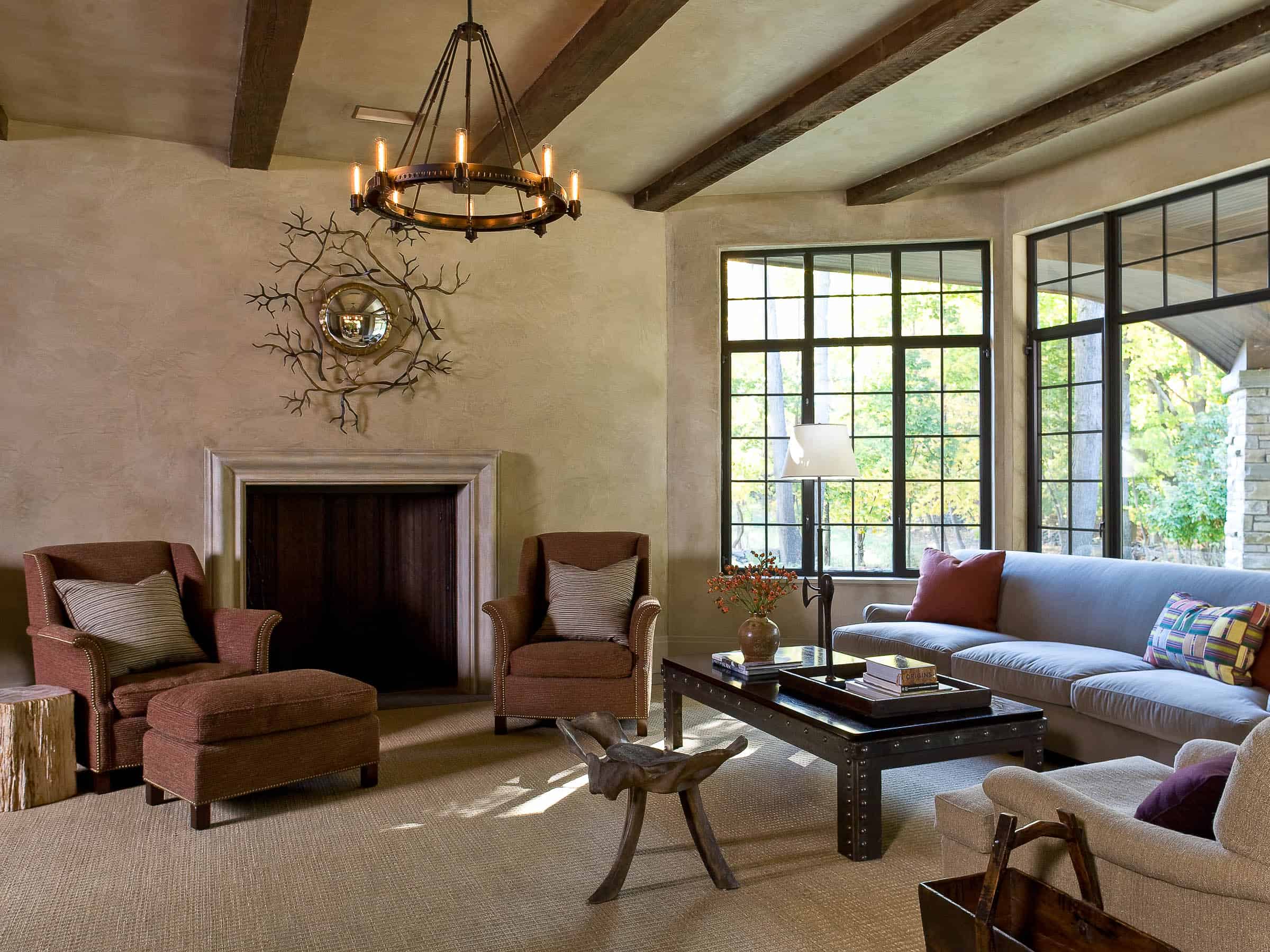
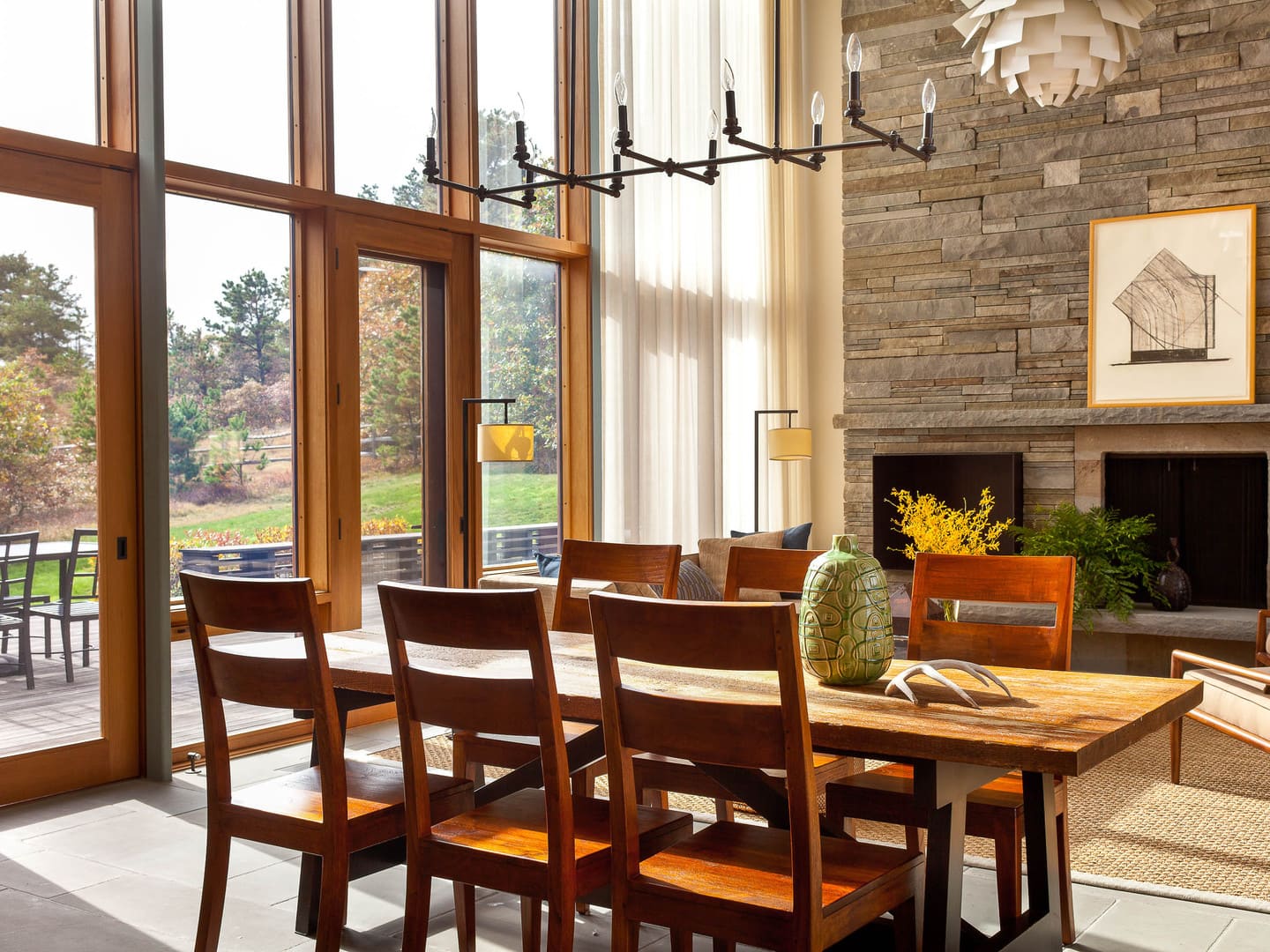
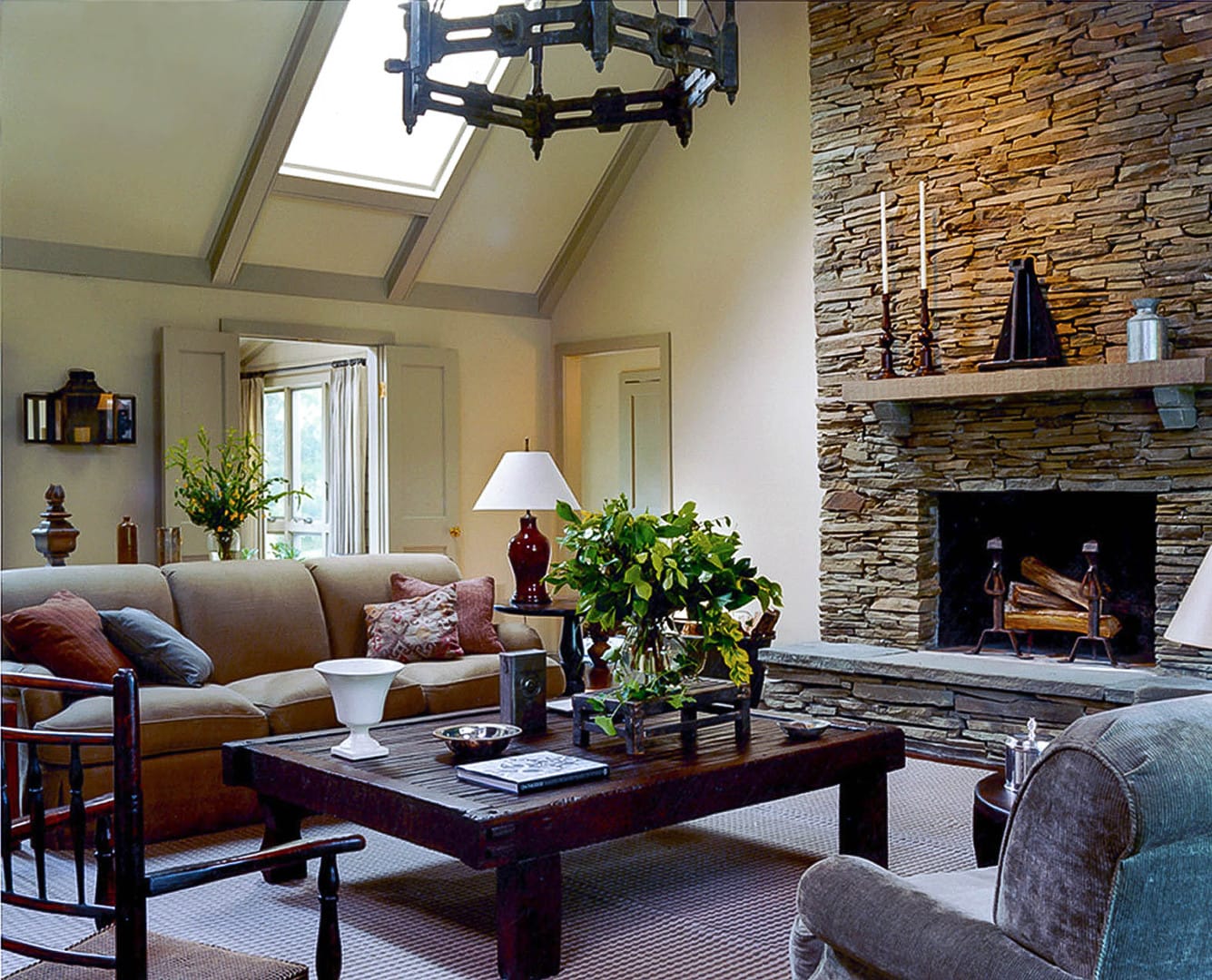
The double-height living room had a rather blank fireplace with a sheetrock surround. Using Connecticut fieldstone, we built a floor to ceiling surround using the “drystack” building method, in which no mortar is visible; the rough effect added shadows and texture to the space. A massive 19th-century wooden chandelier brings human scale to the 18-foot ceiling.

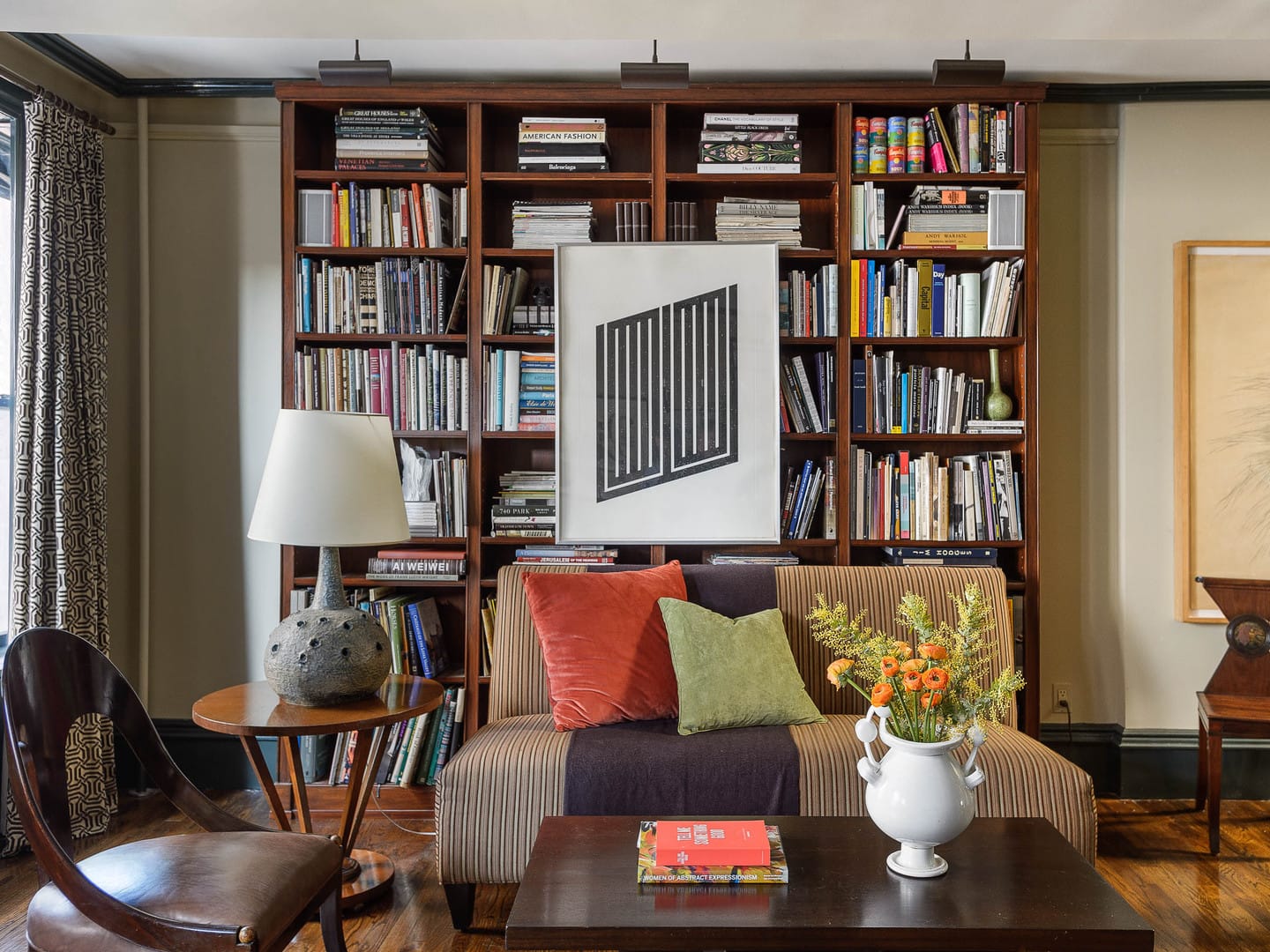
With the house itself thus reimagined, furnishing became a delightful enterprise of layering English and American 19th century antiques with pieces from South America, the Far East and India, including colonial styles. Warmth, materiality and restrained rusticity became the keynotes of this house, which now appears rooted and timeless, inside and out.

The blue-grey of the house’s exterior shingles is complemented by the use of bluestone surrounding the swimming pool, punctuated, in turn, by small gridded metal lamps.

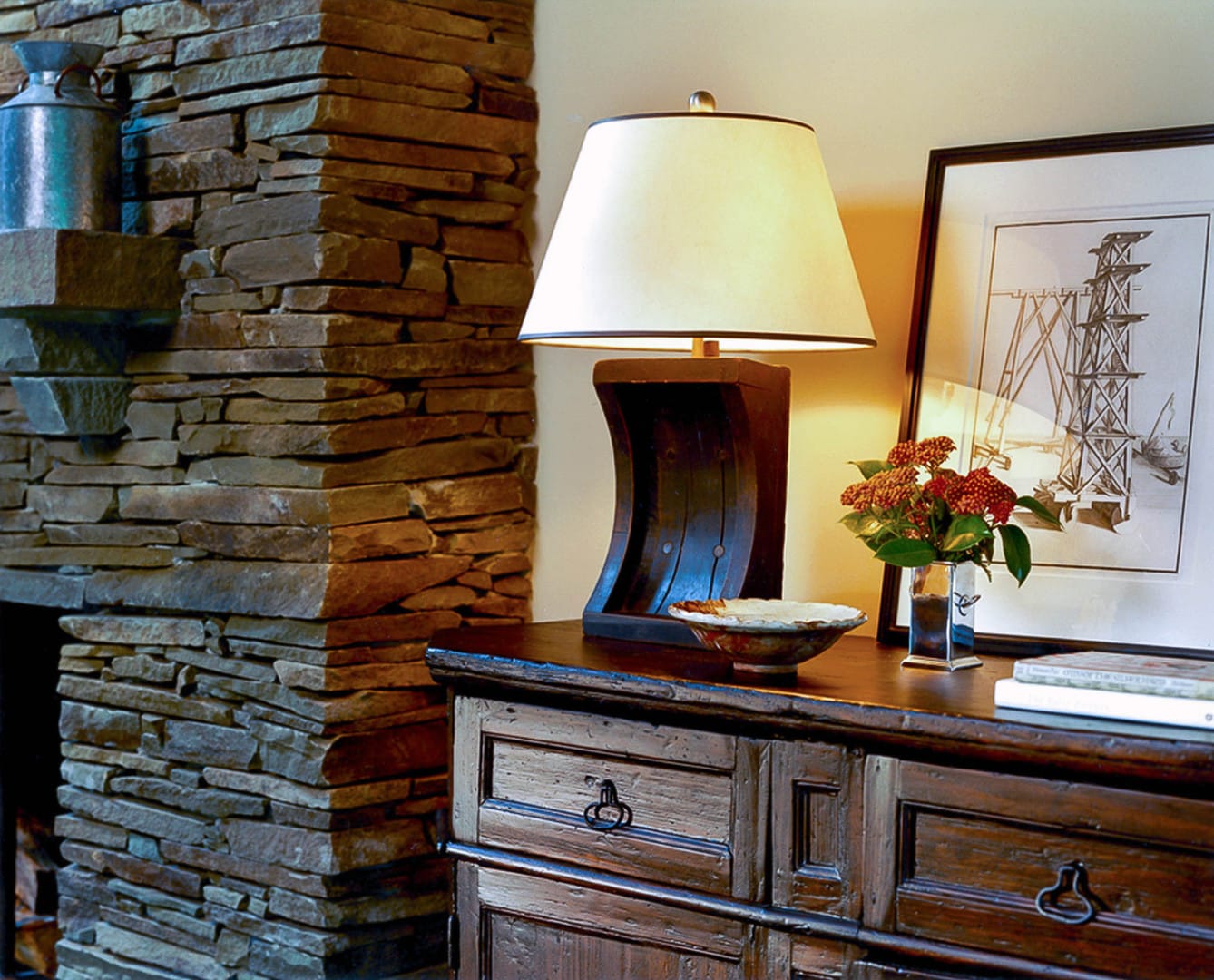
An old chest harbors a collection of objects evincing texture and interest, including the lamp, which we had cast, and an 18th century architectural engraving of an obelisk.

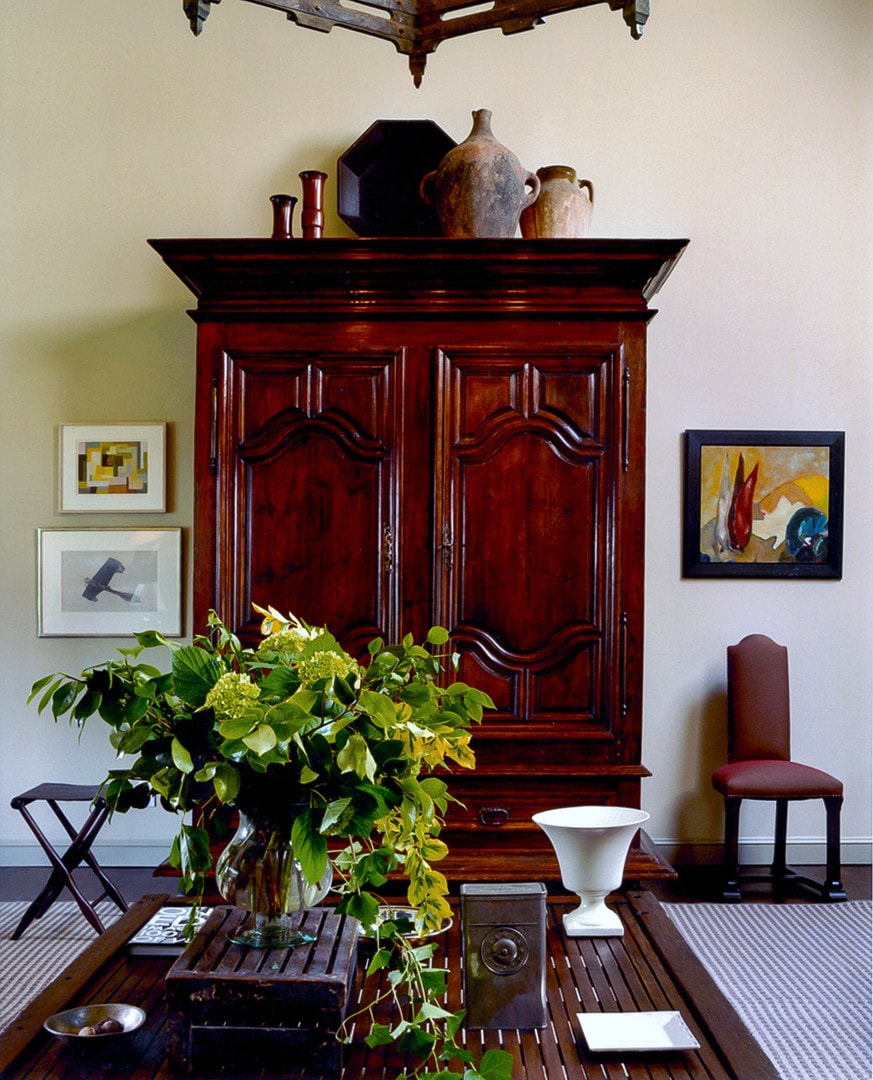
An 18th century Italian armoire, ten feet high, sheathes the family’s entertainment center and balances the fireplace on the opposite side of the living room.

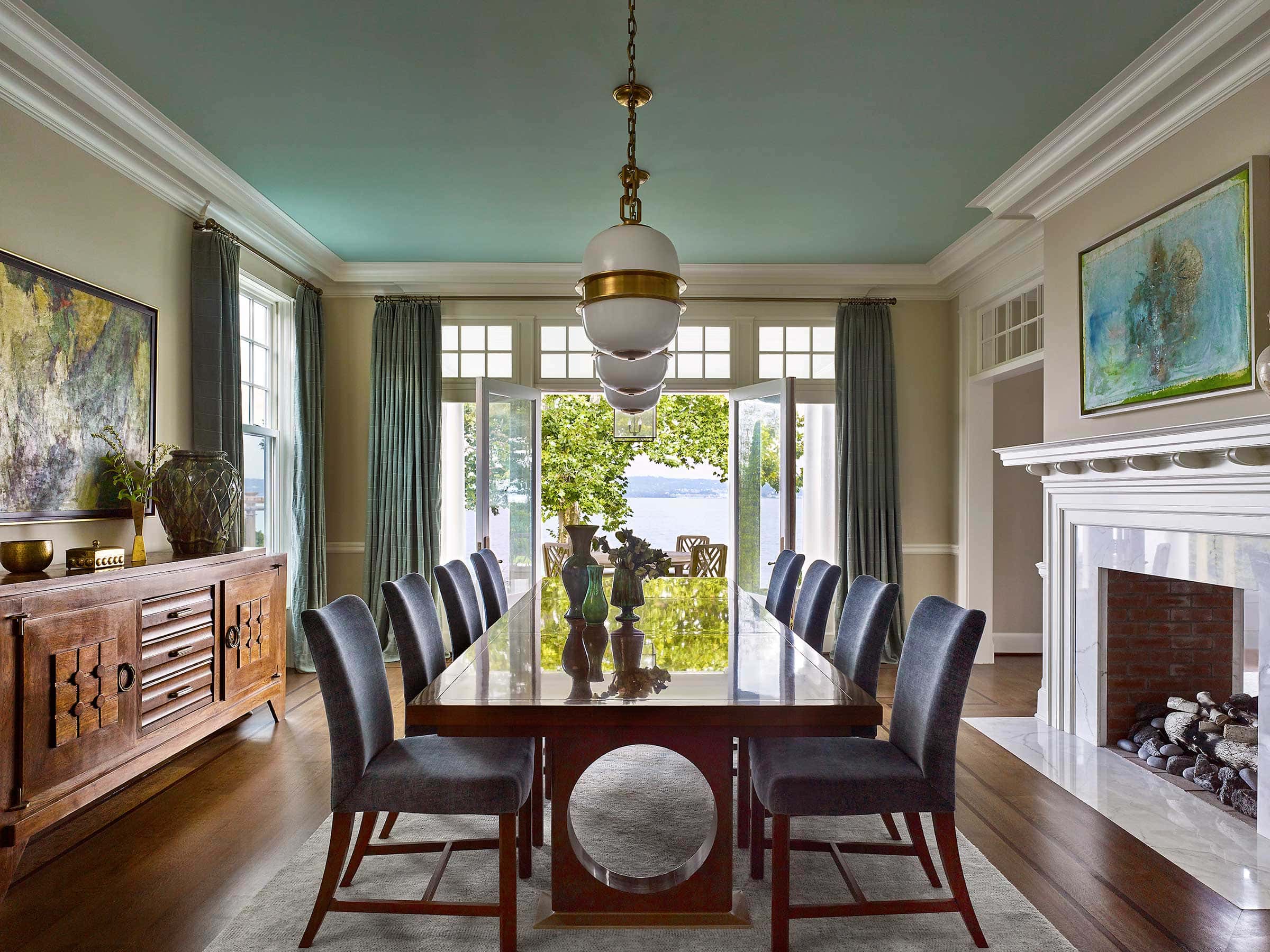
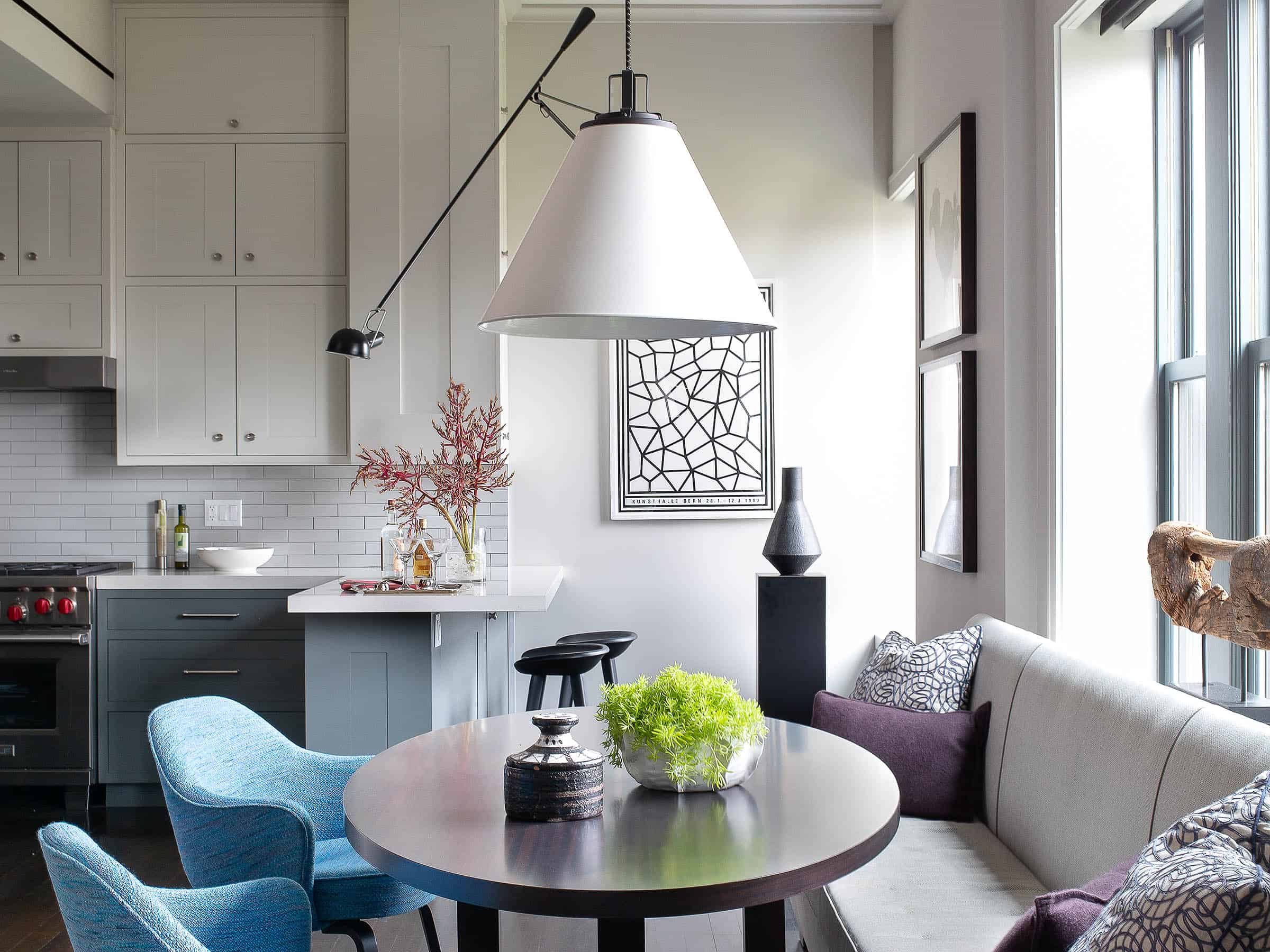
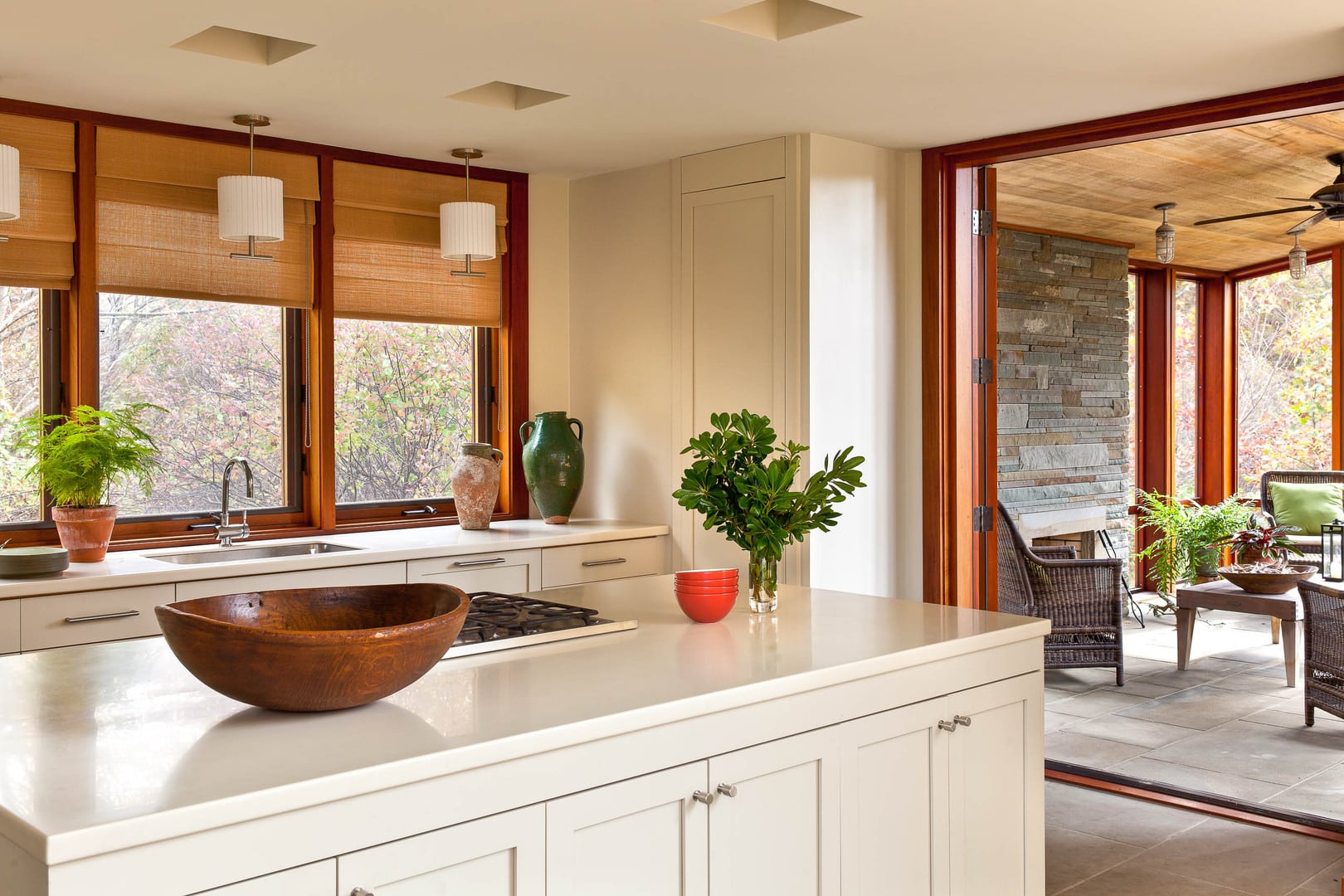
Dark wooden floors carry through into the kitchen, contrasting crisply with finely crafted millwork lacquered in off-white, and the taupe window frames of the double-height dining area.

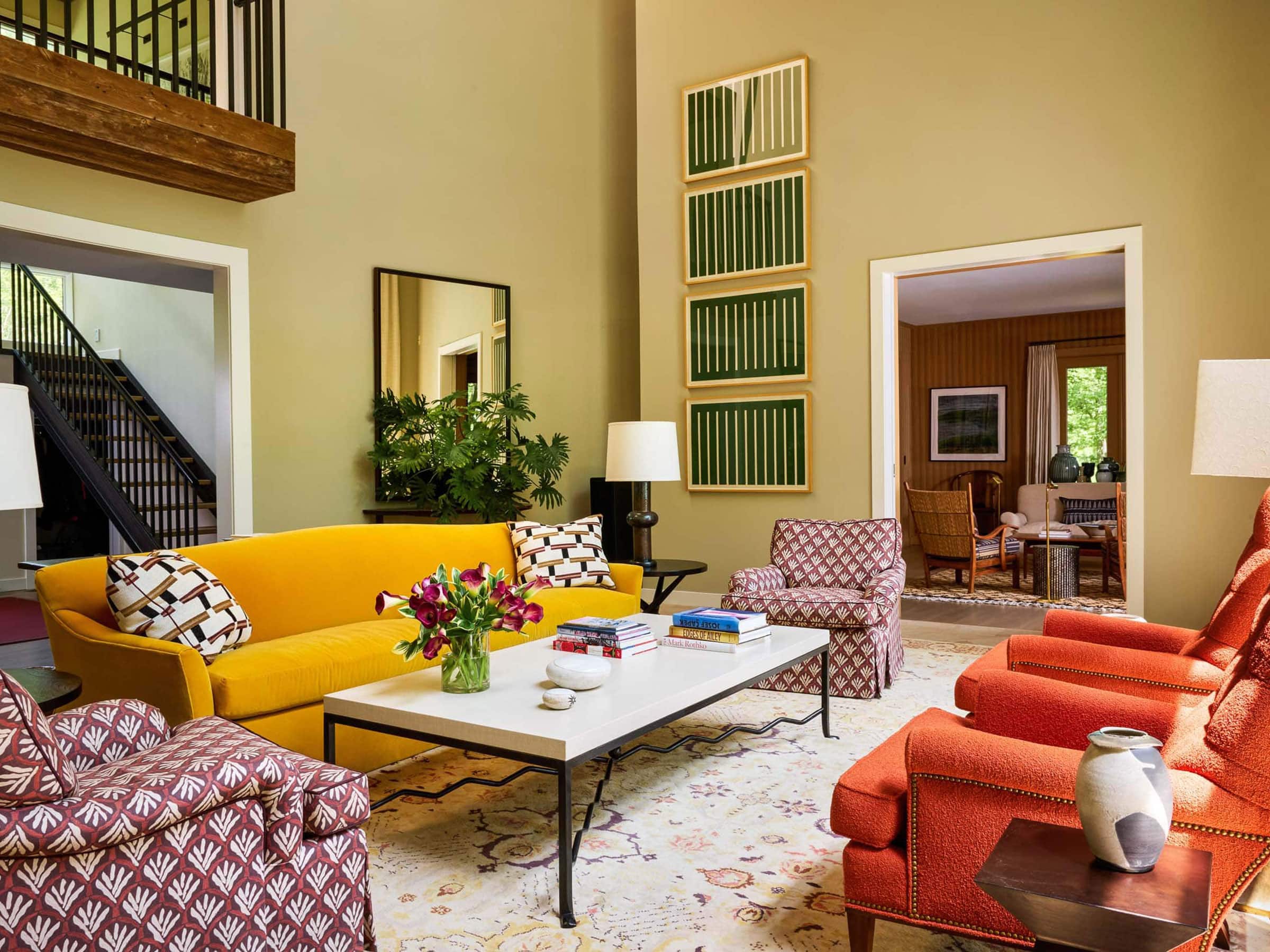
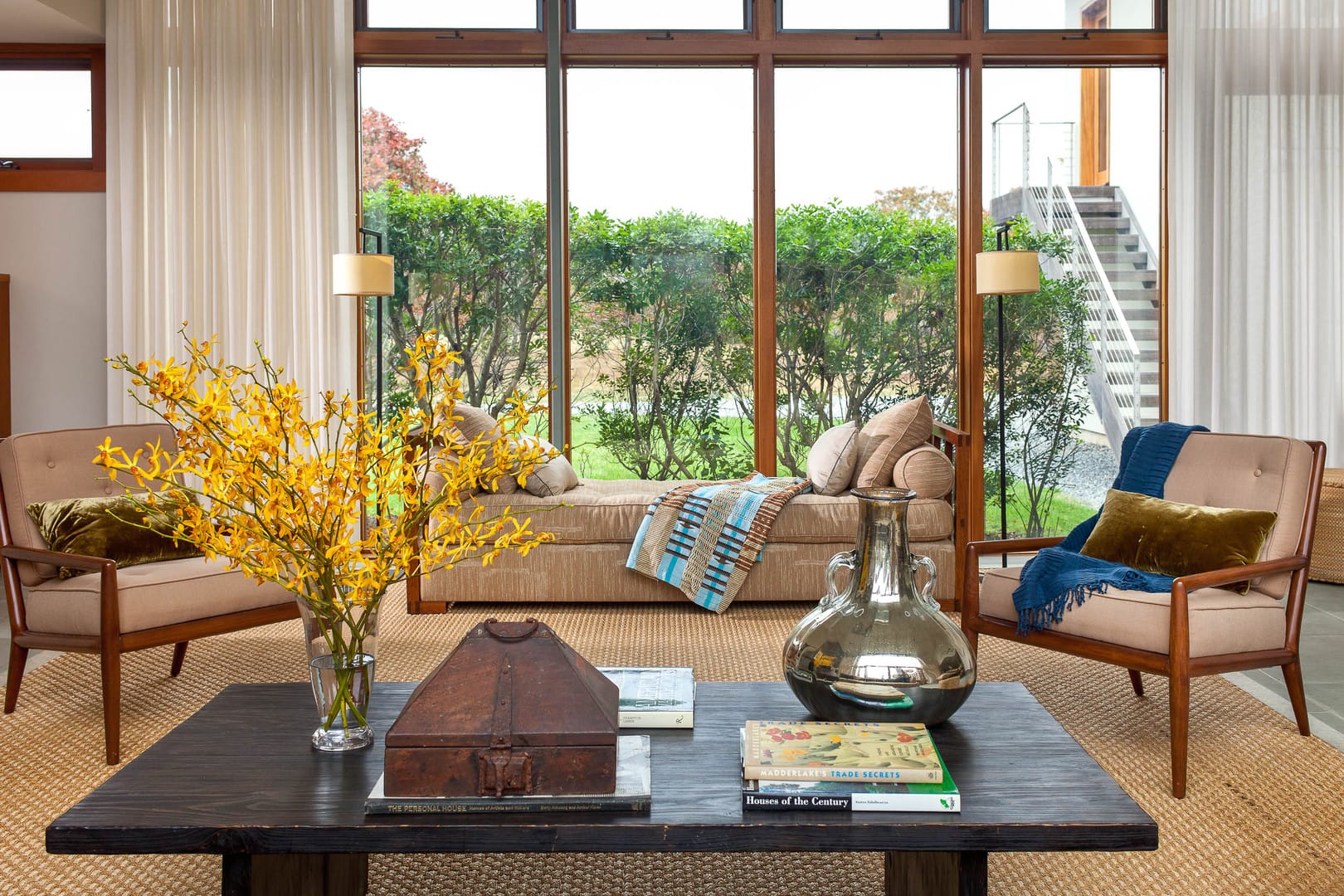
The double-height drystack fireplace, its hearth and mantelpiece made of slabs of bluestone, is a dominant organic element in the room, suggesting the earth tones of the upholstery fabrics: grey plush velvet, antique linen and leather. A heavy coffee table, a relic of the Raj, is counterpointed by a delicate William Morris Sussex chair. Traditional Shaker doors and moldings are painted a soft taupe.

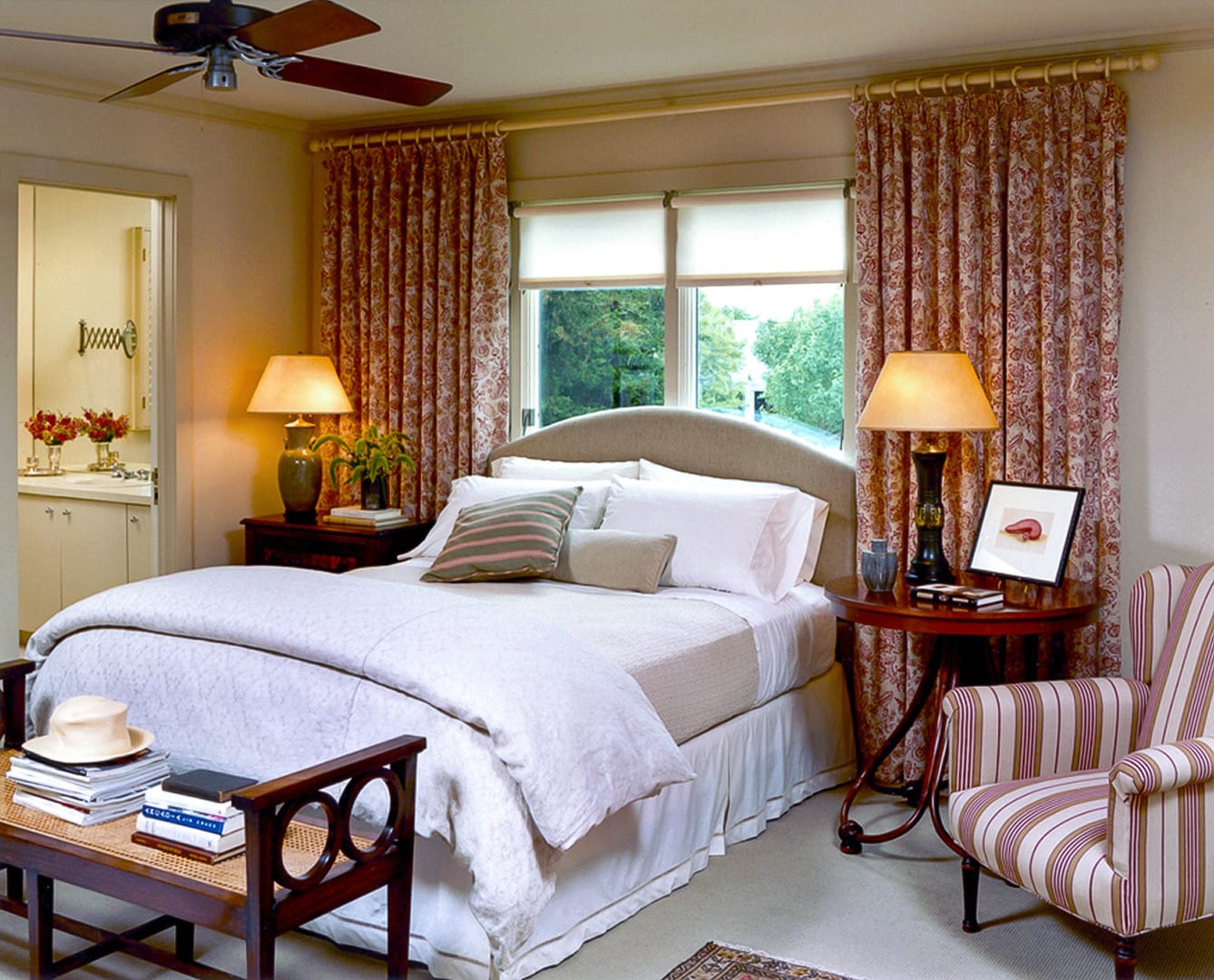
Regency rules in the master bedroom, with a caned bench at the foot of the bed. A comfortable armchair upholstered in maroon and white stripes and printed curtains of the same color heighten the 19th century atmosphere of the room.

Senior Designer Craig Strulovitz
Photos by Gross & Daley

Family Home – Central Park West

CENTRAL PARK WEST – NYC

Family Home

This project for long-time clients began in the early 1990s, when, with their growing family, they lived in a four-bedroom apartment with high ceilings, “great bones” and views of Central Park. The living room was double-sized, but there was only a small service kitchen at the back. When they bought the apartment upstairs, there was suddenly wonderful space as well as superb structure to work with. It became possible to accord sophisticated design thinking and dignity to every room, including utilitarian ones: the bathrooms, kitchen, wine cellar, service areas, and an expanded family room.

We moved all the bedrooms downstairs. Upstairs, the new kitchen, transplanted to the front and converted from what had been a parlor, became an important, spacious place for family and entertaining as well as a design statement. We reconfigured hallways and doors, essentially creating from what had been two apartments a family “house” in the midst of Manhattan, with all the comforts, amenities and technological advances one might expect in a townhouse.
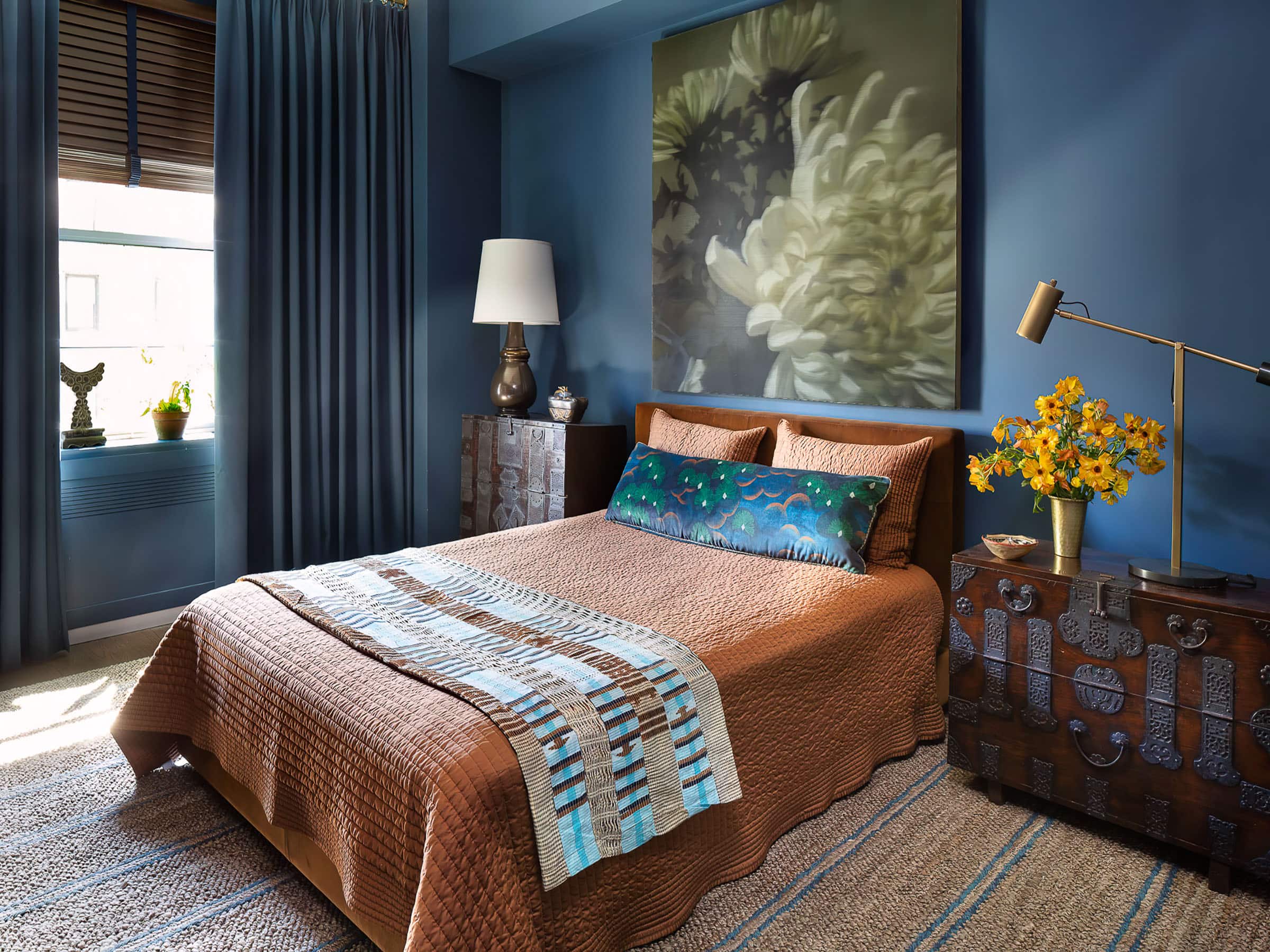
The clients’ taste in furnishing might be described as “venerable simplicity”: the dark, polished woods of the 19th and early 20th century antiques coupled with velvets and linens–in one case we used the reverse of a printed linen for more subtlety–but all used sparingly. If the furnishings exhibited the contours and patina of an earlier century, our approach to space was almost severe, as in the master bedroom where a splendid expanse of dark stained floor, coupled with an installation of artist Kiki Smith’s custom silk wallpaper are the main protagonists. If less is sometimes more, then what isthere must be of the highest order of aesthetic value and craft.
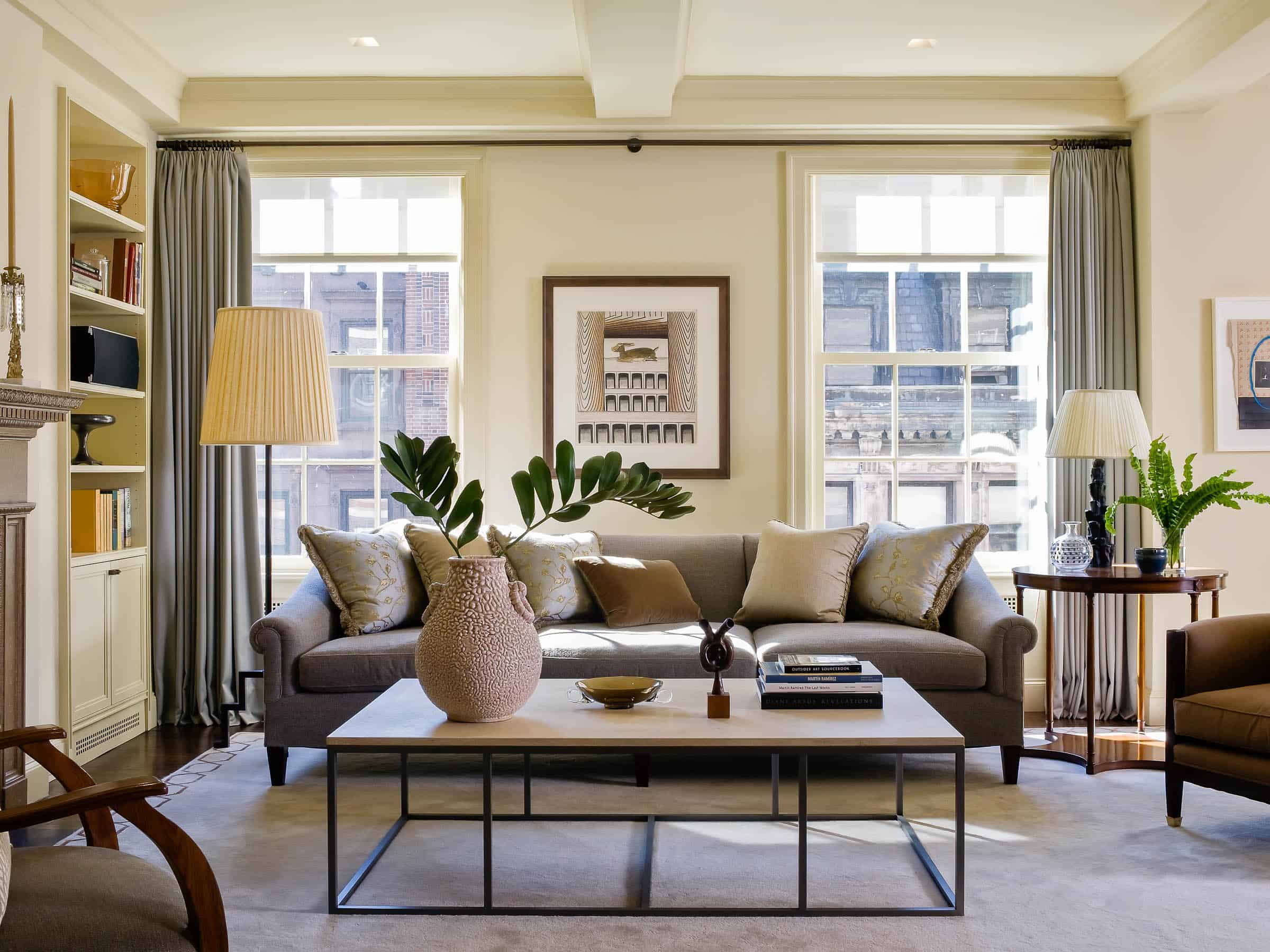
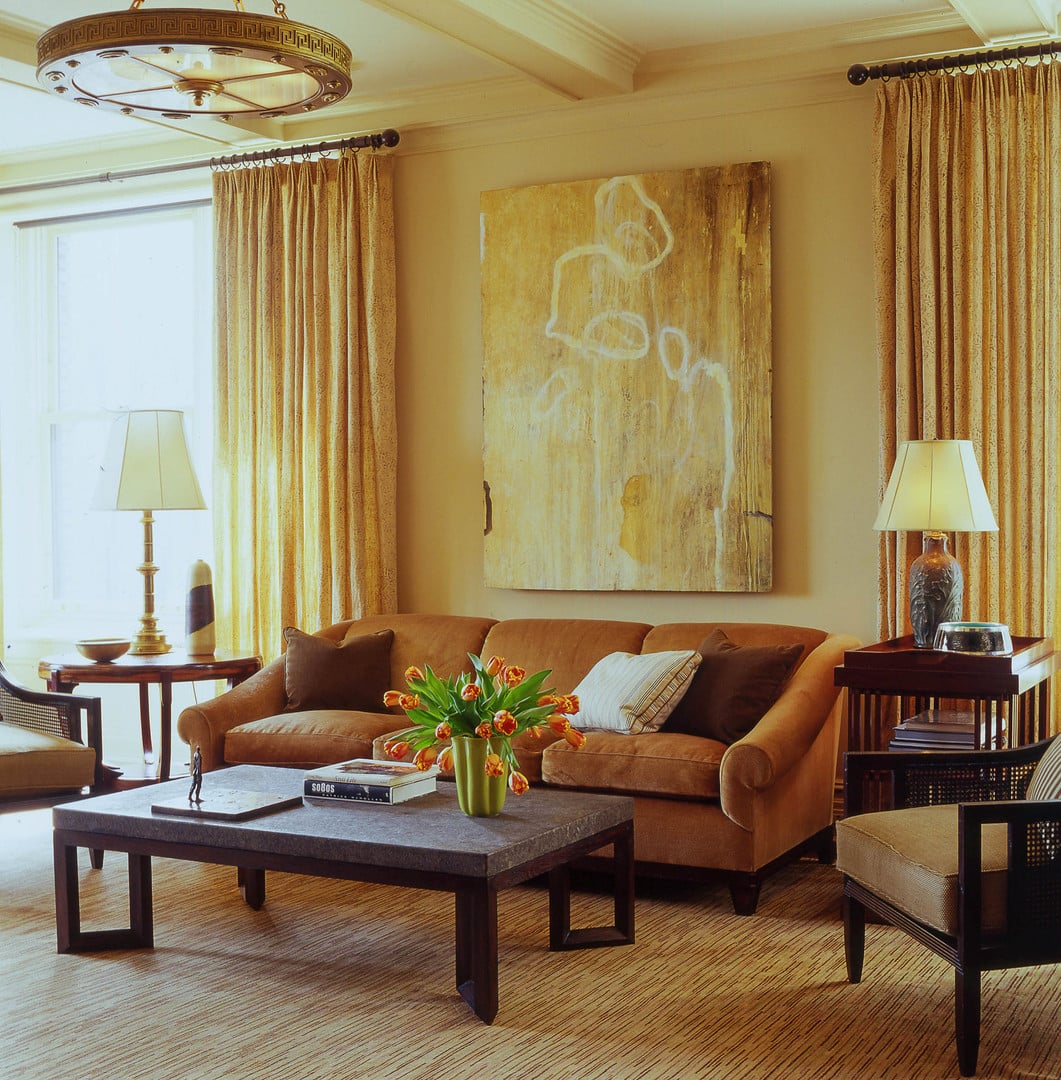
Golden light suffuses a palette of wheat and honey tones, with a deep sofa in cinnamon velvet and a strie carpet. Curtains in pale gold silk and parchment lampshades add to the luminous quality of the living room, along with a large abstract painting in the same colors.

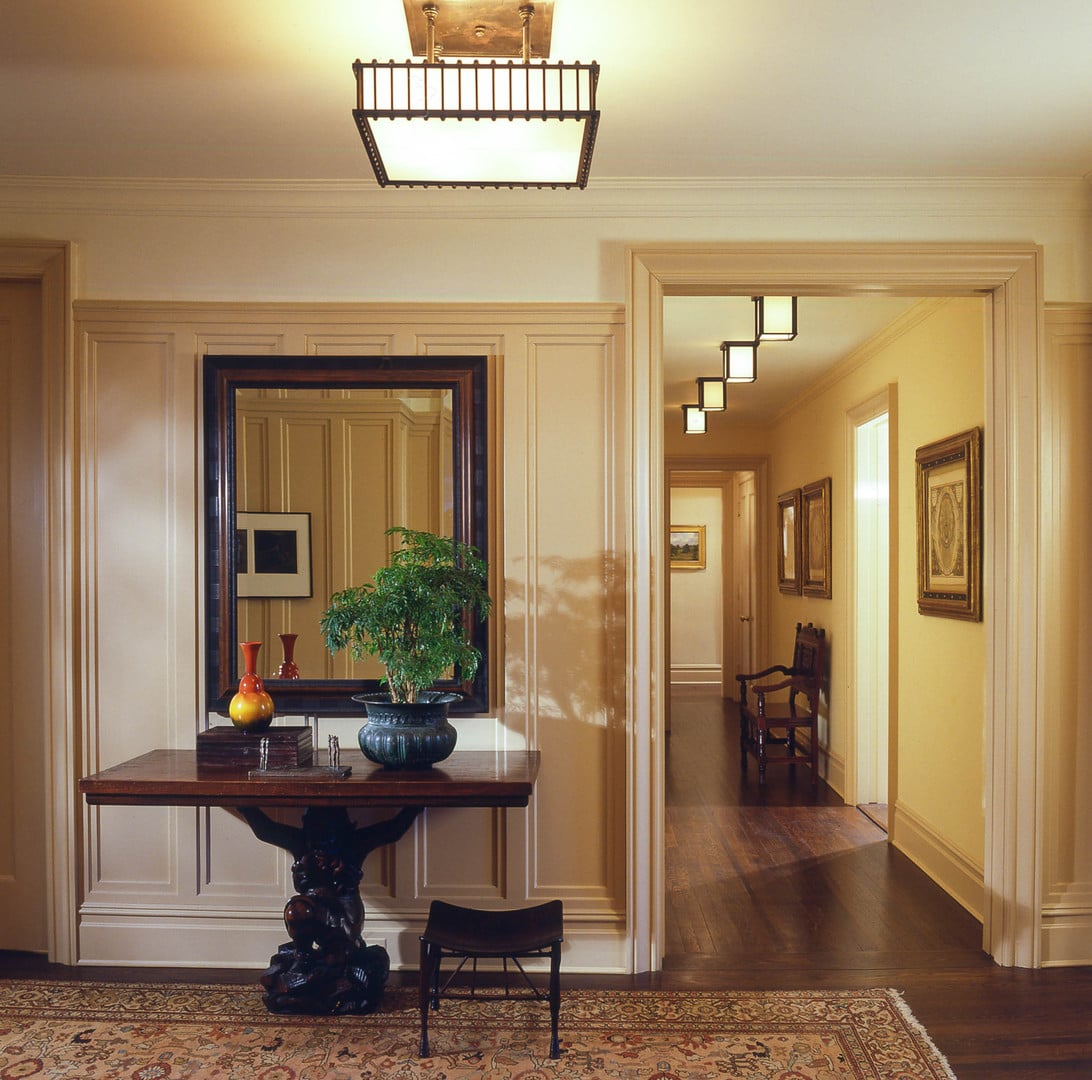
A massive hall table upheld by a carved figurative base, is laden with Aesthetic Movement ceramics, including pieces by Christopher Dresser. Nearby is a classic Liberty Thebes stool, another icon of the Aesthetic Movement in England.

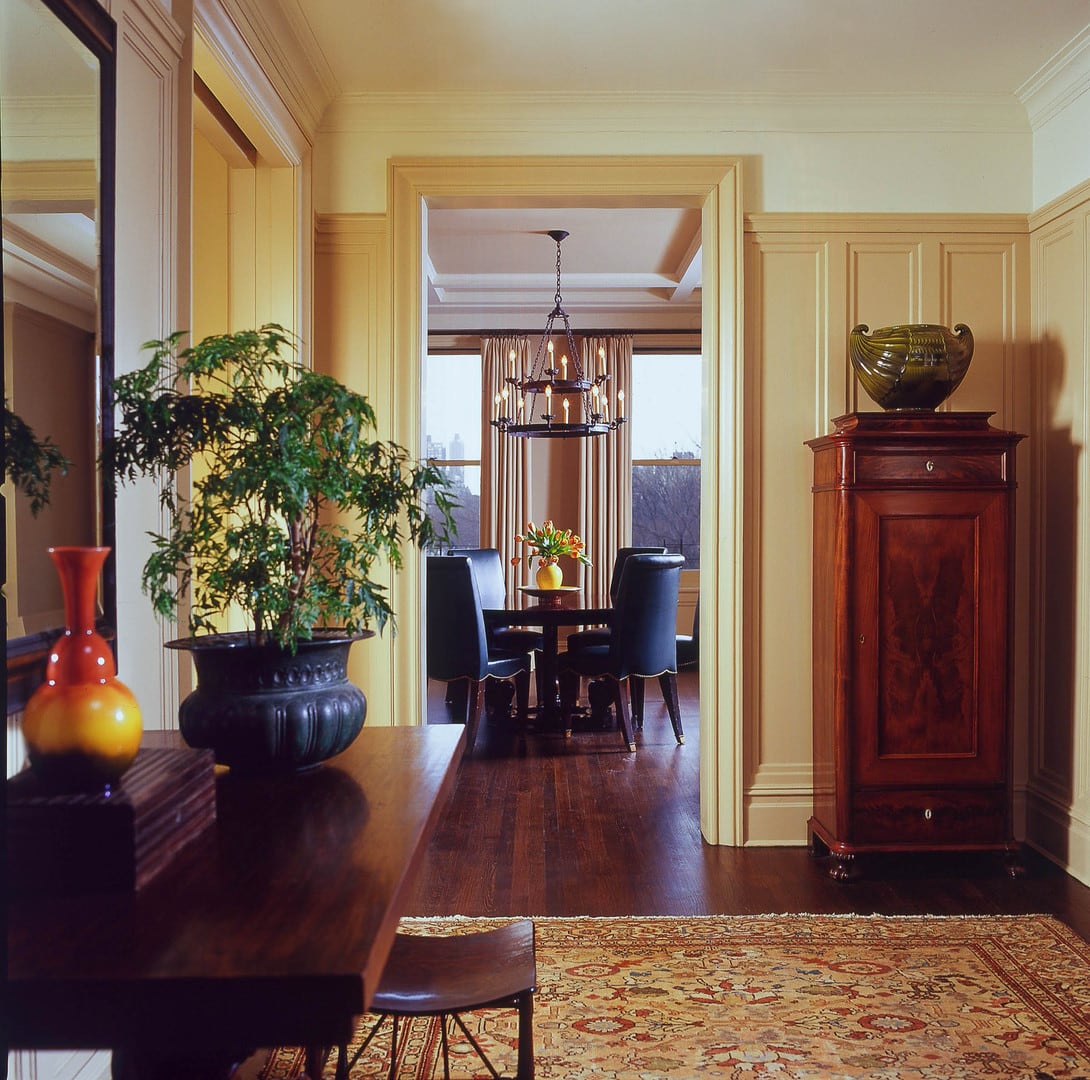
A view of the dining room from the Entry reveals, at right, an important ceramic, a dark green two-handled urn by Dresser atop a tall Regency cabinet. Views from the dining room are of Central Park. Over the table hangs a 19th century iron chandelier; chairs are studded with decorative brass tacks.

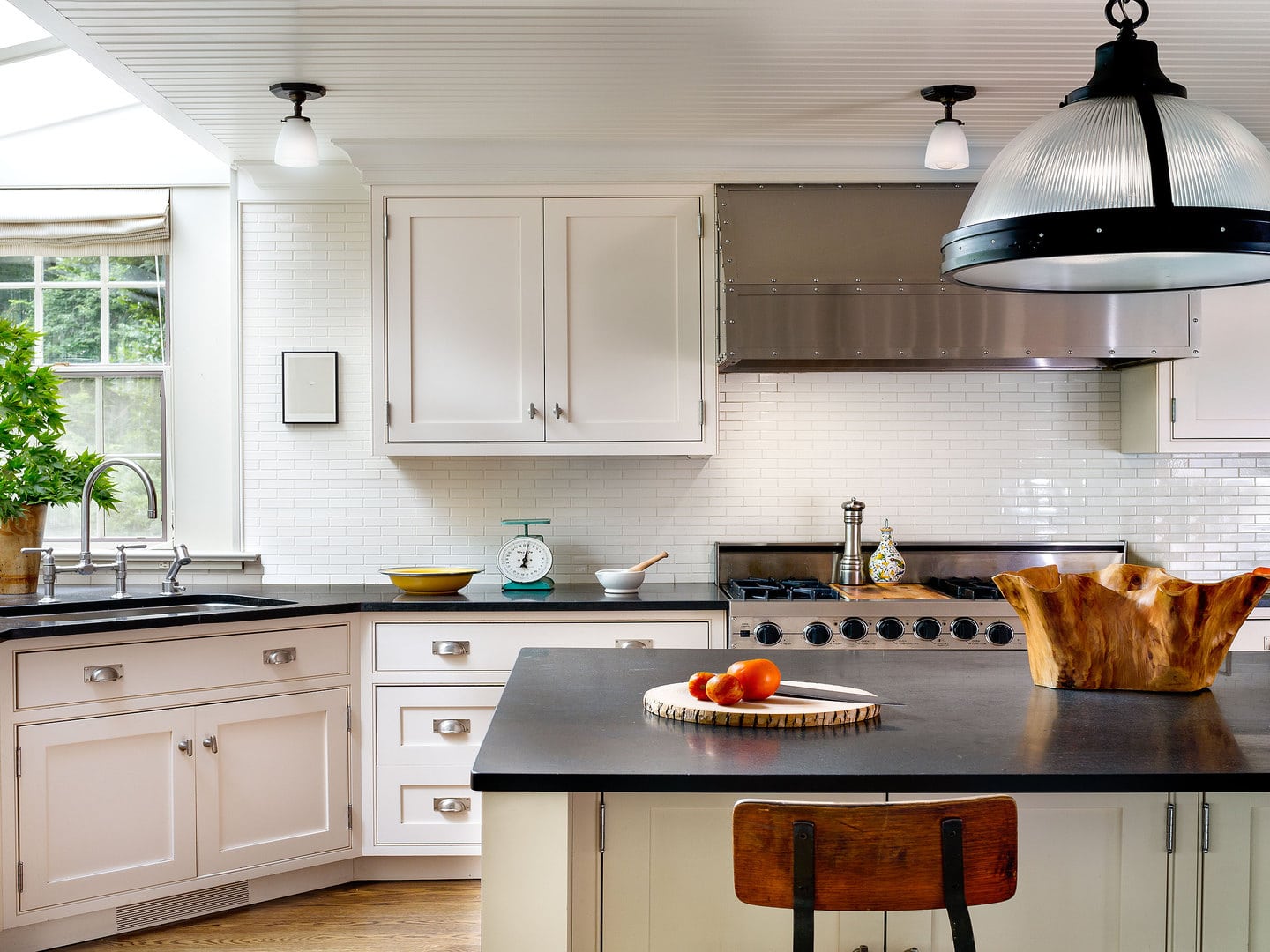
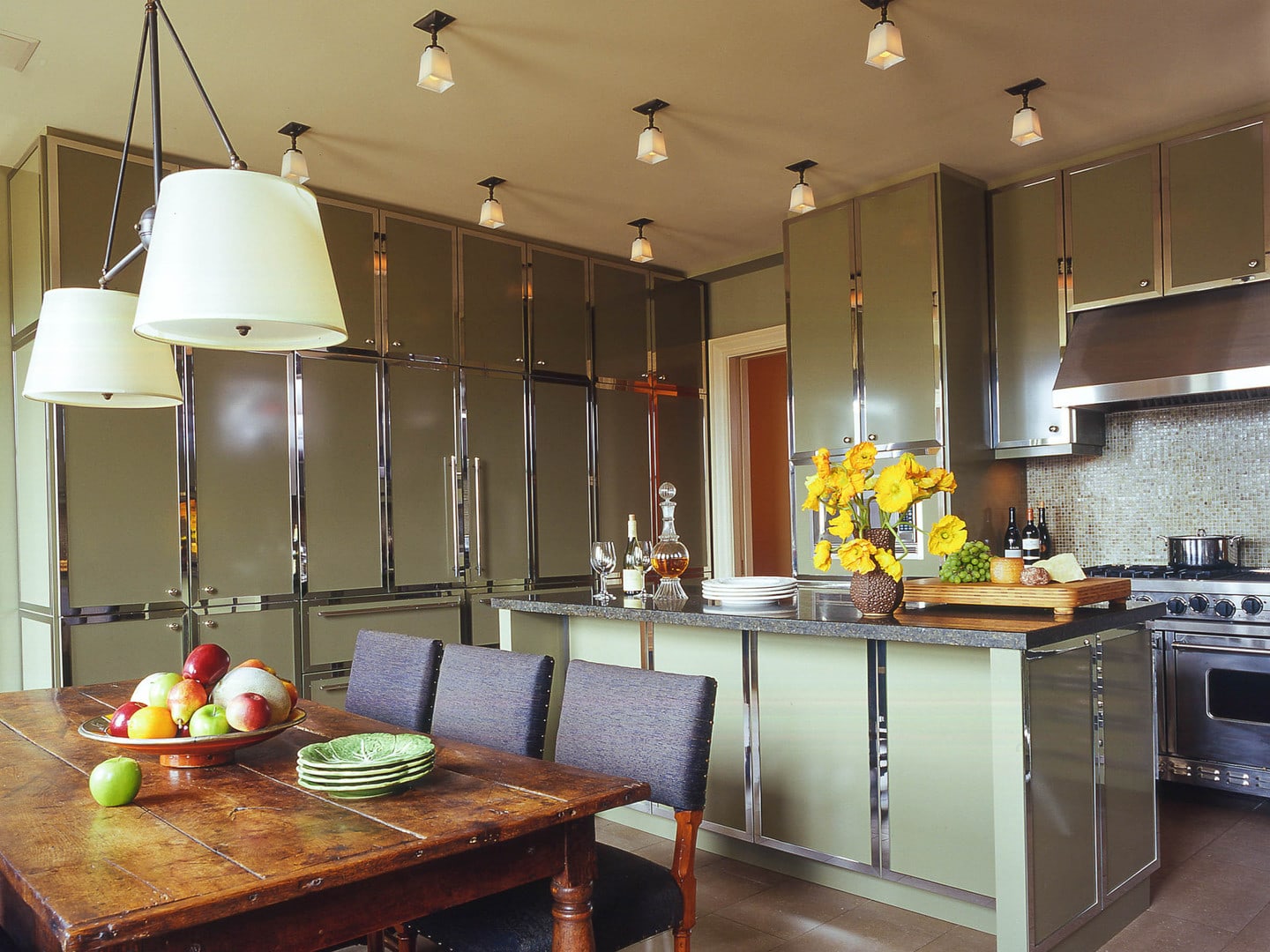
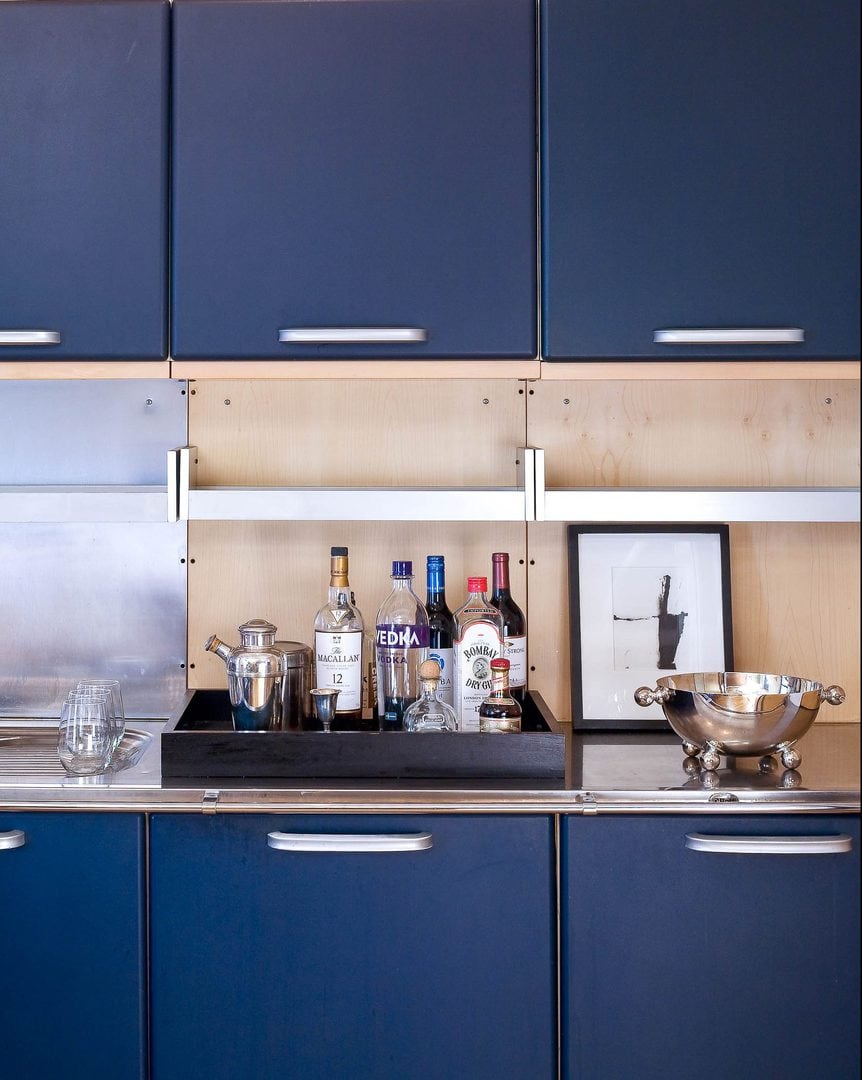
The kitchen is one of the glories of this home, fitted out with the latest technology yet inflected with early 20th century design traditions. The pale grey-green painted millwork is trimmed in gleaming stainless steel. Even the light fixtures, simple shaded bulbs, are arranged on the ceiling in a grid pattern, as one might see in an Edwardian kitchen.

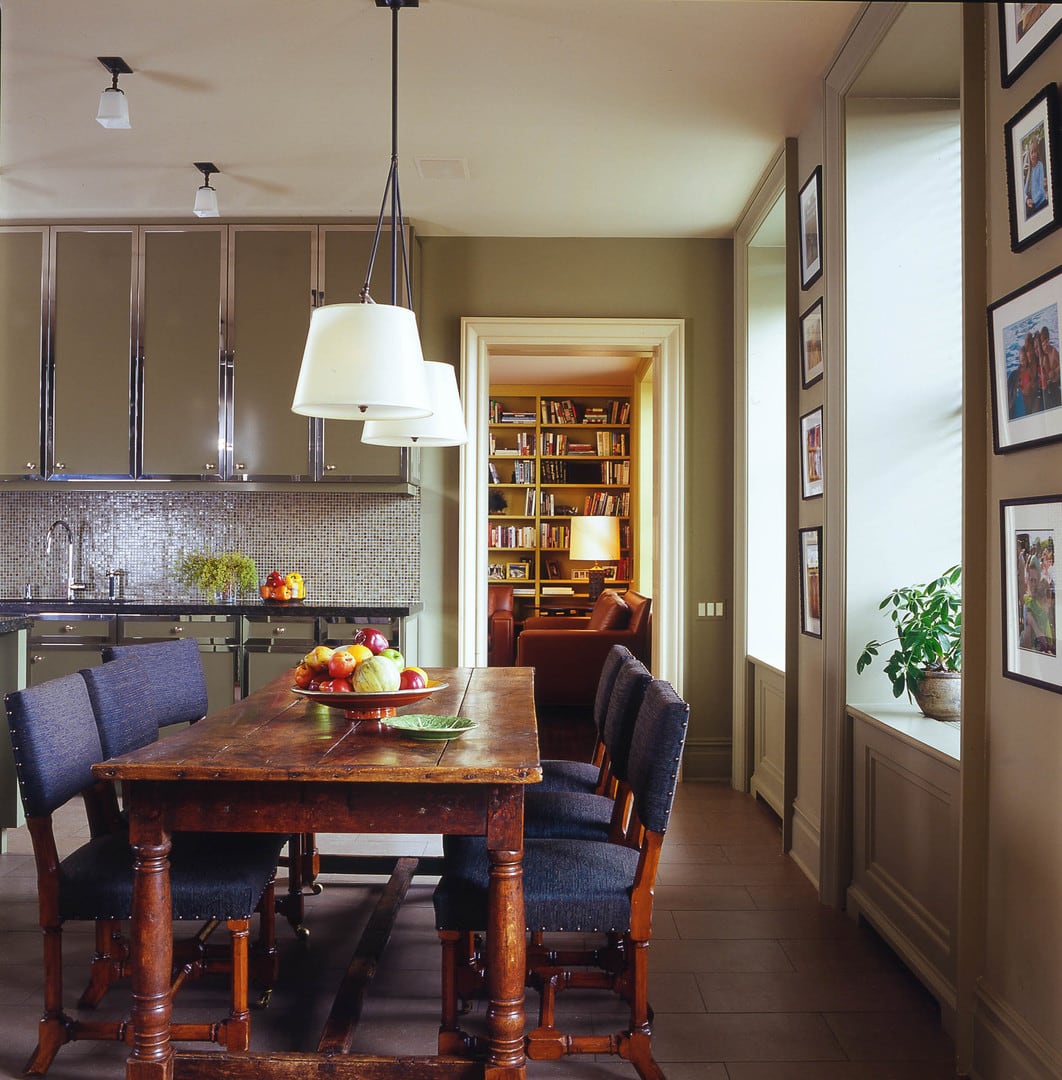
A long muscular antique table and chairs are lit by a double shaded fixture. The doorway opens onto the family room, with leather furniture and bookshelves.

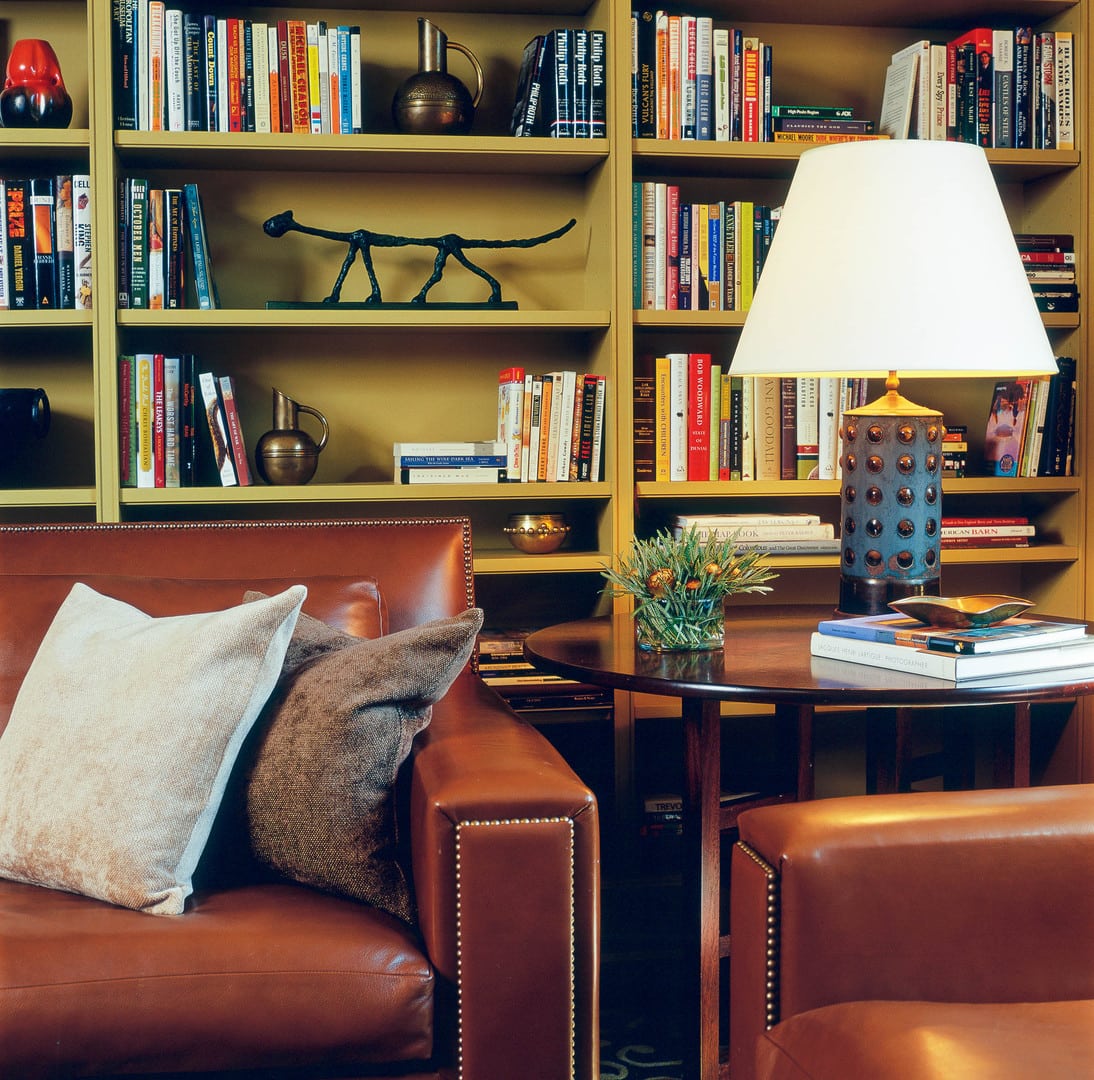
Comfort, elegance and durability cohabit in this family room equipped with boxy studded leather chairs and generous library shelves filled with art objects as well as books.

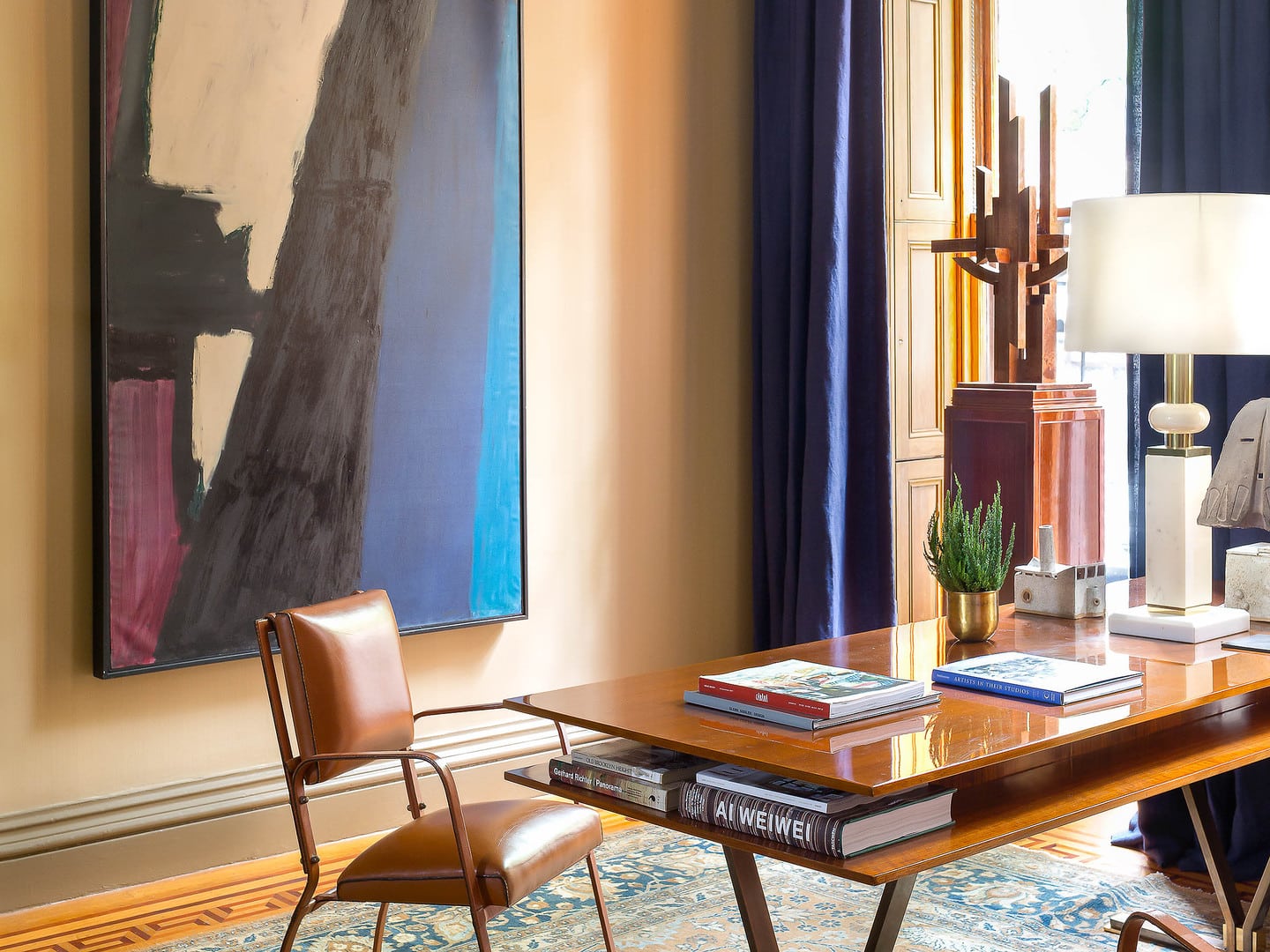
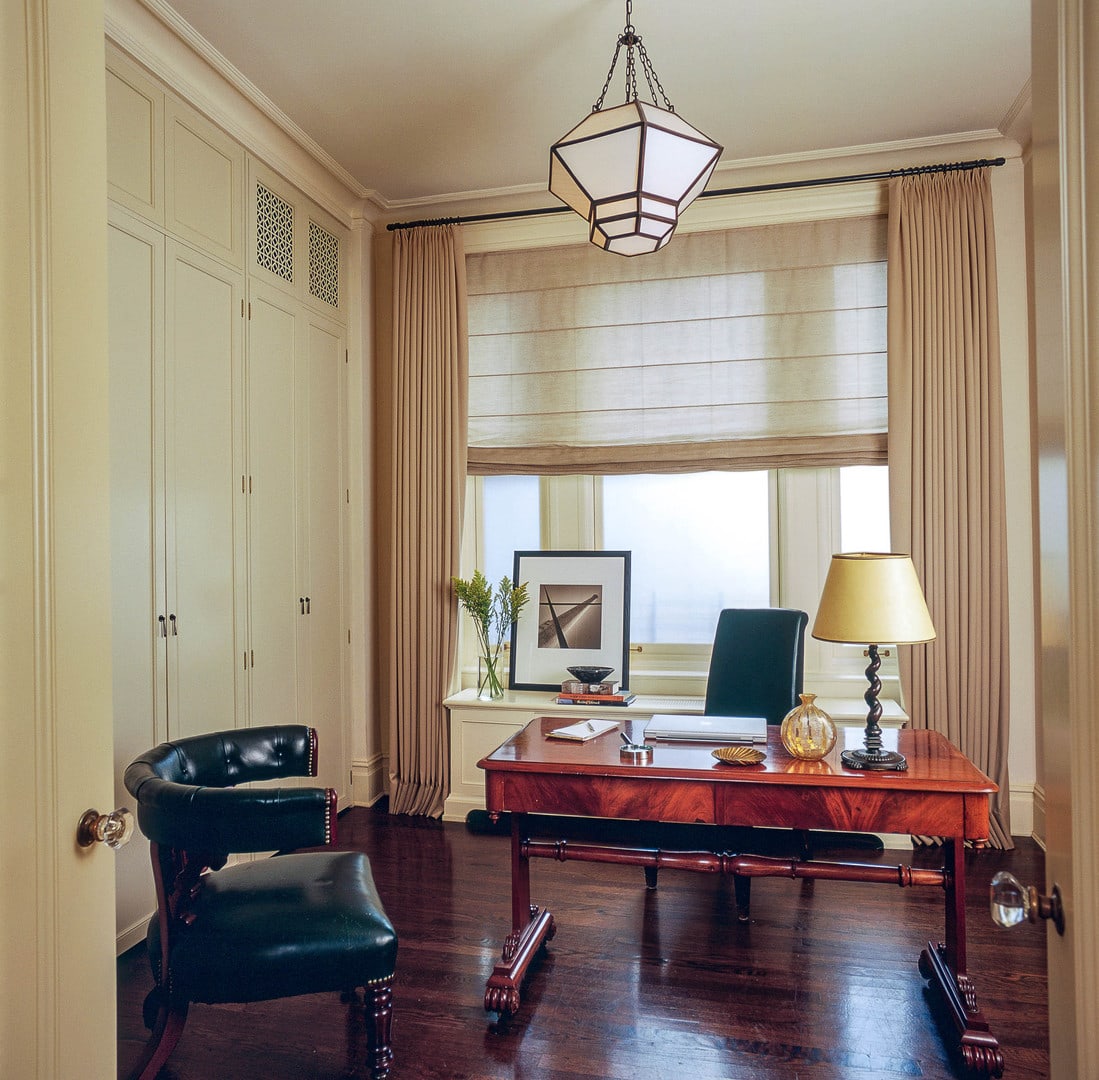
A mahogany writing desk and distinctive U-shaped chair against the dark-stained floor are balanced by the pale cream of the built-in closets (at left) and buoyant light-colored Roman shades.

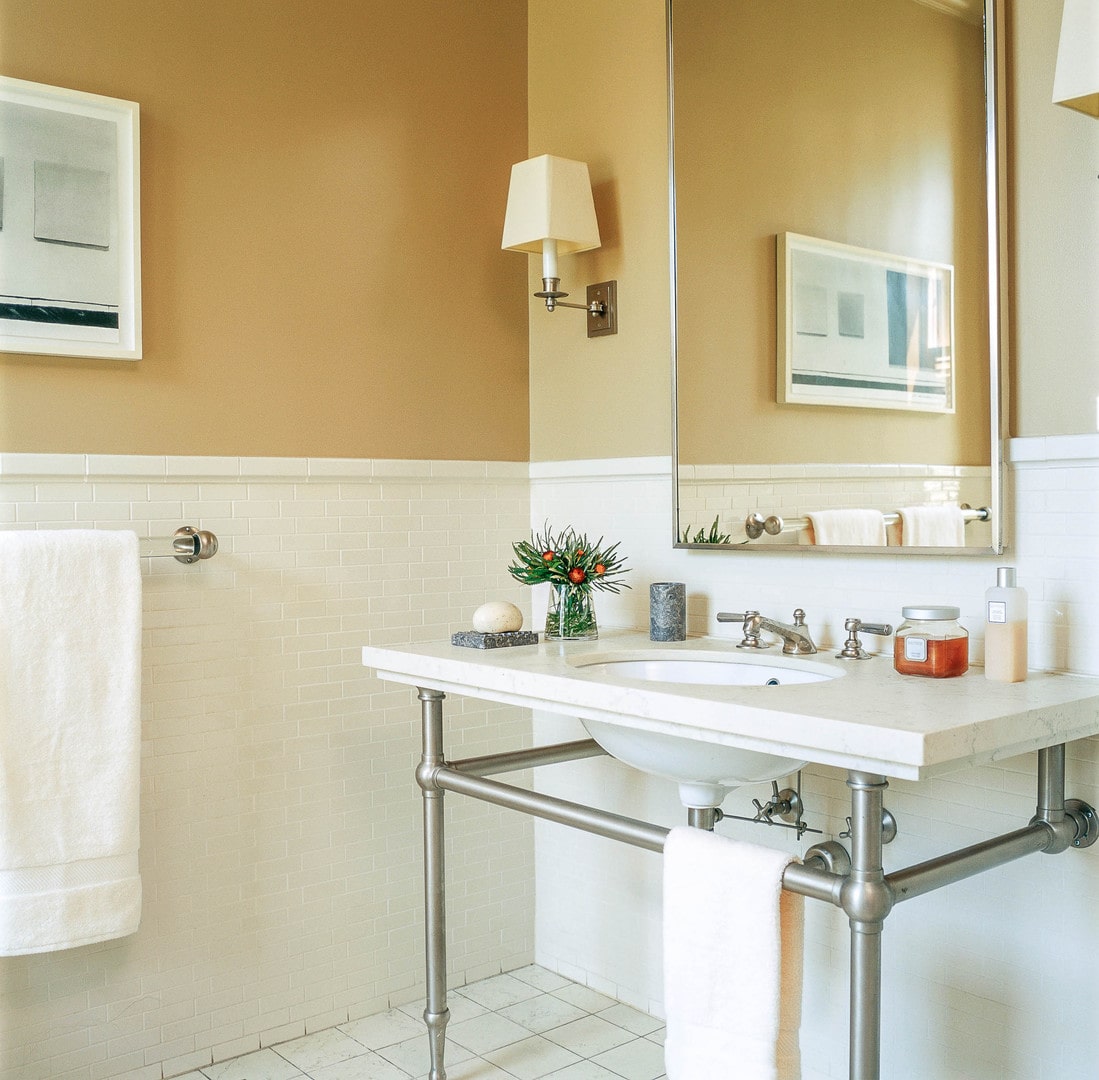
A sparkling white-tiled dado and washstand of white marble with polished nickel supports are complemented by cafe-au-lait upper walls.

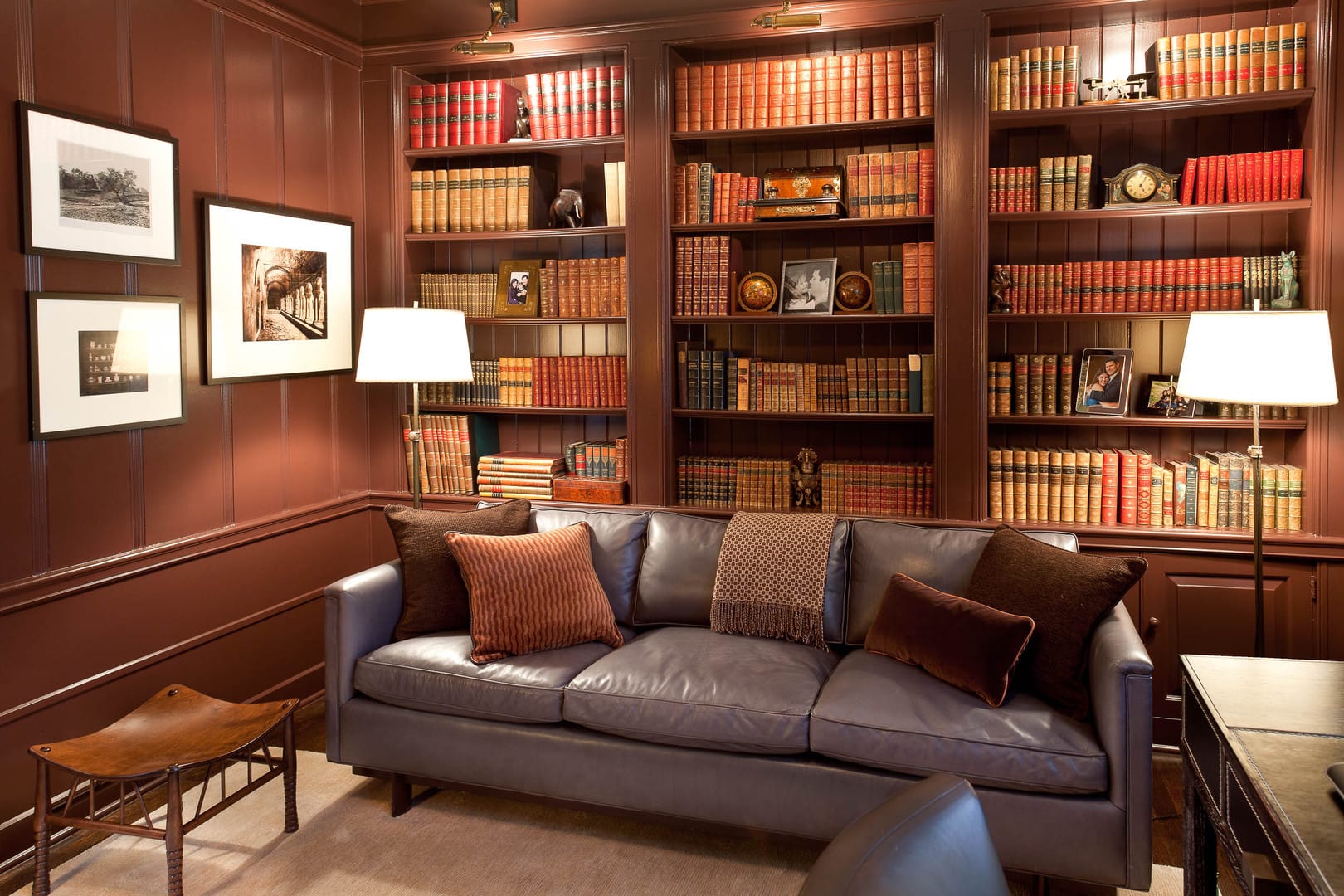
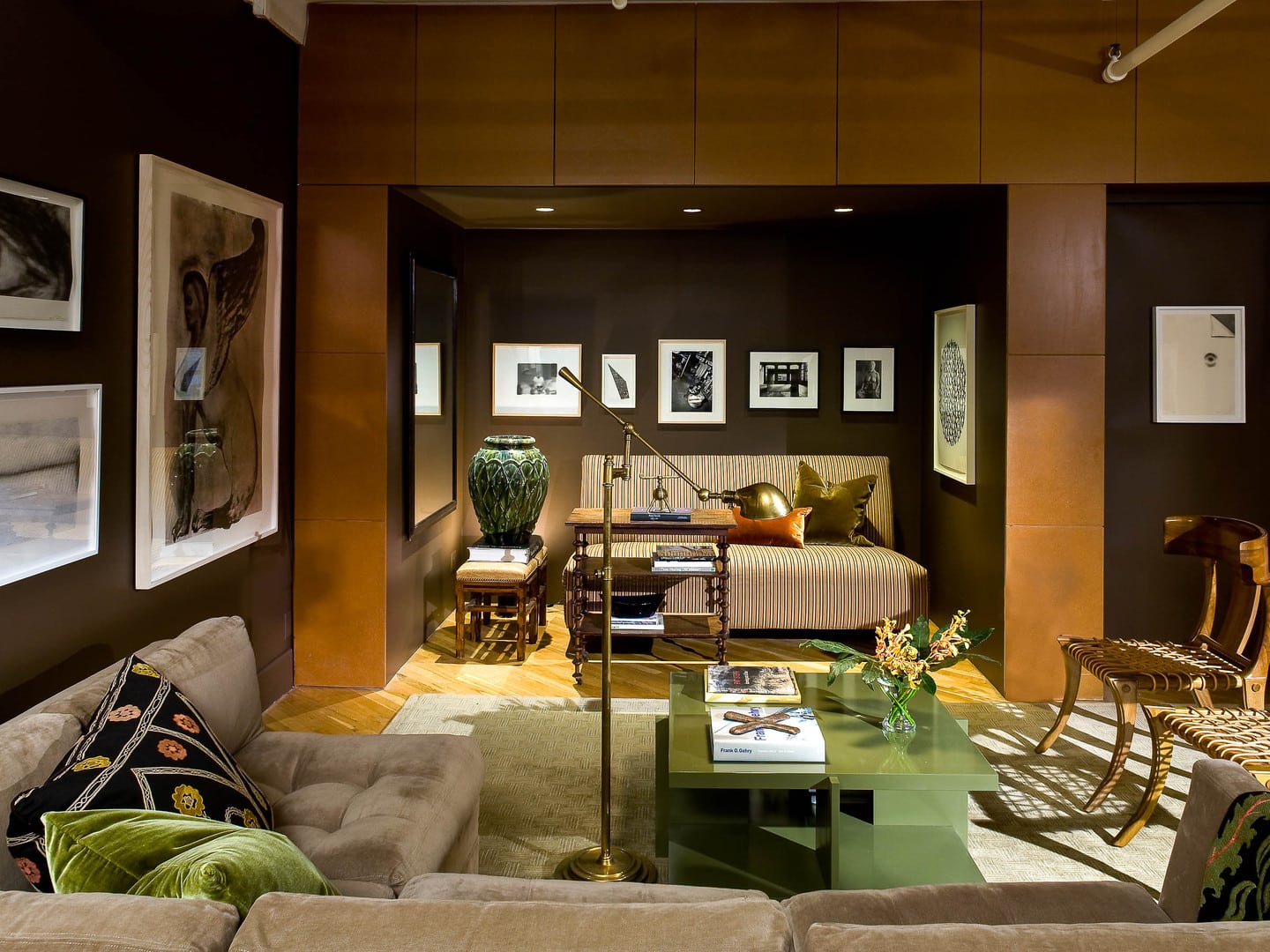
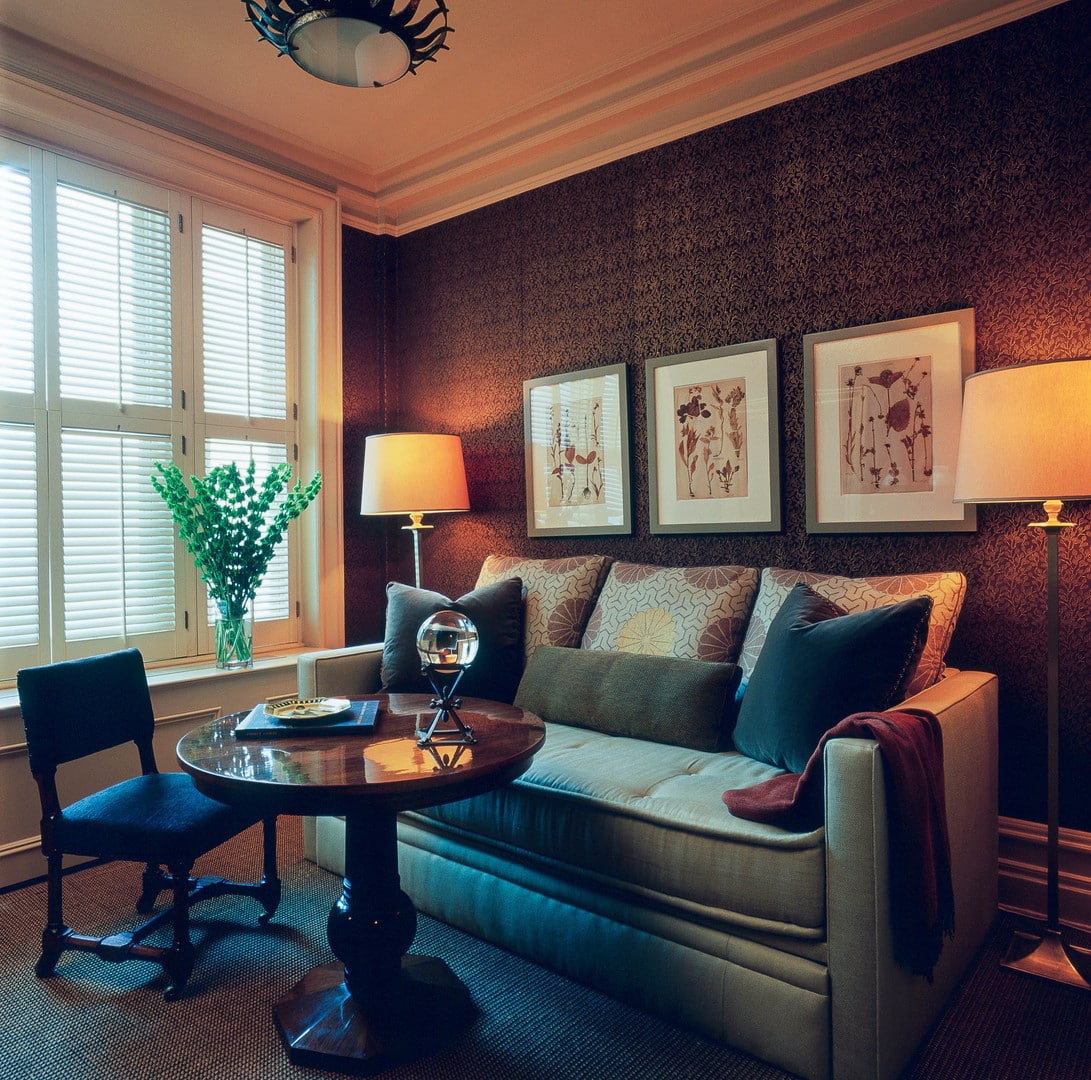
In the den, embroidered pillows and framed dried ferns add texture against a chocolate wallpaper.

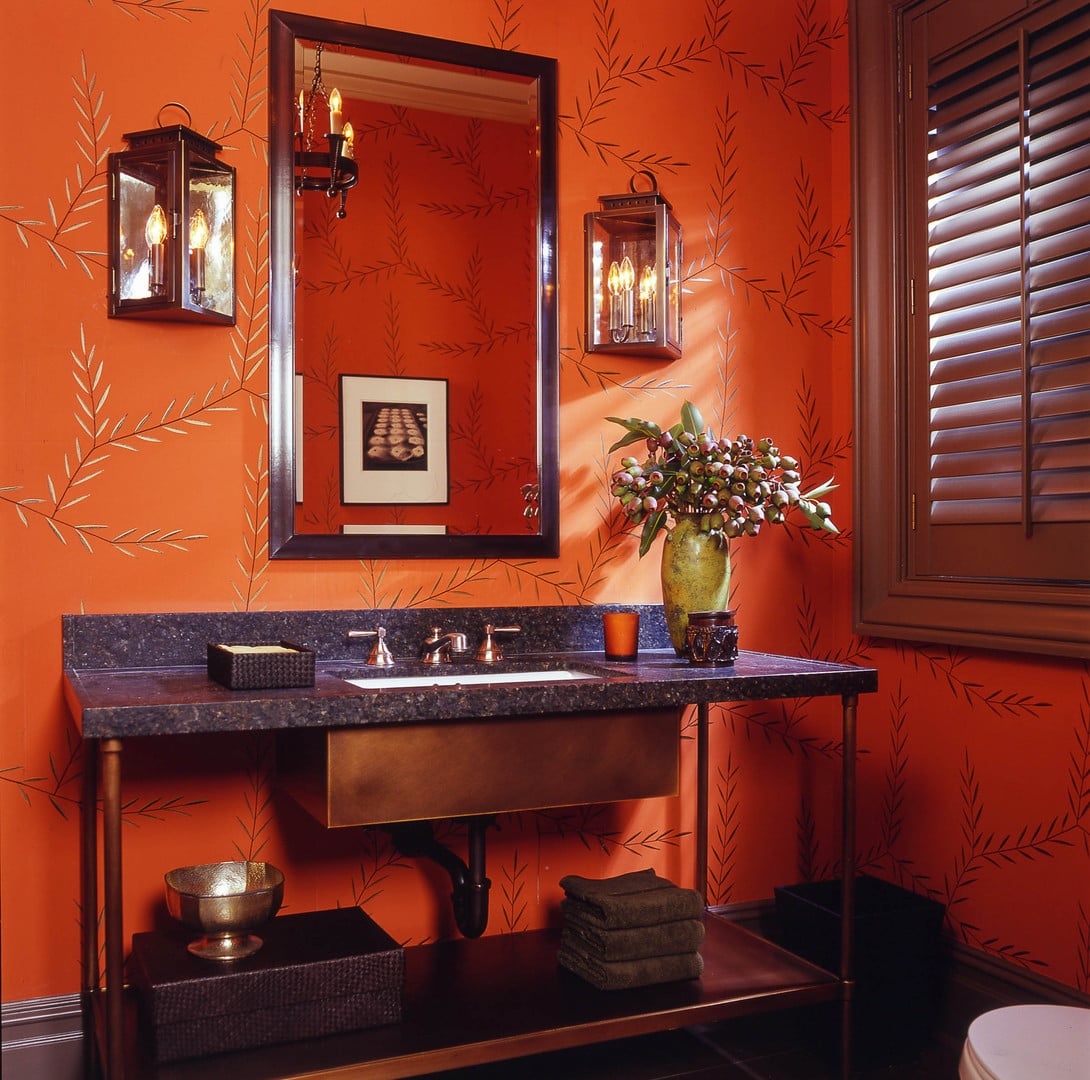
A handsomely appointed Master Bathroom, with wide Uba Tuba granite sink is enveloped in a rare, pumpkin-colored wallpaper with a stylized pattern of slender leaves, designed by the great Viennese designer Dagobert Peche.

Senior Designer Craig Strulovitz
Photos by Gross & Daley

Waterfront Residence, Westchester, NY

WESTCHESTER, NY

Waterfront Residence

These clients, empty nesters, desired what Glenn calls “a new old house,” a residence with all the charm–including the detailing, stone and millwork–of a 19th century house, but the amenities of a contemporary one. The siting of this 1960s house was magnificent; it overlooked Kirby Pond and Long Island Sound in a neighborhood of beautiful late 19th and early 20th century houses. But massive renovation was necessary to create an aura of age as well as to effectuate modern conveniences. From the footprint of a generic Colonial-style house, we forged a house redolent with late 19th and early 20th century architectural references which meshed with the ethos of the early houses nearby.

Windows and doors were added, especially to emphasize views of the pond, and the layout was reconfigured, with some room additions, notably the vaulted-ceilinged dining room. The master bedroom, with his and hers bathrooms, remained downstairs, while one of three bedrooms upstairs was converted into an office for the lady of the house.

In furnishing the house, we made use of some pieces already owned by the clients, as well as selecting antique furniture that had patina and character, not necessarily heavily pedigreed. Rugs throughout the house were custom, and included some interesting techniques of fabrication, including braiding and hooking. The overarching decorative effect of these rooms is a kind of restrained, even reductive American Colonialism, a fresh interpretation of the style with a light streamlined touch.

French doors in the living room open onto splendidly landscaped views of Kirby Pond. The custom Tibetan weave rug resembles an updated Colonial hooked rug, with its warm tones. The curtains are a traditional print; and the porch chairs are rockers from Charleston, South Carolina. The husband’s desk and work area are at right.

Rebuilding the house from virtually the ground up, we redesigned the elevations with multiple windows to augment symmetry, natural light and views. A stately curving gravel drive leads to the entry. Beautifully mullioned sash windows now flank the front door.

A 1780s English bureau in the Entry signals the character of the whole house.

In another view of the living room, we accentuated the existing homely low ceilings by adding beams. An antique Chinese bed is used as a coffee table; and we commissioned a contemporary landscape painter to create a view of the pond at dusk.

"We purchased an unremarkable Colonial house on a great site overlooking the Long Island Sound that needed a complete renovation, and found Glenn Gissler Design after researching interior design experts on the internet. We could not be happier with the process and the results."

– Client

In the kitchen, vernacular elements–beadboard ceilings, rustic tiles and an antique rug–create an atmosphere of slightly countrified tradition rendered with new lightness and energy. Eighteenth century pewter plates on the wall accentuate the early American feeling.

Windows added on three sides provide expansive views for the breakfast room. The table, chairs and chandelier are antique; the rug is custom braided.

The powder room is resplendent with a hand-blocked golden wallpaper by Alpha Workshops. The bronze washstand contrasts beautifully with the countertop of black combed granite. The light fixture is early 20th century French.

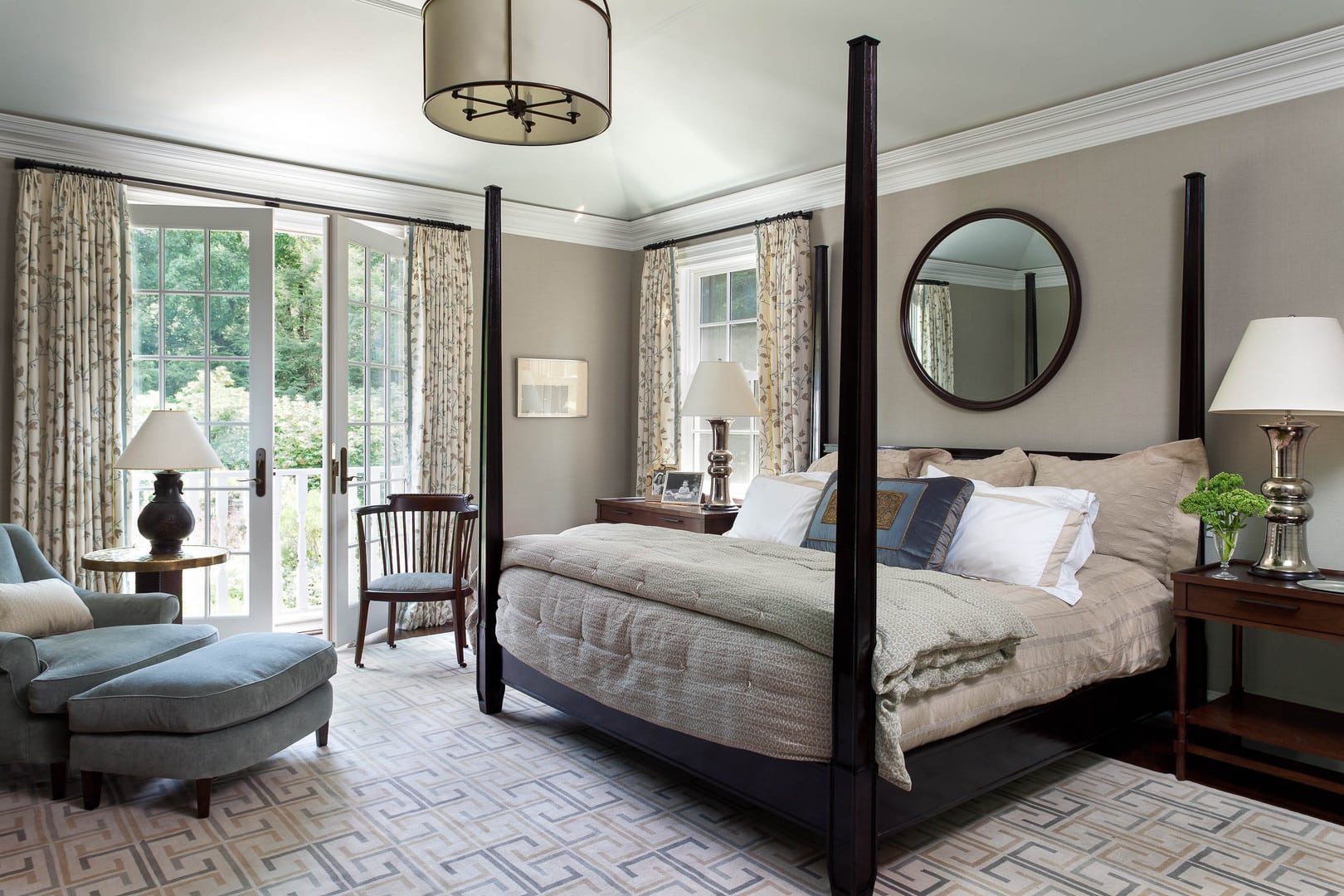
In the master bedroom, a four-poster bed with caned headboard is illuminated by a Christopher Spitzmiller lamp in black pearl finish.

The “Hers” master bath is a luminous essay in off-white, highlighted by Perlino Bianco floor tile.

The guest room is an enclave of rich simplicity, created by an ensemble of sisal matting, an antique barley-twist table, crewel curtains, and iron bedstead with antique quilt.

In the guest bath, an intricate floor of mosaic tile creates a textured ground for a traditional wooden washstand.

An ultra-simple Mudroom epitomizes honest construction, reminiscent of that in Shaker houses. The walls are beadboard with hooks for clothing, the floor a durable dark green slate.

An outdoor view overlooking Kirby Pond shows a low, curving fieldstone wall added by Glenn.

Senior Designer Craig Strulovitz
Photos by Gross & Daley

Oceanfront Home – Hamptons

Watermill, NY

Hamptons Oceanfront Home

We began designing this waterfront weekend house in Water Mill, Long Island, overlooking both the Atlantic Ocean and Mecox Bay, over twenty years ago – and we venture to say it has stood the test of time. In fact, like any good house, the design we forged in the early 1990s has demanded change and evolution; but there is a certain consistency of style and predilection–both the client’s and ours–for art, furniture, and artifacts, European and American, of the late 19th and early 20th centuries. For a Shingle Style house on a grand scale–9000 square feet–our penchant for spareness was challenged by the obvious need for a sense of fullness in the rooms.

East Hampton architect Francis Fleetwood, who built the house for Hirsch, had endowed it with aspects derived from late-19th-century sources: porches, facades, fireplaces, shingles, and wood paneling. Yet finally the house evinces a late twentieth-century simplicity, a subtle drive towards modernity. In furnishing the house, we endeavored to strike a balance between old-fashioned comfort and warmth and modern legibility.

Fleetwood’s design is notable for its many windows–and window seats–giving the house an extraordinary lightness. Therefore we were able to place rather deeply colored, rich furniture in it–Shaker and Mission pieces; Arts and Crafts era antiques; fin de siecle Austrian elements. The result is a house that is welcoming to its many summer guests, yet cozily suited to romantic winter weekends a deux.

A long carved-wood trestle bench beckons to guests in this tableaux replete with Chinese Chippendale tables.

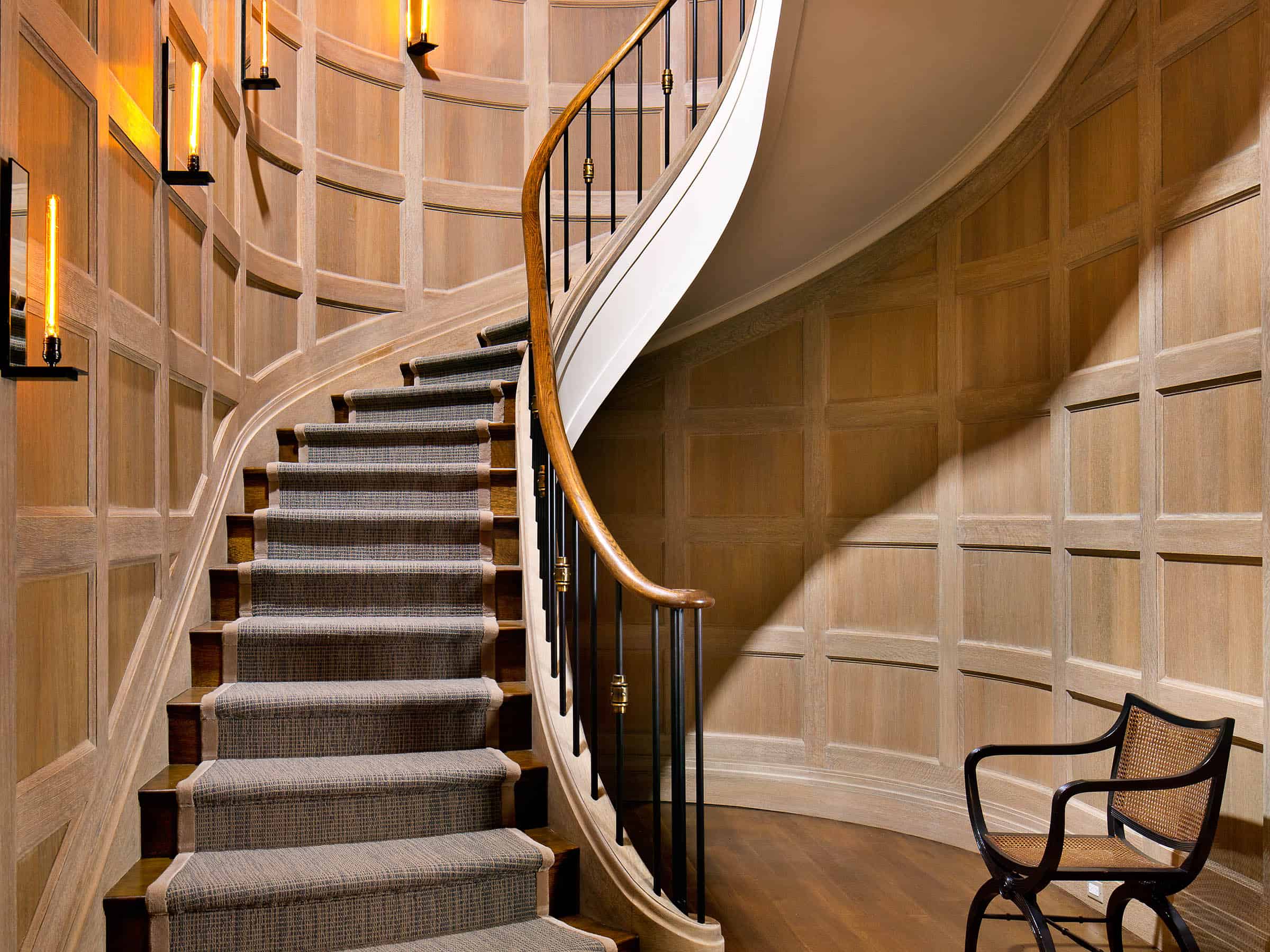
A towering double-height entry, paneled in white painted mortice-and-tenon squares, echoes the great houses of Lutyens, with an elegant sweeping staircase.

"I first worked with Glenn Gissler over 25 years ago when I was building a new oceanfront home in Watermill, New York that I still enjoy today. We recently did some refreshing of the main floor, but the countless decisions we made decades ago stood the test of time."

– Client

Stunning Arts & Crafts chairs from Newel Art Galleries with splats formed like arrows and spades, a mysterious, moody seascape painting and abundant low lighting–designed by us–create an atmosphere in this dining room that seems of another time and place.

A glimpse of the dining room from the living room reveals an Arts and Crafts-style chandelier of five shaded lamps. The tall velvet sofa, with deep fringe at the bottom, is accompanied by an early 20th century table and lamp.

The capacious and embracing English-style sofa is covered in wool from Coraggio; the tapestried Louis XIII chair is from Reymer-Jourdan. The low table is Dutch Colonial, from Rene Antiques. A richly figured indigo and orange carpet from Safavieh enhances the complexity and color of the room.

An electrified oil lamp hangs over a rugged trestle table surrounded by English chairs from Newel Art Galleries.

A delightful corner of the library evokes the cafes of Vienna and Berlin. Dutch Colonial Indonesian chairs, 1920s, in a late Arts and Crafts style, accompany an Austrian walnut table of 1910. French iron wall sconces are from Reymer-Jourdan Antiques.

The porch, its floor faced in pale grey stone which echoes the blue-greys of the ocean in the distance, is a space for the pleasures both of entertainment and solitude.