Pied-à-Terre – Upper East Side, NYC

UPPER EAST SIDE – NYC

Pied-à-Terre

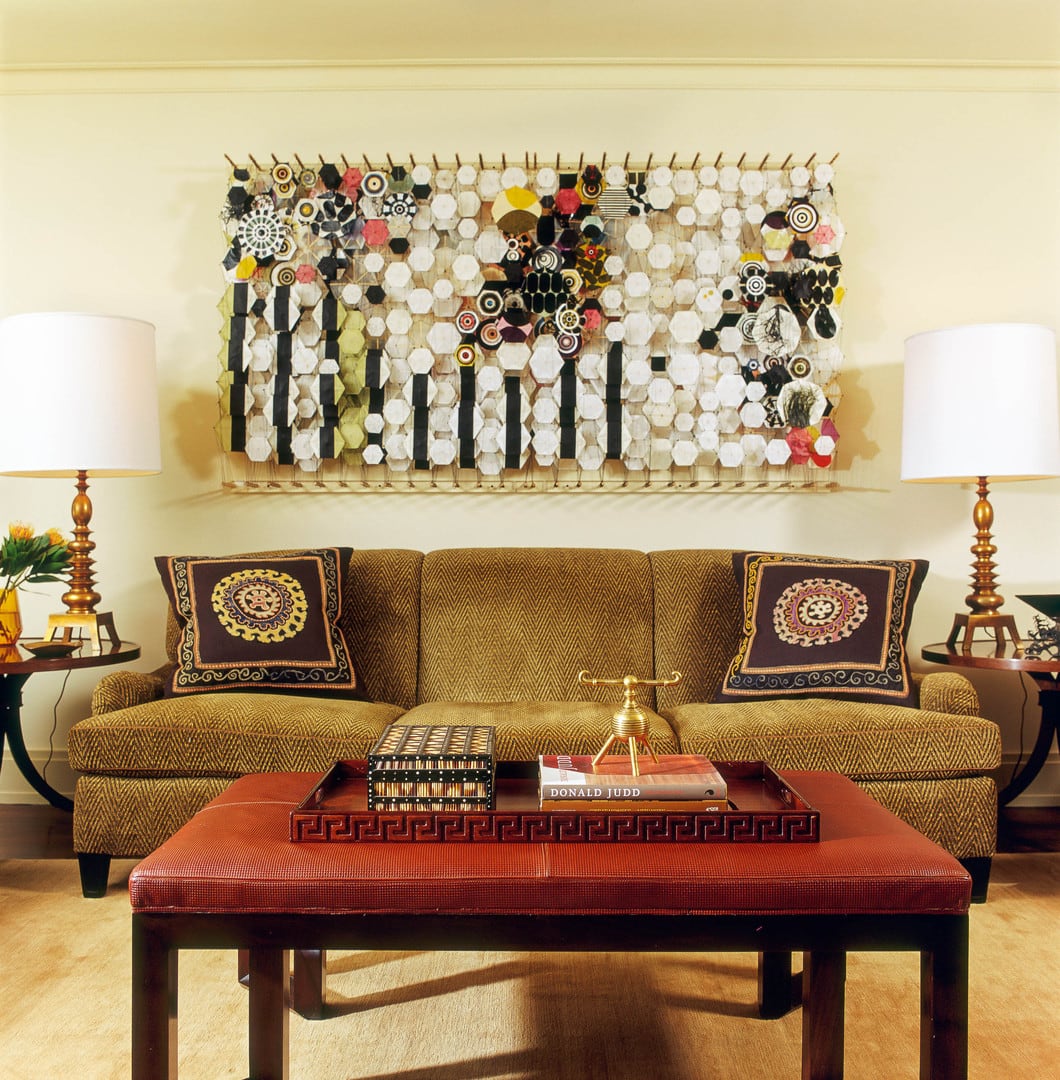
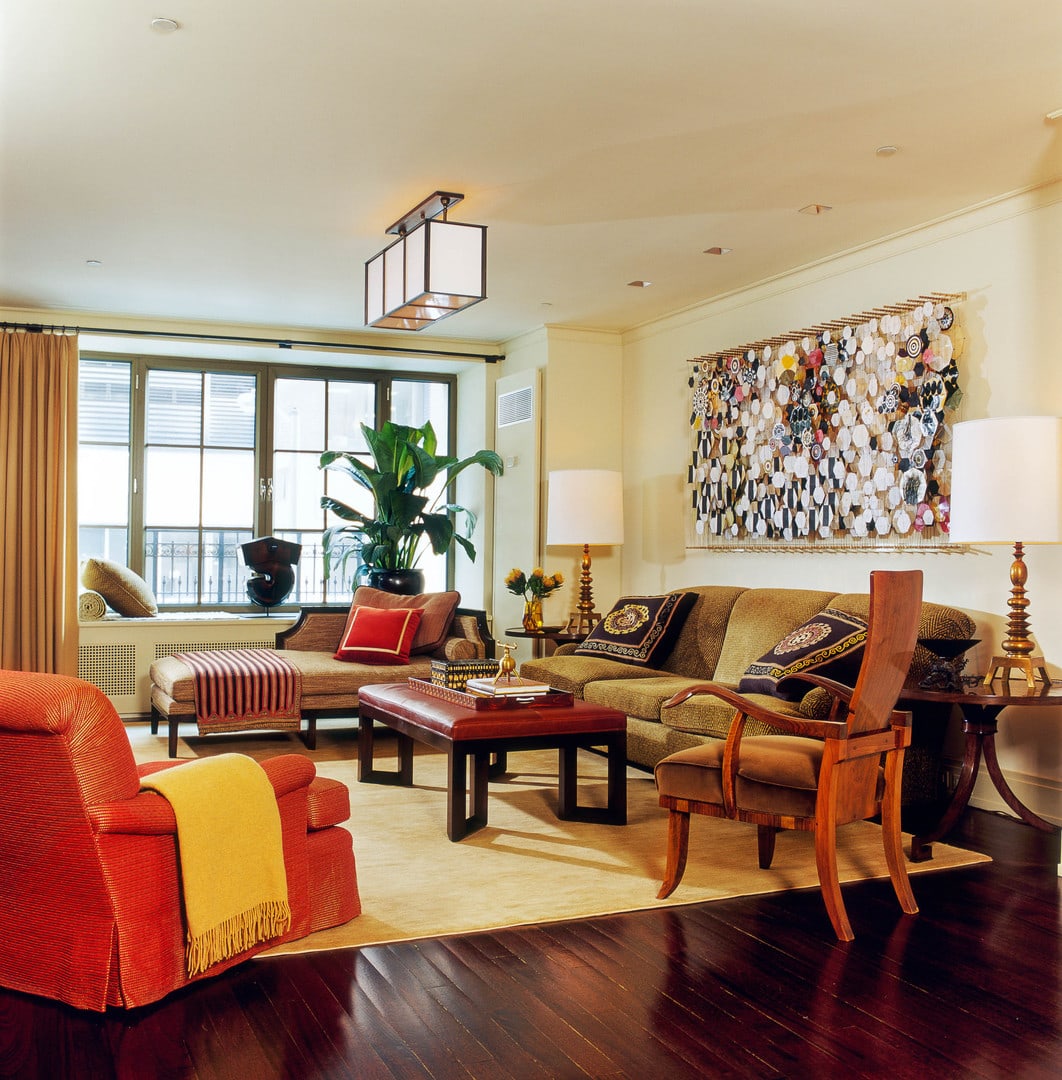
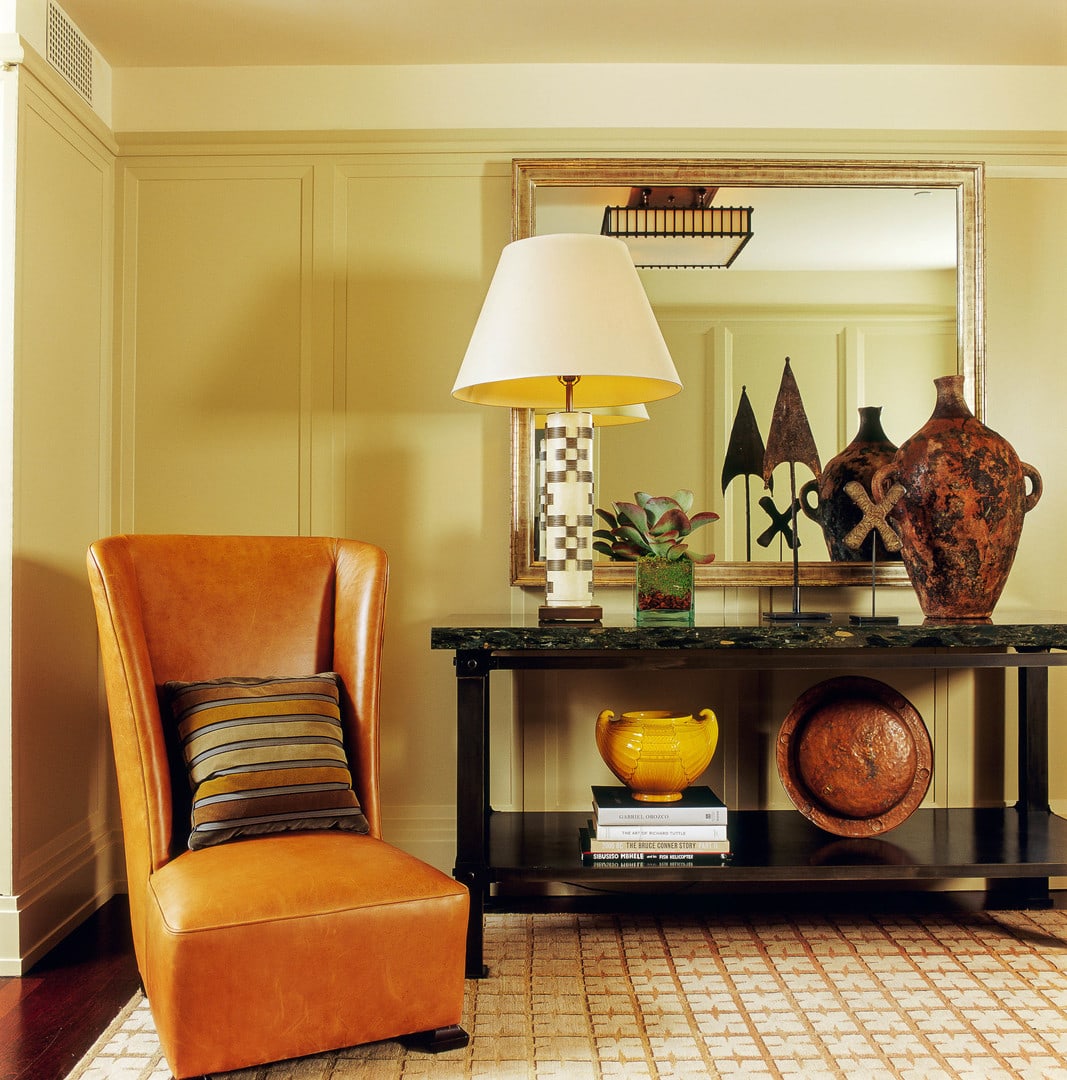
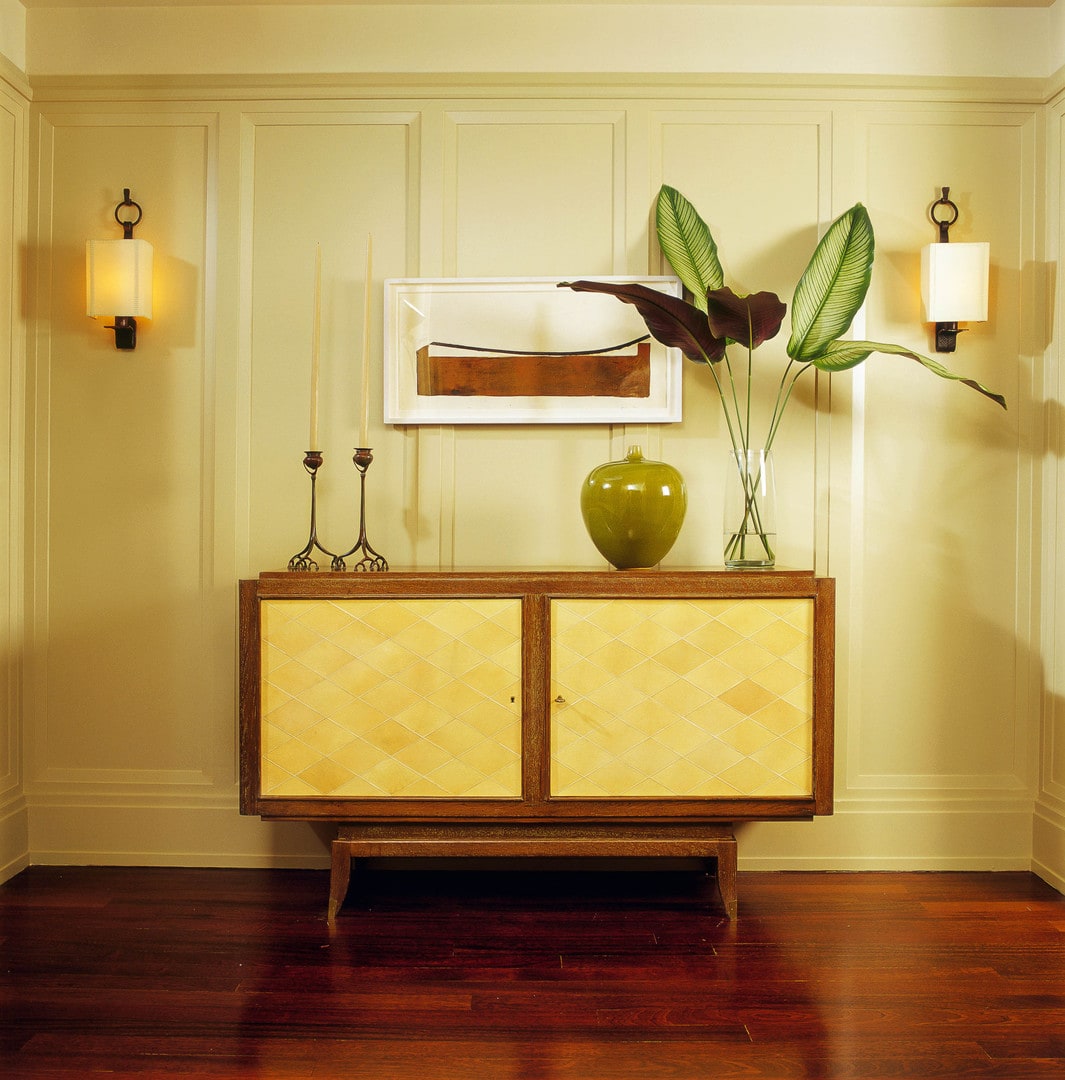
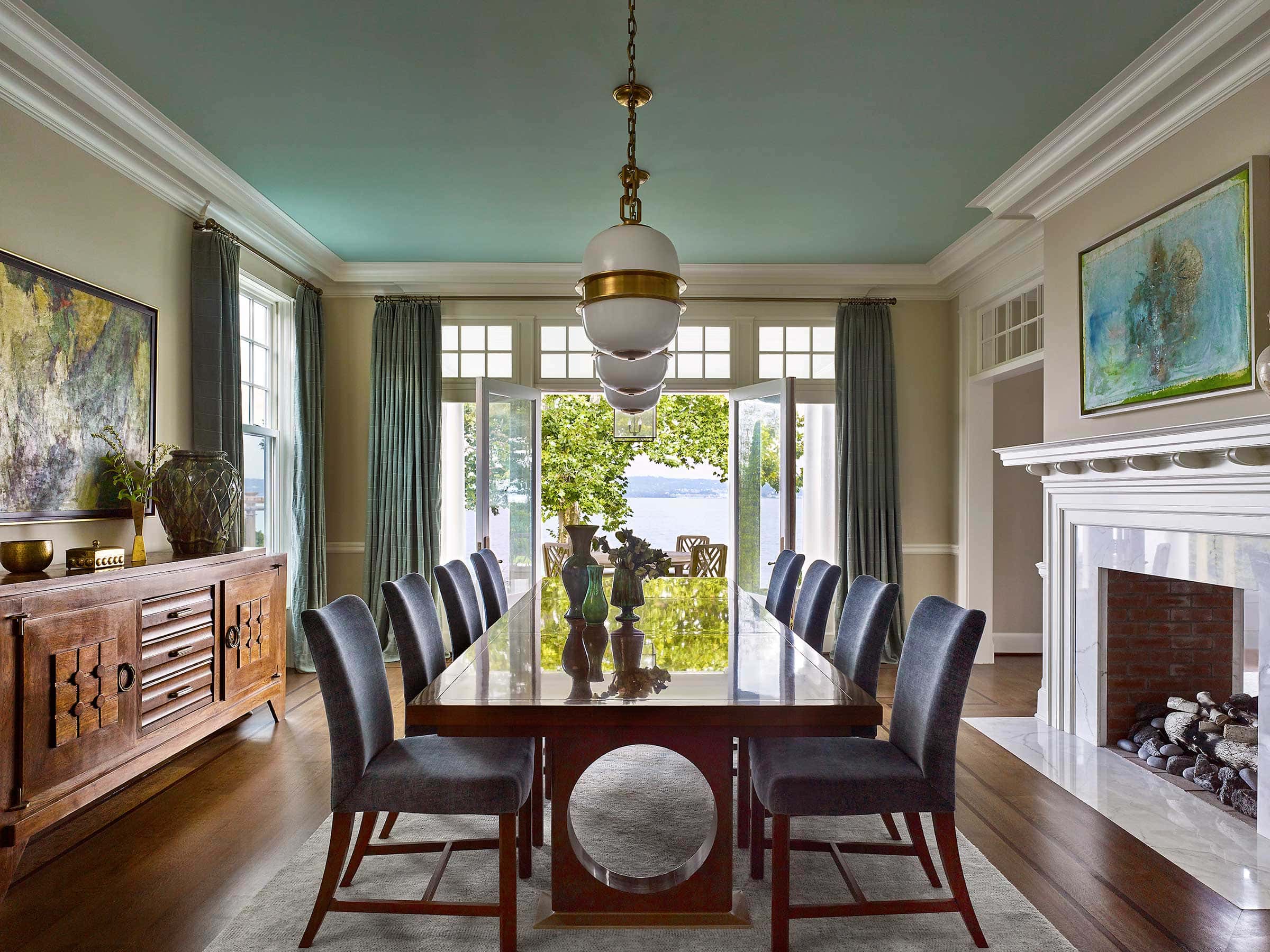
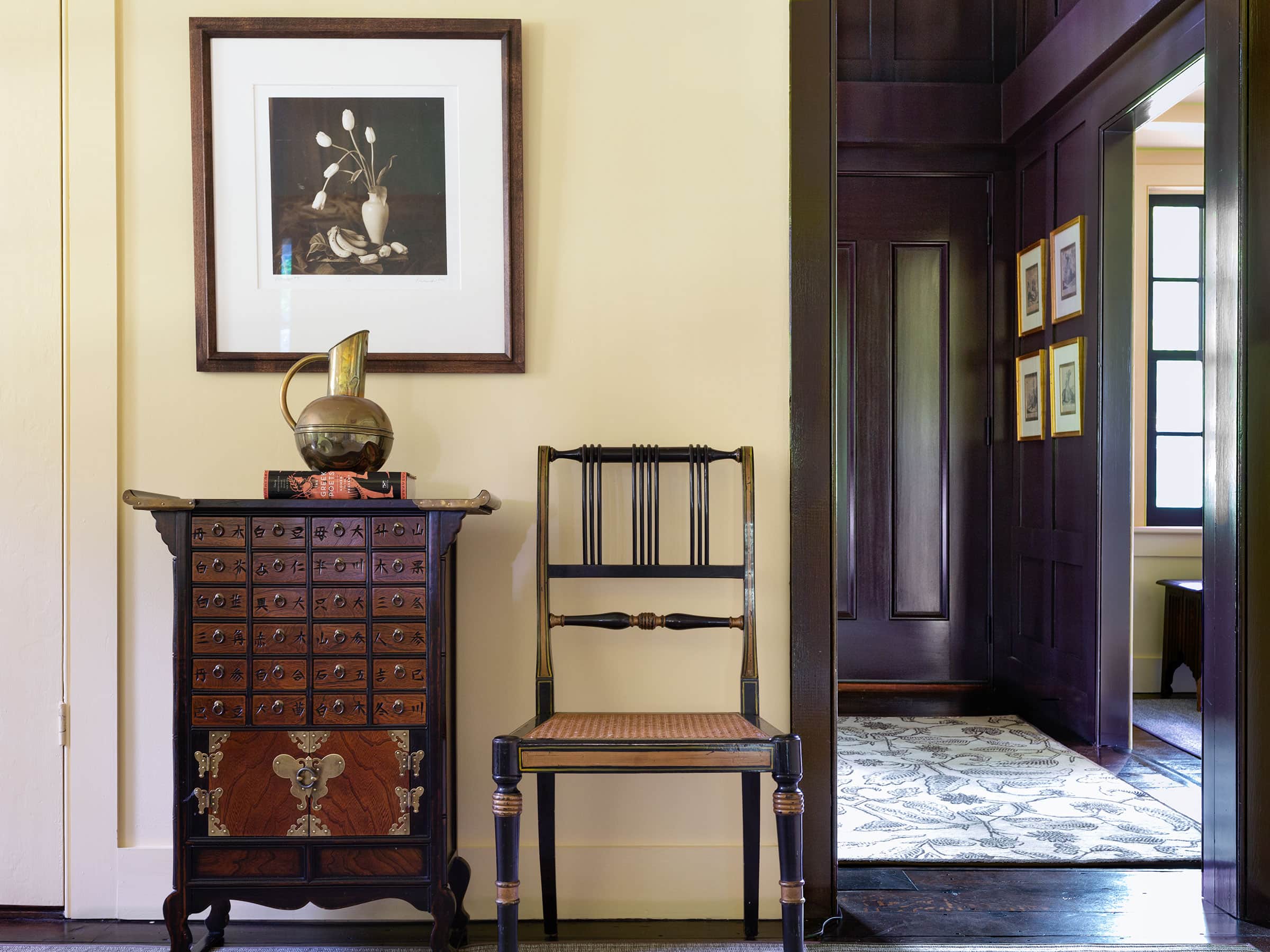
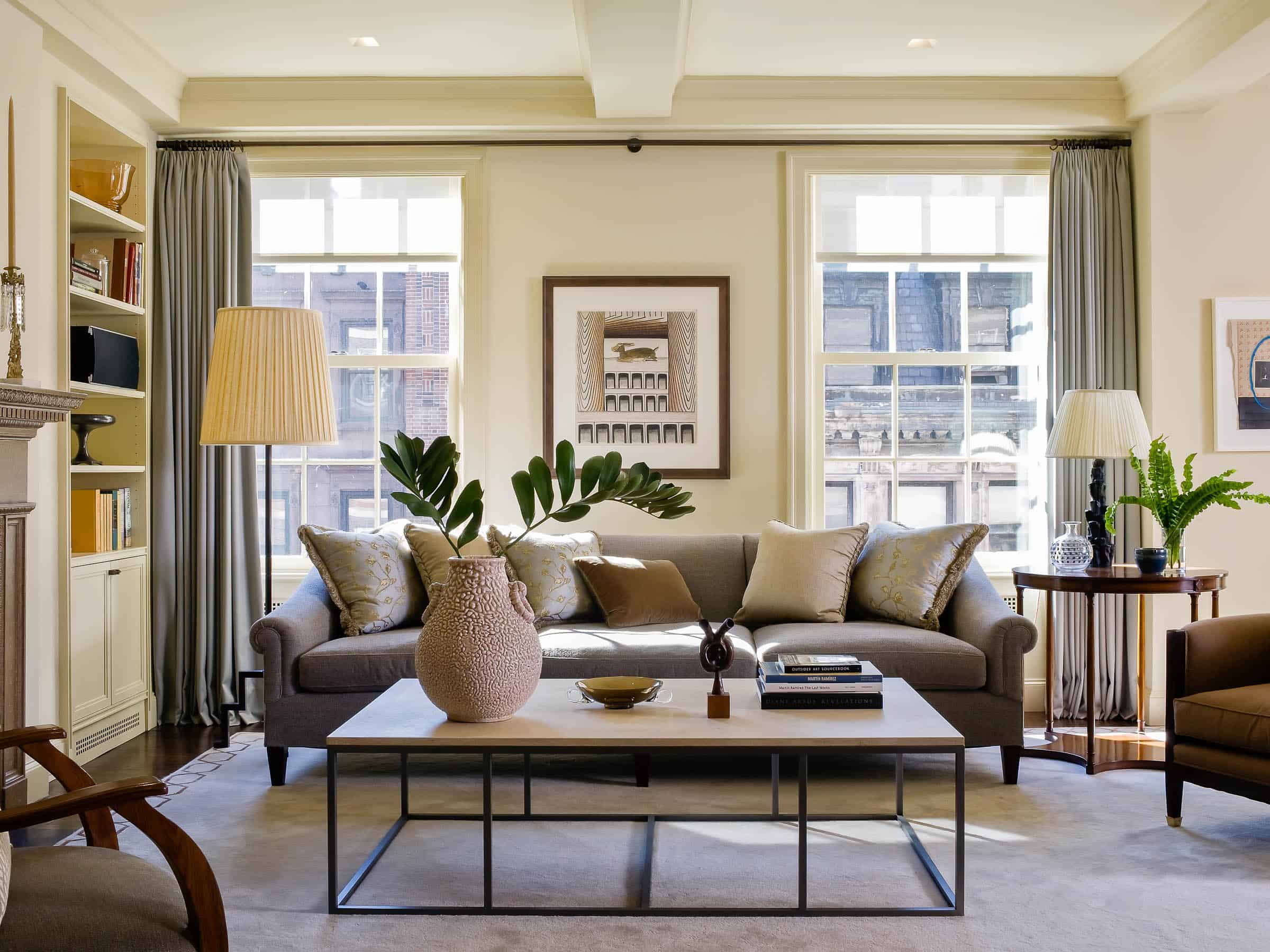
The clients, natives of Sao Paulo, love New York City, and wanted to establish a sometime home there, where their children and grandchildren could visit and they might entertain. To import the colors and cadence of Brazil was a joyous assignment for us, an unusual, less sedate take on modernism which draws inspiration from Latin American architects such as Brazil’s own Oscar Niemeyer, landscape architect Roberto Burle Marx, and Mexico’s Luis Barragan.

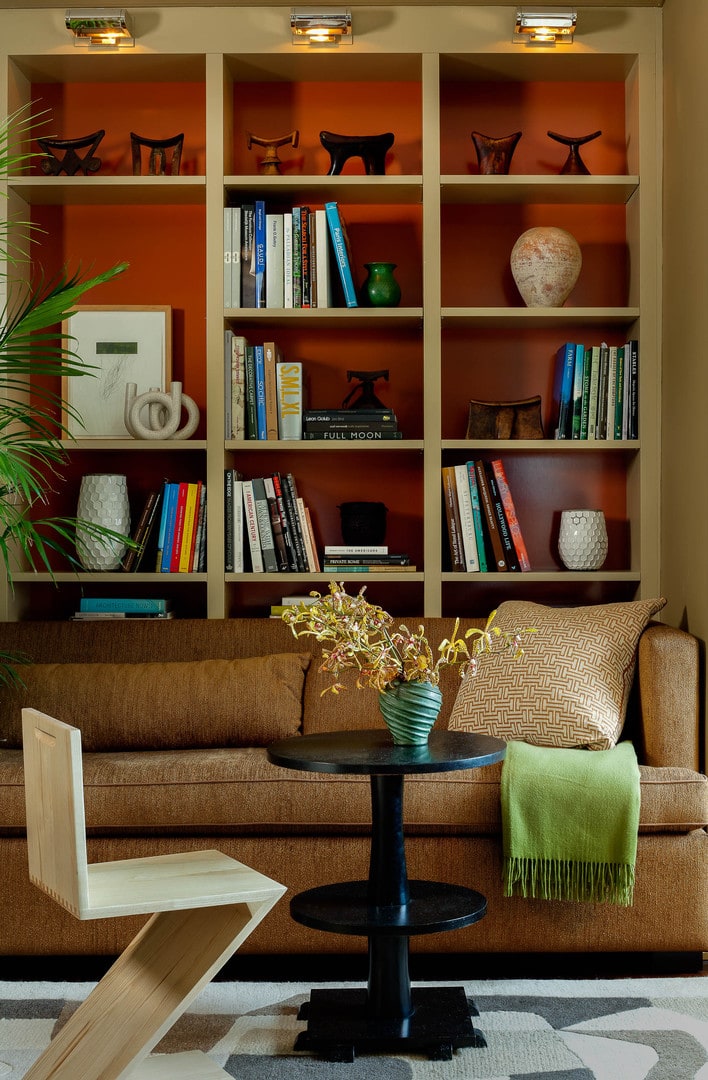
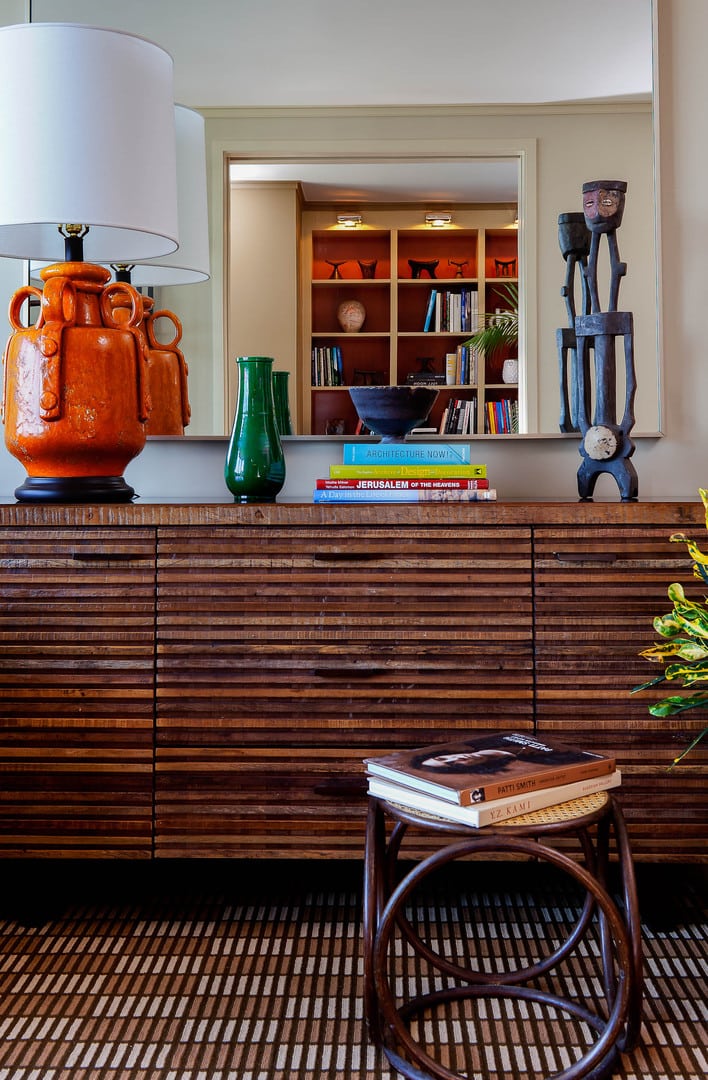
We adopted Niemeyer’s and Marx’s love of undulating biomorphic shapes in our selection of ceramics and artworks; and Barragan’s bold use of color to demarcate planes and announce room transitions. These architectural trends are hinted at, echoed rather than imitated. Instead of painting a whole wall orange, as Barragan might have done, we brought in this luscious, vibrant color more sparingly: the large ceramic lamp in the entry; the pillows and napkins in the dining area; and the back of a shelving unit. Yet the dominant colors–coffee brown, cinnamon and natural walnut–also speak of Brazilian tropics and tastes.
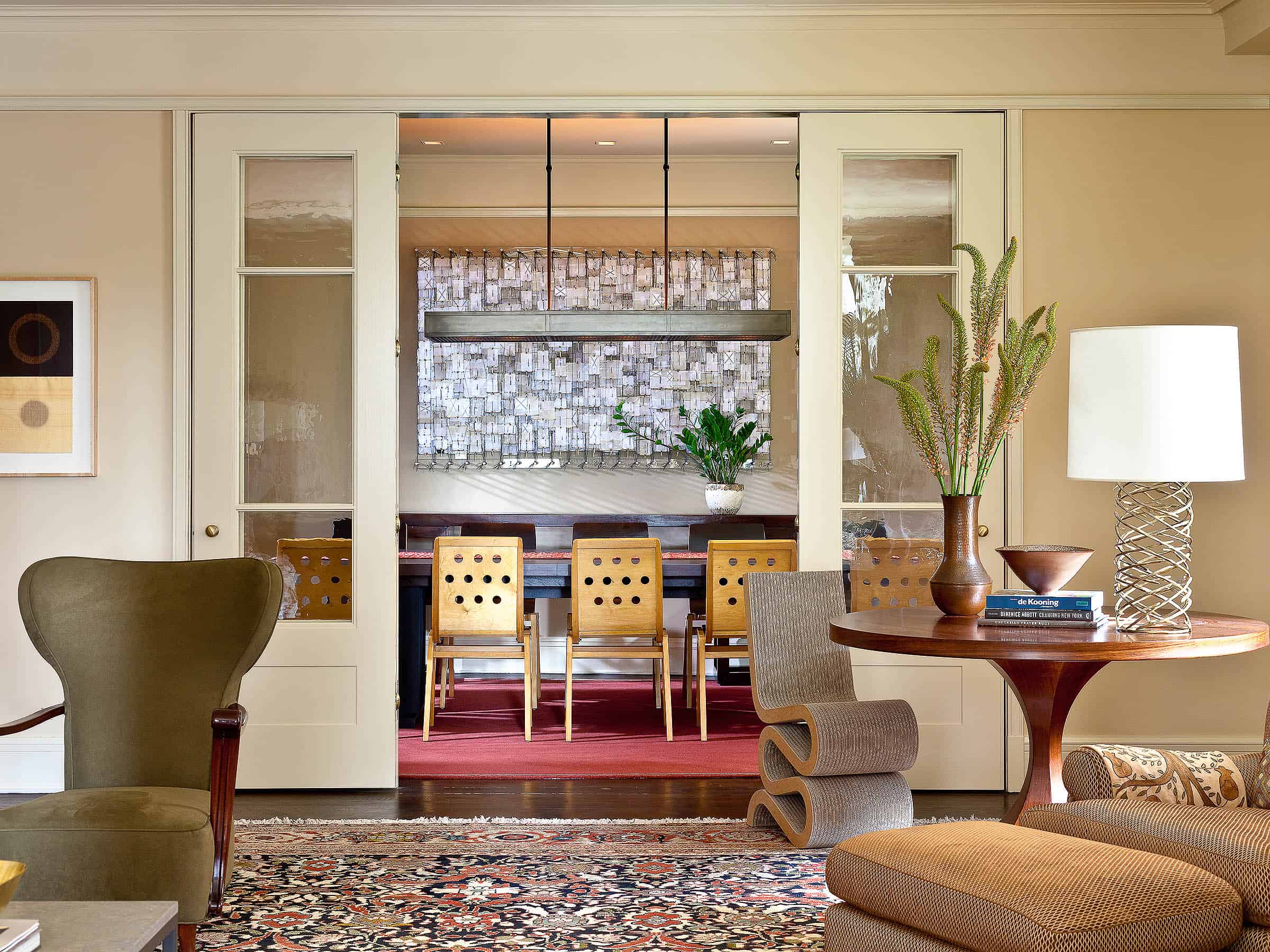
A custom banquette upholstered in distressed buckskin, and “Turner” chair in Kravet’s Diamond Raffia surround a custom walnut table top from Nutech Interiors. The large late 1950’s abstract painting in grey, black and white evinces the spirit of cool jazz.

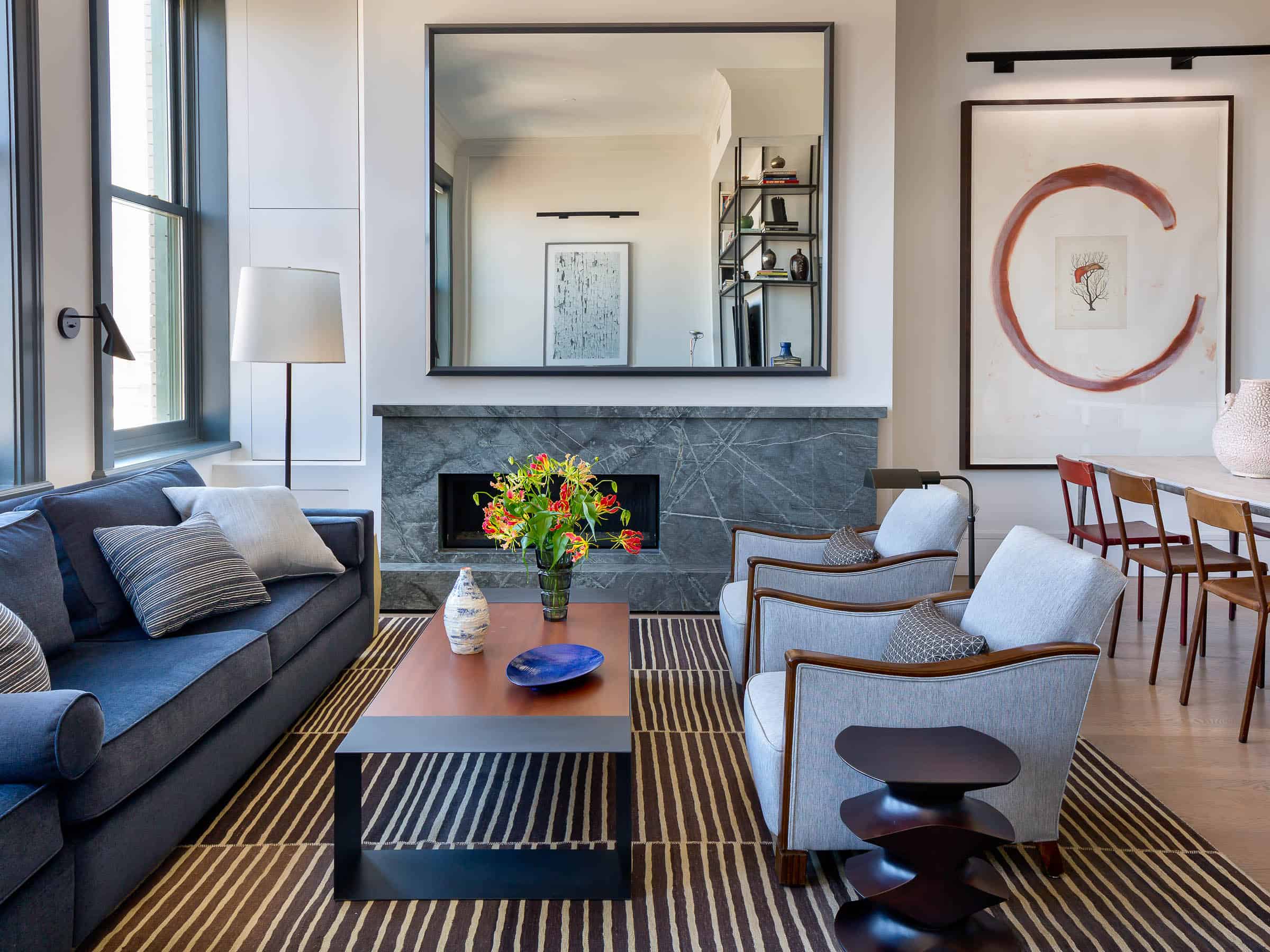
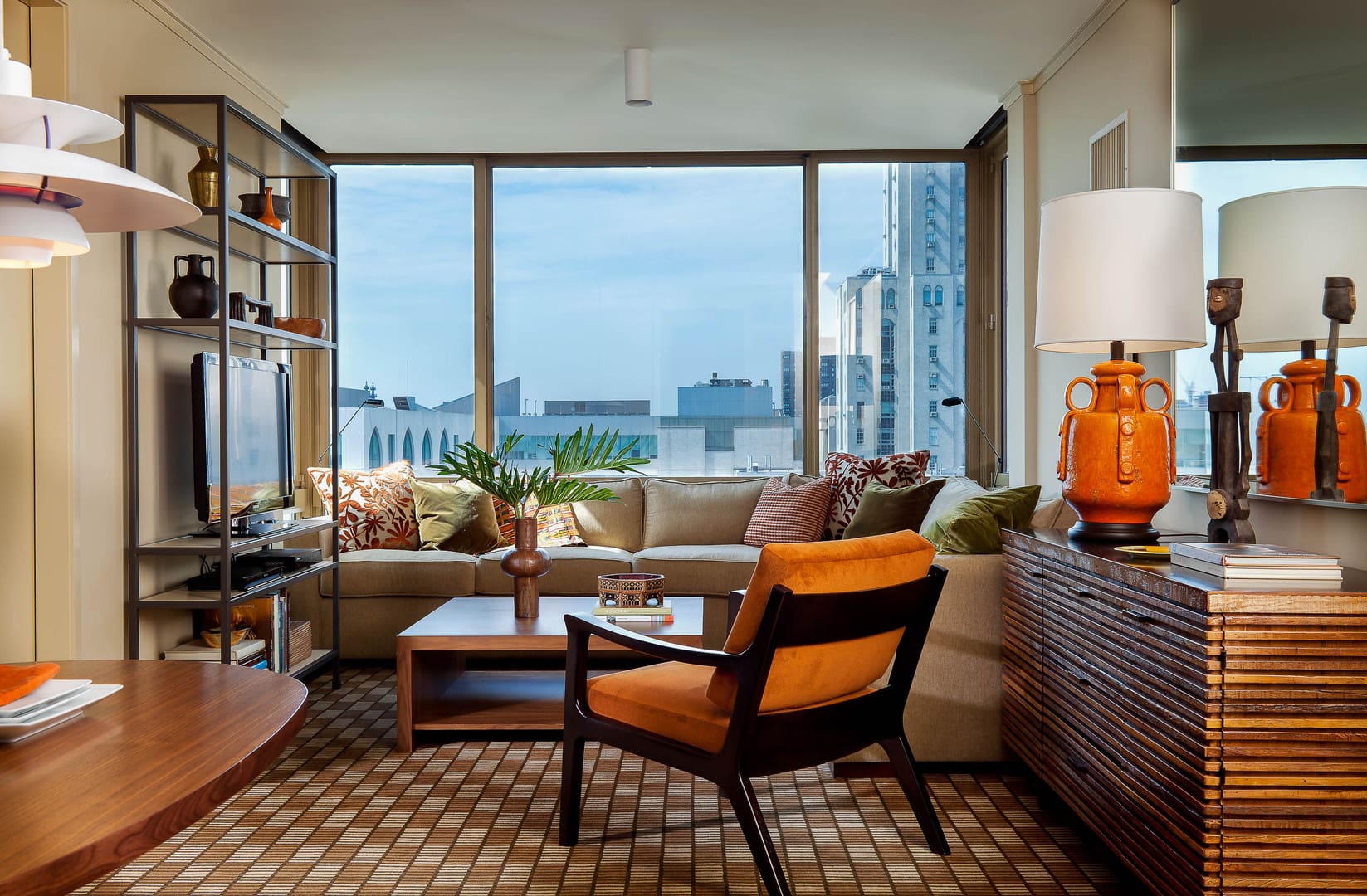
The slim, handsome custom one-armed sleeper sofa from Carlyle is juxtaposed with a jaunty abstract rug by John-Paul Philippe for West Elm, and Rietveld’s classic Zig Zag Chair.

We created an ensemble with an aura of Latin sophistication. The sideboard was crafted from rare, exotic peroba wood salvaged from the siding and floors of old buildings in Brazil. The 1960s orange stoneware lamp sets the vibrant mood of the entire apartment. The 1970s bentwood and cane stool and African sculpture complete the earthy, quirky atmosphere.

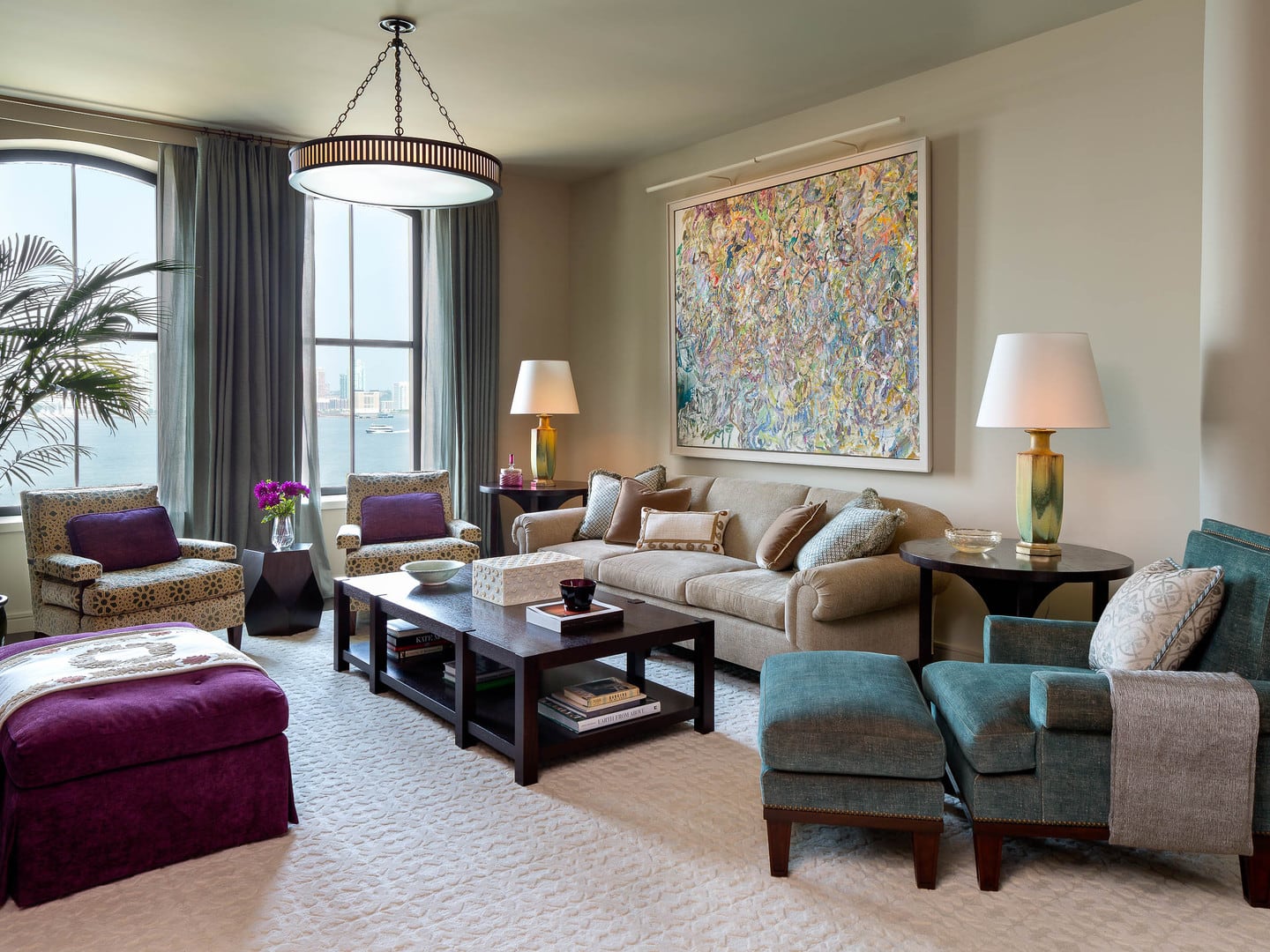
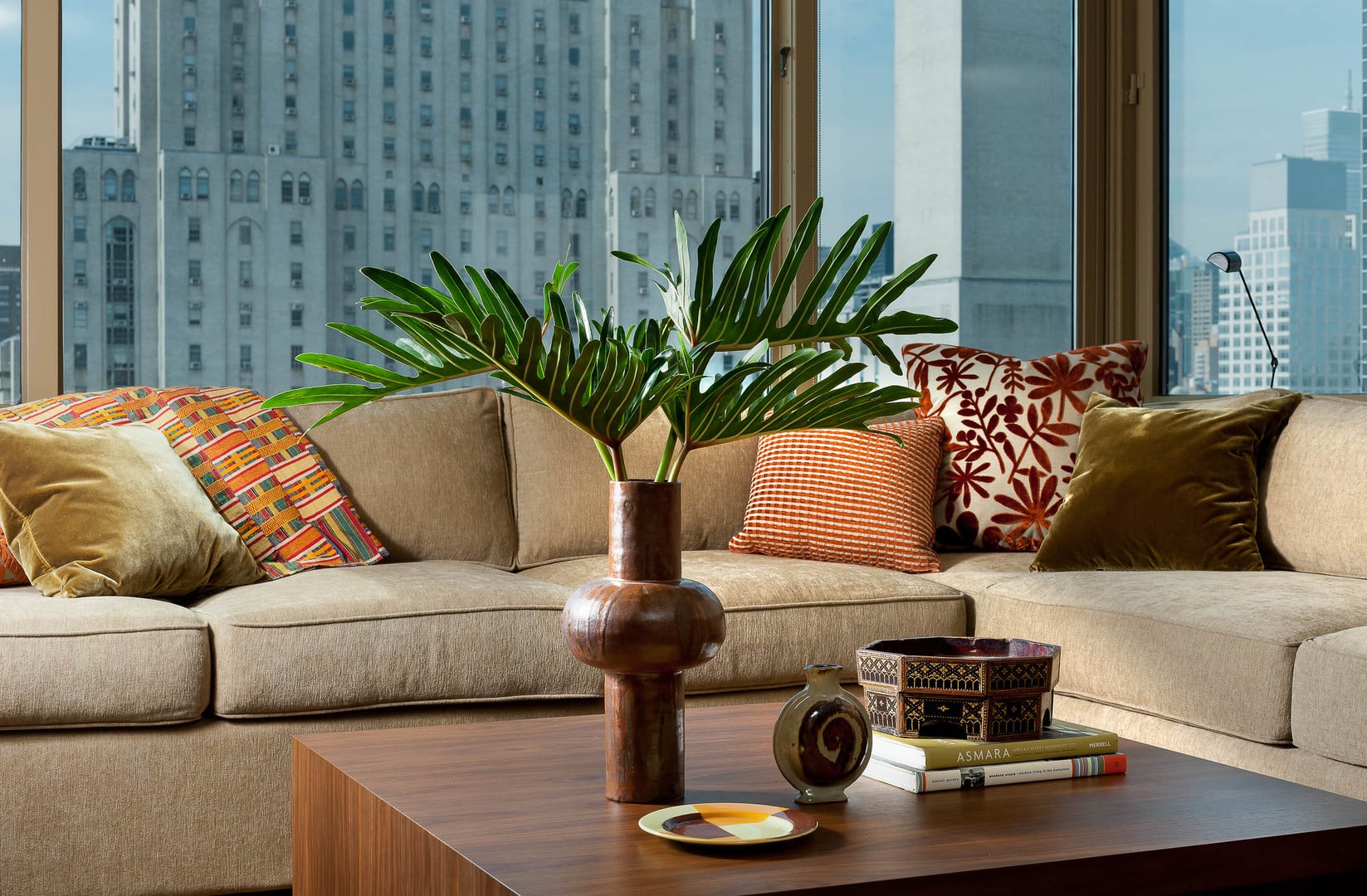
Earthy modern ceramics populate the large multi-use low table in the Living Room, with pops of color provided by textiles used on pillows and a vintage Kente cloth throw with a common orange thread.

A rich warm palette and comfortable mid-century style furniture overlook the cool geometry of the NYC landscape.

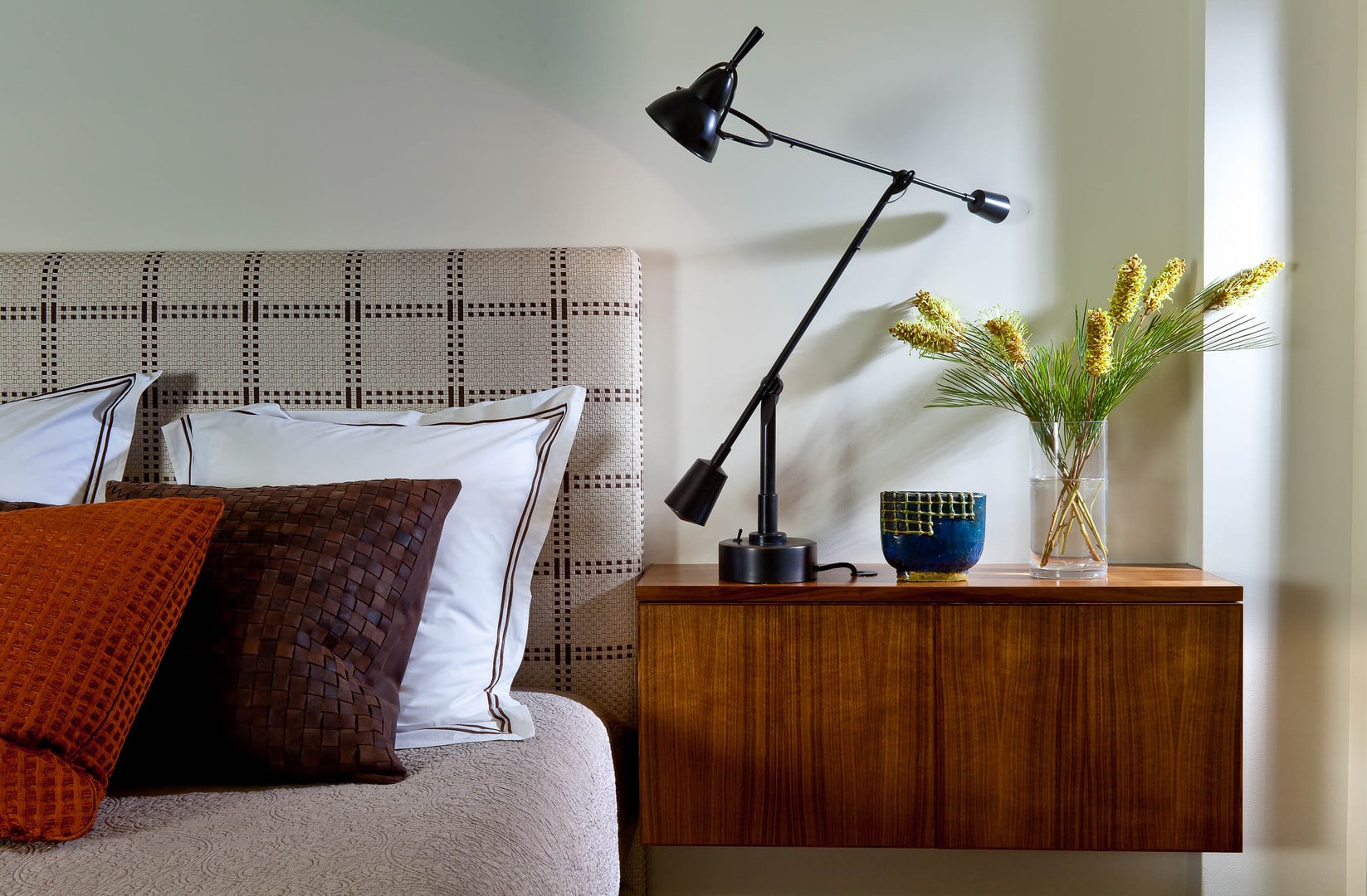
In the spacious bedroom, a custom bedside console floats along the wall, illuminated by the Machine Age lamp designed by Edouard-Wilfred Bouquet. The print is by Robert Motherwell. Archaic elements make their way into the room: a vintage Thebes Chair with leather upholstery and a small vintage Moroccan rug, c. 1940s, from Jacques Carcanagues.

A tailored upholstered head board combined with custom wall-mounted mahogany bedside cabinets with Edouard-Wilfred Buquet articulated lamps continue the clean-lined mid-century story.

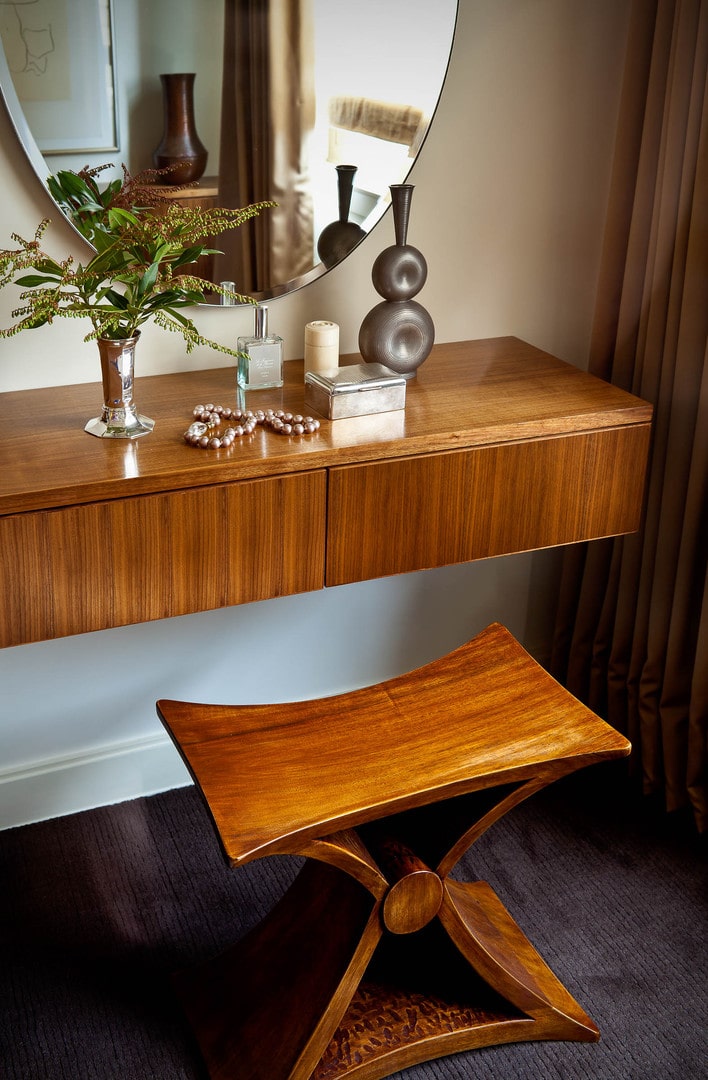
In a definite nod to simple luxury living a modern vanity was designed to provide a perfect location near the large window for the application of make-up, and completion of finishing touches.

Senior Designer Craig Strulovitz
Photos by Gross & Daley

Duplex Apartment – Brooklyn Heights

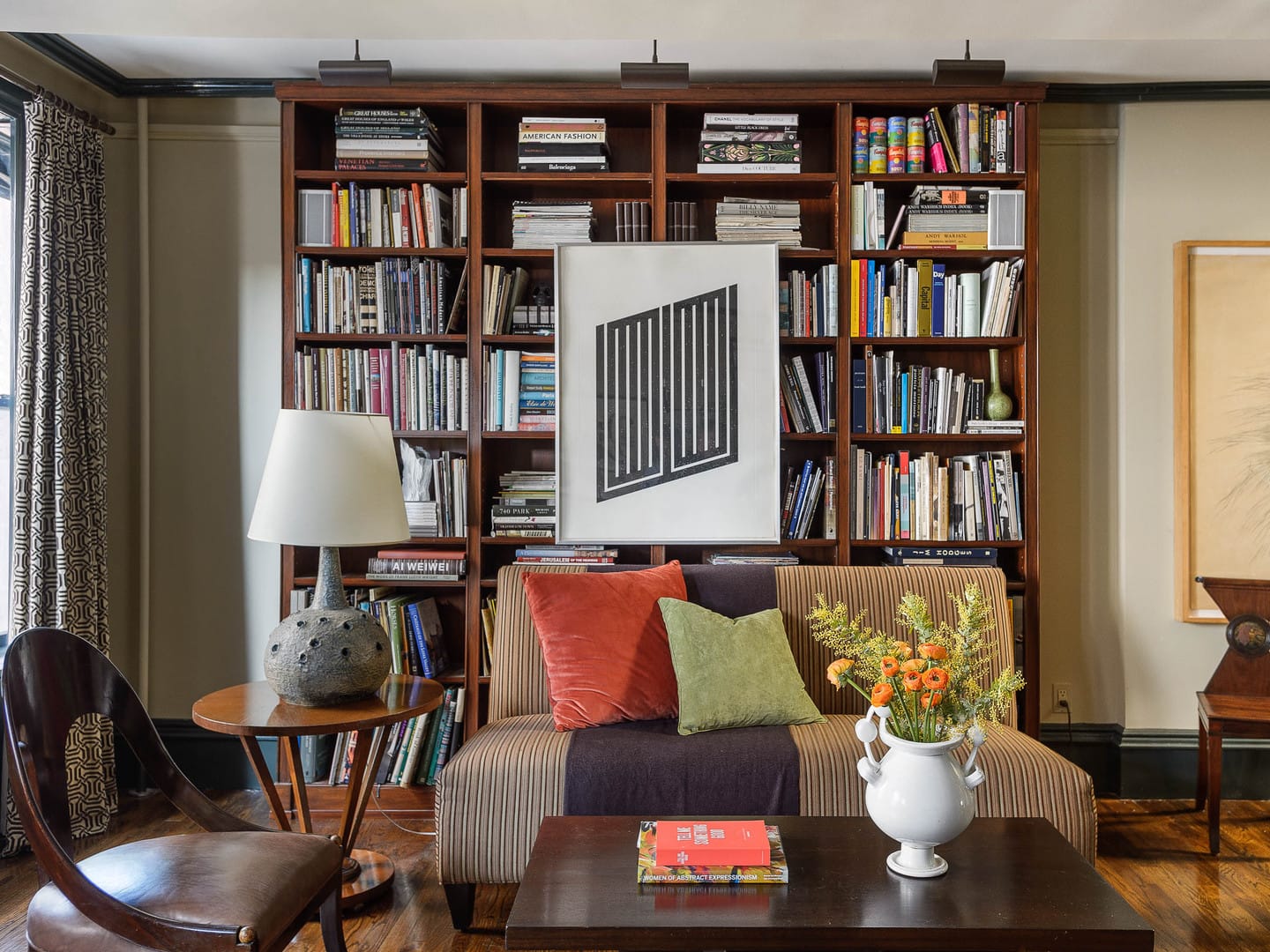
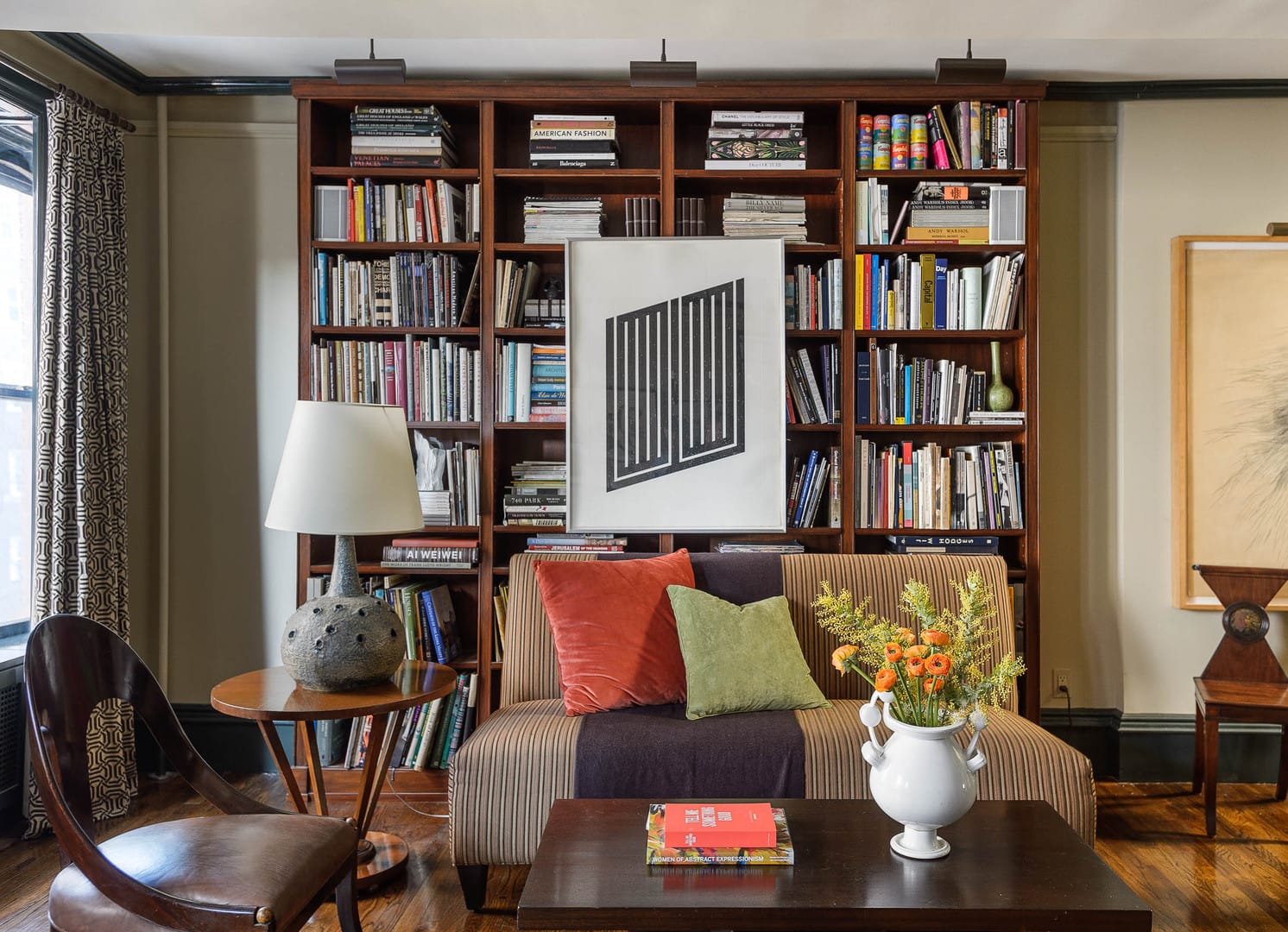
With its imposing wall of books, the downstairs sitting area doubles as a library.

BROOKLYN HEIGHTS – NYC

Duplex Apartment

This brownstone duplex – Glenn Gissler’s own — in the heart of historic Brooklyn Heights, represents a fine distillation of the designer’s development over the past three decades. The tailored, masculine sensibility of these rooms is expressed through unabashedly dark colors–camel, chocolate brown, and  green-black–which create a subdued yet rich background for Glenn’s collection of art, furniture and objects, grouped in tableaux which he regularly rearranges.

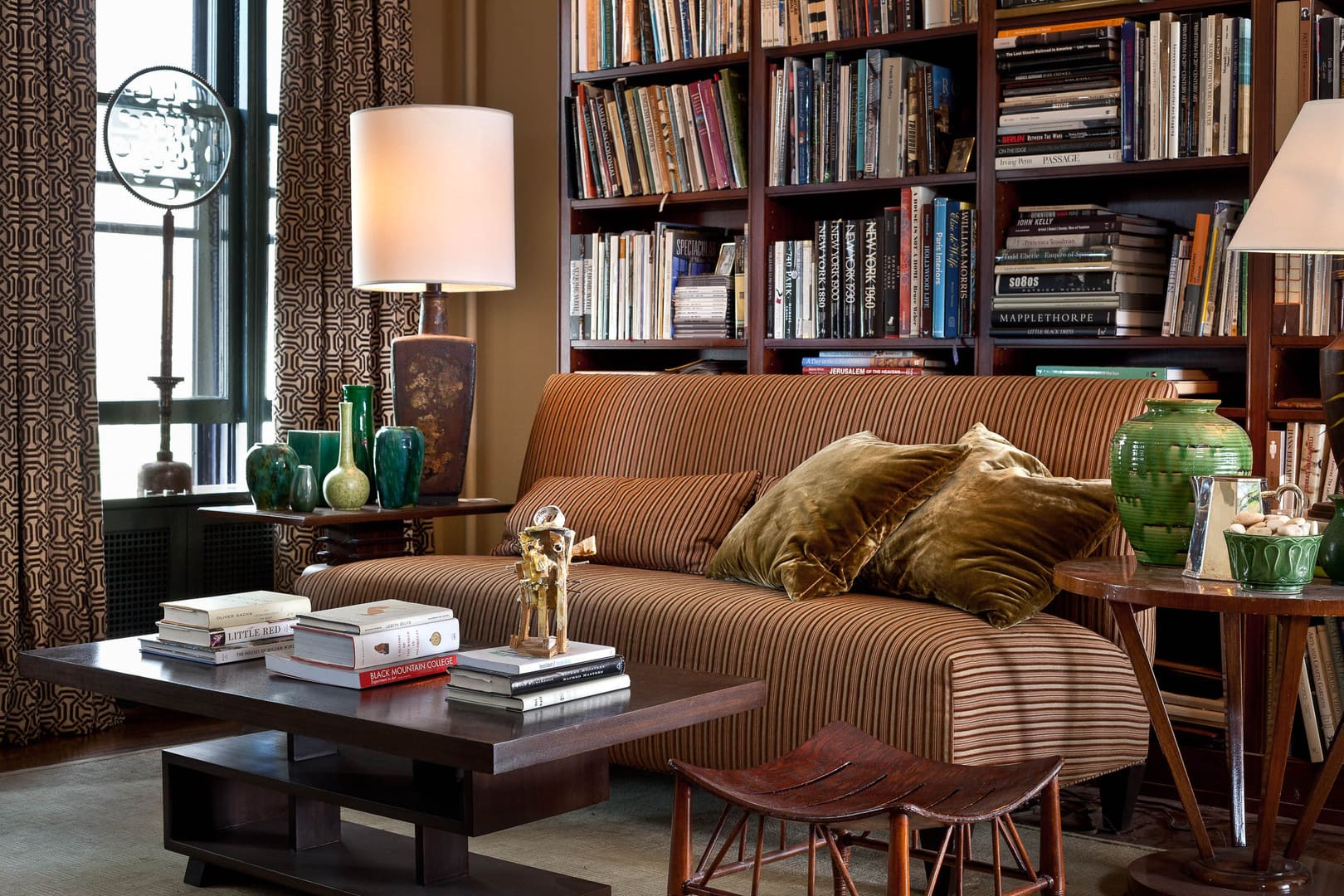
As a collector of Arts & Crafts and Aesthetic Movement furniture, both American and British, he free reign in this apartment to incorporate seminal examples of such design. Thus a Liberty & Co. “Thebes” stool has pride of place beside a very contemporary settee, upholstered in a chocolate and cinnamon woven stripe. Christopher Dresser ceramics, contemporary drawings and other works on paper, including distinctive “outsider art” harmonize with curtains patterned like African fabric and a rich selection of natural yet polished materials–dark green granite, exotic hardwoods, and burnished metals.

The living room is a layered, complex arrangement of both geometric and more biomorphic forms. The custom coffee table is assertively asymmetrical, while the green-glazed ceramics, by Christopher Dresser for Linthorpe, are rounded and gourd-like. The “Thebes” stool is a Gissler signature, a favorite form he incorporates into various interiors.

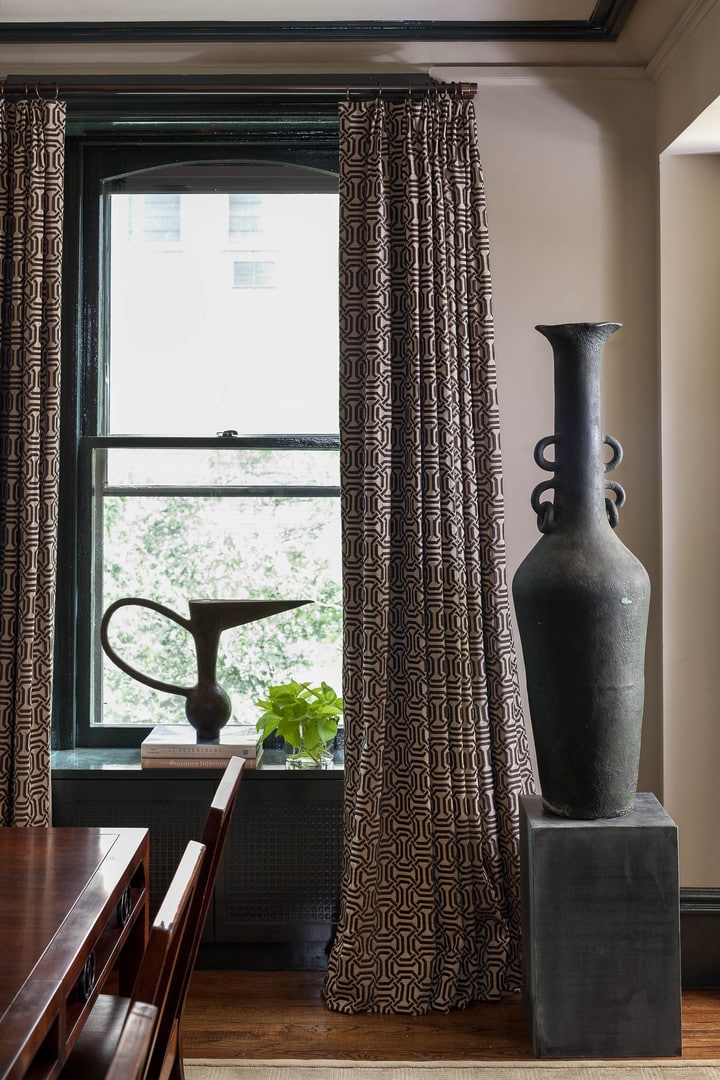
Curtains in patterned fabric by Pollack form the backdrop for a tall dark green Mexican ceramic and a sculpture by Christopher Dresser.

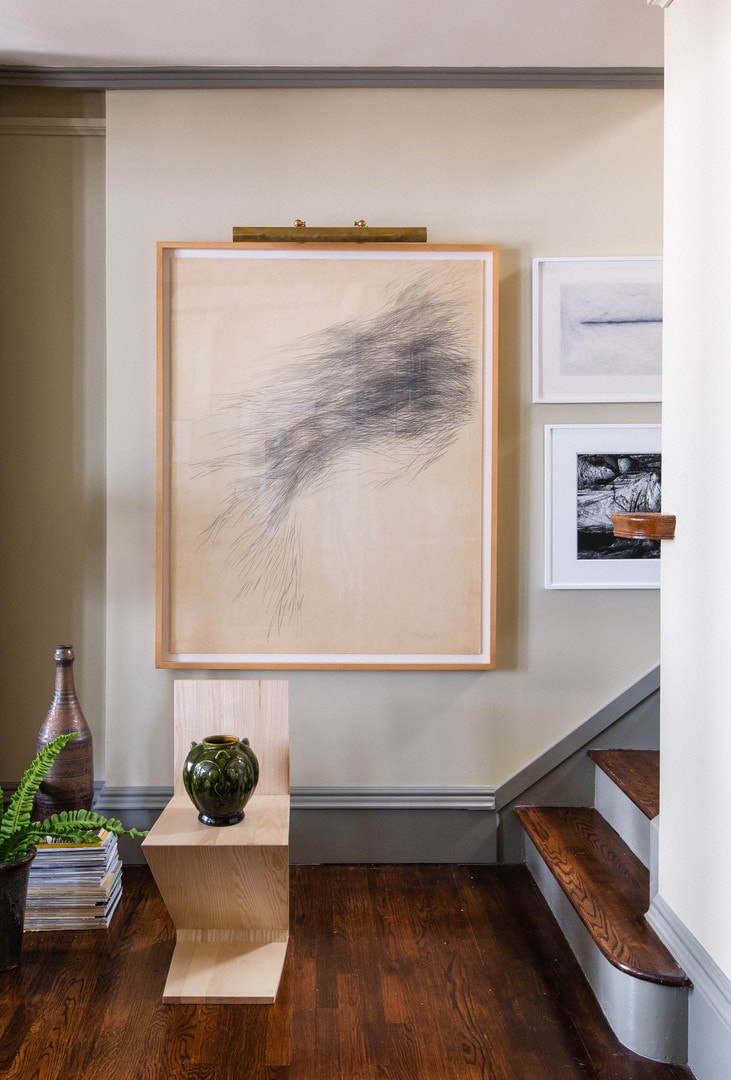
A crisp classic of early 20th century design–De Stijl designer Gerrit Rietveld’s Zig-zag chair–the framed drawing that dominates the vignette is a 1958 work by American artist Sonia Gechtoff.

"While it was a big change to move to Brooklyn after nearly three decades in Greenwich Village and Soho, the duplex apartment offered space and amenities that I could never have afforded in Manhattan . . . after living in single floor apartment it was a revelation to live on two floors – the spatial definition offers a sense of privacy and luxury that it’s hard to imagine!"

– Glenn Gissler

"Your apartment is truly one of, if not the most special apartments in the neighborhood."

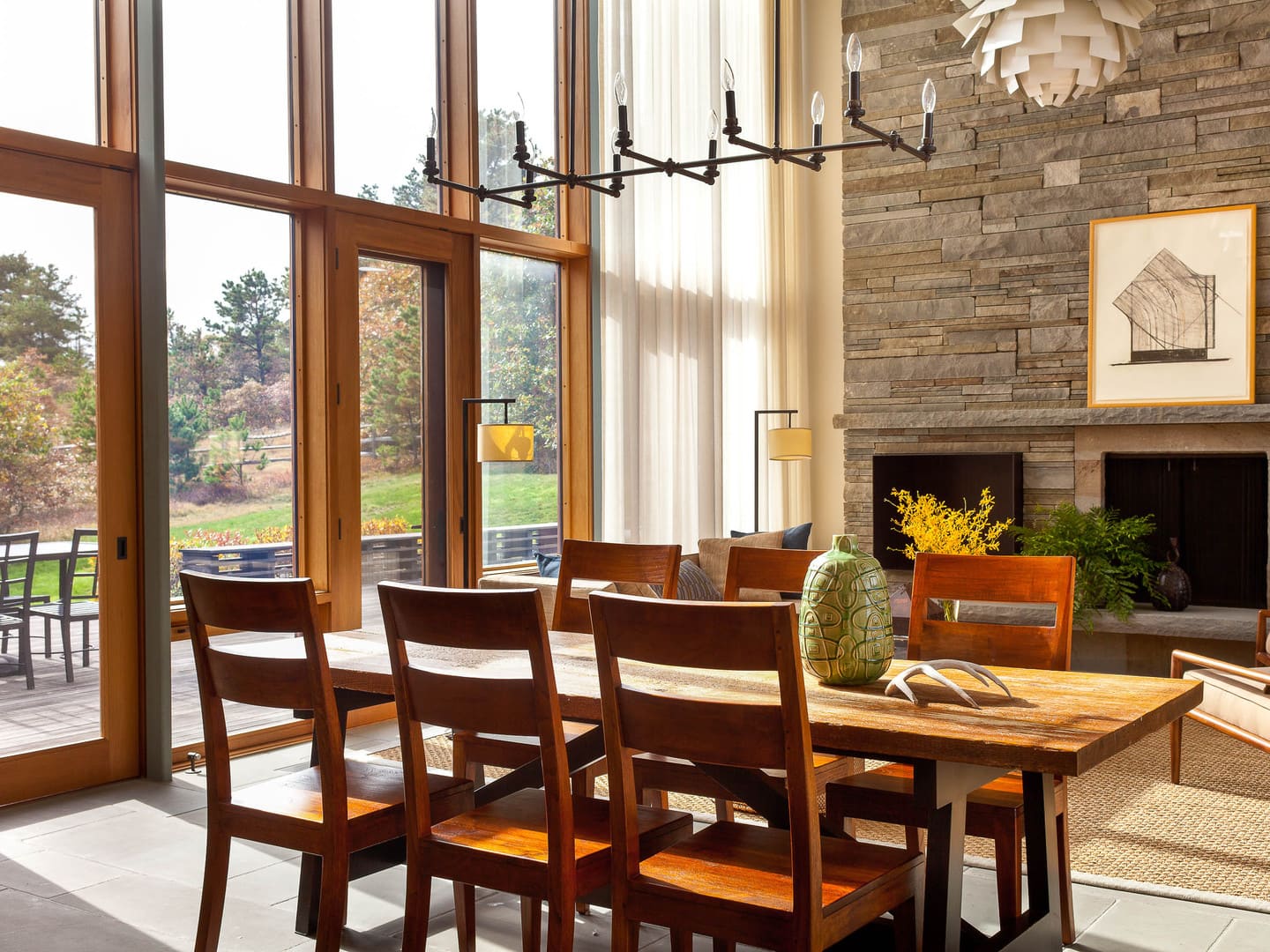
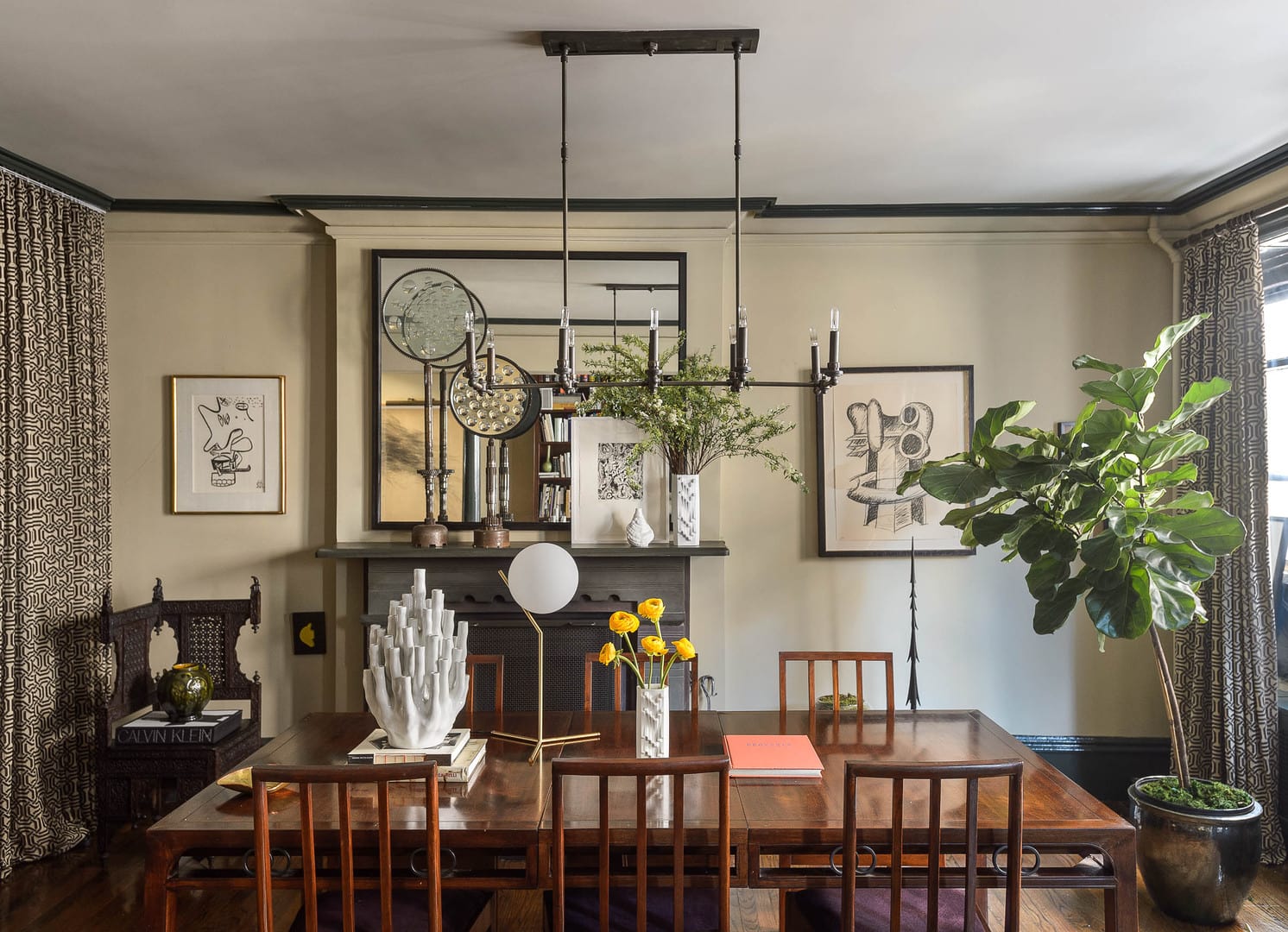
Gissler designed the chandelier that hangs above a 1950s Baker dining table. A Le Corbusler work on paper to the left of the fireplace is balanced by one on the right by American abstract expressionist Seymour Lipton.

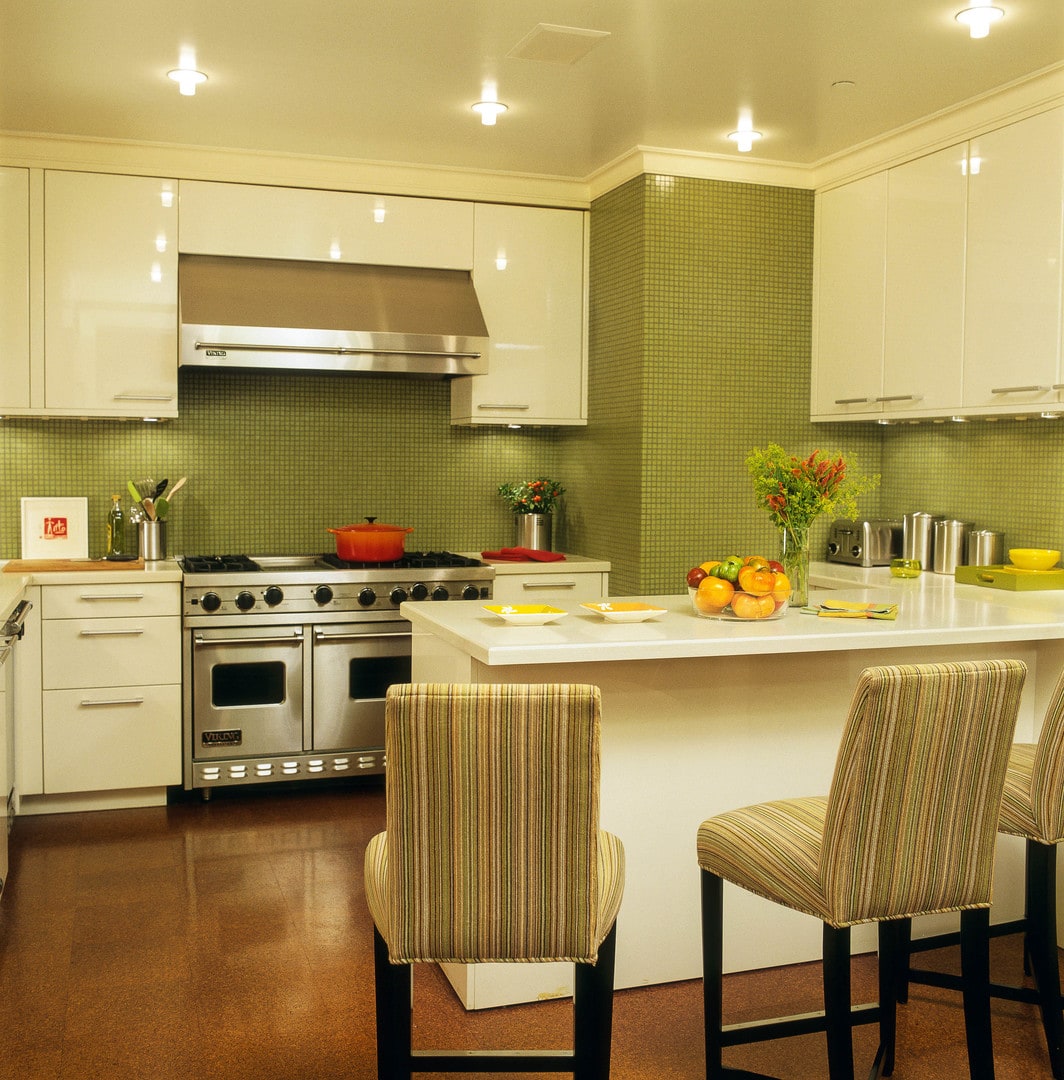
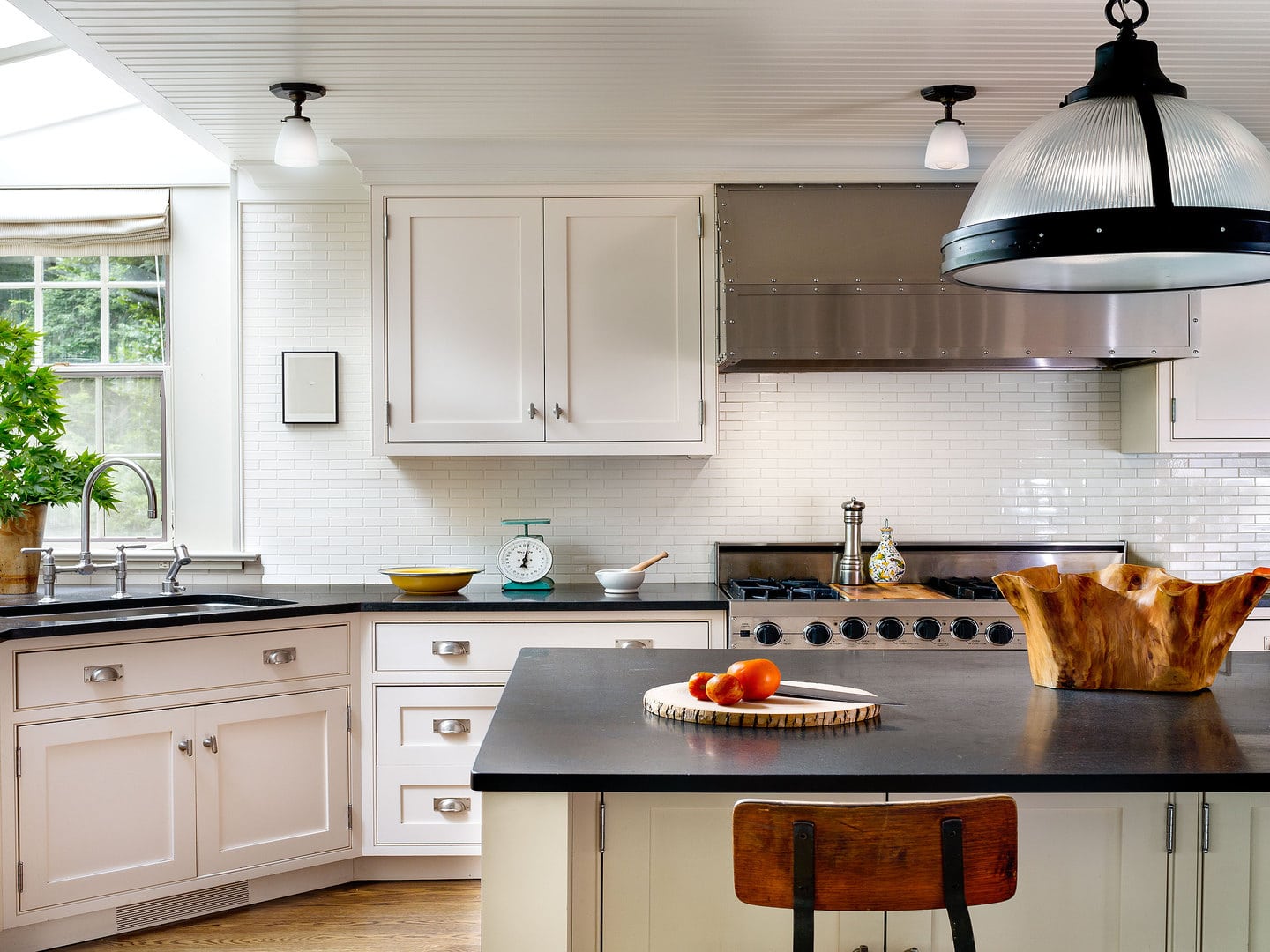
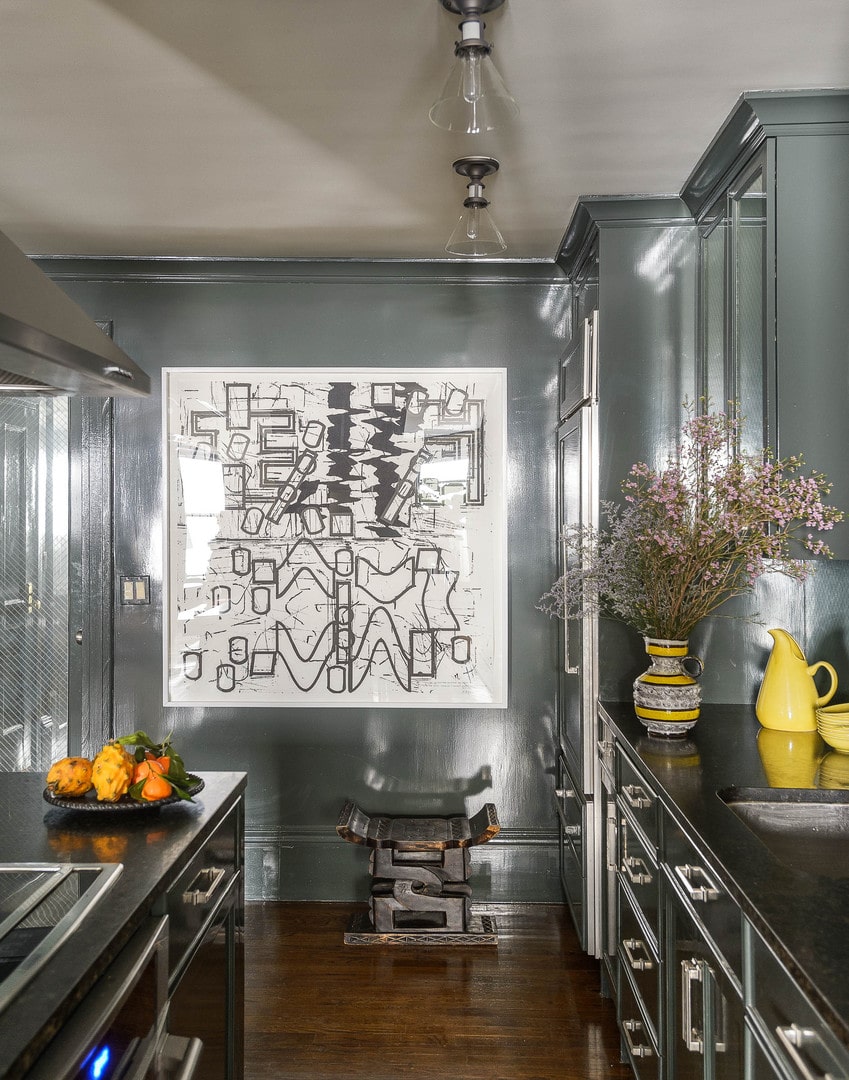
The elegant kitchen serves as the apartment’s de facto entry hall, with glossy green cabinetry, expanses of mirror glass and granite countertops.

"I wake up every day looking at a richly planted terrace that connects me to nature and creates a sense of calm. I love my apartment cherish my books and objects and treasure my art collection, but I like my apartment best when engaged with family and friends in my home. I have been acquiring items that give me pleasure for many decades – they rarely remain in the same location for too long as I am interested in the dialogue between them – like friends at a party! All of the art that I own is from the 20th century – some early and some late in the century – I love to find relationships between seemingly disparate works as I understand them more and more."

– Glenn Gissler

French Art Deco armchair, faux shagreen coffee tables and framed art matted in white provide a pale contrast to the wall color of bitter chocolate. The yellow artwork is by the well-known American artist Donald Baechler.

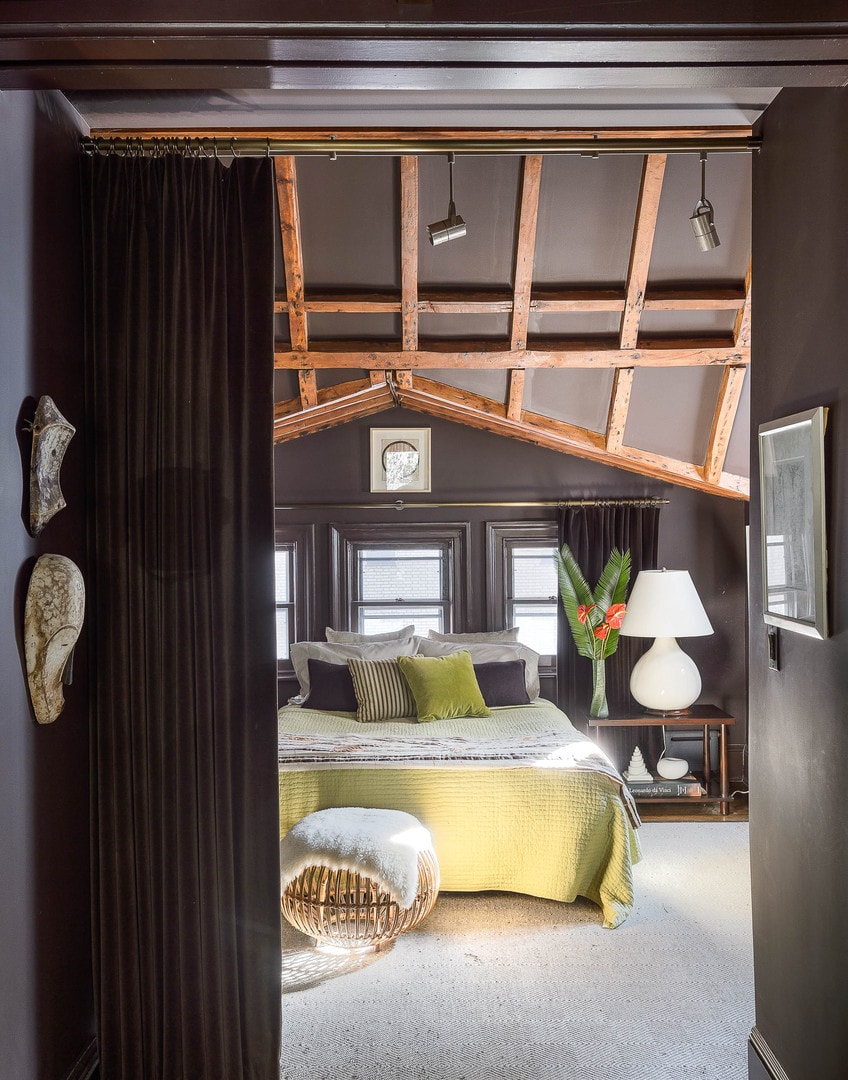
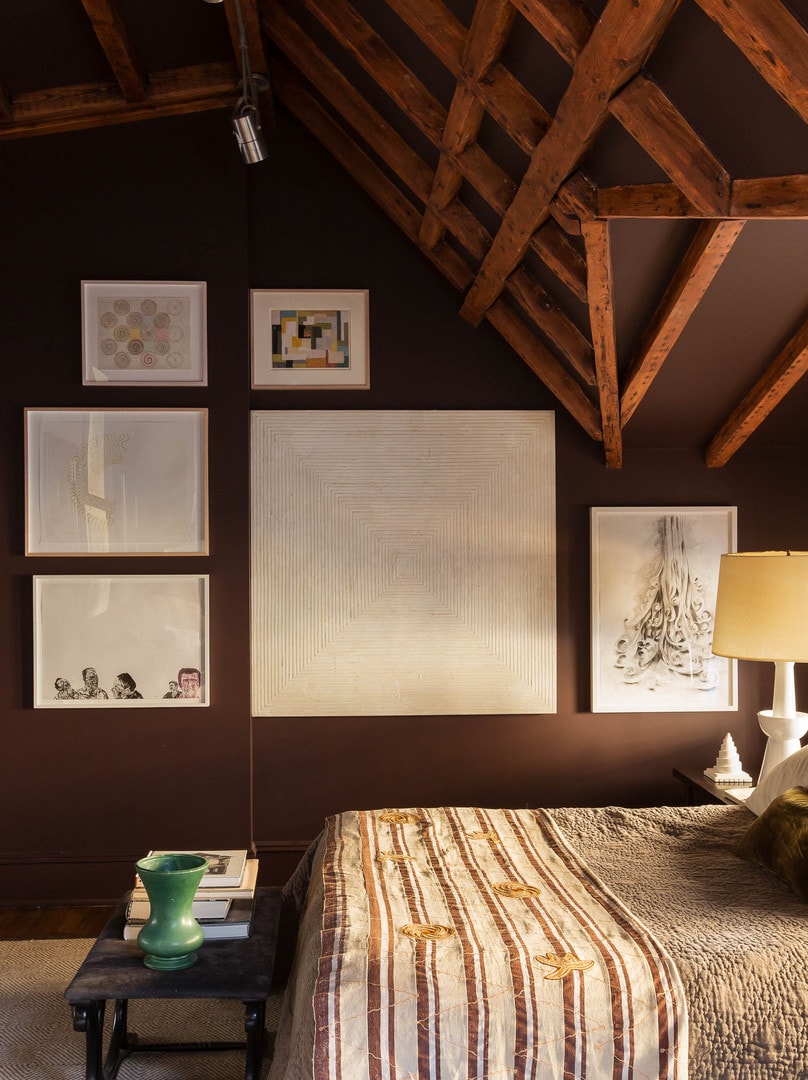
In this aerie under the eaves, exposed roof beams create a unique feeling of shelter; the room’s unusual scale resembles that of a Paris atelier.

On the walls – the color of bitter chocolate – is an assemblage of contemporary works on paper.

Classic garden furniture from Restoration Hardware makes of this city terrace a place to enjoy nature, as well as to entertain.

Art Collectors’ Home – Westchester

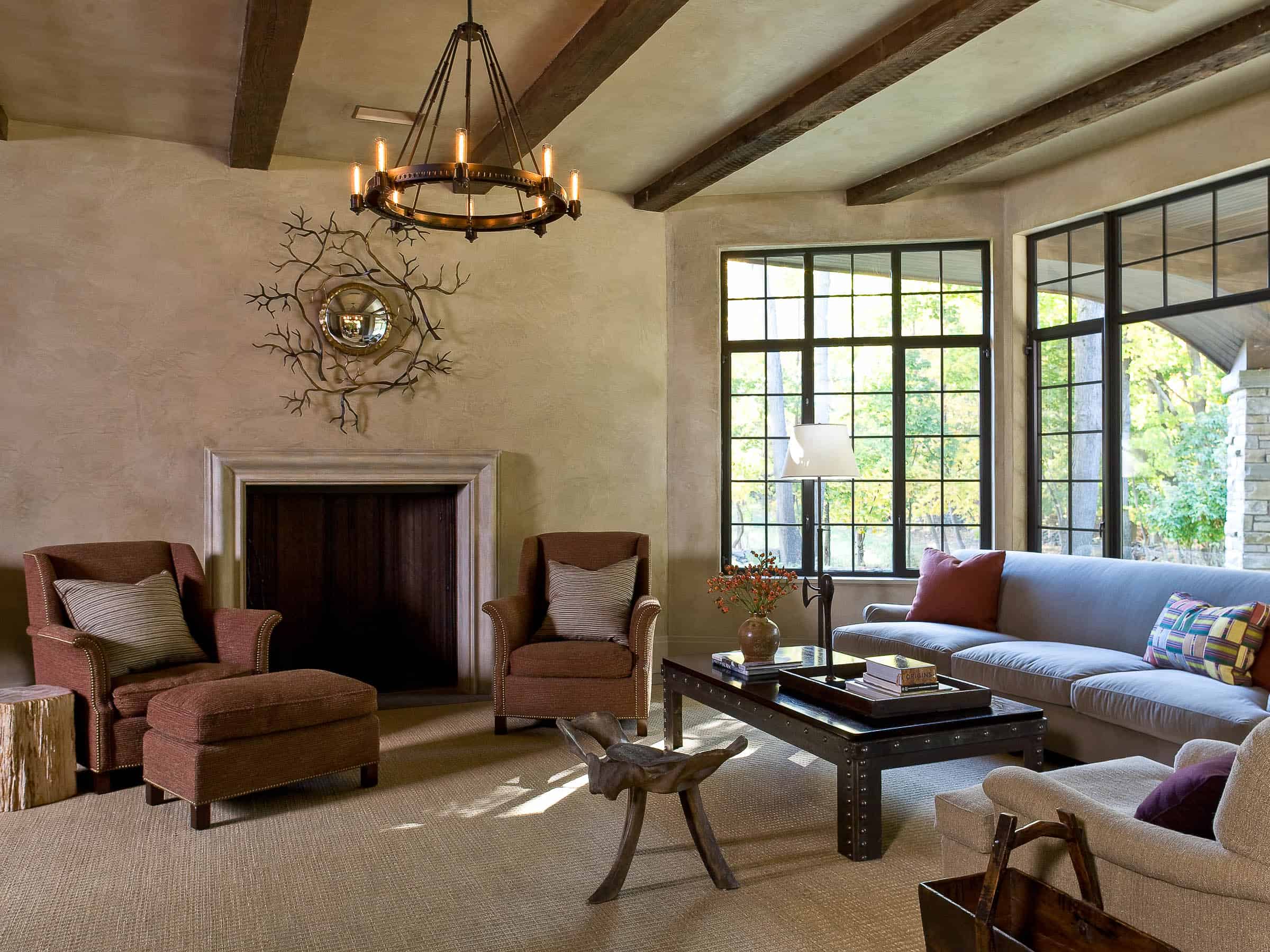
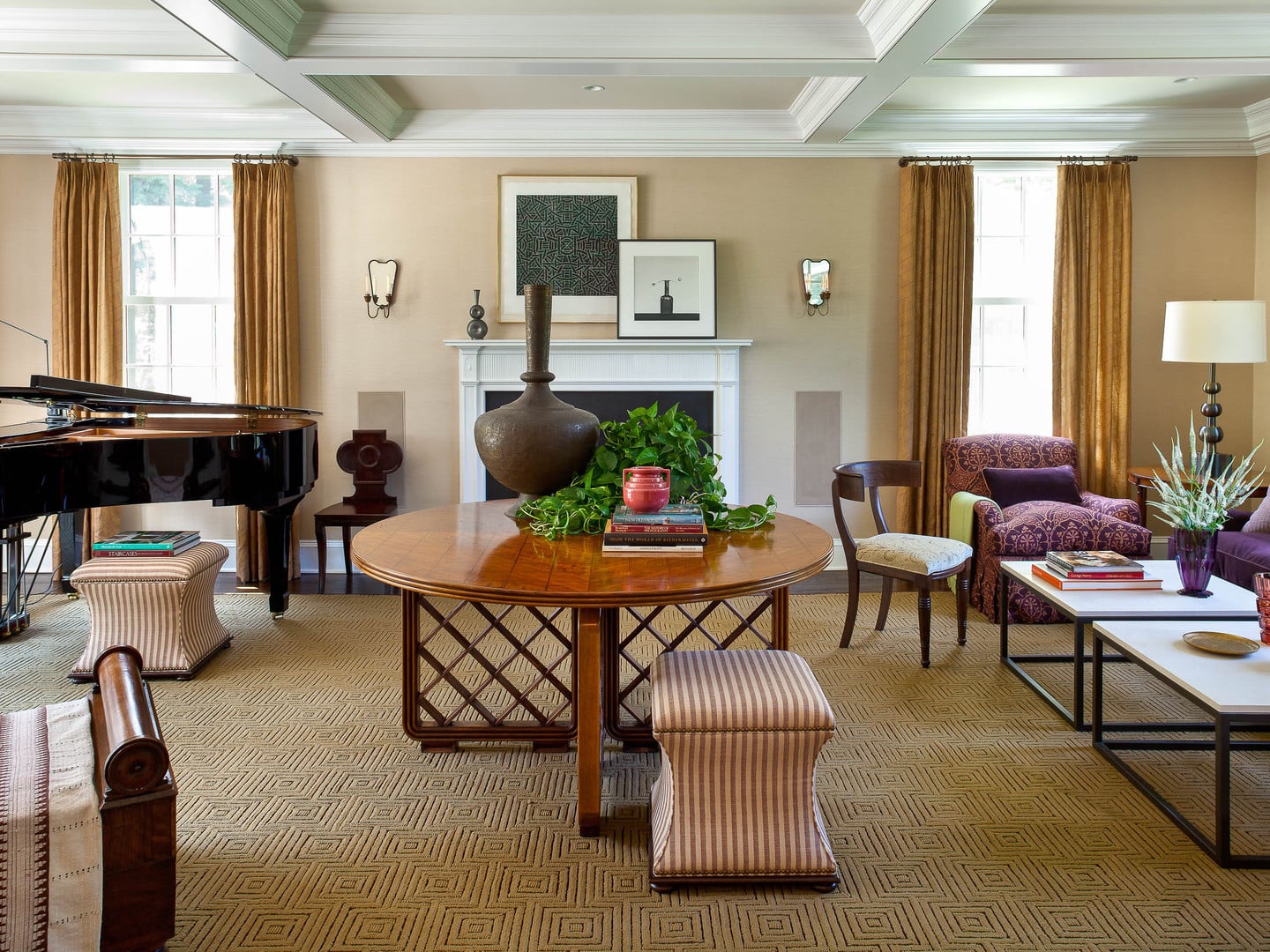
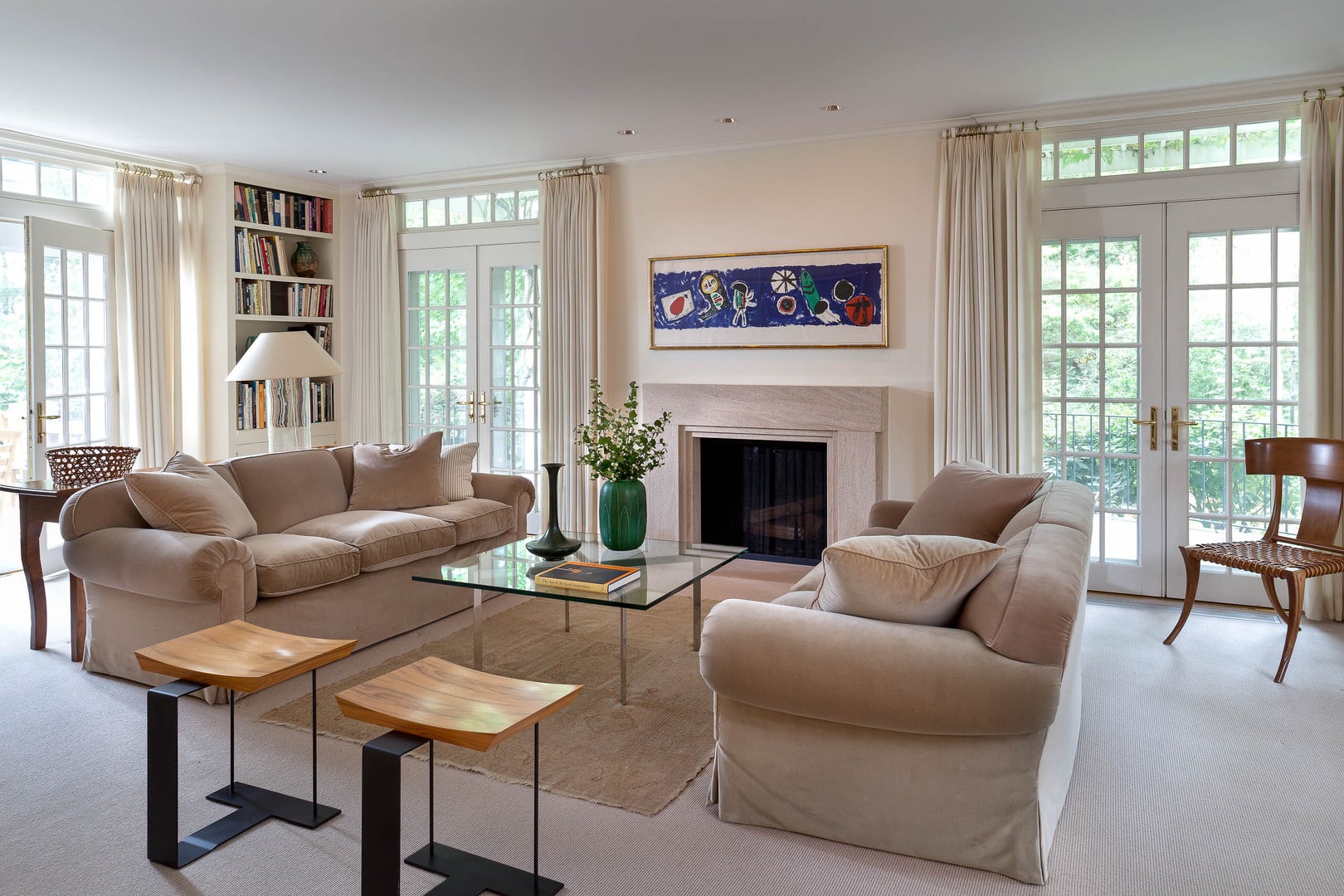
The living room is a study in soft greys and mellow burgundies, with sofas by Jonas Upholstery. The stool is 19th century, made from whale vertebrae, from Amy Perlin; the tree-trunk table is of petrified wood.

Westchester House

Art Collectors’ Home

The clients, empty nesters with a house in Westchester, New York are passionate and discerning art collectors. Modest in size, and superlative in quality, their collection includes works by Cy Twombly, Joan Miro, Jim Dine, Edvard Munch, Jean Dubuffet, Richard Serra, Robert Motherwell, Henri Matisse, Jasper Johns, Claes Oldenburg, and Frank Stella.

We sought to create a setting for these pieces that would display them prominently yet without ostentation. It was the clients’ desire truly to live with art, meshing seamlessly the works on the walls with fine pieces of twentieth-century furniture, to live in the comfort of understated style, design originality and quality.

As many of the artworks are from the mid-to late twentieth century, we countered this emphasis with furniture of the earlier to mid-part of the century, designed by Mies van der Rohe, Pierre Chareau, Carlo Scarpa, and in the manner of Jean-Michel Frank, with accents by Hans Wegner and Eero Saarinen. As always, we did not limit the furniture repertoire to Modernist icons, but introduced earlier finds–even of the Colonial era– of comparable simplicity, along with his signature emphasis on wonderfully comfortable custom upholstery and rugs. Altogether, this residence–calm, considered, above all comfortable–flashes with excitement from the seminal works of art which punctuate its rooms.

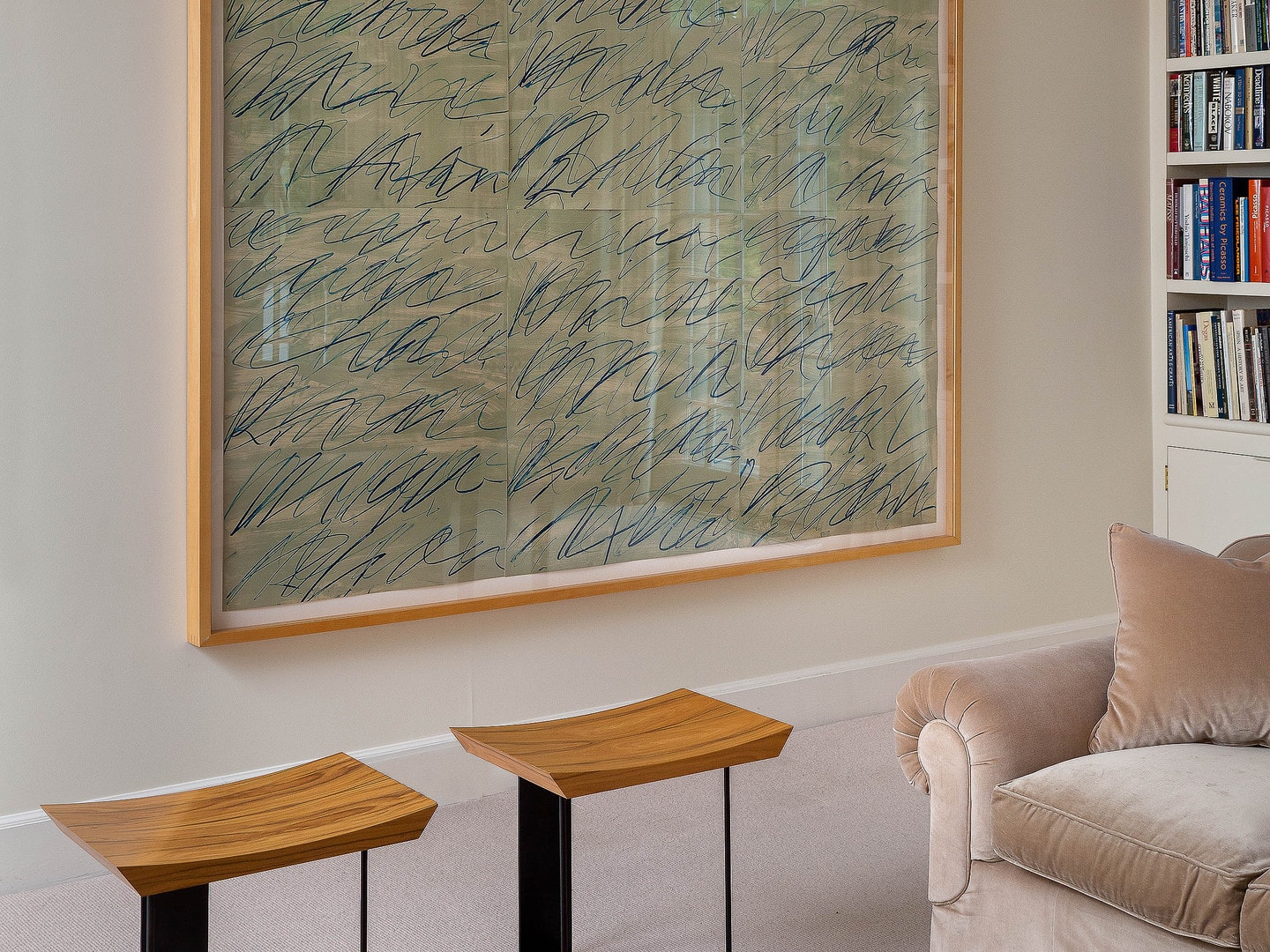
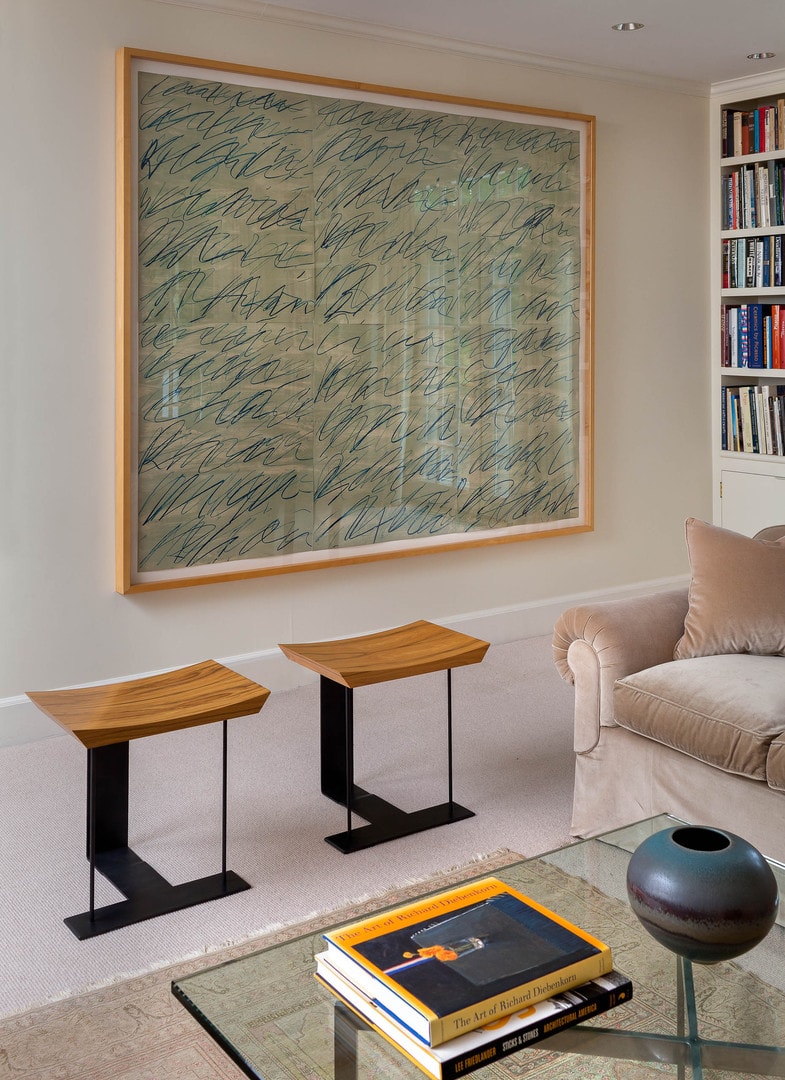
1920’s stools by the legendary designer Pierre Chareau vie for attention with a work on paper by another legend, American artist Cy Twombly in the living room.

Glenn must have made a thousand decisions. We don’t regret any. We worked together in a collaborative way. He made suggestions and we discussed them. Nothing was forced. The final result was a warm comfortable modern interior, esthetically pleasing, simple not cluttered. The ultimate compliment came from many visitors, including art patrons on a house tour, who said “I would love to live in this house.”

– Client

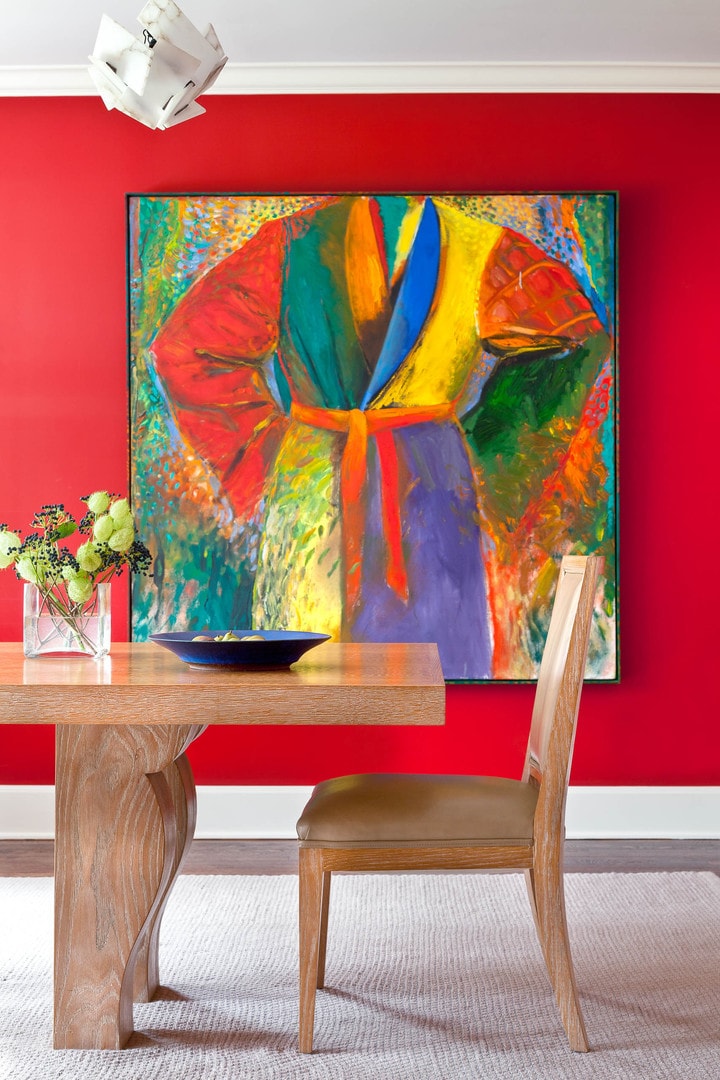
The cerused oak dining table and chairs in the manner of Jean-Michel Frank represent Frank’s gift to the twentieth century: elegantly plain furniture that bears the discrete neo-Baroque curve. Above hangs a faceted pendant lamp by Pierre Chareau. The startling scarlet of the walls is Donald Kaufman custom paint, its color inspired by Jim Dine’s painting, “Bathrobe” which hangs against it.

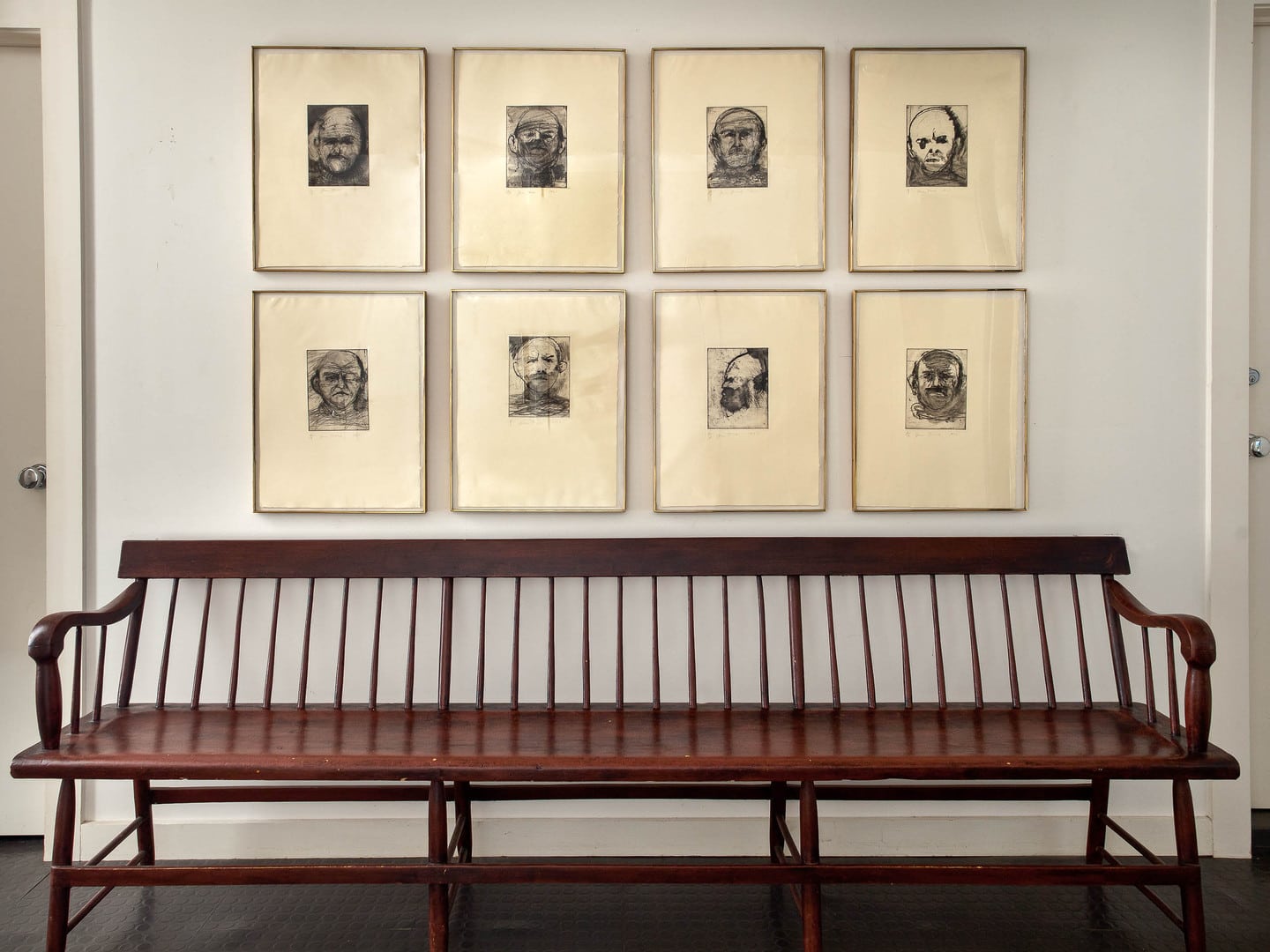
A long Colonial bench with original paint, almost modern in it simplicity, is surmounted by a series of eight self-portraits by Jim Dine.

The cerused oak dining table and chairs in the manner of Jean-Michel Frank represent Frank’s gift to the twentieth century: elegantly plain furniture that bears the discrete neo-Baroque curve. Above hangs a faceted pendant lamp by Pierre Chareau. The startling scarlet of the walls is Donald Kaufman custom paint, its color inspired by Jim Dine’s painting, “Bathrobe” which hangs against it.

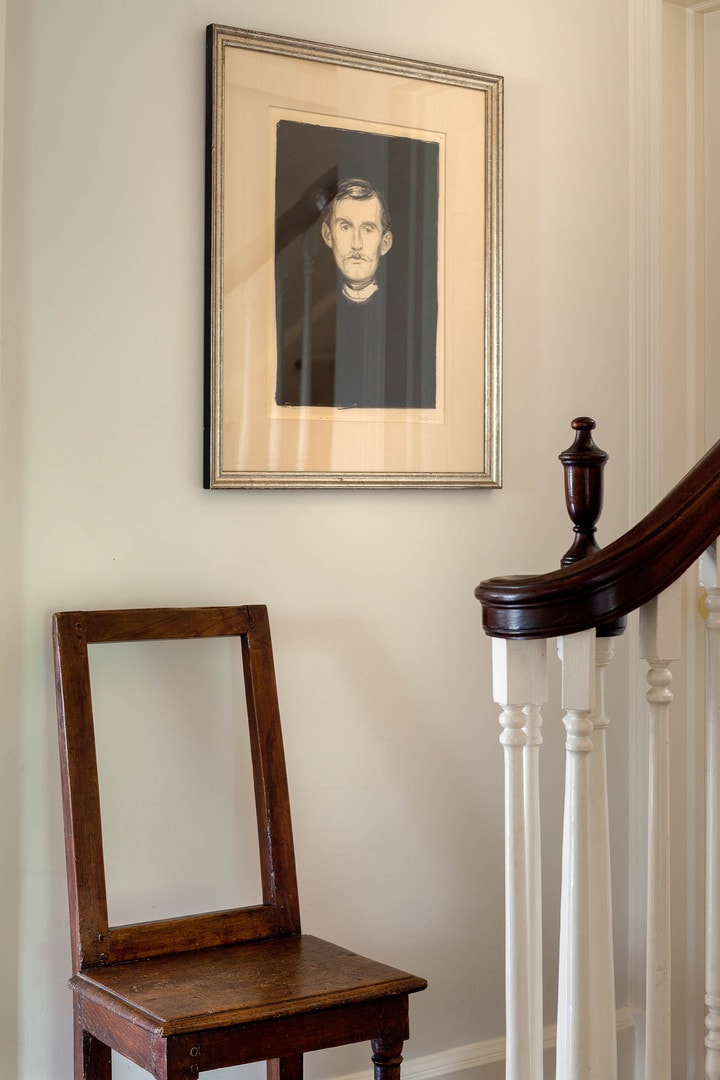
A nineteenth-century chair, modern in its angles, is accompanied by an etching of Edvard Munch.

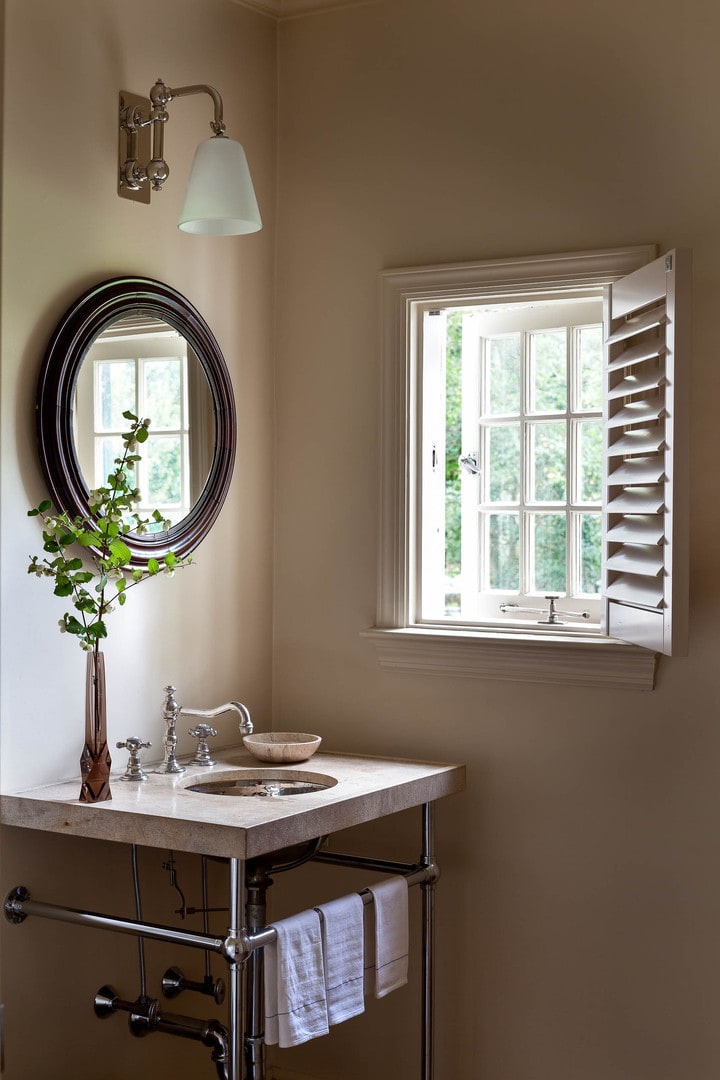
Quality and patina attend this smallest room: the countertop is of limestone, supported by legs of polished nickel, with vintage style faucet in the same finish. The antique round mirror is from J. Garvin Mecking, the vintage style wall sconce, from Urban Archaeology.

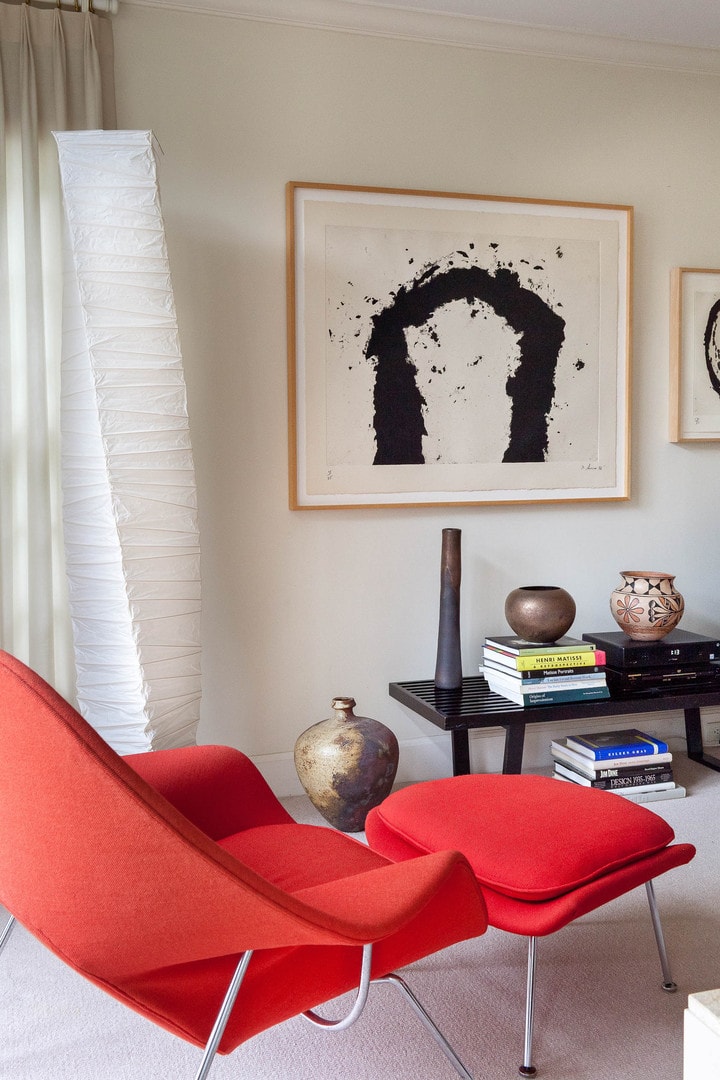
In a corner of the family room, we created a lively dialogue between pieces of 1950s furniture–including Eero Saarinen’s famous ‘Womb’ chair and ottoman, a crisp white “Akari” floor lamp designed by Isamu Noguchi, later works of contemporary fine art, and a suite of boldly calligraphic works on paper by Richard Serra. The platform bench is by George Nelson.

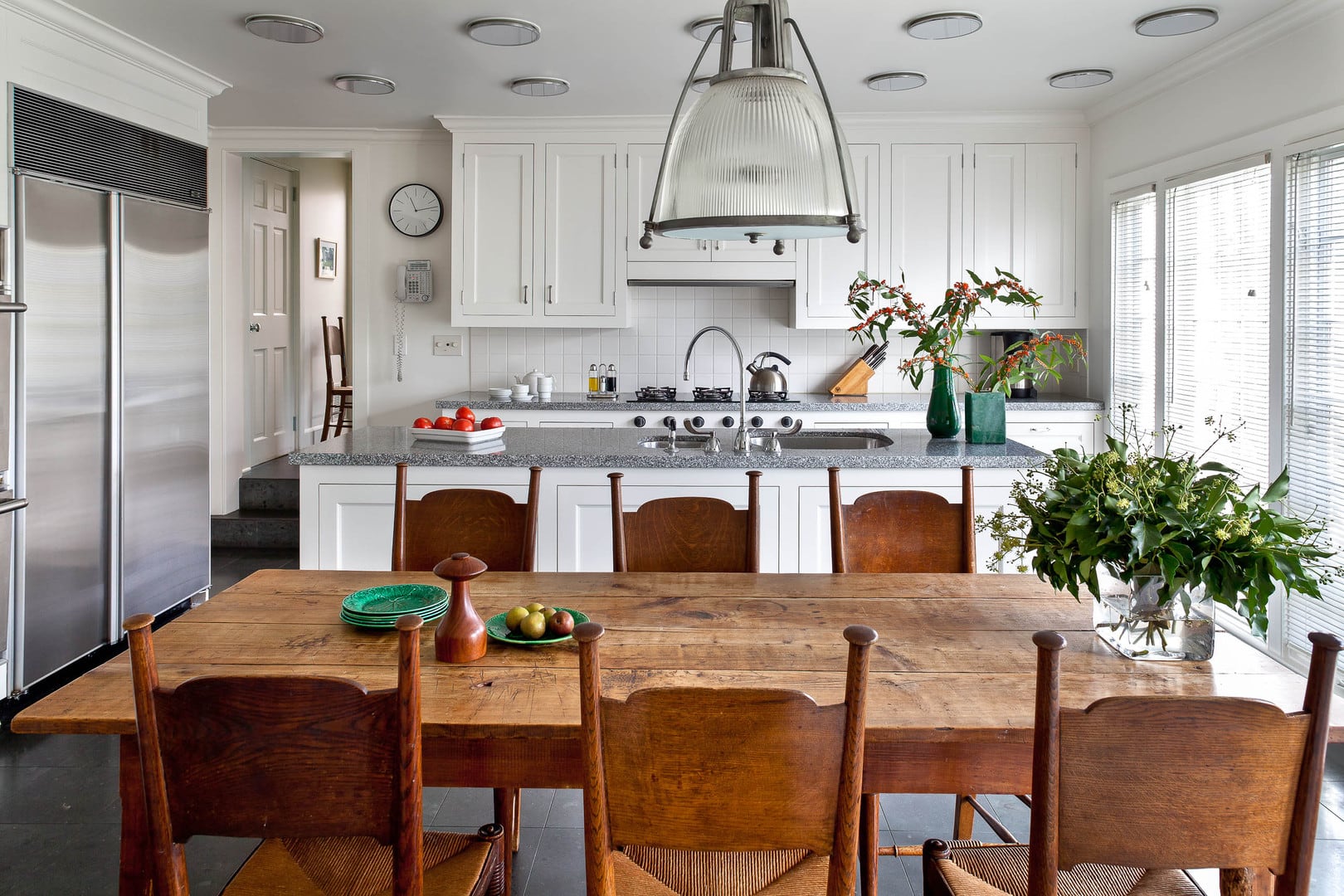
The rustic patina of the Kitchen is in sharp contrast to the elegance of the other rooms. An antique oak farm table is surrounded by antique 17th century rush-bottomed chairs, all lit by a single pendant from Urban Archaeology. The sheer simplicity of the farm furniture presages that of the 20th century pieces used elsewhere in the house.

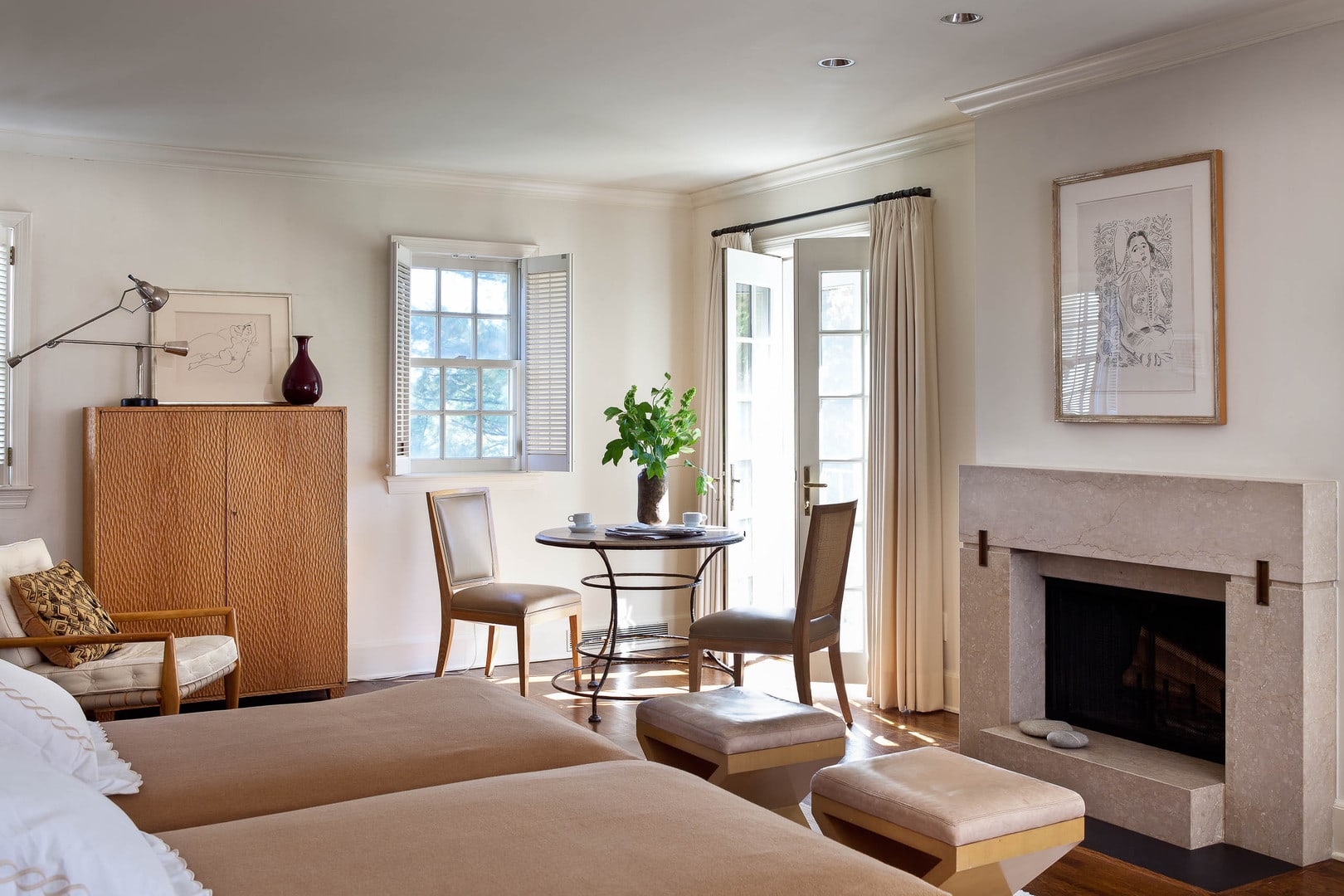
Soft neutrals suggest repose and subdued luxury. Etchings by Henri Matisse set the mood, expressed further by the pale, rosy beiges of the fireplace surround, bedclothes and leather upholstery of the Mattaliano side chairs and sleek X-framed stools, and the curtains framing the French doors.

Above the upholstered headboard, two vibrant prints by Joan Miro, and at the bedside, a classic Louis Poulsen lamp.

Senior Designer Craig Strulovitz
Photos by Gross & Daley

Gramercy Park

GRAMERCY PARK – NYC

Gramercy Park Apartment

These engaged and willing clients, a couple moving from California, sought to create an interior in their prewar Gramercy Park two bedroom – with keys to the Park — that would express emotion, even passion. One of the clients was from South Africa and possessed some heirlooms belonging to his grandfather, including a grand piano and artworks, forming an interesting family legacy which introduced color and and a certain exoticism into the apartment.

Instead of using the second bedroom as a guest room, we chose to create a den for work and entertainment; this has turned out to be a delightful and much-used room.

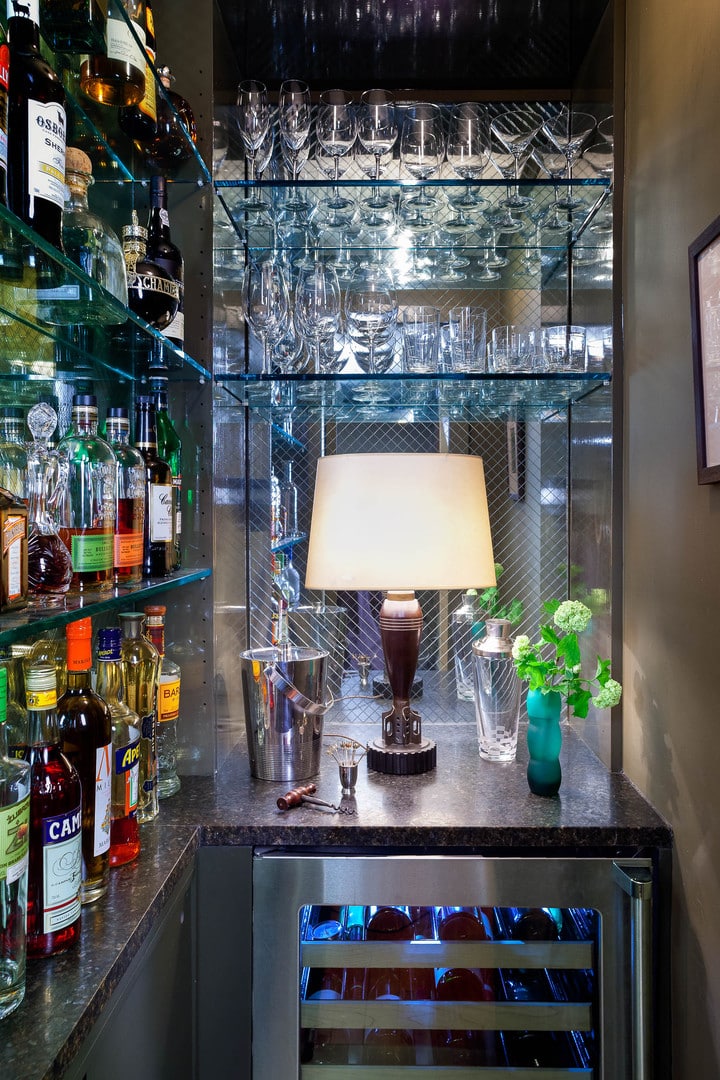
The couple are master chefs, and multi-course dinners with carefully selected wines were a priority. We created a dining area with a banquette; a closet was transformed into a stunning bar. We furnished the terrace with pieces from Restoration Hardware, making of it another place for dining.

By actively engaging these gastronomic connoisseurs in the design design process, their evolving visual sense came to be reflected in the colors, textures and objects of this highly personal apartment.

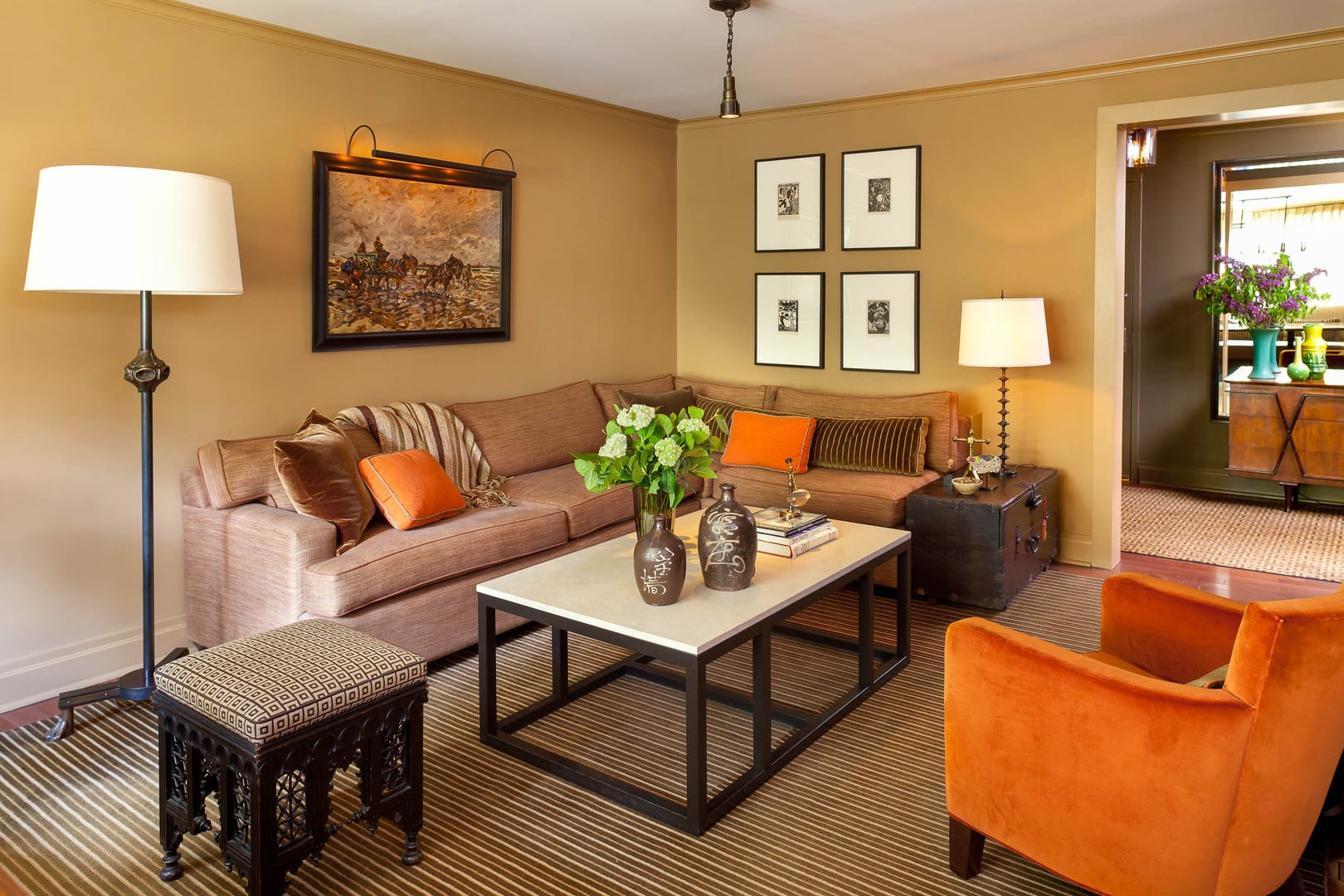
A lively striped carpet in tones of cinnamon and cream provides a basic palette and ground for custom and antique furniture, including a black-painted Moroccan stool of the Victorian era.

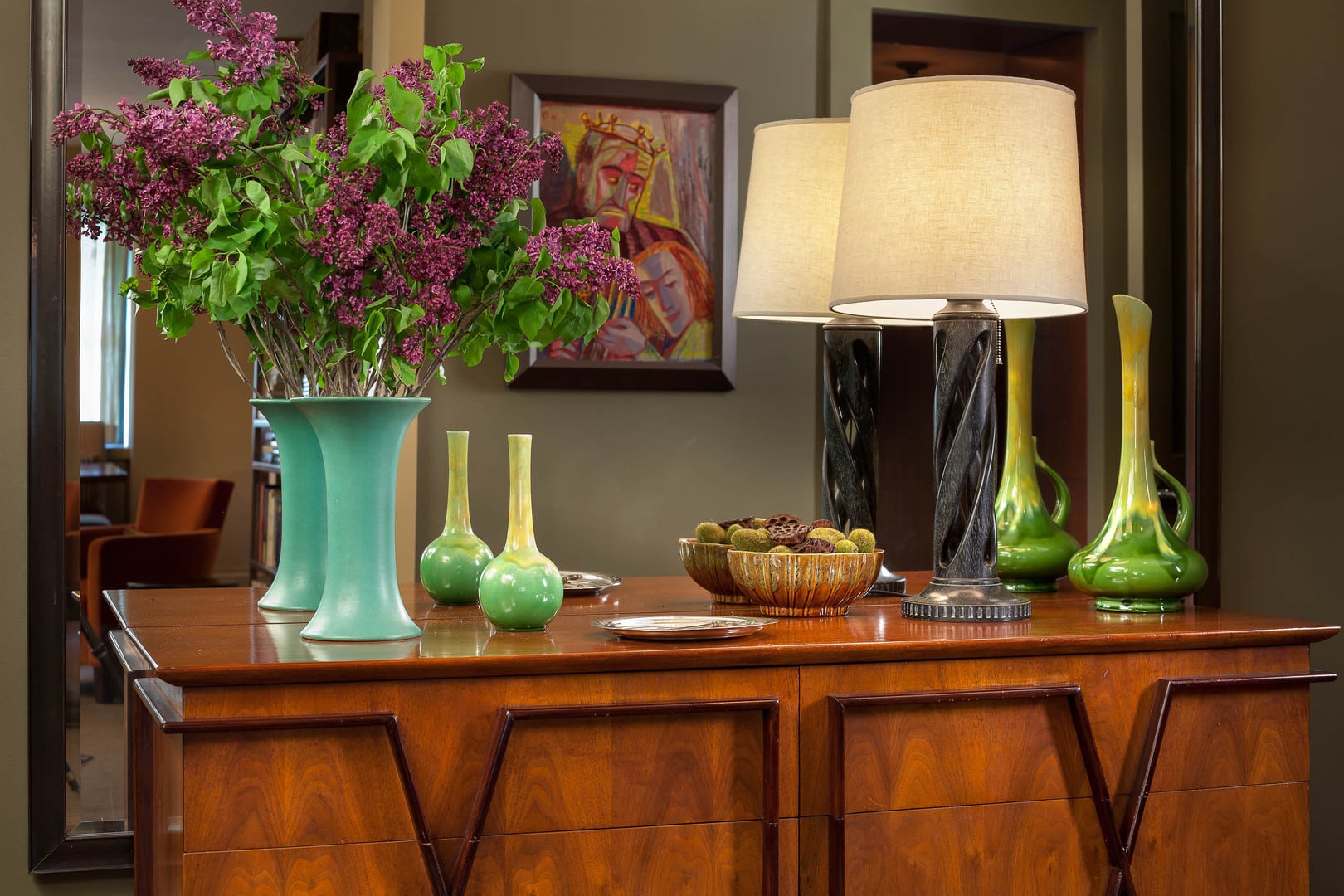
An X-front American chest of drawers, 1950s, sets the stage for a collection of green-glazed pots and an spiraling cylinder fashioned into a table lamp. We extended the custom mirror beyond the chest for an added feeling of space. The carpet, from Stark, is in a Greek key pattern which appears almost stenciled.

"Thanks to his architectural background, Glenn Gissler is a master at transformative spaces. His unique eye for materials, shape and color manifested in a seductive, sumptuous and luxurious space that has become our new home in Manhattan. Working with Glenn and his extended team of highly talented, professional and caring artisans and contractors yielded a formidable result we are extremely proud of."

– Client

Converted from a closet, the bar is a special delight, inspired by Charles James’ bar for the De Menils in Houston. The clients are oenophiles, with an esoteric knowledge of wines and spirits. The granite top is Uba Tuba from Stone Source.

Converted from a closet, the bar is a special delight, inspired by Charles James’ bar for the De Menils in Houston. The clients are oenophiles, with an esoteric knowledge of wines and spirits. The granite top is Uba Tuba from Stone Source.

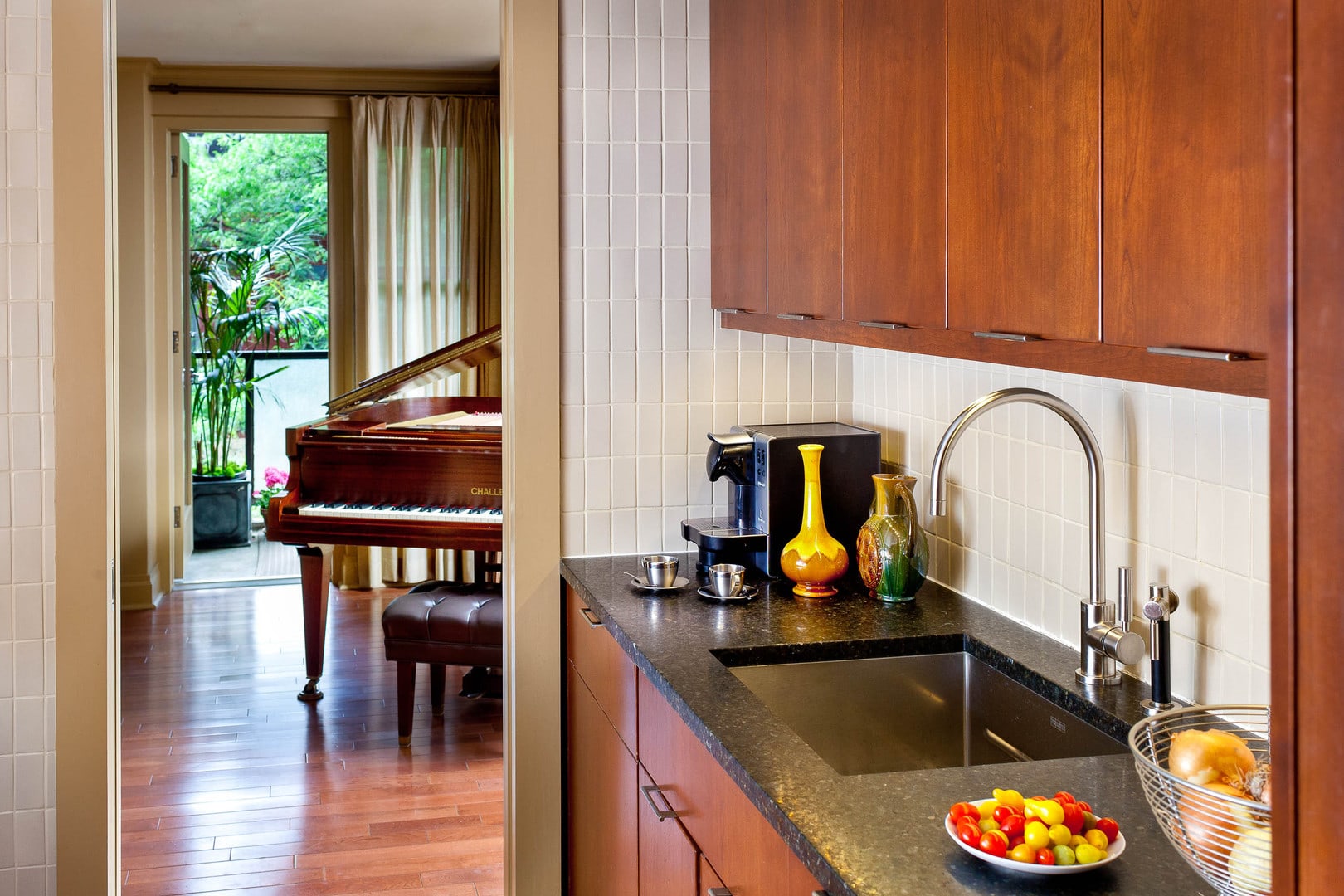
In the kitchen, Dresser ceramics and an expresso maker have pride of place on the Uba Tuba counter. The couples baby grand piano appears though the doorway.

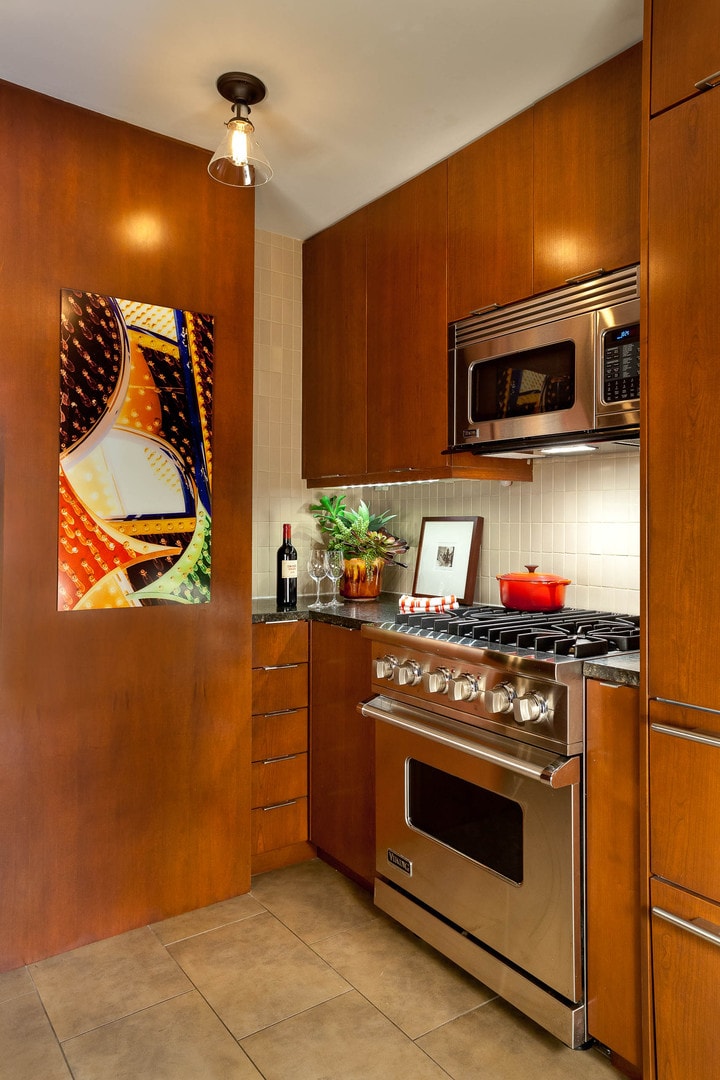
While the kitchen is diminutive, we managed to incorporate superlative appliances that speak to the clients love of all things culinary.

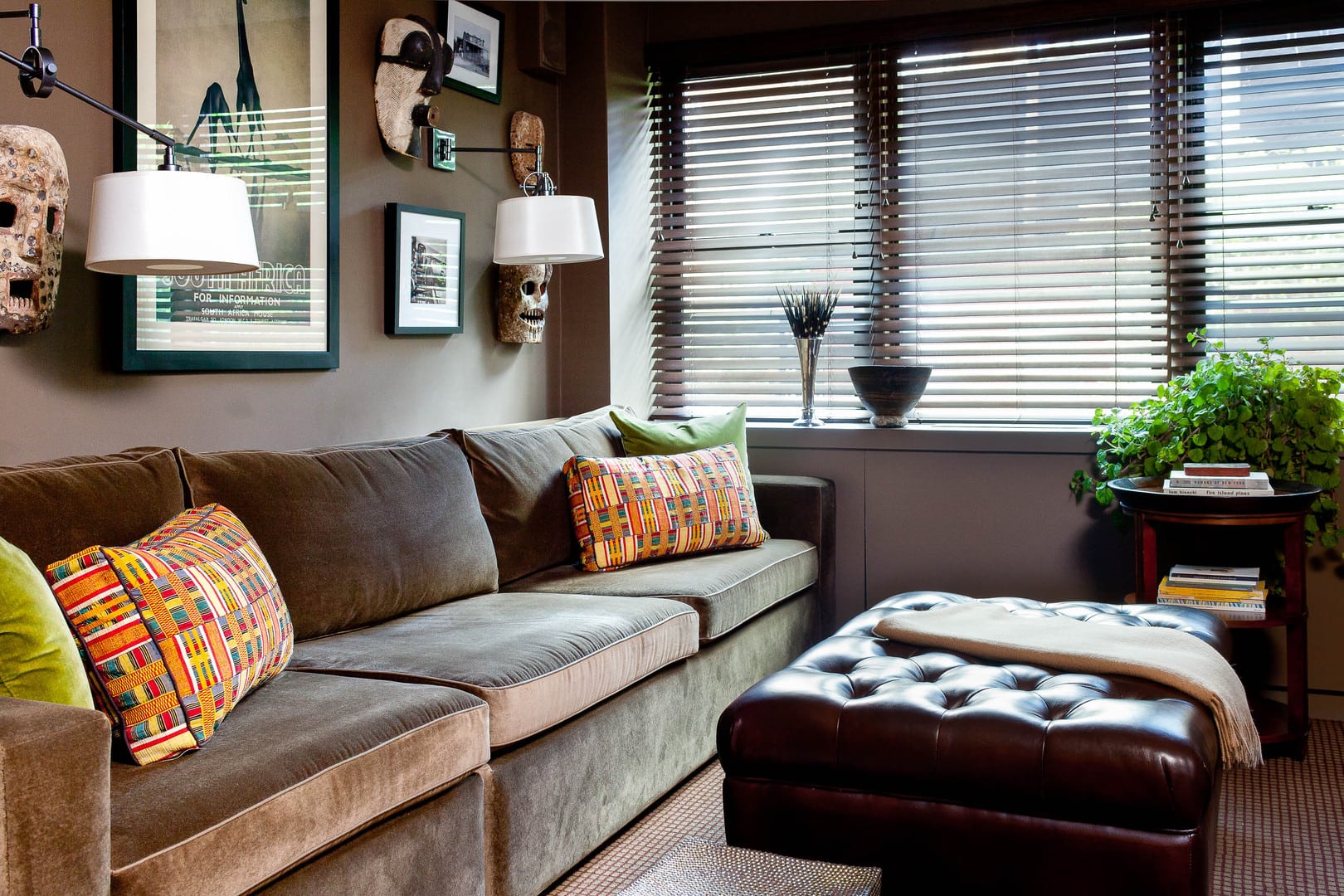
The den, painted in Benjamin Moore’s “Northwood Brown,” with dark wooden blinds at the window, is well lived in by the clients and their guests, who enjoy the comfort of a sleeper sofa upholstered in Holly Hunt velvet with pillows covered in vintage Kente fabric.

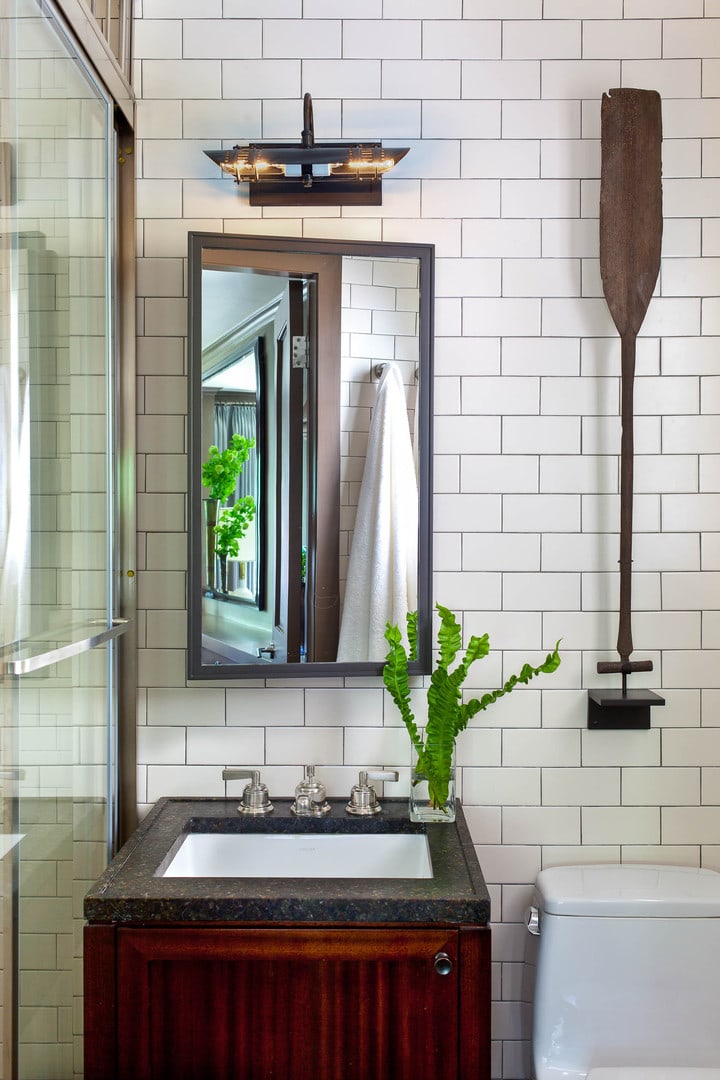
Bone-colored subway tiles create a ruggedly masculine environment, accented by the antique paddle mounted on a custom stand and an industrial sconce in steel and brass

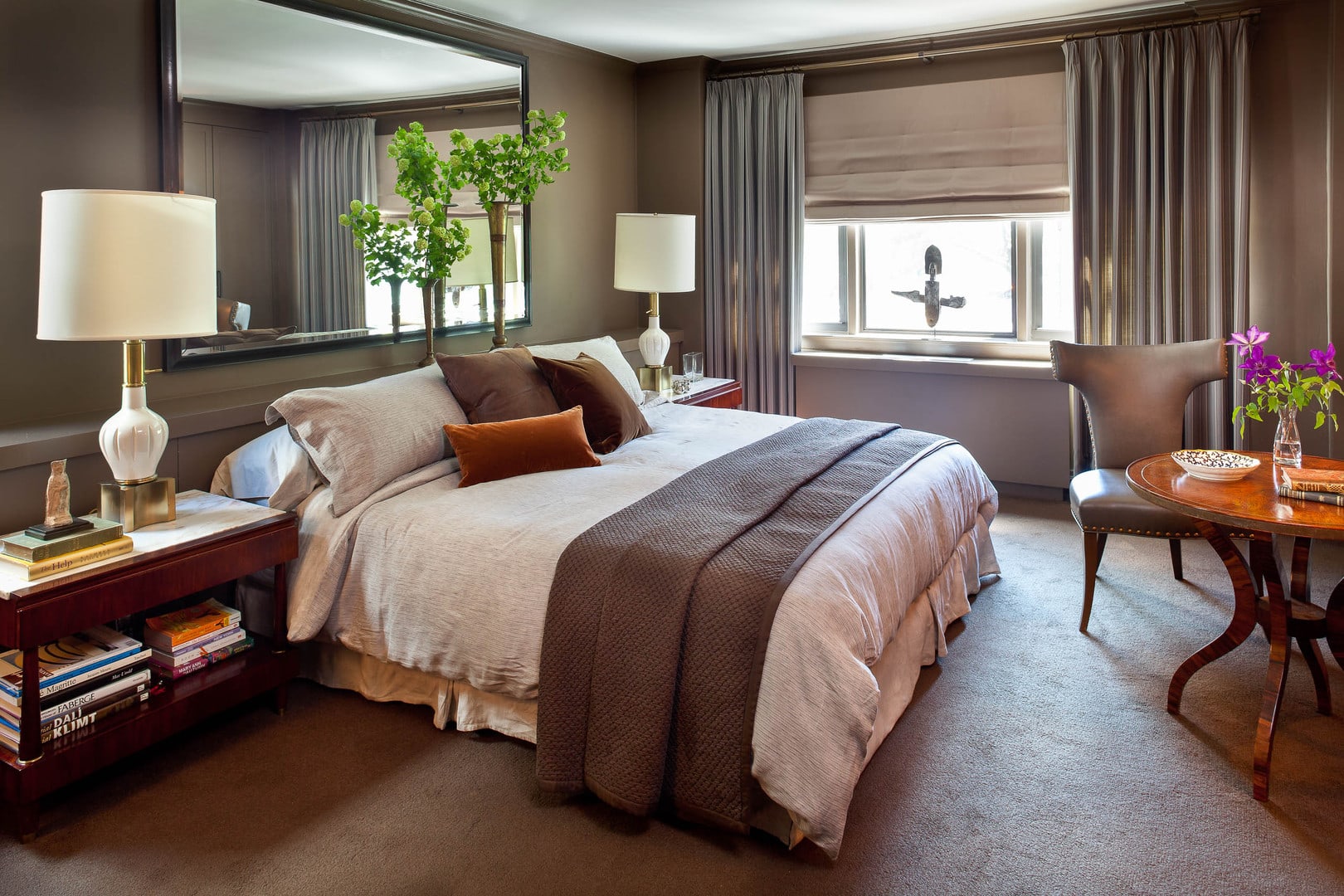
By removing part of a wall of closets, we created a little sitting and work area, with a banquette and midcentury table and lamp, like one would find in a good hotel. The bed skirt is of vintage washed Belgian linen; the bedding, from Aero. Walnut and marble nightstands are by Bert English, 1950s.

Senior Designer Craig Strulovitz
Photos by Gross & Daley

Brooklyn Heights

A bold Larry Zox painting from 1967 hangs in sharp contrast to the original 19th-century curvacious marble fireplace surround. Extending the main seating area into the center of the room is a vintage Vladimir Kagan sofa paired with a Maxine Old center table and a vintage stool, one of a pair.

BROOKLYN HEIGHTS – NYC

Brooklyn Heights

The design for this ‘19th Century Living Room for the 21st Century’ in the first Brooklyn Heights Designer Showhouse was supported by a number of New York’s finest antique, contemporary and fine art dealers – all from 1stdibs. Within the existing formal architecture, the room was designed for a living today using a multifunctional layout including a generous seating group, a large table-desk, and a large storage cabinet. The 19th-century Khorassan carpet reinforces the history of the 1867 house, while perfectly sized for the grand space, with enough room for the original Greek-key floor inlay to be seen throughout.  The surprising shimmer of gold metallic bee silhouettes on the Farrow & Ball ‘Bumble Bee’ wallpaper covering the entire ceiling in this graciously-scaled living room in a wide townhouse built in 1867.

A massive scale and of the striking English Arts & Crafts Armoire boldly holds one side of the room with its evocative form, and earthier finish a counterpoint to many of the more glossy, refined elements in the room.

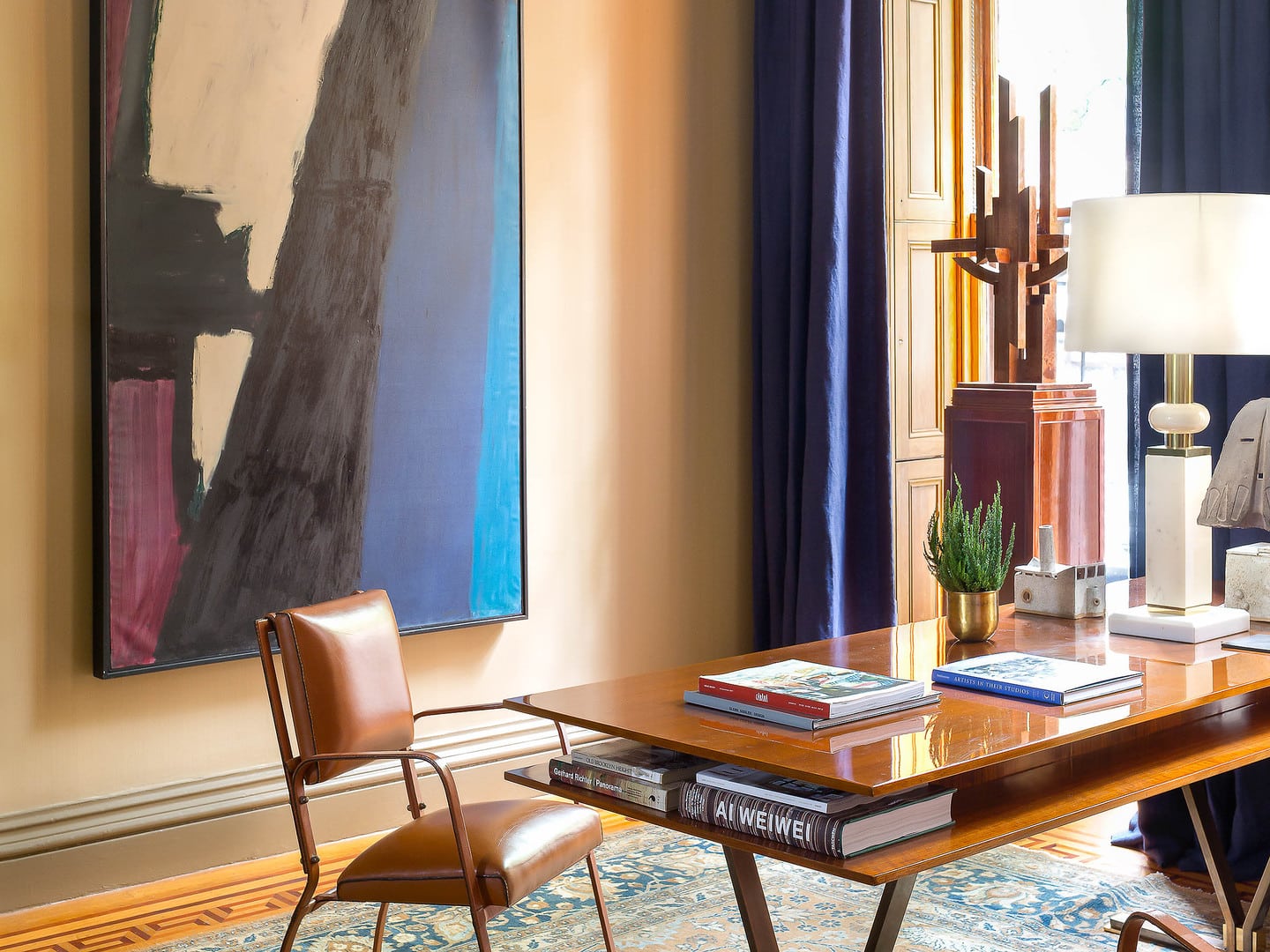
The 1959 painting by Abstract Expressionist painter Judith Godwin, entitled ‘Black Cross’, pairs beautifully with the striking Jules Leleu modernist table-desk and the pair of vintage Jacques Adnet leather-wrapped chairs. The rusted steel sculpture by Marino di Teana sits proudly on a mahogany pedestal in the window.

The grey-blue Milano sofa from Dmitriy & Co. anchors the primary seating area of the room. A large-scale painting by artist Dan Christiansen, “Dolby”, loaned by Berry Campbell Gallery, hangs above the sofa. The magenta tie-dyed pillows add complimentary saturation of color to the sofa, while coordinating with the painting above.

The luminous 1958 painting by Walter Darby Bannard, a strong complement to the existing 19th-century architectural details of the room, hangs above a pair of 1930’s Bjorn Thagard armchairs upholstered in a pale celadon velvet, and a set of T.H. Robsjohn-Gibbings nesting tables.

Senior Designer Craig Strulovitz
Photos by Gross & Daley